
celebrity radar - gossips
The truth lie, Mohammed cannot kill (Part 2)

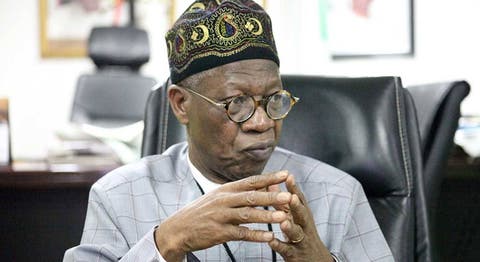
The truth lie, Mohammed cannot kill (Part 2) Tunde Odesola
Finally, truth flew out of the dirty White Paper, last week, encircled the powerful seat in Alausa seven times, and blessed the bony head of Johnny Walker with a poop. Singing a dirge, “Justice is the first condition for peace walk,” truth shook its little tail, and away it flew!
Truth flew back to Lekki. To continue to sing the panegyrics of the nine AK-47 victims, whose red blood was used to signpost the Lekki Toll Gate on October 20, 2020 as a monument in memory of brutality.
Truth is blunt, it doesn’t care a hoot about the slavish godson, and his all-grabbing godfather scheming to grab the biggest cake in the land come 2023. From the aquatic splendour of Bourdillon to the House-o-Rock in Abuja, where the head herdsman resides, the wind of truth has blown, exposing the rump of the hen.
His Most Majestic Excellency, Lagos State Governor, Rt. Hon. Babajide Sanwo-Olu, knows the truth but cannot swallow its bitterness. He desires peace but dislikes its sauce, justice. He knows that with the proverbial duck, the swallowed stone ends in a piss.
In Lagos, piss splatter down on peace with no law in sight to bring pissing soldiers and policemen to justice at Lekki, and Nigeria’s foulest city rolls on in filth as honest celebrities abandon Gv Johnny Walker to walk alone on Falsehood Road.
Minister of Information and Culture, Alhaji Lai Mohammed, knows the truth, but he curls up in the bed of fallacy; fallacy that the rain of bullets at the Lekki toll gate in October 2020, all missed their targets, like the piss of the drunk refusing to enter the targeted latrine hole.
Alhaji Lai worships in Abuja, Governor Sanwo-Olu worships in Lagos. They both serve the same omnipotence. Ironically, Mohammed and Sanwo-Olu, sired from the same political loins, today sing divergent tunes when truth came to judgment at the abattoir called Lekki Toll Gate.
When truth catches up with falsehood, egberun Lai or Sanwo-Olu can’t rescue it. Truth turns lies into foolishness in the fullness of time. Truth is a tongue twister. It is colourless.
In far away Abuja, Hadji Lai sat under the evening shade of the baobab, and sang tales by moonlight, insisting that nobody died at Lekki but Sanwo-Olu, holding aloft his dirty White Paper, contradicts Mohammed, admitting that one person died at Lekki while many others were injured.
Buoyed up by the 41-page White Paper produced through a four-member hand-picked committee that comprised officials under his authority, Sanwo-Olu debunked the submission of the retired Justice Doris Okuwobi-led panel that nine persons fell to the bullets of soldiers at the LTG in October, last year.
Sanwo-Olu’s White Paper panel was headed by the Lagos State Attorney-General and Commissioner for Justice, Mr. Moyosore Onigbanjo (SAN); with the Commissioner for Youths and Social Development, Mr. Segun Dawodu; Special Adviser, Works and Infrastructure, Mrs Aramide Adeyoye, and Permanent Secretary, Cabinet Office, Mrs. Tolani Oshodi, as members.
Departing from the path of truth set by the eclectic Judicial Panel of Inquiry on Restitution for Victims of SARS-Related Abuses and Other Matters, inaugurated shortly after the Lekki massacre in 2020, a statement by Lagos State on December 1, 2021 said, “This recommendation is not acceptable to Lagos State Government for the following reasons: The finding of the JPI at page 288 paragraph M is that, ‘The evidence of the pathologist Prof Obafunwa that only 3 of the bodies that they conducted post mortem examination on were from Lekki and only one had gunshot injury and this was not debunked.’”
The statement continued, “The JPI’s finding of nine deaths is therefore irreconcilable with the evidence of Prof Obafunwa that only one person died of gunshot wounds at 7:43pm at LTG on October 21, 2020.”
Ehn-ehn? So, the White Paper produced by Governor Sanwo-Olu’s officials even acknowledged the submission that three dead persons were brought in dead from the LTG with one of them dying from gunshot? Where, therefore, did Alhaji Lai get his nobody-died-at-Lekki tales by moonlight from?
For the government’s White Paper panel to admit with the pathologist that only three dead bodies were brought dead from Lekki leaves so much unsaid about the other skeletons in the cupboard. Nigerians are not dumb to believe that the loyalists of a generous governor will turn around to pull down his government, kamari ni Paul wi.
In the obsession to rubbish the JPI report, the statement by the Sanwo-Olu government claimed two names were mentioned twice in the JPI’s list of victims that died at Lekki. An incorrupt primary school pupil would know that was a typographical error demanding just a subtraction of the repeated names to arrive at nine, the figure the Okuwobi panel said were killed at the LTG.
Still rummaging the haystack to invalidate the bloodbath at Lekki, Sanwo-Olu’s government said, “Furthermore, the person listed as No. 46, Nathaniel Solomon, who testified as a witness and petitioned the JPI in respect of his brother, whom he said alleged died at LTG, was himself listed as having died at LTG on 20th October 2020. Remarkably, Nathaniel Solomon’s deceased brother (Abuta Solomon) was then also listed as No. 2 on the list of persons who died at LTG.”
This admission by the Lagos State Government puts the lie to Alhaji Lai’s annoying claim that no family of the deceased showed up to complain about the death of their member. The listing of the deceased’s brother among the dead was another typographic error that doesn’t vitiate the fact that Abuta Solomon died from bullet(s) fired at the toll gate – as acknowledged by the White Paper.
Meanwhile, a group of grieving women reportedly stormed the Ikoyi residence of the Lagos Deputy Governor, Obafemi Hamzat, four days ago, to protest the death of their children at the LTG.
In its recommendation, the JPI revealed that one Olamilekan Sanusi testified that he was mistaken for dead, and packed with corpses in a vehicle. It’s the truth of Sanusi and six other victims of gunshots, who were awarded N15m each, that Lai Mohammed and Sanwo-Olu want interred.
The family of a dead victim, Nathaniel Solomon, was awarded N25m by the panel even as two amputees, Lucky Philemon and Olalekan Faleye, were awarded N15m each just as others that sustained various degrees of injury were also awarded millions of naira.
A mother, Adesola, who lost her 32-year-old son to a gunshot wound at the toll gate, told CNN that her son (name withheld), died in her arms after sustaining a gunshot injury to the chest. Standing by her son’s tomb one year after, a weeping Adesola told CNN her son, who had two children, was buried according to Muslim rites, the day after he was shot.
Fearing for her dear live, Adesola (not real name) refused to show her face on camera as she recalled seeing a dead protester in the gutter at the LTG, where she had gone to look for her son, whose chest was pierced by a bullet that exited through his back.
Adesola’s plight was replicated in many families who lost loved ones during the nationwide #ENDSARS protests. Felicia Ogunniyi, the mother of an 18-year-old, Kemisola, has an unpalatable tale to tell. She had sent her daughter on an errand when she was apprehended by soldiers on a raid. She was handed over to the police and charged with being part of the group that burnt down the All Progressives Congress secretariat in Akure. Kemisola, who gave birth to a baby boy in prison last June, has been released on humanitarian grounds, but thousands of protesters remain behind bars nationwide while state governments including Lagos offer olive branches in one hand, and whips of falsehood in the other hand, calling for a peace walk but closing the door on justice.
The wind has exposed the rump of the hen. It’s now clear why the police didn’t preserve, secure and investigate the crime scene shortly after the massacre.
Conscience is an open wound…
Email: [email protected]
Facebook: @tunde odesola
Twitter: @tunde_odesola




celebrity radar - gossips
Adron Homes Celebrates Visionary Chairman, Aare Adetola Emmanuel King, at 51
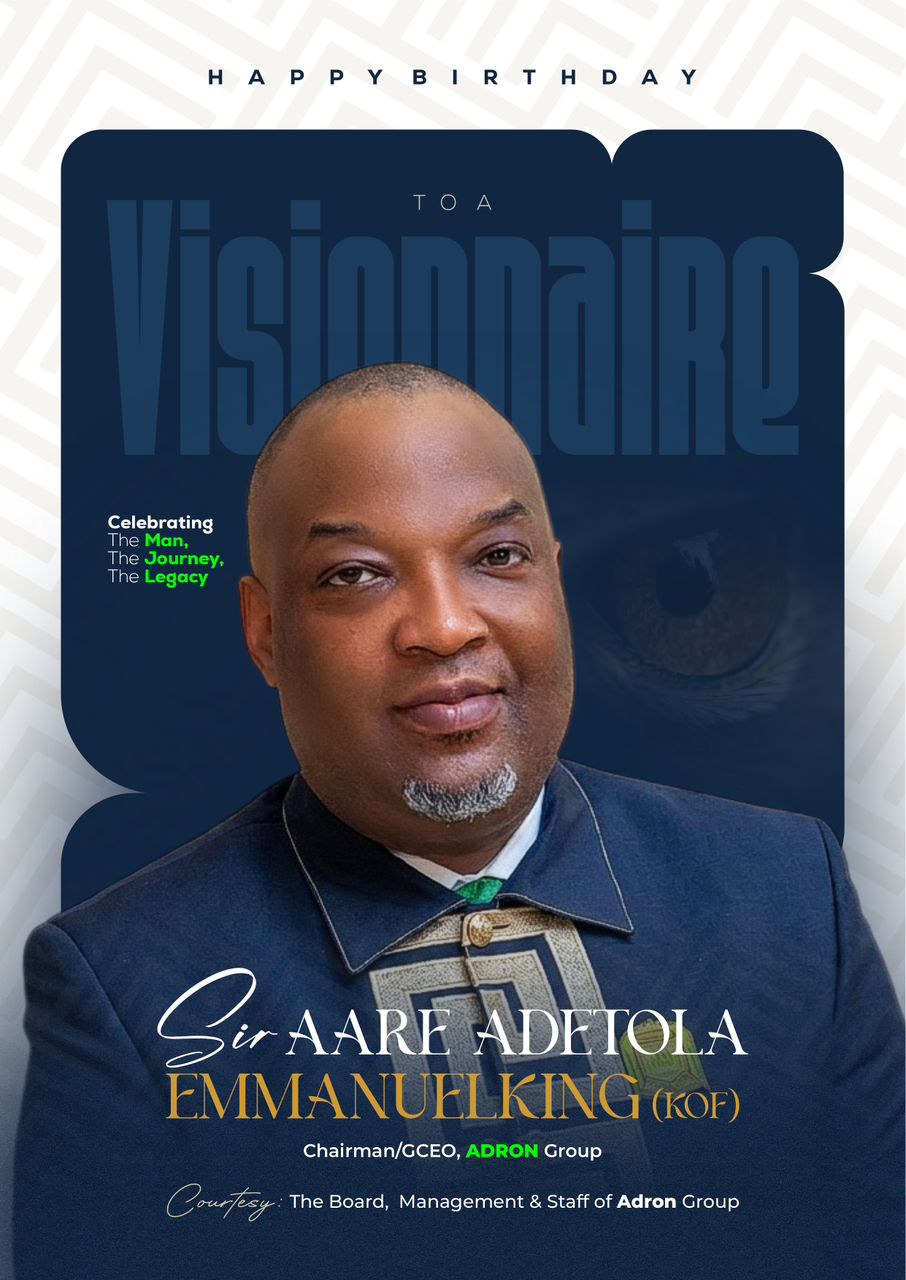
Adron Homes Celebrates Visionary Chairman, Aare Adetola Emmanuel King, at 51
The management and staff of Adron Homes and Properties Limited have joined family, friends, associates, and well-wishers across the globe to celebrate their Chairman and Chief Executive Officer, Aare Adetola EmmanuelKing, as he marks his 51st birthday.

In a statement released by the company, the milestone was described as a celebration of an exceptional leader whose vision, resilience, and entrepreneurial brilliance have not only transformed Adron Homes into a household name in Nigeria’s real estate sector but have also redefined affordable housing across the country.
Under his dynamic leadership, Adron Homes has continued to expand its footprint, delivering value-driven residential solutions while empowering thousands of Nigerians with opportunities for home ownership. His commitment to excellence, innovation, and customer satisfaction has remained the driving force behind the company’s sustained growth and industry leadership.
The statement further highlighted Aare EmmanuelKing’s passion for nation-building and community development, noting his significant contributions to job creation, youth empowerment, and the promotion of socio-economic development through real estate investments.
“As a leader, mentor, and visionary, Aare Adetola EmmanuelKing has consistently inspired a culture of excellence, integrity, and dedication within the organization. His ability to turn bold ideas into reality continues to position Adron Homes as a trailblazer in the industry,” the statement read.
The company expressed profound gratitude for his steadfast leadership and prayed for continued wisdom, strength, and sound health as he embarks on another year of impactful achievements.
As he celebrates his 51st birthday, the entire Adron Homes family proudly honours a man whose legacy continues to shape the future of real estate in Nigeria.
Happy 51st Birthday, Aare Adetola EmmanuelKing!
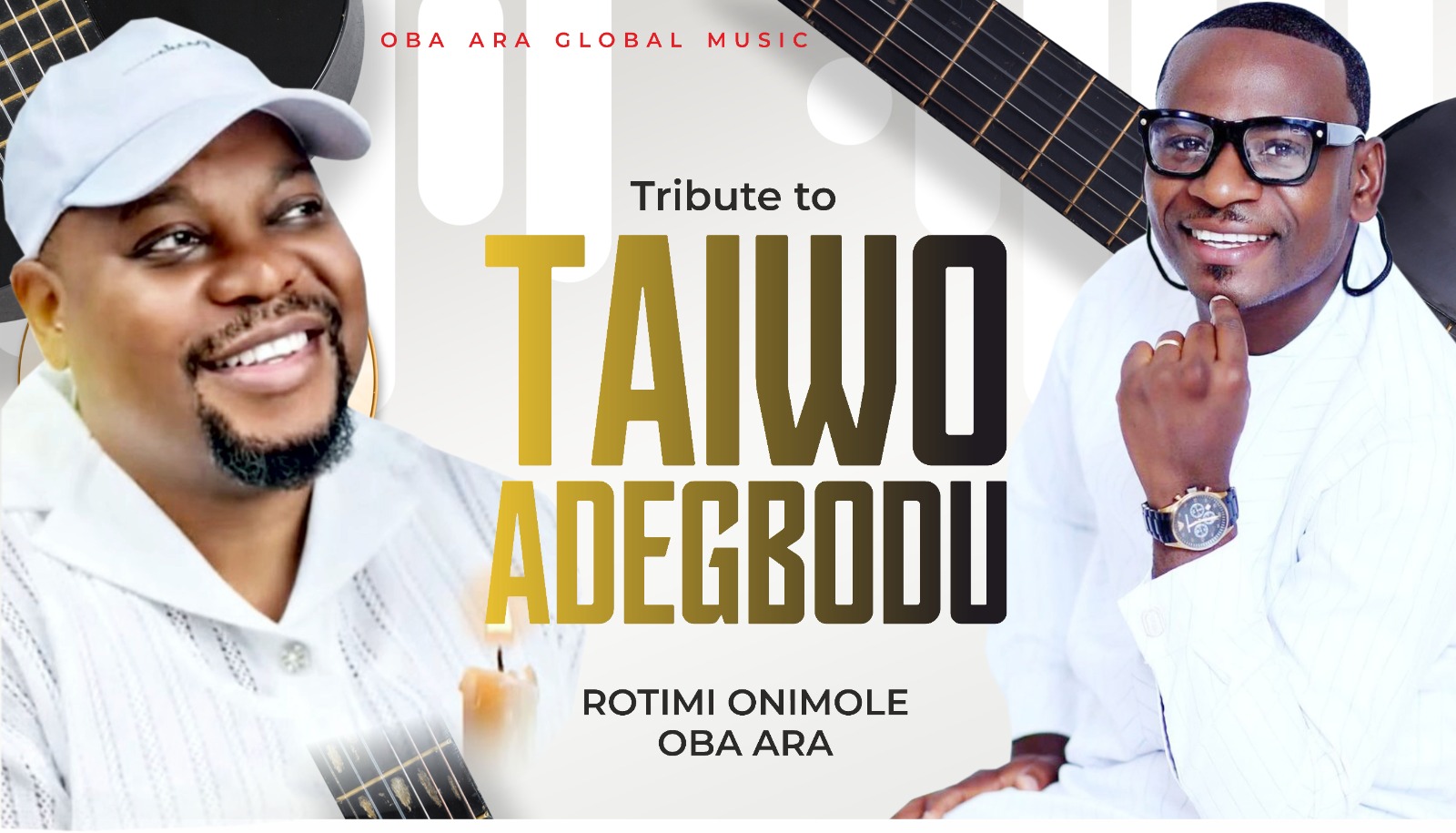
Oba Ara Releases Emotional Tribute to Late Taiwo Adegbodu
Taofik Afolabi
The gospel music community continues to grieve the painful loss of Taiwo Adegbodu, a beloved figure whose sudden departure left a deep void among fans, colleagues, and loved ones. In response to this loss, renowned gospel minister Rotimi Onimole, popularly known as Oba Ara, has released a moving tribute song that captures both the sorrow of the moment and the enduring legacy of the late singer.
Oba Ara, a proud son of Isale Eko, channels raw emotion throughout the song, using heartfelt lyrics and soul-stirring melodies to reflect on his personal connection with Taiwo Adegbodu. In the tribute, he openly expresses how deeply the news of Adegbodu’s passing shook him, describing it as a painful and unexpected loss that is difficult to come to terms with.
The song goes beyond mourning, it celebrates the life, ministry, and impact of Taiwo Adegbodu. Oba Ara highlights the late artist’s dedication to spreading the gospel through music, his inspiring voice, and the spiritual influence he had on many within and beyond Nigeria. Through powerful verses, he paints a picture of a man who lived for God and touched countless lives through his ministry.
Listeners have described the tribute as both comforting and deeply emotional, as it resonates with the collective grief of the gospel music community. It serves as a reminder that although Taiwo Adegbodu is no longer physically present, his music, message, and legacy will continue to live on.
In honoring his late colleague, Oba Ara not only pays his respects but also offers a source of healing for fans and fellow ministers, using music as a tool to process grief and celebrate a life well lived.
celebrity radar - gossips
Buratai, Fagbemi , Shagaya, Olofa, Others Eulogise Olowu Kuta’s Olori On 60th Birthday, Foundation Launch
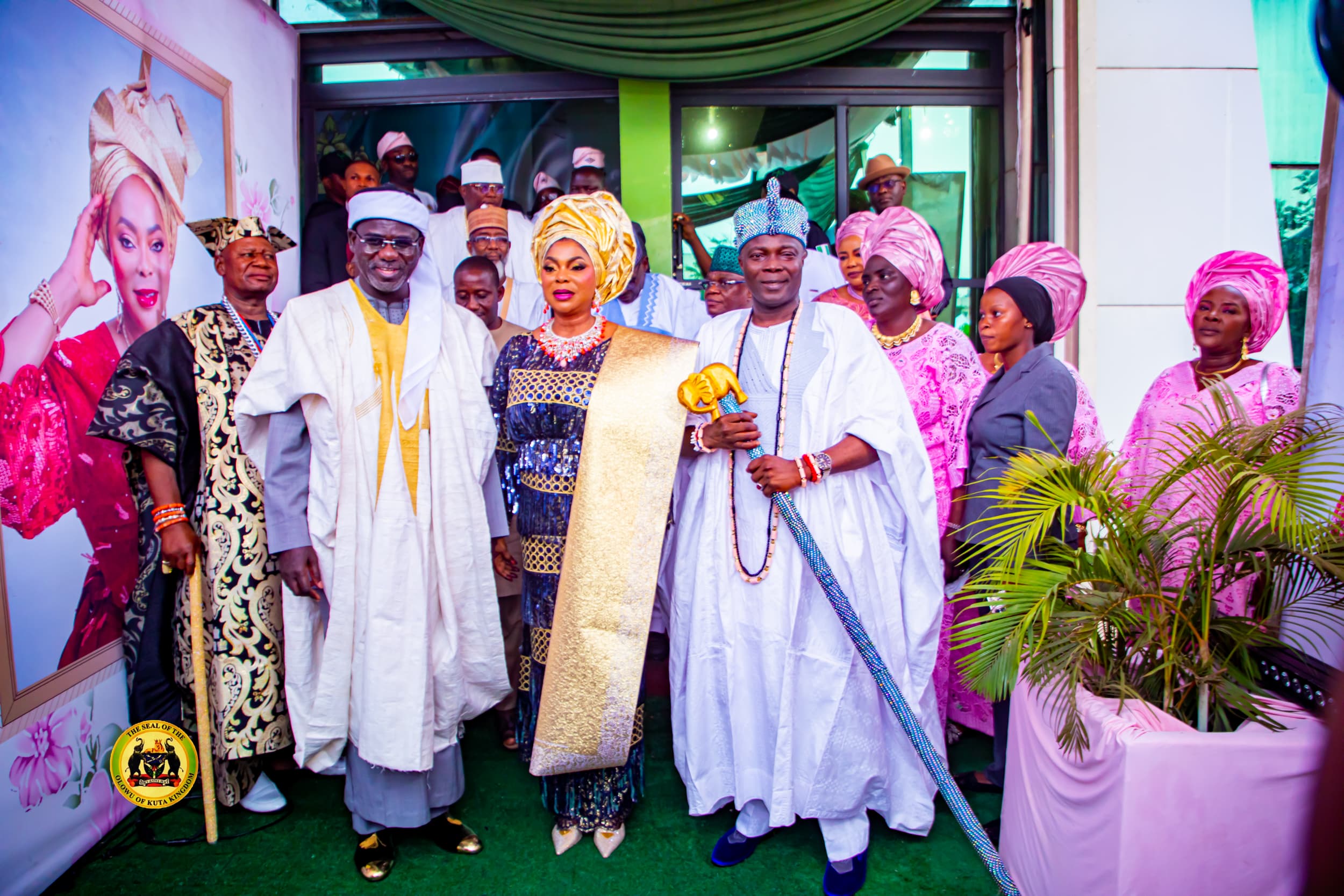
Buratai, Fagbemi , Shagaya, Olofa, Others Eulogise Olowu Kuta’s Olori On 60th Birthday, Foundation Launch
Eminent personalities across the Nigeria stormed the TFK Event Centre, Bala Mohammed Way, Guzape, Abuja, to celebrate the 60th birthday of Olowu Kuta’s Olori, Queen Jumai Amoke and her Foundation Launch on Saturday 28, March 2026.

From former Chief of Army Staff, Lt Gen TY Buratai rtd, to the Minister of Justice and Attorney-General of the Federation, Prince Lateef Fagbemi; Olofa of Offa, HRM Oba Mufutau Gbadamosi. Even top businesswoman and socialite, Chief (Mrs) Bola Shagaya, was in attendance.


Other dignitaries were newly promoted Deputy Inspector-General of Police and former AIG Zone 2 , Lagos , Adegoke Fayoade, Major General Abdumalik, Major General Samuel Adebayo rtd (Fmr CDI);
Major General Anthony Omozoje rtd (Fmr Copp);
Alhaji Tajudeen Owoyemi (Asiwaju of Offa and CEO Radisson Hotel Nigeria;
Dr Waheed Olagunju, former managing director of Bank of Industry, Oniba of Iba, Lagos State, HRM Oba Dr Suleiman Raji ;
Justice Falola, Olu of Ile-Ogbo , Oba Adetoyese amongst many traditional rulers and captains of industry too numerous to mention.
Speaking at the occasion, the Chief Host, Olowu of Kuta, HRM Oba Dr Adekunle Oyelude Makama, CON , Tegbosun iii, who is also the husband of the celebrant commended Queen Jumai for ‘ her slender arms full of kindness’ to establish such humanitarian Foundation, ‘Amoke Children and mother in Need Foundation’ at a time Nigerians are going through economic crisis occassioned by the global meltdown.
Olowu also commended her steadfastness and love for the less privileged and downtrodden.
The monarch refrenced the task before his wife’s humanitarian gesture said her best is yet to come.
” Olori Amoke Jumai, I celebrate you. You will celebrate 70, 80, 90 and continue to shine as you continue to put a smile on people’s faces. I love you, “Olowu Kuta added.
To Lt Gen Buratai, a former army chief and former Nigerian Ambassador to Benin Republic, the reward of hard work is more work.
Buratai, who also doubles as Balogun Agba of Owu Kuta, a chieftaincy title reserved for a generalismo congratulated Queen Jumai for attaining the age of 60 in good health.
The retired army General said he’s not surprised by the turn out of eminent personalities across the country to celebrate the Olowu Kuta’s Olori because she merited it through her hospitality to all, adding that Allah the most merciful, most beneficial would accept all her act of ibadah.
The minister of Justice, Prince Fagbemi, was full of praises for Queen Jumai for deeming it fit to have a place in her heart to accommodate the needy and less privileged in ‘our society.’
Prince Fagbemi urged the guests to contribute generously to support the Foundation in order to continue to alleviate poverty and put a smile on the faces of the people.
” I congratulate you on your 60th birthday and Foundation Launch. I wish you many happy returns of the day and many more fruitful services to the country and motherland”, Prince Fagbemi added.
The celebrant, Queen Jumai who was grining from ear to ear thankfully said she was excited by the turn out and the response of the people to her foundation.
Queen Jumai, however, promised to continue to use her resources and donations received for the good of the needy and less privileged in the society.
” I want to appreciate my own Kabiesi Olofa of Offa , for his presence and im I’m using him as a point of contact to all other Kabiesis present here, the minister of justice and Attorney-General, you’re welcome, sir; Mrs Bola Shagaya, I salute your enterprise, Lt Gen Buratai, I’m grateful, sir; DIG Fayoade, Justice Falola and other dignitaries too numerous to mention, I thank you, all. To my darling husband, Kabiesi Olowu , I thank you immensely for your support. And to my family and friends, I thank you , all. E se pupo!”, she said.


-

 society7 months ago
Religion: Africa’s Oldest Weapon of Enslavement and the Forgotten Truth
-

 news4 months ago
WHO REALLY OWNS MONIEPOINT? The $290 Million Deal That Sold Nigeria’s Top Fintech to Foreign Interests
-

 society6 months ago
“You Are Never Without Help” – Pastor Gebhardt Berndt Inspires Hope Through Empower Church (Video)
-

 celebrity radar - gossips2 months ago
Dr. Chris Okafor Returns with Power and Fire of the Spirit -Mounts Grace Nation Altar with Fresh Anointing and Restoration Grace on February 1, 2026