
Business
The World at a Breaking Point: How Geopolitics, Climate Collapse and Food Insecurity Are Forging a Global Emergency

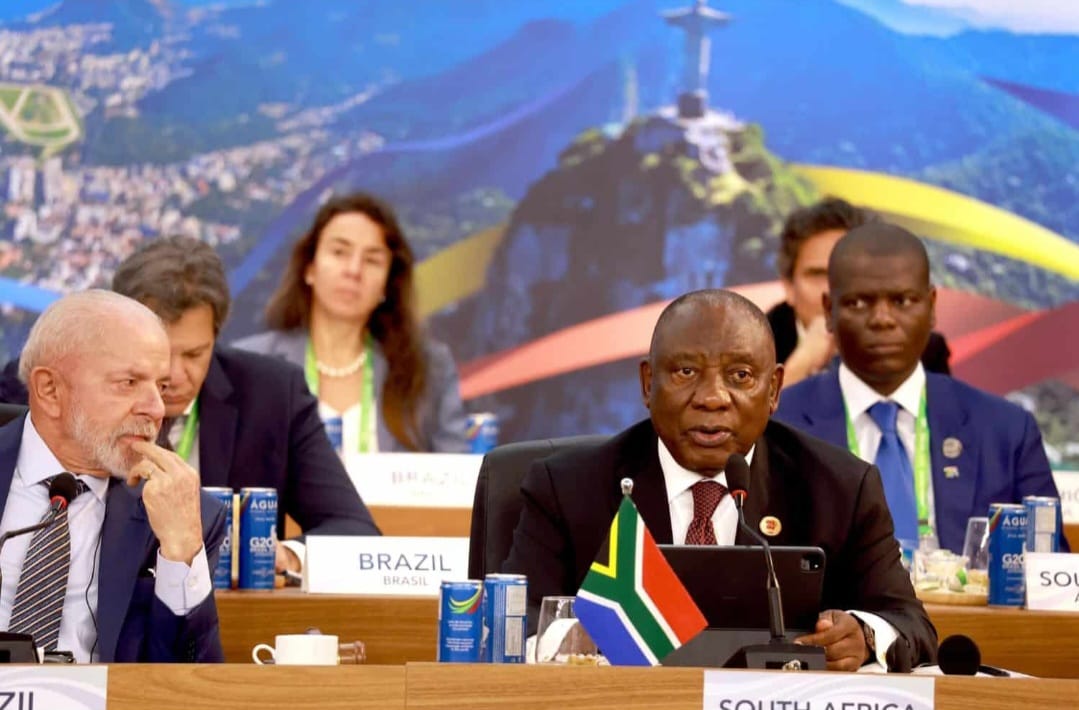
The World at a Breaking Point: How Geopolitics, Climate Collapse and Food Insecurity Are Forging a Global Emergency.
By George Omagbemi Sylvester | Published by saharaweeklyng.com
“Why the G20 can no longer tinker at the edges – it must act boldly and now.”
“GEOPOLITICAL TENSIONS, GLOBAL WARMING, PANDEMICS, ENERGY and FOOD INSECURITY jeopardise our collective future.” Those were not idle words from President Cyril Ramaphosa at the opening of the G20 Leaders Summit in Johannesburg; they were an urgent alarm bell for a global order fraying at the seams. South Africa’s presidency put its finger on what every honest analyst, humanitarian and climate scientist already knows, multiple, interacting crises are converging to create a cascade of risk that threatens lives, economies and the political stability of entire regions.
This is not hyperbole. The world is seeing an uncomfortable and brutal arithmetic: geopolitical conflict and economic fragmentation reduce the flow of goods, cut investment and corrode cooperation; climate change undermines harvests, water supplies and coastal livelihoods; and food insecurity (driven by war, weather shocks and runaway inflation) is spiking in the places least able to cope. The UN-led State of Food Security and Nutrition report and contemporaneous UN analyses show that hundreds of millions remain undernourished and that while global hunger edged down overall, it rose sharply in much of Africa and western Asia. That divergence is lethal and politically combustible.
The mechanics of the crisis are simple and merciless. Geopolitical tensions (trade wars, sanctions, blockades and military conflict) rip apart integrated supply chains that keep food, fertiliser and energy moving. When ports close, fertiliser becomes scarce and grain prices spike. When currencies collapse under the weight of sanctions or poor macroeconomic policy, millions lose the purchasing power to buy calories. At the same time, climate extremes (drought, floods, heatwaves) are reducing yields and increasing volatility in staple food production, consuming resilience faster than it can be rebuilt. The latest scientific syntheses make plain that warming and its knock-on effects are not some distant threat but an immediate multiplier of instability.
Experts who study planetary risk are not whispering, they are shouting warnings. Professor Johan Rockström, a leading authority on planetary boundaries, has repeatedly warned that transgressing critical Earth system thresholds risks irreversible, accelerating changes; the very “TIPPING POINT’S” that would cascade into mass crop failures, ecosystem collapse and mass displacement. “The tipping element that worries me most is coral reef systems,” Rockström has said and that is not just an environmental lament; coral reefs underpin fisheries and coastal protection for hundreds of millions of people. When ecosystems fail, livelihoods vanish overnight.
Humanitarian leaders echo this urgency. At the launch of the 2024–25 global food report, WFP Executive Director Cindy McCain bluntly stated that “one thing is very clear, the world is badly OFF-TRACK in our efforts to achieve Zero Hunger by 2030.” That failure is not a statistic; it is a moral indictment of global choices: insufficient financing, a shortfall of multilateral cooperation, and a failure to insulate vulnerable countries from shocks. The Global Report on Food Crises and related UN assessments put numbers to the suffering: in 2024, crisis-level acute food insecurity affected tens of millions more people than the year before, with conflict and climate extremes the main drivers.
So what does this mean for governance at the G20 and for global leaders who can still shape outcomes? First, the era of incrementalism is over. Patchwork measures and symbolic statements will not stabilise food systems in the face of simultaneous geopolitical and climatic shocks. The G20 must mobilise large, guaranteed financing for adaptive agriculture, targeted social protection, emergency food reserves and rapid fertiliser distribution mechanisms that bypass geopolitical chokepoints. It must also create contingency credit lines and debt-service suspensions that prevent vulnerable states from choosing between feeding their people and paying creditors. The evidence is clear: well-targeted social protection and local agricultural investment are among the most cost-effective ways to reduce hunger and build resilience.
Second, climate action has to be reframed as a security imperative, not merely an emissions accounting exercise. The IPCC’s synthesis makes this plain: unmitigated warming amplifies risks across agriculture, water, health and migration; every fraction of a degree matters for harvest reliability. That is why developing countries must receive immediate and predictable finance for adaptation; not loan-based stopgaps, but grants and concessional financing for climate-smart irrigation, soil restoration, seed systems and disaster-proof storage and transport. Without it, the Global South will continue to pay the price for emissions it did little to cause.
Third, the G20 must reopen the playbook on cooperation. The fragmentation of global governance (boycotts, unilateral sanctions and self-interested blocs) reduces the capacity for joint action where it counts most: humanitarian corridors, collective purchasing of critical inputs, and deconflicted maritime and land corridors for trade. The Johannesburg summit’s adoption of a leaders’ declaration despite diplomatic friction is a positive sign, but words must translate into mechanisms: grain and fertiliser de-risking facilities, coordinated early warning systems, and a G20 compact to stabilise critical commodity markets during geopolitical shocks.
Finally, the moral argument must become operational policy. Development economists remind us that famines and mass hunger are often political choices enabled by governance failures. Nobel laureate Amartya Sen has long argued that democracy, information transparency and entitlements prevent famines; in the present context, global institutions must protect those entitlements across borders by guaranteeing aid flows, supporting local markets and opposing weaponised scarcity. The time for blaming is over; the time for binding, enforceable compacts to protect food systems and essential supplies is now.
This is not a plea for naïve optimism, nor is it a call to surrender national interest. It is a demand for sober realism: the alternative to action is disorder. We are already seeing localized political instability linked directly to food and fuel spikes; we will see more unless the G20 and every major economy treat climate adaptation, food security and conflict de-escalation as a unified emergency program. If multilateral institutions are to retain legitimacy, they must be capable of delivering rapid, predictable assistance precisely when markets and geopolitics fail.
President Ramaphosa was correct to frame the summit around “PEOPLE, PLANET and PROSPERITY.” Though correct framing without decisive instruments is mere rhetoric. The Johannesburg G20 can be remembered either as the moment the world began to stitch back the frayed fabric of global cooperation, or as yet another summit where urgent warnings dissolved into bland communiqués. Policymakers, financiers and civil society now face a stark choice: treat these converging crises as separate policy silos, or confront them together as the systemic emergency they are. History will judge us by which path we choose.
If we have learned anything from the last decade, it is that crises compound. To avoid a future where food shortages, climate collapse and geopolitical fracture become permanent features of the international system, the G20 must act with the scale, speed and solidarity that this moment demands. Anything less is an act of negligence and the price will be paid in human lives and shattered nations.
George Omagbemi Sylvester is a contributing writer. This piece is published by saharaweeklyng.com.





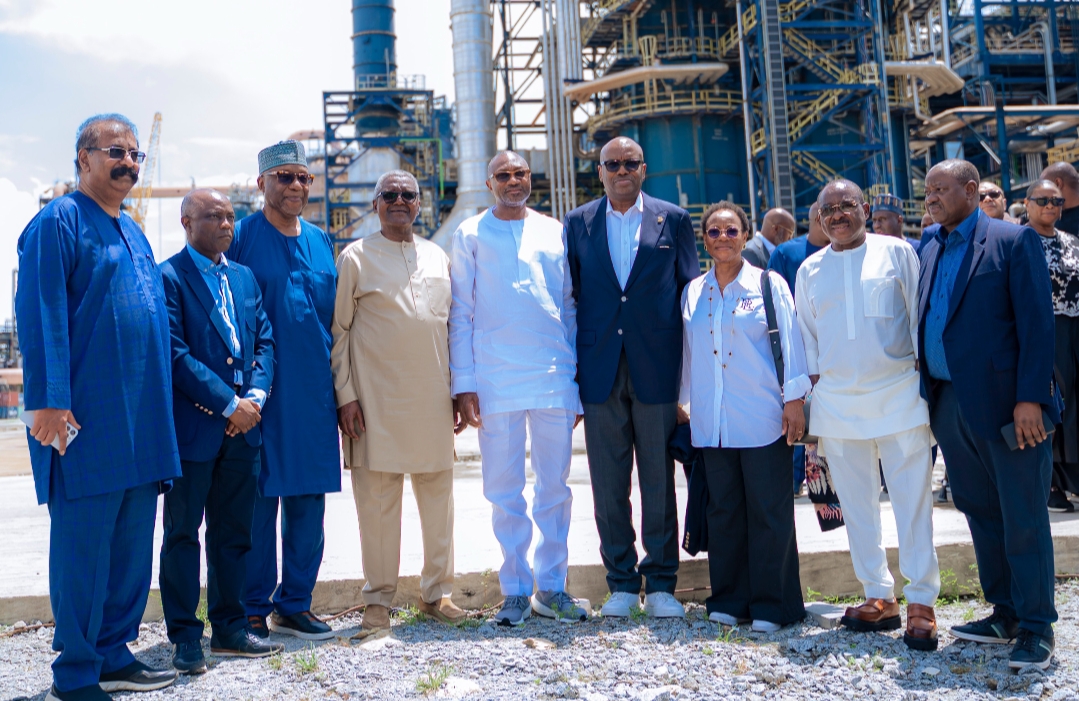
First HoldCo Group Companies’ Boards and Management teams visit Dangote Refinery
…All Nigerians will have access to the Refinery’s IPO and be part-owners-Dangote
Chairman of FirstHoldCo, Femi Otedola, has appealed to the President of Dangote Group, Aliko Dangote, to allocate $100 million worth of shares to him in the proposed listing of Dangote Petroleum Refinery & Petrochemicals. He disclosed that he divested his stake in Geregu Power Plc specifically to position himself for investment in the refinery’s initial public offering (IPO), which he described as a transformative industrial platform helping to free Africa from decades of reliance on imported petroleum products.
Otedola made these remarks during a visit by the FirstHoldCo leadership team to the 650,000 barrels-per-day refinery and Dangote Fertiliser Limited in Ibeju Lekki, Lagos, where he commended Dangote for building the world’s largest single-train refinery and accelerating Africa’s industrial transformation.
“He is a genius and one of the greatest men to emerge from Africa. What he has achieved is helping to liberate the continent from economic dependency and import reliance,” Otedola said. “I have visited this refinery more than 25 times, and I have consistently appealed for $100 million worth of shares during the private placement. That informed my decision to sell my stake in Geregu so I can reinvest in the Dangote Petroleum Refinery.”
Otedola also expressed strong confidence in the Group’s planned expansion of refining capacity to 1.4 million barrels per day, noting that Africa’s growing demand for refined petroleum products clearly supports further investment in domestic refining infrastructure.


In his remarks, President of Dangote Group, Aliko Dangote, assured that the refinery’s IPO would be broadly inclusive, enabling ordinary Nigerians to become part-owners and benefit from its value creation. He emphasised that the Group is committed to democratising access to investment opportunities by opening participation to retail investors across Nigeria and the African continent.
“We want ordinary Africans to participate in the value being created,” Dangote said. “What companies like Amazon and Apple achieved globally in terms of wealth creation is what we seek to replicate in Africa. We want people to invest, grow with us, and share in the prosperity.”
Dangote further disclosed plans for a proposed East Africa refinery with a projected capacity of 700,000 barrels per day, alongside polypropylene and base oil production facilities. According to him, the project could commence within the next three to four years once construction begins. He noted that the initiative was not originally captured in the Group’s Vision 2030 strategy, underscoring the company’s trajectory toward exceeding its long-term growth targets.
Chief Executive Officer of FirstBank Group, Olusegun Alebiosu, described the refinery as a symbol of vision, courage, and industrial ambition capable of inspiring similar investments across Africa.
“If you see this refinery and realise that an individual conceived and delivered a project of this magnitude, already helping to stabilise energy supply across Africa, you cannot help but be inspired,” Alebiosu said. “We have delegates here from the United Kingdom and several African countries who will return home with renewed commitment to building industries that can transform their economies. It is about building Africa together.”
Dangote also highlighted the Group’s sustained leadership across its core businesses over the past five years, including cement operations in 11 African countries, alongside significant investments in refining, petrochemicals, and fertiliser production. He noted that cement capacity has expanded to 55 million tonnes per annum, supported by the development of clinker export terminals to strengthen regional trade.
“We have built businesses that address Africa’s critical needs and create long-term value for the continent,” Dangote said. “Africa must stop exporting raw materials and importing finished goods. That amounts to exporting jobs and importing poverty.”
He added that investor appetite for the refinery’s listing on the Nigerian Exchange has remained exceptionally strong, with demand for the private placement already exceeding $2 billion.
“There is significant interest in both the IPO and the private placement,” he said. “While we are not able to meet all requests, the strong demand reflects investors’ confidence in the refinery and in Africa’s industrial future.”


Globacom Marks 21 Years Of Ojude Oba Festival Sponsorship
Nigeria’s leading indigenous digital solutions company, Globacom, has reaffirmed its support for cultural preservation with the announcement of its headline sponsorship of the 2026 Ojude Oba Festival, marking 21 consecutive years of partnership with the people of Ijebuland.
Speaking at the festival’s pre-event press conference in Ijebu-Ode, Globacom’s representative, Mr. Olumide Orojimi, described the milestone as a testament to the company’s commitment to promoting culture, unity, and national identity.
“This edition represents a defining milestone for us,” he stated. “For twenty-one unbroken years, Globacom has walked this cultural journey with the people of Ijebuland.
“Beyond sponsorship, this partnership symbolises our deep respect for tradition, community, and the enduring spirit of our heritage.
“To commemorate this historic anniversary, we are committed to making this year’s celebration even more colourful, memorable, and impactful for Ijebu sons and daughters across the world.”
He noted that the company’s longstanding collaboration with the festival has helped enhance its profile as a globally recognised cultural and tourism event, adding that culture remains “the invisible architecture of a people’s soul.”
The 2026 edition, themed “Ojude Oba: Celebration of Culture Beyond Borders,” will also honour the legacy of the late Awujale of Ijebuland, Oba Sikiru Kayode Adetona, whose reign significantly shaped the festival’s growth and prominence.
Globacom disclosed that winners in the age-grade competitions will receive cash prizes of ₦750,000, ₦600,000, and ₦500,000 for first, second, and third places respectively. Festival attendees will also have access to a range of Globacom products and devices during the event.
In his remarks, the Coordinator of the Ojude Oba Festival Organising Committee, Chief Fassy Adetokunbo Yusuff, described Globacom as “the Pacesetter in the sponsorship of Ojude Oba” and commended the company for its unwavering support over the past 21 years.
Said he, ” this festival serves as a major catalyst for economic growth and commercial activities throughout Ijebuland, “as he gave kudos to Globacom for raising the bar of the event.
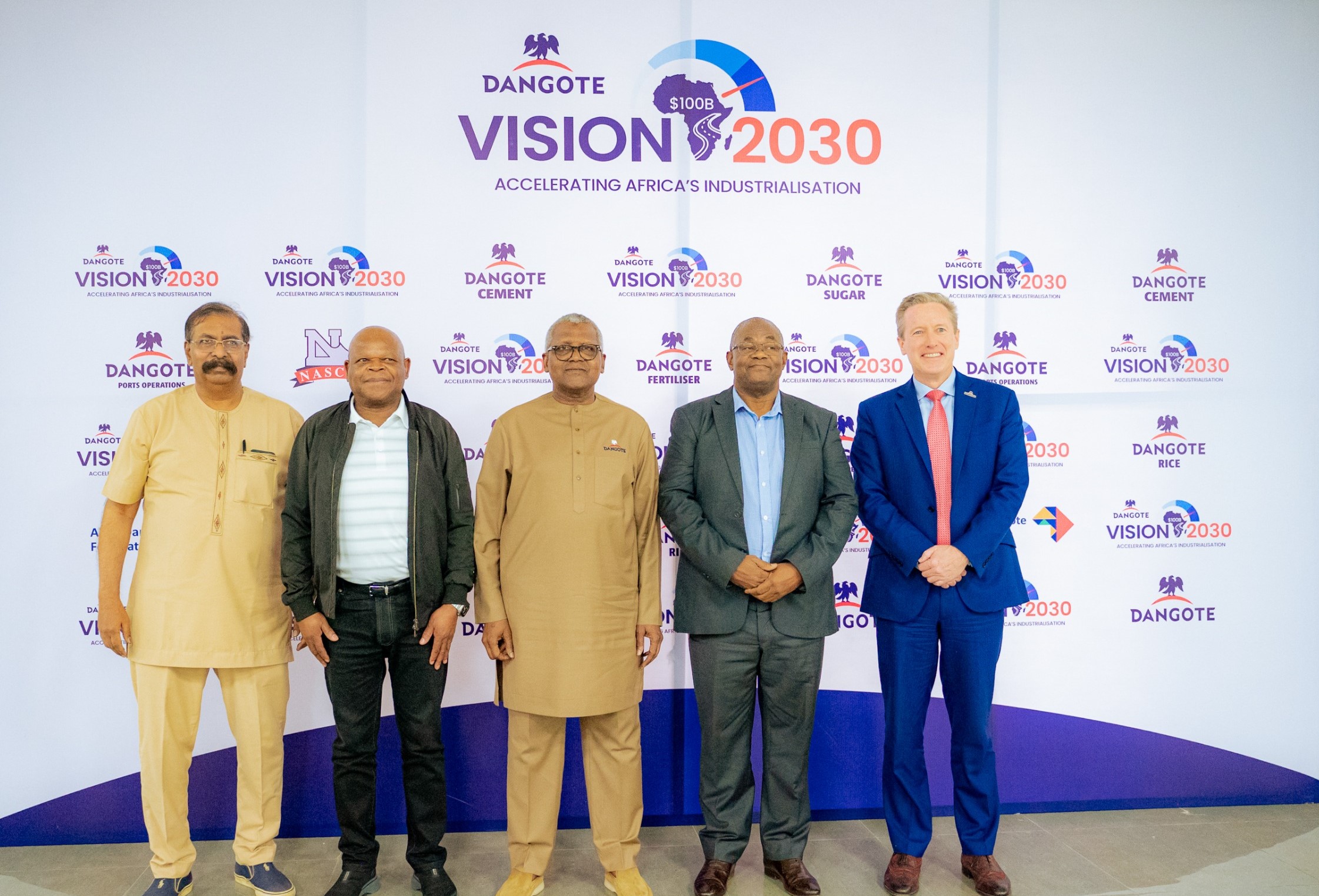
Refinery Listing Will Democratise Africa’s Industrial Prosperity – Dangote
… South African investors eye investment opportunities
President/Chief Executive, Dangote Group, Aliko Dangote, has said the planned listing of the Dangote Petroleum Refinery & Petrochemicals on the Nigerian Exchange is designed to democratise wealth creation and give Africans direct access to participate in the continent’s industrial transformation.
Dangote spoke during the visit of the leadership of South Africa’s Government Employees Pension Fund (GEPF), alongside the Public Investment Corporation and Alterra Capital Partners, to the Dangote Petroleum Refinery & Petrochemicals and Dangote Fertiliser Limited in Lagos. The South African delegation included Chairperson of GEPF, Frans Baleni; Principal Executive Officer of GEPF, Musa Mabesa; Deputy Chairperson of PIC, Mongwena Maluleke; Chief Executive Officer of PIC, Patrick Dlamini; and Managing Partner of Alterra Capital Partners, Genevieve Sangudi.
The visit comes amid rising investor interest in Africa-led industrialisation and long-term infrastructure investments. GEPF is Africa’s largest defined benefit pension fund, managing the retirement and associated benefits of more than 1.8 million public sector workers in South Africa, while PIC is the continent’s largest asset manager.
Speaking on the planned refinery listing, Dangote said Africa’s next phase of economic growth must be anchored on large-scale industrial projects capable of creating jobs, strengthening domestic production capacity and generating broad-based prosperity.
“We are opening the doors for investors to participate directly in Africa’s industrial future and the prosperity it will create,” Dangote said.
According to him, the refinery project reflects the scale of untapped opportunities within Africa’s energy market, particularly as most African countries remain dependent on imported refined petroleum products despite growing industrial demand and rising consumption.
Dangote said the Group’s long-term investment strategy is driven by Africa’s expanding energy needs and the urgent requirement for regional refining capacity capable of serving multiple markets across the continent.
The billionaire industrialist noted that demand for products such as polypropylene, aviation fuel and refined petroleum products has exceeded earlier projections, reinforcing the commercial viability of the refinery and shaping future expansion plans.
“We thought about Nigeria first and then exports, but even with our current production, we are practically living hand to mouth because the market demand is extremely high,” he said.
Speaking after the tour of the Dangote facilities in Ibeju-Lekki, the Chairperson of GEPF, Frans Baleni, said that the refinery stands as evidence that Africa can execute transformational infrastructure projects when backed by visionary leadership, long-term investment and strong technical expertise.
“If it can be done anywhere else in the world, it can be done in Africa,” he said. “This project has shown that the continent is capable of achieving world-class industrialisation at scale.”
Baleni added that the significance of the project extends well beyond Nigeria’s borders. “What has been built here is reshaping how the world should think about African industrial capability — and it should reshape how Africa thinks about itself. For too long, projects of this magnitude have been associated with other parts of the world. The Dangote Refinery and Petrochemicals Complex is a powerful demonstration that, with visionary leadership and long-term capital, that perception no longer holds. This is the kind of African-led industrial scale that institutional investors on this continent should be backing.”
On his part, Chief Executive Officer of PIC, Patrick Dlamini, described the refinery as one of the most transformative industrial projects undertaken on the continent, saying it is reshaping global perceptions about Africa’s industrial capabilities and economic potential.
Quoting former South African President Nelson Mandela, Dlamini said: “It always looks impossible until it’s done. This project is redefining the story of Africa and the possibilities of Africa.”
He said PIC, which manages about $230 billion in assets largely on behalf of South Africa’s Government Employees Pension Fund, is actively seeking long-term partnerships aligned with infrastructure development, industrialisation and economic transformation across Africa.
“PIC’s mandate is to deploy long-term, patient capital in service of industrialisation, infrastructure and economic transformation across Africa,” Dlamini said. “What we have seen today reinforces our conviction that the next chapter of African prosperity will be written through partnership between African institutional capital and African industrial champions. There is real strategic alignment between Dangote’s industrial agenda and how we are positioning our portfolio, and we look forward to exploring meaningful avenues for collaboration.”
According to him, poverty, unemployment and economic exclusion remain major drivers of instability across Africa, making industrialisation and large-scale job creation critical to the continent’s long-term development.


- Strengthening Zambia’s Readiness for Health Emergencies: From Surveillance to Pandemic Preparedness May 21, 2026
- Economic Community of West African States (ECOWAS) Strengthens Regional Integration Through Cross-Border Cooperation Stakeholders’ Meeting in Abuja, Nigeria May 21, 2026
- Senegal Retains Title as Overall Champion at ECOWAS African Wrestling Tournament (TOLAC 14) May 21, 2026
- Eritrea: Diaspora Nationals Celebrate Independence Day Anniversary May 21, 2026
- Seychelles: President Herminie Visits District Administration Office and Library on La Digue May 21, 2026
- Egypt: President El-Sisi Meets Tunisian Minister Mohamed Ali Nafti May 21, 2026
- Joint statement welcoming the Republic of Togo’s announcement on Visa facilitation for African nationals May 21, 2026
- Advancing Regional Political Commitment and Cross Border Coordination for Ebola Preparedness and Response May 21, 2026
- Morocco: African Development Bank commits €200 Million to boost employability and develop future skills May 21, 2026
- Société Nationale des Pétroles du Congo (SNPC) Targets Global Operator Status as African Energy Chamber (AEC) Engagement Reinforces Congo’s Energy Ambitions May 21, 2026
- Strengthening Zambia’s Readiness for Health Emergencies: From Surveillance to Pandemic Preparedness May 21, 2026
- Economic Community of West African States (ECOWAS) Strengthens Regional Integration Through Cross-Border Cooperation Stakeholders’ Meeting in Abuja, Nigeria May 21, 2026
- Senegal Retains Title as Overall Champion at ECOWAS African Wrestling Tournament (TOLAC 14) May 21, 2026
- Eritrea: Diaspora Nationals Celebrate Independence Day Anniversary May 21, 2026
- Seychelles: President Herminie Visits District Administration Office and Library on La Digue May 21, 2026
- Egypt: President El-Sisi Meets Tunisian Minister Mohamed Ali Nafti May 21, 2026
- Joint statement welcoming the Republic of Togo’s announcement on Visa facilitation for African nationals May 21, 2026
-

 news5 months ago
WHO REALLY OWNS MONIEPOINT? The $290 Million Deal That Sold Nigeria’s Top Fintech to Foreign Interests
-

 society3 weeks ago
SOCIAL MEDIA IS NOT A BATTLEFIELD COMMAND – WHY THE NIGERIAN ARMY’S ACTION AGAINST JUSTICE CRACK IS A NATIONAL SECURITY IMPERATIVE
-

 celebrity radar - gossips4 months ago
Dr. Chris Okafor Returns with Power and Fire of the Spirit -Mounts Grace Nation Altar with Fresh Anointing and Restoration Grace on February 1, 2026
-

 celebrity radar - gossips5 months ago
Prophet Kingsley Aitafo Releases 2026 Prophecy: ‘Nigeria Will Rise, but the World Must Prepare for Turbulence’