
society
There Can Be No New World Order Without Women: The Irreplaceable Role of Gender Inclusion in Global Leadership


There Can Be No New World Order Without Women: The Irreplaceable Role of Gender Inclusion in Global Leadership.
By George Omagbemi Sylvester | Published by saharaweeklyng.com
“Why Sustainable Peace, Prosperity, and Progress Depend on Women’s Full Participation in World Affairs.”
There will be no legitimate, enduring or equitable new world order until women are fully part of it. This is not a slogan, a buzzword or a momentary slogan for social media likes; it is an empirical, historical and moral truth. For too long, discourses on global governance, peacebuilding, economic reform, climate action and technological innovation have marginalized women and relegating half of humanity to the sidelines of decision-making. The evidence is overwhelming: nations, institutions and global systems that elevate women to positions of leadership and influence outperform those that do not. To reimagine and rebuild a world order in the 21st century (one that is just, resilient and prosperous for all) women’s voices must not only be included but central.

Why Women Matter in Global Leadership. At its core, the call for women’s inclusion in world affairs rests on justice and merit. Women make up approximately 50% of the global population yet remain underrepresented in political offices, corporate boardrooms, peace negotiations and diplomatic arenas. According to the United Nations, women comprise only 26.1% of all national parliamentarians worldwide with only 22 countries having women as heads of state or government as of 2025. These figures reveal not just a gender gap but a leadership deficit that compromises the quality of global governance.
Renowned gender scholar Dr. Mona Lena Krook of Rutgers University asserts: “Inclusion is not a token gesture. It is fundamental to legitimacy, to accountability, and to a system that reflects the peoples it serves.”
This assessment underscores a simple truth: if half the world lacks equal access to power, systems claiming to serve “all humanity” are inherently flawed.

Women and Peace: A Case Study in Effectiveness. Nowhere is the case for women’s inclusion more compelling than in peace and security. The conventional approach to resolving conflict (historically dominated by male soldiers, politicians and diplomats) has often failed to produce durable peace. In contrast, research by the Council on Foreign Relations and UN Women has shown that peace processes with meaningful female participation are 35% more likely to last at least 15 years. When women are on peace negotiation teams, agreements are more likely to address community needs like justice mechanisms, education and social reintegration.
Nobel Peace Laureate Leymah Gbowee, who led women’s peace movements in Liberia that helped end civil war in 2003, famously said: “If women stop, war stops.”
Her words are not hyperbolic; they reflect the reality that women’s perspectives prioritize community well-being, reconciliation and rebuilding, dimensions too often ignored in male-centered diplomatic strategies.
Economic Growth Depends on Women’s Inclusion. A new world order worthy of the name cannot succeed without addressing economic disparities that sideline women. The McKinsey Global Institute reported that advancing gender equality could add $12 trillion to global GDP by 2025, a figure larger than the entire economy of Germany and Japan combined. This is not charity; it is smart economics.
Investments in women’s education, workforce participation and entrepreneurship yield extraordinary returns. Countries that bridge the gender employment gap experience higher productivity, innovation and economic stability. When women earn and control financial resources, they reinvest a significant portion in their families and communities, creating a multiplier effect that benefits society at large.
World Bank Senior Economist Mariana Mazzucato explains: “Equitable economies are not just morally right, they are more dynamic, more resilient and more innovative.”
The logic is undeniable. Marginalizing women in global economic systems is not merely unjust but it is self-defeating.

Women at the Forefront of Climate Action. The climate crisis demands urgent, coordinated global action. Yet many international climate negotiations and policy decisions have been dominated by male leaders with limited engagement of women’s voices. A growing body of research, including work from the United Nations Framework Convention on Climate Change (UNFCCC), reveals that women are disproportionately affected by climate change (especially in vulnerable regions) yet they also offer innovative and sustainable solutions.
Communities led by women demonstrate higher levels of environmental protection and sustainable resource management. In rural Africa and Asia, women’s traditional ecological knowledge has preserved water systems, food supplies and land fertility, long before climate change became a global term.
As environmental justice advocate Mary Robinson has stated: “Climate justice is gender justice.”
Recognizing women as leaders in climate policy is not optional; it is essential for the survival of communities and ecosystems worldwide.
Breaking Barriers: Women in Global Governance. A true new world order must transform global governance structures and from the United Nations Security Council to international financial institutions like the World Bank and International Monetary Fund. These institutions shape global policy but historically skew male in leadership and perspective.
The UN’s own Sustainable Development Goals (SDGs) highlight gender equality as a standalone goal (SDG 5) and as a cross-cutting priority across all goals. This reflects a growing recognition that gender equality is not a “women’s issue,” but a development imperative linked to poverty reduction, education, health outcomes and political stability.
Despite international commitments, progress remains uneven. Structural barriers (from discriminatory laws to cultural norms) continue to restrict women’s opportunities. Closing this gap requires proactive policies like gender quotas, equal pay legislation, reproductive rights protections and expanded access to education and healthcare.
International relations scholar Dr. Anne-Marie Slaughter has argued: “Diversity in leadership is not a luxury, it is a strategic necessity.”
Her assertion captures the stakes: when global leadership reflects diversity, societies benefit from expanded creativity, empathy and strategic vision.
Addressing Criticisms and Misconceptions. Some detractors argue that emphasizing women’s inclusion undermines meritocracy or distracts from “universal” goals. This is a false dichotomy. Inclusion and excellence are not mutually exclusive. On the contrary, a system that widens the talent pool inherently raises standards of competence and innovation.
Others claim that gender parity is a Western agenda imposed on other cultures. Yet the desire for dignity, fairness and opportunity transcends borders. Women in every region (from Asia to Africa, the Middle East to Latin America) have led movements for freedom, justice and progress. Their voices are not imported; they are organically rooted in their communities.
The Path Forward: Toward a Truly Inclusive World Order. To build a new world order that is equitable, sustainable and resilient, we must champion transformational changes:
Legal Reforms: Eliminate discriminatory laws that limit women’s political participation, property rights and economic freedom.
Education Access: Ensure girls receive quality education from primary to tertiary levels and because education is the foundation of empowerment.
Political Representation: Implement gender quotas and mentorship programs to accelerate women’s entry into parliaments, cabinets and diplomatic corps.
Economic Inclusion: Support women entrepreneurs, guarantee equal pay for equal work, and invest in childcare and family-friendly policies.
Leadership Training: Expand forums that prepare women for leadership and in technology, science, diplomacy and international organizations.
Cultural Transformation: Challenge stereotypes and norms that limit women’s roles, fostering societal attitudes that value women’s contributions equally.
Closing Perspective: A New World Order That Honors Women’s Power. The call to place women at the center of global decision-making is not merely rhetorical and it is rooted in evidence, history and justice. A world order that excludes women is inherently crippled: it lacks the full spectrum of human talent, experiences and wisdom needed to confront the defining challenges of our time.
As former UN Secretary-General Ban Ki-moon famously declared: “There is no peace without development, no development without peace and neither can be achieved without women’s full and equal participation.”
Let these words guide us. The future we seek (peaceful, just, prosperous) demands that women are not just participants but equal architects of the world we build together.
There will never be a new world order until women are part of it. And until that vision becomes reality, the promise of our shared humanity remains unfulfilled.





society
GEN CHRISTOPHER GWABIN MUSA SUPPORT INITIATIVE EXTENDS WARM BIRTHDAY FELICITATIONS TO PRESIDENT TINUBU ON 74TH BIRTHDAY
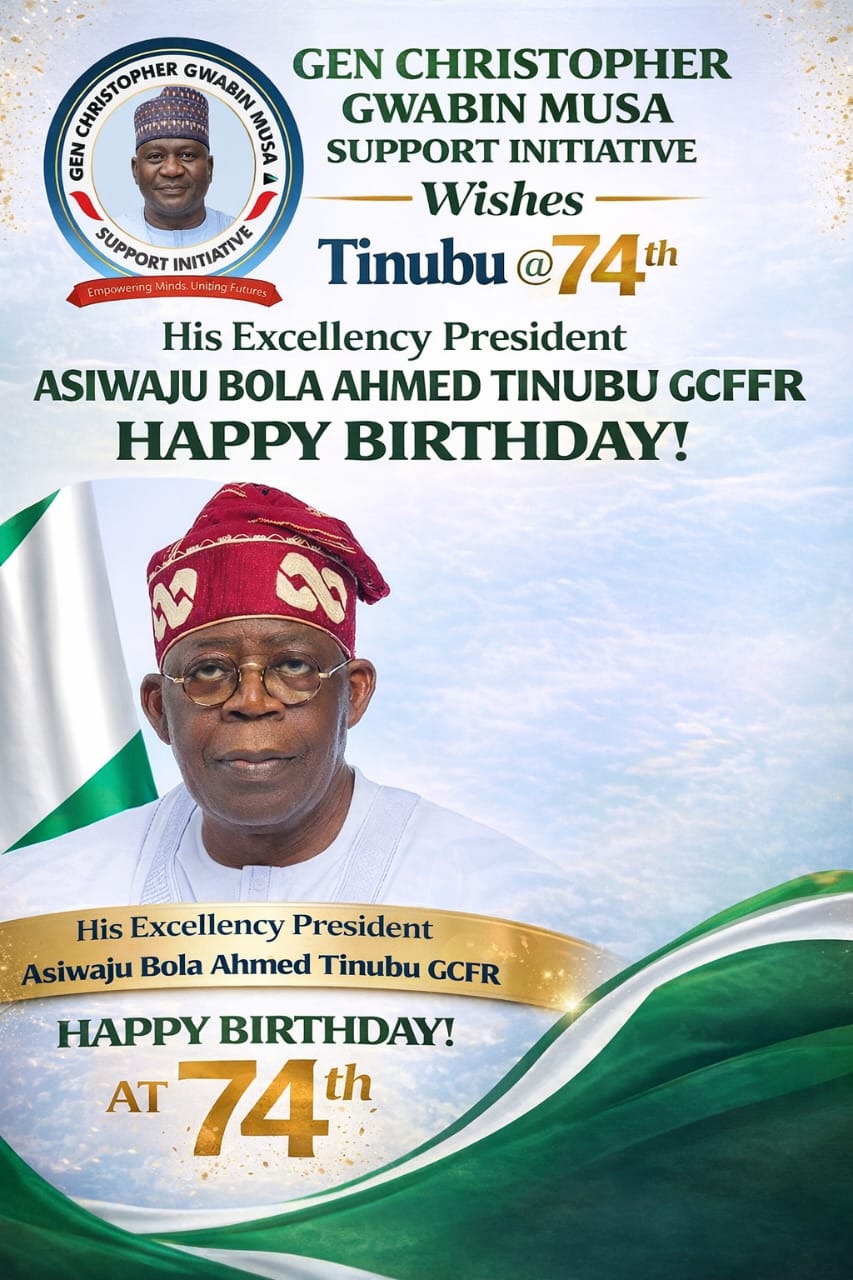
GEN CHRISTOPHER GWABIN MUSA SUPPORT INITIATIVE EXTENDS WARM BIRTHDAY FELICITATIONS TO PRESIDENT TINUBU ON 74TH BIRTHDAY
The Gen Christopher Gwabin Musa Support Initiative has extended heartfelt congratulations to His Excellency President Asiwaju Bola Ahmed Tinubu, GCFR, on the occasion of his 74th birthday.
In a statement released to the press, the Initiative conveyed warm wishes for the President’s personal well-being and for his continued leadership of the nation. The statement, signed by the Convener, Ibrahim Dahiru Danfulani, Sadaukin Garkuwan Keffi/Betara Biu, expressed hope that the coming year would bring the President “renewed strength and more wisdom in guiding the nation.”
The statement further noted that the Grand Patron of the Initiative, His Excellency Gen Christopher Gwabin Musa, OFR, Minister of Defence of the Federal Republic of Nigeria, joined in celebrating the milestone. It added, “Wishing Your Excellency continued good health, vitality, and determination as you lead the country towards greater unity and progress.”
The message underscores support for President Tinubu’s administration and its national objectives, marking the birthday as an occasion to reaffirm commitment to the nation’s unity and advancement under his stewardship.
society
Dominion City to Host Global Camp Meeting, “2 Nights of Glory” 2026 in Lagos, Enugu …Calls for Moral Renewal
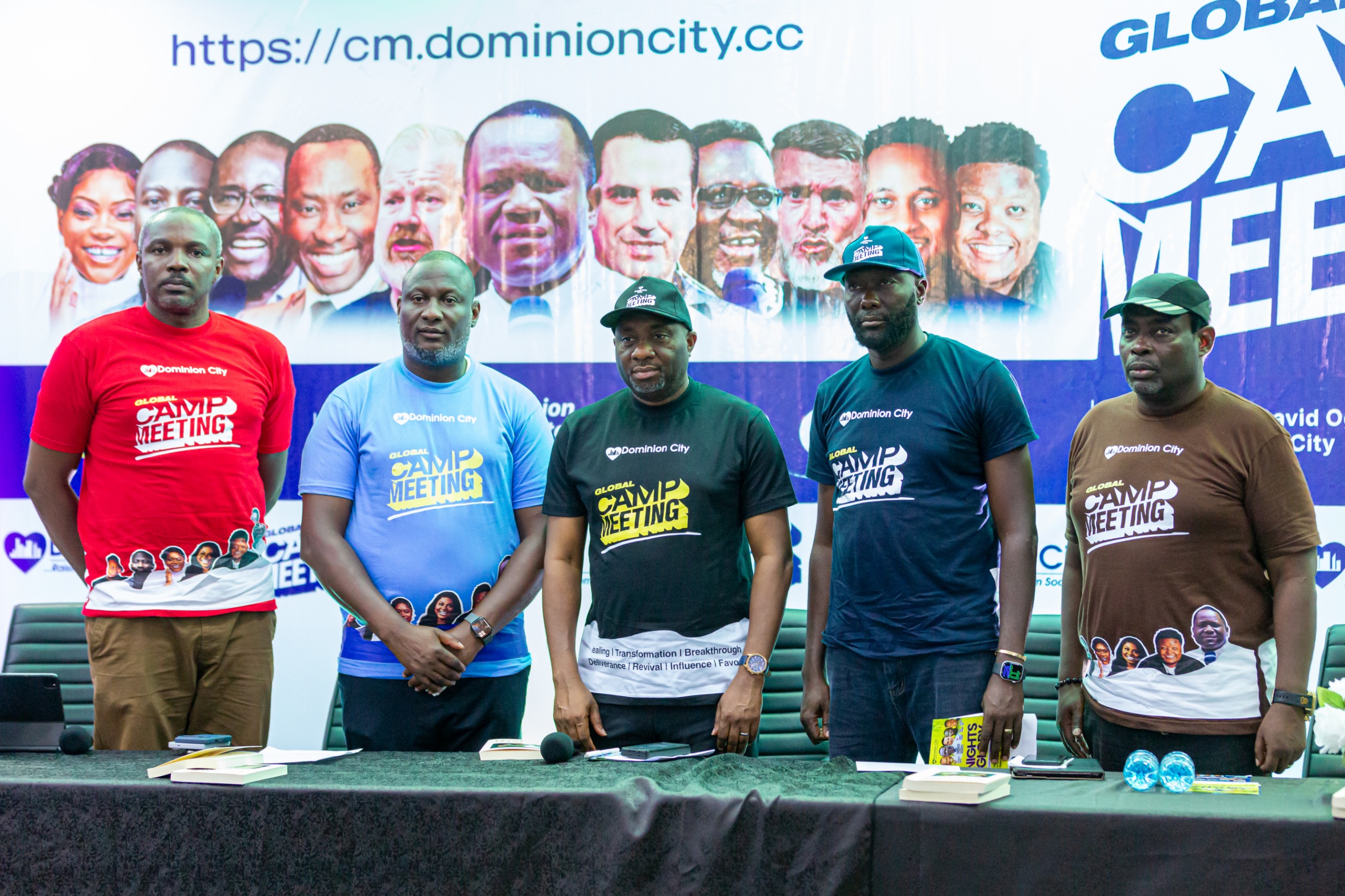
*Dominion City to Host Global Camp Meeting, “2 Nights of Glory” 2026 in Lagos, Enugu
…Calls for Moral Renewal
Lagos – Dominion City has announced plans to host its annual Global Camp Meeting alongside a special “2 Nights of Glory” gathering in April 2026, with events scheduled to be held simultaneously in Lagos and Enugu.
The week-long programme is expected to draw tens of thousands of participants onsite and millions of virtual attendees from across the globe.
The Global Camp Meeting will run from Wednesday, April 1 to Monday, April 6, featuring daily sessions at 8:00 a.m. and 5:00 p.m. The “2 Nights of Glory” is slated for Friday, April 3 and Saturday, April 4 at the Golden Heart Place, Km 22 Lekki-Epe Expressway, beside Lagos Business School, Ajah, Lagos.
Organised by Dominion City, a global church focused on raising transformational leaders, the conference will centre on revival, spiritual renewal, and practical teachings. This year’s theme, “Redigging the Wells of Our Fathers,” underscores a call to return to foundational values and principles.
Speaking ahead of the event, Nobbert Onaga, President, Golden Heart Foundation and Senior Pastor, DC Lagos & Europe, emphasised the need for moral reawakening as a pathway to national transformation. He described the Church as “the pillar and foundation of truth,” noting that the conference aims to confront moral decline and restore core values within society.
“We are going back to foundational truths that established the Church. These truths will help repair societal damage and reposition the Church as a source of hope and light,” Onaga said.
Also speaking, Shola Olapade, Senior Pastor of Dominion City Headquarters, highlighted the Church’s role in addressing ethical and cultural challenges, particularly among young people. He added that the programme would go beyond spiritual teachings to include sessions on artificial intelligence, innovation, business, media, arts, and career development.
“We are equipping people not just spiritually, but with relevant 21st-century skills to thrive in today’s world,” Olapade noted.
The conference will feature teachings and ministrations from a lineup of international ministers, including Dr. David Ogbueli, Dr. Charles Ndifon, Andres Bisonni, Pastor Randy Mitchell, Apostle Ikechukwu Peter Nnajiofor, Dr. Ferdinand Nweke, Apostle Ben Hanyani Ndobe, Evangelist Dan Scott, and Dr. Chiefo Ejiofobiri.
Music ministrations will also be led by notable gospel artists such as Grace Idowu, Rhema Onuoha, Once More Six, David Nkennor, Anthony Kani, and GUC.
Organisers disclosed that over 30,000 participants are expected to attend in person, with free transportation provided from designated locations across Lagos to ease access. In addition, free medical services will be offered daily, building on previous outreaches that benefited over 1,700 people.
To ensure safety and order, more than 200 traffic marshals will be deployed in collaboration with relevant authorities.
Beyond its spiritual impact, organisers project that the event will stimulate local economic activity across hospitality, transportation, and retail sectors.
The Global Camp Meeting remains a key platform for spiritual impartation, leadership development, and societal transformation, aligning with Dominion City’s mission to equip believers to influence their communities positively.
Participation is open to the public, with registration available online for both physical and virtual attendance. //END.//
*PHOTO CAPTIONS:*
L-R: Dr. Godwin Efobi, Head, Medical Team, Dominion City Headquarters (DCHQ); Pastor Shola Olapade, Senior Pastor, DCHQ; Pastor Nobbert Onaga, President, Golden Heart Foundation and Senior Pastor, DC Lagos & Europe; Pastor Chuks Anochie, Head of Security and Traffic Control, Dominion City Headquarters (DCHQ), Camp Meeting 2026; Pastor Josh Tim Vaduchi, Head of Event & Programmes, DCHQ, during the press briefing of the forthcoming Global Camp Meeting, held the weekend of 2026 at the Dominion City Headquarters (DCHQ), Lagos.
L-R: Pastor Chuks Anochie, Head of Security and Traffic Control, Dominion City Headquarters (DCHQ), Camp Meeting 2026; Pastor Shola Olapade, Senior Pastor, DCHQ; Pastor Nobbert Onaga, President, Golden Heart Foundation and Senior Pastor, DC Lagos & Europe; Dr. Godwin Efobi, Head, Medical Team, DCHQ; and Pastor Josh Tim Vaduchi, Head of Event & Programmes, during the press briefing of the forthcoming Global Camp Meeting, held over the weekend in 2026 at the Dominion City Headquarters (DCHQ), Lagos.
society
Oloworo of Oworosoki Kingdom, Oba Babatunde Saliu, Felicitates President Bola Ahmed Tinubu at 74
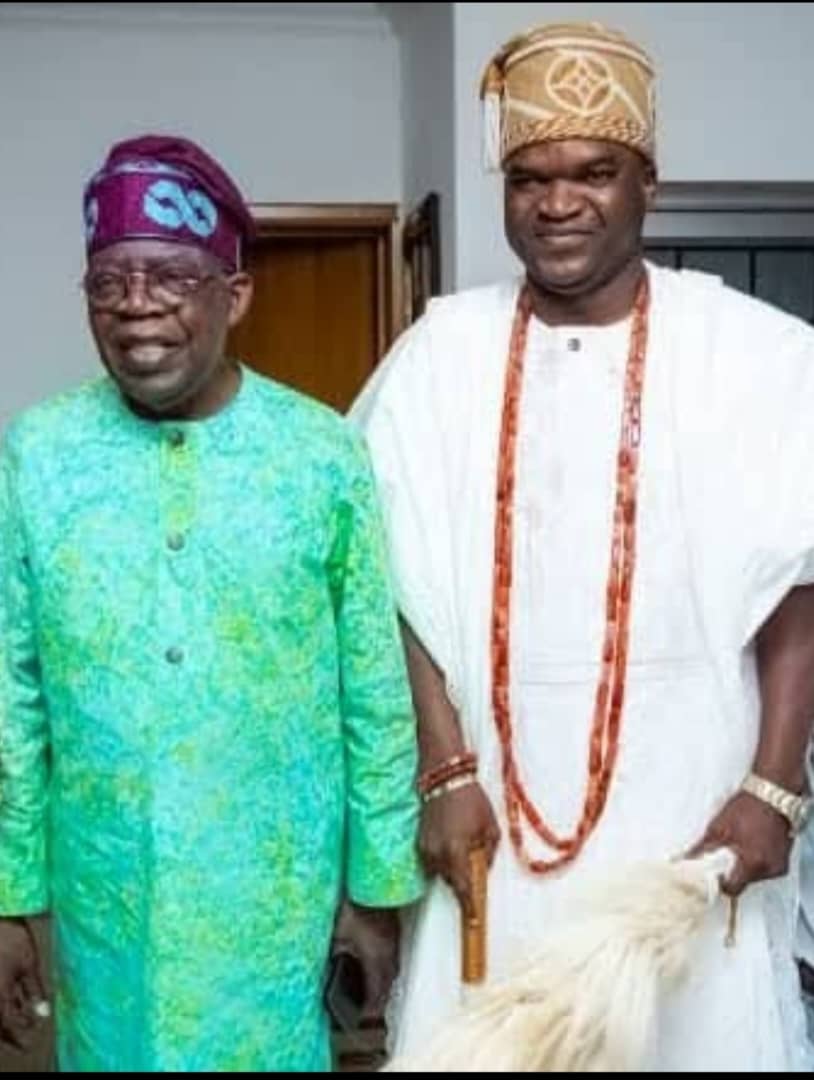
Oloworo of Oworosoki Kingdom, Oba Babatunde Saliu, Felicitates President Bola Ahmed Tinubu at 74
By Adeyemi Obadimu
The Oloworo of Oworosoki Kingdom, His Royal Majesty, Oba Babatunde Saliu, Elebo II, has extended warm felicitations to the President of the Federal Republic of Nigeria, Bola Ahmed Tinubu, GCFR, on the occasion of his 74th birthday.
In a goodwill message issued from his palace, the revered monarch described President Tinubu as a visionary statesman, a courageous reformer, and an indefatigable democrat whose lifelong commitment to nation-building continues to shape Nigeria’s progress.
Oba Babatunde Saliu praised the President’s unwavering dedication to public service, noting that his leadership has ushered in a new phase of economic reform, infrastructural renewal, and institutional strengthening across the country.
According to the monarch, the President’s Renewed Hope Agenda has begun yielding tangible relief and renewed confidence among citizens, reflecting his determination to reposition Nigeria for sustainable growth and prosperity.
“President Bola Ahmed Tinubu has demonstrated exceptional resilience, strategic foresight, and a deep love for Nigeria. His administration’s bold initiatives are laying the foundation for long-term national transformation. At 74, he remains steadfast in his resolve to build a stronger, more united, and economically vibrant nation,” the monarch stated.
Oba Babatunde further commended the President’s legacy of leadership, describing him as a bridge-builder, a mentor to many leaders, and a symbol of democratic stability. He acknowledged the President’s decades of sacrifice and contribution to the advancement of democracy in Nigeria.
On behalf of the Oworosoki Kingdom, the royal father prayed for divine wisdom, sound health, and renewed strength for the President to successfully complete the noble reforms and developmental strides he has embarked upon for the benefit of all Nigerians.
“As Your Excellency marks 74 remarkable years, we pray that Almighty God grants you long life, continued wisdom, and the fortitude to steer our great nation toward greater heights. May your days be filled with strength and grace as you continue to serve Nigeria with distinction,” Oba Babatunde Saliu added.
President Bola Ahmed Tinubu clocks 74 as a leader whose enduring influence, bold reforms, and steadfast patriotism remain central to Nigeria’s ongoing journey of national renewal.


-

 society6 months ago
Religion: Africa’s Oldest Weapon of Enslavement and the Forgotten Truth
-

 news4 months ago
WHO REALLY OWNS MONIEPOINT? The $290 Million Deal That Sold Nigeria’s Top Fintech to Foreign Interests
-

 society6 months ago
“You Are Never Without Help” – Pastor Gebhardt Berndt Inspires Hope Through Empower Church (Video)
-

 celebrity radar - gossips2 months ago
Dr. Chris Okafor Returns with Power and Fire of the Spirit -Mounts Grace Nation Altar with Fresh Anointing and Restoration Grace on February 1, 2026