
Business
Time is of the essence,” the group stressed. “Every delay compounds the hardship and weakens faith in the system.”

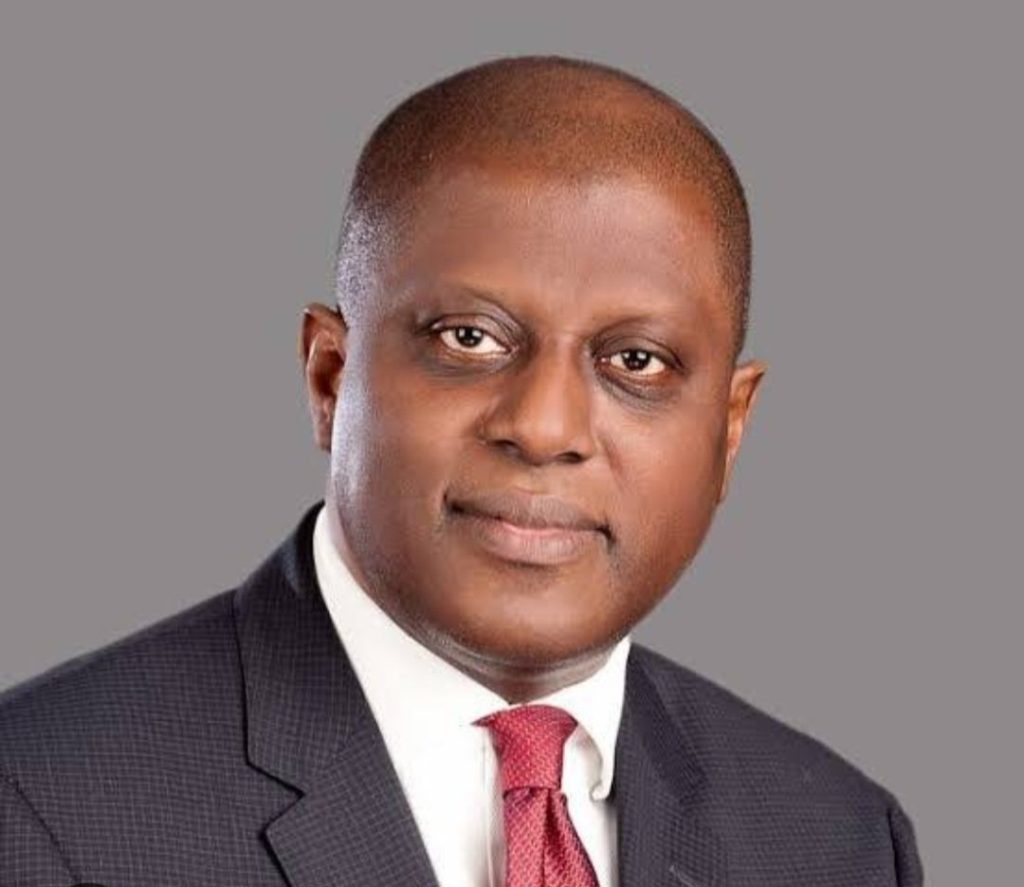
Trapped Funds, Fading Trust: Heritage Bank Depositors Demand Urgent CBN Bailout
By Ifeoma Ikem
Nearly two years after the collapse of Heritage Bank, thousands of depositors say they are still living with the financial and emotional aftershocks of a liquidation they insist was never meant to end this way. What began as regulatory reassurances has, in their view, spiralled into prolonged uncertainty, partial payments, and mounting hardship, thus prompting a fresh and urgent appeal to President Bola Tinubu and the Governor of the Central Bank of Nigeria, Olayemi Cardoso, to intervene decisively.

In a strongly-worded statement issued in Lagos, the depositors framed their demand not simply as a financial request but as a test of the country’s commitment to safeguarding public trust in its banking system. They are asking the Central Bank to provide immediate bailout funds to the Nigeria Deposit Insurance Corporation (NDIC) to enable full reimbursement of all affected customers, arguing that the pace of recovery so far has been painfully slow and grossly inadequate.
According to them, while insured deposits up to ₦5 million were covered under statutory provisions, payments beyond that threshold (known as liquidation dividends) have amounted to just 14.2 percent of their total balances in nearly two years. The first tranche of 9.2 percent was paid in April 2024. A second installment of 5 percent followed recently. For many, that has been the extent of relief.
At this rate, they argue, the mathematics simply does not inspire confidence.
“These are not abstract figures,” one depositor said. “They represent school fees, retirement savings, working capital for small businesses, cooperative funds, and life savings built over decades.” Among those affected, they say, are civil servants, retirees, entrepreneurs, and families whose livelihoods have been upended by the prolonged wait.
What deepens their frustration, they contend, is the memory of official assurances given before the bank’s collapse. When signs of distress first emerged, depositors recall that the Central Bank publicly and privately reassured customers that their funds were safe and that the institution remained sound. Those assurances, they say, influenced their decision not to withdraw their savings at the time.
The eventual liquidation therefore came as a shock, both financially and psychologically. “We trusted the regulator,” the group noted. “Between the Central Bank and the NDIC, we were told our funds would be repaid 100 percent.”
It is that promise, they argue, that must now be honored in full.
While acknowledging that the NDIC has begun verification and payment processes, the depositors insist that the agency lacks the financial capacity to conclude the exercise within a reasonable timeframe. They point to the scale of total deposits — estimated at about ₦650 billion — and the fact that only around ₦54 billion has been paid out in 18 months. In their view, that ratio raises serious questions about whether the liquidation process, left solely to asset recovery, can realistically guarantee timely reimbursement.
The group also referenced previous instances in which the Central Bank stepped in to stabilize distressed institutions, arguing that regulatory precedent supports intervention. They cited the reported ₦460 billion facility linked to Heritage Bank before its collapse, as well as substantial financial support extended to other banks to facilitate mergers or recapitalization. In one example, they noted, a ₦700 billion support package reportedly enabled a struggling bank to qualify for a merger, with favorable repayment terms that included a five-year moratorium and extended repayment window at below-market interest rates. They also referenced regulatory intervention in Keystone Bank as evidence that decisive action is possible when systemic stability is at stake.
Given that history, they say, it is difficult to understand why a direct bailout to protect depositors is not being prioritized.
Beyond financial restitution, the depositors are also calling for accountability. They demanded a thorough investigation and immediate prosecution of any individuals or entities found culpable of asset diversion, mismanagement, or actions that may have contributed to the bank’s collapse. To them, justice is as important as compensation.
They argue that without visible consequences, public confidence in the banking system could erode further. “The integrity of the financial sector rests not only on liquidity, but on accountability,” one stakeholder said. “If people believe that funds can disappear without consequences, trust collapses.”
The broader concern, they warn, is systemic. Nigeria has not witnessed a full commercial bank liquidation in over two decades, as troubled institutions have typically been resolved through mergers, acquisitions, or regulatory restructuring. Many depositors therefore assumed that a similar pathway would apply in this case. Instead, they say, liquidation has exposed gaps in depositor protection mechanisms.
They also question the broader insurance framework, noting that banks have paid premiums to the NDIC for years precisely to safeguard depositors. If recovery remains this limited, they argue, the protective purpose of that insurance scheme comes under scrutiny.
For small business owners, the implications have been severe. Some report shutting down operations due to frozen capital. Others speak of properties sold under distress or retirement plans abruptly altered. The social cost, they insist, is real and growing.
At the heart of their appeal is a request for clarity. They want a clear, binding timeline for completion of the liquidation process and a transparent roadmap outlining how and when full repayment will occur. Without that, they fear that partial dividends will continue indefinitely, eroded by inflation and the time value of money.
They have also urged the Presidency and the National Assembly to step in, arguing that the matter transcends a single bank and touches on Nigeria’s financial credibility before the global community. Prolonged uncertainty, they warn, risks signaling regulatory inconsistency at a time when the country seeks to attract investment and deepen financial inclusion.
For the depositors, the issue is no longer simply about numbers on a ledger. It is about confidence in regulators, in institutions, and in the promise that money kept within the formal banking system is secure.
They believe the Central Bank must now assume full responsibility for resolving what they describe as a crisis of trust. Whether through direct financial support to the NDIC, accelerated asset recovery, or a hybrid intervention model, they insist that swift action is essential.
“Time is of the essence,” the group stressed. “Every delay compounds the hardship and weakens faith in the system.”
In a nation striving to strengthen its financial architecture and restore economic stability, the resolution of the Heritage Bank liquidation may well become a defining test — not only of regulatory capacity, but of the enduring covenant between citizens and the institutions entrusted with their savings.





*Oceangate Engineering Oil & Gas LTD to appeal Federal High ruling over forfeiture assets*
Oceangate Engineering Oil & Gas Limited has said it will appeal to the recent ruling of the Federal High Court ordering the forfeiture of certain assets.
Barr. Nnenna Onyeaso, the Company Secretary said in a statement on Thursday insisting that neither the company nor its leadership was found guilty of any wrongdoing.
Onyeaso said that the firm has described the court’s decision as a civil asset forfeiture order based on suspicion rather than proof, stressing that the judgment did not establish any criminal liability against the organisation.
According to her, the company maintain that it has already directed its legal team to file an appeal, expressing confidence in the judicial process and the outcome of a thorough review of the case.
“To be clear, this ruling is a civil asset forfeiture order with no finding of wrongdoing against Oceangate or its leadership.
“The court’s decision rested on a legal standard of suspicion, not proof, and it is one we intend to pursue fully through the appeals process,” she said in a statement.
The firm secretary also said that Oceangate has reiterated its belief in the rule of law, noting that the appellate system exists to address such outcomes.
She added that the company remained confident that the facts of the case will ultimately affirm its integrity and business practices.
Onyeaso said that the firm also emphasised that its operations remained unaffected, stating that it continues to provide employment for many Nigerians while contributing to the country’s energy sector and broader economy.
“We have always believed in the ability of the judicial process, and that belief has not wavered,” she added.
She noted that Oceangate further expressed appreciation to its employees, partners, and clients for their continued support amid the development, assuring stakeholders of its commitment to transparency and accountability.
The Secretary said that the company reaffirmed its confidence in Nigeria as a viable destination for investment, describing the country as a land of equity, growth, and opportunity.
“We remain committed to the continued growth of our business and the communities we serve as we are optimistic that justice will prevail at the end of the legal process.
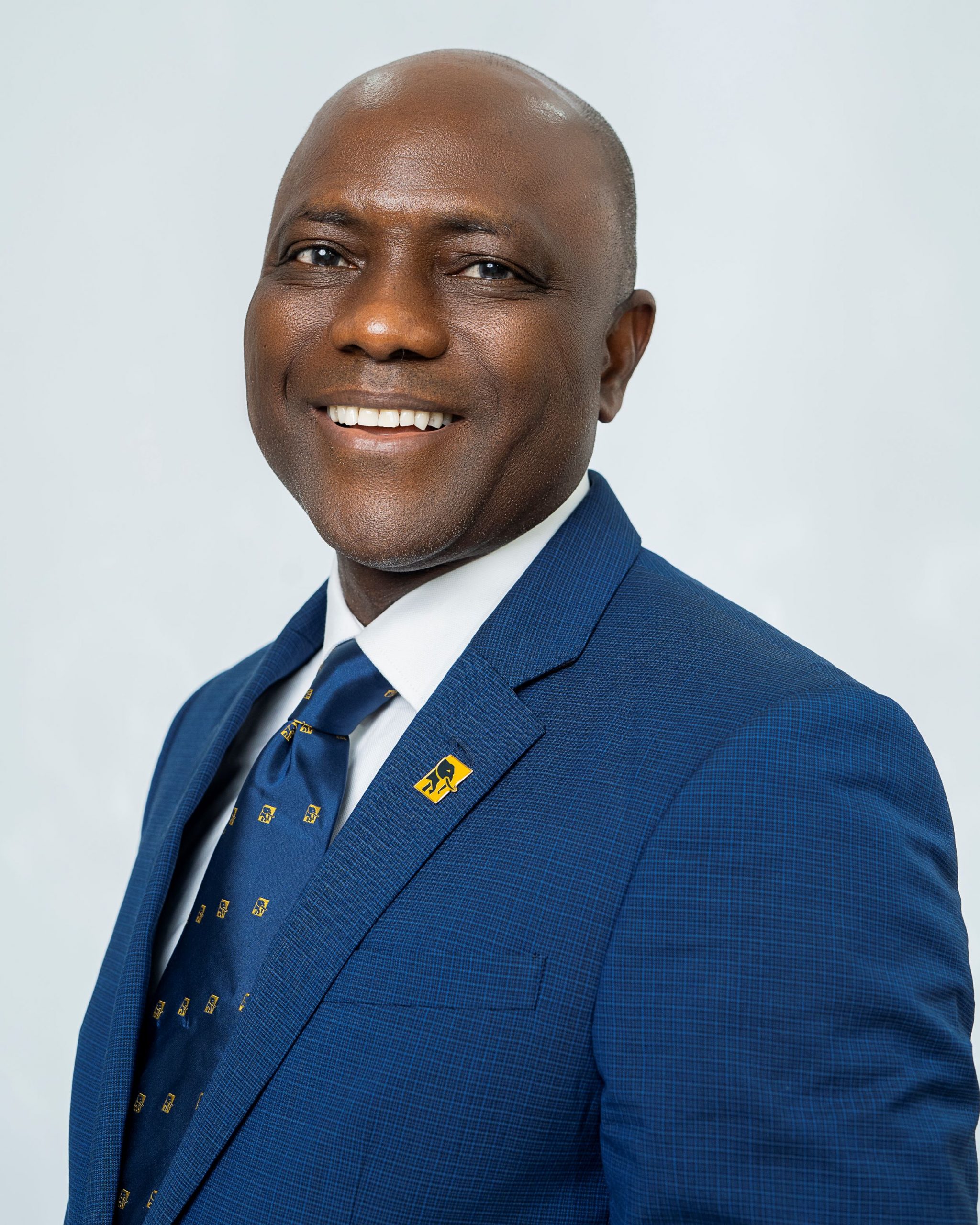
FirstBank Empowers SMEs with AI-Driven Growth Strategies, Hosts SMEConnect Webinar
Lagos, 20 March 2026 – FirstBank, West Africa’s premier financial institution and financial inclusion services provider, is pleased to announce the upcoming edition of the SMEConnect Webinar scheduled to hold on Tuesday, 31 March 2026. The event will equip small and medium-sized enterprises (SMEs) with the knowledge and tools to harness the power of Artificial Intelligence (AI) for business growth.
This edition is strategically curated to inform and educate SMEs on how AI can be applied to scale their businesses in today’s rapidly evolving digital economy. The chosen theme, “AI for Business Growth: From Adoption to Integration and Scalable Impact,” reflects the growing importance and timeliness of AI as one of the most influential trends shaping the SME business landscape. The session will provide SMEs with actionable insights on how to leverage AI to enhance productivity, streamline operations, strengthen customer engagement, and make smarter, data-driven decisions.
The SMEConnect webinar will feature experts, including Temitope Odude, Senior AI Solutions Architect at Microsoft as a guest speaker. Odude will provide credible and globally relevant perspectives on how SMEs can successfully adopt and integrate AI into their everyday business operations. Other speakers include Abednego Ugwueke, Head of Digital Channels and Ibidun Adedewe, Head of SME Acquisition & Partnerships at FirstBank.
Speaking ahead of the event, Chuma Ezirim, Group Executive, e-Business and Retail Products at FirstBank, said “SMEs are the backbone of the Nigerian economy, and at FirstBank, we recognise that the economy cannot thrive without them. As a committed growth partner to SMEs, this session reinforces our strong focus on innovation, demonstrated through initiatives such as the use of AI‑enabled credit scoring to deliver fast, instant loans to micro‑SMEs, with over ₦1 trillion disbursed to support customers’ financial needs. Building on this foundation, we are equipping business owners with the right knowledge and practical insights on Artificial Intelligence to help them scale in the short term and drive sustainable growth. I encourage every business owner to participate in this session to gain hands‑on guidance on integrating AI into everyday business operations.”
SME owners and entrepreneurs can register for the webinar at https://firstbanknigeria.zoom.us/webinar/register/WN_cUr1LhWFQXymTqWtONOOVg
SMEConnect Webinar series is one of FirstBank’s signature platforms for supporting SMEs with practical knowledge and strategic insights. The Bank has consistently won awards for impacting businesses and for providing innovative solutions for customers and other stakeholders, including SMEs.
The Bank was named Best SME Bank in Nigeria and Best SME Bank in Africa by TAB Global Excellence in Retail Finance Awards for 2 years as at 2025. The Bank also won the SME Financier of the Year- Nigeria awarded by The Digital Banker.
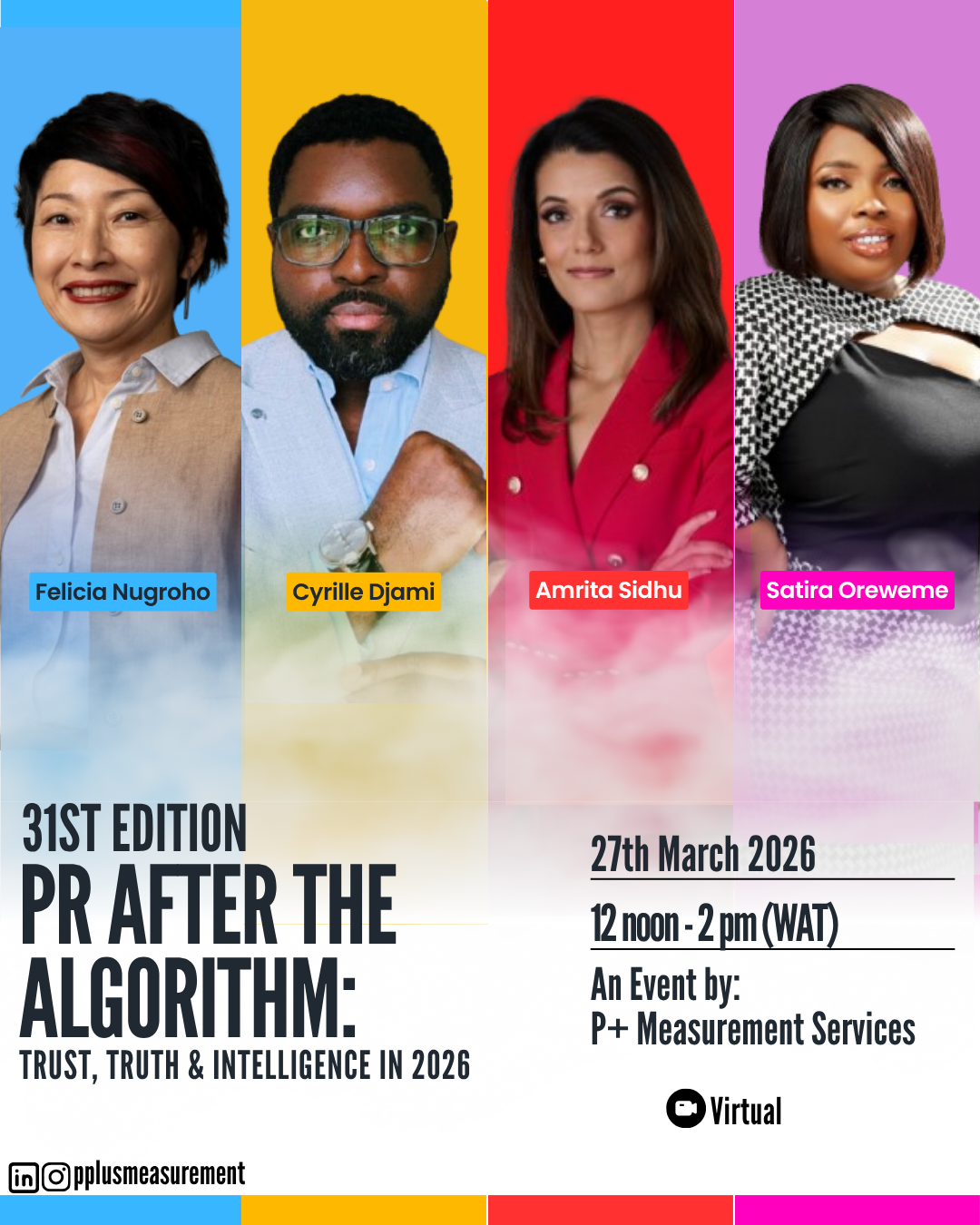
EvaluatePR to Explore “PR After the Algorithm: Trust, Truth & Intelligence in 2026
P+ Measurement Services, Nigeria’s leading independent media intelligence and PR measurement agency, will host the 31st edition of its flagship thought-leadership platform, EvaluatePR, on Friday, March 27, 2026, at 12:00 p.m. (WAT).
Themed “PR After the Algorithm: Trust, Truth & Intelligence in 2026,” this virtual session will convene professionals across public relations, communications, and media measurement to explore how algorithms, artificial intelligence, and digital ecosystems are reshaping reputation management, media influence, and audience trust.
With the increasing role of automation in communications, the event will challenge professionals to rethink how credibility is built and sustained in a fast-evolving digital landscape, while emphasizing the need for transparency, ethical measurement, and strategic intelligence.
The session will feature a distinguished lineup of speakers representing diverse expertise across global communications, media intelligence, and analytics: Felicia Nugroho – Director, Analytics & Insights, Maverick Indonesia / Chair, Asia Pacific & International Board Director, AMEC; Cyrille Djami – Founder & Publisher, CommsOfAfrica; Strategic Communications, Editorial and Influence Consultant; Amrita Sidhu – Managing Director, Medianet / Director & Board Representative, AsiaNet / Board Member, AMEC; and Satira Osemudiamen Oreweme – Principal Consultant, Satira Media & Public Relations Limited.
Together, they will lead insightful discussions on how communicators can navigate the intersection of technology and trust, maintain authenticity in automated environments, and leverage data-driven intelligence to deliver meaningful communication outcomes.
Participation in the session is free, with access available via the official registration link:
https://bit.ly/4stWjUh


-

 society6 months ago
Religion: Africa’s Oldest Weapon of Enslavement and the Forgotten Truth
-

 news3 months ago
WHO REALLY OWNS MONIEPOINT? The $290 Million Deal That Sold Nigeria’s Top Fintech to Foreign Interests
-

 society6 months ago
“You Are Never Without Help” – Pastor Gebhardt Berndt Inspires Hope Through Empower Church (Video)
-

 celebrity radar - gossips2 months ago
Dr. Chris Okafor Returns with Power and Fire of the Spirit -Mounts Grace Nation Altar with Fresh Anointing and Restoration Grace on February 1, 2026