
Business
Tinubu and the generation of Astyanax bimaculatus by Idowu Ajanaku


“Stab the body and it heals, but injure the heart and the wound lasts a lifetime.”
― Mineko Iwasaki
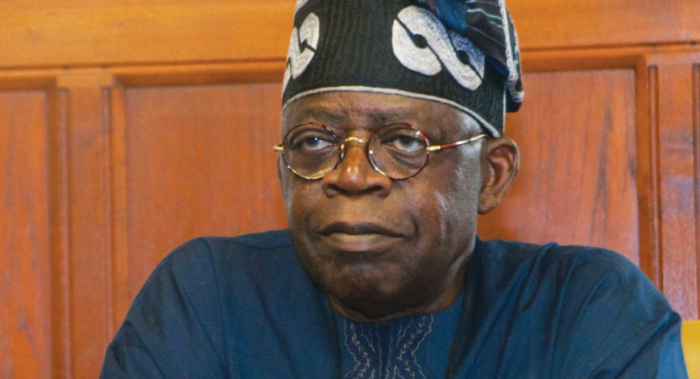
The grand conspiracy and recent desperate attempts to de-construct and indeed, de-mystify one of Africa’s most decorated political colossuses, who, incidentally remains an enduring metaphor for what true democratic culture represents in Nigeria smirks of gross ingratitude. The pain runs deep, considering the incontestable fact that the masterminds are some of the greatest beneficiaries of his patriotic struggles, at one time or the other over the past five decades.
One is talking about none other than Asiwaju Bola Ahmed Tinubu, the famed Jagaban, the one man who stood firm, like Zuma rock in the whirlwind of Nigeria’s politics, against the brutal and bruising boots of late Abacha’s dictatorship. Our subject was the guiding light of the struggle for the realization of June 12,1993 mandate as won by late Chief MKO Abiola. He was the former executive governor of Lagos State(1999-2007) and has remained the constant star in the firmament of Nigeria’s progressive political spectrum.
But for the commitment of this national Leader of the All Progressives Congress (APC), perhaps Nigeria’s then rudderless ship of state would long have capsized into the vast ocean of corruption under the clueless, Jonathan-led administration. That was then. But this is now, as he is being paid back in coins he never traded for the survival of democratic culture in his dear country, Nigeria.
So, it rankles; it shocks one to the marrow, more so because acts of sheer deception and bitter betrayal as reflected in some of William Shakespeare’s plays of the 16th century now play out in the 21st Century Nigeria, with uncanny semblances! And for what? All because of transient fame and fortunes. For instance, in the play Macbeth the lead character betrays King Duncan (to whom he has sworn allegiance) by killing him when he is a guest at his home. But why, one may ask? It is in an overtly ambitious attempt to gain the crown that Duncan wears. He also betrays his friend, Banquo, just to retain the power and position of being King. Thereafter, he murdered sleep!
But that is man for you; vacillating like the tropic weather. Today, he pretends to be the most loving and loyal friend or ally, only because he is in dire need of the other’s help, most likely to get out of a sticky situation. But tomorrow he turns coat at the drop of a hat, that is when the price is right. There are scruples but he has none. No binding philosophy of commitment to a cause. Greed for instant gains and an unquenchable desire to be seen as the man- of -the -moment are his propelling passion; his odious guiding credo.
Worse still, Tinubu’s traducers are going about it as if he is one desperate politician, who wants power at all costs and by all crooked means. Yet, nothing could be further from the truth. If memory serves, Tinubu’s political trajectory took off when he pitched tent with the Musa Yar’Adua’s political dynasty. That was the Social Democratic Party(SDP).Before long, he was championing the struggle for the actualization of the June 12, 1993 mandate, as freely given by the good people of Nigeria to Chief MKO Abiola(of blessed memory). He made a lot of sacrifices; of precious time, energy, finance, strategies, wise counsel and other incalculable resources in this noble cause.
And still sticking to his political guns, to forever remain on the side of the people through a democratic structure he, it was who warned Dapo Sarumi, who was then the patriarch of the Primrose Group not to jump ship into the IBB contraption of an Interim National Government. Back then, the group was the most dominant in Lagos politics in 1992-93. Tinubu vowed to break rank with Sarumi should he not heed his piece of patriotic advice. But the other was far too gone in his quest for political relevance under the military government to heed it. That singular wrong choice led to Sarumi’ political oblivion, till this day.
If Tinubu was desperate he would have joined the bandwagon as one of the infamous carpet baggers. It would also be recalled that when he, Tinubu was the Chairman, House Committee on Finance at the Senate he was offered the juicy post as the Minister of Finance by the Abacha-led military government but he rejected it out rightly out of sheer national interest. Yet, that was not all.
Specifically in 2003, when as the Lagos state governor he became the last man standing at a time OBJ’s rigging machinery raged through the South West geo-political zone Tinubu’s commitment, dedication, determination and personal sacrifice re-engineered the progressive community to retrieve the zone from the conservative People’s Democratic Party, PDP. The eventual emergence of Kayode Fayemi and Rauf Aregbesola as the governors of Ekiti and Osun states respectively became the turning point for the progressives’ relevance.
Another remarkable and in fact, epochal moment in the South West politics came in 2007.When the market din swirled in Lagos over the emergence of Babatunde Raji Fashola -then a political neophyte-as the governorship candidate of the AC it was Tinubu who made another sacrifice of his Senatorial ambition, giving the ticket to Ganiyu Solomon.
It was Fashola’s victory at the polls in 2011 that empowered, emboldened and paved the way for the subsequent victories of the progressives in Oyo and Ogun states in 2011.And it was also in the spirit of Asiwaju’s sacrifice that made it possible for Ibikunle Amosun, well-known then as a diehard conservative politician to clinch the coveted governorship seat in Ogun State, in spite of the array of other progressive politicians on ground.
Ditto for Abiola Ajimobi in Oyo sate who had earlier abandoned Alliance for Democracy, AD for ANPP. Ordinarily, if Asiwaju was one desperate politician, as being insinuated such politicians would not have ridden to political prominence on the back of the Jagaban. Worthy of note too, is that it was the sacrifice made by Tinubu out of love for his country that led to the historic merger amongst the ACN,CPC,ANPP and a faction of APGA to form APC. And for the first time in the political evolution in Nigeria the party was able to dislodge the incumbent greed-driven PDP-led administration.
Were he one selfish politician he would have been contented being a king in his South West enclave. But no. Even when the then presidential flag-bearer, Muhammadu Buhari offered him the post of his running mate in the presence of Chief Bisi Akande, who was the Interim Chairman of the party Tinubu declined the offer. He nominated Professor Yemi Osibanjo instead. This is an incontrovertible fact. It was borne out of his patriotic zeal, taking cognizance that the PDP had then polarized Nigeria along ethnic and religious lines. Unfortunately, one John Baden, a total stranger to Nigeria’s political evolution has stood logic on its head by claiming otherwise in his recently launched biography of Mister President.
Having achieved such political feats, out of a rare sense of patriotism it is a crying shame that some lucky individuals who rode on his back to fame are now hands-in-glove with the Hausa/Fulani hegemony to attempt to rubbish his good image which he has built over the decades. What is their aim? To gain entrance into the hearts of the new generation of Yorubas.
But they must learn from the unfailing hands of history that the Akintolas, Omoboriowos and Babatopes who had travelled such ignoble paths have been consigned into the dustbins of political history. No Yoruba man who has jettisoned the collective interest of their people ever survived their ill-fated journeys. More instructively, they may have to read the accounts of Shakespeare characters in Julius Caesar. For instance, the wily one named Antony betrays his commitment to Cleopatra by marrying Octavia. Conversely, Mena betrays Antony, Lepidus, and Caesar by suggesting that Pompey should kill the trio. On the other hand, Ahenobarbus betrays Antony by deserting Antony when the latter is at his most vulnerable point in life. As if to literally turn tables, Cleopatra herself endures betrayal from both Caesar as well as her own treasurer. This deception, coming from among one’s closest servants, constitutes great betrayal. Instructively, they all ended on the sad side of history.
It would therefore, do the Yoruba political traitors in Abuja, who, like the Astyanax fish species betray their own , are now hell-bent on doing Tinubu in to have some moment of sober reflection. Even Ayodele Fayose, Ekiti State governor in his characteristic blunt manner has warned of the dire consequences for those so involved. They should remember that in the market square of life, it is always honourable and rewarding to be grateful to those who lift us up, instead of turning round to spit on their faces. God, who created us all is watching. As the only one to who vengeance belongs He will surely take recompense. For, anybody who abuses grace will soon have nothing to eat but grass.





HOUSE OF BIMPE FIT GAINS ATTENTION WITH TRENDY UNISEX FASHION LINE
LAGOS — A fast-rising fashion brand, House of Bimpe Fit, is making waves in the style scene with its collection of modern, elegant outfits designed for both men and women.
The brand, which showcases a blend of contemporary and classic designs, is quickly attracting attention for its attention to detail and quality finishing. From sharply tailored men’s native wears and suits to chic, figure-flattering outfits for women, House of Bimpe Fit is positioning itself as a go-to destination for fashion lovers seeking both style and comfort.

Speaking on the brand’s vision, the management emphasized its commitment to delivering “quality outfits for both men and women,” ensuring customers step out with confidence and class regardless of the occasion.
Fashion enthusiasts have particularly praised the brand’s versatility, as it caters to a wide range of tastes—from corporate elegance to casual sophistication.

With an active presence on social media, especially on TikTok via @house_of_bimpefit, the brand is leveraging digital platforms to reach a broader audience and showcase its latest collections.
Industry watchers say House of Bimpe Fit is one to watch, as it continues to carve a niche for itself in Nigeria’s competitive fashion industry.
For inquiries, customers can contact the brand via phone at 0802 686 6277.

Business
Jafad College of Nursing Science Showcases Excellence at Matriculation, Capping Ceremony for 158 Nursing Students

Jafad College of Nursing Science Showcases Excellence at Matriculation, Capping Ceremony for 158 Nursing Students
By Agholor M.O
Jafad College of Nursing Science, Oru Ijebu Ogun State, has once again demonstrated its commitment to excellence in healthcare education as it matriculated and inducted into Nursing Training, 158 students of the N.D 2025/2026 academic session in a well attended and inspiring ceremony which took place on Wednesday, 8th of April 2026 at the College premises, Oru Ijebu, Ogun State

The event began with a colourful academic procession of the matriculating students led by their Class Coordinator Mrs B.O. Okuboyejo, alongside principal officers of the college, including the Student Affairs Officer, Mrs Fijabi; College Accountant, Mrs Funmilayo Victoria Alao; Librarian, Mr Jonathan Olusola Fatokun; Registrar, Mr Mojeed Adewale Lawal; and the Acting Provost, Ms Olufunmilola Akintayo.

In her welcome address, the Acting Provost charged the new students to embrace discipline, dedication, and professionalism, noting that Jafad College provides a strong academic and moral foundation needed to thrive in the ever demanding healthcare sector.

The ceremony attracted dignitaries, including Mr Abdulhameed, JAMB Zonal Coordinator, Abeokuta, Ogun State, further underscoring the institution’s growing reputation.

Delivering the matriculation lecture, Mrs Oyelayo Toyin Adeola, a registered nurse educator from Olabisi Onabanjo University Teaching Hospital, spoke on the theme: *“The Journey of Admission to Graduation: Strategies for a Successful Outcome – Learner and Teacher Perspective.”* She emphasized the importance of goal-setting, effective study habits, time management, and active student teacher collaboration. She also highlighted the need for resilience, ethical conduct, and continuous self-improvement, describing nursing as both a calling and a profession that demands compassion, competence, and lifelong learning.

The ceremony reached a symbolic peak with the capping and stripping of the students by experienced registered nurses from Ogun State Hospital, Ijebu Ode, officially ushering them into the noble nursing professional Training.
Parents and guardians expressed satisfaction with the quality of organization and training standards, while the students beamed with excitement as they began their professional journey.


With its experienced faculty, structured training, and commitment to producing competent and compassionate nurses, Jafad College of Nursing Science continues to stand out as a top choice for aspiring healthcare professionals in Ogun State and beyond.


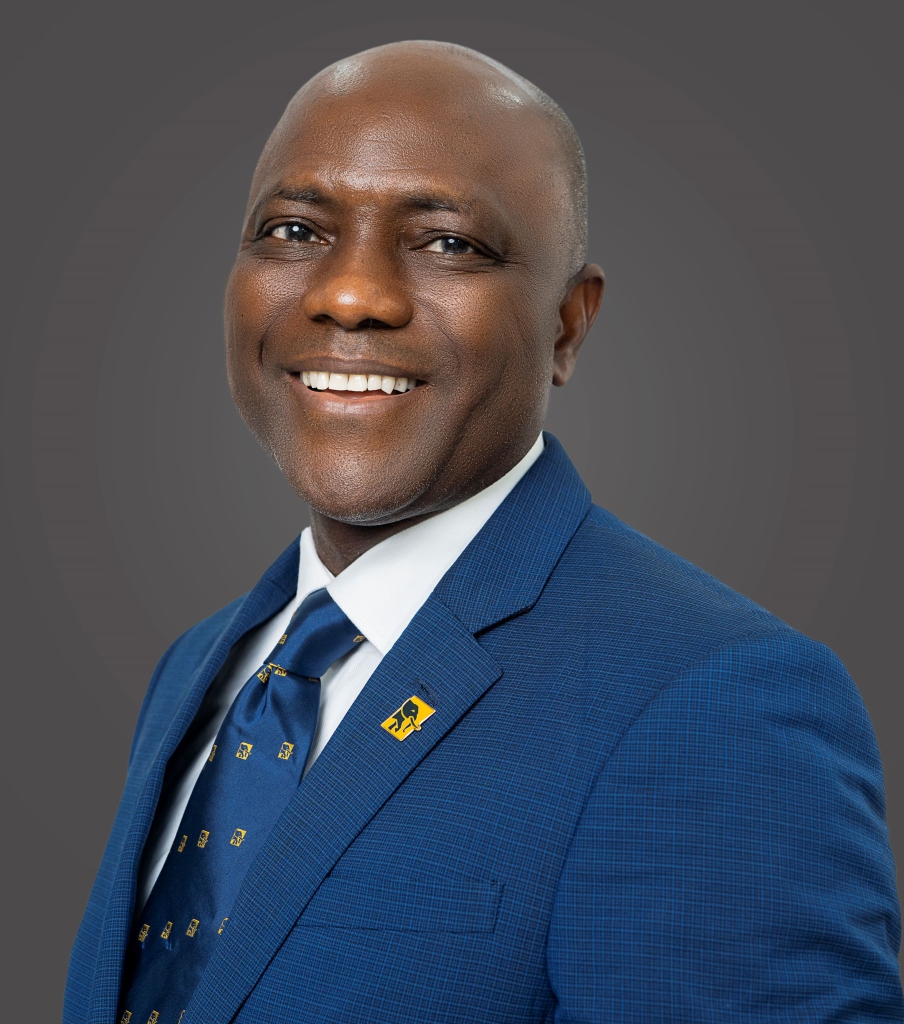
FirstBank Partners Eko Hotels & KEY Academy for ChessMasters 2026 Tournament
Lagos, 30 March 2025 – FirstBank, West Africa’s premier financial institution and the leading financial inclusion service provider, has announced its strategic sponsorship of the second edition of ChessMasters, Africa’s largest school chess tournament. The announcement was made at the official press conference of the tournament held on 16 March 2026 at Eko Hotels and Suites, Lagos.
ChessMasters is an annual chess tournament designed to equip the next generation with critical thinking, problem-solving, and leadership skills. The competition targets children in primary school aged between 6 and 11 years old. Organised by Eko Hotels and Suites & KEY Academy , ChessMasters was created to provide thousands of children across Nigeria with opportunities to develop modern educational skills, bringing schools together on a national stage.
Speaking at the press conference, Olayinka Ijabiyi, Acting Group Head, Marketing & Corporate Communications at FirstBank, said, “Our sponsorship of ChessMasters 2026 reflects our commitment to building talents and communities, driving inclusion, and deepening engagement through our First@Sports initiative, a platform that celebrates talent and promotes social impact through sports. With over a century of supporting legacy sports in Nigeria, we are proud of our enduring partnerships – 105 years with the Georgian Cup, 65 years with the Lagos Amateur Golf Championship and 35 years with the Dala Hard Court Tennis Championship.”
Ijabiyi further highlighted how the sponsorship aligns with FirstBank’s sustainability pillars of Education, Health, and Welfare. “We recognise the potential of chess to help school-age children challenge themselves, think critically, and compete at the highest level, hence we see the tournament as a launchpad for a pan-African movement leveraging chess as a tool for education, empowerment, and leadership development. We are utilising this platform as another avenue to promote social impact and drive positive change in the community.”
Caline Chagoury Moudabar, Director and Co- Founder of ChessMasters and her partner Damilola Okonkwo of Key Academy, expressed appreciation for FirstBank’s support, noting that the partnership will help scale the impact of ChessMasters and inspire more schools to participate. “We are happy to welcome FirstBank on board. This collaboration will boost chess development in Nigeria and promote critical thinking among young minds. With support from partners like FirstBank, we are opening the doors of participation to more children and more schools in this year’s edition.”
Prince Adeyinka Adewole, Vice President of the Nigeria Chess Federation, commended the initiative, emphasising its role in nurturing future chess talents. “Chess connects people, ideas, and opportunities. It teaches children to be analytical, patient, and manage their time and resources effectively. Chess also improves concentration and has been particularly beneficial for children with autism.”
The second edition of ChessMasters will be held on Saturday, 2 May 2026 at Eko Hotels and Suites, Lagos. The competition is open to 150 schools across Lagos, with over 700 students expected to participate and vie for a total prize pool of N10 million.
FirstBank’s involvement in the 2026 edition of the tournament reinforces the potential of ChessMasters to become a launchpad for African children, leveraging chess as a tool for education, empowerment, and leadership development.


- Century Group Joins African Energy Week (AEW) 2026 as Floating Production Storage and Offloading (FPSO) Partner, Showcasing Regional Offshore Expansion April 10, 2026
- Climate Litigation Surge Reshapes Energy Policy as Africa Seeks Stronger Legal Voice April 10, 2026
- ES-KO Secures Five-Year Catering & Facilities Management Contract Renewal with TotalEnergies EP Congo April 10, 2026
- Beyond the Court: The Kalahari Conference Solidifies its Status as Africa’s Premier Sports & Lifestyle Destination April 10, 2026
- Africa Sports Unified Launches Pan-African Sports Deals Tracker to Improve Market Visibility and Decision-Making April 10, 2026
- Nigeria and Senegal Must Follow Ghana and Mozambique Against Exclusionary Practices April 10, 2026
- Sheraton Nouakchott marks the entry of Marriott International in Mauritania April 10, 2026
- Eritrea: Seminar to Nationals in Nairobi and Its Environs April 10, 2026
- African financial institutions call for coordinated financing solutions to unlock Africa’s digital transformation April 9, 2026
- African Energy Chamber (AEC) Supports Perenco Partnership to Advance Industry 4.0 Skills in Central Africa April 9, 2026
- Century Group Joins African Energy Week (AEW) 2026 as Floating Production Storage and Offloading (FPSO) Partner, Showcasing Regional Offshore Expansion April 10, 2026
- Climate Litigation Surge Reshapes Energy Policy as Africa Seeks Stronger Legal Voice April 10, 2026
- ES-KO Secures Five-Year Catering & Facilities Management Contract Renewal with TotalEnergies EP Congo April 10, 2026
- Beyond the Court: The Kalahari Conference Solidifies its Status as Africa’s Premier Sports & Lifestyle Destination April 10, 2026
- Africa Sports Unified Launches Pan-African Sports Deals Tracker to Improve Market Visibility and Decision-Making April 10, 2026
- Nigeria and Senegal Must Follow Ghana and Mozambique Against Exclusionary Practices April 10, 2026
- Sheraton Nouakchott marks the entry of Marriott International in Mauritania April 10, 2026
-

 news4 months ago
WHO REALLY OWNS MONIEPOINT? The $290 Million Deal That Sold Nigeria’s Top Fintech to Foreign Interests
-

 society7 months ago
“You Are Never Without Help” – Pastor Gebhardt Berndt Inspires Hope Through Empower Church (Video)
-

 celebrity radar - gossips2 months ago
Dr. Chris Okafor Returns with Power and Fire of the Spirit -Mounts Grace Nation Altar with Fresh Anointing and Restoration Grace on February 1, 2026
-

 celebrity radar - gossips4 months ago
Prophet Kingsley Aitafo Releases 2026 Prophecy: ‘Nigeria Will Rise, but the World Must Prepare for Turbulence’
You must be logged in to post a comment Login
You must log in to post a comment.