
Politics
Tinubu Then and Now: From Fuel Tax Opponent to Fuel Tax Enforcer. (A Political Irony Cast in Fuel Flames)


Tinubu Then and Now: From Fuel Tax Opponent to Fuel Tax Enforcer.
(A Political Irony Cast in Fuel Flames)
By George Omagbemi Sylvester | Published by SaharaWeeklyNG.com
In 2003, he called it “double taxation.” In 2025, he signed it into law.
In the annals of Nigeria’s political history, few things expose the duplicity of power like policy reversals. In 2003, then-Governor of Lagos State, Bola Ahmed Tinubu, stood before Nigerians as a fiery defender of the masses, lashing out at President Olusegun Obasanjo’s proposal of a fuel tax. He called it “DOUBLE TAXATION,” condemned it as an anti-people policy and vowed to challenge it in court. Fast-forward to June 2025 and that same Tinubu (now President of the Federal Republic of Nigeria) has signed into law a sweeping tax reform that imposes a 5% surcharge on petrol and other fuels, effective January 2026, under the guise of funding clean energy initiatives.
The irony is blistering. The man who once denounced fuel taxation as economic strangulation now brandishes the very policy instrument he once demonized. Nigerians are left to ask: has Tinubu betrayed his own words or has power exposed a truth he once concealed?
The Heavy Burden of Fuel Taxes.
Fuel in Nigeria is not just another commodity; it is the lifeblood of the economy. With epileptic electricity and industries relying heavily on diesel-powered generators, any increase in fuel price sends shockwaves across every sector. A 5% surcharge, no matter how noble the intended purpose, translates into higher transport costs, food inflation and spiraling costs of goods and services.
Dr. Bismarck Rewane, a respected economist and CEO of Financial Derivatives Company, has long warned: “In Nigeria, any policy that touches fuel pricing is a policy that touches every Nigerian pocket.”
Already, Nigerians are grappling with the aftermath of subsidy removal in 2023, a policy that saw fuel prices skyrocket by more than 200%. Inflation, officially pegged at over 33% by mid-2025, has ravaged household incomes. The National Bureau of Statistics (NBS) reports that food inflation is above 40%, while unemployment remains at a crushing 37%. In such a climate, adding a fuel surcharge is nothing short of pouring salt into a festering wound.
Tinubu’s Contradiction: From Courtrooms to Aso Rock.
Let us revisit Tinubu’s words in 2003. Back then, when Obasanjo’s administration sought to introduce a levy on fuel, Tinubu (as Lagos Governor) declared:
“This is double taxation, an exploitation of the people. We will resist it and if necessary, challenge it in court.”
That same Tinubu, now wielding presidential authority, has turned his back on the principle he once defended. What has changed? Is it the man, the times or the seduction of power?
Political scholar Dr. Jideofor Adibe puts it bluntly: “Nigerian politicians rarely hold consistent positions on policy. What they oppose in opposition, they implement in power. It is not about principle but expediency.”
This hypocrisy is at the heart of Nigeria’s governance crisis. Policies are not measured by long-term developmental value but by political convenience. Today, Tinubu’s reform is packaged as “PROGRESSIVE TAXATION for CLEAN ENERGY TRANSITION,” but to ordinary Nigerians, it is yet another mechanism of state-sanctioned hardship.
The Global Energy Argument; And Its Flaw.
Defenders of the surcharge argue that the world is moving toward renewable energy and that Nigeria must raise funds to finance its own green transition. Indeed, global institutions like the International Energy Agency (IEA) have emphasized the urgency of moving away from fossil fuels. Nigeria, Africa’s largest oil producer, paradoxically suffers from poor energy access, with over 85 million citizens lacking electricity.
However, as Professor Pat Utomi, a leading political economist, once observed: “You cannot tax poverty into prosperity. A government must first build productivity before loading burdens on its citizens.”
Unlike advanced economies where fuel taxes fund infrastructure and clean energy, Nigeria’s history is littered with failed interventions. Billions allegedly spent on power reforms have vanished into bureaucratic black holes. The Petroleum Trust Fund (PTF), set up in the 1990s, became a political cash cow. Why should Nigerians now trust that this 5% fuel surcharge will not go the same way?
Opposition Cries Foul.
Unsurprisingly, opposition parties have seized on this contradiction. The Peoples Democratic Party (PDP) issued a scathing statement:
“Tinubu opposed fuel taxes when it suited him politically. Today, he imposes the same tax on a suffering population. This is not leadership; this is betrayal.”
Labour unions, too, are preparing for confrontation. The Nigeria Labour Congress (NLC) has vowed mass action if the surcharge is not reversed. Its president, Joe Ajaero, thundered: “This government cannot continue to impoverish Nigerians under the false banner of reform. We will resist with everything we have.”
History Repeating Itself.
George Santayana once warned: “Those who cannot remember the past are condemned to repeat it.” Nigeria is the perfect example. Obasanjo’s attempt to tax fuel in 2003 collapsed under public outrage. Now, two decades later, Tinubu has resurrected the same ghost.
Nobel Laureate Wole Soyinka once described Nigerian governance as a “cycle of déjà vu.” Today, his words ring true. Every administration recycles old, failed policies under new labels. The tragedy is that Nigerians are forced to pay the price again and again.
The Larger Question: Leadership or Self-Interest?
At the heart of this debate is a moral question: should leaders hold themselves accountable to their past words? Tinubu’s reversal is not just a policy decision; it is a credibility issue. By signing a law he once condemned, he sends a dangerous message that political positions are mere costumes to be worn and discarded at will.
Political scientist Larry Diamond once wrote: “Democracy collapses when leaders lose credibility, because legitimacy is the only currency that sustains power.” If Tinubu continues down this path, his administration risks eroding whatever remains of its legitimacy.
Alternatives Ignored.
Critics argue that instead of taxing fuel, the government should:
Cut Wasteful Spending: Nigeria’s budget still allocates billions to frivolous items, including luxury convoys and political perks.
Plug Revenue Leakages: The Nigerian Extractive Industries Transparency Initiative (NEITI) reports that over $46 billion has been lost to oil theft and mismanagement in two decades.
Expand Tax Base Fairly: Less than 10% of Nigerians are in the formal tax net. Why punish the poor majority with fuel surcharges instead of taxing the wealthy elite more effectively?
Professor Kingsley Moghalu, former Deputy Governor of the Central Bank, emphasizes: “Reform must be people-centered. You cannot build a nation by squeezing its weakest members.”
Final Reckoning: A Nation at the Crossroads.
Tinubu’s 2025 fuel surcharge is not just an economic decision, it is a moral and political paradox. The man who once called fuel taxes “double taxation” now enforces them on the very people he once claimed to defend. Nigerians are watching, and the echoes of 2003 are alive.
The question is not whether clean energy is necessary, it is whether this government has the trust, integrity and capacity to channel fuel taxes into genuine transformation. Without transparency and accountability, this policy will go the way of every failed Nigerian reform: another burden on the masses, another betrayal by the political class.
As Chinua Achebe warned in The Trouble with Nigeria: “The trouble with Nigeria is simply and squarely a failure of leadership.”
Once again, Nigerians stand at the mercy of leaders who promise one thing and deliver the opposite. And once again, it is the people who will pay at the pump.





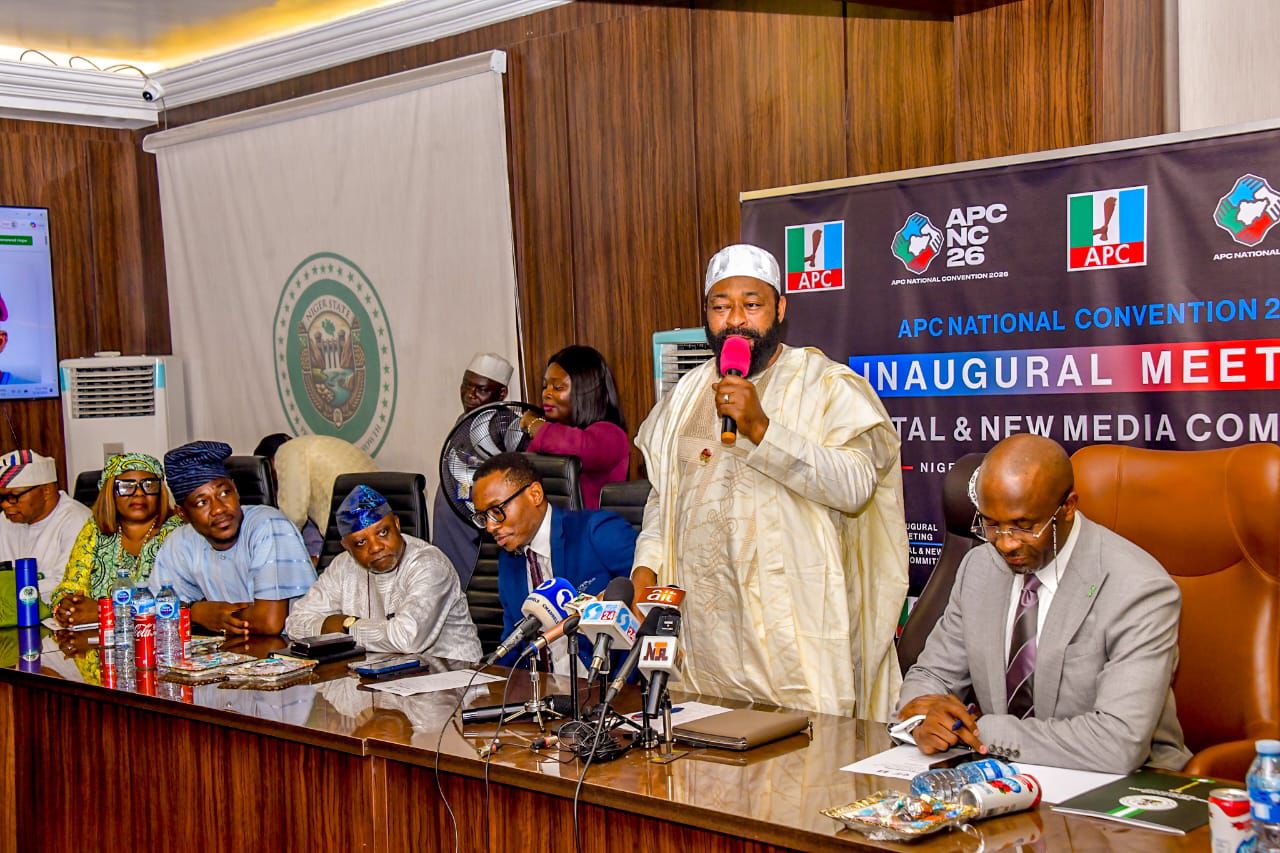
Governor Bago Inaugurates APC Digital Media Sub-Committee Ahead of National Convention.
Governor Umaru Bago has inaugurated the Digital Media Sub-Committee for the forthcoming National Convention of the All Progressives Congress (APC), scheduled to hold on March 27 and 28, 2026 in Abuja.
Chairing the sub-committee, Governor Bago tasked members with the responsibility of effectively communicating the party’s manifesto to the public.
He emphasized the need to leverage social media platforms to highlight the achievements and ongoing efforts of President Bola Ahmed Tinubu, noting that communication gaps have posed challenges that must now be decisively addressed.
The Co-Chair of the sub-committee, Hon. Benjamin Kalu, Deputy Speaker of the House of Representatives, echoed the Governor’s position, urging members to project the activities of both the party and the government to a broader audience.
He called for a deliberate and coordinated effort to showcase the party’s achievements and policy direction, stressing the importance of shaping a compelling and consistent narrative across all digital platforms.
Delivering a presentation to the committee, Otega Ogra, SSA to the President on New Media, who serves as Secretary of the sub-committee, outlined strategic focus areas to guide the team’s operations.
His presentation highlighted communication priorities and actionable steps to achieve the committee’s mandate and strengthen the party’s digital engagement.


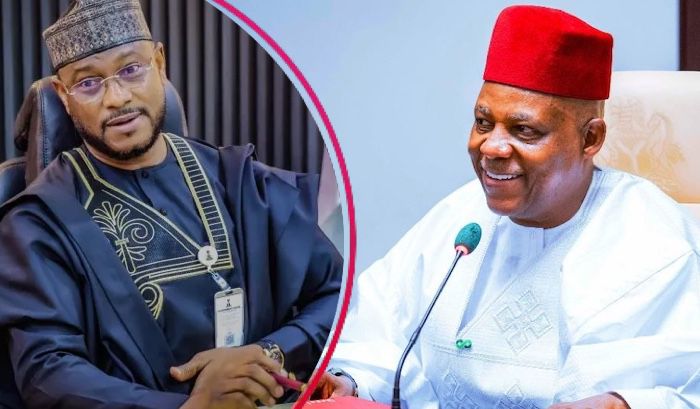
VP Shettima Set to Lead Delegation to Zamfara as Governor Dauda Lawal Formally Joins APC
The Zamfara State chapter of the All Progressives Congress (APC) has finalized plans to receive Vice President Kashim Shettima for the formal defection and reception of Governor Dauda Lawal into the ruling party, scheduled to take place on Tuesday.
State APC Chairman, Tukur Danfulani Maikatako, disclosed this during a high-level stakeholders’ meeting held in Gusau, the state capital. He noted that the Vice President would be joined by the party’s national leadership to mark what he described as a landmark political realignment in the state.
Maikatako expressed the party’s excitement over Governor Lawal’s return, recalling that Zamfara had historically been an APC stronghold and that the Governor was previously a bona fide member of the party before his earlier exit.
“We all know that Zamfara has long been one of the APC’s stronghold states, where the defected Governor was once a bona fide member. Now that he has decided to return home, having been satisfied that the APC remains his second choice after the one he left for obvious reasons,” Maikatako stated.
The Chairman called on all party faithful across the 147 wards in the state’s 14 local government areas to turn out en masse to honour the Vice President’s visit. He emphasized that the event was strategically positioned to bolster the party’s popularity and strengthen its structures ahead of the 2027 general elections.
In a strong appeal for unity, Maikatako urged members to set aside all factional tendencies, stressing that the APC remained one political family with shared goals, particularly the ambition to make Zamfara and Nigeria great again.
Echoing similar sentiments, a former state APC Chairman, Lawal M. Liman, appealed to members to cascade the message to their wards and local government areas. He reinforced the need for cohesion, noting that the party’s collective strength would be critical to achieving success in future elections.

All eyes are now on Gusau as the ruling party prepares for a high-profile political gathering expected to further consolidate its influence in Zamfara State.
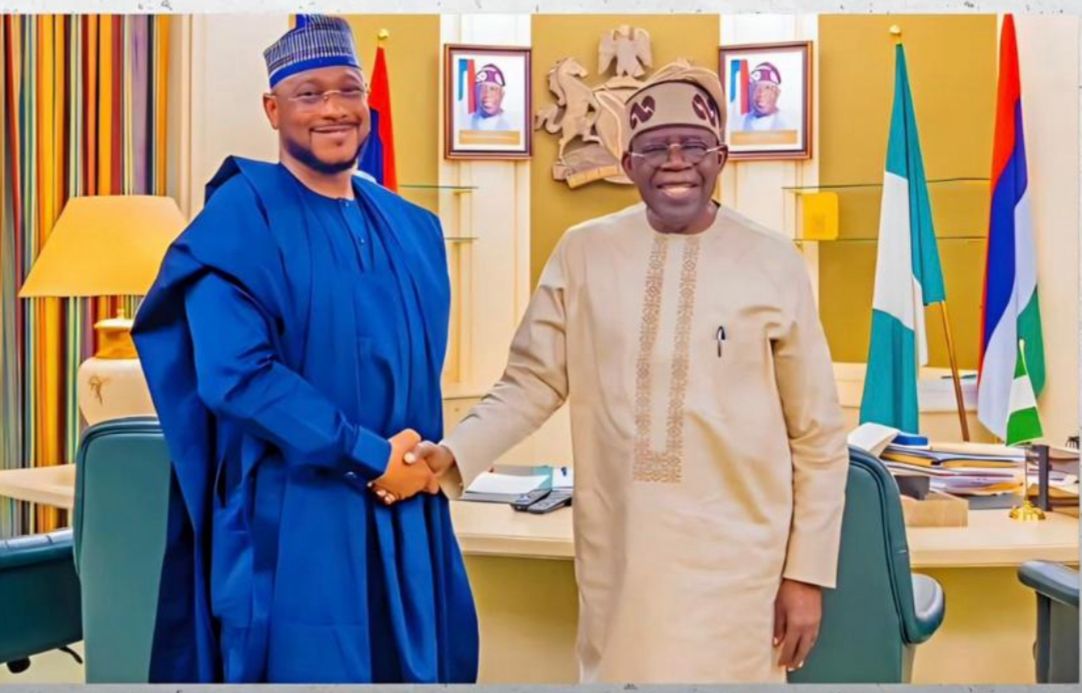
Governor Dauda Lawal Named Part of Presidential Delegation for Historic UK State Visit
Governor Dauda Lawal of Zamfara State has been named as a member of the presidential entourage that will accompany President Bola Ahmed Tinubu and First Lady Oluremi Tinubu on a historic two-day State Visit to the United Kingdom.
According to a statement from the Zamfara State Government House on Monday, the Governor will depart Abuja for the UK on Tuesday for the visit, which is scheduled to take place on March 18 and 19 at the invitation of the British Royal Family.

During the visit, King Charles III will host President Tinubu, the First Lady, and the Nigerian delegation at Windsor Castle, where they will view a special exhibition of Royal Collection items related to Nigeria. The Royal Family will also host a State Banquet in honour of the Nigerian guests on the evening of Wednesday, March 18.
The presidency has outlined that the purpose of the visit is to strengthen bilateral relations between Nigeria and the United Kingdom. President Tinubu is scheduled to hold talks with Prime Minister Keir Starmer, which are expected to lead to expanded bilateral discussions and the signing of Memorandums of Understanding covering trade, investment, defence, and cultural cooperation.
The President will also serve as the guest of honour at the Nigerian Modernism exhibition, which showcases contemporary art and culture, and will participate in a reception with Nigerian and British business leaders as well as members of the diaspora community.
The Zamfara State Government expressed confidence that Governor Lawal’s participation in the high-level delegation will provide valuable networking opportunities, opening significant prospects for investment and economic benefits for Zamfara State. The visit will also see Governor Lawal display his repertoire of knowledge on global policy and corporate governance and also pitch the Mineral and Farming rich state to potential investors during the bilateral meeting with the UK Prime Minister, Keir Starmer.


-

 society6 months ago
Religion: Africa’s Oldest Weapon of Enslavement and the Forgotten Truth
-

 news4 months ago
WHO REALLY OWNS MONIEPOINT? The $290 Million Deal That Sold Nigeria’s Top Fintech to Foreign Interests
-

 society6 months ago
“You Are Never Without Help” – Pastor Gebhardt Berndt Inspires Hope Through Empower Church (Video)
-

 celebrity radar - gossips2 months ago
Dr. Chris Okafor Returns with Power and Fire of the Spirit -Mounts Grace Nation Altar with Fresh Anointing and Restoration Grace on February 1, 2026