
Politics
Tinubu’s 2027 Defeat Is Inevitable; Even INEC Cannot Rescue a Failed Regime


Tinubu’s 2027 Defeat Is Inevitable; Even INEC Cannot Rescue a Failed Regime.
George Omagbemi Sylvester | Published by SaharaWeeklyNG.com
Politics aside, the truth must be told without sugarcoating: President Bola Ahmed Tinubu’s chances of securing a second term in 2027 are not just slim; they are virtually non-existent. Even with the support of a compromised Independent National Electoral Commission (INEC) and the intimidation tactics that have become hallmarks of his administration, the Nigerian people have grown weary of a regime marked by hardship, economic mismanagement, insecurity and an outright disconnect from the suffering of the average citizen. Nigeria under Tinubu has become a theatre of chaos and no amount of political gymnastics or propaganda can whitewash the truth: NIGERIANS ARE FED UP.

The Popularity Myth Has COLLAPSED. When Tinubu ascended the presidency in May 2023, he did so on the back of a controversial election riddled with irregularities. From late results transmission to the suppression of voters in opposition strongholds, the 2023 polls marked one of the most contentious electoral cycles since Nigeria’s return to democracy in 1999. Despite his victory, Tinubu has struggled to win the hearts of Nigerians. A 2024 Africa Polling Institute (API) survey revealed that over 76% of Nigerians disapprove of Tinubu’s performance, citing worsening economic hardship, insecurity and corruption.

Political analyst Jide Ojo put it bluntly in a Channels TV interview: “The legitimacy deficit is real. Tinubu has failed to govern in a way that wins public trust. His popularity is only on paper and within his shrinking political circle.”
IF POPULARITY IS A CURRENCY IN ELECTORAL POLITICS, THEN TINUBU IS BANKRUPT.
Economic Woes. The Breaking Point for Nigerians. The most glaring indictment of the Tinubu administration is its catastrophic handling of the Nigerian economy. From the abrupt REMOVAL of FUEL SUBSIDY without a comprehensive safety net, to the FREE-FLOATING of the NAIRA that triggered HYPERINFLATION, Tinubu’s policies have inflicted unbearable hardship on citizens.
As of mid-2025, inflation stands at 33.5%, food inflation has soared to 40.2%, and the naira continues its downward spiral, trading at over ₦1,700/$1. The removal of fuel subsidy, described by Tinubu as a “NECESSARY SACRIFICE,” has only benefitted oil marketers and rent-seeking politicians, while the masses endure endless queues, transportation nightmares and skyrocketing food prices.
In the words of Nigerian economist Bismarck Rewane: “There is no coherent economic philosophy guiding this administration. Policies are reactive not proactive. Tinubu’s approach has compounded the problem he claimed to solve.”
The average Nigerian is tired of empty promises. Tinubu’s slogan of “Renewed Hope” has turned into “Renewed Hunger.” When hunger walks into a room, no amount of ethnic sentiment or party loyalty can silence it’s cry.
Insecurity. The Phantom Commander-in-Chief. Tinubu promised to tackle insecurity head-on. Two years in, the reverse is the case. Banditry has escalated in the North-West, terrorism still thrives in the North-East, IPOB activities persist in the South-East and kidnappings have become a nationwide epidemic. From Borno to Benue, Zamfara to Enugu, the blood of innocent Nigerians continues to stain the soil daily.
In March 2025 alone, over 1,204 abductions were recorded and 221 people were killed by non-state actors across the country (SBM Intelligence). The government’s response? Recycled military operations and press statements devoid of action.
Security expert, Kabir Adamu, told Arise News: “We are seeing a government that is not only reactive but also shockingly silent on key security threats. Tinubu appears absent, aloof or unconcerned.”
The Nigerian people can no longer tolerate a president who cannot guarantee their basic right to life.

Disconnection from the People. What is perhaps most galling is the aloofness and arrogance of the Tinubu administration. From excessive foreign trips (over 21 in two years) to the extravagant ₦10 billion solar panel installation at Aso Rock, Nigerians are left wondering: Is this president living in the same country as the rest of us?
The hardship on the streets contrasts sharply with the luxury in the corridors of power. Civil servants are owed salaries, university students are frustrated by strikes and hospitals are crumbling; yet Tinubu’s government continues to behave like a monarchy, prioritising vanity projects over people-centered governance.
Ayo Sogunro, a legal scholar and activist, captured it perfectly: “A government that does not feel the pulse of its people is not a democracy, it’s a glorified dictatorship.”
The End of Godfatherism. Tinubu’s political brand has long relied on his image as a kingmaker, a political strategist who pulls strings from behind the scenes. But in 2027, godfatherism will not be enough. The people are angry and that anger will translate into VOTES, PROTESTS or BOTH.
Peter Obi’s 2023 performance, despite massive sabotage, showed that a new political awakening has begun among NIGERIANS especially the YOUTH. With social media becoming a digital battleground and civic consciousness on the rise, Tinubu’s old playbook of political manipulation is quickly becoming obsolete.
The 2023 elections may have been rigged, but the 2027 election will be a referendum on suffering, not structure.
INEC: A Compromised Umpire? INEC’s credibility is at an all-time low. The failure of the 2023 elections (especially the inability to electronically transmit results as promised) has tainted its image. Nigerians no longer believe INEC is impartial and any attempt to repeat the same in 2027 could lead to unprecedented chaos.
INEC Chairman, Mahmood Yakubu, has already been under intense criticism with civil society groups calling for his resignation. Even foreign observers from the European Union and the U.S. Department of State have criticized the 2023 elections as deeply flawed.
It is highly unlikely that INEC will be able to manipulate public sentiment the same way again. Not when the nation is boiling with frustration.
2027: A Political Earthquake Looms. If Tinubu dares to contest again in 2027, the backlash will be seismic. The opposition is already re-aligning, and even within the APC, there are cracks forming. Disgruntled governors, sidelined northern politicians and betrayed political allies are beginning to distance themselves from the failed regime.
In the North, where Tinubu initially gained support through the help of certain elite blocs, disillusionment has set in. The Middle Belt has turned against him. The South-East was never with him. Even the South-West (his supposed stronghold) is groaning under the weight of discontent.
Professor Usman Yusuf, former NHIS Executive Secretary, summed it up on national TV: “Even if you gift Tinubu a second term, he won’t be able to govern. The nation is rejecting him. The APC has become a symbol of betrayal.”
Endnote: A Government on Borrowed Time. No matter how many billions Tinubu throws at propaganda, no matter how many traditional rulers he bribes, no matter how many press statements are released by sycophants in the corridors of power, one truth remains unshakable: NIGERIANS ARE DONE WITH THIS ADMINISTRATION.
Tinubu has failed, not because of sabotage or international conspiracies; but because of his own incompetence, arrogance and refusal to connect with the realities of the people he was elected to serve.
2027 will not be about party LOYALTY. It will not be about TRIBALISM. It will be about SURVIVAL. For millions of Nigerians, survival means rejecting the very regime that has plunged them into misery.
INEC cannot rescue a failed presidency. The people are watching. The streets are restless. The countdown to rejection has already begun.
By George Omagbemi Sylvester
Published by SaharaWeeklyNG.com




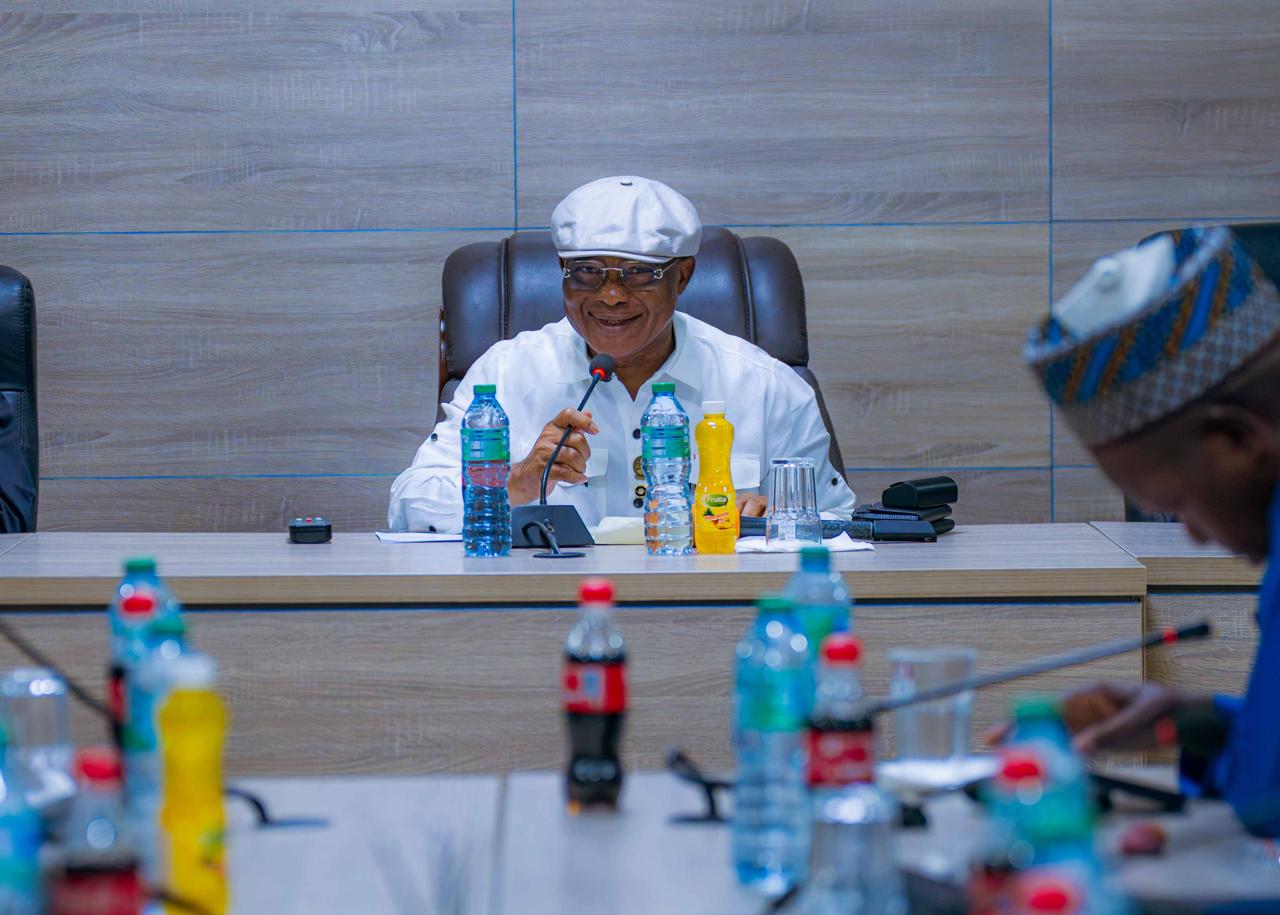
*Renewed Hope Ambassadors Step Into the Next Phase
Fresh from the successful APC 2026 National Convention, the Renewed Hope Ambassadors National, Zonal, and State leadership gathered in Abuja over the weekend, for its fourth strategic meeting, setting the tone for nationwide grassroots activation ahead of 2027.
Chaired by Governor Hope Uzodinma (Imo State) the Director General and National Coordinator of the Renewed Hope Ambassadors, alongside Deputy Director-General, Governor Uba Sani of Kaduna State, and Governor Inuwa Yahaya of Gombe State as Secretary, the session reinforced one clear direction: One Party. One Message. One Mobilization whilst also laying out a strategic roadmap for the activation of the network across all communities in Nigeria.
Backed by the strength of 31 APC-led states, the Renewed Hope Agenda is taking Bola Ahmed Tinubu’s message of progress and reform to every corner of Nigeria.
From bold economic restructuring to initiatives like NELFUND, the increase in the national minimum wage from ₦30,000 to ₦70,000, and strategic investments in critical sectors, including PNiCGI, the mission remains clear: helping Nigerians understand both the purpose and the progress of the Renewed Hope vision.
This is coordination at scale. This is grassroots engagement with purpose. This is the next phase of Renewed Hope with One Party, One Message, and One Mobilisation framework
#RenewedHopeAmbassadors #APC #WeAreAPC


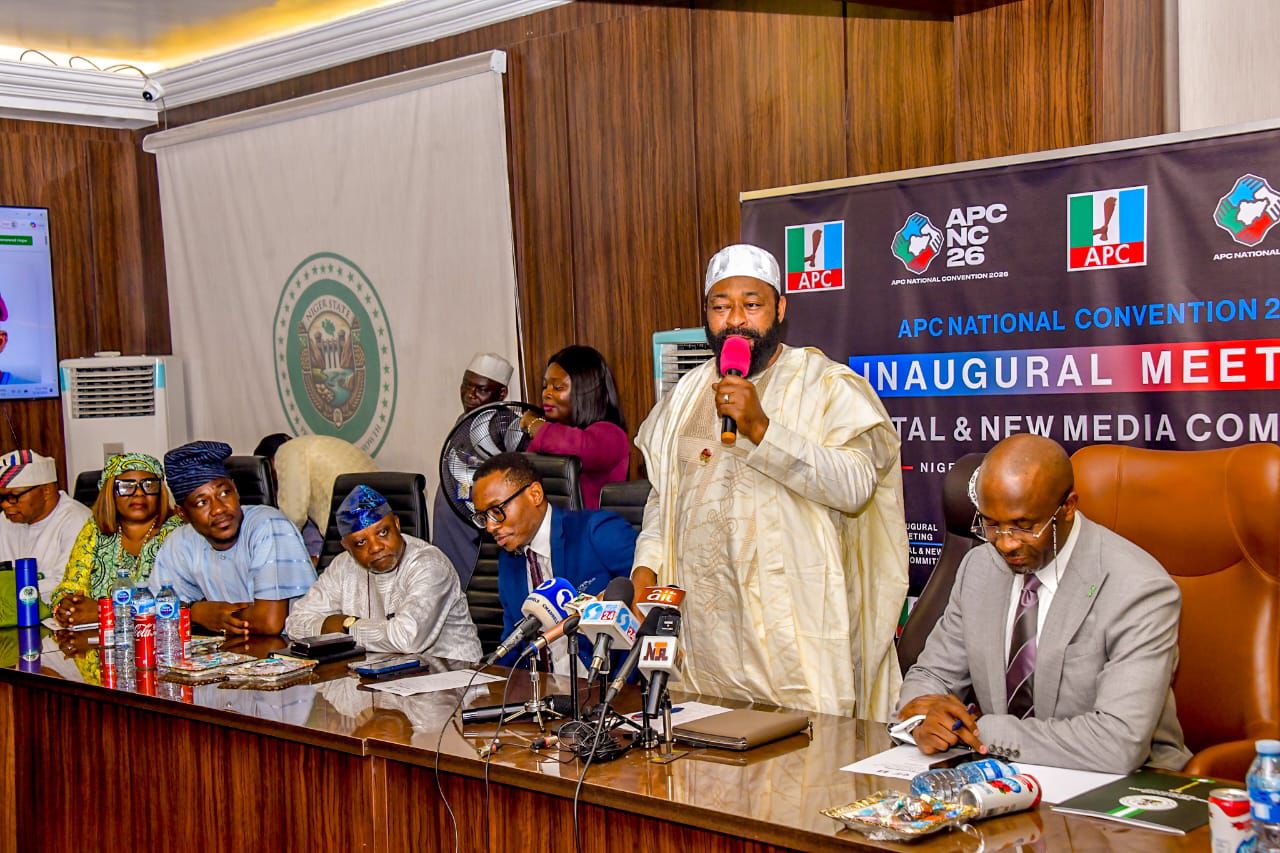
Governor Bago Inaugurates APC Digital Media Sub-Committee Ahead of National Convention.
Governor Umaru Bago has inaugurated the Digital Media Sub-Committee for the forthcoming National Convention of the All Progressives Congress (APC), scheduled to hold on March 27 and 28, 2026 in Abuja.
Chairing the sub-committee, Governor Bago tasked members with the responsibility of effectively communicating the party’s manifesto to the public.
He emphasized the need to leverage social media platforms to highlight the achievements and ongoing efforts of President Bola Ahmed Tinubu, noting that communication gaps have posed challenges that must now be decisively addressed.
The Co-Chair of the sub-committee, Hon. Benjamin Kalu, Deputy Speaker of the House of Representatives, echoed the Governor’s position, urging members to project the activities of both the party and the government to a broader audience.
He called for a deliberate and coordinated effort to showcase the party’s achievements and policy direction, stressing the importance of shaping a compelling and consistent narrative across all digital platforms.
Delivering a presentation to the committee, Otega Ogra, SSA to the President on New Media, who serves as Secretary of the sub-committee, outlined strategic focus areas to guide the team’s operations.
His presentation highlighted communication priorities and actionable steps to achieve the committee’s mandate and strengthen the party’s digital engagement.


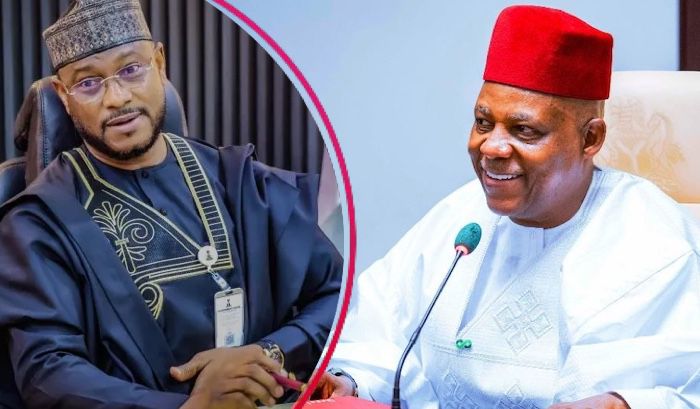
VP Shettima Set to Lead Delegation to Zamfara as Governor Dauda Lawal Formally Joins APC
The Zamfara State chapter of the All Progressives Congress (APC) has finalized plans to receive Vice President Kashim Shettima for the formal defection and reception of Governor Dauda Lawal into the ruling party, scheduled to take place on Tuesday.
State APC Chairman, Tukur Danfulani Maikatako, disclosed this during a high-level stakeholders’ meeting held in Gusau, the state capital. He noted that the Vice President would be joined by the party’s national leadership to mark what he described as a landmark political realignment in the state.
Maikatako expressed the party’s excitement over Governor Lawal’s return, recalling that Zamfara had historically been an APC stronghold and that the Governor was previously a bona fide member of the party before his earlier exit.
“We all know that Zamfara has long been one of the APC’s stronghold states, where the defected Governor was once a bona fide member. Now that he has decided to return home, having been satisfied that the APC remains his second choice after the one he left for obvious reasons,” Maikatako stated.
The Chairman called on all party faithful across the 147 wards in the state’s 14 local government areas to turn out en masse to honour the Vice President’s visit. He emphasized that the event was strategically positioned to bolster the party’s popularity and strengthen its structures ahead of the 2027 general elections.
In a strong appeal for unity, Maikatako urged members to set aside all factional tendencies, stressing that the APC remained one political family with shared goals, particularly the ambition to make Zamfara and Nigeria great again.
Echoing similar sentiments, a former state APC Chairman, Lawal M. Liman, appealed to members to cascade the message to their wards and local government areas. He reinforced the need for cohesion, noting that the party’s collective strength would be critical to achieving success in future elections.

All eyes are now on Gusau as the ruling party prepares for a high-profile political gathering expected to further consolidate its influence in Zamfara State.


-

 society6 months ago
Religion: Africa’s Oldest Weapon of Enslavement and the Forgotten Truth
-

 news4 months ago
WHO REALLY OWNS MONIEPOINT? The $290 Million Deal That Sold Nigeria’s Top Fintech to Foreign Interests
-

 society6 months ago
“You Are Never Without Help” – Pastor Gebhardt Berndt Inspires Hope Through Empower Church (Video)
-

 celebrity radar - gossips2 months ago
Dr. Chris Okafor Returns with Power and Fire of the Spirit -Mounts Grace Nation Altar with Fresh Anointing and Restoration Grace on February 1, 2026