
society
Tinubu’s Caribbean Detour: How Nigeria’s Resources Are Funding Private Deals with the Chagoury Empire

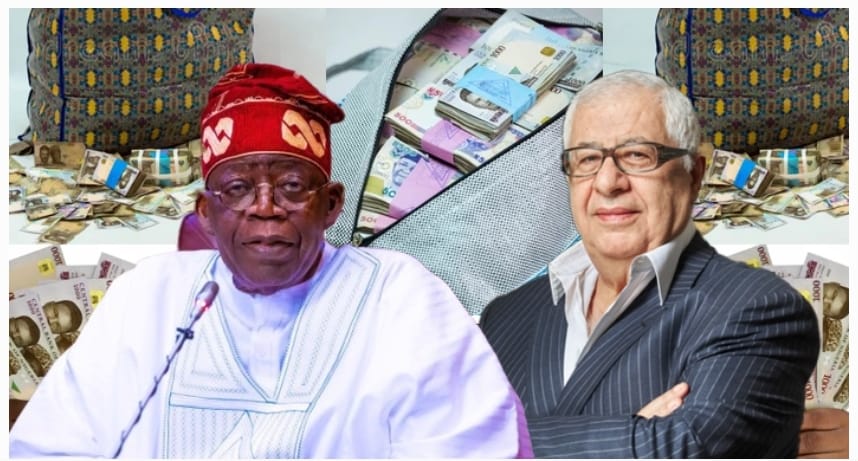
Tinubu’s Caribbean Detour: How Nigeria’s Resources Are Funding Private Deals with the Chagoury Empire.
By George Omagbemi Sylvester | Published by SaharaWeeklyNG.com
President Bola Ahmed Tinubu’s recent trip to Saint Lucia and Saint Helena, before jetting off to Brazil, raises serious red flags about the true intent of his foreign excursions and the reckless use of Nigerian public resources for what appears to be a deeply personal, profit-driven mission. This was no ordinary diplomatic voyage. Behind the carefully staged optics of international relations lies a trail of covert dealings, shady business alliances and questionable loyalties; all pointing toward one family: the Chagourys.
At a time when Nigeria is gripped by unprecedented economic despair, runaway inflation and mass disillusionment, Tinubu’s trip to these obscure Caribbean islands (countries with little or no diplomatic or economic value to Nigeria) has ignited outrage. The big question on every concerned Nigerian’s lips is simple: Why Saint Lucia and Saint Helena, and what business does the Nigerian president have with the Chagoury family there?
The Chagoury Connection: A History of Shadows
The Chagoury name is no stranger to Nigerian politics. The Lebanese-Nigerian family, headed by Gilbert Chagoury, has long held deep roots in Nigeria’s corridors of power, with business interests spanning construction, telecommunications, real estate and oil. They were especially cozy with the late General Sani Abacha and Gilbert was once convicted in Switzerland for laundering money on Abacha’s behalf, a conviction that was later dismissed after a settlement, but not before it left a lasting stain.
So, when Bola Tinubu, a man whose personal and political wealth has always drawn suspicion, decides to “stop by” Caribbean nations where the Chagoury family has financial interests, red flags fly. According to diplomatic insiders and corroborated travel logs, the stopovers in Saint Lucia and Saint Helena were less about bilateral relations and more about consolidating private real estate deals and financial instruments tied to the Chagoury empire.
Nigeria’s Resources, Private Gain
It is alarming that a democratically elected leader would use Nigeria’s public resources (planes, staff, security details and state funds) to bolster private foreign investments. These trips were not publicized in official state bulletins, nor were they announced through the Ministry of Foreign Affairs, a clear breach of transparency. What is worse, no known Nigerian delegation or bilateral agreement was signed in either Saint Lucia or Saint Helena. No trade discussions, no tourism development pacts, no diaspora meetings. Nothing.
What did occur, however, were high-level meetings between President Tinubu’s inner circle and Chagoury family representatives to negotiate the expansion of their real estate projects, allegedly tied to offshore holdings where Nigerian interests may have been used as collateral.
This sort of deception is precisely what erodes public trust and deepens the legitimacy crisis Nigeria faces under Tinubu’s administration.
A Nation Bleeding While the President Shops for Property
Back home, the reality couldn’t be more tragic. Fuel prices are unaffordable, unemployment is skyrocketing, insecurity is swallowing entire communities and naira continues its freefall. Nigerians are forced to tighten their belts while the president gallivants across the globe in what appears to be a luxury real estate and business expansion tour.
Veteran journalist and public affairs analyst, Jide Olatunji, puts it bluntly:
“This is the worst form of political deceit. At a time when Nigerians are selling their household items to buy food, their president is busy striking private business deals with convicted foreign oligarchs. It is an insult to national dignity.”
Foreign Trips, No Foreign Results
Since assuming office, Tinubu has made more than a dozen international trips. From Paris to Doha, Davos to New York and now to these remote Caribbean islands, the president has spent more time abroad than many foreign ministers. Yet, there’s very little to show for it in terms of foreign direct investment, trade partnerships or international support. Every trip is heralded with pomp but ends in nothing but vague photo-ops and empty communiqués.
Even within the National Assembly, grumbles are beginning to surface. A ranking senator from the South-South region, who asked to remain anonymous for fear of reprisal, lamented:
“We can’t keep watching our president turn Nigeria into a private logistics company for his global empire-building. These trips are excessive, unnecessary and expensive.”
Democracy or Kleptocracy?
This latest episode is a continuation of a disturbing trend: the personalization of governance. Bola Tinubu appears to treat state apparatus as an extension of his private estate; echoing the “Emilokan” entitlement mentality that powered his controversial election. Whether it’s installing loyalists into key institutions, bypassing due process or embarking on business-centric diplomatic charades, Tinubu is shaping Nigeria into a dangerous cocktail of crony capitalism and authoritarian kleptocracy.
Facts and Figures: The Burden on Nigerians
Cost of Presidential Trips: It is estimated that each foreign trip by the presidency costs Nigerians between ₦2.5 billion to ₦4 billion, including aircraft operations, logistics, accommodations and security.
Foreign Reserves Depletion: Nigeria’s foreign reserves dropped to $32.1 billion in June 2025, the lowest in over a decade yet the president flies to islands with no fiscal relevance to Nigeria.
National Debt: Nigeria’s public debt has crossed ₦101 trillion, with interest payments consuming over 90% of government revenue.
All this, while Tinubu entertains a billionaire family known for laundering stolen Nigerian funds during the Abacha era? The insult could not be deeper.
A Message to the Presidency: Enough!
Nigerians must not be passive. Civil society organizations, the media, opposition parties and religious leaders must demand a detailed breakdown of all Tinubu’s foreign trips/destinations, expenses, outcomes and justifications. We cannot allow a presidency that sells economic reform at home while pursuing private profit abroad.
In the words of Nobel Laureate, Prof. Wole Soyinka:
“The man dies in all who keep silent in the face of tyranny.”
Silence is no longer an option. Nigerians must demand accountability. We must ask why the presidency is more accountable to Chagoury’s bank than to the Nigerian people.
Final Word: This Is Not Governance
What Tinubu is doing is not leadership. It is exploitation. It is manipulation. It is, quite frankly, a betrayal. Nigerians deserve more than presidential charades designed to mask private transactions. They deserve leadership rooted in transparency, vision and patriotic sacrifice.
If Bola Ahmed Tinubu believes Nigeria is his personal estate, then we must remind him: Nigeria is a democracy, not a family business.
And if the Saint Lucia-Saint Helena trips were indeed innocent, let him prove it with documents, agreements and visible benefits to Nigeria.
Until then, this remains a deceptive trip cloaked in executive fraud and a disgrace to the nation and a tragedy to its people.


Written by George Omagbemi Sylvester
Published by SaharaWeeklyNG.com




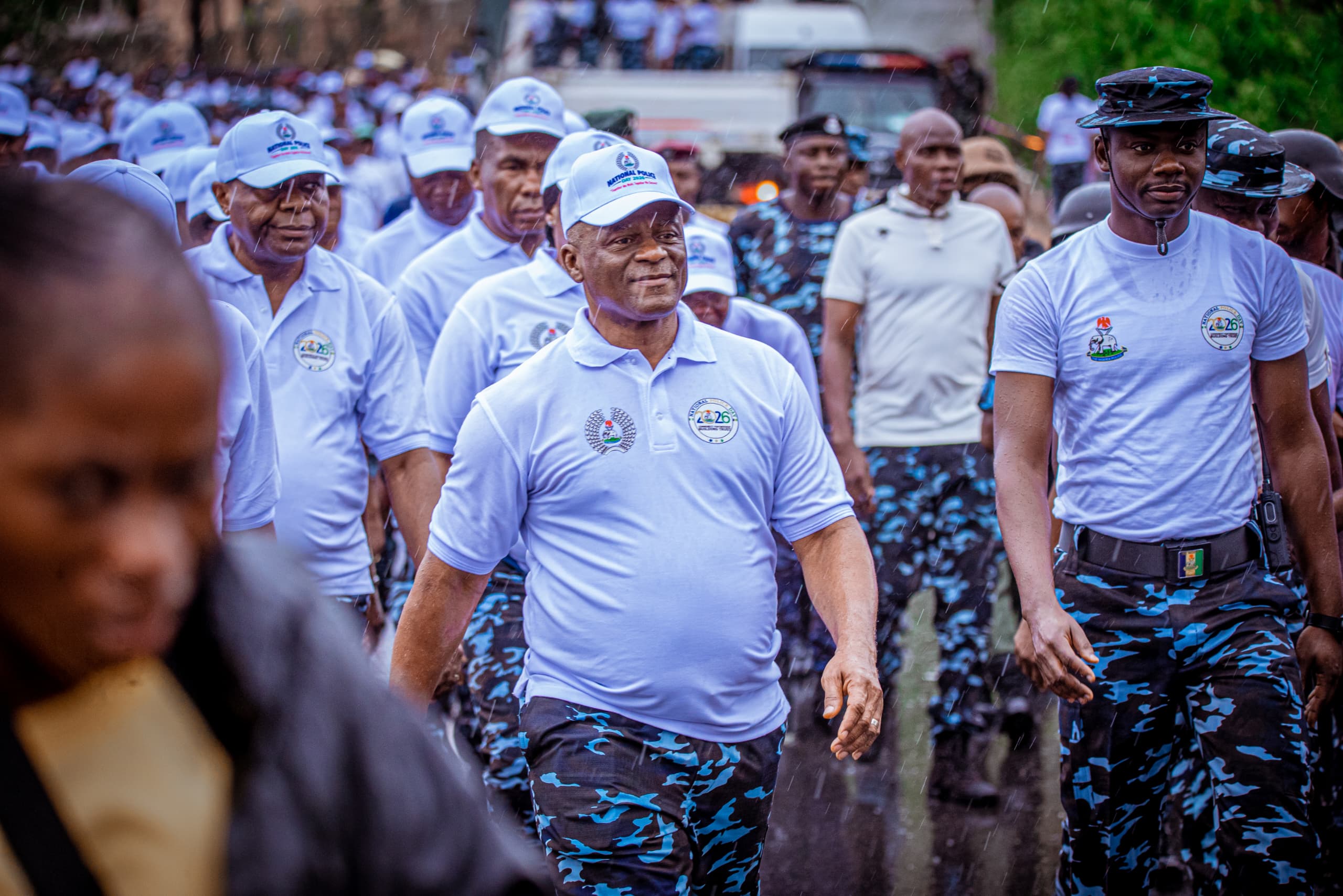
Police Day 2026: IGP Disu Leads Nationwide Walkathon To Strengthen Community Trust
The Inspector-General of Police, Olatunji Disu, on Tuesday led the management team, alongside officers and personnel of the Nigeria Police Force, in a nationwide walkathon to commemorate the 2026 National Police Day.
The event, held across state capitals and the Federal Capital Territory, formed part of activities marking Day Two of the annual celebration, themed “Community Partnership: Building Trust.”
The symbolic exercise, which drew participation from both police personnel and members of the public, was aimed at showcasing unity, discipline, and a renewed commitment to community policing and public safety.
According to the Force leadership, the walkathon underscores the Nigeria Police Force’s resolve to strengthen public trust, deepen engagement with citizens, and enhance collaboration in tackling security challenges across the country.
Participants described the initiative as a practical step toward bridging the gap between law enforcement and the communities they serve, while also promoting physical fitness and mental well-being among officers and civilians alike.
With the theme reflecting a shared responsibility for safety, the Police reiterated that sustainable security can only be achieved through active partnership with the public.
The event concluded with a renewed call for collective action under the banner: “Together We Walk, Together We Secure,” emphasizing unity of purpose in building a safer and more secure society for all Nigerians.


society
Dr. Chris Okafor invokes divine retribution upon individuals blackmailing the Grace Nation church
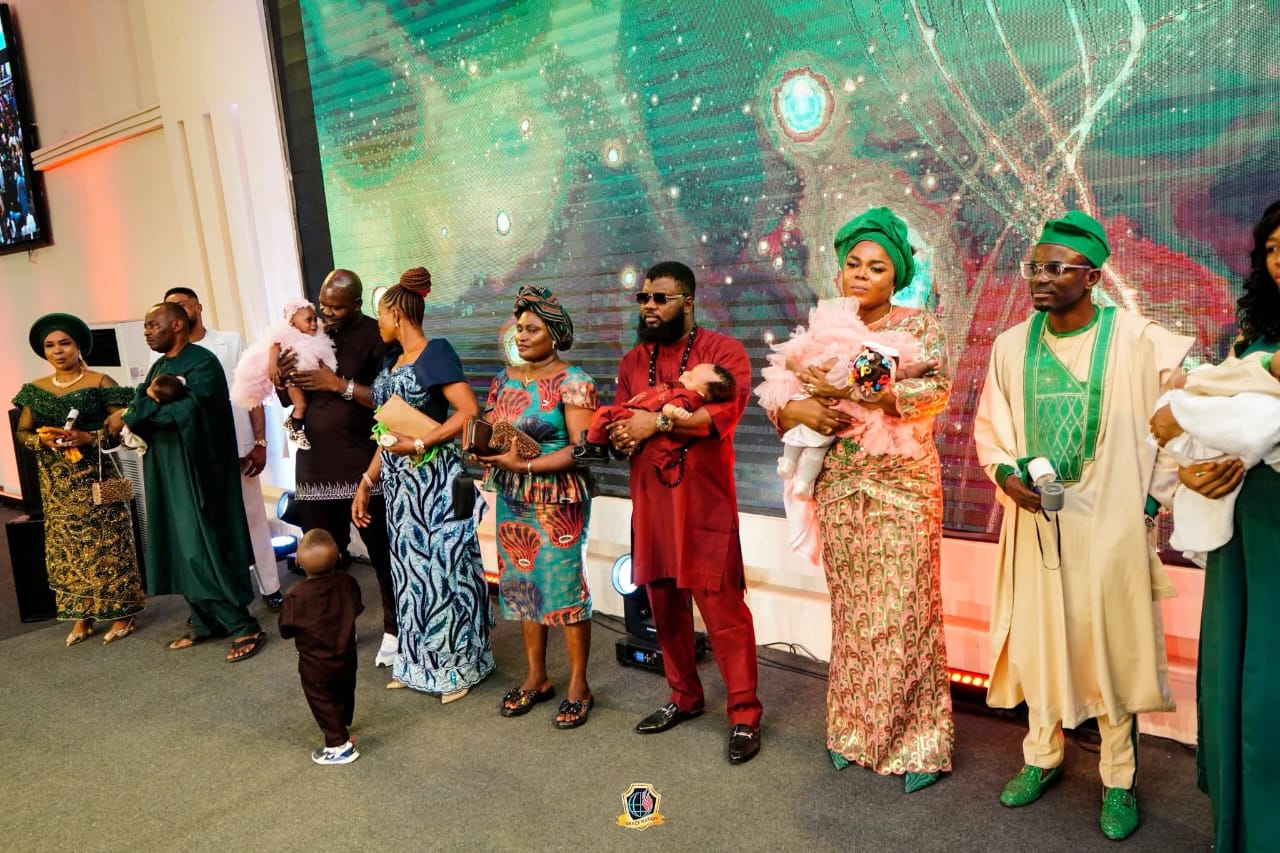
Dr. Chris Okafor invokes divine retribution upon individuals blackmailing the Grace Nation church
… Affirming God’s omnipotence to unveil malicious schemes.
To be frank, the ability of Doris Ogala and her associates to withstand the arduous challenges set by Senior Pastor Dr. Chris Okafor of Grace Nation Global at the culmination of the Harvest of Babies 2026 conference, the church’s flagship event, continues to elude me.
It’s advisable not to offend a powerful spiritual leader like Prophet Chris Okafor to avoid potential consequences, as seen in the situation with Doris Ogala, who was rebuked by the prophet; can she rectify the situation through confession?
Insiders close to the man of God claim that despite relentless online bullying and blackmailing, the Generational Prophet remains resolute, stating that God’s power has been evident throughout the commission’s existence. The reason for this wonderful statement is found in the scriptures, “Upon this rock I shall build my Church, and the gates of hell shall not prevail.” The more falsehoods are spread about the church and its leader, the more God elevates the church and propels him to greater heights, he asserted. He emphasized that blessings and fruitfulness are antidotes to curses, noting that God continues to bestow blessings upon the church, including miracles and the gift of children, which is one reason for the grand finale of the annual family liberation program, The Harvest of Babies.
However, the man of God issued a curse on each person speaking ill of the church, blackmailing, and uttering all sorts of falsehoods against the church, declaring that if they refused to repent within a few days, the earth would swallow them and their family members, stating that they would be of no use to themselves, their families, or society at large.
The spiritual leader cautions his followers to beware of such individuals including Doris Ogala who may taint their faith, and urges them to treat these persons as emissaries of the devil, avoiding them altogether.
Recall that the 2026 harvest of babies concluded with a remarkable birth of a miracle baby boy to a woman on the third day of the conference, accompanied by the dedication of several other miracle babies, all to the glory of God.
Christopher Sunday David writes from
Austria
“Together We Walk, Together We Secure”: Police Launch 2026 Walkathon In Abuja
The Nigeria Police Force has announced plans to host a walkathon in commemoration of the 2026 National Police Day, aimed at promoting unity, peace, and stronger community partnership.
The event is scheduled to take place on Tuesday, March 31, 2026, with participants expected to converge at the Force Headquarters Abuja by 6:00 a.m., where the walk will commence.
According to the organisers, the walkathon is designed to bring together members of the public, stakeholders, and security personnel in a show of solidarity and shared commitment to national security.
With the theme, “Together we walk, together we secure,” the initiative underscores the importance of collaboration between the police and citizens in maintaining peace and safety across the country.
Members of the public have been encouraged to participate in the exercise, which forms part of activities lined up to mark this year’s National Police Day celebration.
It is believed that the walkathon would not only foster closer ties between the police and the communities but also serve as a platform to promote awareness on collective responsibility in ensuring a safer society.


-

 society6 months ago
Religion: Africa’s Oldest Weapon of Enslavement and the Forgotten Truth
-

 news4 months ago
WHO REALLY OWNS MONIEPOINT? The $290 Million Deal That Sold Nigeria’s Top Fintech to Foreign Interests
-

 society6 months ago
“You Are Never Without Help” – Pastor Gebhardt Berndt Inspires Hope Through Empower Church (Video)
-

 celebrity radar - gossips2 months ago
Dr. Chris Okafor Returns with Power and Fire of the Spirit -Mounts Grace Nation Altar with Fresh Anointing and Restoration Grace on February 1, 2026