
society
Tinubu’s Food Security Reforms: A Reactionary Gimmick Driven by Fear, Not Empathy – ADC Fires Back

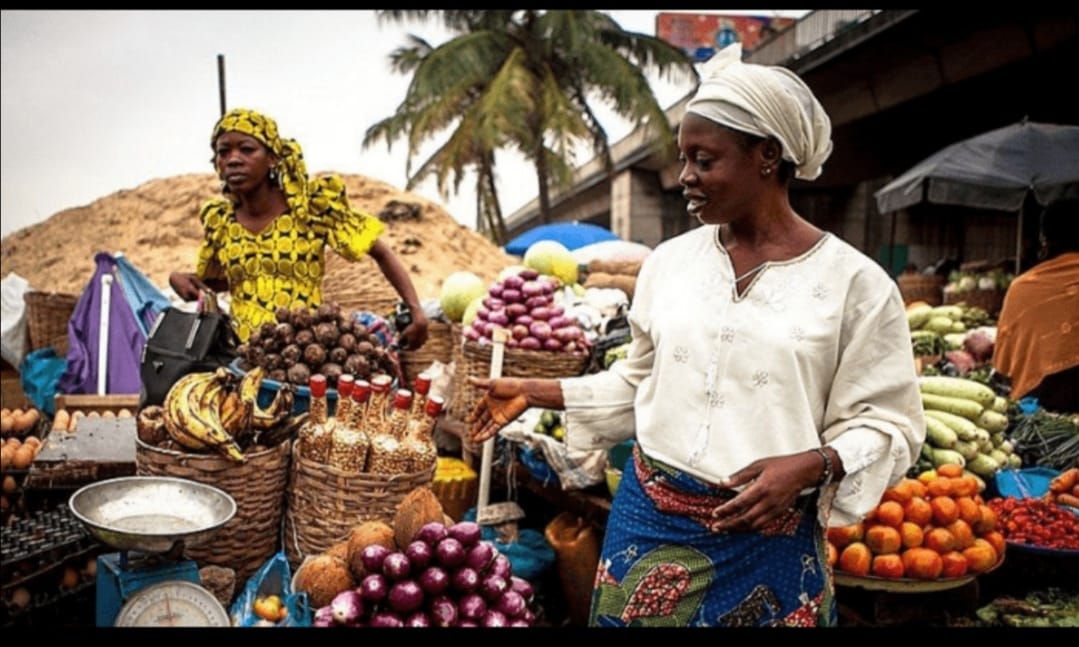
Tinubu’s Food Security Reforms: A Reactionary Gimmick Driven by Fear, Not Empathy – ADC Fires Back.
By George Omagbemi Sylvester | Published by SaharaWeeklyNG.com
In what appears to be a desperate scramble to douse public anger amid Nigeria’s worsening food crisis, President Bola Ahmed Tinubu’s recent pronouncements on food security have been described by the African Democratic Congress (ADC) as not only belated but driven by sheer fear of public backlash not empathy for the Nigerian people. While the President now talks tough about declaring food as a national emergency, the ADC has boldly called out this so-called reform agenda as a reactionary measure borne out of panic and not patriotism.
Nigerians are not fooled by press statements or cosmetic committee formations. They are HUNGRY. They are ANGRY. And above all, they are tired of being treated as STATISTICAL FOOTNOTES while the ruling elite feed fat on their agony. The skyrocketing prices of basic food items (garri, rice, beans, yam and even sachet water) have reached astronomical levels under this administration. This is not an ISOLATED MARKET DISTORTION. This is ECONOMIC SABOTAGE by NEGLECT.
According to the National Bureau of Statistics (NBS), inflation in Nigeria climbed to 34.1% in May 2025, with food inflation surpassing 40%, a devastating record. Over 31 million Nigerians, according to the United Nations World Food Programme, face acute food insecurity. These are not abstract numbers. They are your neighbors, family members and colleagues skipping meals or relying on charity to stay alive.
Yet, for almost two years since assuming office, Tinubu failed to prioritize agriculture beyond policy papers. His administration’s obsession with neoliberal economic theories (from fuel subsidy removal to currency floating) has compounded rural poverty, destroyed purchasing power and dismantled any existing structure for agricultural resilience. Now, when the streets begin to simmer with rage and the organized labour threatens more strikes, the President suddenly ‘discovers’ food security?
The African Democratic Congress is right in calling out the President’s food emergency declaration as fear-induced. The ADC National Chairman, Ralph Nwosu, minced no words recently:
“A government that ignored farmers, refused to support rural infrastructure and watched as bandits chased thousands of agricultural workers from their land cannot now pretend to care about food security. Tinubu is reacting to fear, not responding with empathy.”
This statement is not mere political rhetoric. The reality on the ground confirms that Tinubu’s food reforms are cosmetic, reactive and fundamentally disconnected from the lived realities of Nigerians.
SECURITY and AGRICULTURE: A Broken Link
Perhaps the greatest irony of Tinubu’s food security posturing is his failure to secure the rural economy. More than 12 million Nigerians have been displaced since 2009 due to insecurity, especially in the Middle Belt and northern regions, the country’s agricultural backbone. Bandits, terrorists and herders operate with impunity while farmers abandon their lands.
Dr. Akinyemi Olabode, an agricultural economist at the University of Ibadan, recently noted:
“You cannot talk about food security in a war zone. The real food security policy should begin with guaranteeing physical safety for farmers. Until then, these reforms are academic exercises.”
Rather than increase investment in agro-policing or community farming protection schemes, Tinubu’s government has consistently slashed the budgets of the Ministry of Agriculture while spending billions on luxury foreign trips, meaningless jamborees and inflated solar panels for Aso Rock.
Where Was Tinubu When Farmers Cried?
When farmers across Benue, Zamfara, Kaduna, Plateau and parts of Delta State cried out over the loss of farmland and attacks by armed herdsmen, where was Tinubu? When rice and maize associations demanded subsidized inputs and protection against imported produce, where was his empathy?
Instead of responding to the agricultural sector with strategic foresight, the President continued to parade imported technocrats with zero practical knowledge of local food systems. Policies like the so-called “GREEN IMPERATIVE” and MECHANIZED AGRICULTURE BLUEPRINT were mere buzzwords without budgetary backing. The Anchor Borrowers Programme, which had shown some promise under past administrations, was left in bureaucratic limbo.
ADC’s Bold Alternative Vision.
In contrast, the ADC has consistently championed a grassroots-centered approach to food security. The party advocates for a Food Sovereignty Act that would protect local farmers, enhance state-level ago-cooperatives and legalize land ownership rights for smallholders. Rather than depend on private profiteers or foreign donors, the ADC calls for direct community budgeting and a return to Nigeria’s rich agrarian heritage.
“We must move beyond press releases and fight food poverty like we fought Ebola or COVID-19,” says ADC spokesperson, Hon. Adaobi Onyekachi. “Food is not just an economic issue; it is a national survival issue. A hungry population cannot be loyal, peaceful or productive.”
The ADC further accused Tinubu of failing to engage agricultural unions, rural communities or academic think tanks before hastily declaring a state of emergency. This top-down leadership style, the party argues, has always resulted in policy failure; from the fuel subsidy chaos to the botched student loan scheme.
Lip Service vs. Real Policy.
In practical terms, Tinubu’s food policy lacks substance. There is no clear IMPLEMENTATION ROAD MAP. No RURAL INFRASTRUCTURE BUDGET. No POST-HARVEST PRESERVATION or LOGISTICS plan. No MONITORING AGENCY with actual teeth. Declaring emergency is one thing. Translating it into sustainable food pricing, availability and affordability is quite another.
Moreover, the government’s continued failure to regulate the activities of middlemen and commodity hoarders remains a key driver of food inflation. Without breaking the monopolies of urban market cartels and empowering producer cooperatives, farmers will remain poor and food prices will keep soaring.
Public Sentiment: Tinubu’s Growing Disconnect.
Public opinion is rapidly shifting against the President. Many Nigerians now see him as arrogant, disconnected and elitist. The ADC’s rebuke taps into this public frustration. It reflects a growing consensus that Tinubu’s administration is out of touch with grassroots pain and more concerned about international image than national dignity.
“We voted for renewed hope. What we got is renewed hunger,” says Ngozi Ede, a Lagos market trader. “Every day my capital shrinks, my customers cry and Tinubu is still flying abroad talking about investment. If we die of hunger, who will invest in a graveyard?”
In Retrospect: Nigeria Needs Empathy, Not Emergency Rhetoric.
The time has passed for performative governance. Nigerians demand real empathy, not emergency declarations rooted in fear of revolt. Food security cannot be achieved through fear-driven policy announcements. It requires bold, inclusive and honest leadership qualities sorely missing in the Tinubu presidency.
The ADC has rightly exposed the hollow nature of this food security charade. Nigeria deserves a government that does not wait for protests to feed its people. A government that leads with compassion, not coercion. One that plans ahead, listens to its farmers, respects its poor and sees every hungry child as a national failure, not a political liability.
Tinubu may have declared food a national emergency, but Nigerians already know; HUNGER became a national tragedy the day leadership forgot its PEOPLE.


By George Omagbemi Sylvester
Published by SaharaWeeklyNG.com





Police Day 2026: IGP Disu Leads Nationwide Walkathon To Strengthen Community Trust
The Inspector-General of Police, Olatunji Disu, on Tuesday led the management team, alongside officers and personnel of the Nigeria Police Force, in a nationwide walkathon to commemorate the 2026 National Police Day.
The event, held across state capitals and the Federal Capital Territory, formed part of activities marking Day Two of the annual celebration, themed “Community Partnership: Building Trust.”
The symbolic exercise, which drew participation from both police personnel and members of the public, was aimed at showcasing unity, discipline, and a renewed commitment to community policing and public safety.
According to the Force leadership, the walkathon underscores the Nigeria Police Force’s resolve to strengthen public trust, deepen engagement with citizens, and enhance collaboration in tackling security challenges across the country.
Participants described the initiative as a practical step toward bridging the gap between law enforcement and the communities they serve, while also promoting physical fitness and mental well-being among officers and civilians alike.
With the theme reflecting a shared responsibility for safety, the Police reiterated that sustainable security can only be achieved through active partnership with the public.
The event concluded with a renewed call for collective action under the banner: “Together We Walk, Together We Secure,” emphasizing unity of purpose in building a safer and more secure society for all Nigerians.


society
Dr. Chris Okafor invokes divine retribution upon individuals blackmailing the Grace Nation church

Dr. Chris Okafor invokes divine retribution upon individuals blackmailing the Grace Nation church
… Affirming God’s omnipotence to unveil malicious schemes.
To be frank, the ability of Doris Ogala and her associates to withstand the arduous challenges set by Senior Pastor Dr. Chris Okafor of Grace Nation Global at the culmination of the Harvest of Babies 2026 conference, the church’s flagship event, continues to elude me.
It’s advisable not to offend a powerful spiritual leader like Prophet Chris Okafor to avoid potential consequences, as seen in the situation with Doris Ogala, who was rebuked by the prophet; can she rectify the situation through confession?
Insiders close to the man of God claim that despite relentless online bullying and blackmailing, the Generational Prophet remains resolute, stating that God’s power has been evident throughout the commission’s existence. The reason for this wonderful statement is found in the scriptures, “Upon this rock I shall build my Church, and the gates of hell shall not prevail.” The more falsehoods are spread about the church and its leader, the more God elevates the church and propels him to greater heights, he asserted. He emphasized that blessings and fruitfulness are antidotes to curses, noting that God continues to bestow blessings upon the church, including miracles and the gift of children, which is one reason for the grand finale of the annual family liberation program, The Harvest of Babies.
However, the man of God issued a curse on each person speaking ill of the church, blackmailing, and uttering all sorts of falsehoods against the church, declaring that if they refused to repent within a few days, the earth would swallow them and their family members, stating that they would be of no use to themselves, their families, or society at large.
The spiritual leader cautions his followers to beware of such individuals including Doris Ogala who may taint their faith, and urges them to treat these persons as emissaries of the devil, avoiding them altogether.
Recall that the 2026 harvest of babies concluded with a remarkable birth of a miracle baby boy to a woman on the third day of the conference, accompanied by the dedication of several other miracle babies, all to the glory of God.
Christopher Sunday David writes from
Austria
“Together We Walk, Together We Secure”: Police Launch 2026 Walkathon In Abuja
The Nigeria Police Force has announced plans to host a walkathon in commemoration of the 2026 National Police Day, aimed at promoting unity, peace, and stronger community partnership.
The event is scheduled to take place on Tuesday, March 31, 2026, with participants expected to converge at the Force Headquarters Abuja by 6:00 a.m., where the walk will commence.
According to the organisers, the walkathon is designed to bring together members of the public, stakeholders, and security personnel in a show of solidarity and shared commitment to national security.
With the theme, “Together we walk, together we secure,” the initiative underscores the importance of collaboration between the police and citizens in maintaining peace and safety across the country.
Members of the public have been encouraged to participate in the exercise, which forms part of activities lined up to mark this year’s National Police Day celebration.
It is believed that the walkathon would not only foster closer ties between the police and the communities but also serve as a platform to promote awareness on collective responsibility in ensuring a safer society.


-

 society6 months ago
Religion: Africa’s Oldest Weapon of Enslavement and the Forgotten Truth
-

 news4 months ago
WHO REALLY OWNS MONIEPOINT? The $290 Million Deal That Sold Nigeria’s Top Fintech to Foreign Interests
-

 society6 months ago
“You Are Never Without Help” – Pastor Gebhardt Berndt Inspires Hope Through Empower Church (Video)
-

 celebrity radar - gossips2 months ago
Dr. Chris Okafor Returns with Power and Fire of the Spirit -Mounts Grace Nation Altar with Fresh Anointing and Restoration Grace on February 1, 2026