
society
Tinubu’s Greatest Failure: Insecurity Has Made Nigeria a Killing Field

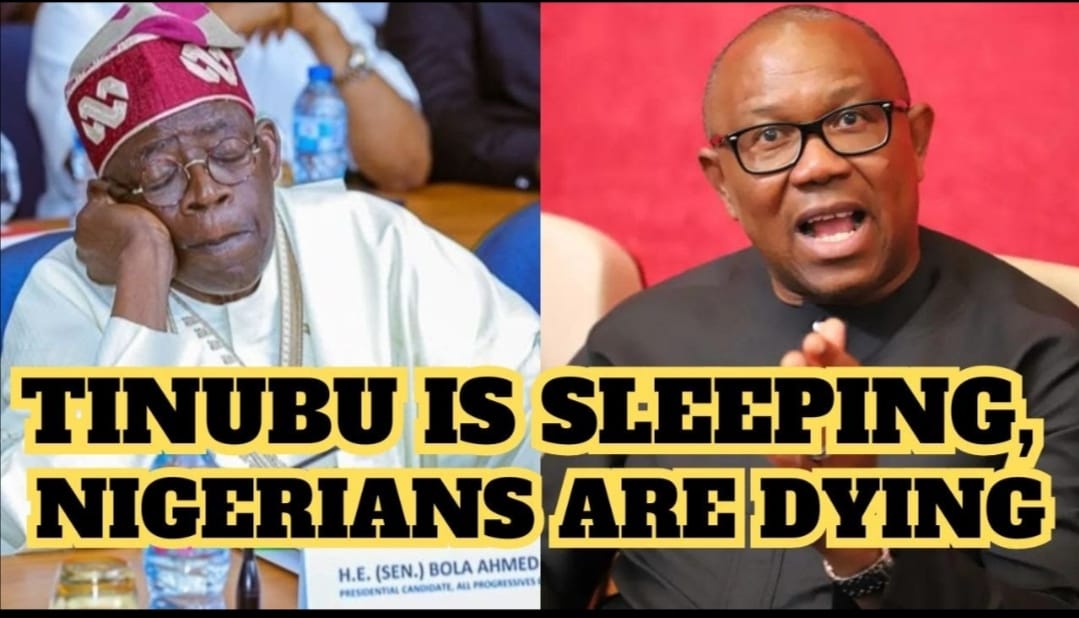
Tinubu’s Greatest Failure: Insecurity Has Made Nigeria a Killing Field.
By George Omagbemi Sylvester | Published by SaharaWeeklyNG.com
In a nation where blood flows more freely than clean water and the average citizen sleeps with one eye open, the conversation about Nigeria’s survival has shifted from economic growth and job creation to the fundamental right to life. Security is not just a policy issue; it is the very foundation of governance. Sadly, President Bola Ahmed Tinubu has utterly failed in this most sacred duty.
There is no peace in the Northeast. There is no safety in the Northwest. Blood flows in the North-Central. The South-South is bleeding from oil theft and continous violence. The Southeast is under siege from unknown gunmen and militarization. The Southwest (Tinubu’s own region) isn’t exempt either with kidnapping and violent crimes now part of daily life. Who exactly is safe in Nigeria today?
Let’s be clear: nothing is more important than the protection of lives and properties. Even the Constitution of the Federal Republic of Nigeria 1999 (as amended) is clear in Section 14(2)(b): “The security and welfare of the people shall be the primary purpose of government.” If the government cannot protect its people, then that government has failed. And President Tinubu, despite his flowing agbada and grand political image as “Jagaban,” has failed woefully.
“Na Who Dey Alive Dey Chop”
A popular Nigerian phrase that captures this sentiment is: “Na who dey alive dey chop.” You can’t talk about inflation, minimum wage, education or infrastructure when you’re constantly looking over your shoulder, wondering if you’ll be the next victim of kidnapping or mass murder. Insecurity has destroyed markets, closed schools and emptied farmlands. Farmers in Zamfara, Borno, Plateau and Benue can no longer go to their farms. The roads between Kaduna and Abuja are death traps. The forests from Ondo to Enugu are controlled by bandits. Nowhere is safe.
How can a government that cannot protect lives talk about attracting foreign investment? What investor would risk their capital in a country where entire communities are wiped out overnight? And yet, this administration keeps spinning illusions about economic recovery while citizens are slaughtered like animals.
Defenders of the Indefensible
Some political loyalists and sycophants continue to defend Tinubu using logic that insults common sense. They tell us to be patient. They say insecurity didn’t start with Tinubu, but did he not campaign with the promise to restore security? Did he not swear to protect every Nigerian? If you inherit a house on fire, you don’t fan the flames, you put it out! Two years into his presidency, we’re still hearing excuses while mass graves multiply across the country.
Defending Tinubu’s inaction using history or regional politics is dangerous and dishonest. If the Taliban were to attack Nigeria tomorrow and the Tinubu government allows them to slaughter Nigerians without resistance, will we again blame religion or foreign influence or will we hold the Commander-in-Chief accountable?
This is not a religious issue. It is not an ethnic problem. It is a question of leadership. And in this critical area, Tinubu has failed to lead, failed to inspire and most importantly, failed to protect.
Grim Facts Don’t Lie
Let’s look at the numbers. According to SBM Intelligence, over 4,556 Nigerians were killed and more than 3,000 abducted in 2023 alone; Tinubu’s first year in office. Amnesty International reported that in Kaduna, Plateau and Benue states, coordinated attacks on villages continue with little or no military intervention. In March 2024, over 300 people were killed in Plateau within a week. And yet, no national day of mourning was declared. No military heads were sacked. Life went on as if Nigerian lives meant nothing.
Security spending under Tinubu has skyrocketed with over ₦3.25 trillion allocated to defense and security in the 2024 budget, yet the insecurity situation has only worsened. Where is the money going? Why are our soldiers underpaid, under-equipped and overstretched? Why are bandits better armed than the police? Why are communities forming vigilante groups to do the job the government is paid to do?
“It is better to have no government than to have one that kills its own people through negligence.” ~ Femi Falana, SAN
No Excuses, Just Accountability
Leadership is not about sharing palliatives or jetting around the world for photo ops. It is about responsibility. Nigeria is not a playground for political experiments. It is a nation of over 200 million human lives. Tinubu should not be spending more time in Paris and London than in Borno, Zamfara or Benue.
In April 2025, President Tinubu boasted during a foreign investment summit that “Nigeria is open for business.” But the truth on the ground is grim. Foreign companies are shutting down due to insecurity. Telecom masts are being destroyed. Railway lines are vandalized. Schools in the North are closing en masse. Between 2020 and 2024, over 1,500 schoolchildren were abducted by terrorists and under Tinubu, not much has changed.
In the words of former Chief of Defence Staff, General Martin Luther Agwai (rtd): “The country is gradually being taken over by non-state actors while the state folds its arms.”
Citizens Are Losing Hope
Youths are tired. Families are broken. Dreams are buried alongside loved ones in shallow graves. The idea of Nigeria has become a nightmare for too many. From the herdsmen killings in Benue to the communal clashes in Taraba, the terrorist ambushes in Borno to the kidnapping rings in Ekiti, the story is the same: death, destruction and despair.
Even the National Assembly is grumbling. In May 2025, several lawmakers demanded the sack of National Security Adviser Nuhu Ribadu and the Service Chiefs, citing failure to tackle escalating insecurity. Yet Tinubu continues to operate in denial, unwilling to admit the rot, unable to inspire confidence.
What Should Tinubu Do?
Enough is enough. President Tinubu must:
Declare a state of emergency on national security; with clear military, intelligence and community policing strategies.
Restructure the Nigerian Police Force to function more autonomously, with proper funding, training and accountability.
Replace non-performing security chiefs, this is not a retirement home.
Engage local communities through civil-military cooperation, dialogue and intelligence sharing.
Publicly address Nigerians every month with real updates on security and not empty rhetoric.
Final Word
To those still defending Tinubu blindly: you are part of the problem. Patriotism does not mean defending failure. It means holding leaders accountable. Nigeria cannot move forward when her citizens are being buried in mass graves while politicians exchange blames and play ethnic cards.
Security is not an optional promise. It is a constitutional obligation. And President Tinubu, so far, has failed to meet that obligation. If nothing changes, history will remember him not as the reformer he claimed to be, but as the man who fiddled while Nigeria burned.
“A nation that cannot protect its citizens has signed its own death warrant.” ~ Prof. Chidi Odinkalu, human rights activist
Nigeria DESERVES better. Nigerians DEMAND better… And we must not rest until we get it.


Written by George Omagbemi Sylvester
Published by SaharaWeeklyNG.com




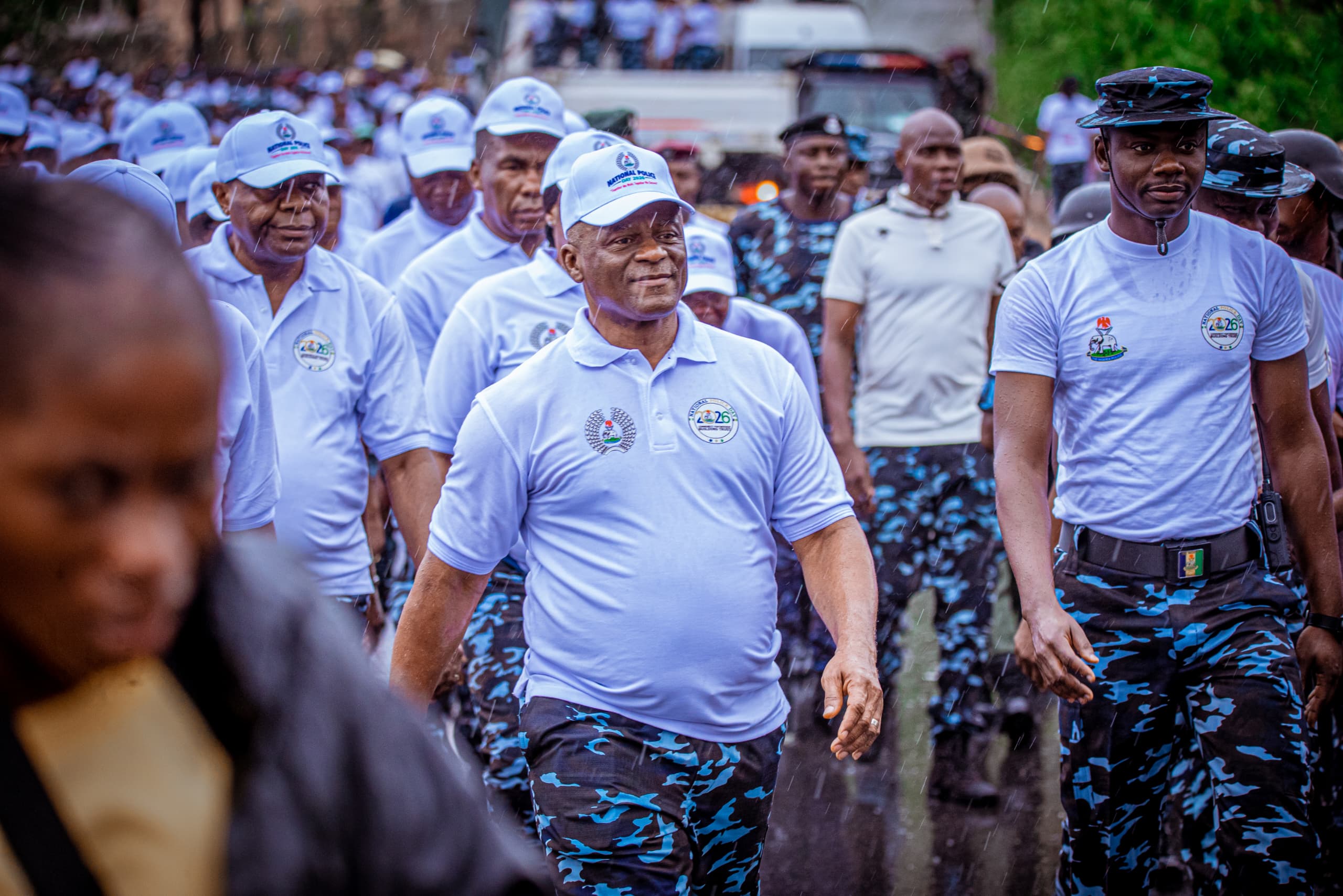
Police Day 2026: IGP Disu Leads Nationwide Walkathon To Strengthen Community Trust
The Inspector-General of Police, Olatunji Disu, on Tuesday led the management team, alongside officers and personnel of the Nigeria Police Force, in a nationwide walkathon to commemorate the 2026 National Police Day.
The event, held across state capitals and the Federal Capital Territory, formed part of activities marking Day Two of the annual celebration, themed “Community Partnership: Building Trust.”
The symbolic exercise, which drew participation from both police personnel and members of the public, was aimed at showcasing unity, discipline, and a renewed commitment to community policing and public safety.
According to the Force leadership, the walkathon underscores the Nigeria Police Force’s resolve to strengthen public trust, deepen engagement with citizens, and enhance collaboration in tackling security challenges across the country.
Participants described the initiative as a practical step toward bridging the gap between law enforcement and the communities they serve, while also promoting physical fitness and mental well-being among officers and civilians alike.
With the theme reflecting a shared responsibility for safety, the Police reiterated that sustainable security can only be achieved through active partnership with the public.
The event concluded with a renewed call for collective action under the banner: “Together We Walk, Together We Secure,” emphasizing unity of purpose in building a safer and more secure society for all Nigerians.


society
Dr. Chris Okafor invokes divine retribution upon individuals blackmailing the Grace Nation church

Dr. Chris Okafor invokes divine retribution upon individuals blackmailing the Grace Nation church
… Affirming God’s omnipotence to unveil malicious schemes.
To be frank, the ability of Doris Ogala and her associates to withstand the arduous challenges set by Senior Pastor Dr. Chris Okafor of Grace Nation Global at the culmination of the Harvest of Babies 2026 conference, the church’s flagship event, continues to elude me.
It’s advisable not to offend a powerful spiritual leader like Prophet Chris Okafor to avoid potential consequences, as seen in the situation with Doris Ogala, who was rebuked by the prophet; can she rectify the situation through confession?
Insiders close to the man of God claim that despite relentless online bullying and blackmailing, the Generational Prophet remains resolute, stating that God’s power has been evident throughout the commission’s existence. The reason for this wonderful statement is found in the scriptures, “Upon this rock I shall build my Church, and the gates of hell shall not prevail.” The more falsehoods are spread about the church and its leader, the more God elevates the church and propels him to greater heights, he asserted. He emphasized that blessings and fruitfulness are antidotes to curses, noting that God continues to bestow blessings upon the church, including miracles and the gift of children, which is one reason for the grand finale of the annual family liberation program, The Harvest of Babies.
However, the man of God issued a curse on each person speaking ill of the church, blackmailing, and uttering all sorts of falsehoods against the church, declaring that if they refused to repent within a few days, the earth would swallow them and their family members, stating that they would be of no use to themselves, their families, or society at large.
The spiritual leader cautions his followers to beware of such individuals including Doris Ogala who may taint their faith, and urges them to treat these persons as emissaries of the devil, avoiding them altogether.
Recall that the 2026 harvest of babies concluded with a remarkable birth of a miracle baby boy to a woman on the third day of the conference, accompanied by the dedication of several other miracle babies, all to the glory of God.
Christopher Sunday David writes from
Austria
“Together We Walk, Together We Secure”: Police Launch 2026 Walkathon In Abuja
The Nigeria Police Force has announced plans to host a walkathon in commemoration of the 2026 National Police Day, aimed at promoting unity, peace, and stronger community partnership.
The event is scheduled to take place on Tuesday, March 31, 2026, with participants expected to converge at the Force Headquarters Abuja by 6:00 a.m., where the walk will commence.
According to the organisers, the walkathon is designed to bring together members of the public, stakeholders, and security personnel in a show of solidarity and shared commitment to national security.
With the theme, “Together we walk, together we secure,” the initiative underscores the importance of collaboration between the police and citizens in maintaining peace and safety across the country.
Members of the public have been encouraged to participate in the exercise, which forms part of activities lined up to mark this year’s National Police Day celebration.
It is believed that the walkathon would not only foster closer ties between the police and the communities but also serve as a platform to promote awareness on collective responsibility in ensuring a safer society.


-

 society6 months ago
Religion: Africa’s Oldest Weapon of Enslavement and the Forgotten Truth
-

 news4 months ago
WHO REALLY OWNS MONIEPOINT? The $290 Million Deal That Sold Nigeria’s Top Fintech to Foreign Interests
-

 society6 months ago
“You Are Never Without Help” – Pastor Gebhardt Berndt Inspires Hope Through Empower Church (Video)
-

 celebrity radar - gossips2 months ago
Dr. Chris Okafor Returns with Power and Fire of the Spirit -Mounts Grace Nation Altar with Fresh Anointing and Restoration Grace on February 1, 2026