
society
Tinubu’s Strategic Turn: Year-End Reprieve and Nigeria’s Leap into Global Sustainability Diplomacy

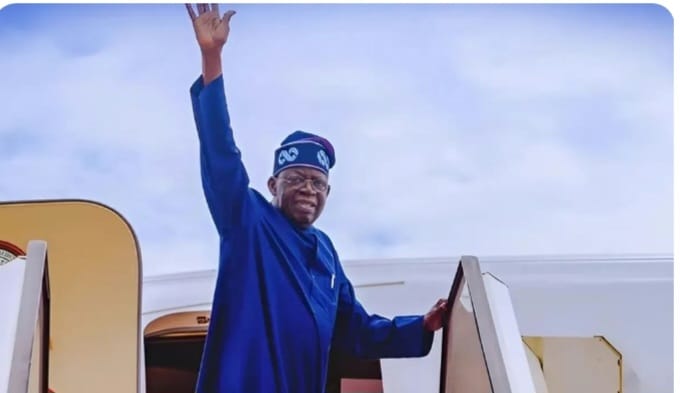
Tinubu’s Strategic Turn: Year-End Reprieve and Nigeria’s Leap into Global Sustainability Diplomacy.
By George Omagbemi Sylvester | Published by SaharaWeeklyNG.com
“How President Bola Ahmed Tinubu’s Engagement with the 2026 Abu Dhabi Sustainability Week Signals Nigeria’s Bid for Global Leadership in Sustainable Development and Economic Rebirth.”
In a move that has ignited widespread discussion across political, economic, and civic spaces in Nigeria, President Bola Ahmed Tinubu departed Lagos on 28 December 2025 for Europe to continue what the Presidency described as his end-of-year break, before heading to the United Arab Emirates (UAE) to participate in the 2026 edition of the Abu Dhabi Sustainability Week (ADSW). This engagement, though wrapped in the ceremonial language of diplomatic protocol, carries profound implications for Nigeria’s role in the global sustainability agenda, its foreign policy trajectory, and the country’s quest for economic revitalisation.

At face value, the trip appears routine: a sitting president on annual leave, pausing domestic duties for a brief hiatus before attending a high-profile international summit. But this narrative is too reductive. What is unfolding is a carefully calibrated geopolitical and economic engagement that places Nigeria, Africa’s largest economy and most populous nation, at the heart of contemporary debates on sustainability, energy transition, climate resilience, and inclusive global development.
A Timespan of Purpose: From Europe to Abu Dhabi.
According to the official statement by Bayo Onanuga, Special Adviser to the President on Information and Strategy, President Tinubu first traveled to Europe, with the specific destination undisclosed, before jetting on to Abu Dhabi in early January 2026. The presidency explained that this is part of his end-of-year break immediately preceding his official duties at the ADSW summit.
Critics have seized on the lack of disclosed European itinerary, framing the silence as emblematic of broader transparency issues within the Tinubu administration. However, defenders argue that the timing and sequence of trips reflect pragmatic diplomacy—staying connected with key allies in Europe while positioning Nigeria for substantive engagements in the Gulf. Whether viewed as diplomatic maneuvering or political opacity, the sequence undeniably converges on a major global platform: the ADSW.
Abu Dhabi Sustainability Week: What It Is and Why It Matters. The Abu Dhabi Sustainability Week is not merely another international conference. It is a week-long annual summit convened by the Government of the United Arab Emirates, under the auspices of President Sheikh Mohamed bin Zayed Al Nahyan. The summit draws leaders from government, the private sector, civil society, and academia to deliberate on pathways to sustainable development, climate action, inclusive growth, and green economic transformation.
The 2026 edition carries the theme “The Nexus of Next: All Systems Go”, reflecting a global appetite to transition from rhetoric to implementation. The convening aims to connect innovation, finance, and human capital to accelerate global sustainability outcomes—a priority for a world grappling with climate emergencies, energy insecurity, and socio-economic inequality.
The inclusion of heads of state, global investors, climate scientists, and infrastructure financiers underscores the summit’s gravity. This is not a ceremonial platform; rather, it is one where strategic alliances are formed, investments are mobilised, and future roadmaps are sketched. Former ADSW sessions have convened more than 3,500 global delegates across more than 150 countries, featuring high-level dialogues on leveraging technology, finance, and policy for sustainable outcomes.
Nigeria On the Global Stage: A Strategy of Engagement.
Nigeria’s participation under Tinubu’s leadership reflects a shift toward proactive engagement with global sustainability architecture. This stands in contrast to narratives that paint the country as inward-looking or detached from international norms. By accepting the invitation to ADSW, Tinubu signals Nigeria’s intent to be part of the collective solution to global challenges and not a bystander.

For a country battling endemic insecurity, economic instability, and governance deficits, this may, at first glance, seem paradoxical. But sustainable development is not a luxury reserved for stable nations; it is a necessity that can catalyse resilience. As renowned sustainability expert Professor Jeffrey Sachs once said, “Sustainable development is the pathway to the future we want for all. It offers a framework to generate economic growth, achieve social justice, exercise environmental stewardship, and strengthen governance.” Tinubu’s attendance positions Nigeria in conversations where these pathways are being defined.
Contextual Realities: Nigeria’s Domestic Imperatives. Critically, Nigeria confronts persistent challenges: inflationary pressures, infrastructure deficits, power shortages, and the urgency of diversifying an oil-dependent economy. Critics argue that trips abroad, framed as breaks or holidays, are misplaced when domestic woes demand leadership presence. Indeed, some opposition voices argue that Tinubu’s extended travels erode public confidence and obscure accountability at home.
Yet, sustainable development is not merely about domestic policy; it is also about international alignment, investment attraction, and knowledge exchange. When a country like Nigeria engages at forums such as ADSW, it can attract green financing, forge clean energy partnerships, and integrate into global sustainability value chains. This has tangible domestic implications: access to climate finance, support for renewable infrastructure, and potential uplift for sectors like agriculture through climate-smart practices.
Tinubu’s Evolving Sustainability Agenda: Lessons from the Past
President Tinubu’s engagement with sustainability is not unprecedented. During the 2025 Abu Dhabi Sustainability Week, he articulated an approach to sustainable development that emphasised collective action and economic transformation. Speaking on “From Climate Imperatives into Economic Prosperity: Bridging Africa with the Global Energy Future,” Tinubu noted:
“The fight against climate change is not merely an environmental necessity but a global economic opportunity to reshape the trajectory of our continent and the global energy landscape.”
Tinubu’s earlier address rested on three pillars (energy transition, climate resilience, and sustainable development) with an emphasis on diversifying energy sources, expanding cleaner mobility options like Compressed Natural Gas (CNG) and electric vehicles, and promoting climate-smart agriculture. These commitments, if implemented effectively, could yield sustainable jobs, bolster energy security, and enhance food systems.
While these ambitions are commendable, sceptics highlight a disconnect between rhetoric and implementation. Without robust policy execution and transparent governance, such global engagements risk becoming performative. Yet, the potential benefits of sustained, well-executed sustainability strategies are too significant to ignore.

The Broader Diplomatic Imperative. Nigeria’s participation also carries diplomatic weight. Strengthening ties with the UAE and other global partners can unlock bilateral cooperation in investment, technology transfer, and infrastructure financing. As sustainability expert Dr. Amina Mohammed has observed, “Global partnerships are indispensable in addressing climate change, no nation can tackle it alone.” Tinubu’s presence at ADSW situates Nigeria within this network of shared commitment.
Moreover, engaging with a diverse coalition of leaders and investors equips Nigeria to navigate global shifts in energy, finance, and development paradigms. The world is moving toward net-zero targets, green economies, and inclusive growth agendas and Nigeria risks marginalisation if it remains disengaged.
Closing Argument: Leadership, Vision, and the Stakes Ahead.
President Tinubu’s journey from Lagos to Europe and then to Abu Dhabi is far more than a leisurely end-of-year break. It is a strategic engagement at the intersection of global sustainability, economic diplomacy, and national aspiration. Nigeria stands at a crossroads: it can either be a passive observer of global sustainability trends or an active participant shaping outcomes.
Whether Tinubu’s participation yields transformative results for Nigeria depends on policy coherence, implementation fidelity, and accountability mechanisms back home. Every international engagement must be tethered to domestic action; global commitments must translate into local impact. Sustainable development is not a summit outcome, t is a national project.
As Professor Sachs rightly underscores, sustainability is both a goal and a process: “It demands collective resolve backed by measurable action.” If Nigeria can harness the insights and partnerships from ADSW and channel them into concrete reforms, the journey that began as an annual break could become a defining chapter in the nation’s pursuit of a resilient, prosperous, and sustainable future.





society
Dr. Chris Okafor invokes divine retribution upon individuals blackmailing the Grace Nation church
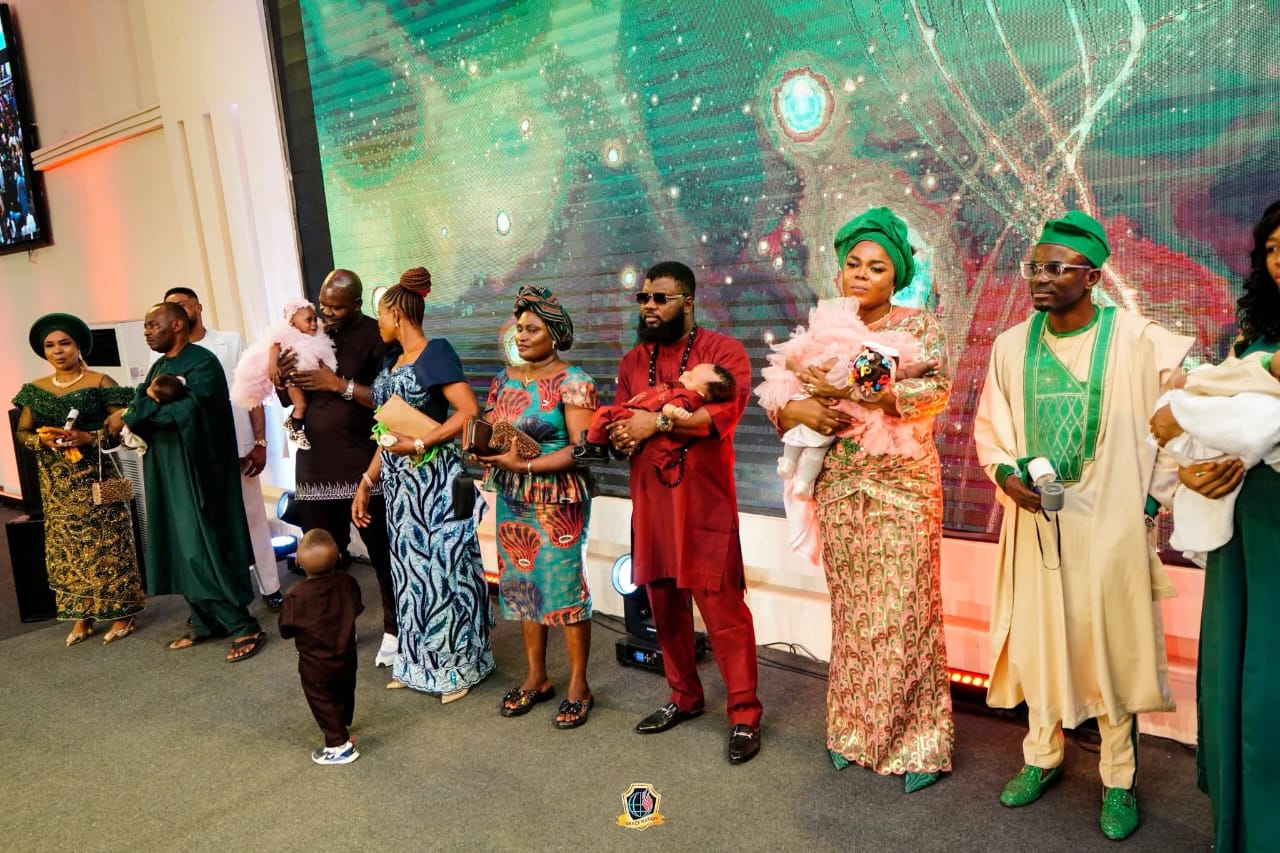
Dr. Chris Okafor invokes divine retribution upon individuals blackmailing the Grace Nation church
… Affirming God’s omnipotence to unveil malicious schemes.
To be frank, the ability of Doris Ogala and her associates to withstand the arduous challenges set by Senior Pastor Dr. Chris Okafor of Grace Nation Global at the culmination of the Harvest of Babies 2026 conference, the church’s flagship event, continues to elude me.
It’s advisable not to offend a powerful spiritual leader like Prophet Chris Okafor to avoid potential consequences, as seen in the situation with Doris Ogala, who was rebuked by the prophet; can she rectify the situation through confession?
Insiders close to the man of God claim that despite relentless online bullying and blackmailing, the Generational Prophet remains resolute, stating that God’s power has been evident throughout the commission’s existence. The reason for this wonderful statement is found in the scriptures, “Upon this rock I shall build my Church, and the gates of hell shall not prevail.” The more falsehoods are spread about the church and its leader, the more God elevates the church and propels him to greater heights, he asserted. He emphasized that blessings and fruitfulness are antidotes to curses, noting that God continues to bestow blessings upon the church, including miracles and the gift of children, which is one reason for the grand finale of the annual family liberation program, The Harvest of Babies.
However, the man of God issued a curse on each person speaking ill of the church, blackmailing, and uttering all sorts of falsehoods against the church, declaring that if they refused to repent within a few days, the earth would swallow them and their family members, stating that they would be of no use to themselves, their families, or society at large.
The spiritual leader cautions his followers to beware of such individuals including Doris Ogala who may taint their faith, and urges them to treat these persons as emissaries of the devil, avoiding them altogether.
Recall that the 2026 harvest of babies concluded with a remarkable birth of a miracle baby boy to a woman on the third day of the conference, accompanied by the dedication of several other miracle babies, all to the glory of God.
Christopher Sunday David writes from
Austria
“Together We Walk, Together We Secure”: Police Launch 2026 Walkathon In Abuja
The Nigeria Police Force has announced plans to host a walkathon in commemoration of the 2026 National Police Day, aimed at promoting unity, peace, and stronger community partnership.
The event is scheduled to take place on Tuesday, March 31, 2026, with participants expected to converge at the Force Headquarters Abuja by 6:00 a.m., where the walk will commence.
According to the organisers, the walkathon is designed to bring together members of the public, stakeholders, and security personnel in a show of solidarity and shared commitment to national security.
With the theme, “Together we walk, together we secure,” the initiative underscores the importance of collaboration between the police and citizens in maintaining peace and safety across the country.
Members of the public have been encouraged to participate in the exercise, which forms part of activities lined up to mark this year’s National Police Day celebration.
It is believed that the walkathon would not only foster closer ties between the police and the communities but also serve as a platform to promote awareness on collective responsibility in ensuring a safer society.


society
Habeeb Okunola Foundation Hosts Visually Impaired Students, Reaffirms Commitment to Educational Development
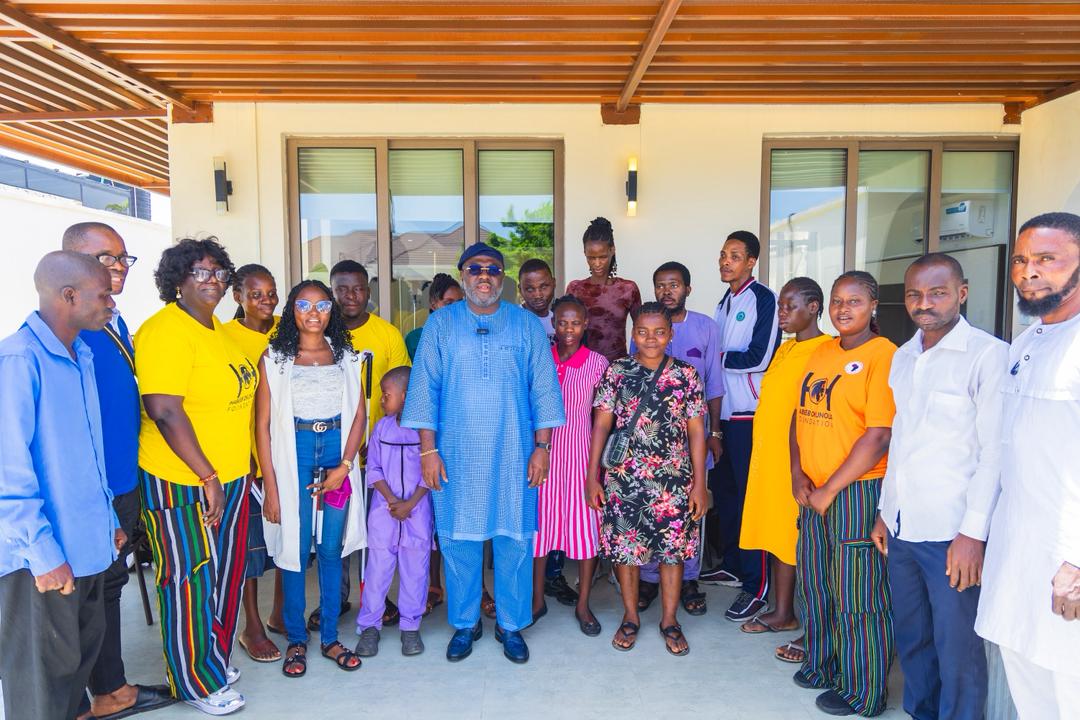
Habeeb Okunola Foundation Hosts Visually Impaired Students, Reaffirms Commitment to Educational Development
The founder of the Habeeb Okunola Foundation, High Chief Dr. Habeeb Olalekan Okunola MON, OFR, has once again demonstrated his dedication to the welfare of the underprivileged. On March 30, 2026, he played host to a group of talented visually impaired students across tertiary institutions in Nigeria whom he is currently covering their tuition fees at the head office of CINI Holdings in Ikoyi, Lagos.
During the gathering, Okunola reaffirmed his commitment to using his God-given resources to uplift humanity through his foundation. According to him, true wealth is proven through empowerment, and supporting the education of visually impaired students ensures that knowledge remains accessible regardless of one’s circumstances.
Addressing the students directly, he said: “I am delighted to host you. I want you to know that my foundation will continue to cover your school fees and provide monthly stipends for your upkeep. Your disability does not diminish your right to education. With your talents, education becomes a platform to showcase your abilities. I am excited that instead of taking to the streets to engage in nefarious activities or begging, you have chosen to do something meaningful and sharpen your talents. Today is not just about support; it is about belief. We see you. We hear you. And we believe in your strength, your talent, and your future. Life may not always be easy. You may face moments where people doubt you or where the path feels difficult. But we want you to remember this: you are not alone. You matter. And you are capable of achieving more than you can even imagine right now.”
He further emphasized that he remains fully committed to consistently covering their tuition fees many of the students are enrolled in various tertiary institutions across the country while also ensuring their overall welfare.
“This support is not just financial,” he added. “It is a promise. A promise that for the rest of this year and beyond, you have the Habeeb Okunola Foundation standing with you, cheering you on, and investing in your journey. Use this opportunity well. Keep learning. Keep pushing. Keep believing in yourself, even on the hard days. One day, when you rise, when you succeed, remember to lift others just as you are being lifted today. We are proud of you. And we are excited to see all that you will become.”
Also present at the event was the founder of the Makemee Elegant Foundation, Mrs. Kehinde Adelaja, who expressed her gratitude to Chief Okunola for covering the students’ school fees and attending to their needs. She noted that if more wealthy individuals took on such responsibilities, Nigeria would be a better place.
“I am excited that you took time to host and dine with them,” she said. “This goes a long way in restoring hope. They did not choose to be in this situation, but seeing someone like you embrace them with love and care is rare. They deeply appreciate your kind gesture.”
During a lunch session held at his office, Chief Okunola further reiterated that philanthropy remains a core part of his lifestyle. He pledged to continue setting aside a portion of his business earnings to impact lives and bring relief to the downtrodden.


-

 society6 months ago
Religion: Africa’s Oldest Weapon of Enslavement and the Forgotten Truth
-

 news4 months ago
WHO REALLY OWNS MONIEPOINT? The $290 Million Deal That Sold Nigeria’s Top Fintech to Foreign Interests
-

 society6 months ago
“You Are Never Without Help” – Pastor Gebhardt Berndt Inspires Hope Through Empower Church (Video)
-

 celebrity radar - gossips2 months ago
Dr. Chris Okafor Returns with Power and Fire of the Spirit -Mounts Grace Nation Altar with Fresh Anointing and Restoration Grace on February 1, 2026