
society
Tinubu’s Two Years of Policy Illusions and National Suffering: Nigeria’s Descent into Economic and Moral Chaos. By George Omagbemi Sylvester


Tinubu’s Two Years of Policy Illusions and National Suffering: Nigeria’s Descent into Economic and Moral Chaos.
By George Omagbemi Sylvester | Published by SaharaWeeklyNG.com
When President Bola Ahmed Tinubu assumed office in May 2023, many Nigerians hoped for a departure from the stagnation and decay that had plagued the country under successive administrations. He came promising “renewed hope.” What we have received, instead, is an unrelenting wave of economic brutality, elite arrogance and state-sanctioned impoverishment. Two years down the line, Nigeria stands not rejuvenated, but ravaged; its middle class wiped out, its poor suffocating and its leaders more obsessed with politicking than governance.
A Mirage of Policy Success
To be fair, on paper, President Tinubu has achieved a few major policy reforms:
Tax Law Reforms were introduced to improve revenue generation.
Fuel Subsidy Removal was executed within days of his inauguration.
Electricity was devolved to the states, theoretically giving them power over power.
The foreign exchange system was liberalised, floating the naira to end multiple exchange rates.
A Student Loan Act was passed to assist struggling tertiary students.
Local Government Autonomy was proposed but remains conveniently unimplemented.
These are bold moves, but boldness without wisdom is recklessness. Vision without empathy is tyranny. And policy without proper execution becomes poison. The Tinubu administration may be flying from a policy perspective, but it is flying blind and the PEOPLE are the ones CRASHING.
The Fallout: A Catalogue of Pain
Let us evaluate the real-life impact of these so-called reforms.
1. Death of the Middle Class
The once-thriving Nigerian middle CLASS (the teachers, civil servants, small business owners and professionals) has been completely decimated. Inflation, which stood at 21.9% in May 2023, now hovers above 34% as of June 2025 (according to the National Bureau of Statistics). Food prices have tripled. Transportation is unaffordable. School fees have skyrocketed. A bag of rice now sells for over ₦85,000. People no longer talk of saving; survival is now the priority.
2. Currency Collapse and Soaring Inflation
Floating the naira without adequate safeguards was akin to throwing a drowning man into deeper waters. The naira has become Africa’s worst-performing currency, exchanging at ₦1,560 to $1 as of June 2025. This is the lowest in Nigerian history. Importers can’t access forex. Businesses are closing. Foreign investors are fleeing. This is not liberalisation; it is economic euthanasia.
“You don’t float a currency in an import-dependent economy without first boosting domestic productivity,” said Professor Uche Uwaleke, a financial economist at Nasarawa State University. “What we’re seeing is textbook mismanagement.”
3. Fuel Subsidy Removal: A Punishment to the Poor
The removal of fuel subsidy, while economically justified in theory, was implemented without any cushioning measures. The result? Petrol now sells between ₦850 and ₦980 per litre, depending on the state. The cost of transportation has doubled. Food distribution costs have tripled. Meanwhile, the elite fly around in private jets funded by government largesse.
4. Civil Servants in Poverty
Civil servants, once seen as modest pillars of public administration are now objects of mockery. The minimum wage remains ₦30,000 in about 20 states which is equivalent to less than $20 monthly. How do you expect a family to survive on this in a country where rent in major cities starts at ₦800,000 per year for a single room?
5. Insecurity and Social Collapse
The bold promises to tackle insecurity have remained empty rhetoric. Bandits, terrorists and kidnappers continue to run wild. Farmers can’t access their lands. Students are kidnapped en masse. Communities are deserted. The state has abandoned its primary duty: protecting lives and property.
6. Student Loans: An Empty Shell
The student loan policy was announced with fanfare, but months later, implementation remains a mirage. The bureaucracy is confusing, the criteria are harsh and public universities are still underfunded. The average student has seen no relief.
7. Housing and Rent: Dreams Turned Nightmare
The housing deficit in Nigeria exceeds 28 million units, according to the Federal Mortgage Bank. Under Tinubu, nothing has changed. No new social housing schemes have been successfully executed. Rent continues to skyrocket. Owning a home is a forgotten dream for millions.
“In Nigeria today, leisure is a crime and survival is an achievement,” says activist Aisha Yesufu. “We are witnessing a systematic dismantling of hope.”
State Governments: Rascality with Increased Revenue
With the removal of subsidy and naira floatation, state allocations have significantly increased. Yet, what have the governors done with the money? Roads are death traps. Schools are glorified poultry sheds. Hospitals lack paracetamol. The same states collecting billions from Abuja still owe months of salary arrears. The rot is not just national, but systemic.
A Government of Leisure, Lies and Lavishness
While Nigerians suffer, our leaders vacation. The president has spent more days abroad than on the ground with the people. Ministers take selfies in Rome and Dubai, while children starve in Borno. Governance has become an illusion wrapped in press statements and sponsored media narratives.
“There is no nation on earth that treats its citizens with such contempt and survives intact,” notes Dr. Chidi Odinkalu, former chairman of the National Human Rights Commission.
What Hope for 2027?
With two more years to go and the looming horror of a 2027 election engineered through political “ABRACADABRA”, Nigerians are right to be scared. The electoral system is broken. INEC’s credibility is in tatters. If this government gets another term, it may mark the end of any democratic pretense in Nigeria.
Final Thoughts
Nigeria under Bola Tinubu is not being governed; it is being experimented on. The people are not citizens; they are test subjects. The economy is not being revived; it is being bled. And the future is not being prepared for; it is being plundered.
Let it be known that policy success without human impact is failure. You don’t pat a government on the back for reforms that destroy lives. A nation where leisure is a luxury, dignity is a relic and honesty is a punishment, cannot thrive.
The only question now is: WILL NIGERIANS RISE TO RESCUE THEMSELVES or will we CONTINUE DANCING to the DIRGE of our DESTRUCTION?


By George Omagbemi Sylvester
Published by SaharaWeeklyNG.com




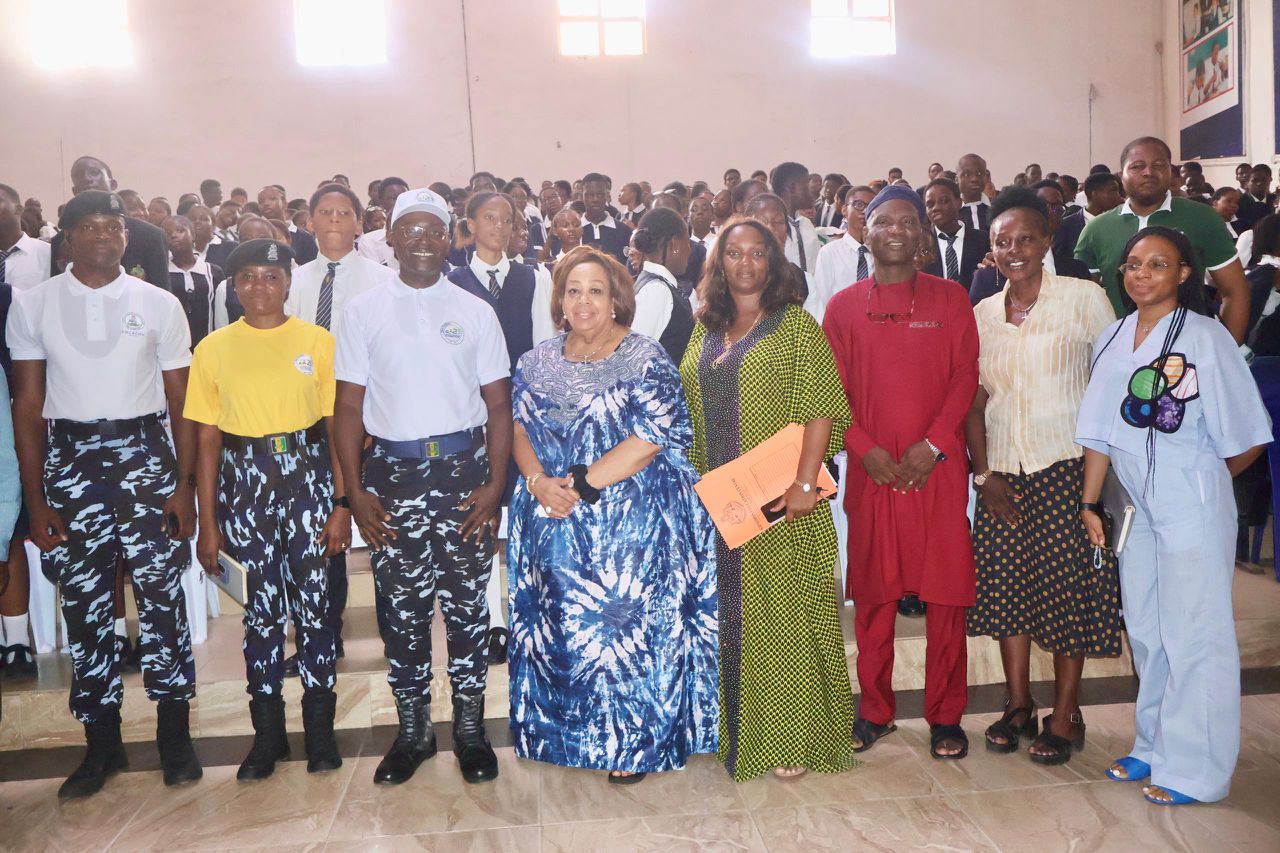
POCACOV Intensifies Sensitization on Cultism, Bullying, and Social Vices Among Students in Edo
In commemoration of the 2026 National Police Day Celebration, the Police Campaign Against Cultism and Other Vices (POCACOV), Edo State Command, has reinforced its preventive policing efforts through a targeted sensitization outreach at Igbinedion Education Centre, Benin City.
The initiative forms part of the broader activities marking this year’s National Police Day, themed “Community Partnership: Building Trust,” which emphasizes collaboration between the Nigeria Police Force and the public in fostering a safer society.
The sensitization programme witnessed the presence of key stakeholders, including the Commissioner of Police, Edo State Command, the Police Public Relations Officer, and the Edo State POCACOV Coordinator, ASP Kingsley Upeh. The team engaged students in an insightful and impactful session focused on the dangers of cultism, bullying, and other social vices prevalent among youths.
During the session, students were educated on the severe and far-reaching consequences of cult-related activities. These include violence, loss of lives, disruption of academic pursuits, and long-term damage to personal reputation and future opportunities. The speakers also highlighted how peer pressure, drug abuse, and negative social influences often serve as gateways into criminal behavior.
In an interactive segment, the Commissioner of Police stressed the legal implications of engaging in criminal acts, noting that involvement in cultism and related offences could lead to arrest, prosecution, and lifelong consequences that may hinder personal growth and career aspirations.
The issue of bullying was also extensively addressed, with emphasis on both its legal ramifications and psychological impact on victims. Students were encouraged to speak up against bullying, report incidents to school authorities or law enforcement, and support peers who may be affected.
Furthermore, the outreach underscored the importance of self-discipline, moral values, and making informed life choices. Students were urged to become ambassadors of peace within their schools and communities by rejecting violence and promoting unity and mutual respect.
The POCACOV team reiterated its commitment to continuous engagement with young people through awareness campaigns, community outreach, and strategic partnerships aimed at preventing crime before it occurs. The initiative aligns with the Nigeria Police Force’s proactive approach to policing, which prioritizes education, prevention, and community involvement.


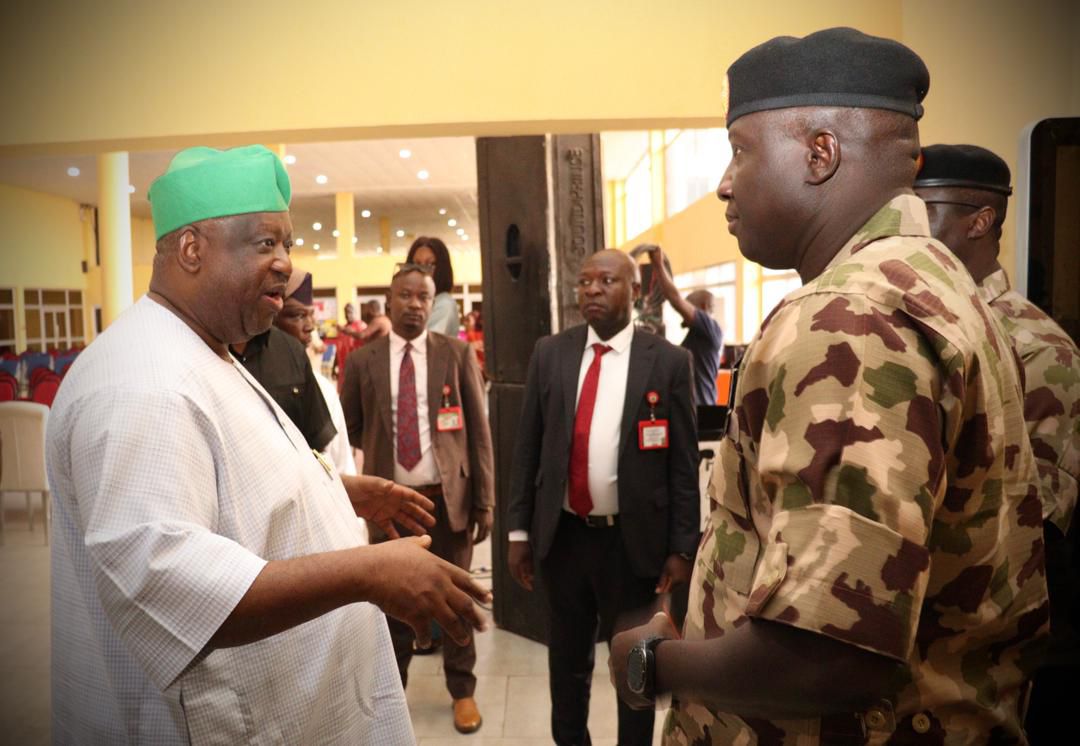
COAS Launches Nationwide Security Renewal Mission in Plateau
The Chief of Army Staff, Lieutenant General Waidi Shaibu, on Thursday led a high-level delegation of security chiefs to Plateau State, flagging off a nationwide security renewal mission aimed at strengthening civil-military cooperation and restoring lasting peace across the country.
The visit to Jos, the Plateau State capital, marks the first phase of a coordinated national effort to address persistent security challenges through joint operations, community engagement, and proactive intelligence gathering.

Governor Caleb Muftwang received the delegation, describing the initiative as a critical step toward stabilizing affected communities and reinforcing public confidence in security institutions.
Civil-Military Synergy Takes Centre Stage
At the heart of the mission is a renewed emphasis on collaboration between the military, civil authorities, and local communities. Speaking during the visit, Lt. Gen. Shaibu stressed that national security must be treated as a collective responsibility.
He urged citizens to support security agencies by remaining vigilant, sharing credible information, and complying with lawful directives, noting that effective security cannot be achieved in isolation.
Community Engagement as Confidence-Building Tool
In a departure from purely operational engagements, the Army Chief held direct consultations with community leaders and residents in Jos, reinforcing the importance of trust and dialogue in conflict resolution.
Lawmakers, including Dachung Bagos and Ladi Dangyok, commended the initiative, stating that visible engagement by top military leadership helps rebuild confidence among citizens and fosters cooperation.

Proactive Security Operations Underway
Operational updates were provided by Major General Folusho Oyinlola, who disclosed that troops under Operation Enduring Peace have intensified surveillance, intelligence-led patrols, and coordinated actions with other security agencies.
According to the Army, the approach is designed to prevent escalation of threats, safeguard lives and property, and stabilize vulnerable communities before crises emerge.
A Shift Toward Sustainable Peace
Military authorities emphasized that the Plateau visit is part of a broader, long-term strategy to transition from reactive responses to sustainable peacebuilding nationwide. The framework includes strengthening local resilience, ensuring justice, and maintaining continuous engagement with stakeholders.
Analysts view the initiative as a significant policy shift, reflecting a more inclusive security architecture that integrates community participation with military operations.
Call for National Unity
The Army leadership concluded with an appeal to Nigerians to reject divisive narratives and support ongoing efforts to promote unity and peace.
“The success of this mission depends not only on the armed forces but on the cooperation of every citizen,” the COAS stated.
The nationwide security renewal campaign is expected to extend to other regions in the coming weeks as authorities seek to consolidate gains and build a safer, more unified Nigeria.


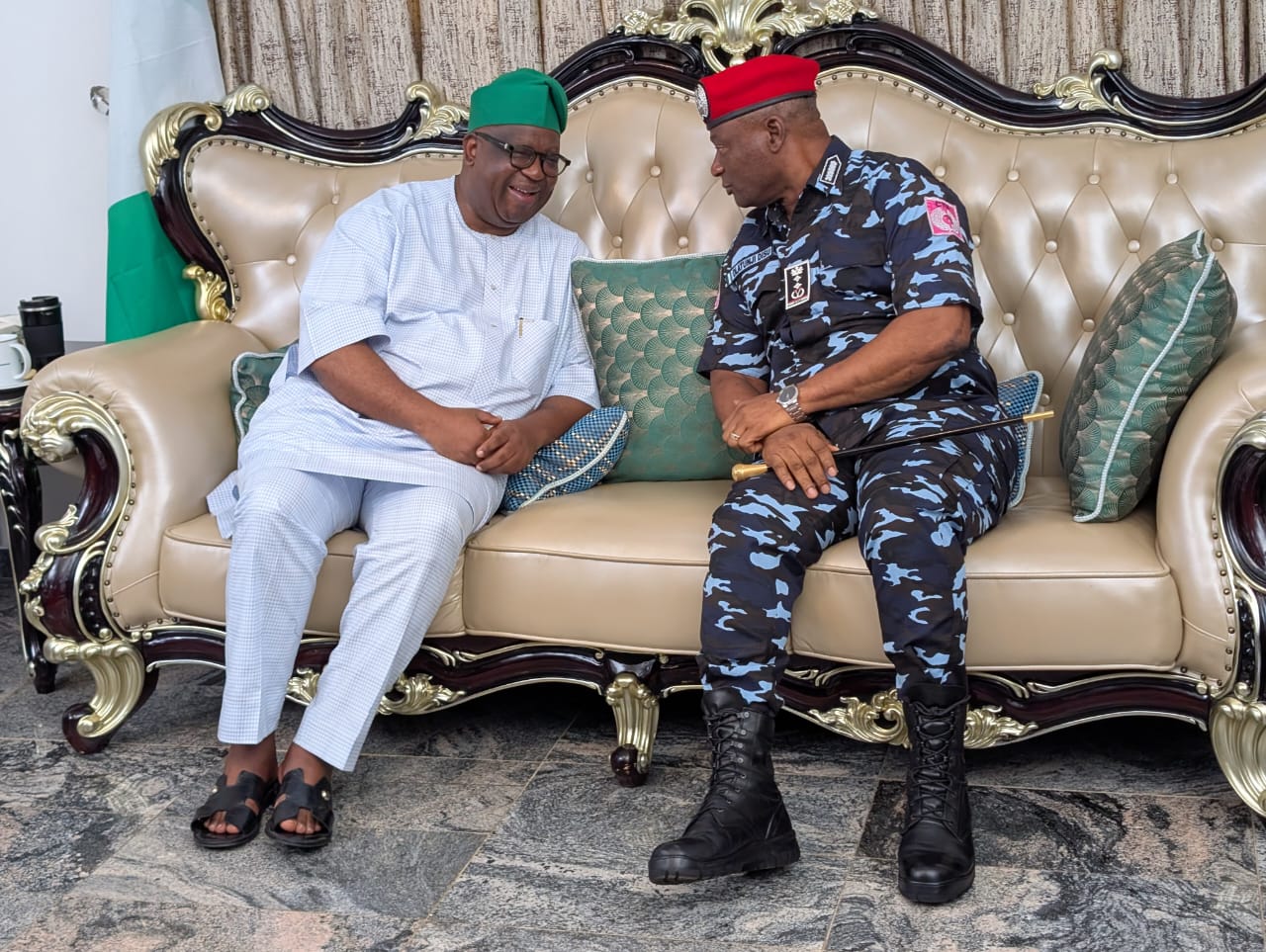
IGP Disu Visits Plateau, Orders Tactical Deployment To Reinforce Security
The Inspector General of Police, Olatunji Disu, on Thursday paid a working visit to Plateau State following recent unrest, holding strategic talks with Governor Caleb Muftwang on measures to strengthen security and prevent further disturbances.
As part of immediate steps to stabilise the situation, the police chief authorised the deployment of specialised tactical units to support officers already on ground across affected areas.
Governor Muftwang commended the swift intervention of the police leadership, praising the dedication and professionalism of security personnel working to restore calm. He also acknowledged the efforts of mobile police officers and lauded the leadership of the state’s Commissioner of Police, Bassey Ewah.
Both the Nigeria Police Force and the Plateau State Government reaffirmed their commitment to safeguarding lives and property, stressing that enhanced collaboration remains key to restoring lasting peace in Plateau State, popularly known as the Home of Peace and Tourism.


-

 society7 months ago
Religion: Africa’s Oldest Weapon of Enslavement and the Forgotten Truth
-

 news4 months ago
WHO REALLY OWNS MONIEPOINT? The $290 Million Deal That Sold Nigeria’s Top Fintech to Foreign Interests
-

 society6 months ago
“You Are Never Without Help” – Pastor Gebhardt Berndt Inspires Hope Through Empower Church (Video)
-

 celebrity radar - gossips2 months ago
Dr. Chris Okafor Returns with Power and Fire of the Spirit -Mounts Grace Nation Altar with Fresh Anointing and Restoration Grace on February 1, 2026