
celebrity radar - gossips
TRUMP, MALEMA, RAMAPHOSA AND THE OVAL OFFICE GRILL by Chief Femi Fani-Kayode

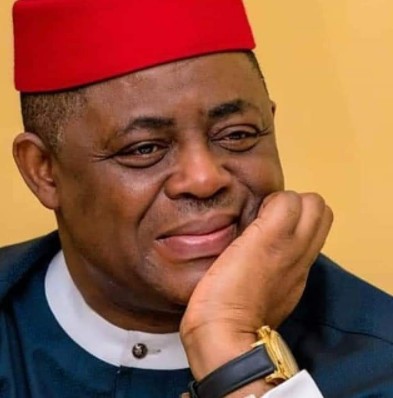
TRUMP, MALEMA, RAMAPHOSA AND THE OVAL OFFICE GRILL by Chief Femi Fani-Kayode
It was quite a show at the Oval office in the White House a few days ago when South African President Cyril Ramaphosa met with American President Donald J. Trump to discuss bilateral issues and world affairs.
It began with Trump’s unsubstantiated and frankly asinine allegation that the white Boers of South Africa are being subjected to mass murder, ethnic cleansing and genocide.
This is not only false but also painfully absurd.
Sadly it did not stop there. Trump went on to assert that Julius Malema, the inspirational charismatic and colourful M.P. and leader and founder of the South African Economic Freedom Fighters (EFF), is a hate-filled black supremacist and racist and a cold-blooded murderer and ruthless terrorist whose intention it is to kill every white person in South Africa.
Needless to say these allegations are baseless and false. The Americans are attempting to give a dog a bad name in order to hang it. It is nothing but yet another well-crafted but unsubstantiated mendacity.
Even though Malema is very vocal and highly controversial he does not strike me as a hater of whites but rather as a hater of injustice, oppression, persecution and institutional racism.
He is a man with a social conscience who speaks for the poor, the weak, the vulnerable and the oppressed and who has constituted himself into a major thorn in the flesh of the political establishment and the ruling elites in South Africa both white and black.
He is very eloquent, well-informed, well-read and quick off the mark and these qualities, coupled with his obvious courage and strength, make him a formidable adversary which every person of class, rank or privilege in his country has every reason to be wary of.
He also speaks a good deal of sense and his passion for truth, justice and equity for the black majority population of South Africa and commitment to the emancipation of the African continent from the forces of imperialism and neo-colonialism cannot be denied.
To millions of South Africans Malema is a deeply courageous, insightful and profound man and possibly the greatest post-Mandela hero and rising star that their nation has ever known.
To add to this millions of Africans (including Nigerians and Zimbabweans) who live in South Africa regard him as a loyal and trusted friend who has always spoken up for them and sought to protect them from the rabid xenophobia that most black South Africans suffer from and who has a strong and commendable Nkrumaist Pan-African vision.
For Trump and his White House to attempt to disparage such a man that brings so much to the table and that has done so much to restore the self-respect and dignity of black South Africans and Africans all over the world simply because he sang an old outdated, pre-independence, apartheied-era, anti-Boer war song at his political party rally is uncharitable and unkind.
To turn down the lights of the Oval office, watch a film on him on television for four good minutes and make him the centre of discussion at a bilateral meeting between the Presidents of two of the most respected nations on earth only proves the fact that he is no longer only an African phenomenon but also a global brand and a rallying point for blacks from all over the world.
To that extent Trump has inadvertently elevated his profile rather than diminish it.
Like in the case of the Biblical Joseph, what Trump meant for evil, God meant for good.
Yet perhaps the most shameful thing that Trump did on that day was not what he attempted to do to Malema but rather the following.
He presented a picture to Ramaphosa and his delegation of what was purportedly “1000 white South African graves with white crosses on them of white South African farmers” that were supposedly “dispossessed of their land by black terrorists” and “murdered in cold blood”.
Contrary to the American Presidents assertions it was later confirmed that the picture was NOT of the graves of white farmers in South Africa but rather of a burial ground in a completely different country called Congo!
One wonders how the President of the most powerful nation on earth could make such an egregious and monumental blunder and indulge in such deceit and doublepeak all in an attempt to humiliate the South African President.
Sadly it didn’t stop there. Trump literally ambushed Ramaphosa, lectured him, bullied him, spoke down to him, accused his Government and people of heinous crimes, kept interrupting him when he attempted to speak, mocked his role as a peacemaker in the Ukraine/Russia conflict and sought to utterly humiliate him.
To behave in this unacceptable manner and indulge in such mendacious falsehood is below any President let alone the most powerful one in the world.
I see the hand of Elon Musk, who himself is a South African and who has not hidden his contempt and disdain for the ANC-led South African Government and Israeli Prime Minister Benjamin Netanhayu, whose Government has been accused by South Africa of genocide and indeed taken to the International Court of Justice and to the International Criminal Court both at the Hague, in all this.
Both must have thoroughly enjoyed the spectacle!
Yet the truth is that even if his predominately white right-wing MAGA base in America may have been excited and thrilled by his proverbial lynching and carpeting of a helpless and whimpering black President at the Oval office it has also alienated a lot of black and particularly African Trumpers like yours truly who have always refused to regard Trump as a racist but rather as a man who was specially chosen, prepared, raised and anointed by God to destroy the American Deep State, to terminate the Godless agenda of the globalists, to stop the wars of the world, to put God at the centre of affairs when it comes to politics and governance, to re-establish and re-instill the Christian virtues and values that America was built on, to break the back of the unholy, Luciferean trinity and anti-Christ philosophy of Obama, Clinton and Biden in world affairs and American politics.
I sincerely hope that we do not end up regretting our support for him but if he continues in this way that support shall undoubtedly dwindle.
Why do I day this? Consider the following.
First it was “let us grab Greenland, Canada, Mexico, the Panama Canal, the Suez Canal and rename the Gulf of Persia”, then it was “let us turn Gaza into an American Riviera”, then it was “let us wage a tariff war against the nations of the world”, then it was “let us alienate and abandon our European allies”, then it was “let us provoke China”, then it was “let us go to the three richest nations in the Middle East and compel their Kings to invest trillions of dollars in America and even give us a new presidentiel jet”, then it was “let us bring the little African leader who leads a country with the largest and most properous economy on his continent to the Oval office, humiliate him before the world and bully him into leaving our white brothers in South Africa alone” and the latest is “let us stop foreign students from attending Harvard University because the authorities of that school have refused to bring to an end the pro-Palestinian
demonstrations that are taking place on campus”.
These actions are increasingly troubling and whether we have hitherto admired, loved and prayed for Trump or not we cannot support a confirmed bully and racist. That would be ungodly.
We cannot support a man that finds it difficult to empathise with the suffering of others or that is fast losing his humanity. That would be incorrigible.
Trump needs to retrace his steps, divest himself of these glaring and obvious symptoms of meglomania, obsessive vanity and extreeme narcissim and get real.
God did not deliver him from the hands of his enemies and make him President to do this sort of nonsense but rather to make America great again and to make the world a better and safer place. If he fails to do this God will leave him, remove him and replace him with another.
Back to the episode at the White House.
Cyril Ramaphosa’s responses to the grilling were equally embarrassing and frankly disappointing.
Most western commentators have described his disposition, body language and reaction as “weak”, “cowardly” and “cringeworthy” and I am constrained to concur.
No President should bow and tremble before another no matter how rich and powerful the latter may be.
In the African context Nelson Mandela would not have done so and neither would Murtala Mohammed, Olusegun Obasanjo, Jerry Rawlings, Thomas Sankara, Ahmed Ben Bella, Muammar Ghadafi, Patrice Lumumba, Gamal Nasser, Sani Abacha, Ibrahim Babangida, Kwame Nkrumah, Muhammadu Buhari, Robert Mugabe, Samora Machel or Ibrahim Traore.
This ritual of inviting foreign leaders to the Oval office like King Hussein of Jordan (who literally had to bow and lick Trumps posterior), President Vlodomer Zelensky of Ukraine (who was insulted, rubbished, humiliated and finally thrown out) and now Cyril Ramaphosa (who was forced to watch an embarrassing scene about his country on television) and belittling and denigrating them must stop.
The humiliation of the South African President particularly was painful for me to watch because of the frightful history of his country and the terrible atrocities and apartheid system that the white Afrikaaner Boers subjected the black Africans to for hundreds of years.
They went through all that and now they have to suffer this in the hands of yet another white man.
This same white minority that oppressed and enslaved them in their own land for hundreds of years control 80% of the economy and own 90% of the land in their country today despite the fact that they only constitute 8% of the population.
These are the people that Trump is claiming are being subjected to genocide and is offering asylum in America.
These are people that in the main and in the past have regarded black Africans as being “no better than animals”.
These are people that practised apartheid and that described black people as the biblical “hewers of the wood and drawers of the water”.
These are the people that once regarded a black man as being a quarter of a human being and that not only refused to have legal inter racial sex or marriages but compelled black people to live in shanty towns that were little better than concentration camps and subjected them to pass laws much in the sane way as the Israelis are subjecting the Palestinians to such inhumanity and degradation today.
If a Nigerian leader had been treated like this at the Oval office and I was in the room believe me all hell would have broken loose and Trump, his VP, his Ministers, his team and the American White House Press Corps would not only have got more than they dished out and bargained for but they would have been given a curt history lesson about the past and present atrocities of their nation and a thorough and precise lecture about the matter at hand.
I am a Trump supporter but in all matters my nation and continent must come first.
I despise the way he bullied Ramaphosa and I hope and pray that if he or any other foreign leader tries this with any Nigerian leader that I am in the room.
The days of talking down to African Presidents are long over.
More importantly the days of cowardly, weak, subservient, spineless, grovelling, corrupt, compromised and ignorant African lichspittles and
quislings who call themselves leaders but who lack self-esteem, self-respect and pride in their people and who have no shame or dignity, who are hopelessly compromised, who have no knowledge of world affairs or world history, who are pawns of the neo-colonialists and imperialists and who have sold their soul and destiny of their nation to the western powers are long over.
This fact can be confirmed by what can best be described as the “Traore spirit” that is blowing into all the nooks and corners of our continent today.
As much as I love and support Trump his attitude and policy on Africa and Gaza leaves much to be desired.
He needs to do better and he must understand that the Palestinians and the Africans, though facing challenges, are far more resilient than his people ever were and come from a far older and greater civilisation than his country ever did.
We may not have their money and power but we have God.
Their time is now but tomorrow belongs to us. That God that put them up there and established their hegemony and empire shall remember us.
We too shall rise and at that time all men shall say that the rejected stone has become the corner stone, that the Lord uses the foolish things of this world to confound the wisdom of the wise and that in truth all things are possible with God.
(Chief Femi Fani-Kayode is the Sadaukin Shinkafi, the Wakilin Doka Potiskum, a former Minister of Aviation and a former Minister of Culture and Tourism)




celebrity radar - gossips
Adron Homes Celebrates Visionary Chairman, Aare Adetola Emmanuel King, at 51
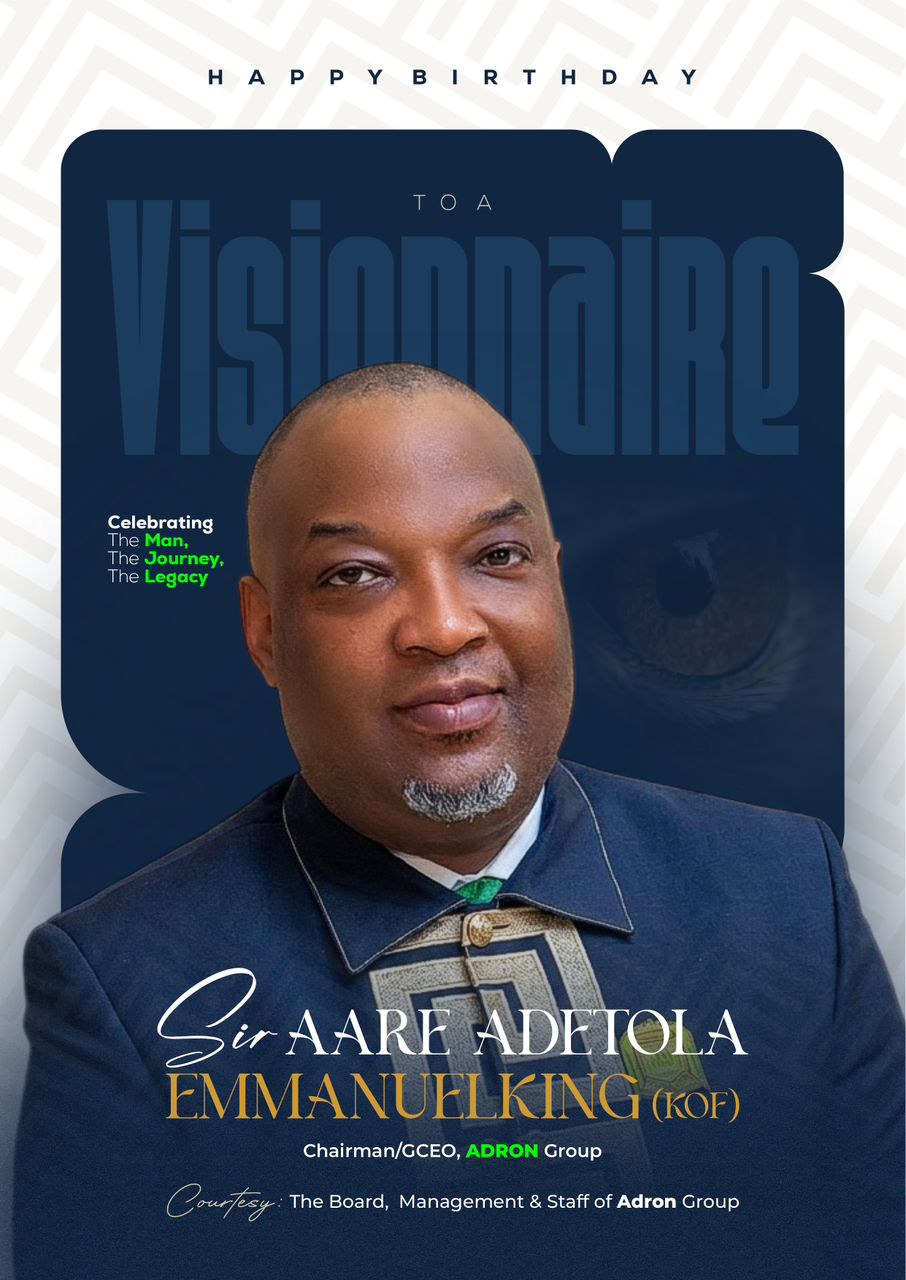
Adron Homes Celebrates Visionary Chairman, Aare Adetola Emmanuel King, at 51
The management and staff of Adron Homes and Properties Limited have joined family, friends, associates, and well-wishers across the globe to celebrate their Chairman and Chief Executive Officer, Aare Adetola EmmanuelKing, as he marks his 51st birthday.

In a statement released by the company, the milestone was described as a celebration of an exceptional leader whose vision, resilience, and entrepreneurial brilliance have not only transformed Adron Homes into a household name in Nigeria’s real estate sector but have also redefined affordable housing across the country.
Under his dynamic leadership, Adron Homes has continued to expand its footprint, delivering value-driven residential solutions while empowering thousands of Nigerians with opportunities for home ownership. His commitment to excellence, innovation, and customer satisfaction has remained the driving force behind the company’s sustained growth and industry leadership.
The statement further highlighted Aare EmmanuelKing’s passion for nation-building and community development, noting his significant contributions to job creation, youth empowerment, and the promotion of socio-economic development through real estate investments.
“As a leader, mentor, and visionary, Aare Adetola EmmanuelKing has consistently inspired a culture of excellence, integrity, and dedication within the organization. His ability to turn bold ideas into reality continues to position Adron Homes as a trailblazer in the industry,” the statement read.
The company expressed profound gratitude for his steadfast leadership and prayed for continued wisdom, strength, and sound health as he embarks on another year of impactful achievements.
As he celebrates his 51st birthday, the entire Adron Homes family proudly honours a man whose legacy continues to shape the future of real estate in Nigeria.
Happy 51st Birthday, Aare Adetola EmmanuelKing!
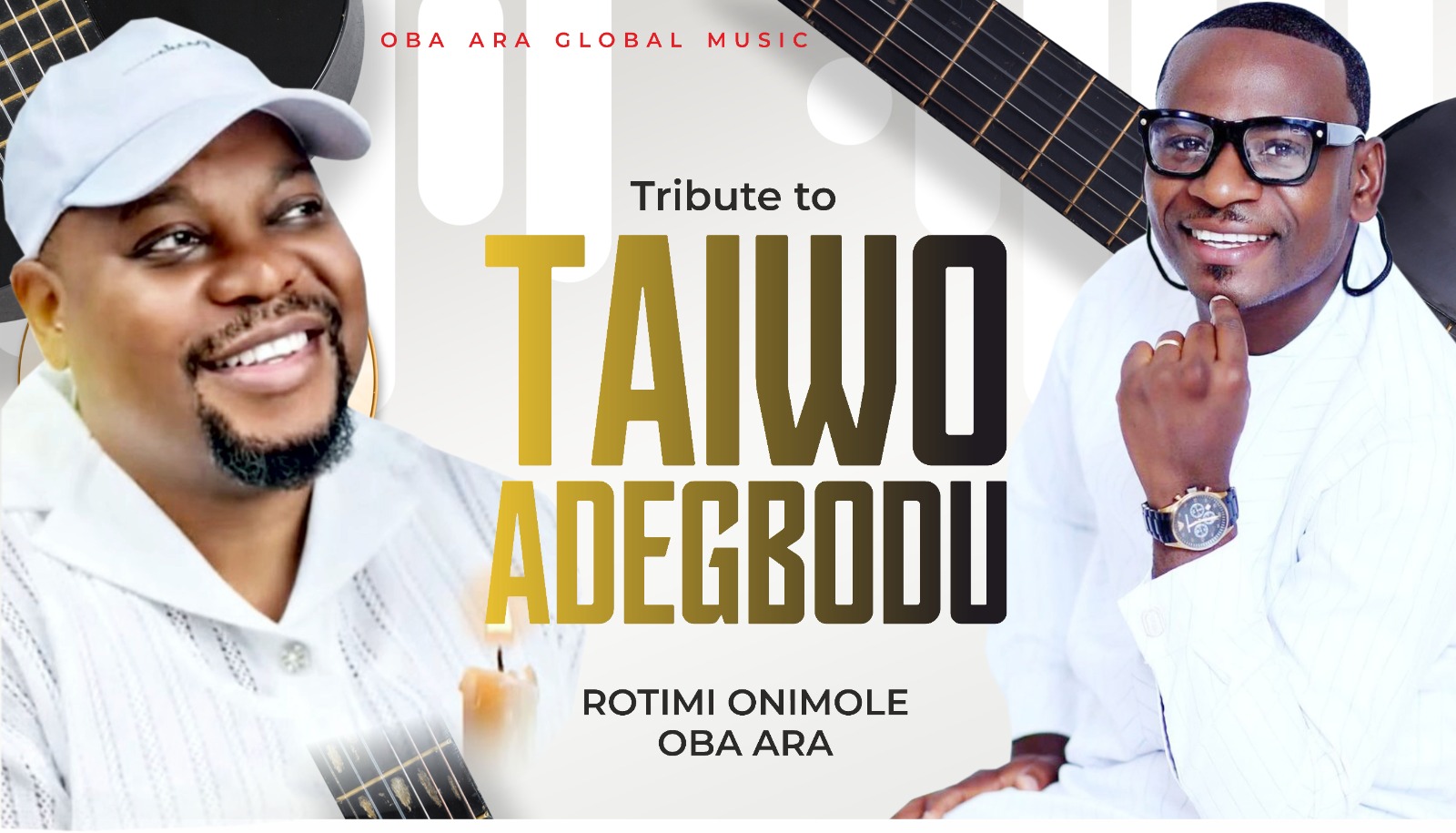
Oba Ara Releases Emotional Tribute to Late Taiwo Adegbodu
Taofik Afolabi
The gospel music community continues to grieve the painful loss of Taiwo Adegbodu, a beloved figure whose sudden departure left a deep void among fans, colleagues, and loved ones. In response to this loss, renowned gospel minister Rotimi Onimole, popularly known as Oba Ara, has released a moving tribute song that captures both the sorrow of the moment and the enduring legacy of the late singer.
Oba Ara, a proud son of Isale Eko, channels raw emotion throughout the song, using heartfelt lyrics and soul-stirring melodies to reflect on his personal connection with Taiwo Adegbodu. In the tribute, he openly expresses how deeply the news of Adegbodu’s passing shook him, describing it as a painful and unexpected loss that is difficult to come to terms with.
The song goes beyond mourning, it celebrates the life, ministry, and impact of Taiwo Adegbodu. Oba Ara highlights the late artist’s dedication to spreading the gospel through music, his inspiring voice, and the spiritual influence he had on many within and beyond Nigeria. Through powerful verses, he paints a picture of a man who lived for God and touched countless lives through his ministry.
Listeners have described the tribute as both comforting and deeply emotional, as it resonates with the collective grief of the gospel music community. It serves as a reminder that although Taiwo Adegbodu is no longer physically present, his music, message, and legacy will continue to live on.
In honoring his late colleague, Oba Ara not only pays his respects but also offers a source of healing for fans and fellow ministers, using music as a tool to process grief and celebrate a life well lived.
celebrity radar - gossips
Buratai, Fagbemi , Shagaya, Olofa, Others Eulogise Olowu Kuta’s Olori On 60th Birthday, Foundation Launch
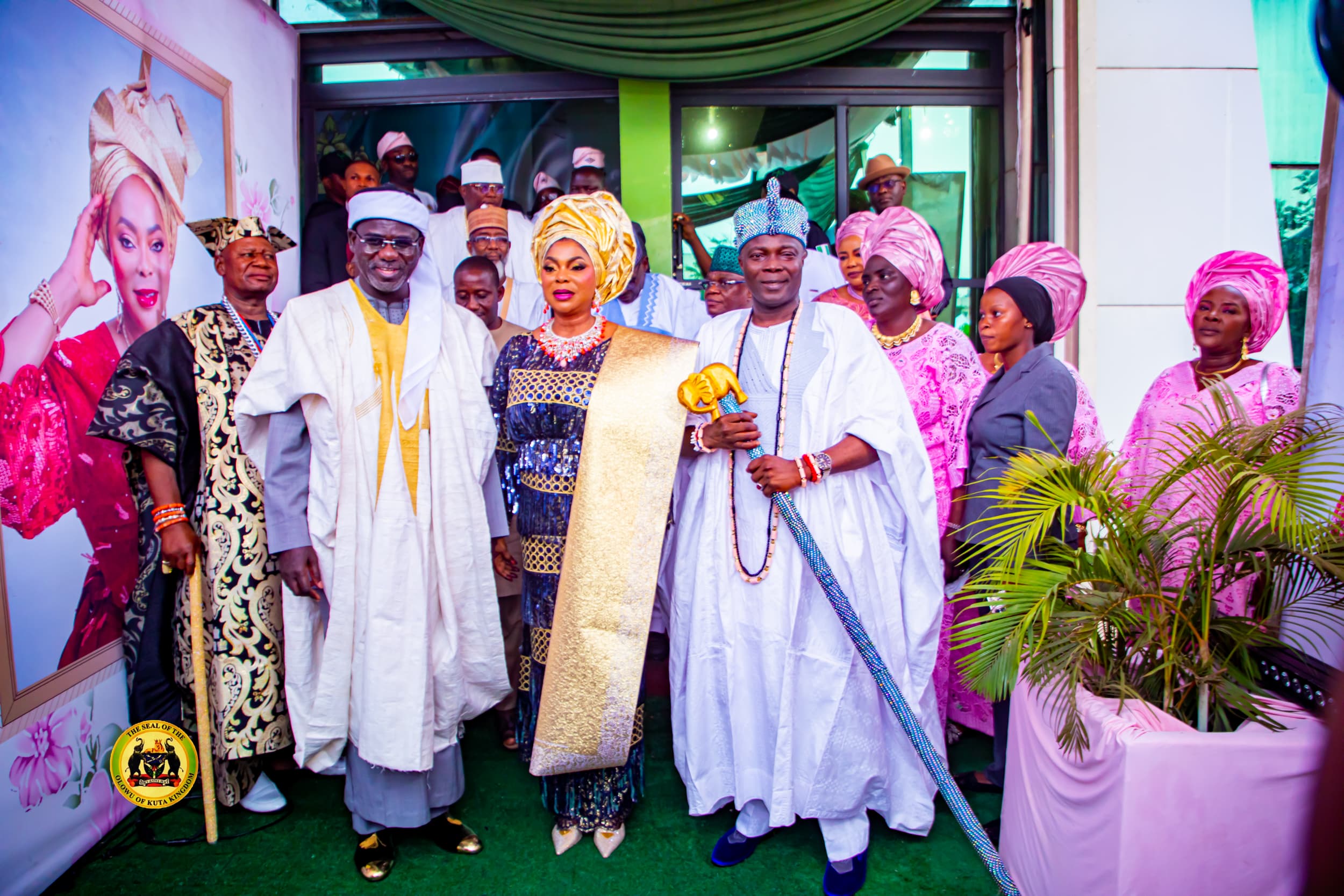
Buratai, Fagbemi , Shagaya, Olofa, Others Eulogise Olowu Kuta’s Olori On 60th Birthday, Foundation Launch
Eminent personalities across the Nigeria stormed the TFK Event Centre, Bala Mohammed Way, Guzape, Abuja, to celebrate the 60th birthday of Olowu Kuta’s Olori, Queen Jumai Amoke and her Foundation Launch on Saturday 28, March 2026.

From former Chief of Army Staff, Lt Gen TY Buratai rtd, to the Minister of Justice and Attorney-General of the Federation, Prince Lateef Fagbemi; Olofa of Offa, HRM Oba Mufutau Gbadamosi. Even top businesswoman and socialite, Chief (Mrs) Bola Shagaya, was in attendance.


Other dignitaries were newly promoted Deputy Inspector-General of Police and former AIG Zone 2 , Lagos , Adegoke Fayoade, Major General Abdumalik, Major General Samuel Adebayo rtd (Fmr CDI);
Major General Anthony Omozoje rtd (Fmr Copp);
Alhaji Tajudeen Owoyemi (Asiwaju of Offa and CEO Radisson Hotel Nigeria;
Dr Waheed Olagunju, former managing director of Bank of Industry, Oniba of Iba, Lagos State, HRM Oba Dr Suleiman Raji ;
Justice Falola, Olu of Ile-Ogbo , Oba Adetoyese amongst many traditional rulers and captains of industry too numerous to mention.
Speaking at the occasion, the Chief Host, Olowu of Kuta, HRM Oba Dr Adekunle Oyelude Makama, CON , Tegbosun iii, who is also the husband of the celebrant commended Queen Jumai for ‘ her slender arms full of kindness’ to establish such humanitarian Foundation, ‘Amoke Children and mother in Need Foundation’ at a time Nigerians are going through economic crisis occassioned by the global meltdown.
Olowu also commended her steadfastness and love for the less privileged and downtrodden.
The monarch refrenced the task before his wife’s humanitarian gesture said her best is yet to come.
” Olori Amoke Jumai, I celebrate you. You will celebrate 70, 80, 90 and continue to shine as you continue to put a smile on people’s faces. I love you, “Olowu Kuta added.
To Lt Gen Buratai, a former army chief and former Nigerian Ambassador to Benin Republic, the reward of hard work is more work.
Buratai, who also doubles as Balogun Agba of Owu Kuta, a chieftaincy title reserved for a generalismo congratulated Queen Jumai for attaining the age of 60 in good health.
The retired army General said he’s not surprised by the turn out of eminent personalities across the country to celebrate the Olowu Kuta’s Olori because she merited it through her hospitality to all, adding that Allah the most merciful, most beneficial would accept all her act of ibadah.
The minister of Justice, Prince Fagbemi, was full of praises for Queen Jumai for deeming it fit to have a place in her heart to accommodate the needy and less privileged in ‘our society.’
Prince Fagbemi urged the guests to contribute generously to support the Foundation in order to continue to alleviate poverty and put a smile on the faces of the people.
” I congratulate you on your 60th birthday and Foundation Launch. I wish you many happy returns of the day and many more fruitful services to the country and motherland”, Prince Fagbemi added.
The celebrant, Queen Jumai who was grining from ear to ear thankfully said she was excited by the turn out and the response of the people to her foundation.
Queen Jumai, however, promised to continue to use her resources and donations received for the good of the needy and less privileged in the society.
” I want to appreciate my own Kabiesi Olofa of Offa , for his presence and im I’m using him as a point of contact to all other Kabiesis present here, the minister of justice and Attorney-General, you’re welcome, sir; Mrs Bola Shagaya, I salute your enterprise, Lt Gen Buratai, I’m grateful, sir; DIG Fayoade, Justice Falola and other dignitaries too numerous to mention, I thank you, all. To my darling husband, Kabiesi Olowu , I thank you immensely for your support. And to my family and friends, I thank you , all. E se pupo!”, she said.


-

 society7 months ago
Religion: Africa’s Oldest Weapon of Enslavement and the Forgotten Truth
-

 news4 months ago
WHO REALLY OWNS MONIEPOINT? The $290 Million Deal That Sold Nigeria’s Top Fintech to Foreign Interests
-

 society6 months ago
“You Are Never Without Help” – Pastor Gebhardt Berndt Inspires Hope Through Empower Church (Video)
-

 celebrity radar - gossips2 months ago
Dr. Chris Okafor Returns with Power and Fire of the Spirit -Mounts Grace Nation Altar with Fresh Anointing and Restoration Grace on February 1, 2026