
Business
UBA Gives Customers December to Remember

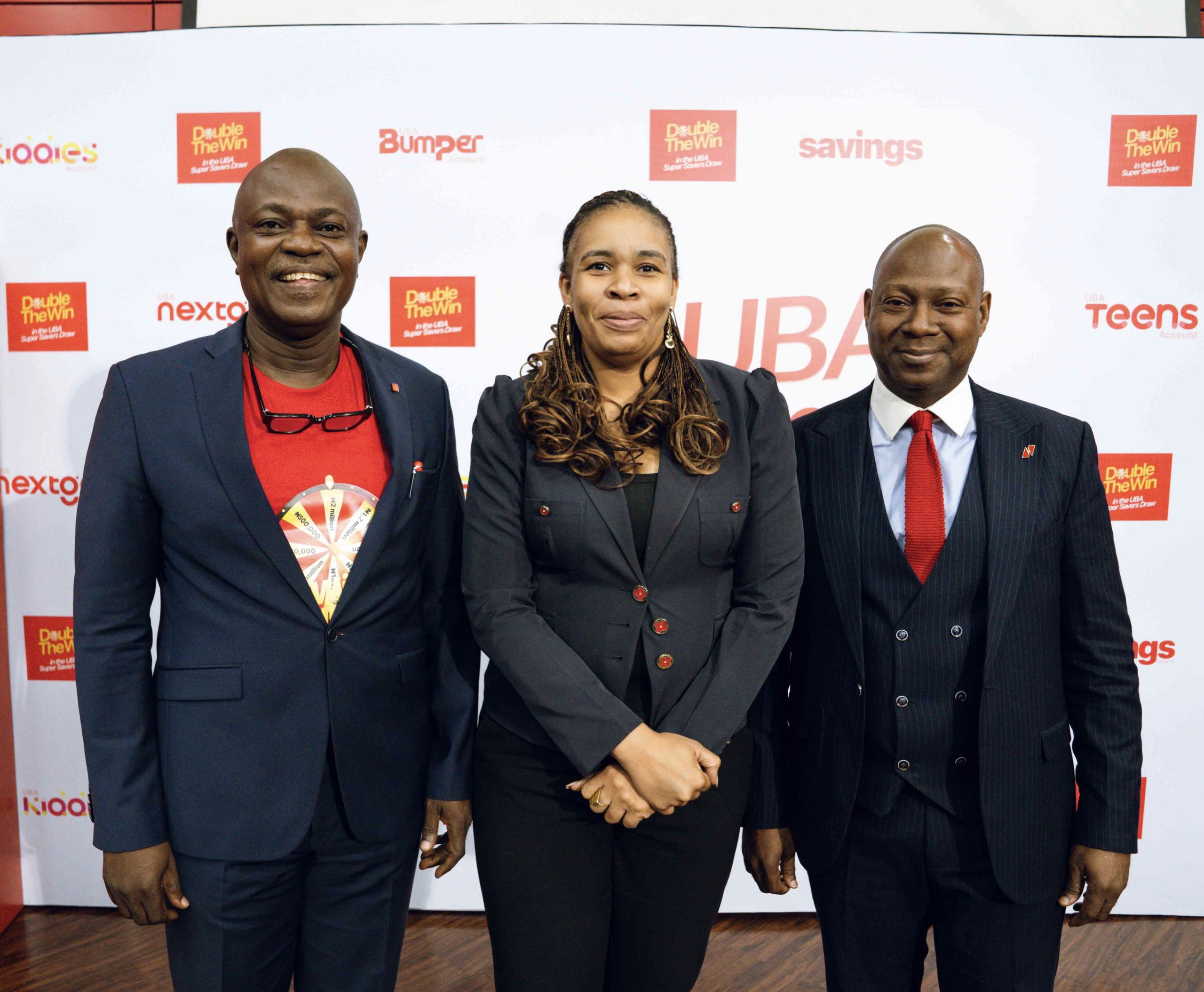
UBA Gives Customers December to Remember,
…Doles out N36m IN Super Savers Draw
In line with its usual custom of rewarding loyalty especially during the yuletide season, Africa’s Global Bank – United Bank for Africa (UBA) Plc- has rewarded its loyal customers in the just concluded UBA Super Savers Draws giving out over N36million in cash prizes.
The winners were announced following a highly transparent draw which held at the Tony Elumelu Amphitheatre, UBA House on Thursday, and was witnessed by members of the press as well as representatives of the Federal Consumer Protection Council (FCPC) and the National Lottery Regulatory Commission (NLRC).

A UBA Bumper account customer, Fabian Matthew Okon, copped the biggest prize of the day as he won the N10m jackpot, while Abiodun Joseph Aduramigba, emerged winner of the N5m star price for the day. Kahalla Mohammed was the lucky winner of the N1.8m rent for a year cash prize.
Ten lucky savings/current account holders: Emmanuel Onyeka Ozoude; Nneka Ali Ologwu; Juliana Obioma Idoko; ThankGod Gagbe; Babayo Dahiru; Ahmad Hamza; Wisdom Otaghogho; Ecdelson Chukwuamaka Amusa; Genom Isaac Jibrin and Atimanu Eunice Bala, emerged lucky winners of N1m each; while Monica Onuzurike, a bumper account holder carted N500k shopping voucher.
In another category; 15 Kidddies and Teens account holders: Giovanni Chidera Ikwuagwu; Brinemigha Prince, Prezide; Oguzie Ugonna Mitchell-Chris; Chimamanda Chikamso Samuel Louis-Okafor; Oyebola Jayden Okikiola; Ugomsinachi Emmanuel Obiegbunam; Bonaventure Odira Udoyibo; Jayden Obehi Lucky; Chimdiebube Joan Ugoma; Isaac Ibrahim; Emmanuel Dominion Innocent; Daniel Tamarakuro Oyadonghan; Ayibanugha Lawson; Muhammad Mohammed Murtala and Abdullah Ndanusa Abdulkadir were each rewarded with N200,000 each.
On the other hand, Onyinyechukwu Perpetua Okechukwu; Chinenye Christiana Ukaobasi; David Ayomide Olarewaju; Malik Olamide Mustapha; Mujaheed Abdulwahab; Grace Amarachi Nduka; Izoduwa Theophilus Umweni; Ibironke Mercy Temitayo; Fatima Bello and Sandra Luevese Akaahan were the 10 UBA Next Gen account holders who each won N180,000 pocket money.
The 35 winners of N100,000 each were: Lantyo Clement Aondohemba; Chibuike Godwin Oluchukwu; Sunday Miracle Ukah; Sonia Igho; Chukwuebuka Victor Wilfred; Friday Emmanuel Okon; Ajao Ramota Abiola; Comfort Ifeoluwa Jonathan; Abisoye Oluwakemi Agbeja; Kurah Rejoice; Rukkayya Ibrahim; Confidence Loveday; Gift Nke Yusuf; Salamat Onize Hadi; Hadiza Lawal; Stonia Oghenekevwe Ohwofa; Anthonia Adesua Ukazu; Alimo Ajoke Usman and Hassana Zubairu.
Others were Musa Abdulhamid; Paul Peter; Sarah Olabanke Olawunmi; Do-Ere Ekpe; Nduka Paul; Ijeoma Loveday Ndumechi; Idris Muhammed; Chinonye Christabella Olumba; Ossai, Josephine Oluchukwu; Gift Rhoda Adode; Felix, Felicia; Nwakaego Sunday; Okwudiri Victor Nwankwo; Peter Enyo-Ojo Alfa; Blessing Damilola Alao and Gbolahan John Ayanlowo
When contacted over the phone, the N10m jackpot winner, Fabian Matthew Okon, expressed gratitude to the bank for the prize, adding that he was very grateful. “Thank you UBA, I am very happy” he said.
UBA’s Head, Retail Banking, Prince Ayewoh, who congratulated all the 74 winners after the draw, encouraged other people to keep on saving so they could be winners in the next edition.
He said; “At UBA, our customers are at the heart of everything we do, which is why in the midst of the current financial terrain, high cost of living and reduced income, we chose to reward 74 people today and we will keep rewarding you every month. The Super Savers Draw is not just a moment to reward our savers; it’s a celebration of the strong bond that we share with you.
He disclosed that the bank will be embarking on new ventures and initiatives aimed at enhancing customer experience in 2024, as he asked them to anticipate a range of innovative products, improved services, and exclusive offerings crafted specially to address your evolving needs, especially for the senior citizens.
United Bank for Africa Plc is a leading Pan-African financial institution, offering banking services to more than twenty-five (25) million customers, across 1,000 business offices and customer touch points in 20 African countries. With presence in New York, London, Paris, and Dubai, UBA is connecting people and businesses across Africa through retail, commercial and corporate banking, innovative cross-border payments and remittances, trade finance and ancillary banking services.





Fidelity Bank grows gross earnings by 38% to N434.95b in Q1
Fidelity Bank Plc recorded 37.9 per cent growth in gross earnings to N434.95 billion in first quarter 2026 as the international commercial bank continued to expand its core banking market share.
Interim report and accounts of Fidelity Bank for the three months ended March 31, 2026 released at the Nigerian Exchange (NGX) showed that gross earnings rose from N315.42 billion in first quarter 20025 to N434.95 billion in first quarter 2026, representing an increase of 37.9 per cent.
The top-line performance was driven by impressive growth in the bank’s core business operations with interest incomes rising by 22.8 per cent to N314.48 billion in first quarter 2026 as against N256.10 billion in first quarter 2025.
With net interest income at N180.97 billion, the bank closed the period with profit before tax of N92.48 billion. After taxes, net profit stood at N74.47 billion for the three-month period. Earnings per share remained high at N5.69, underlining the capacity of the bank to reward its shareholders.
The balance sheet of the bank also emerged stronger. Total assets crossed the N11 trillion mark to N11.35 trillion by March 2026 compared with N10.46 trillion recorded in December 2025. Customers’ deposits increased from N6.89 trillion to N7.38 trillion. Total equity rode on the back of earnings growth to a 27.5 per cent increase from N1.09 trillion in December 2025 to N1.39 trillion by March 2026.
The first quarter 2026 results further consolidated the strong earnings outlook of the bank, which had successfully completed its recapitalisation amidst impressive earnings performance in 2025.
Fidelity Bank had recorded double-digit growths in interest and non-interest incomes as well as key balance sheet items during the year ended December 31, 2025.
The audited report showed that gross earnings rose from N1.04 trillion in 2024 to N1.52 trillion in 2025, an increase of 45.6 per cent. Interest and similar incomes had grown by 38.7 per cent from N803.1 billion in 2024 to N1.11 trillion in 2025. Fees and commission incomes also rose by 44.7 per cent from N78.4 billion to N113.4 billion. The bank recorded net profit after tax of N242.4 billion in 2025.
The bank’s balance sheet emerged stronger with total assets rising by 18.6 per cent to N10.46 trillion in 2025 as against N8.82 trillion in 2024. Customer deposits increased by 16.1 per cent from N5.94 trillion to N6.89 trillion, reflecting continued franchise strength and an improved funding profile. Net loans and advances meanwhile declined by 2.4 per cent to N4.28 trillion in 2025 as against N4.39 trillion in 2024, attributable to customers paying down on their mature obligations.
The bank had in 2025 strengthened its capital position, with eligible capital rising to N561 billion, above the regulatory minimum of N500 billion for banks with international authorisation. In addition, capital adequacy had remained robust, with Capital Adequacy Ratio of 30.94 per cent by December 2025 as against 23.47 per cent by December 2024.
Managing Director, Fidelity Bank Plc, Dr. Nneka Onyeali-Ikpe, said the first quarter 2026 results reinforced the bank’s strong and resilient business model.
She noted that with the remarkable success of its recapitalisation programme and continuing expansion, Fidelity Bank has entered a new era of growth and impressive returns.
“We are on a stronger footing and confident that we will set new growth records that are reflective of our legacy and the future we are working on,” Onyeali-Ikpe said.
Business
Dangote Refinery Ends Nigeria’s Era of Fuel Import Dependence, Boosts GDP, FX Earnings — EIU
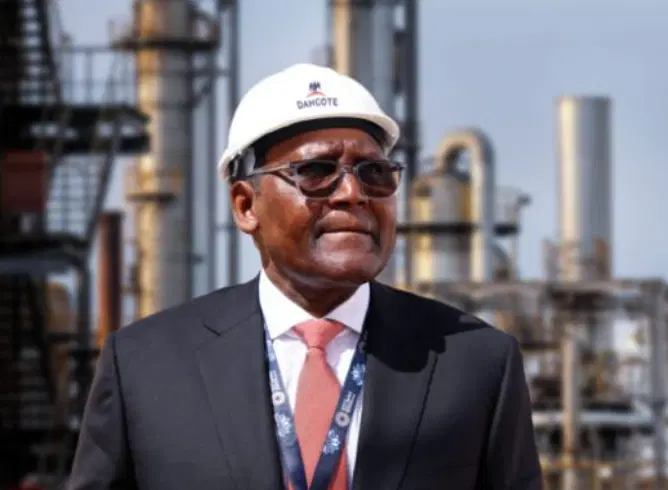
Dangote Refinery Ends Nigeria’s Era of Fuel Import Dependence, Boosts GDP, FX Earnings — EIU
The operational ramp up of the 650,000 barrels per day Dangote Petroleum Refinery & Petrochemicals is fundamentally reshaping Nigeria’s downstream oil sector, significantly reducing the country’s dependence on imported refined petroleum products and strengthening its external position, according to the Economist Intelligence Unit (EIU).
In its latest assessment on Nigeria’s fuel market and regulatory environment, the EIU said the refinery has already transformed a sector that was previously characterised by heavy reliance on imported fuel despite Nigeria being Africa’s largest crude oil producer. The report noted that the refinery met nearly 80 per cent of domestic petrol demand in April and produced enough volumes to satisfy local consumption requirements as operations approached full capacity.
The EIU described Nigeria’s downstream petroleum sector before the refinery as “long dysfunctional”, noting that the country had remained almost entirely dependent on costly imported fuel while producing nearly 1.5 million barrels of crude oil daily.
According to the report, the emergence of the refinery has reduced import dependence, improved domestic fuel availability and strengthened Nigeria’s balance of payments position through lower import demand and rising exports of refined petroleum products.
“The gradual ramp up of the 650,000 barrel/day Dangote refinery since May 2023 has transformed Nigeria’s long dysfunctional downstream sector,” the report stated. “The country’s main refineries, all state owned, had been inoperative for years and Nigeria was almost entirely reliant on costly imported fuel.”
The research and analysis division of The Economist Group, London added that the refinery’s attainment of full operational capacity and its planned expansion would further support Nigeria’s economic growth and foreign exchange earnings over the medium term.
“Meanwhile, the attainment of full capacity at, and an increase in exports from, the Dangote refinery will support real GDP growth and foreign exchange earnings in 2026 and 2027 and beyond, as a planned doubling of the plant’s output comes on stream around the end of the decade,” it added.
Industry analysts said the refinery is increasingly positioning Nigeria as an emerging refining and export hub, altering energy trade flows across Africa and reducing the vulnerability associated with fuel import dependence.
The EIU noted that the refinery’s expansion has coincided with major reforms in Nigeria’s downstream sector, including the removal of fuel subsidies and the introduction of market driven pricing mechanisms.
The report, however, said the transition from a state dominated fuel import structure to large scale domestic refining has triggered resistance from interests linked to the old import regime.
The latest tensions emerged following the decision by the Nigerian Midstream and Downstream Petroleum Regulatory Authority to relax restrictions on petrol imports despite the refinery’s growing capacity to meet domestic demand.
Dangote Industries subsequently initiated legal action, arguing that continued import approvals undermine domestic refining investments and conflict with the objectives of the Petroleum Industry Act, which seeks to encourage local refining capacity and reduce import dependence.
Analysts noted that the availability of large-scale domestic refining capacity has improved Nigeria’s energy security and reduced exposure to external supply shocks and foreign exchange volatility.
The Centre for the Promotion of Private Enterprise also cautioned against unrestrained importation of petroleum products, warning that such a policy could weaken Nigeria’s industrialisation drive and discourage investments in domestic refining.
Chief Executive Officer of CPPE, Muda Yusuf, said continued dependence on imported fuel had historically contributed to pressure on foreign reserves, exchange rate instability and fiscal leakages.
The refinery’s growing impact is also being reflected in Nigeria’s broader macroeconomic indicators. Earlier this month, S&P Global Ratings cited increased domestic refining capacity and rising hydrocarbon exports among the major factors supporting Nigeria’s sovereign credit rating upgrade – the first in 14 years.
Beyond Nigeria, analysts said the refinery is increasingly being viewed as a strategic industrial asset for Africa, where many countries remain heavily dependent on imported fuel despite rising demand for transportation, manufacturing, and power generation.
Business
BREAKING: Court Dismisses $19.6 Million Claim Against NNPCL — Rules Contract Scope Cannot Be Changed Orally
BREAKING: Court Dismisses $19.6 Million Claim Against NNPCL — Rules Contract Scope Cannot Be Changed Orally
In a landmark ruling on Friday, May 22, 2026, the Federal Capital Territory High Court in Abuja threw out a $19.6 million lawsuit filed by Alternate Dimensions Ventures Ltd against the Nigerian National Petroleum Company Limited (NNPCL), affirming a key legal principle: a written contract cannot be expanded through oral agreements or conduct.
Alternate Dimensions had sought $19,600,000 in professional fees, claiming the scope of its Direct Sale, Direct Purchase (DSDP e-pro) contract with NNPCL was orally expanded. Represented by counsel Patrick Peter, the firm argued it was entitled to the revised sum for services rendered under the alleged new terms.
But NNPCL, through its lawyer Ituah Imhanze of KENNA LP, pushed back sharply, arguing that parties are bound exclusively by the clear terms of their written agreement. Imhanze contended that without any written amendment, the claim was legally unsound, and the court agreed.
Delivering judgment, Justice Hamza Mu’azu upheld NNPCL’s defense, stating that the contract was unambiguous and that no evidence was adduced during the trial, which supported the alleged scope expansion. The court further found that NNPCL fully complied with all contractual terms and committed no breach.
Dismissing the suit as meritless, Justice Mu’azu reinforced the doctrine of sanctity of contract: any amendment to a written agreement must be express, unequivocal, and documented, not implied or verbal.
The ruling spares NNPCL from the S19.6 million claim and also a floodgate of similar potential liabilities.


- Most Africans continue to experience economic hardship despite signs of recovery, latest Afrobarometer report shows June 9, 2026
- African Organisations Move from Awareness to Action as IT Asset Visibility Becomes a Board-Level Priority June 9, 2026
- Forget Energy Transition, Produce Oil Like Nothing Before June 9, 2026
- Heirs Energies' US$750 Million Financing Named Best Oil & Gas Deal of the Year June 9, 2026
- What Human Resource (HR) Professionals Gain from Automation June 9, 2026
- Spiro Appoints Former Indofast Energy Chief Executive Officer (CEO) Anant Badjatya as Group CEO to Lead its Next Phase of Growth June 9, 2026
- Gwede Mantashe Joins African Energy Week (AEW) 2026 as South Africa's Petroleum Reforms Open the Orange Basin to Drilling June 8, 2026
- Inspiring Tomorrow's Leaders: Senator Dr. Rasha Kelej Launches her First Virtual Mentorship and Leadership Platform June 8, 2026
- ExxonMobil and National Basketball Association (NBA) Africa interactive Science, Technology, Engineering, and Mathematics (STEM) Showcase and a Jr. NBA Clinic June 8, 2026
- Africa Centres for Disease Control and Prevention (Africa CDC) Welcomes Pandemic Fund’s US$220m Support for Bundibugyo Virus Outbreak Response June 8, 2026
- Most Africans continue to experience economic hardship despite signs of recovery, latest Afrobarometer report shows June 9, 2026
- African Organisations Move from Awareness to Action as IT Asset Visibility Becomes a Board-Level Priority June 9, 2026
- Forget Energy Transition, Produce Oil Like Nothing Before June 9, 2026
- Heirs Energies' US$750 Million Financing Named Best Oil & Gas Deal of the Year June 9, 2026
- What Human Resource (HR) Professionals Gain from Automation June 9, 2026
- Spiro Appoints Former Indofast Energy Chief Executive Officer (CEO) Anant Badjatya as Group CEO to Lead its Next Phase of Growth June 9, 2026
- Gwede Mantashe Joins African Energy Week (AEW) 2026 as South Africa's Petroleum Reforms Open the Orange Basin to Drilling June 8, 2026
-

 news6 months ago
WHO REALLY OWNS MONIEPOINT? The $290 Million Deal That Sold Nigeria’s Top Fintech to Foreign Interests
-

 society1 month ago
SOCIAL MEDIA IS NOT A BATTLEFIELD COMMAND – WHY THE NIGERIAN ARMY’S ACTION AGAINST JUSTICE CRACK IS A NATIONAL SECURITY IMPERATIVE
-

 celebrity radar - gossips4 months ago
Dr. Chris Okafor Returns with Power and Fire of the Spirit -Mounts Grace Nation Altar with Fresh Anointing and Restoration Grace on February 1, 2026
-

 celebrity radar - gossips6 months ago
Prophet Kingsley Aitafo Releases 2026 Prophecy: ‘Nigeria Will Rise, but the World Must Prepare for Turbulence’