
society
We Are Not the Enemy: A Letter to South Africa from One African to Another. By George Omagbemi Sylvester

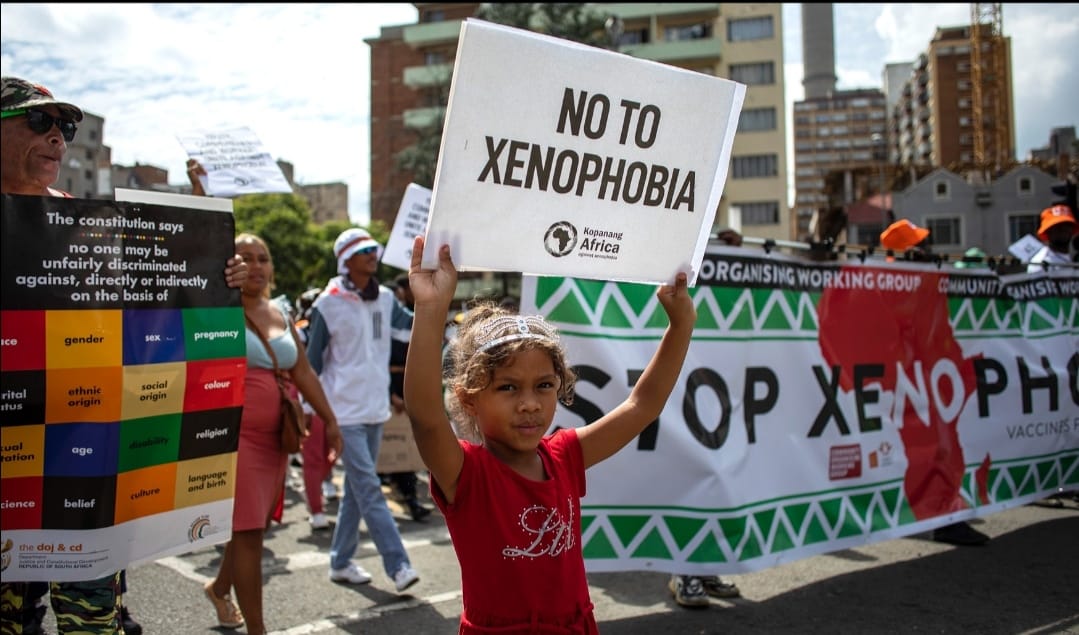
We Are Not the Enemy: A Letter to South Africa from One African to Another.
By George Omagbemi Sylvester | Published by SaharaWeeklyNG.com
There is a storm brewing on the southern tip of our beloved continent; one not caused by nature, but by man. In township corners, across social media reels and in political podiums draped in national flags, an uncomfortable message continues to echo: “Operation Dudula, Foreigners must go.”
Let’s ask the question the cowards will not: who really are the enemies of South Africa? Is it the foreign national who sells tomatoes on the street, or the political elite sipping imported wine while corruption ruins the soul of the nation?

In a recent viral Instagram reel, yet another South African citizen laments the presence of foreign nationals, blaming them for unemployment, rising crime and economic stagnation. The message is emotionally charged and undoubtedly reflects the frustration of the average citizen who feels abandoned, beneath this fiery rhetoric lies a dangerous illusion: that foreign nationals (especially African migrants) are the root cause of South Africa’s problems.
Nothing could be further from the truth.
The Real Source of the Pain. Let’s be honest: the pain South Africans feel is real. Youth unemployment is above 60%. Basic services often fail. Corruption, crime, and poverty are rampant. But who created these problems? Foreigners?

No.
It was the politicians who promised “a better life for all” and then built palaces for themselves. It was the corporate barons who loot pension funds. It was the system that failed to reform after apartheid ended—a system that now feeds on division to hide its incompetence.
Instead of holding the powerful accountable, the people are being told to look sideways; to blame Zimbabweans, Nigerians, Congolese, Somalis and Mozambicans. This is not just sad; it is intellectually dishonest and morally dangerous.
Divide and Rule: The Old Colonial Tactic. Repackaged, Let us not forget: the first Europeans to colonize Africa didn’t do so with armies alone, they did so by dividing us. Zulu vs Xhosa. Igbo vs Yoruba. South African vs Nigerian. They turned brothers into rivals.
Now in 2025, that same method is being repackaged. South African politicians (especially populists like Gayton McKenzie and others like him) use foreign nationals as scapegoats. They say “they take our jobs”, “they commit crimes”, “they’re illegal.”
Ask any honest economist and they’ll tell you that most foreign nationals in South Africa CREATE their own jobs. They run salons, spaza shops, taxi services, catering businesses, tailoring shops. They hustle, just like the average South African. They are not stealing jobs. They are surviving.
The Cost of Xenophobia. Xenophobia does not just hurt the foreigner, it stains South Africa’s soul.
In 2008, 2015, 2019 and again in recent years, we saw the brutal scenes: machetes drawn, businesses looted, people burned alive. These are not just headlines. They are human tragedies.
What did South Africa gain from these attacks? Did the economy improve? Did unemployment drop? Were the hospitals suddenly functional?
No.
All that happened was blood in the streets and shame on the continent.
According to a 2023 UNHCR report, more than 140,000 African migrants in South Africa live in fear of physical attacks. Children don’t go to school. Families sleep with one eye open. And for what?
To distract the people from the true cause of their suffering: failed governance.
The Pan-African Dream Is Dying. Kwame Nkrumah, Julius Nyerere, Nelson Mandela and Thomas Sankara all dreamed of a united Africa; an Africa without borders, without hatred, without tribal or national division. Today, that dream is being poisoned.
When South Africans attack Nigerians, Zimbabweans or Somalians, they are not protecting their country; they are burning down the very bridges we need to build the Africa we deserve.
Africa will never rise if we continue to fight ourselves. No nation can isolate itself into prosperity. We either grow together, or we collapse together.
Who Are the Real Criminals?
Let us talk about crime.
Yes, there are criminals among foreign nationals; just as there are criminals among South Africans, but every society has both SAINTS and SINNERS. You don’t condemn an entire nationality because of a few bad actors. That’s not justice; that’s prejudice.
Let’s talk facts.
According to the South African Police Service (SAPS), more than 85% of all arrests and convictions are South African nationals. Foreign nationals make up a very small percentage of actual criminals and even smaller when you factor in economic contribution.
Now let’s talk about white-collar crime. The biggest scandals in South Africa’s history ( Eskom looting, Gupta state capture, Steinhoff fraud, VBS bank collapse) were all masterminded by South Africans. Not a single foreigner was needed to pull off those billion-rand crimes.
So, again, who are the real criminals?
The Contribution of Foreign Nationals
Foreign nationals bring more than just their sweat and skills; they bring their cultures, their flavors, their music, their resilience. Nigerian doctors in Limpopo save lives every day. Zimbabwean teachers educate children in Eastern Cape. Somali traders bring goods to rural areas where no one else wants to go.
According to a 2022 report by the Human Sciences Research Council (HSRC), foreign-owned businesses in South Africa contribute nearly R20 billion annually to the informal economy. That is not THEFT. That is VALUE.
Yet, many of them live under threat; discriminated against, demonized and harassed by both citizens and police.
A Message to South Africans. Brothers and sisters, I say this not with bitterness, but with love: WE ARE NOT YOUR ENEMIES.
We come here not to conquer but to contribute. We run from war, hunger and collapsed governments to places like South Africa because we believe in its promise. We believe in ubuntu; that African spirit that says “I AM BECAUSE WE ARE.”
Let us not allow fear and propaganda to destroy that spirit.
The solution to your suffering lies in BETTER GOVERNANCE, FAIRER ECONOMIC POLICY and YOUTH EMPOWERMENT; not in burning down a Somali-owned shop or blaming a Nigerian Uber driver.
A Message to African Leaders. We foreign nationals are not just victims; we are also failed by our own governments. Why do so many Africans risk their lives to flee to South Africa? Home has failed us.
So this is also a call to our own leaders; Nigerian, Zimbabwean, Congolese, Ethiopian: fix your countries. Stop looting. Stop silencing opposition. Stop selling out to foreign powers. Your failure forces your citizens to flee. And that exodus becomes fuel for xenophobia abroad.
Finally: Africa is bleeding from within. The hate we show each other only deepens the wounds left by colonialism and corruption.
South Africa, you are a giant (but even giants can fall) especially when they forget their brothers.
We must reject the politics of DIVISION and embrace the vision of UNITY. The future of Africa does not lie in border posts or deportation vans. It lies in the hands of young Africans, working together, respecting one another and rebuilding this continent from the ground up.
Let us rise; not as South Africans or Nigerians or Zimbabweans; but as Africans, together.

Written by George Omagbemi Sylvester
Pan-African writer, political commentator, and human rights advocate
Published by SaharaWeeklyNG.com




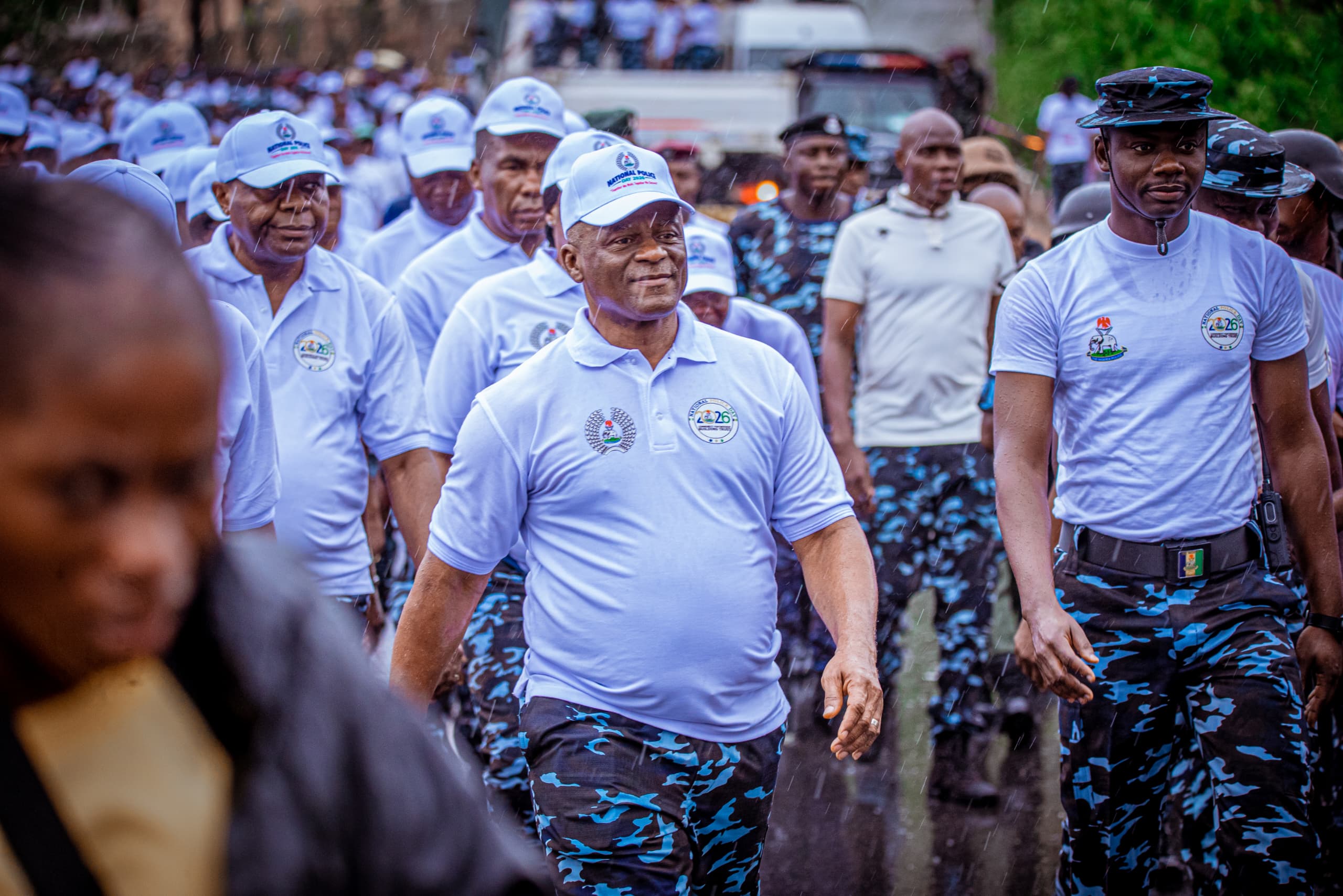
Police Day 2026: IGP Disu Leads Nationwide Walkathon To Strengthen Community Trust
The Inspector-General of Police, Olatunji Disu, on Tuesday led the management team, alongside officers and personnel of the Nigeria Police Force, in a nationwide walkathon to commemorate the 2026 National Police Day.
The event, held across state capitals and the Federal Capital Territory, formed part of activities marking Day Two of the annual celebration, themed “Community Partnership: Building Trust.”
The symbolic exercise, which drew participation from both police personnel and members of the public, was aimed at showcasing unity, discipline, and a renewed commitment to community policing and public safety.
According to the Force leadership, the walkathon underscores the Nigeria Police Force’s resolve to strengthen public trust, deepen engagement with citizens, and enhance collaboration in tackling security challenges across the country.
Participants described the initiative as a practical step toward bridging the gap between law enforcement and the communities they serve, while also promoting physical fitness and mental well-being among officers and civilians alike.
With the theme reflecting a shared responsibility for safety, the Police reiterated that sustainable security can only be achieved through active partnership with the public.
The event concluded with a renewed call for collective action under the banner: “Together We Walk, Together We Secure,” emphasizing unity of purpose in building a safer and more secure society for all Nigerians.


society
Dr. Chris Okafor invokes divine retribution upon individuals blackmailing the Grace Nation church
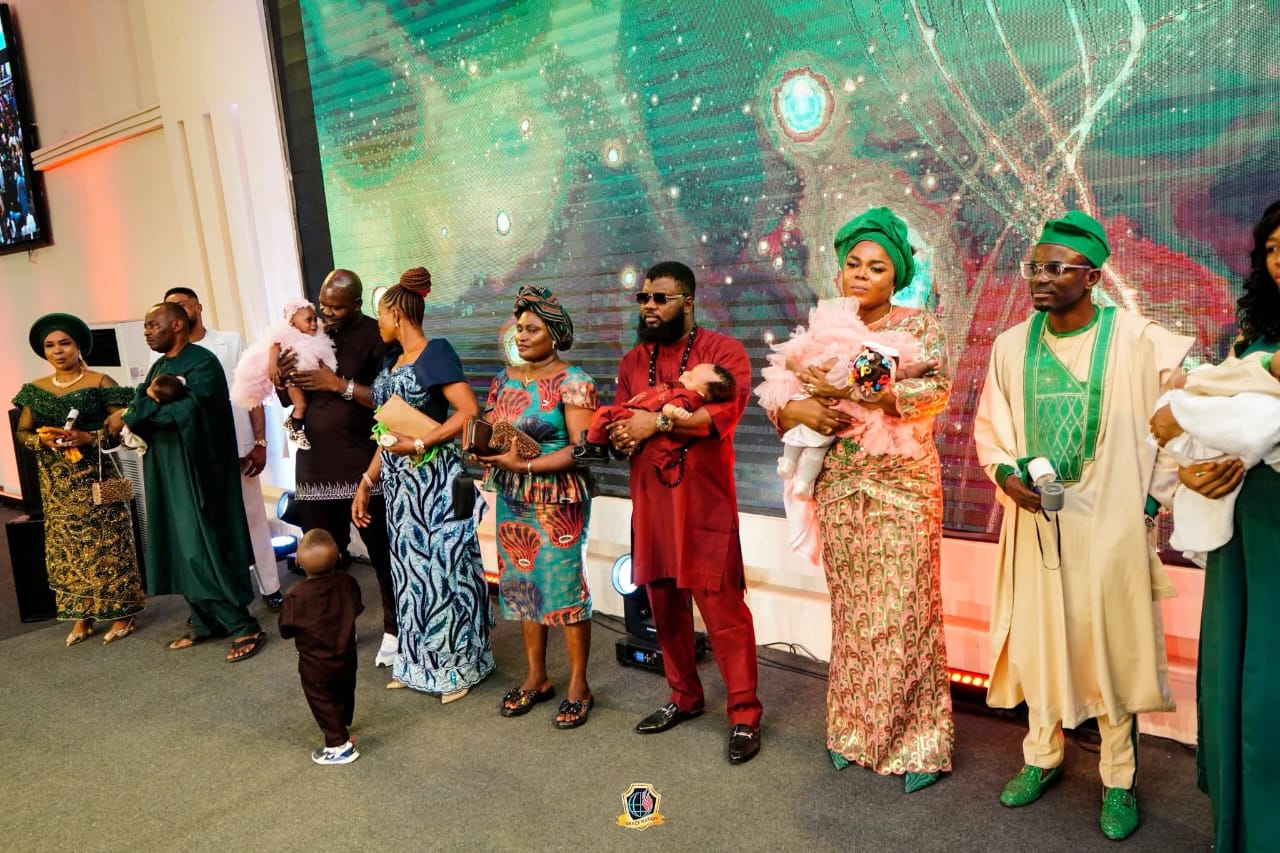
Dr. Chris Okafor invokes divine retribution upon individuals blackmailing the Grace Nation church
… Affirming God’s omnipotence to unveil malicious schemes.
To be frank, the ability of Doris Ogala and her associates to withstand the arduous challenges set by Senior Pastor Dr. Chris Okafor of Grace Nation Global at the culmination of the Harvest of Babies 2026 conference, the church’s flagship event, continues to elude me.
It’s advisable not to offend a powerful spiritual leader like Prophet Chris Okafor to avoid potential consequences, as seen in the situation with Doris Ogala, who was rebuked by the prophet; can she rectify the situation through confession?
Insiders close to the man of God claim that despite relentless online bullying and blackmailing, the Generational Prophet remains resolute, stating that God’s power has been evident throughout the commission’s existence. The reason for this wonderful statement is found in the scriptures, “Upon this rock I shall build my Church, and the gates of hell shall not prevail.” The more falsehoods are spread about the church and its leader, the more God elevates the church and propels him to greater heights, he asserted. He emphasized that blessings and fruitfulness are antidotes to curses, noting that God continues to bestow blessings upon the church, including miracles and the gift of children, which is one reason for the grand finale of the annual family liberation program, The Harvest of Babies.
However, the man of God issued a curse on each person speaking ill of the church, blackmailing, and uttering all sorts of falsehoods against the church, declaring that if they refused to repent within a few days, the earth would swallow them and their family members, stating that they would be of no use to themselves, their families, or society at large.
The spiritual leader cautions his followers to beware of such individuals including Doris Ogala who may taint their faith, and urges them to treat these persons as emissaries of the devil, avoiding them altogether.
Recall that the 2026 harvest of babies concluded with a remarkable birth of a miracle baby boy to a woman on the third day of the conference, accompanied by the dedication of several other miracle babies, all to the glory of God.
Christopher Sunday David writes from
Austria
“Together We Walk, Together We Secure”: Police Launch 2026 Walkathon In Abuja
The Nigeria Police Force has announced plans to host a walkathon in commemoration of the 2026 National Police Day, aimed at promoting unity, peace, and stronger community partnership.
The event is scheduled to take place on Tuesday, March 31, 2026, with participants expected to converge at the Force Headquarters Abuja by 6:00 a.m., where the walk will commence.
According to the organisers, the walkathon is designed to bring together members of the public, stakeholders, and security personnel in a show of solidarity and shared commitment to national security.
With the theme, “Together we walk, together we secure,” the initiative underscores the importance of collaboration between the police and citizens in maintaining peace and safety across the country.
Members of the public have been encouraged to participate in the exercise, which forms part of activities lined up to mark this year’s National Police Day celebration.
It is believed that the walkathon would not only foster closer ties between the police and the communities but also serve as a platform to promote awareness on collective responsibility in ensuring a safer society.


-

 society6 months ago
Religion: Africa’s Oldest Weapon of Enslavement and the Forgotten Truth
-

 news4 months ago
WHO REALLY OWNS MONIEPOINT? The $290 Million Deal That Sold Nigeria’s Top Fintech to Foreign Interests
-

 society6 months ago
“You Are Never Without Help” – Pastor Gebhardt Berndt Inspires Hope Through Empower Church (Video)
-

 celebrity radar - gossips2 months ago
Dr. Chris Okafor Returns with Power and Fire of the Spirit -Mounts Grace Nation Altar with Fresh Anointing and Restoration Grace on February 1, 2026