
Politics
We are thinking in the same line with President Tinubu’s Renewed Hope Housing Agenda – Governor Fubara

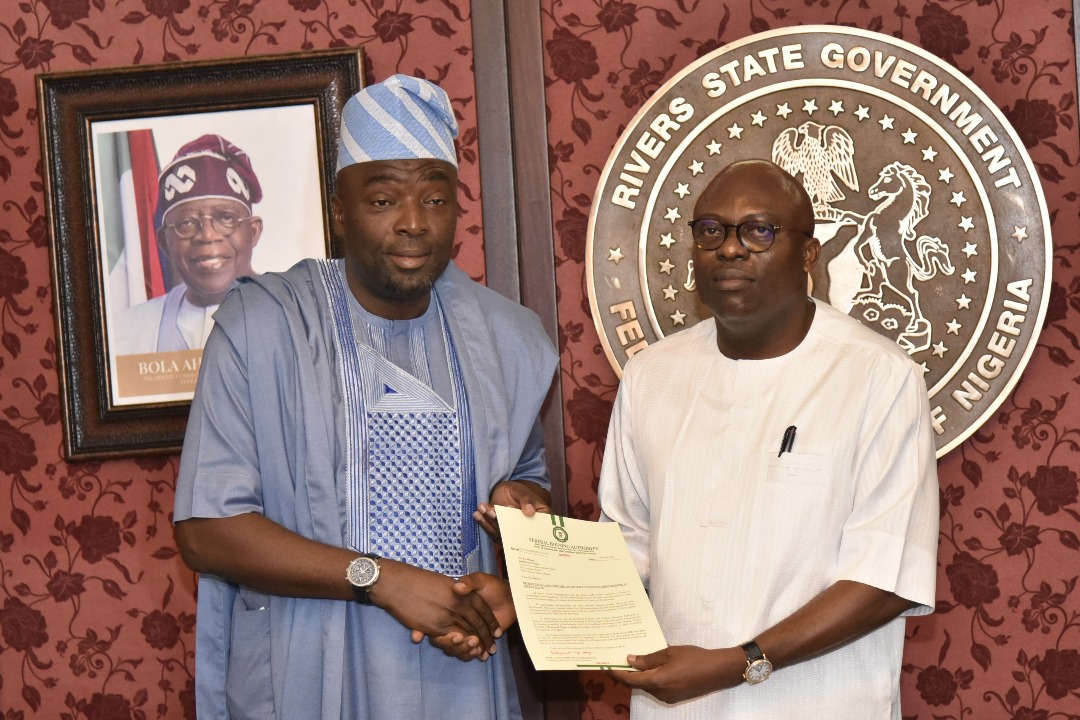
We are thinking in the same line with President Tinubu’s Renewed Hope Housing Agenda – Governor Fubara
…As Managing Director, Federal Housing Authority,Hon Oyetunde Ojo visits Rivers State.
The Governor of Rivers State, His Excellency, Sir Siminalayi Fubara, says Rivers State will fully support the Renewed Hope Agenda of President Bola Ahmed Tinubu (GCFR).

He disclosed this on Wednesday, 10th April, 2024 when the Managing Director and Chief Executive of Federal Housing Authority, Hon. Oyetunde Oladimeji Ojo paid him a visit in continuation of the agency’s consultation with State Governors towards the Renewed Hope Agenda programme of President Tinubu.
Hon. Ojo, in his address to the governor, commended him for the great sense of focus he has displayed in governance within the short period he assumed office.
The FHA Chief Executive listed out the Governor’s infrastructural development, timely payment of pensioners, and enhanced security in the state, among other things, as the areas he has made instant marks in the state.
The MD informed Governor Fubara that the main reason for the visit was to bring President Bola Ahmed Tinubu’s Renewed Hope Agenda message on Housing to Rivers State, which is all about providing affordable houses to Nigerians, pointed out that the state is the thirteenth he is visiting with his team in under one month.
Hon. Ojo reiterated Mr. President’s determination not only to tackle the nation’s housing deficit, but giving Nigerians affordable and livable houses. According to him, “We bring you Mr President’s mandate of Renewed Hope, which is affordable housing. Right now, in Nigeria, we lack adequate shelter, which is why the President has chosen us to help tackle the issue.”
The FHA boss pointed out the strategic importance of Rivers State with its peculiar terrain to the economic life of the country and noted the need for affordable houses in the state for the good of the citizens.
The MD therefore told His Excellency, Governor Fubara, that the Authority has come to ask for land from Rivers State for the purpose of delivering the Renewed Hope Housing project.
Hon. Ojo explained to the Governor the new developmental inclusiveness policy of the FHA, where the Authority consults with the State Governments for inputs in designs before any project is sited. He said that the Authority would does not wish to stay in Abuja and design what they like for the people of Rivers.
In his words, the MD told the governor, “One of the reasons why we are here today is to solicit for land. We do not want you to just give us land. We want, like I said, to sit with your management team to come up with the right designs that will be tailored towards what the Rivers people need”.
Hon. Ojo also informed the Governor of the Authority’s Diaspora City initiative, where a certain percentage of the land given for projects would be dedicated to building for our diasporians and other privileged Nigerians. This, he said, would benefit our people in diaspora, some of whom have fallen into the hands of fraudsters in their quest to have befitting accommodation back home.
FHA, the MD told Mr Governor, is in advanced discussion with the Nigerians In Diaspora Commission and the Federal Ministry of Tourism towards this. He noted that with the Authority’s digitization, the Diasporians would have seamless transaction with FHA from the comfort of their respective locations and also be able to monitor and track their investments.
Hon. Ojo also told Governor Fubara that FHA wants to capitalise on the value chain of construction to help fight inflation in the country. He noted that by the time these sporadic massive constructions would start across the country, numerous direct and indirect jobs would be created.
The Managing Director equally informed the Governor that most of the contracts would be given to contactors from Rivers State. This, he said, apart from helping boost the state’s economy, would create a sense of ownership of the project, and the people would also know those to hold accountable.
The MD also emphasized the apolitical stand of President Bola Ahmed Tinubu on this project. Mr. President, he noted, sees this as a critical Nigerian project devoid of political colouration. He noted further that the FHA team has visited 13 states that are APC, PDP, NNPP, and Labour Party controlled, pointing to the non-partisan nature of the Renewed Hope Agenda programme.
On the designs and models of delivery, Hon. Ojo told the governor that the Authority remains resolute in the decision to consider Nigerians in the lower rung of the economy by building Studio, One Bedroom apartments, and carcass. He maintained that expensive finishing would not be imposed on Nigerians. FHA would do a prototype exterior, plumbing, and electricals, while respective allottees would do the finishing according to their individual tastes and resources.
Finally, the MD informed His Excellency that the Authority has ready off – takers for the project and would also like the collaboration of the State in profiling off-takers . “We will make you proud. We will come back to sit with you once you give us land. We will call you for the ground breaking, and President Tinubu will surely be your guest”. The MD concluded.
The governor, in his response, thanked the FHA team for coming to the state to discuss such an important issue of nation building. He thanked the President for the Renewed Hope initiative and expressed great concern over the issue of housing challenges in the country. In the Governor’s words, “I am really happy this evening not minding the timing, to discuss such an important issue of nation building”.
Governor Fubara noted that the issue of housing is becoming more challenging in the country due to high cost of living, and as such, all levels of government need to come down to tackle. “In our country today, because of the high cost of living, housing has become an issue, the medium income earner can not even afford them. All levels of government need to come down to tackle it.” He opined.
The Governor noted that his government is thinking along the same line with Mr President. He said that they are thinking of making provision for all segments of the populace, including the civil servants, traders, taxi drivers etc. He said that “…receiving a delegation from FHA is cheering to us. I want to assure you that we will be part of this project.” He noted.
The Governor expressed happiness for the proactive and business oriented disposition of the Authority’s presentation, and reaffirmed his Government’s commitment to work with FHA. In his words, “your demands are very simple. We are dealing with a team that is very serious to develop. They want the contractors to come from us. They want to partner us for off- takers. I want to assure you that we will work with you.”
Governor Fubara was also pleased with the Authority’s proposal to sit with the state for input in designs. He said it shows the seriousness FHA’s Management, that has great interest in its end product meeting the desires of those it is building for.
Finally, the Governor said, “I assure you of all the support you would need. Our message to the President is that we will support the project to be a successful legacy of his administration. ” He concluded.




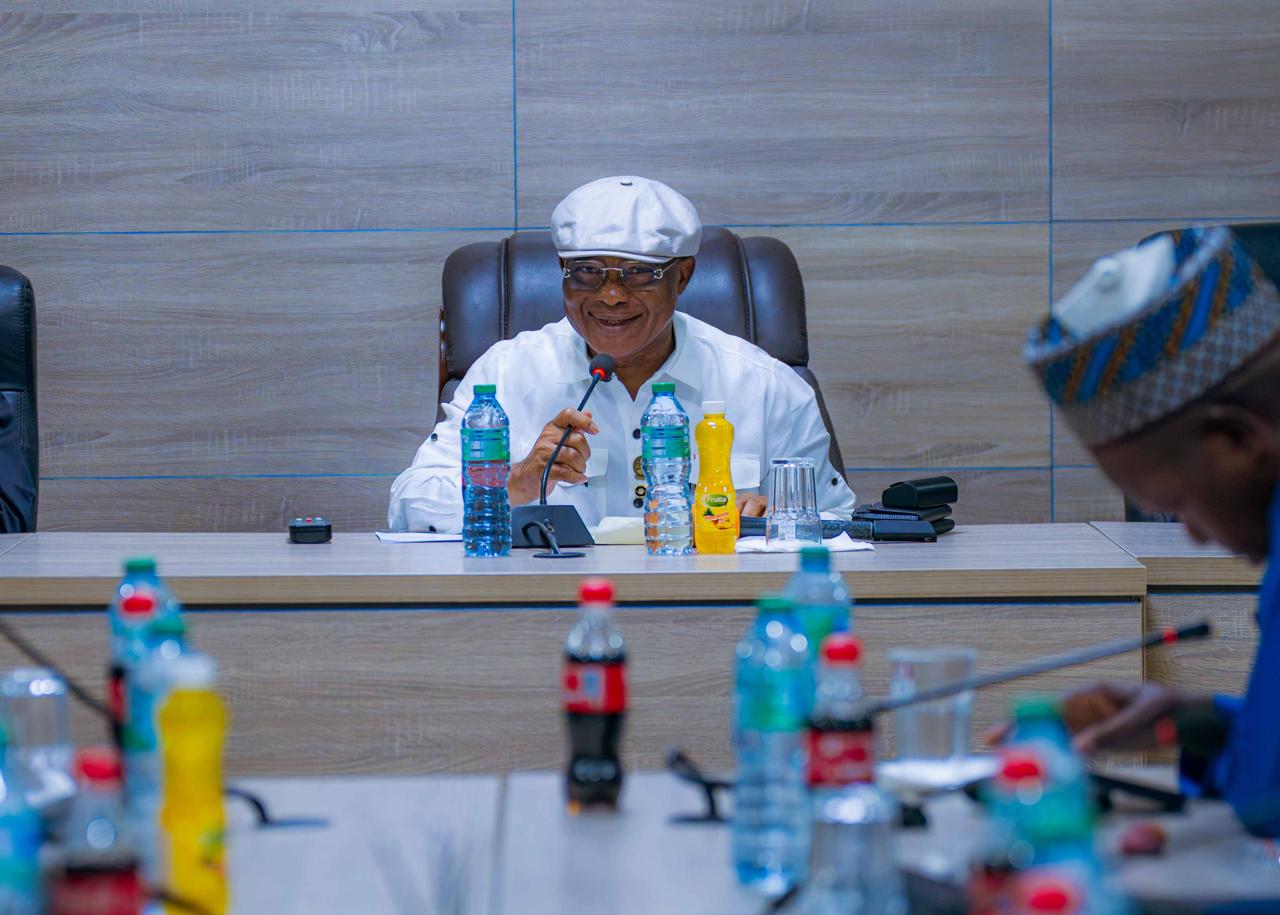
*Renewed Hope Ambassadors Step Into the Next Phase
Fresh from the successful APC 2026 National Convention, the Renewed Hope Ambassadors National, Zonal, and State leadership gathered in Abuja over the weekend, for its fourth strategic meeting, setting the tone for nationwide grassroots activation ahead of 2027.
Chaired by Governor Hope Uzodinma (Imo State) the Director General and National Coordinator of the Renewed Hope Ambassadors, alongside Deputy Director-General, Governor Uba Sani of Kaduna State, and Governor Inuwa Yahaya of Gombe State as Secretary, the session reinforced one clear direction: One Party. One Message. One Mobilization whilst also laying out a strategic roadmap for the activation of the network across all communities in Nigeria.
Backed by the strength of 31 APC-led states, the Renewed Hope Agenda is taking Bola Ahmed Tinubu’s message of progress and reform to every corner of Nigeria.
From bold economic restructuring to initiatives like NELFUND, the increase in the national minimum wage from ₦30,000 to ₦70,000, and strategic investments in critical sectors, including PNiCGI, the mission remains clear: helping Nigerians understand both the purpose and the progress of the Renewed Hope vision.
This is coordination at scale. This is grassroots engagement with purpose. This is the next phase of Renewed Hope with One Party, One Message, and One Mobilisation framework
#RenewedHopeAmbassadors #APC #WeAreAPC


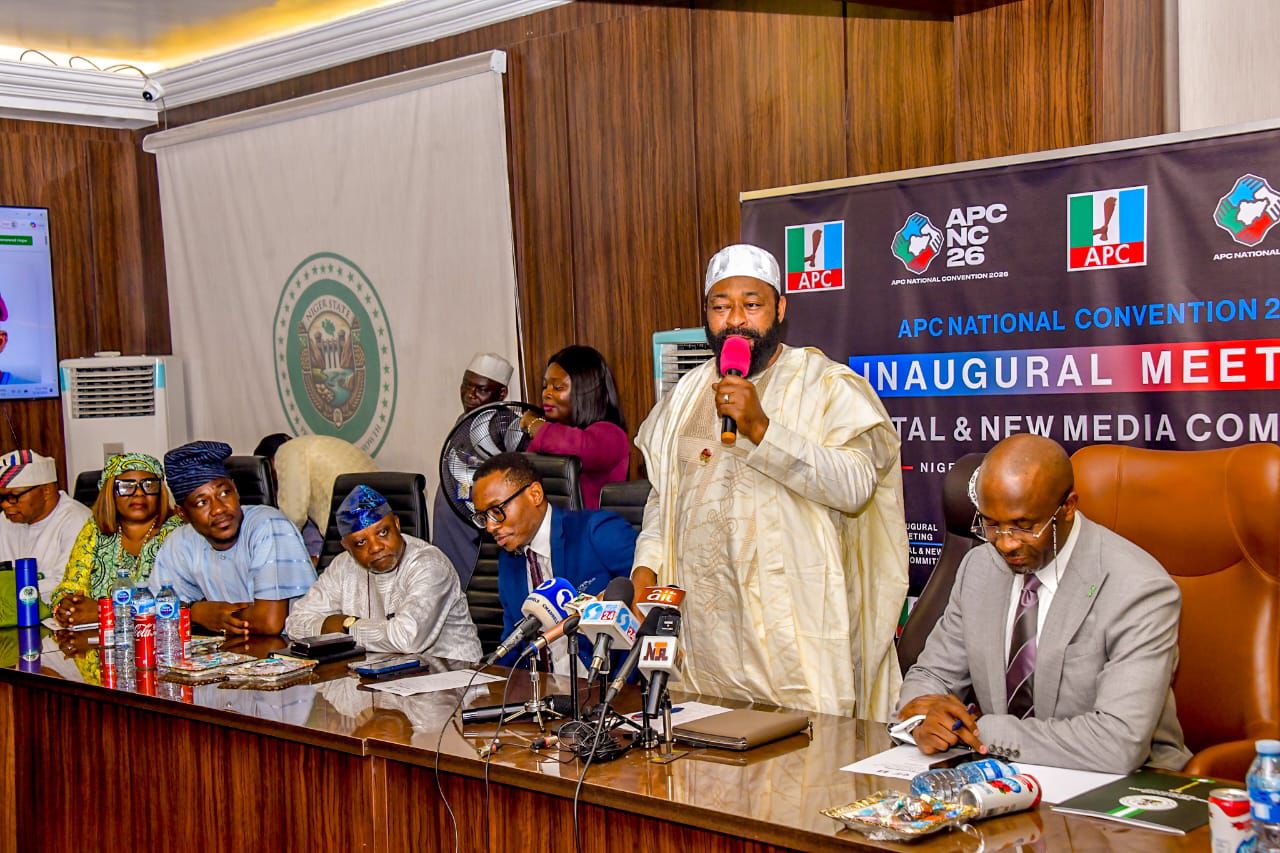
Governor Bago Inaugurates APC Digital Media Sub-Committee Ahead of National Convention.
Governor Umaru Bago has inaugurated the Digital Media Sub-Committee for the forthcoming National Convention of the All Progressives Congress (APC), scheduled to hold on March 27 and 28, 2026 in Abuja.
Chairing the sub-committee, Governor Bago tasked members with the responsibility of effectively communicating the party’s manifesto to the public.
He emphasized the need to leverage social media platforms to highlight the achievements and ongoing efforts of President Bola Ahmed Tinubu, noting that communication gaps have posed challenges that must now be decisively addressed.
The Co-Chair of the sub-committee, Hon. Benjamin Kalu, Deputy Speaker of the House of Representatives, echoed the Governor’s position, urging members to project the activities of both the party and the government to a broader audience.
He called for a deliberate and coordinated effort to showcase the party’s achievements and policy direction, stressing the importance of shaping a compelling and consistent narrative across all digital platforms.
Delivering a presentation to the committee, Otega Ogra, SSA to the President on New Media, who serves as Secretary of the sub-committee, outlined strategic focus areas to guide the team’s operations.
His presentation highlighted communication priorities and actionable steps to achieve the committee’s mandate and strengthen the party’s digital engagement.


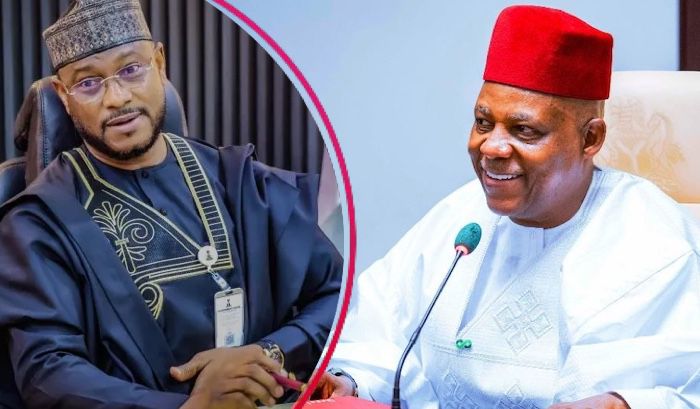
VP Shettima Set to Lead Delegation to Zamfara as Governor Dauda Lawal Formally Joins APC
The Zamfara State chapter of the All Progressives Congress (APC) has finalized plans to receive Vice President Kashim Shettima for the formal defection and reception of Governor Dauda Lawal into the ruling party, scheduled to take place on Tuesday.
State APC Chairman, Tukur Danfulani Maikatako, disclosed this during a high-level stakeholders’ meeting held in Gusau, the state capital. He noted that the Vice President would be joined by the party’s national leadership to mark what he described as a landmark political realignment in the state.
Maikatako expressed the party’s excitement over Governor Lawal’s return, recalling that Zamfara had historically been an APC stronghold and that the Governor was previously a bona fide member of the party before his earlier exit.
“We all know that Zamfara has long been one of the APC’s stronghold states, where the defected Governor was once a bona fide member. Now that he has decided to return home, having been satisfied that the APC remains his second choice after the one he left for obvious reasons,” Maikatako stated.
The Chairman called on all party faithful across the 147 wards in the state’s 14 local government areas to turn out en masse to honour the Vice President’s visit. He emphasized that the event was strategically positioned to bolster the party’s popularity and strengthen its structures ahead of the 2027 general elections.
In a strong appeal for unity, Maikatako urged members to set aside all factional tendencies, stressing that the APC remained one political family with shared goals, particularly the ambition to make Zamfara and Nigeria great again.
Echoing similar sentiments, a former state APC Chairman, Lawal M. Liman, appealed to members to cascade the message to their wards and local government areas. He reinforced the need for cohesion, noting that the party’s collective strength would be critical to achieving success in future elections.

All eyes are now on Gusau as the ruling party prepares for a high-profile political gathering expected to further consolidate its influence in Zamfara State.


-

 society6 months ago
Religion: Africa’s Oldest Weapon of Enslavement and the Forgotten Truth
-

 news4 months ago
WHO REALLY OWNS MONIEPOINT? The $290 Million Deal That Sold Nigeria’s Top Fintech to Foreign Interests
-

 society6 months ago
“You Are Never Without Help” – Pastor Gebhardt Berndt Inspires Hope Through Empower Church (Video)
-

 celebrity radar - gossips2 months ago
Dr. Chris Okafor Returns with Power and Fire of the Spirit -Mounts Grace Nation Altar with Fresh Anointing and Restoration Grace on February 1, 2026