
society
West Africa’s Shadow Network: The Human Trafficking Scam Crisis

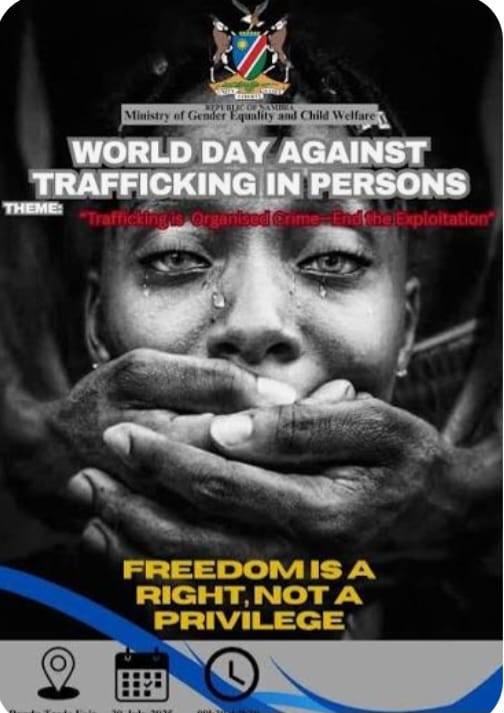
West Africa’s Shadow Network: The Human Trafficking Scam Crisis.
By George Omagbemi Sylvester | Published by saharaweeklyng.com
“How Criminal Syndicates Are Turning Hope into Exploitation and What the World Must Do.”
Human trafficking is not a distant atrocity happening “somewhere else.” It is a brutal reality unfolding across West Africa (a region grappling with socioeconomic hardship, youth unemployment and porous borders) where criminal networks exploit desperation, allure victims with false promises of jobs abroad and entrap them in modern slavery. This crisis has morphed into a scam-driven trafficking epidemic that not only enslaves victims physically but also weaponizes digital deception to sustain itself. It is a crisis that demands global attention, decisive policy and coordinated enforcement if countless lives are to be saved.

A Crime of Two Fronts: Promise and Deceit. At the heart of West Africa’s trafficking scandal are fraudulent employment schemes that prey on the hopes of young people seeking better lives. Recruiters promise coveted jobs in Canada, Europe or the Middle East (often backed by fraudulent phone numbers, falsified travel documents and compelling online material) only to deliver something far darker. In one high-profile case in Ivory Coast, 33 West Africans from Benin, Burkina Faso, Togo and Ghana paid up to $9,000 each for the promise of legitimate work abroad. Instead, they were trafficked to Abidjan, held under coercive conditions and forced to participate in scam operations designed to lure more victims into the web of exploitation.
Perpetrators not only deceive victims before arrival but keep them in psychological captivity. Those trafficked were made to take staged photos in luxury restaurants and hotels to create the illusion of Canadian employment, then restricted from contacting family and effectively deepening their isolation and reliance on traffickers.
These scams operate like twin instruments of coercion: the lure of opportunity and the fear of exposure or debt. Once ensnared, victims often endure physical abuse, debt bondage and forced labor under threat of violence and stark violations of human rights.

From Digital Scams to Physical Enslavement. Interpol, the world’s largest international police organization, has warned that West Africa is emerging as a regional hub for human trafficking-fueled scam centres, mirroring earlier trends in Southeast Asia. Traditionally associated with regions like Cambodia and Myanmar, these trafficking networks have now spread globally to include West Africa, where increasing evidence points to systemic exploitation through online scam syndicates.
According to Interpol’s crime trend analysis, victims from 66 countries have been trafficked into scam centres worldwide, with West Africa among the newly recognized hotspots. While Southeast Asia still accounts for the majority of cases, the rapid expansion of similar operations in West Africa and other regions highlights how organized crime evolves in response to global demand for cheap, exploitable labor and illicit profit.

Perhaps most troubling is how digital technology has exacerbated the threat. Traffickers now exploit artificial intelligence (AI) to craft convincing fake job ads, deepen deception and generate fake identities or profiles used in romance and sextortion scams though amplifying both recruitment and exploitation.
The Human Cost: Lives, Dignity, Futures. Human trafficking is not just a criminal statistic, but it is a human tragedy. Many of those trafficked into scam operations are young men and women with limited economic prospects at home. They represent regions most promising potential with education abandoned, futures deferred, lives destabilized.
Beyond online job scams, trafficking in West Africa also feeds into other forms of forced labor. According to migration and anti-trafficking data, children constitute more than 50% of detected trafficking victims across Africa, with forced labor including begging, domestic work and exploitation along migration routes.
For every case uncovered, many more remain unseen. The International Organization for Migration (IOM) and United Nations data consistently show that only a fraction of trafficking victims are detected or rescued, while many fall victim to smuggling networks that blur the lines between irregular migration and outright exploitation. The IOM reports that a majority of African migrants arriving irregularly in Europe are at high risk of being trafficked, especially women and girls.
Structural Drivers: Poverty, Unemployment and Desperation. What drives young West Africans into the hands of traffickers? The answer lies in structural inequalities: poverty, unemployment, climate change and lack of educational opportunities. In countries like Sierra Leone, where youth make up a large portion of the population and unemployment is chronic, the promise of jobs abroad becomes a lifeline worth pursuing, even at high financial and personal risk.
These vulnerabilities are compounded by weak enforcement infrastructures and limited cross-border cooperation. Traffickers exploit gaps in legal frameworks, corrupt practices and the relative ease of forging documents or digital identities to move victims across borders without detection.

What Experts Are Saying: Cyril Gout, Acting Executive Director of Police Services at Interpol, has emphasized the global scope and persistence of the crisis: “Tackling this rapidly globalising threat requires a coordinated international response.” His warning underscores that no single country can dismantle these networks alone, but a collaboration among law enforcement, NGOs and technology platforms is essential.
Scholars studying the nexus between trafficking and migrant smuggling underscore another crucial point: trafficking thrives where legal migration pathways are limited. Research from the Department of International Relations at Universidad Complutense de Madrid notes that criminal actors exploit migration pressures, turning migration aspirations into exploitation upon arrival.
At the grassroots level, activists like Chelcy Heroe of the Informal Workers Organisation in Sierra Leone highlight the gendered nature of exploitation, especially for women lured into forced labor under the guise of legitimate recruitment programmes.
Law Enforcement and the Global Response. Efforts to dismantle trafficking-linked scam operations have seen some successes. Law enforcement collaborations (such as joint operations between Côte d’Ivoire and Ghana) have led to arrests and the rescue of dozens of victims. Such initiatives demonstrate the potential of cooperative policing across borders.
African Union member states have also taken steps to reinforce continental cooperation against trafficking and migrant smuggling. In late 2024, senior officials validated Continental Guidelines for Sharing Information and Intelligence, aimed at strengthening mechanisms to detect, disrupt and prosecute trafficking networks.
However, enforcement alone cannot solve a problem rooted in structural inequity. Prevention (through education, community awareness, access to safe employment and legal migration pathways) must be part of a comprehensive response.
Conclusion: Turning the Tide Against Exploitation. The human trafficking scam crisis in West Africa is a stark reminder that vulnerability can be commodified by criminal actors who operate with sophisticated tools, global networks and a chilling disregard for human dignity. This is not abstract, it is a present-day stain on global society that undermines human rights, shatters families and erodes the very promise of opportunity.
Addressing this crisis requires collective resolve from governments, civil society, international institutions and everyday citizens. It demands robust legal structures, transparent international cooperation, investment in young people’s futures and a refusal to let exploitation flourish in the shadows.
Human trafficking is not inevitable. Where there is will and coordinated action, there is hope; for rescue, for justice and for renewed dignity for those who have been robbed of both. Let the world’s conscience be stirred, and let action follow urgently.





society
GEN CHRISTOPHER GWABIN MUSA SUPPORT INITIATIVE EXTENDS WARM BIRTHDAY FELICITATIONS TO PRESIDENT TINUBU ON 74TH BIRTHDAY
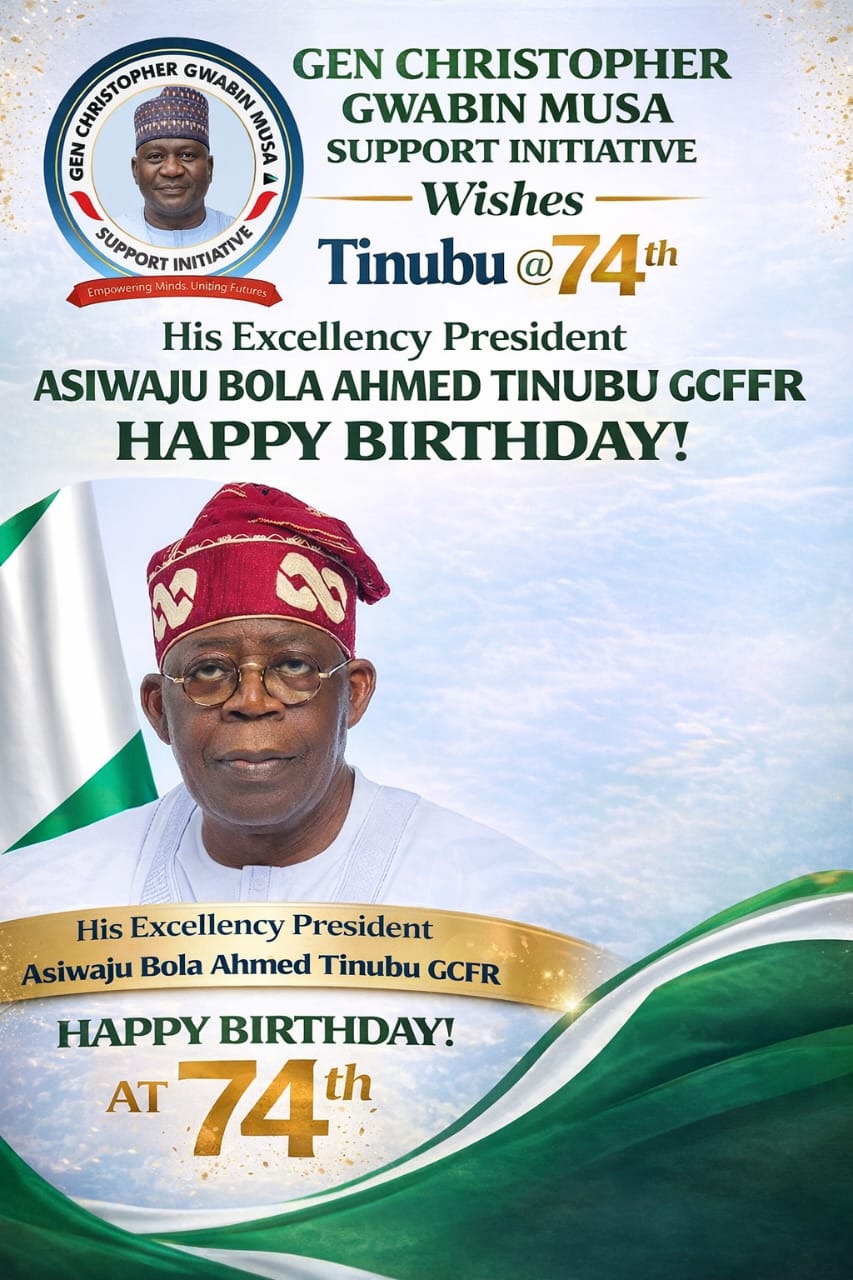
GEN CHRISTOPHER GWABIN MUSA SUPPORT INITIATIVE EXTENDS WARM BIRTHDAY FELICITATIONS TO PRESIDENT TINUBU ON 74TH BIRTHDAY
The Gen Christopher Gwabin Musa Support Initiative has extended heartfelt congratulations to His Excellency President Asiwaju Bola Ahmed Tinubu, GCFR, on the occasion of his 74th birthday.
In a statement released to the press, the Initiative conveyed warm wishes for the President’s personal well-being and for his continued leadership of the nation. The statement, signed by the Convener, Ibrahim Dahiru Danfulani, Sadaukin Garkuwan Keffi/Betara Biu, expressed hope that the coming year would bring the President “renewed strength and more wisdom in guiding the nation.”
The statement further noted that the Grand Patron of the Initiative, His Excellency Gen Christopher Gwabin Musa, OFR, Minister of Defence of the Federal Republic of Nigeria, joined in celebrating the milestone. It added, “Wishing Your Excellency continued good health, vitality, and determination as you lead the country towards greater unity and progress.”
The message underscores support for President Tinubu’s administration and its national objectives, marking the birthday as an occasion to reaffirm commitment to the nation’s unity and advancement under his stewardship.
society
Dominion City to Host Global Camp Meeting, “2 Nights of Glory” 2026 in Lagos, Enugu …Calls for Moral Renewal
*Dominion City to Host Global Camp Meeting, “2 Nights of Glory” 2026 in Lagos, Enugu
…Calls for Moral Renewal
Lagos – Dominion City has announced plans to host its annual Global Camp Meeting alongside a special “2 Nights of Glory” gathering in April 2026, with events scheduled to be held simultaneously in Lagos and Enugu.
The week-long programme is expected to draw tens of thousands of participants onsite and millions of virtual attendees from across the globe.
The Global Camp Meeting will run from Wednesday, April 1 to Monday, April 6, featuring daily sessions at 8:00 a.m. and 5:00 p.m. The “2 Nights of Glory” is slated for Friday, April 3 and Saturday, April 4 at the Golden Heart Place, Km 22 Lekki-Epe Expressway, beside Lagos Business School, Ajah, Lagos.
Organised by Dominion City, a global church focused on raising transformational leaders, the conference will centre on revival, spiritual renewal, and practical teachings. This year’s theme, “Redigging the Wells of Our Fathers,” underscores a call to return to foundational values and principles.
Speaking ahead of the event, Nobbert Onaga, President, Golden Heart Foundation and Senior Pastor, DC Lagos & Europe, emphasised the need for moral reawakening as a pathway to national transformation. He described the Church as “the pillar and foundation of truth,” noting that the conference aims to confront moral decline and restore core values within society.
“We are going back to foundational truths that established the Church. These truths will help repair societal damage and reposition the Church as a source of hope and light,” Onaga said.
Also speaking, Shola Olapade, Senior Pastor of Dominion City Headquarters, highlighted the Church’s role in addressing ethical and cultural challenges, particularly among young people. He added that the programme would go beyond spiritual teachings to include sessions on artificial intelligence, innovation, business, media, arts, and career development.
“We are equipping people not just spiritually, but with relevant 21st-century skills to thrive in today’s world,” Olapade noted.
The conference will feature teachings and ministrations from a lineup of international ministers, including Dr. David Ogbueli, Dr. Charles Ndifon, Andres Bisonni, Pastor Randy Mitchell, Apostle Ikechukwu Peter Nnajiofor, Dr. Ferdinand Nweke, Apostle Ben Hanyani Ndobe, Evangelist Dan Scott, and Dr. Chiefo Ejiofobiri.
Music ministrations will also be led by notable gospel artists such as Grace Idowu, Rhema Onuoha, Once More Six, David Nkennor, Anthony Kani, and GUC.
Organisers disclosed that over 30,000 participants are expected to attend in person, with free transportation provided from designated locations across Lagos to ease access. In addition, free medical services will be offered daily, building on previous outreaches that benefited over 1,700 people.
To ensure safety and order, more than 200 traffic marshals will be deployed in collaboration with relevant authorities.
Beyond its spiritual impact, organisers project that the event will stimulate local economic activity across hospitality, transportation, and retail sectors.
The Global Camp Meeting remains a key platform for spiritual impartation, leadership development, and societal transformation, aligning with Dominion City’s mission to equip believers to influence their communities positively.
Participation is open to the public, with registration available online for both physical and virtual attendance. //END.//
*PHOTO CAPTIONS:*
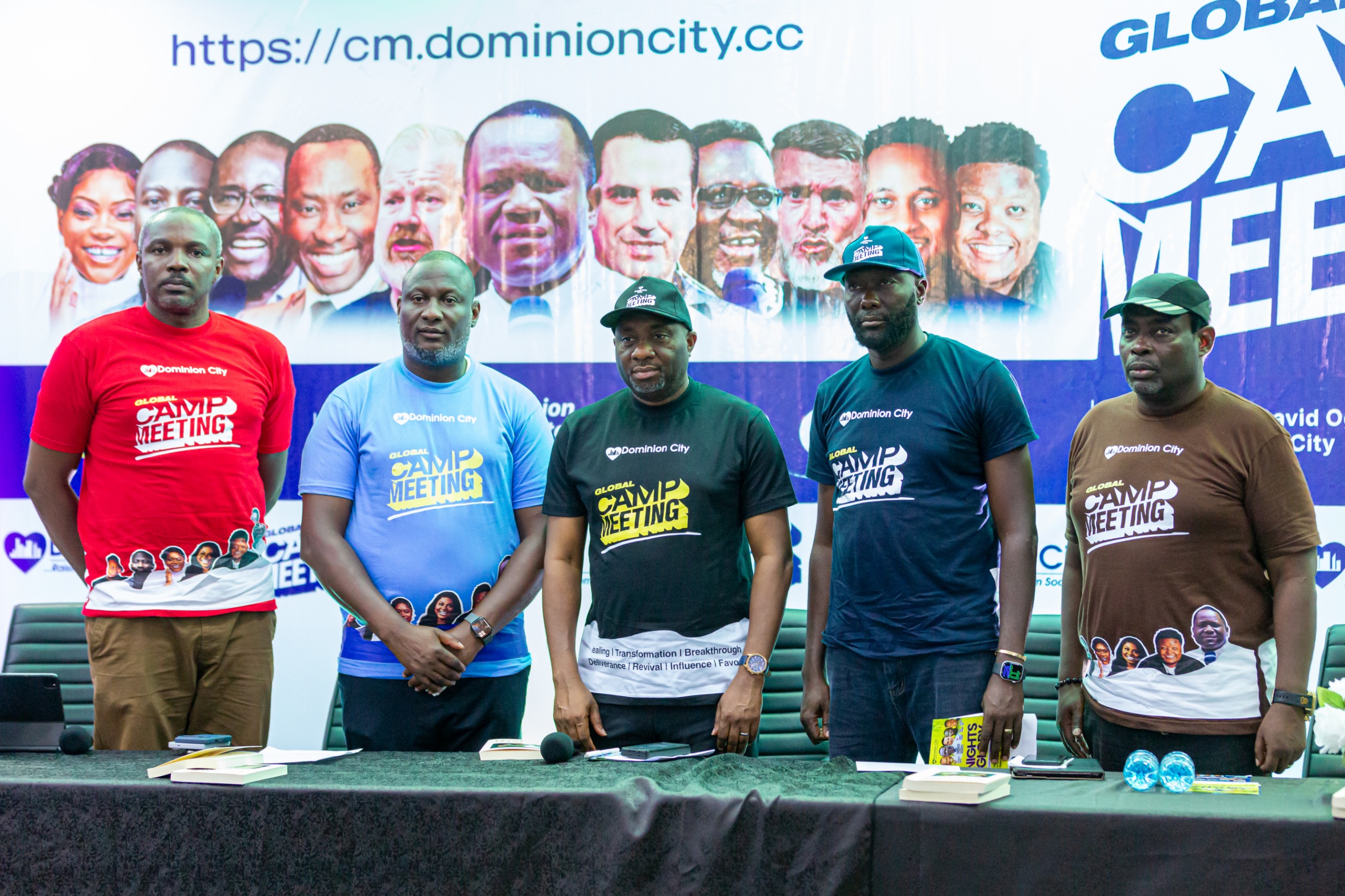
L-R: Dr. Godwin Efobi, Head, Medical Team, Dominion City Headquarters (DCHQ); Pastor Shola Olapade, Senior Pastor, DCHQ; Pastor Nobbert Onaga, President, Golden Heart Foundation and Senior Pastor, DC Lagos & Europe; Pastor Chuks Anochie, Head of Security and Traffic Control, Dominion City Headquarters (DCHQ), Camp Meeting 2026; Pastor Josh Tim Vaduchi, Head of Event & Programmes, DCHQ, during the press briefing of the forthcoming Global Camp Meeting, held the weekend of 2026 at the Dominion City Headquarters (DCHQ), Lagos.
L-R: Pastor Chuks Anochie, Head of Security and Traffic Control, Dominion City Headquarters (DCHQ), Camp Meeting 2026; Pastor Shola Olapade, Senior Pastor, DCHQ; Pastor Nobbert Onaga, President, Golden Heart Foundation and Senior Pastor, DC Lagos & Europe; Dr. Godwin Efobi, Head, Medical Team, DCHQ; and Pastor Josh Tim Vaduchi, Head of Event & Programmes, during the press briefing of the forthcoming Global Camp Meeting, held over the weekend in 2026 at the Dominion City Headquarters (DCHQ), Lagos.
society
Oloworo of Oworosoki Kingdom, Oba Babatunde Saliu, Felicitates President Bola Ahmed Tinubu at 74

Oloworo of Oworosoki Kingdom, Oba Babatunde Saliu, Felicitates President Bola Ahmed Tinubu at 74
By Adeyemi Obadimu
The Oloworo of Oworosoki Kingdom, His Royal Majesty, Oba Babatunde Saliu, Elebo II, has extended warm felicitations to the President of the Federal Republic of Nigeria, Bola Ahmed Tinubu, GCFR, on the occasion of his 74th birthday.
In a goodwill message issued from his palace, the revered monarch described President Tinubu as a visionary statesman, a courageous reformer, and an indefatigable democrat whose lifelong commitment to nation-building continues to shape Nigeria’s progress.
Oba Babatunde Saliu praised the President’s unwavering dedication to public service, noting that his leadership has ushered in a new phase of economic reform, infrastructural renewal, and institutional strengthening across the country.
According to the monarch, the President’s Renewed Hope Agenda has begun yielding tangible relief and renewed confidence among citizens, reflecting his determination to reposition Nigeria for sustainable growth and prosperity.
“President Bola Ahmed Tinubu has demonstrated exceptional resilience, strategic foresight, and a deep love for Nigeria. His administration’s bold initiatives are laying the foundation for long-term national transformation. At 74, he remains steadfast in his resolve to build a stronger, more united, and economically vibrant nation,” the monarch stated.
Oba Babatunde further commended the President’s legacy of leadership, describing him as a bridge-builder, a mentor to many leaders, and a symbol of democratic stability. He acknowledged the President’s decades of sacrifice and contribution to the advancement of democracy in Nigeria.
On behalf of the Oworosoki Kingdom, the royal father prayed for divine wisdom, sound health, and renewed strength for the President to successfully complete the noble reforms and developmental strides he has embarked upon for the benefit of all Nigerians.
“As Your Excellency marks 74 remarkable years, we pray that Almighty God grants you long life, continued wisdom, and the fortitude to steer our great nation toward greater heights. May your days be filled with strength and grace as you continue to serve Nigeria with distinction,” Oba Babatunde Saliu added.
President Bola Ahmed Tinubu clocks 74 as a leader whose enduring influence, bold reforms, and steadfast patriotism remain central to Nigeria’s ongoing journey of national renewal.


-

 society6 months ago
Religion: Africa’s Oldest Weapon of Enslavement and the Forgotten Truth
-

 news4 months ago
WHO REALLY OWNS MONIEPOINT? The $290 Million Deal That Sold Nigeria’s Top Fintech to Foreign Interests
-

 society6 months ago
“You Are Never Without Help” – Pastor Gebhardt Berndt Inspires Hope Through Empower Church (Video)
-

 celebrity radar - gossips2 months ago
Dr. Chris Okafor Returns with Power and Fire of the Spirit -Mounts Grace Nation Altar with Fresh Anointing and Restoration Grace on February 1, 2026