
Politics
WHO IS SQUEEZING BAKARE’S BALLS?

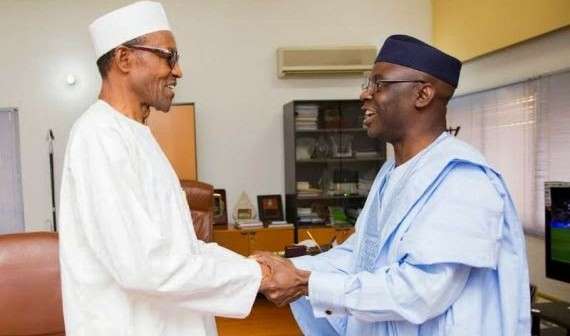
“Is Tunde Bakare being blackmailed? Are his balls being squeezed? Why has he suddenly lost what my brother, Yinka Odumakin, often describes as testicular fortitude?”-@realFFK

CLICK LINK & READ..
WHO IS SQUEEZING BAKARE’S BALLS?
https://t.co/yRoSIDYXnG https://t.co/K6VdeMmEDL https://t.co/xJGDjIRWkB WHO IS SQUEEZING BAKARE’S BALLS?
On 28th October 2019, Pastor Tunde Bakare said the following,
“Tinubu will give account for all his deeds. He should not be seen as a generous man, he is an integral part of the rot in Nigeria”.
This is a robust condemnation of a man that has been variously described as the ‘Lion of Bourdillon’, the ‘Jagaban of Borgu’ and the ‘Asiwaju of Iragbiji’ and the words reflect the utter contempt that Bakare has for him.
Curiously, just one year and two months later, on 20th December 2020, the same Tunde Bakare changed the music and said the following about the same man. He said,
“People should see Tinubu as a Yoruba hero, he shouldn’t be vilified. Like Jephthah the Gileadite, he has fought many battles on behalf of the Yoruba people and won despite his rough beginning and God does not need anybody’s permission to put such in his hall of fame despite their past deeds and ancestry.
Despite his growing up challenges, the dents and the detours of his life, he like Jephthah delivered Lagos State and nearly all the southwest states from the onslaught of the PDP from 1999 to 2007. Truth be told, without his cooperation and political dexterity, the APC victory at the polls in 2015 and 2019 would have been impossible. I have a word for some Yoruba people whose stock in trade is nothing but a rancorous noise characterised by bitterness and resentment about the ancestry of the former two-term governor of Lagos State, Asiwaju Bola Ahmed Tinubu. Carry your stone. I have a word for those Yoruba rancorous elements, noisemakers who have not achieved as much as Asiwaju Tinubu has achieved, but are always querying and worrying themselves about his ancestry.
Those who are envious of Mr. Tinubu and those who desire to take his power slot should stop their useless talk about him, and busy themselves with what can add value to society”.
I listened to Bakare’s words, spoken from the sanctity of his pulpit, three times and I was astounded. I asked myself what could have possibly made him flip in such an unceremonious, undignified and inglorious manner?
I regarded his new-found and newly-cultivated grovelling and sycophantic assertions about Tinubu as being not only self-serving, arrogant, pitiful and condescending but also, to borrow Mr. Phil Smart’s words, a “celebration of criminality and a desecration of the pulpit”.
I asked myself over and over again whether this was the same man saying one thing at the end of 2019 and saying the opposite at the end of 2020?
I had no choice but to borrow an old expression of shock and a profound exclamation of disbelief from Pastor Femi Adesina, the spokesman to President Buhari, who first used it in one of his most brilliant essays about fifteen years ago and I shouted “jumping Jehoshaphat!”.
I asked myself, what on earth could have happened to my old friend and brother and someone who, in my view, is undoubtedly one of the most reverred clerics of our time?
I have always had so much respect and affection for him. I have always loved him and the truth is that regardless of all this I still do because, like yours truly, he is deeply courageous and utterly fearless.
He has always had the courage of his convictions and he is a formidable fighter who has done much for the Body of Christ and the Kingdom of God.
However on this Tinubu matter he has not done justice to himself and he has indulged in an inexcusable faux pas!
I am constrained to ask, why this sudden u-turn on Jagaban? Is there something he knows today that he did not know one year ago? If so can he possibly share it with us so that we can possibly consider doing a volte face too? Or is that they have something on him?
Is he being blackmailed? Are his balls being squeezed by a hidden hand? Why has he suddenly lost what my friend and brother, Comrade Yinka Odumakin, often describes as “testicular fortitude?”.
Is his chain being pulled by someone? Do they have something on him? Is there a deep dark secret somewhere that we know nothing about and that they are dangling over his head like the sword of Damocles?
Could this volte face have been motivated by the fact that an unsavoury event which allegedly took place in 1990 in the life of the Pastor was about to be exposed by the Tinubu camp? I am not making any allegations here: I am only asking a question.
Again could it have anything to do with an allegedly ugly situation with a Bank whose ownership recently changed hands?
Once again let me be clear: I have not made any allegations here but I am simply asking whether this is true or false.
Whatever the case let me say this: Bola Tinubu may be loved and adored in the APC but he is no Jeptha.
To say that he is is not only deeply insulting to the memory of one of the greatest, most reverred, most courageous and most noble Old Testament figures in the Holy Bible but it also smacks of chicanery, recklessness and opportunism.
Bakare can love and admire Tinubu as much as he likes. That is his right and prerogative.
What he cannot do is tell those of us that have strong reservations about Jagaban and what he stands for to love and admire him as well.
More importantly he cannot insult us for refusing to do so. Respect and affection are earned and cannot be imposed by threat or compulsion.
For the sons of Oduduwa and every right-thinking southerner and Middle Belter that has not had his mind twisted and his head brainwashed by the fake news media over the last five years, the Buhari administration is the worse Federal Government in the history of Nigeria. And it is a Government that Tinubu had a major hand in putting in place.
Quite apart from being a conglomeration and alliance of ill-bred touts and ill-mannered idiots, it is also a Government that can best be described as an unadulterated aberration and a cancerous affliction.
It is a cruel, inept, bumbling, abrasive, vicious, obnoxious, chaotic, toxic, sociopathic and paranoid Government which is undergirded by ineptitude and incompetence, which has divided and destroyed our country and which he and a handful of others (many of whom have since recanted, apologised and repented) helped to bring to power.
Quite apart from being anti-the Nigerian people, it is also the most anti-Christian Government that our country has ever known. It is a Government that has nothing but contempt for Christians and that does not shy away from displaying it.
It is a Government that has impoverished it’s people, terrorised them, humiliated them, tormented them, insulted them and turned them into second class citizens, grovelling slaves, beggardly field-hands and pitiful serfs.
It is a Government with a hideous and hateful ethnic and religious agenda which seeks to disempower, discredit and destroy all but its own.
It is a Government that has pampered terrorists and rewarded them with massive ransom payments and it is a Government of desolation and destruction that thrives on wickedness and injustice.
It is a Government that has turned a blind eye to the activities of the herdsmen and bandits and that has fought Boko Haram and ISWA with kid gloves.
It is a Government of hate, double standards and deceit that has murdered its own citizens and that seeks to intimidate and silence contrary and dissenting voices.
It is a Government that has cowered the civil society groups, members of the opposition and the entire political class into silence because it is so vindictive, brutal, barbaric, relentless and ruthless.
It is a Government that has turned its back on humanity, that despises the Living God and that has nothing but contempt for His counsel and His purpose.
It is a Government of calamity and sorrows that loves darkness and that hates light. It is Government of hardship and oppression and one that has ushered in more corruption, more recession, more suffering, more injustice, more calamities and more plagues than ALL the previous Governments in our entire history put together.
It is a Government that has done more damage, poured more venom and unleashed more vitriol and scorn on the elders of the South West in Afenifere, the elders of the South East in Ohaeneze, the elders of the Middle Belt in the Middle Belt Forum and the elders of the South South in PANDEM, than ANY other.
It is a Government that has demonised the various self-determination groups like IPOB, MASSOB, OPC, IYC, MEND and others in our country and has sought to intimidate and destroy them more than any other.
It is a Government that hates and despises anything or anyone that is wholesome, honorable, pristine, erudite, learned and clean more than any other.
It is a Government that has shamelessly indulged in such a high degree of nepotism, religious bigotry and ethnic chauvinism and that has so “northernised” the country that even level-headed, rational, reasonable, respected and responsible voices like that of the courageous, insightful and irrepressible Bishop Matthew Hassan Kukah, the Catholic Bishop of the Diocese of Sokoto, has had cause to assert that had Buhari been from the South there would have been a military coup d’etat by now.
Permit me to share the Bishop’s exact words. In a Christmas day sermon titled ‘A Nation In Search Of Vindication’ he said,
“Every honest Nigerian knows that there is no way any non-northern Muslim President could have done a fraction of what President Buhari has done by his nepotism and got away with it. There would have been a military coup a long time ago or we would have been at war. The President may have concluded that Christians will do nothing and will live with these actions! Pastor Adesina was right to call us wailers. On the sad situation in Nigeria, the United Nations has wailed. The Pope has wailed. Cardinals, Archbishops, Bishops, Priests, Pastors have wailed. Emirs have wailed. Politicians have wailed. The Sultan has wailed. The north that the President sought to privilege has become a cauldron of pain and a valley of dry bones”.
Kukah hit the nail on the head. It is no wonder that the Southern Nigeria and Middle Belt Forum have risen up in his defence and publicly commended him for his insight and courage. I am also glad that the Catholic Church has backed him too.
It is a Government that has consistently ignored the admonitions and warnings and closed its ears to the counsel of moderate voices in the core Muslim North led by His Eminence, the Sultan of Sokoto and the likes of forward-thinking, bridge-building and progressive northern leaders like Governor Bello Matawalle of Zamfara state, Governor Aminu Tambuwal of Sokoto state, Governor Bala Mohammed of Bauchi state and many others who do not share the supremacist mindset or hegemonist disposition of President Muhammadu Buhari.
Finally it is a Government that has been rejected by God and that will ultimately face His judgement.
Bakare should consider all this when he tells us to love Tinubu: a man who is essentially the backbone and source of strength of this failed and evil Government that has brought us close to the brink.
When he tells us that had it not been for Jagaban Buhari would not have come to power he is exposing the reason for and source of our misery and pain and he is demanding that we should love that source.
He does not have the right or the mandate to tell us who to follow and neither does he speak for anyone but himself. His authority begins and ends in his Church.
He can stand with Tinubu and praise him as much as he likes but he would do well to desist from lecturing and talking down to those of us that do not share his views about him.
Jagaban may be Bakare’s hero and messiah but he remains a culturally depraved, power-obsessed, morally bankrupt reprobate villain and the proverbial “enemy within” to millions.
Quite apart from that he is also an intellectual lilliputian, a spiritual vampire and a political pimp who has been outplayed and outmanouvered by the very forces that he has nurtured and served over the last five years.
All the fiery and self-righteous sermons in the world cannot change that.
Permit me to end this contribution with the words of
Comrade Yinka Odumakin, the spokesman for Afenifere. After listening to Bakare’s sermon on Tinubu he wrote,
“It is the very height of the abuse of the rostrum for a Pastor to say to us no matter how God-forsaken the country has become that if somebody is accused of being a thief, the rest of us should go and become thieves as well. That is some weird Sunday school of demonic dimension bordering on arrogance and total disdain for your congregation whom you no longer see as children of God but political instruments that can be abused for any purpose and desire.”
I could not agree with Yinka more.
On his part, my brother, Mr. Kayode Samuel, a well-respected columnist with enormous influence and one of the most brilliant minds in Nigeria wrote,
“The people who take Tunde Bakare as a Pastor may be disappointed by his recent verbal effusions. But those who know him to be no more than an opportunistic politician will just rest easy and sigh!”
Kayode was as eloquent and insightful as ever.
Yet the person that takes the first prize in terms of his understanding and analysis of Bakare is Mr. Wale Lanre Ojo, the Senior Special Assistant on Tourism to Governor Kayode Fayemi of Ekiti state. He said,
“Pastor Tunde Bakare’s mouth is smelling! He is so filthy and dirty. I am ashamed of that kind of fellow being a prophet of God. He is telling us that noble ancestry, decent livelihood, the honesty of purpose, good and refined education, integrity and hard work are not necessary ingredients for future reference.
The sakabular pastor is encouraging the young ones to loot, steal, engage in fraudulent acts, sell drugs, do passport racketeering in their youth as these will not count against them in the future. Rubbish from the pulpit. Shame on him”.
I need say no more.




Politics
APC Group Endorses Fubara for 2027, Calls on Tinubu and APC to Prioritise Performance Over Politics in Backing Governor’s Second Term Ambition
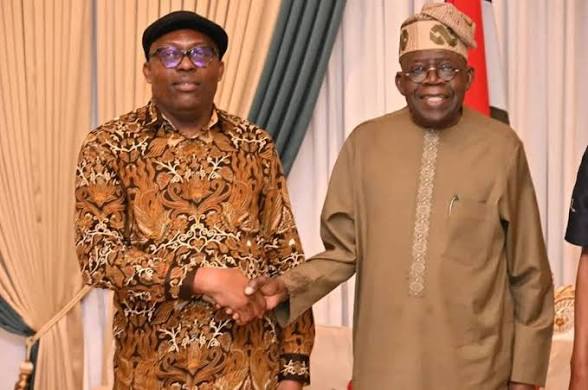
*APC Group Endorses Fubara for 2027, Calls on Tinubu and APC to Prioritise Performance Over Politics in Backing Governor’s Second Term Ambition*
The APC National Vanguard has appealed to President Bola Ahmed Tinubu and the leadership of the All Progressives Congress (APC) to support a second term in office for Siminalayi Fubara, citing what it described as “impressive and verifiable developmental strides” across Rivers State.
In a statement issued on Thursday by its National President, Dr Gbenga Salam (JP), the group said its position followed an extensive assessment tour of key infrastructure and public service projects executed under the Fubara administration.
The APC National Vanguard said the appeal was based strictly on performance, arguing that governance outcomes should outweigh partisan considerations, particularly in a state as economically significant as Rivers.
“We respectfully urge President Bola Ahmed Tinubu and the leadership of the All Progressives Congress to support the continuity of Governor Siminalayi Fubara beyond his current tenure, in recognition of his commitment to development, prudent resource management, and people-focused governance,” the statement read.
According to the group, its delegation visited multiple project sites across the state, observing ongoing and completed works spanning road construction, urban renewal, and public infrastructure upgrades.
It noted that the scale and distribution of these projects reflect a deliberate effort by the state government to extend development beyond traditional urban centres and into underserved communities.
“Our findings from the tour reveal a government that is not only active but intentional in its development agenda. The execution of capital projects across various parts of Rivers State demonstrates a clear understanding of the needs of the people and a commitment to addressing them,” Dr Salam said.
The group particularly commended what it described as prudent financial management by the administration, noting that the projects reviewed showed evidence of careful planning and efficient allocation of resources.
“At a time when economic pressures are evident across the country, it is commendable that the Rivers State government has managed its resources in a way that delivers visible and impactful development without signs of fiscal recklessness,” the statement added.
The APC National Vanguard further observed that despite political tensions in the state, the Fubara administration has maintained focus on governance, ensuring continuity in project execution and service delivery.
The group argued that such stability is critical for sustained development and should be encouraged rather than disrupted.
“Leadership must ultimately be judged by results. In Rivers State, there is clear evidence of progress—projects that are not only announced but executed, and policies that translate into real benefits for citizens,” Dr Salam noted.
The group warned that discontinuity in leadership could stall ongoing projects and reverse gains already recorded, stressing the importance of allowing a performing administration to consolidate its achievements.
“Rivers State is at a pivotal stage where continuity will allow for the completion of ongoing initiatives and the deepening of development gains. Supporting Governor Fubara for a second term is, therefore, a decision in the best interest of the people,” the statement said.
In addition to its call on the APC leadership, the group reaffirmed its support for President Tinubu, expressing confidence in his administration’s broader economic and governance reforms.
The APC group urged Nigerians to remain supportive of efforts aimed at stabilising the economy and strengthening public institutions.
“We reiterate our endorsement of President Bola Ahmed Tinubu for a second term in office, in recognition of his leadership and commitment to national development. With sustained support, the administration can consolidate its reform agenda for the benefit of all Nigerians,” Dr Salam added.
The APC National Vanguard concluded by calling on political actors to prioritise development and public interest over partisan divides, insisting that governance should always be guided by performance and accountability.
“Where leadership demonstrates prudence, delivers development, and remains focused on the welfare of the people, it deserves continuity. This is the position we have reached after a careful and independent assessment of Rivers State,” the statement added.
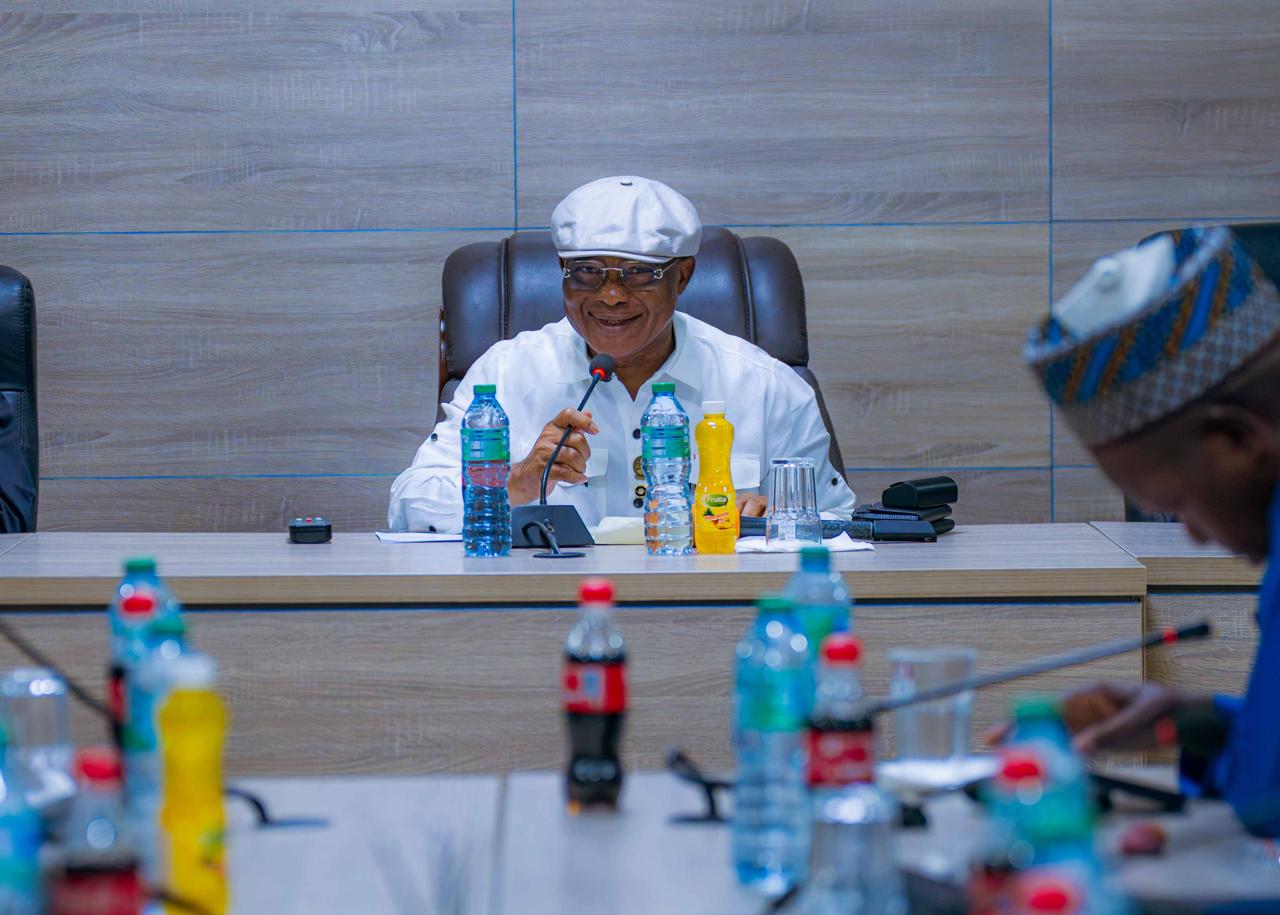
*Renewed Hope Ambassadors Step Into the Next Phase
Fresh from the successful APC 2026 National Convention, the Renewed Hope Ambassadors National, Zonal, and State leadership gathered in Abuja over the weekend, for its fourth strategic meeting, setting the tone for nationwide grassroots activation ahead of 2027.
Chaired by Governor Hope Uzodinma (Imo State) the Director General and National Coordinator of the Renewed Hope Ambassadors, alongside Deputy Director-General, Governor Uba Sani of Kaduna State, and Governor Inuwa Yahaya of Gombe State as Secretary, the session reinforced one clear direction: One Party. One Message. One Mobilization whilst also laying out a strategic roadmap for the activation of the network across all communities in Nigeria.
Backed by the strength of 31 APC-led states, the Renewed Hope Agenda is taking Bola Ahmed Tinubu’s message of progress and reform to every corner of Nigeria.
From bold economic restructuring to initiatives like NELFUND, the increase in the national minimum wage from ₦30,000 to ₦70,000, and strategic investments in critical sectors, including PNiCGI, the mission remains clear: helping Nigerians understand both the purpose and the progress of the Renewed Hope vision.
This is coordination at scale. This is grassroots engagement with purpose. This is the next phase of Renewed Hope with One Party, One Message, and One Mobilisation framework
#RenewedHopeAmbassadors #APC #WeAreAPC


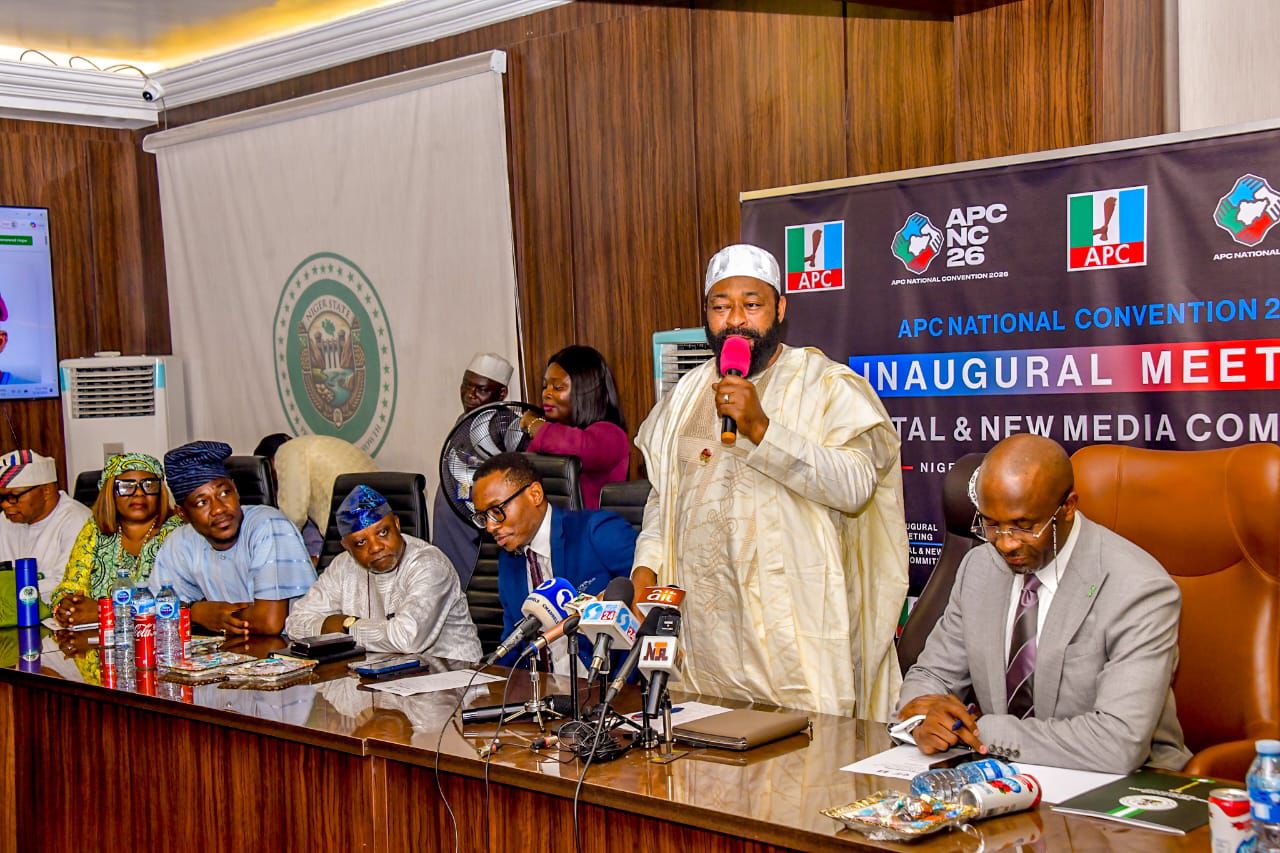
Governor Bago Inaugurates APC Digital Media Sub-Committee Ahead of National Convention.
Governor Umaru Bago has inaugurated the Digital Media Sub-Committee for the forthcoming National Convention of the All Progressives Congress (APC), scheduled to hold on March 27 and 28, 2026 in Abuja.
Chairing the sub-committee, Governor Bago tasked members with the responsibility of effectively communicating the party’s manifesto to the public.
He emphasized the need to leverage social media platforms to highlight the achievements and ongoing efforts of President Bola Ahmed Tinubu, noting that communication gaps have posed challenges that must now be decisively addressed.
The Co-Chair of the sub-committee, Hon. Benjamin Kalu, Deputy Speaker of the House of Representatives, echoed the Governor’s position, urging members to project the activities of both the party and the government to a broader audience.
He called for a deliberate and coordinated effort to showcase the party’s achievements and policy direction, stressing the importance of shaping a compelling and consistent narrative across all digital platforms.
Delivering a presentation to the committee, Otega Ogra, SSA to the President on New Media, who serves as Secretary of the sub-committee, outlined strategic focus areas to guide the team’s operations.
His presentation highlighted communication priorities and actionable steps to achieve the committee’s mandate and strengthen the party’s digital engagement.


-

 society6 months ago
Religion: Africa’s Oldest Weapon of Enslavement and the Forgotten Truth
-

 news4 months ago
WHO REALLY OWNS MONIEPOINT? The $290 Million Deal That Sold Nigeria’s Top Fintech to Foreign Interests
-

 society6 months ago
“You Are Never Without Help” – Pastor Gebhardt Berndt Inspires Hope Through Empower Church (Video)
-

 celebrity radar - gossips2 months ago
Dr. Chris Okafor Returns with Power and Fire of the Spirit -Mounts Grace Nation Altar with Fresh Anointing and Restoration Grace on February 1, 2026