
Business
Why Matrix Energy Should Stop Dancing Naked* By David Tunde


*Why Matrix Energy Should Stop Dancing Naked*
By David Tunde
In a flagrant and audacious exhibition of corporate greed and regulatory failure, Matrix Energy Limited, a prominent player in Nigeria’s petroleum industry, led by CEO Abdulkadir Adisa Aliu, has become embroiled in a scandal of monumental proportions involving the importation of subpar fuel products. This disturbing revelation, compounded by the company’s alleged complicity in illicit activities, raises grave concerns regarding the integrity of the Nigerian fuel supply chain and the potential perils to public health and safety.
Through the deliberate importation of blended low-grade petroleum products, which are subsequently sold as high-quality fuel, Matrix Energy is not only jeopardizing lives but also subverts the country’s economic governance framework. Abdulkadir Adisa Aliu, a member of the esteemed Presidential Economic Coordination Council (PEEC), is exploiting his position of influence and proximity to powerful and corrupt individuals in the Nigerian Midstream and Downstream Petroleum Regulatory Authority (NMDPRA) , and The Nigerian National Petroleum Corporation (NNPC) Limited to perpetuate these nefarious activities with unbridled impunity.

Matrix Energy’s operations have been irrefutably linked to Malta, a preeminent European hub for the clandestine blending and ship-to-ship (STS) transfers of sanctioned Russian oil and petroleum products. A staggering 35% of shipments arriving in Malta comprise naphtha and other components, which are subsequently blended into petrol to produce “African Spec” products. These products are then transshipped into various vessels for ultimate delivery into Nigeria, perpetuating a complex web of clandestine transactions.
Further investigation reveals that the products from Malta are transported through a labyrinthine network of intermediate ships and companies, including Poly Pro Trading in Dubai. Notably, the listed office of Poly Pro Trading is merely a business center devoid of any physical presence, thereby obfuscating the trail of accountability. This is further complicated by the forgery of paper works and the representation of non-existent companies, which serve as a conduit for these surreptitious transactions and movements.
The fact that Malta, a country devoid of any known oil refineries, has emerged as the top European destination for blending and ship-to-ship transfers of sanctioned Russian oil and petroleum products is a damning indictment of the lack of regulation and oversight in Nigeria’s oil and gas sector. The Nigerian Midstream and Downstream Petroleum Regulatory Authority (NMDPRA) has demonstrably failed in its duty to regulate fuel quality, thereby enabling international commodity traders and Nigerian marketers to exploit this regulatory vacuum and import low-quality fuels with impunity.
Regrettably, the presence of unpatriotic individuals such as Adisa Aliu, Farouk Ahmed, Mele Kyari, and their cohorts in positions of decision-making ensures the perpetuation of the rot in our oil and gas sector, which will continue to thrive on a “balanced diet” of corruption and malfeasance. These are people that are ready to run our economy aground with unbridled greed, bigotry, nepotism, and illegalization of Institutional corruption from one catastrophic selfish agenda to the other, under the guise of improving the Oil and gas sector.
It is intriguing to ponder the rationale behind the selection of Russia and Malta as key players in this illicit operation. However, it is hardly surprising, given that these regions, being under international sanctions, lack stringent measures to curb illegal activities, thereby becoming a haven for corrupt individuals worldwide to converge and indulge in nefarious pursuits for their selfish interests.
The fact that Russia was expelled from the SWIFT global banking framework, comprising nearly 12,000 banks, renders any oil and gas transactions between Nigerian companies and Russian refineries illicit, as Russian banks are unable to open letters of credit for exports. This exposes Nigeria to diplomatic crises that could further compound all that we are going through. Consequently, it is no wonder that Malta has emerged as the premier European destination for blending and ship-to-ship (STS) transfers of sanctioned Russian oil and petroleum products, following the Greek navy’s decision to prohibit such activities in their offshore zone.
Notably, diesel from Russia is notoriously off-spec, and diesels from Matrix filling stations have failed the ASTM D4294 test method, which provides a rapid and precise measurement of total sulfur in petroleum and petroleum products with minimal sample preparation. This egregious situation has led to Matrix Energy peddling flammable diesel with toxic fumes to unsuspecting Nigerians, while reaping enormous profits.
The sheer magnitude of Matrix Energy’s operations is staggering, with over 200,000 tons of gasoline products from Malta allegedly discharged into a Jetty owned by Matrix Energy in July 2024. This represents a staggering 25 percent of Nigeria’s monthly PMS consumption, channeled to a relatively small player with a mere 150 retail stations, highlighting the vast scope of this illicit operation.
The Nigerian Midstream and Downstream Petroleum Regulatory Authority (NMDPRA) is undoubtedly complicit in the importation of substandard diesel and jet fuel into the country, thereby fueling concerns regarding the quality of products utilized in Nigeria. It is a travesty that Africa’s largest oil-producing nation has been importing inferior petroleum products from Malta, a country devoid of any known oil refineries. The evidence of this egregious act is ubiquitous and glaringly apparent to the federal government, unless they choose to willfully ignore it, even without conducting a thorough investigation into the operations of Adisa Aliu and Matrix Energy.
A cursory examination of the cargo trails, the non-existent Dubai business location, and the Malta-Russia adulterated imported fuel, would reveal the extent of this malfeasance. Furthermore, an investigation into the quality of fuel being dispensed at Matrix Filling stations would provide additional evidence of the nefarious activities. If these investigations are thoroughly conducted, the evil nature of Abdulkadir Adisa Aliu’s actions will be laid bare for all to see. His genocidal actions, posing a significant health hazard to Nigerian citizens, increasing the potential mortality rate due to accidents caused by adulterated fuel, and dilapidating the economy for selfish gains, will be exposed.
Matrix Energy’s recent maneuver to seek judicial protection and restrain media houses and other entities from further publishing revelatory stories about its oil shipping business is a farcical spectacle that ranks as one of the most absurd jokes of the century. This attempt to stifle the dissemination of incriminating information constitutes a blatant assault on the sacrosanct right to free expression, a fundamental tenet of democratic societies. By seeking to muzzle the media and suppress the truth, Matrix Energy is attempting to circumvent accountability and perpetuate its nefarious activities, thereby undermining the very fabric of transparency and public discourse.
Aliu’s “dance of shame” must be met with severe consequences. The shame and disdain brought upon Nigeria must be addressed forthwith. Nigeria must not be perceived as a country of fools. We are aware of the situation, and the President must take decisive action to address this madness. The weakness in regulating fuel quality poses a grave health risk to Nigerians. International commodity traders and Nigerian marketers are exploiting this regulatory vacuum to import low-quality fuels. This is grounds for the President to immediately sanction the regulators responsible for policing the midstream and downstream sector and take action concerning the leadership of the Oil and Gas sector in Nigeria.
It is hardly astonishing that Matrix Energy would resort to extreme measures to protect and shield certain influential benefactors, whose identities and interests remain shrouded in secrecy. The primary motivation behind their decision to institute this lawsuit is to insulate and shield their accomplices within the Nigerian National Petroleum Company Limited (NNPCL) and other members of their clandestine cabal from the scrutiny of the media. By doing so, Matrix Energy seeks to conceal the complicity of these individuals and entities in their illicit activities, thereby perpetuating a culture of impunity and shielding them from accountability. This desperate attempt to gag the media and suppress the truth is another evidence to the company’s desperation to maintain the veil of secrecy surrounding their nefarious operations and protect their cohorts from exposure. This audacious move is an affront to the principles of openness and accountability, and it is imperative that it be vehemently resisted to safeguard the integrity of free expression and the public’s right to know.
To effectively mitigate this crisis, the Nigerian government must adopt a resolute and proactive stance. The leadership of the Nigerian Midstream and Downstream Petroleum Regulatory Authority (NMDPRA) and the Nigerian National Petroleum Corporation (NNPC) must be held accountable for their failure to safeguard the interests of Nigerian consumers. Furthermore, the government should undertake a comprehensive overhaul of the regulatory framework governing the importation and distribution of petroleum products to prevent future recurrences of this nature.
Moreover, a thorough investigation into Matrix Energy Limited , and their Cabal’s involvement in illicit activities, including the importation of sanctioned Russian oil, is imperative. If found culpable, the company should face severe penalties, including the revocation of its operating license. It is imperative that Matrix Energy ceases its egregious activities and is held accountable for its actions. The Nigerian people deserve a safe, reliable, and uninterrupted fuel supply, and it is the government’s responsibility to ensure that this is achieved.
The issue at hand extends beyond the mere importation of substandard fuel; it encompasses a complex web of illicit activities, including the importation of sanctioned products, falsification of documents to facilitate smooth operations, and the deliberate alteration of product origin. It is high time that Matrix Energy assumes responsibility for its actions and ceases its exploitative practices.
Nigerians deserve better and demand immediate action from the President to sanction the regulators responsible and address the leadership of the Oil and Gas sector in Nigeria. Matrix Energy’s exploitation of Nigeria’s fuel market and the manipulation of our Judiciary must be halted, and those responsible must be held accountable. The citizens of Nigeria will no longer tolerate being treated as guinea pigs for corporate greed and regulatory failure.
Tunde is an oil and gas expert writing from Dundee, United Kingdom.





Fidelity Bank grows gross earnings by 38% to N434.95b in Q1
Fidelity Bank Plc recorded 37.9 per cent growth in gross earnings to N434.95 billion in first quarter 2026 as the international commercial bank continued to expand its core banking market share.
Interim report and accounts of Fidelity Bank for the three months ended March 31, 2026 released at the Nigerian Exchange (NGX) showed that gross earnings rose from N315.42 billion in first quarter 20025 to N434.95 billion in first quarter 2026, representing an increase of 37.9 per cent.
The top-line performance was driven by impressive growth in the bank’s core business operations with interest incomes rising by 22.8 per cent to N314.48 billion in first quarter 2026 as against N256.10 billion in first quarter 2025.
With net interest income at N180.97 billion, the bank closed the period with profit before tax of N92.48 billion. After taxes, net profit stood at N74.47 billion for the three-month period. Earnings per share remained high at N5.69, underlining the capacity of the bank to reward its shareholders.
The balance sheet of the bank also emerged stronger. Total assets crossed the N11 trillion mark to N11.35 trillion by March 2026 compared with N10.46 trillion recorded in December 2025. Customers’ deposits increased from N6.89 trillion to N7.38 trillion. Total equity rode on the back of earnings growth to a 27.5 per cent increase from N1.09 trillion in December 2025 to N1.39 trillion by March 2026.
The first quarter 2026 results further consolidated the strong earnings outlook of the bank, which had successfully completed its recapitalisation amidst impressive earnings performance in 2025.
Fidelity Bank had recorded double-digit growths in interest and non-interest incomes as well as key balance sheet items during the year ended December 31, 2025.
The audited report showed that gross earnings rose from N1.04 trillion in 2024 to N1.52 trillion in 2025, an increase of 45.6 per cent. Interest and similar incomes had grown by 38.7 per cent from N803.1 billion in 2024 to N1.11 trillion in 2025. Fees and commission incomes also rose by 44.7 per cent from N78.4 billion to N113.4 billion. The bank recorded net profit after tax of N242.4 billion in 2025.
The bank’s balance sheet emerged stronger with total assets rising by 18.6 per cent to N10.46 trillion in 2025 as against N8.82 trillion in 2024. Customer deposits increased by 16.1 per cent from N5.94 trillion to N6.89 trillion, reflecting continued franchise strength and an improved funding profile. Net loans and advances meanwhile declined by 2.4 per cent to N4.28 trillion in 2025 as against N4.39 trillion in 2024, attributable to customers paying down on their mature obligations.
The bank had in 2025 strengthened its capital position, with eligible capital rising to N561 billion, above the regulatory minimum of N500 billion for banks with international authorisation. In addition, capital adequacy had remained robust, with Capital Adequacy Ratio of 30.94 per cent by December 2025 as against 23.47 per cent by December 2024.
Managing Director, Fidelity Bank Plc, Dr. Nneka Onyeali-Ikpe, said the first quarter 2026 results reinforced the bank’s strong and resilient business model.
She noted that with the remarkable success of its recapitalisation programme and continuing expansion, Fidelity Bank has entered a new era of growth and impressive returns.
“We are on a stronger footing and confident that we will set new growth records that are reflective of our legacy and the future we are working on,” Onyeali-Ikpe said.
Business
Dangote Refinery Ends Nigeria’s Era of Fuel Import Dependence, Boosts GDP, FX Earnings — EIU
Dangote Refinery Ends Nigeria’s Era of Fuel Import Dependence, Boosts GDP, FX Earnings — EIU
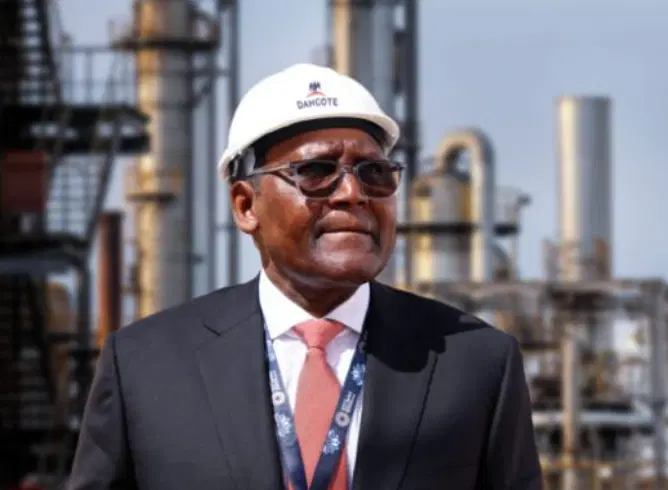
The operational ramp up of the 650,000 barrels per day Dangote Petroleum Refinery & Petrochemicals is fundamentally reshaping Nigeria’s downstream oil sector, significantly reducing the country’s dependence on imported refined petroleum products and strengthening its external position, according to the Economist Intelligence Unit (EIU).
In its latest assessment on Nigeria’s fuel market and regulatory environment, the EIU said the refinery has already transformed a sector that was previously characterised by heavy reliance on imported fuel despite Nigeria being Africa’s largest crude oil producer. The report noted that the refinery met nearly 80 per cent of domestic petrol demand in April and produced enough volumes to satisfy local consumption requirements as operations approached full capacity.
The EIU described Nigeria’s downstream petroleum sector before the refinery as “long dysfunctional”, noting that the country had remained almost entirely dependent on costly imported fuel while producing nearly 1.5 million barrels of crude oil daily.
According to the report, the emergence of the refinery has reduced import dependence, improved domestic fuel availability and strengthened Nigeria’s balance of payments position through lower import demand and rising exports of refined petroleum products.
“The gradual ramp up of the 650,000 barrel/day Dangote refinery since May 2023 has transformed Nigeria’s long dysfunctional downstream sector,” the report stated. “The country’s main refineries, all state owned, had been inoperative for years and Nigeria was almost entirely reliant on costly imported fuel.”
The research and analysis division of The Economist Group, London added that the refinery’s attainment of full operational capacity and its planned expansion would further support Nigeria’s economic growth and foreign exchange earnings over the medium term.
“Meanwhile, the attainment of full capacity at, and an increase in exports from, the Dangote refinery will support real GDP growth and foreign exchange earnings in 2026 and 2027 and beyond, as a planned doubling of the plant’s output comes on stream around the end of the decade,” it added.
Industry analysts said the refinery is increasingly positioning Nigeria as an emerging refining and export hub, altering energy trade flows across Africa and reducing the vulnerability associated with fuel import dependence.
The EIU noted that the refinery’s expansion has coincided with major reforms in Nigeria’s downstream sector, including the removal of fuel subsidies and the introduction of market driven pricing mechanisms.
The report, however, said the transition from a state dominated fuel import structure to large scale domestic refining has triggered resistance from interests linked to the old import regime.
The latest tensions emerged following the decision by the Nigerian Midstream and Downstream Petroleum Regulatory Authority to relax restrictions on petrol imports despite the refinery’s growing capacity to meet domestic demand.
Dangote Industries subsequently initiated legal action, arguing that continued import approvals undermine domestic refining investments and conflict with the objectives of the Petroleum Industry Act, which seeks to encourage local refining capacity and reduce import dependence.
Analysts noted that the availability of large-scale domestic refining capacity has improved Nigeria’s energy security and reduced exposure to external supply shocks and foreign exchange volatility.
The Centre for the Promotion of Private Enterprise also cautioned against unrestrained importation of petroleum products, warning that such a policy could weaken Nigeria’s industrialisation drive and discourage investments in domestic refining.
Chief Executive Officer of CPPE, Muda Yusuf, said continued dependence on imported fuel had historically contributed to pressure on foreign reserves, exchange rate instability and fiscal leakages.
The refinery’s growing impact is also being reflected in Nigeria’s broader macroeconomic indicators. Earlier this month, S&P Global Ratings cited increased domestic refining capacity and rising hydrocarbon exports among the major factors supporting Nigeria’s sovereign credit rating upgrade – the first in 14 years.
Beyond Nigeria, analysts said the refinery is increasingly being viewed as a strategic industrial asset for Africa, where many countries remain heavily dependent on imported fuel despite rising demand for transportation, manufacturing, and power generation.
Business
BREAKING: Court Dismisses $19.6 Million Claim Against NNPCL — Rules Contract Scope Cannot Be Changed Orally
BREAKING: Court Dismisses $19.6 Million Claim Against NNPCL — Rules Contract Scope Cannot Be Changed Orally
In a landmark ruling on Friday, May 22, 2026, the Federal Capital Territory High Court in Abuja threw out a $19.6 million lawsuit filed by Alternate Dimensions Ventures Ltd against the Nigerian National Petroleum Company Limited (NNPCL), affirming a key legal principle: a written contract cannot be expanded through oral agreements or conduct.
Alternate Dimensions had sought $19,600,000 in professional fees, claiming the scope of its Direct Sale, Direct Purchase (DSDP e-pro) contract with NNPCL was orally expanded. Represented by counsel Patrick Peter, the firm argued it was entitled to the revised sum for services rendered under the alleged new terms.
But NNPCL, through its lawyer Ituah Imhanze of KENNA LP, pushed back sharply, arguing that parties are bound exclusively by the clear terms of their written agreement. Imhanze contended that without any written amendment, the claim was legally unsound, and the court agreed.
Delivering judgment, Justice Hamza Mu’azu upheld NNPCL’s defense, stating that the contract was unambiguous and that no evidence was adduced during the trial, which supported the alleged scope expansion. The court further found that NNPCL fully complied with all contractual terms and committed no breach.
Dismissing the suit as meritless, Justice Mu’azu reinforced the doctrine of sanctity of contract: any amendment to a written agreement must be express, unequivocal, and documented, not implied or verbal.
The ruling spares NNPCL from the S19.6 million claim and also a floodgate of similar potential liabilities.


- Uganda: Parliament concludes vetting of ministers June 2, 2026
- Fund for Export Development in Africa (FEDA) Board Appoints Mr. Emmanuel Assiak as Chief Executive Officer June 2, 2026
- Ecobank Group Launches World First Nature Bond Mobilising Global Capital to Protect Africa’s Natural Ecosystems June 2, 2026
- Merck Foundation Chief Executive Officer (CEO) Dr. Rasha Kelej together with Kenya First Lady support the education of 47 Kenyan Schoolgirls by providing Annual Scholarships till they Graduate June 2, 2026
- Annual Meetings 2026: Governors Back the Bank’s Platform Solutions to Transform Aviation and Health Systems in Africa June 2, 2026
- ThinkMarkets launches ChelseaAI, bringing live CFD trading into Artificial Intelligence (AI) assistants June 2, 2026
- Afreximbank Invites Rugby Africa President Herbert Mensah to Address the 33rd Annual Meetings on a Panel Exploring Sport as a Driver of African Industrialisation June 2, 2026
- Afreximbank Deepens Commitment to Economic Progress in The Bahamas June 1, 2026
- African Electric Vehicle (EV) platform Spiro raises $215M in equity to scale electric mobility and energy infrastructure across Africa June 1, 2026
- Africa Centres for Disease Control and Prevention (Africa CDC) Statement on Attacks Against Health Facilities During the Bundibugyo Virus Disease Response in the Democratic Republic of the Congo June 1, 2026
- Uganda: Parliament concludes vetting of ministers June 2, 2026
- Fund for Export Development in Africa (FEDA) Board Appoints Mr. Emmanuel Assiak as Chief Executive Officer June 2, 2026
- Ecobank Group Launches World First Nature Bond Mobilising Global Capital to Protect Africa’s Natural Ecosystems June 2, 2026
- Merck Foundation Chief Executive Officer (CEO) Dr. Rasha Kelej together with Kenya First Lady support the education of 47 Kenyan Schoolgirls by providing Annual Scholarships till they Graduate June 2, 2026
- Annual Meetings 2026: Governors Back the Bank’s Platform Solutions to Transform Aviation and Health Systems in Africa June 2, 2026
- ThinkMarkets launches ChelseaAI, bringing live CFD trading into Artificial Intelligence (AI) assistants June 2, 2026
- Afreximbank Invites Rugby Africa President Herbert Mensah to Address the 33rd Annual Meetings on a Panel Exploring Sport as a Driver of African Industrialisation June 2, 2026
-

 news6 months ago
WHO REALLY OWNS MONIEPOINT? The $290 Million Deal That Sold Nigeria’s Top Fintech to Foreign Interests
-

 society1 month ago
SOCIAL MEDIA IS NOT A BATTLEFIELD COMMAND – WHY THE NIGERIAN ARMY’S ACTION AGAINST JUSTICE CRACK IS A NATIONAL SECURITY IMPERATIVE
-

 celebrity radar - gossips4 months ago
Dr. Chris Okafor Returns with Power and Fire of the Spirit -Mounts Grace Nation Altar with Fresh Anointing and Restoration Grace on February 1, 2026
-

 celebrity radar - gossips6 months ago
Prophet Kingsley Aitafo Releases 2026 Prophecy: ‘Nigeria Will Rise, but the World Must Prepare for Turbulence’