
society
Wives Of Governors, Nollywood Actors Support Marwa For Drug War, Dismissed DPO Arrested With 168kg Compressed Cannabis

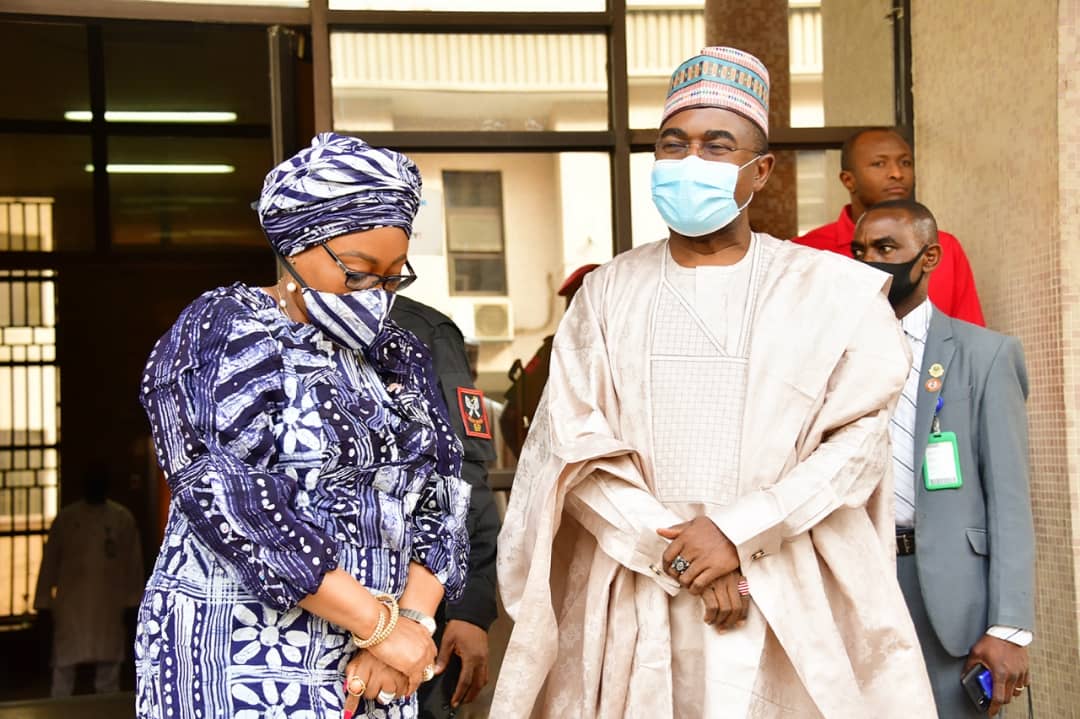
Wives Of Governors, Nollywood Actors Support Marwa For Drug War, Dismissed DPO Arrested With 168kg Compressed Cannabis
The wives of governors in Nigeria, under the aegis of Governors’ Wives Forum, GWF, have declared total support for the National Drug Law Enforcement Agency, NDLEA, and its ongoing war against abuse and trafficking of illicit drugs, while seeking a formidable partnership that will secure the states and Nigeria from the menace of drug sub-culture.

According to a statement signed by Femi Babafemi, Director, Media & Advocacy and made available to the National Association of Online Security Reporters, NAOSRE, the supports for NDLEA was the highlight of a meeting between the leadership of the forum and the Chairman/Chief Executive of NDLEA, Brigadier General Mohamed Buba Marwa (Retd) at the Agency’s National Headquarters in Abuja on Thursday 3rd February 2022. Ekiti state First Lady and Chairperson of NGWF, Erelu Bisi Fayemi led the delegation, which includes First Lady of Kwara, Mrs. Olufolake Abdulrasaq; Imo, Mrs. Chioma Uzodinma and Yobe, Hajiya Hafsat Kollere Buni.

Welcoming the governors’ wives, Gen. Marwa expressed appreciation for the visit, adding that the interest shown by them in the country’s drug problem shows their humanity and commitment to support their husbands engender a better society devoid of drug-induced criminalities.

“Let me put it on record that President Muhammadu Buhari is the number one drug fighter in Nigeria today because of all he has done to ensure the country wins the war against abuse and trafficking of illicit drugs. As such, we count on the states especially the governors’ wives as the pillars and partners through which citizens across the states, local councils and communities are mobilised to reject this ravaging sub-culture”, he stated.
He charged the governors’ wives to work with their husbands to make the drug problem a major priority on their agenda; support the state commands of NDLEA with logistics; set up rehabilitation centres; provide jobs and skills for the youths; massive advocacy campaigns on state-owned media houses and mandatory drug tests for students, workers as well as intending couples among others.
In her remarks, Erelu Fayemi said they came on the visit to inform Gen. Marwa of their collective decision to adopt drug abuse as a flagship project “to address the alarming problem of drug abuse in our communities.”
According to her, “We are therefore here today to pledge our support for NDLEA to ensure that our country and communities become drug free. We are not willing to stand by as mothers and see our children consumed by this menace.”
They presented four requests, all of which were instantly granted by Gen. Marwa. Their demands include that NDLEA continues to see State First Ladies as important allies in furtherance of the objectives of the agency; involve them in the fight against drugs as Champions in their respective States; help build the capacity of State Frist Ladies and their teams to be effective partners in the war against drug abuse and involve them in national and State campaigns against drugs.
In their contributions, the First Ladies of Kwara, Imo and Yobe expressed their willingness to key into the War Against Drug Abuse, WADA advocacy agenda and the National Drug Control Master Plan, NDCMP, of the agency in their respective states.
In like manner, leaders of the Nollywood industry under the aegis of Actors Guild of Nigeria, AGN, have declared support for the ongoing war against drug abuse in Nigeria even as they expressed their preparedness to join the crusade against the scourge.
They gave the assurance on Monday 7th February 2022 during a meeting with the Chairman/Chief Executive of the National Drug Law Enforcement Agency, NDLEA, Brig. Gen. Mohamed Buba Marwa (Retd) at the National Headquarters of the Agency in Abuja.
While commending the Nollywood actors and the entertainment industry for projecting the image of Nigeria, Gen. Marwa expressed confidence that the campaign against drug abuse in the country will go far with the offer of partnership and support from the leadership of AGN.
He said with drug use prevalence in the country three times the global average, the Agency needs committed partners like the Guild to mobilise the citizentry against the menace. According to him, “A number of artists don’t only use, they also encourage others to abuse drugs through their work and activities on social media. We want the Guild to set good example by leading the war within its circle. Your movies must promote messages against the use of illicit drugs because the minds of millions are shaped by what they watch in movies. We need you to set up War Against Drug Abuse, WADA, committees within your industry.”
Speaking earlier, National President of AGN, Emeka Rollas Ejezie said, “We are here today to affirm our complete support to your efforts in combating the menace of drugs in our society as we strongly believe will help reduce drug crime to the barest minimum.
“As a Guild of major influencers and in line with our set objectives to educate, inform and entertain as well as our avowed commitment to national development, we seek a mutually beneficial partnership with the NDLEA to leverage on the star-power of our members in promoting some of your transformation programs especially on drug trafficking and abuses.”
Listing the areas he will want the Guild to collaborate with the NDLEA, he “Majority of our members are youths and appeal to a generation of youths who are influenced heavily by internet content and social media.
We have therefore outlined some advocacy programs to enlighten Nigerian youths on the dangers of drug abuse and trafficking; they include but not limited to: production of skits majorly for social media campaigns; drama series on negative effects of drug abuses, rehabilitations, eradicating the fear of stigmatization and advantages of total abstinence; engage some of our A-List actors as NDLEA Ambassadors to help use their star power to discourage the youths from doing drugs”, among others.
“We share in the dream of a better Nigeria where success will be the reward for hard work and not through drug trafficking and other drug related offences.
The era of glorifying drug barons and criminals is far gone and the Actors Guild of Nigeria, as Ambassadors of Nigeria’s image is readily available for advocacy campaigns, talk-shops, production of skits, playlets, feature films etc. on the menace of drug abuse and trafficking”, he stated.
Apart from the National President, Emeka Rollas Ejezie, other members of the delegation include: Mohammed Kareem, Vice President North Central; veteran actor, Zulu Adigwe; Steve Eboh; Onwurah Agility Ifeanyi; Waash Waziri, Vice President North West; Nazareth Jesse Bako, Mayor AGN Abuja; Pamela Abah; Veteran actor, Lisa Onu and Hajiya Salma Ibrahim, Chairman AGN Kaduna.
In the face of these supports from institutions and groups, the agency disclosed that over 22,160 kilograms of Codeine syrup, Methamphetamine and Skunk have been seized at Apapa seaport and a notorious drug den, Akala, Mushin, Lagos in two major operations in the state by operatives of the National Drug Law Enforcement Agency, NDLEA.
According to Babafemi, while a total of 14,080kg codeine syrup (8,080 litres) and 4,352.43kg cold caps used to conceal the former in a 40ft container imported from India, were intercepted on Wednesday 2nd February, 2022 at the Apapa port, Cannabis/Loud/Skunk imported from Ghana and Methamphetamine weighing 3,727.72kg were seized in an early morning raid at Akala, Mushin where 17 suspects including five females were arrested on Thursday 3rd Feb. The seizure at the Lagos seaport followed intelligence from foreign partners and cooperation of other port stakeholders.
At Akala, NDLEA Strike Force operatives in their numbers with support from the military stormed fortified warehouses in the drug den and evacuated bags and bottles of cannabis, loud, skunk, skuchies and methamphetamine as well as the 17 suspects for further investigation.
Meanwhile, a female drug kingpin, Mrs. Jemilat Seriki, who is one of the owners of 12,385 pellets of Loud imported from Ghana and intercepted at Eko Atlantic beach, Victoria Island Lagos on Saturday 27th November 2021, has been arrested by narcotic officers after weeks of manhunt. Mrs. Seriki, a.k.a Iya Ilorin admitted being one the owners of the consignments seized, adding that her bags of drugs had ‘Jah Bless’ written on them. When eventually identified and sorted, she has 16 bags with the inscription containing drugs weighing 668.85kg.
In Niger state, a 64-year-old former Divisional Police Officer of Idanre Police station, Ondo state, who was dismissed from service for drug offences, Mr. Monday George Chika, has again been arrested with an accomplice, Emmanuel Eniola, 40, with 280 blocks of compressed cannabis weighing 168kg. They were arrested on Sunday 30th Jan. in Mokwa, Niger state, after their Toyota Avalon car marked EKY 429 BZ (Lagos) loaded with the substance at Idanre and heading to Kanji, Borgu area of the state was intercepted.
At the Murtala Muhammed International Airport, MMIA, Ikeja Lagos, attempts by some traffickers to export different quantities of Methamphetamine to Brazil and United Kingdom were scuttled by narcotic officers at the airport. The first bid was made on Friday 28th Jan. through the SAHCO export shed where operatives intercepted 0.80kg of Meth concealed in relaxer plastic container heading to the UK. A suspect, Akuta Chioma Lucy who presented the consignment for search had been arrested for further investigation.
The second attempt was on Friday 4th February during the outward clearance of passengers at Gate ‘C’ Departure hall of the airport when an intending male passenger on Ethiopian Airline going to Brazil, Onyeaghala Chidi was intercepted with 500grams of Meth concealed inside three plastic hair relaxer containers. Also at the airport, a male passenger, Iliyasu Yushau Yushau, coming from Kampala, Uganda via Nairobi, Kenya was intercepted by operatives with 268 debit cards belonging to Access Bank, GTBank and Zenith Bank, during the inward clearance of passengers on the flight on Sunday 30th Jan.
In Edo State, operatives on Friday 4th Feb. stormed the Igbogiri forest, Orhionwon LGA and destroyed four dry season Cannabis farms measuring 3.067718 hectares, following the evacuation of 20 bags of compressed blocks of Cannabis weighing 269.5kg stored in a bush at Uzebba, Owan West LGA, the previous day and the arrest of Afadama James, 42, with 348kg cannabis at Owan, Ovia North East LGA on Wednesday 2nd Feb.
While operatives in Delta state arrested a 21-year-old student of Federal Polytechnic, Auchi, Kate Osagie over a 17.6grams designer drug she ordered from Onitsha, Anambra state, their colleagues in Borno state on Thursday 3rd Feb nabbed one Fatima Musa, 30, for attempting to smuggle pentazocine injections into the camp of surrendered insurgents.
In Plateau state, operatives intercepted a truck marked LSD857XB coming from Ekpoma, Edo State with 885 blocks of cannabis sativa that weighed 736kg. A N400,000 paid to bribe the arresting officers has also been warehoused as part of exhibits for prosecution, just as two suspects; Ebunoluwa Babalola, 40, and Sulyman Sheu, 30, were arrested at Ganmo, Ilorin, Kwara State with 90kg of Cannabis.
In the same vein, 2kg of Methamphetamine being brought to Abuja by a 29-year-old Charity Omuche from Anambra state was intercepted on Friday 4th Feb by operatives at Gwagwalada area of the FCT, while officers of the Kaduna Command of the Agency also arrested a suspect, Buhari Isah Umar with 300 shisha pens and 999 portions of synthetic cannabinoids with gross weight of 9.690kg.
Chairman/Chief Executive of NDLEA, Brig. Gen. Mohamed Buba Marwa (Retd) has commended officers and men of the Strike Force, Apapa seaport, MMIA, Lagos, Niger, Edo, Borno, Plateau, Kwara, FCT and Delta Commands of the Agency for the successful interdiction operations that led to the seizure of thousands of kilograms of illicit drugs from across the country in the past week. He charged them and their compatriots in other commands not to rest on their oars.





society
Liberian Leaders, Citizens Bear Witness as Apostle Suleman Hosts Two-Day Power-Packed Crusade
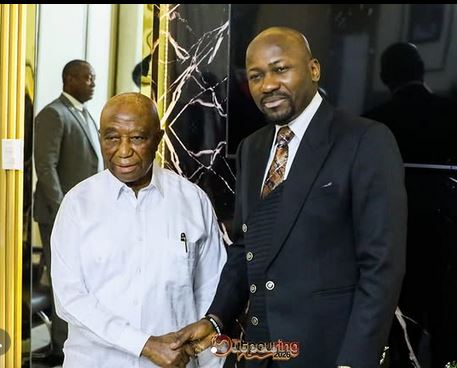
Liberian Leaders, Citizens Bear Witness as Apostle Suleman Hosts Two-Day Power-Packed Crusade
It was testimonies galore on Tuesday, March 31, the first day of the famous servant of God and founder of the Omega Fire Ministries (OFM) worldwide, Apostle Johnson Suleman’s power-packed two-day crusade. The event documented impactful moments with the Gospel and miracles, emphasizing the power of faith and the tangible confirmation of God’s Word through signs and wonders. It was equally an atmosphere of miraculous healing, restoration of lives, and the strengthening of faith.
At the crusade, which was held at the SKD Sports Stadium in Paynesville City, and themed, “Liberia Outpouring Crusade” witnessed testimonies of impact and miracles with participants experiencing instant healing of various kinds of challenges.
Apostle Suleman’s first port of call was Paynesville, the office of Liberian government’s president, Mr. Joseph Nyuma Boakai, who received him in an audience with his junior ministers. Apostle Suleman, who also met with the vice-president, Mr. Jeremiah Kpan Koung, was welcomed by the Liberian leader’s office as part of the president’s ongoing engagements with religious leaders aimed at fostering spiritual support for national development.
The president expressed profound appreciation to Apostle Suleman for the visit and continued prayers and intercessions by men and women of God on behalf of Liberia, emphasizing his firm belief that sustained spiritual guidance and prayer remain vital to the transformation and progress of the nation.
During the visit, Apostle Suleman offered prayers for President Boakai, his cabinet and the Liberian nation, invoking divine alignment, wisdom, and insight in Liberia’s path toward growth and stability. He prayed that the Almighty God would position Liberia for relevance and fulfillment of its national destiny.
Apostle Johnson Suleman, an evangelist who knows no bounds of where preaching the gospel comes to a stop, visited Liberia prepared with the message, compelling power of the Gospel and the work of the Holy Spirit, and bringing people to a point of decision where they surrendered their lives to Christ.
Aside from being prophetic and timely, OFM sources disclosed that the servant of God’s visit underscores the importance of faith-based partnerships in supporting governance and national renewal efforts.
society
Middle Belt Forum Hails Tinubu’s Jos Visit, Calls for United Civil-Military Effort to Restore Lasting Peace
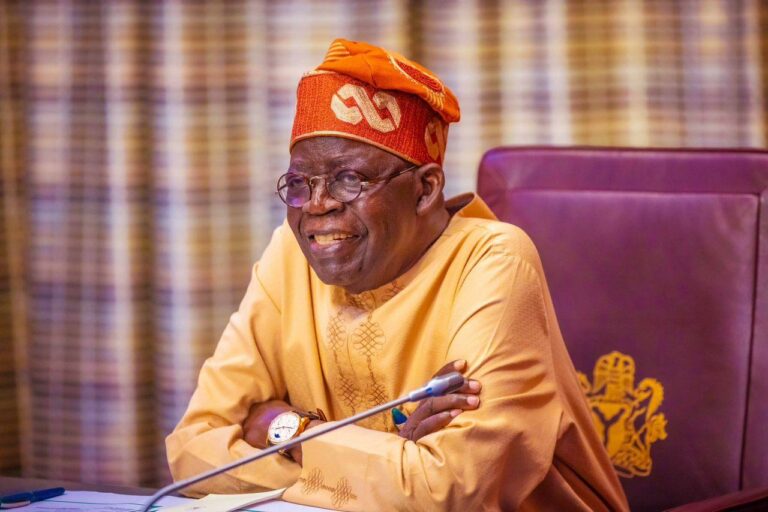
*Middle Belt Forum Hails Tinubu’s Jos Visit, Calls for United Civil-Military Effort to Restore Lasting Peace
The Middle Belt Peace Forum (MBPF) has commended President Bola Ahmed Tinubu for his profound demonstration of empathy and responsive leadership following his decision to postpone an official engagement in Iperu in order to visit victims of the recent attacks in Jos.
In a statement signed by its National Coordinator, Pastor Bulus Garba, in Jos on Friday, the Forum said the President’s decision to personally identify with grieving communities sends a powerful message of solidarity and reinforces public confidence in the commitment of the Federal Government to the protection of lives and property.
“The Middle Belt Peace Forum warmly commends President Bola Ahmed Tinubu for prioritising compassion over ceremony. At a time of deep sorrow for the people of Plateau State, his decision to visit Jos stands as a mark of true leadership—one that listens, responds, and stands with the people in their moment of pain,” the statement read.
The Forum described the perpetrators of the recent attacks as “cowards who prey on innocent and defenceless citizens,” stressing that such acts of violence are not only inhumane but also a direct assault on the unity and peace of the nation.
“We condemn in the strongest terms the actions of these cowardly attackers whose only aim is to instil fear and destabilise peaceful communities. Their actions must be met with firm and decisive resistance from all arms of the state,” Pastor Garba said.
The MBPF further used the opportunity to salute the courage, gallantry, and sacrifices of the Armed Forces of Nigeria under the leadership of the Chief of Defence Staff, General Olufemi Oluyede, noting that their continued efforts remain central to restoring stability across troubled parts of the country.
According to the Forum, the Armed Forces have demonstrated resilience and professionalism in the face of complex security challenges, often operating under difficult conditions to safeguard communities and defend Nigeria’s territorial integrity.
“We salute the Armed Forces of Nigeria for their unwavering commitment and sacrifices. Their gallantry in confronting criminal elements and reclaiming territories is a testament to their dedication to national service. We recognise that the path to peace is demanding, and we honour those who stand daily in defence of our nation,” the statement added.
The Forum pledged its full support to ongoing military operations and called for strengthened collaboration between security agencies and local communities as a critical factor in achieving lasting peace.
It also urged citizens across the Middle Belt to cooperate with security forces by providing timely information and fostering unity within their communities.
The MBPF, however, expressed concern over the need for greater synergy among security agencies, particularly the role of the Nigeria Police in consolidating gains made by the military.
“We call on the Nigeria Police Force to rise fully to its constitutional responsibility by effectively supporting the Armed Forces in stabilising and securing areas that have been cleared of criminal elements. Holding and policing such territories is essential to preventing a resurgence of violence,” Pastor Garba stated.
The Forum emphasised that sustainable peace requires a coordinated approach in which the military clears and secures areas, while the police maintain law and order to enable displaced communities to return and rebuild their lives.
The MBPF concluded by reiterating its commitment to peacebuilding efforts across the Middle Belt and expressed optimism that with sustained leadership, coordinated security efforts, and active citizen participation, lasting peace can be achieved.
“Together, through unity, vigilance, and collective resolve, we can overcome these challenges and build a safer and more peaceful Middle Belt,” the statement added.
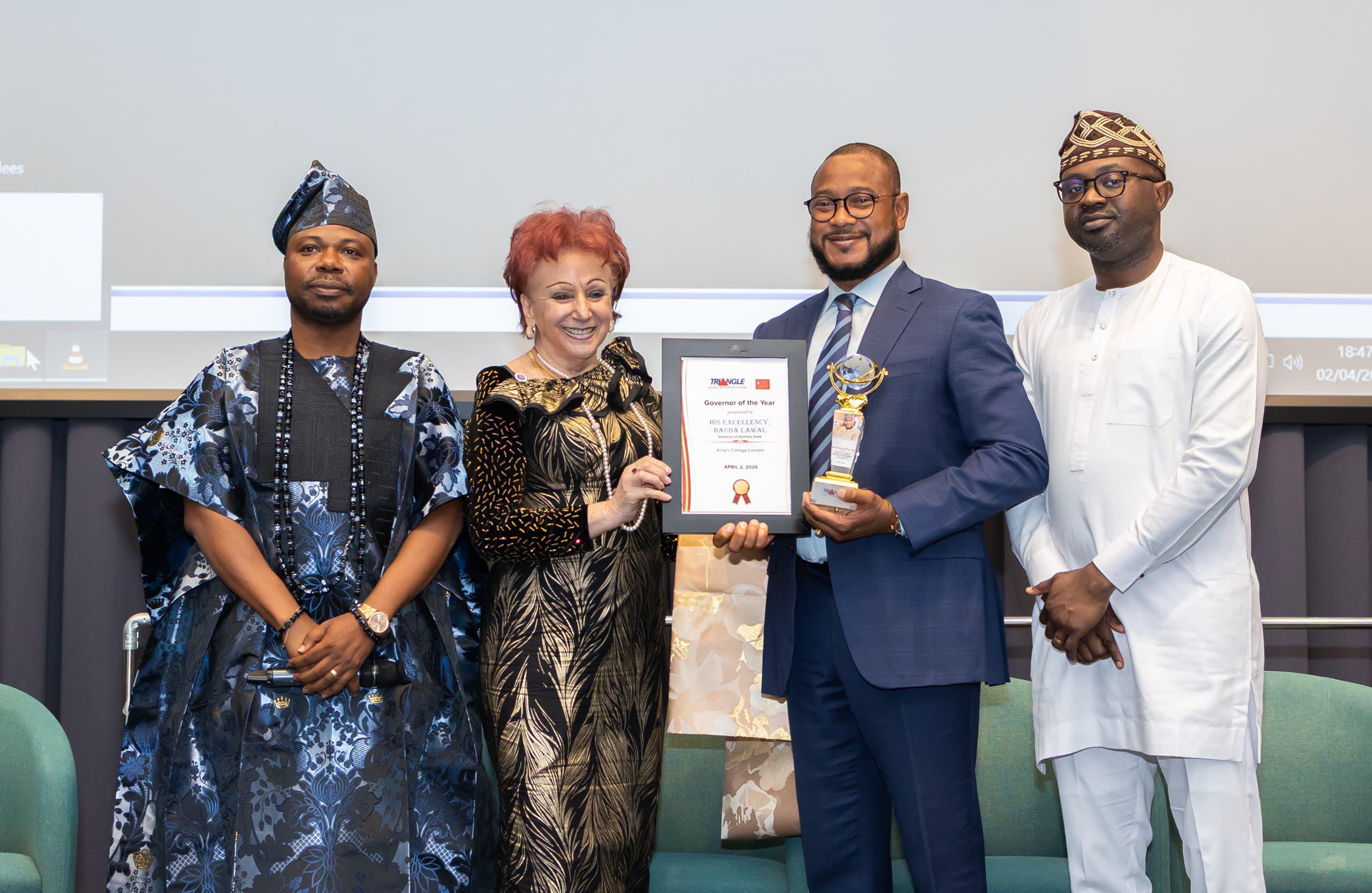
Governor Dauda Lawal Wins Face of Africa Governor of the Year Award in London
Governor Dauda Lawal has been honored with the Outstanding Governor of the Year award by Triangle Media International Magazine.
The award was presented during the magazine’s 10th annual lecture and award ceremony, held on Thursday at the Grand Hall of King’s College, London, United Kingdom.
According to a statement by the governor’s spokesperson, Sulaiman Bala Idris, the awards recognize public and private sector leaders whose leadership positively impacts governance and service delivery.
He added that the lecture, themed “Harnessing the Roles of Nigerians in Diaspora for National Development,” brought together stakeholders from both the public and private sectors.
The statement read in part: “Yesterday, in London, Governor Dauda Lawal received the 2026 Face of Africa Leadership Award for Outstanding Governor of the Year.
“The 2026 edition coincides with the 10th anniversary of Triangle International Magazine, which has over the years celebrated notable Africans across diverse fields.
“The award recognizes the Zamfara State Government under Governor Lawal’s leadership for achieving remarkable milestones in service delivery since his inauguration on 29 May 2023.
“The board of Triangle International noted that, despite inheriting an empty treasury, Governor Dauda Lawal has remained true to the Rescue Agenda’s campaign promise: to rescue and rebuild Zamfara.
“The award also reflects the state government’s innovative approach to indirectly curbing insecurity through educational advancement, demonstrated by the declaration of a state of emergency in the education sector.
“This includes the state government’s swift payment of the outstanding N3.4 billion for WAEC and NECO examinations, as well as the reconstruction and rehabilitation of schools across all 14 Local Government Areas of Zamfara State.
“The international magazine finds these initiatives to be strategic interventions toward long-term efforts to make Zamfara State better.”
The colourful event was attended by the Minister of Interior, Olubunmi Tunji-Ojo, and Sahara Group’s Group Managing Director, Kola Adesina, among others.


-

 society7 months ago
Religion: Africa’s Oldest Weapon of Enslavement and the Forgotten Truth
-

 news4 months ago
WHO REALLY OWNS MONIEPOINT? The $290 Million Deal That Sold Nigeria’s Top Fintech to Foreign Interests
-

 society6 months ago
“You Are Never Without Help” – Pastor Gebhardt Berndt Inspires Hope Through Empower Church (Video)
-

 celebrity radar - gossips2 months ago
Dr. Chris Okafor Returns with Power and Fire of the Spirit -Mounts Grace Nation Altar with Fresh Anointing and Restoration Grace on February 1, 2026