
society
Workers as the Backbone of a Nation: Nigeria’s Labour Force Must Lead the Rescue Mission


Workers as the Backbone of a Nation: Nigeria’s Labour Force Must Lead the Rescue Mission
By George Omagbemi Sylvester
“All great nations are built by workers who do their best for themselves and the country.” These compelling words by Otunba Dr. Segun Showunmi remind us of a timeless truth: no nation rises above the dedication, sweat and courage of its workers. As Nigeria commemorates Workers’ Day, it is not enough to chant praises or post hollow tributes online. The Nigerian worker must now awaken to a more pressing, revolutionary responsibility, to be the moral and political vanguard in rescuing a country teetering on the brink of collapse.
For decades, Nigerian workers have toiled under unimaginable economic pressures, living from paycheck to paycheck, many without dignity, fair wages, or basic social security. The Nigeria Labour Congress (NLC) and Trade Union Congress (TUC), once potent forces of resistance against tyranny and injustice, have become shadows of their former selves and crippled by political compromise, internal corruption and systemic intimidation. It is time for a rebirth.
Nigeria: A Country in Reverse Gear
Nigeria, once touted as the “Giant of Africa,” has become a failed promise. Despite having the largest economy in Africa by GDP size, over 133 million Nigerians are classified as multi-dimensionally poor (National Bureau of Statistics, 2023). Unemployment stands at 33.3%, and inflation continues to crush the purchasing power of an already overburdened citizenry. The current minimum wage of ₦30,000 (about $20 monthly) is not only a moral embarrassment, but a statistical absurdity in the face of skyrocketing fuel, electricity, food, rent and healthcare costs.
The recent calls for a ₦70,000 minimum wage by labour unions have been largely ignored by over 20 state governments, despite the Nigerian Constitution’s directive on equitable welfare. Workers are being enslaved in their own country while politicians feast.
Yet, in the face of this adversity, Nigerian workers must remember: they are not powerless. They are the makers of nations. They are the unseen hands that build cities, schools, roads and factories. They are the intellectuals, the civil servants, the farmers, the teachers, the doctors, the engineers. They are more than voters, they are a force of transformation.
Labour Must Become a Political Weapon
To rescue Nigeria, the working class must reawaken their political consciousness. The time has come for Nigerian labour to evolve beyond protests and strikes into full electoral participation. Workers must become the builders not only of infrastructure but of democracy itself. They must demand policies, shape leadership and hold power accountable.
Thomas Sankara, the revolutionary Burkinabè leader who transformed Burkina Faso in four short years, famously said: “You cannot carry out fundamental change without a certain amount of madness… the courage to turn your back on the old formulas.” Nigerian workers must embrace such boldness. Voting every four years and returning to silence is no longer sufficient. A deliberate, organized movement of workers must be forged to disrupt the current cycle of kleptocracy and mediocrity.
Workers as Nation Builders: Historical Truths
History offers proof that great nations were built by empowered labour. In the United States, the New Deal reforms of the 1930s, which rescued America from the Great Depression, were largely driven by union pressure and workers’ demands. In South Africa, COSATU (Congress of South African Trade Unions) was pivotal in fighting apartheid alongside the ANC. In Ghana, the Trades Union Congress played a key role in resisting colonial rule.
What about Nigeria? Our own past glows with examples: the nationwide strikes led by Michael Imoudu in the 1940s energized the nationalist movement. Pa Hassan Sunmonu and Adams Oshiomhole were once symbols of principled resistance. Sadly, today’s labour leadership, rather than mobilize for systemic change, often appears co-opted by the same ruling elites that perpetuate oppression.
The Struggle of Our Heroes Past Must Not Be in Vain
The Nigerian national anthem reminds us: “The labour of our heroes past shall never be in vain.” But what do we make of that line in a country where pensions are unpaid, workers are retrenched for unionism and salaries are swallowed by inflation? If we are to honor our heroes, then we must finish the battle they began.
Ken Saro-Wiwa, the slain Niger Delta environmental activist, once said: “The Nigerian nation is at war with its people.” Today, that war continues, not with guns and tanks, but with poverty, corruption and misgovernance. Nigerian workers are under siege. It is time to fight back, not with violence, but with unity, organisation and bold political engagement.
As Amílcar Cabral of Guinea-Bissau asserted, “Tell no lies, claim no easy victories.” Nigeria’s problems are rooted in a corrupt elite who have hijacked every arm of governance; executive, legislative and even labour. The fight for a new Nigeria will be hard, but it is a fight worth waging.
Reclaiming the Soul of Nigeria through Workers’ Power
Imagine if every teacher refused to teach until state governments invested 25% of their budgets into education. Imagine if all health workers grounded the hospitals until every Nigerian had access to basic healthcare. Imagine if the NLC and TUC backed credible worker-friendly candidates and mobilized 20 million votes in the 2027 elections. Imagine if we had a working-class party, not as a fringe movement, but as a national force built from the ground up.
The 2023 elections showed that a hunger for change exists among Nigerians. Yet, the political establishment manipulated the process with impunity. The working class must therefore not only vote but guard their vote, mobilize their communities and demand electronic transparency and judicial accountability.
What Must Be Done?
Revamp Labour Leadership: Current union leaders must be held accountable. The rank-and-file should demand transparency and replace docile leaders with visionary fighters.
Form a Worker-Centric Political Front: A credible, pan-Nigerian platform must emerge from the working class. Not another ethnically hijacked party, but one with ideology, focus and inclusivity.
Invest in Civic Education: Workers must understand their rights, the Constitution and how policy affects them. Knowledge is power.
Support Economic Sovereignty: Workers must pressure the government to invest in local production, revive industries and end dependence on imported goods.
Resist Divide-and-Rule Tactics: Ethnic and religious differences must not be used to weaken worker unity. The oppressor thrives on division.
In the Words of Giants
To conclude, let us borrow from the wisdom of Nelson Mandela: “Overcoming poverty is not a gesture of charity; it is an act of justice.” Nigerian workers must now pursue that justice, not beg for it. Martin Luther King Jr. once declared: “The labor movement was the principal force that transformed misery and despair into hope and progress.” Let the Nigerian labour movement rise again, this time not just as a protest group, but as a nation-saving force.
Happy Workers’ Day to all Nigerian workers, may your courage light the path to a new Nigeria.



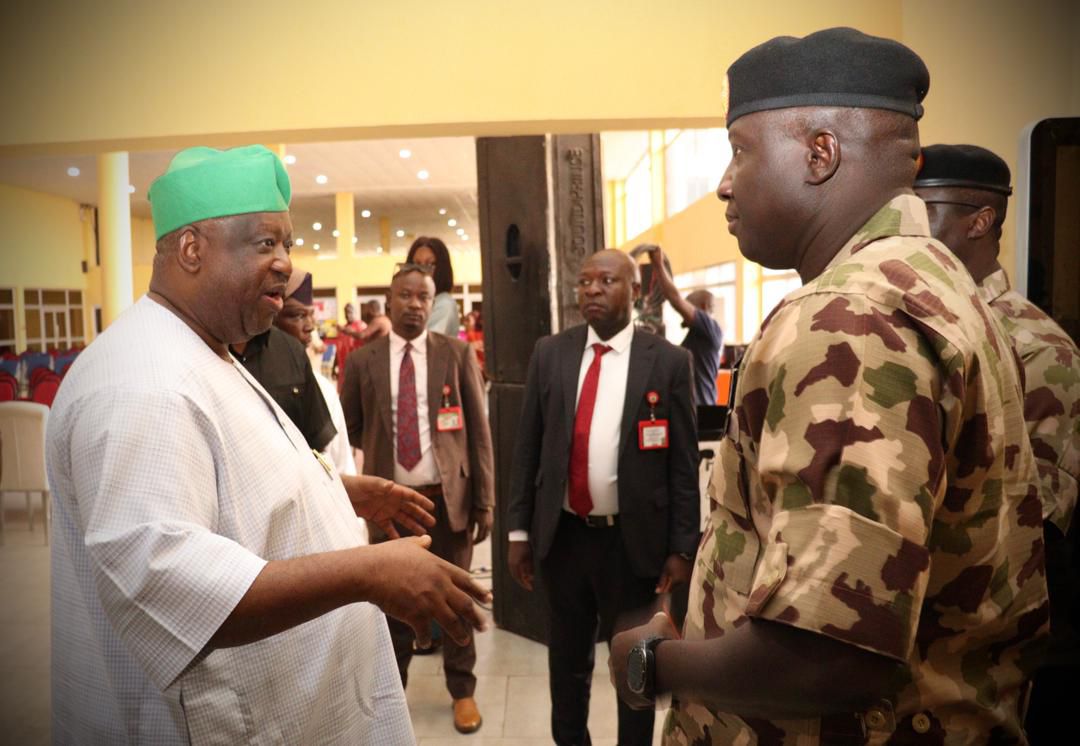
COAS Launches Nationwide Security Renewal Mission in Plateau
The Chief of Army Staff, Lieutenant General Waidi Shaibu, on Thursday led a high-level delegation of security chiefs to Plateau State, flagging off a nationwide security renewal mission aimed at strengthening civil-military cooperation and restoring lasting peace across the country.
The visit to Jos, the Plateau State capital, marks the first phase of a coordinated national effort to address persistent security challenges through joint operations, community engagement, and proactive intelligence gathering.

Governor Caleb Muftwang received the delegation, describing the initiative as a critical step toward stabilizing affected communities and reinforcing public confidence in security institutions.
Civil-Military Synergy Takes Centre Stage
At the heart of the mission is a renewed emphasis on collaboration between the military, civil authorities, and local communities. Speaking during the visit, Lt. Gen. Shaibu stressed that national security must be treated as a collective responsibility.
He urged citizens to support security agencies by remaining vigilant, sharing credible information, and complying with lawful directives, noting that effective security cannot be achieved in isolation.
Community Engagement as Confidence-Building Tool
In a departure from purely operational engagements, the Army Chief held direct consultations with community leaders and residents in Jos, reinforcing the importance of trust and dialogue in conflict resolution.
Lawmakers, including Dachung Bagos and Ladi Dangyok, commended the initiative, stating that visible engagement by top military leadership helps rebuild confidence among citizens and fosters cooperation.

Proactive Security Operations Underway
Operational updates were provided by Major General Folusho Oyinlola, who disclosed that troops under Operation Enduring Peace have intensified surveillance, intelligence-led patrols, and coordinated actions with other security agencies.
According to the Army, the approach is designed to prevent escalation of threats, safeguard lives and property, and stabilize vulnerable communities before crises emerge.
A Shift Toward Sustainable Peace
Military authorities emphasized that the Plateau visit is part of a broader, long-term strategy to transition from reactive responses to sustainable peacebuilding nationwide. The framework includes strengthening local resilience, ensuring justice, and maintaining continuous engagement with stakeholders.
Analysts view the initiative as a significant policy shift, reflecting a more inclusive security architecture that integrates community participation with military operations.
Call for National Unity
The Army leadership concluded with an appeal to Nigerians to reject divisive narratives and support ongoing efforts to promote unity and peace.
“The success of this mission depends not only on the armed forces but on the cooperation of every citizen,” the COAS stated.
The nationwide security renewal campaign is expected to extend to other regions in the coming weeks as authorities seek to consolidate gains and build a safer, more unified Nigeria.


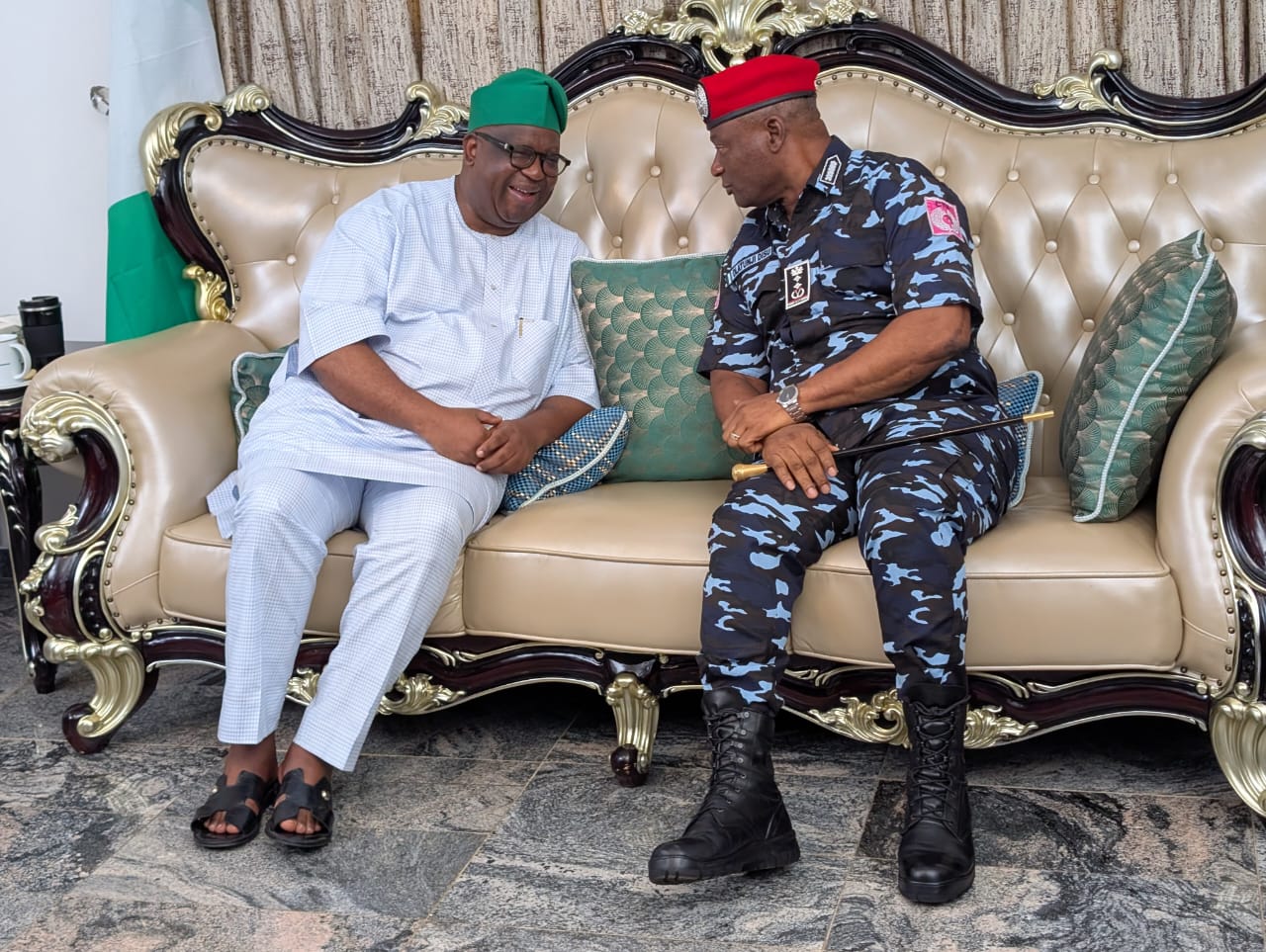
IGP Disu Visits Plateau, Orders Tactical Deployment To Reinforce Security
The Inspector General of Police, Olatunji Disu, on Thursday paid a working visit to Plateau State following recent unrest, holding strategic talks with Governor Caleb Muftwang on measures to strengthen security and prevent further disturbances.
As part of immediate steps to stabilise the situation, the police chief authorised the deployment of specialised tactical units to support officers already on ground across affected areas.
Governor Muftwang commended the swift intervention of the police leadership, praising the dedication and professionalism of security personnel working to restore calm. He also acknowledged the efforts of mobile police officers and lauded the leadership of the state’s Commissioner of Police, Bassey Ewah.
Both the Nigeria Police Force and the Plateau State Government reaffirmed their commitment to safeguarding lives and property, stressing that enhanced collaboration remains key to restoring lasting peace in Plateau State, popularly known as the Home of Peace and Tourism.


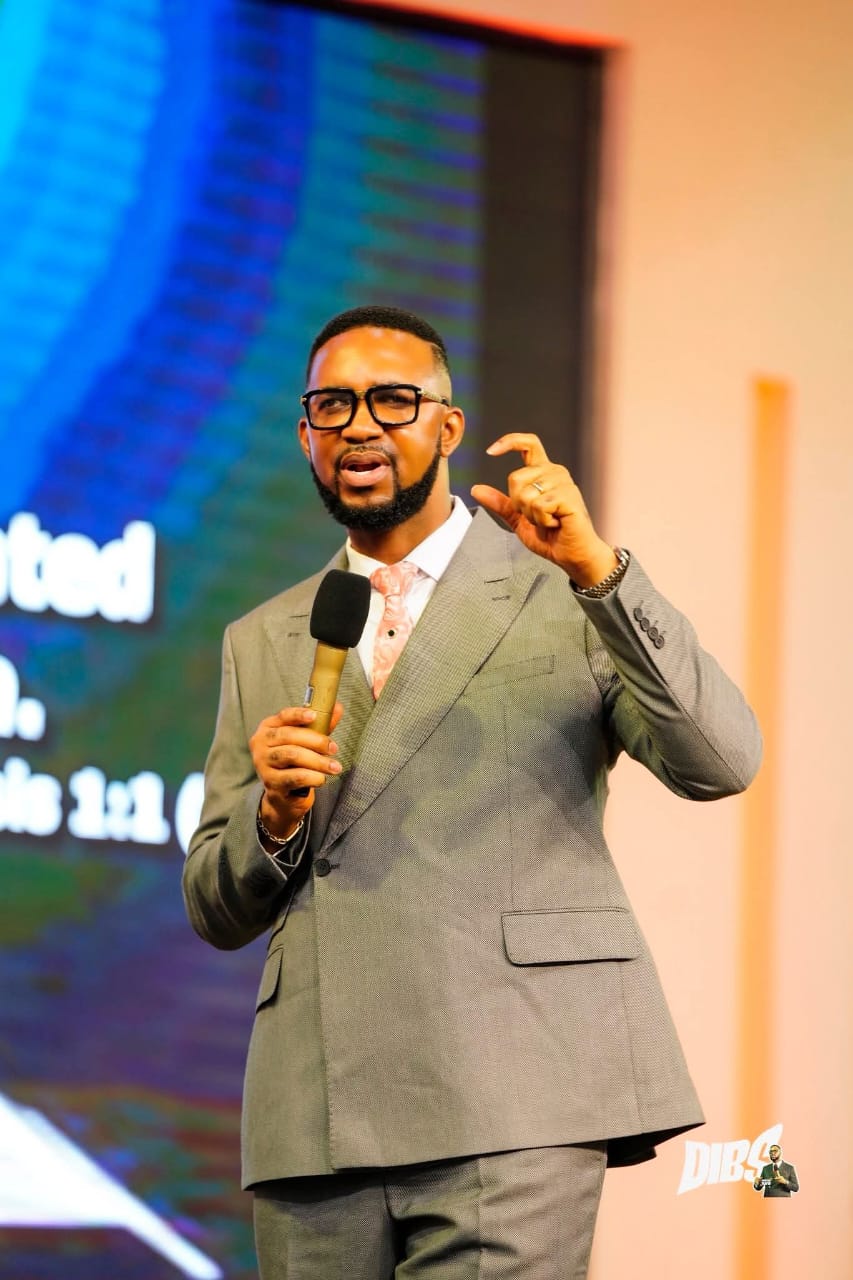
Grace Nation Worldwide: A Living Reality – Dr. Chris Okafor
……“Miracles, Healing, and Deliverance Overflow at Grace Nation Services”
The Grace Nation midweek Prophetic Healing, Deliverance, and Solutions (PHDS) Service on 2nd April 2026 at the international headquarters in Ojodu Berger, Lagos, was a spectacular display of God’s power, marked by miracles, healing, and deliverance.
The God of Grace Nation continues to demonstrate His authority, breaking strongholds, healing the sick, restoring lost glory, and providing solutions to every problem presented at His altar.
Testimonies of God’s Power
One woman, previously diagnosed with a terminal condition and slated for a ₦4.5 million surgery due to inability to excrete, was prayed for by the Generational Prophet, Christopher Okafor, just a week after visiting the church. Declaring healing within 24 hours, she returned to testify to God’s miraculous intervention.
Another pregnant woman, whose baby was bridged and at risk, was located and prayed for. She returned to service with confirmation that her child is now well-positioned for delivery. Similarly, a woman booked for a C-section due to an overdue and poorly positioned pregnancy testified during the service that her baby is now properly positioned, ready for birth.
These testimonies underscore the truth: what God cannot do does not exist. Grace Nation has entered a new level of spiritual authority, and with faith, believers are witnessing the impossible become reality.
God Works by Principle, Not Gossip
In his sermon, Dr. Okafor emphasized that God does not operate on superstition, gossip, or social media pressures. His work is grounded in His Word, and it is through adherence to His principles that Grace Nation continues to flourish.
The Generational Prophet stressed that to enjoy divine blessings and fruitfulness, believers must remain connected to God’s Word, faithfully serve Him, and ignore distractions or side-talks. Focused commitment to God’s service guarantees alignment with His miraculous power.
Join the Movement
Grace Nation Worldwide is open for all who desire a life transformed by divine intervention. Weekly services include:
Sunday Service: 7:00 AM
Grace Nation Island Service (Ogombo): Wednesday, 5:00 PM
Midweek PHDS Service: Thursday, 7:00 AM
Attending these services under the ministry of the Generational Prophet ensures encounters with God’s supernatural power, life-changing miracles, and lasting breakthroughs.
Grace Nation Worldwide is not just a church—it is a reality where faith meets the supernatural.
By Sunday Adeyemi


-

 society7 months ago
Religion: Africa’s Oldest Weapon of Enslavement and the Forgotten Truth
-

 news4 months ago
WHO REALLY OWNS MONIEPOINT? The $290 Million Deal That Sold Nigeria’s Top Fintech to Foreign Interests
-

 society6 months ago
“You Are Never Without Help” – Pastor Gebhardt Berndt Inspires Hope Through Empower Church (Video)
-

 celebrity radar - gossips2 months ago
Dr. Chris Okafor Returns with Power and Fire of the Spirit -Mounts Grace Nation Altar with Fresh Anointing and Restoration Grace on February 1, 2026