Connect with us

society

World TB Day Event: Federal Ministry of Health, LASG, USAID/ SHOPS Plus Unveil New 16 Modular GeneXpert Machine

Published

on

World TB Day Event: Federal Ministry of Health, LASG, USAID/ SHOPS Plus Unveil New 16 Modular GeneXpert Machine at EL-LAB Medical Diagnostics Lagos
The Federal Ministry of Health, Lagos State Government and USAID/SHOPS Plus unveiled a 16-Module GeneXpert Machine, the first of its kind in the country, on Monday, March 22nd, 2021 at the Diagnostics Complex of EL-Lab in Festac Town, Lagos.
According to WHO, TB is a major public health concern in Nigeria with the country ranked 6th among the 30 high TB burden countries globally and about 15 percent of the global gap in TB case notification.
The machine, which is for molecular diagnosis of tuberculosis (TB), was purchased by the United States Agency for International Development (USAID) through its funded Sustaining Health Outcomes through the Private Sector Plus project (SHOPS Plus) for the government of Nigeria to facilitate case detection in the private sector.  The machine was launched at EL-Lab Ltd, one of the leading indigenous medical diagnostic and research centres in Nigeria, with a view to closing the gap in TB case detection, notification, and treatment. EL-Lab is one of the 118 engaged stand-alone laboratories trained by SHOPS/Plus and has been very active in PPM Mix activities in Lagos State.
Mrs. Ayodele Iroko, the Senior Private Sector Advisor USAID/SHOPS Plus who anchored the event started by commending all private sector partners that have remained committed to the proactive screening, testing, and treating of TB in their various communities. She also encouraged all engaged health professional associations to work tenaciously at expanding the pool of private sector TB providers by scaling up engagement to include more of their members while facilitating efforts to integrate tested approaches into facilities service provision for ownership and sustainability.
In his opening remarks, the National Coordinator, National Tuberculosis and Leprosy Control Programme (NTBLCP), Dr Chukwuma Anyaike identified two main national goals as regards TB; to find the missing cases, and to ensure all cases found are adequately treated.
He applauded the efforts of the private sector partners, citing the increase in TB case finding and recent times but also emphasised that there is still a lot of room for improvement. Anyaike also stressed the need for more up-to-date statistical data on TB cases in Nigeria.
Anyaike described the introduction of the 16-Module GeneXpert Machine as a “milestone” and encouraged optimal use of the machine to achieve maximal results. He pointed out, however, that the mission goes beyond case finding, to ensuring treatment for all cases.  He encouraged stakeholders to re-strategize and think outside the box in order to “fish out all TB cases.”
Omosalewa Oyelaran, Deputy Director at USAID Nigeria office for HIV/AIDS & TB also commended the efforts of all stakeholders and encouraged them to take up the challenge of finding and treating all cases of TB in Nigeria. She expressed her excitement about the launching of the 16-Module GeneXpert Machine stating that it will increase the testing capacity, allowing patients to know their status and be placed on treatment as quickly as possible. Oyelaran expressed her organization’s commitment to supporting private sector engagement while encouraging them to take ownership and add value to success stories. She also encouraged all stakeholders to continue to raise awareness around the upcoming World Tuberculosis Day.
In a brief goodwill message, Mr. Mayowa Joel, the Executive Director of STOP TB Partnership expressed gratitude to USAID and SHOPS Plus for their efforts in facilitating and supporting private sector engagement.  He emphasized the need to strengthen and sustain the public -private collaboration.
Individual remarks were also given by Dr Makinde Akinlemibola, Chairman, Association of General and Private Medical Practitioners of Nigeria, Lagos State; Mr. Clement Olaifa, Chairman, Lagos State Association of General & Private Nursing Practitioners of Nigeria, Mr. Anorue C.J Chairman, Guild of Private Medical Laboratory Directors, Lagos State. Pharm. Lawrence Ekhator – Chairman, Association of Community Pharmacists of Nigeria, Lagos State. Each pledged their commitment to vision of 100 percent case finding and treatment, promising to improve their contributions with sustainable strategies, particularly emphasizing their willingness to work with the government in achieving the common goal.
The Medical Laboratory Science Council of Nigeria, through its registrar and CEO, Dr Tosan Erhabor also congratulated EL-Lab Diagnostics on the official unveiling of the First ever 16 modules GeneXpert machine in Nigeria. He also pledged his commitment, on behalf of the organization, to scale up TB case finding and treatment.
Dr Bolanle Olusola –Faleye, TB Technical Director of SHOPS Plus, while sharing the successes of the involvement of the private sector commended the synergy between the private sector and government, as well as the high level of dedication demonstrated by partners and donors.
Expanding further on these successes, Mr. Elochukwu Adibo, CEO of EL-Lab Medical Diagnostic Ltd explained that the involvement of the private sector is gradually ensuring that Nigeria’s unenviable ranking as  6th globally among the high burden countries and first in Africa with high burden for TB becomes a thing of the past.
He noted that the adoption of GeneXpert MTB/RIF test as the entry point diagnostic tool for TB case detection was done in 2016, and Federal Government’s wisdom in engaging the private health sector has tremendously helped to increase case detection and treatment.
Adibo stated that out of over 4000 networks of standalone Laboratories under Guild of Private Medical laboratory Directors, (GMLD), the Hon. Minister for Health donated a 4-module GeneXpert machine on September 4, 2018, to EL-lab Medical Diagnostics, Lagos.
EL-Lab, applying private sector efficiency, optimized testing with the machine which brought about significant improvement in TB case detection and testing with a tremendous support and partnership from the USAID /SHOPS Plus program network and their technical/logistic excellence.
He pointed out the need for infrastructure and logistics upgrade, especially with regards to power supply to meet the demand for uninterrupted service delivery.  He also called on the government and all concerned parties to remove the bottlenecks in the current partnerships to enable unhindered private sector contribution, to meet Country goals and National Strategic Plan for TB which will ultimately improve Nigeria’s global ranking.
Speaking before formally unveiling the new 16 modular machine, Dr Agbolagorite Olurotimi, Director of Disease Control, Lagos State who represented the Commissioner for Health, Lagos State, Prof Emmanuel Akinola Abayomi commended the private sector for their contributions at all levels, to the case finding and treatment of TB cases. He particularly commended EL-Lab’s commitment in testing samples both from government and private facilities. He urged stakeholders to continue to work at the desired goal, as Nigeria still has a long way to go with regards to TB case finding and treatment. He promised to investigate the identified bottlenecks that hinder private sector involvement and encouraged stakeholders to keep identifying and reporting such hindrances.
After his speech, the Commissioner for Health, Lagos State, Prof. Emmanuel Akinola Abayomi, who was represented by Dr Agbolagorite Olurotimi with other guests led by Dr Elochukwu Adibo proceeded on a walk-through tour of the laboratory that culminated into the formal cutting of ribbons and unveiling the new machine to the joy and excitement of both the physical and virtual audience present at the event.
Testing of samples from public and private health institutions was demonstrated using the
new 16 module GeneXpert machine.
Mr. Ifeanyi Okekearu, the Chief of Party of SHOPS/Plus commended the involvement of all partners and appreciated their time at the event.
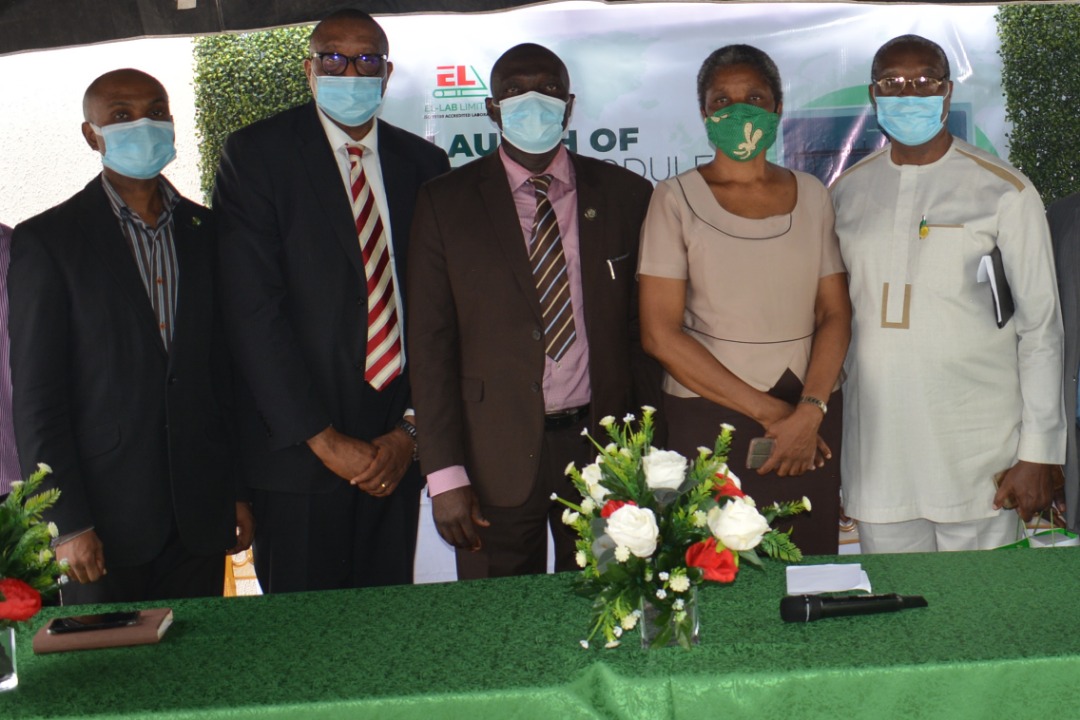
PHOTO CAPTION:
(L-R) Lawrence Ekhator – Chairman, Association of Community Pharmacists Lagos State, Prince Elochukwu Adibo –Laboratory Director, EL-LAB Diagnostics and National President, Guild of Private Medical Laboratory Directors, Dr Agbolagorite Olurotimi – Director of Disease Control Lagos State representing the Commissioner for Health, Lagos State, Mrs Ayodele Iroko –  Senior Private Sector Advisor, USAID/SHOPS Plus, Dr Makinde Akinlemibola – Chairman, Association of General and Private Medical Practitioners of Nigeria, Lagos State

society

Ajadi, Sheikh Sannu Sheu Charge Politicians on Good Governance

Published

on

Ajadi, Sheikh Sannu Sheu Charge Politicians on Good Governance


The Oyo State governorship aspirant on the platform of the Peoples Democratic Party (PDP), Ambassador Olufemi Ajadi Oguntoyinbo, has emphasised the need for politicians to embrace good governance and people-oriented leadership as a fundamental principle of politics in Nigeria.


Ajadi made this call on Friday, shortly after the 4th Annual Ramadan Lecture, organised under his Omituntun 3.0 platform at the BCOS Garden, Bashorun, Ibadan, where he spoke with journalists on the significance of the lecture, themed “Oselurere” (Good Governance).


The well-attended event featured a lecture by a renowned Islamic scholar, Fadheelatus-Sheikh Al-Mufasir Usman Sannu Sheu, the Chief Tafseer of Ilorin Emirate, Al-Adaby, who spoke extensively on the Islamic and socio-political perspectives of good governance, stressing that leadership must be anchored on justice, accountability, and service to humanity.


Speaking after the event, Ajadi explained that the choice of Oselurere as the theme for this year’s lecture was deliberate, noting that it was necessary to educate both current and aspiring politicians on the true essence of politics as service to the people.


According to him, the practice of good politics must be properly understood from both religious and socio-political viewpoints so that the coming generation of leaders can develop the right character for public service.


He said: “Oselurere, which means good governance, was carefully chosen as the topic so we can hear from our guest lecturer about the rewards of practising good politics and also understand what good politics is all about.”


He added that the lecture was also intended to correct the mindset of politicians who seek public office without clear plans to improve the lives of the people.


“The topic is also chosen so that politicians will learn that they should not just assume office without having good things in mind to offer the masses and our nation. That is why we invited our Islamic and renowned scholar, Sannu Sheu, to treat this important subject,” he said.


Reflecting on the history of the annual lecture, Ajadi disclosed that the first three editions were held in Ogun State, where the focus was on humanitarian services and feeding programmes during Ramadan as a way of demonstrating compassion and service to humanity.


The first to third Ramadan lectures hosted by me were held in Ogun State for Muslims and people of other faiths to witness how good it is to feed people and render humanitarian services. The month of Ramadan is one of the best periods to demonstrate these virtues, and that is why I have come to my father’s state of origin, Oyo State, to continue the humanitarian services,” he said.


He further called on Nigerians to use the Ramadan and Lenten periods as opportunities for spiritual rebirth, unity, and prayers for the nation.


“Let us use this period of Ramadan and Lent to learn how to live together in peace, remain united, and be prayerful for our country,” Ajadi advised.


The PDP gubernatorial aspirant also expressed optimism about the electoral fortunes of his party in future elections, saying he believes the PDP will record victories at different levels.


“By the grace of God, our great party will be on the ballot and there will be total victory in the various political offices our candidates will contest for,” he added.


In his lecture, Sheikh Sannu Sheu emphasised that good governance is not only a political obligation but also a moral and religious responsibility. He said Islam places a high premium on leaders who are just, trustworthy, and committed to the welfare of their followers.


The cleric explained that the concept of Oselurere goes beyond political promises, stressing that it includes fairness, transparency, accountability, and prioritising the needs of the weak and vulnerable in society.


He urged leaders at all levels to see their positions as a trust (Amanah) from God and the people, warning that they would be held accountable for how they exercise authority.

The scholar also encouraged citizens to support leaders with prayers and constructive engagement while also holding them accountable through lawful means.


The event attracted Islamic clerics, political stakeholders, community leaders, party members, and residents of Ibadan and its environs. It also featured Qur’anic recitations, special prayers for Oyo State and Nigeria, as well as spiritual musical performances by notable Islamic artistes.


Some of the political stalwarts who graced the occasion included the Executive Chairman of Egbeda Local Government and Chairman of ALGON, Hon. Sanda Sikiru Oyedele; the Oyo State Commissioner for Women Affairs and Social Inclusion, Hon. (Mrs.) Toyin Balogun; and Chief Babatunde Tijani, popularly known as “Double T,” a prominent political figure and Olori-Ebi of the Omituntun Dynasty, among other political leaders.


Observers noted that the annual Ramadan Lecture has continued to grow in prominence, serving as a platform for discussing the intersection between faith, governance, and societal development while also promoting peaceful coexistence among Nigerians of different religious and political backgrounds.

Continue Reading

society

Nigeria on the Edge: Rising Violence, Economic Hardship and Weak Institutions Fuel Fears of State Failure

Published

on

Nigeria on the Edge: Rising Violence, Economic Hardship and Weak Institutions Fuel Fears of State Failure

By George Omagbemi Sylvester


“A leading political scientist raises alarm over rising insecurity, weakening institutions, and economic policies that are deepening hardship for millions of Nigerians.”

Nigeria is facing a growing national crisis as insecurity spreads, democratic institutions weaken, and economic policies continue to deepen hardship for millions of citizens. The country is increasingly confronted with a dangerous convergence of political repression, worsening insecurity, and economic instability that many analysts warn could push the state toward systemic failure if urgent corrective actions are not taken.

Across the country, violence is spreading while government institutions that should safeguard democracy appear to be struggling to maintain credibility and independence. At the same time, economic reforms intended to stabilize the nation’s finances have imposed significant burdens on ordinary Nigerians already grappling with rising living costs.

Nigeria is currently confronting simultaneous challenges on several fronts. Insecurity remains one of the most pressing issues threatening national stability.

The insurgency led by Boko Haram and its splinter faction Islamic State West Africa Province (ISWAP) has persisted for more than a decade. Since the insurgency began in 2009, the conflict has killed more than 40,000 people and displaced over two million civilians in northeastern Nigeria.

Recent reports indicate that attacks on military formations have intensified, particularly around Maiduguri. Militants have continued to target security forces and civilian populations, raising fears that insurgent groups are attempting to strengthen their control in parts of the northeast.

Meanwhile, banditry and organized criminal networks have expanded across Nigeria’s northwest and north-central regions. Armed groups operate across territories stretching from Sokoto and Zamfara toward Niger and Kwara states, carrying out kidnappings, attacks on rural communities, and large-scale destruction of property.

States such as Borno, Zamfara, Sokoto, Benue, and Plateau continue to experience recurring violence, with communities frequently caught between insurgents, bandits, and overstretched security forces.

https://www.stanbicibtcbank.com/nigeriabank/personal/products-and-services/all-loans/stanbic-ibtc-mreif-home-loans


Beyond the security crisis, concerns are also mounting over the state of Nigeria’s democratic institutions.

The judiciary, once widely regarded as a critical pillar of the country’s democracy, is increasingly perceived by critics as being vulnerable to political influence. Questions about judicial independence have intensified as legal decisions in politically sensitive cases continue to spark controversy.

Similarly, the role of the police has come under scrutiny. Critics argue that law enforcement agencies often focus heavily on protecting political elites and high-profile individuals while many communities remain exposed to crime and insecurity.

Such developments have fueled public debate about the strength of Nigeria’s institutional framework and its ability to uphold justice, accountability, and democratic governance.

At the same time, Nigeria’s economic situation continues to generate widespread public concern.

Economic reforms implemented under the administration of President Bola Ahmed Tinubu, including the removal of fuel subsidies and the floating of the national currency in 2023, were designed to stabilize public finances and attract investment. However, these policies have also contributed to a sharp rise in living costs.

Inflation, currency volatility, and increasing energy prices have significantly reduced the purchasing power of many Nigerian households. Electricity tariffs and various taxes have increased, placing additional pressure on citizens whose incomes have not kept pace with rising expenses.

While international institutions such as the International Monetary Fund have praised Nigeria’s macroeconomic reforms, many Nigerians argue that the benefits of these policies have yet to translate into meaningful improvements in their daily lives.

The agricultural sector provides a clear example of the difficulties currently facing the economy.

Nigeria spent roughly ₦51 billion on rice imports in 2024, signaling a reversal of earlier efforts aimed at achieving self-sufficiency in rice production. Rising production costs, expensive energy, and limited access to affordable financing have forced many farmers to abandon rice cultivation.

Farmers in major agricultural states such as Kano, Kebbi, and Jigawa are reportedly exiting rice production due to mounting losses. At the same time, local rice mills that once flourished are struggling to compete with cheaper imported rice.

Industry leaders have warned that Nigeria’s rice value chain could face serious collapse if current conditions persist. Many mills are now operating far below capacity, with high fuel costs and interest rates making it difficult to sustain operations.

Political tensions are also beginning to rise as the country gradually moves toward the 2027 general elections.

Observers warn that the normalization of political intimidation or violence could weaken democratic competition. History shows that democracies rarely collapse suddenly; instead, they erode gradually as intimidation, coercion, and reprisals become more common in political life.

If such trends continue, elections may still take place formally while the deeper democratic meaning of political participation becomes diminished.

Nigeria now faces what many observers describe as a defining moment in its modern history. The combination of insecurity, economic hardship, and institutional fragility presents serious challenges that require decisive leadership and comprehensive policy responses.

Strengthening democratic institutions, improving security coordination, and implementing economic policies that genuinely improve citizens’ living conditions will be essential to stabilizing the country.

Without meaningful reforms and renewed commitment to accountable governance, Nigeria risks drifting closer to a scenario that many citizens fear—a nation struggling to protect its people, sustain its economy, and preserve the democratic ideals upon which its republic was built.


Nigeria on the Edge: Rising Violence, Economic Hardship and Weak Institutions Fuel Fears of State Failure By George Omagbemi Sylvester

Continue Reading

society

U.S. Places $10 Million Bounty on Iran’s New Supreme Leader Mojtaba Khamenei

Published

on

U.S. Places $10 Million Bounty on Iran’s New Supreme Leader Mojtaba Khamenei By George Omagbemi Sylvester

U.S. Places $10 Million Bounty on Iran’s New Supreme Leader Mojtaba Khamenei

By George Omagbemi Sylvester


“Washington Escalates Pressure on Tehran’s Leadership Amid Intensifying Middle East Tensions.”


The United States government has announced a $10 million reward for information leading to the whereabouts of Iran’s new Supreme Leader, Ayatollah Mojtaba Khamenei, in a move widely interpreted as a significant escalation of tensions between Washington and Tehran. The development comes amid an already volatile geopolitical environment in the Middle East, where hostilities involving Iran and its regional adversaries have intensified in recent weeks.

https://www.stanbicibtcbank.com/nigeriabank/personal/products-and-services/all-loans/stanbic-ibtc-mreif-home-loans

On Friday, March 13, 2026, the U.S. State Department made the announcement through its “Rewards for Justice” programme, a long-standing initiative designed to encourage individuals around the world to provide information that helps the United States identify, track, and disrupt individuals linked to international terrorism or threats to global security. Under the programme, individuals who supply credible and actionable intelligence could receive financial compensation and, in some cases, relocation assistance to ensure their safety.

According to U.S. officials, the reward specifically targets information related to Mojtaba Khamenei and several senior Iranian officials believed to be connected to the Islamic Revolutionary Guard Corps (IRGC), a powerful military and political force within Iran. The United States has designated the IRGC as a foreign terrorist organisation, accusing it of coordinating militant networks across the Middle East and supporting groups involved in attacks against American interests and allies.

Officials in Washington argue that the bounty is part of a broader effort to increase pressure on Iran’s leadership structure, particularly at a time when tensions between Iran and Western powers are reaching dangerous levels. U.S. authorities maintain that identifying and tracking individuals involved in international militant activities remains essential to safeguarding global security and preventing further escalation in the region.


https://www.stanbicibtcbank.com/nigeriabank/personal/products-and-services/all-loans/stanbic-ibtc-mreif-home-loans

The development also follows a dramatic shift in Iran’s leadership earlier this year. Mojtaba Khamenei, the son of the late Ayatollah Ali Khamenei, reportedly assumed the role of Supreme Leader in March 2026 following the death of his father. Ali Khamenei, who served as Iran’s Supreme Leader for more than three decades, was reportedly killed during joint U.S.–Israeli airstrikes on February 28, 2026, an operation that marked one of the most significant confrontations between Iran and its adversaries in recent history.

Although the circumstances surrounding the elder Khamenei’s death remain contested in some quarters, the event has undeniably reshaped Iran’s political and religious leadership. The rise of Mojtaba Khamenei to the country’s highest authority has drawn international attention, partly because of his relatively limited public political profile compared with other senior Iranian figures.

Reports from various international sources suggest that Mojtaba Khamenei himself may have sustained injuries during the same wave of attacks that claimed his father’s life. Since assuming the leadership role, he has rarely appeared in public, choosing instead to communicate through written statements or messages delivered by intermediaries. This limited visibility has fueled speculation about his health, security arrangements, and the internal dynamics of Iran’s ruling establishment.

Analysts say the United States’ decision to offer a financial reward for information about Iran’s new Supreme Leader is likely to heighten diplomatic tensions and provoke strong reactions from Tehran. Iranian officials have historically condemned similar measures as violations of international norms and evidence of hostile intent by Western powers.

At the same time, the move underscores the increasingly confrontational posture adopted by Washington as geopolitical rivalries intensify across the Middle East. Security experts note that the region is already grappling with multiple flashpoints, including proxy conflicts, maritime security threats, and growing competition for strategic influence.

For many observers, the bounty announcement also highlights the information war that often accompanies military and political confrontations. In periods of heightened conflict, intelligence gathering, psychological operations, and strategic messaging frequently become as significant as traditional military engagements.

Critics of the U.S. decision warn that publicly offering a bounty on the head of a sitting national leader could further destabilise an already fragile regional environment. They argue that such actions risk escalating hostilities and complicating diplomatic efforts aimed at reducing tensions between Iran and Western governments.

Supporters of the move, however, contend that the measure is intended to disrupt networks linked to militant activities and demonstrate Washington’s determination to confront perceived threats emanating from Iran’s leadership circles.

As the geopolitical contest between the United States and Iran continues to evolve, the announcement of the $10 million bounty represents another chapter in a long-running confrontation that has shaped Middle Eastern politics for decades. Whether the move will yield actionable intelligence or simply deepen the rift between the two nations remains uncertain.


What is clear, however, is that the stakes in the region are rising, and decisions taken by global powers in the coming months could significantly influence the trajectory of security and stability across the Middle East.


U.S. Places $10 Million Bounty on Iran’s New Supreme Leader Mojtaba Khamenei
By George Omagbemi Sylvester

Continue Reading

Cover Of The Week

Trending