society
Yari: Yoruba Youths Oppose Conferment of Prestigious Titles on Figures Linked to Banditry and Corruption
*Yari: Yoruba Youths Oppose Conferment of Prestigious Titles on Figures Linked to Banditry and Corruption
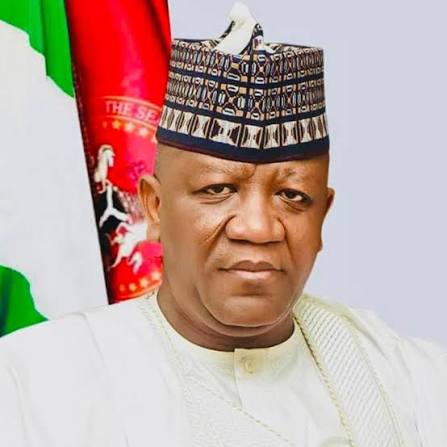
The Yoruba Youth Council (YYC), a foremost organization advocating for the interests, unity, and cultural integrity of Yoruba youth, has vehemently opposed the planned conferment of the Obaloyin of Yorubaland title on former Zamfara State Governor and current Senator Abdulaziz Yari Abubakar by the Alaafin of Oyo.
In a statement released today, YYC President Dr. Adebayo Ogunleye described the decision as a grave misstep that risks undermining the cherished Yoruba values of integrity, moral uprightness, and communal responsibility.
He said: “Yorubaland has always honoured individuals who embody the spirit of omoluabi – those whose character and actions reflect excellence, accountability, and the protection of life and property.
“Bestowing a title as exalted as Obaloyin, which signifies guardianship and military command, on someone with a deeply controversial record sends a dangerous signal to our youth and communities.”
The Council highlighted the unprecedented escalation of banditry and insecurity in Zamfara State during Senator Yari’s governorship from 2011 to 2019.
The group said this period saw thousands of lives lost, widespread displacement, and communities living in constant fear.
It added that persistent allegations have linked Yari to some of the very elements responsible for the violence, including claims of meetings with notorious bandits and allegations of political protection or complicity.
“Banditry did not emerge in a vacuum,” Dr. Ogunleye stated. “It thrived in an atmosphere where questions of oversight and accountability at the highest levels were raised repeatedly.
” We cannot ignore this history when considering someone for a title that represents the guardian of the realm.”
The YYC also drew attention to the numerous corruption allegations that have trailed Senator Yari, including probes by anti-graft agencies, property forfeitures, and claims of misappropriation of billions of naira during his tenure.
According to the group, such accusations, involving alleged fraud, illegal resource exploitation, and mismanagement of public funds, stand in direct opposition to the Yoruba philosophy of transparency, equity, and selfless leadership.
“How can we, as a people who value hard work and moral rectitude, celebrate wealth and power whose origins are shrouded in controversy?” Ogunleye asked.
“This does not reflect the Yoruba ideal of leadership that uplifts the community rather than exploits it.”
The Council further warned that the Southwest is already facing serious security challenges from herdsmen-related violence, including killings, kidnappings, and destruction of farmlands.
“Honouring individuals whose leadership is associated with the rise of similar banditry in other parts of the country risks sending a message that such conduct is tolerable,” the statement read.
“We must not normalize or glorify behavior that endangers lives and livelihoods. Our youth deserve role models who protect and unite, not those whose legacies are stained by insecurity and ethical questions.”
The Yoruba Youth Council called on the Alaafin of Oyo and all Yoruba traditional leaders to reconsider the conferment of these titles.
“True cultural bridge-building must be rooted in unimpeachable character and a proven commitment to peace, justice, and the welfare of the people,” Dr. Ogunleye concluded.
The Council urged Yoruba youth across the country to remain vigilant and united in defending the sanctity of their cultural heritage.
“We will continue to advocate peacefully for values that reflect our proud identity. Titles should inspire, not divide or endanger.”
society
Stand Firm Against Discouragement: Why Every Delay Builds Discipline, Every Challenge Refines Character and Every Setback Prepares a Wiser Tomorrow
Stand Firm Against Discouragement: Why Every Delay Builds Discipline, Every Challenge Refines Character and Every Setback Prepares a Wiser Tomorrow.
By George Omagbemi Sylvester | Published by saharaweeklyng.com
“How PATIENCE, PERSEVERANCE and PRINCIPLED ENDURANCE turn HARDSHIP into STRENGTH and TRANSFORM STRUGGLE into LASTING PROGRESS.”
No matter where you are today, do not surrender to discouragement. This is not a motivational cliché whispered to soothe broken spirits; it is a timeless principle supported by history, psychology, philosophy and lived human experience. Every generation that has achieved meaningful progress (personally or collectively) has done so not by avoiding hardship, but by confronting it with discipline, resilience and clarity of purpose. Delays are not denials. Challenges are not curses. Setbacks are not verdicts. They are formative processes that prepare the human mind and character for something greater.
Discouragement is one of the most dangerous enemies of progress because it convinces people to abandon the journey too early. It magnifies temporary difficulties into permanent defeat and turns momentary failure into lifelong regret. Yet history repeatedly shows that those who endure discouragement (who refuse to surrender their resolve) often emerge stronger, wiser and better prepared for leadership, innovation and service.
Delay as a School of Discipline. It is one of life’s most misunderstood teachers. In an age obsessed with instant gratification, waiting is often framed as weakness or misfortune. In reality, delay is the training ground of discipline. It forces individuals to master self-control, patience and long-term thinking. Psychological research on delayed gratification demonstrates that the ability to wait, plan and persist is strongly linked to improved decision-making, emotional regulation and life outcomes.
Discipline is not formed in moments of abundance; it is forged in seasons of waiting. When progress seems slow and results invisible, the disciplined individual learns consistency over comfort. Delays strip away entitlement and cultivate humility. They teach people to work without applause, to prepare without guarantees and to remain faithful to process even when rewards are postponed.
The great philosopher Aristotle once observed that EXCELLENCE is not an ACT but a HABIT. Delay forces the repetition that builds habit. Each day of disciplined effort (despite uncertainty) strengthens the internal structure required for lasting success. Those who escape discipline during delay often collapse when success finally arrives.
Challenges as Refiners of Character. Character is not revealed in ease; it is refined in adversity. Challenges test values, beliefs and integrity. They expose weaknesses not to shame us, but to show us where growth is required. Every challenge carries a question: Will you ADAPT, LEARN and ENDURE or RETREAT?
History is unambiguous on this point. Leaders, thinkers, reformers and innovators were shaped by resistance. Nelson Mandela’s moral authority was not born in comfort but refined through decades of imprisonment. Abraham Lincoln’s depth of wisdom was forged through repeated political failures and personal loss. These figures were not extraordinary because they avoided difficulty, but because they allowed difficulty to deepen them rather than destroy them.
Modern psychology affirms this truth through the concept of resilience and post-adversity growth. Individuals who confront hardship with reflection and purpose often develop stronger coping skills, deeper empathy and clearer priorities. Challenges, when rightly interpreted, become instruments of refinement. They teach patience, courage and moral clarity with qualities no classroom can fully impart.
Setbacks as Preparation, Not Punishment. A setback is not proof of incompetence; it is evidence of engagement. Those who never fail are often those who never try. Setbacks provide feedback with honest, sometimes painful, but invaluable. They reveal what does not work, what needs adjustment and what must be strengthened.
Carol Dweck’s work on mindset demonstrates that individuals who view failure as a learning process (rather than a personal indictment) are more likely to improve performance and persist. This growth-oriented perspective transforms setbacks into stepping stones. Each fall becomes a lesson. Each mistake becomes instruction.
Setbacks also cultivate wisdom. Wisdom is not mere knowledge; it is understanding shaped by experience. A person who has stumbled learns caution without fear, confidence without arrogance and ambition without recklessness. Such wisdom cannot be inherited or rushed but it is earned through setbacks survived and lessons applied.
The Inner Architecture of Perseverance. Perseverance is not blind stubbornness; it is disciplined endurance guided by purpose. Scholar and psychologist Angela Duckworth describes this quality as “GRIT”—the sustained passion and perseverance for long-term goals. Grit is what enables individuals to remain committed when motivation fades and obstacles multiply.
Perseverance requires structure. It thrives on routines, accountability, reflection and rest. It is sustained not by emotion, but by conviction. Those who endure understand that progress is often invisible before it becomes undeniable. They commit to daily effort, trusting that consistency compounds even when results are delayed.
Neuroscience reinforces this truth. The human brain is capable of change through repetition and effort with a phenomenon known as neuroplasticity. Each disciplined action strengthens neural pathways associated with focus, resilience and problem-solving. In essence, perseverance reshapes the brain, making future endurance easier and more effective.
Meaning as the Antidote to Discouragement. Austrian psychiatrist and Holocaust survivor Viktor Frankl offered one of the most profound insights into human endurance: meaning sustains life even in suffering. According to Frankl, when individuals find meaning in their struggle, they can endure almost any hardship.
Discouragement thrives where meaning is absent. When effort feels pointless, the spirit collapses. But when struggle is linked to purpose (family, legacy, service, faith or contribution) endurance becomes possible. Meaning transforms pain into sacrifice and delay into preparation.
This is why those who stand firm are often guided by something larger than themselves. They endure not because the road is easy, but because the destination is worthy.
A Call to Stand Firm. To stand firm is not to deny pain or pretend strength. It is to acknowledge difficulty without surrendering to it. It is to keep moving when progress is slow, to keep believing when outcomes are uncertain and to keep learning when mistakes occur.
Progress is rarely linear. It is often messy, uneven and delayed. It is inevitable for those who persist intelligently and ethically. Every delay builds discipline. Every challenge refines character. Every setback prepares a wiser tomorrow.
This is the unglamorous truth of growth. It demands patience, humility and courage. Yet it is the path walked by all who leave a meaningful mark on the world.
No matter where you are today, I ask that you stand firm. The work is not wasted. The struggle is not meaningless. And the future is still listening to the choices you make now.
George Omagbemi Sylvester writes on leadership, society, resilience, and human development. This article is published by saharaweeklyng.com
society
Ben Okezie Kalu: The Lawmaker in Our Hearts
Ben Okezie Kalu: The Lawmaker in Our Hearts- By Kassim Omomia
We have watched Ben Okezie Kalu the deputy speaker of the House with all admiration. He exudes humour, humility and hardwork.
Kalu did not catch our glimpse from the wrong side but from a prism of competence, dedication and above all patriotism in his legislative duties. Even though we may not have a full grasp of Okezie’s elementary political life up till his ascension to the exalted office of Deputy speaker, House of Representatives, Federal Republic of Nigeria, but it is on record that he served extremely well and meritoriously when as a first time member of the House of Representatives he was chairman Media and Publicity committee, doubling as spokesperson and image maker.
Okezie stirred the House public outlook to the approval of Nigerians and the outside world,comparing that unit of the Nigerian bicameral legislature he managed its image to world parliaments, like the US Congress and the British House of Common,among others. At home, the House of Representatives earned “the Peoples Parliament” accolade “.
Recalling Okezie’s past,the nostalgia breeds excitement and a continuous commitment to legislative and representatives’ service to his people and the country.
Albeit these well delivered services, his underscoring accomplishments were reinforced by his promotion and advancement to the post of Deputy Speaker House of Representatives, a divine elevation to yet, many exalted offices to come.Kalu qualifies to be governor, and Vice President, even the President of this great country ,if young men are roundly supported for such enviable positions.
Notwithstanding, his Bills , motions are not watery but of immense value to democratic governance, systemic reforms and overall growth and welfare of Nigerians. Call it democratic dividends, the Bende constituents have never had it so good, until now. Similarly his quest for a people’s constitution brings to fore his worthy contributions in the current alteration of the1999 Constitution exercise which he midwife’s for the House of Representatives. He speaks continually about a people’s inclusiveness in people’s document. He speaks about equity, justice and fairness for all. He’s concerned about security, a community policing strategy where states look critically into domestic security and policing. Okezie speaks for all: about good life for Nigerians, not only the Abia people he represents.
Curiously, I have also come in good terms and stead with his leadership style, especially his legislative prowess in presiding, either as Speaker in Chair or Chairman at the Committee of Whole”,a serious and critical aspect of legislative business, where reports become laws made by the parliament. At this critical level of legislative engagement, Ben Okezie Kalu has performed extremely well ,surpassing past deputies. This scoring is without prejudice or gainsaying but with all modesty.
I have written about parliamentary activities,from plenary to investigative hearings, to deliberations and considerations of reports , either in Committee of Supply for money issues -budgets etc, since 2000. I have also been privileged to sit for longer periods listening from the gallery, deliberations at the “Committee of Whole’, a tedious and significant session of legislative processes and never seeing a deputy speaker as pragmatic and intelligent like Kalu. it takes a Chair that is not lazy but with dexterity, humility, patience and resilience to succeed in any report consideration at the “Committee of Whole”.And one former deputy speaker who comes close to Kalu in assesment was Hon Lasun.But with this current Deputy Speaker, the magic wand to navigate these trying moments where every member appears uninterested in their legislative function, is unprecedented.
Two manoeuvres that beat my imagination and exhibit Kalu’s superb style is his smooth management of deliberations and final consideration of the 2025 Electoral.Amendment Bill and the passage of the 2026-2028 MTEF and FSP, on Thursday December 18 2025, few moments to the 2026 Budget presentation by President Ahmed Tinubu to the joint session of the National Assembly.
His mental alertness, understanding of the subject matter, his assessment of the mood and psyche of the members and his strategic demeanour coupled with the patience and resilient approachas well as his humility, diplomacy in getting an unwilling session sit for hours, unknowingly to the members that they had sat for so long and passed a record two critical national assignments, still leaves even the members amiss how it began but ended well.
For over two weeks now, there have been several adjournments to consider the Electoral amendment Bill. The constraints at times point to the inconsequential number of members in session , or when there’s a seeming quorum, inertia and unwillingness sets in.
According to checks, members’ lacklustre attitude in these ending times, come from failed promises from the executive branch such that it was gathered that the lawmakers were adjourning for the yuletide break without cash -backings.This development not only worries the legislators who are at a loss over how to satify their insatiable constituents during the Christmas festivities, but has resulted to the lethargy displayed by them in carrying out their statutory duties of law making . Fears are that, the members may not chorus “on your mandate we stand”, going forward, especially on 19 Friday December 2025, when the President presents his 2026 budget to the joint session of the National Assembly
While the outcome of that session is awaited, the success gained in the House of Representatives for completing and finally passing the MTEF/FSP in record time and upon which premise President Tinubu submits the 2026 Appropriation Bill, after the Senate hurriedly put out their own since Tuesday evening,underscores the goodwill the deputy speaker enjoys from his colleagues,expectedy due to his humility and resilience,such that in over six- unstoppable hours, he successfully managed a tensed session to effectively pass the MTEF and Electoral.amenment Bill. This is all kudos to a young PAN- Nigerian legislator in our hearts
That Ben Okezie Kalu displays an uncommon leadership acumen, which promotes unity and which with he won the hearts of all who sat in plenary on that faithful Thursday 18 2025,is an understatement . This is so because all the lawmaker at that Thursday session,wether Hausa, Fulani, Yoruba,Edo, TIV ,Idoma,Gbagy and of course Ibo were in sync with, aligning with his master stroke with which he chaired that earlier unpredictable session that later became a huge success. I have a dream that Ben Okezie Kalu shall accomplish more in his political career, given his character, competence and leadership capacity.
He will excel beyond this time, tide and position. Ben Okezie Kalu is the lawmaker in our hearts and qualifies for our award as ‘ A Legislature- Exemplar’ even as we watch him deliver again during the final voting of the alteration to the 1999 constitution ( As Ammended) in the days to come
Kassim Omomia of the Bigeyeonline writes from Abuja
society
South Africa’s Sovereign Stand: Defending Deportation of Kenyan Nationals and Rebuking U.S. Allegations
South Africa’s Sovereign Stand: Defending Deportation of Kenyan Nationals and Rebuking U.S. Allegations.
By George Omagbemi Sylvester | Published by SaharaWeeklyNG.com
In a world where national sovereignty increasingly collides with global geopolitical muscle-flexing, South Africa’s recent deportation of seven Kenyan nationals (and its rebuff of allegations emanating from the United States) stands as a defining moment in African statecraft. The incidents have not only ignited diplomatic tensions between Pretoria and Washington, but they have also exposed the fault lines of immigration sovereignty, foreign interventionism, and the rule of law in international relations.
The uproar centers on South Africa’s lawful arrest and deportation of seven Kenyan nationals who were found working without valid permits at an immigration application centre in Johannesburg. The facility was linked to the processing of refugee applications for the United States (particularly for white South Africans under a controversial U.S. resettlement programme) and has since become the fulcrum of a diplomatic dispute.
A Lawful Enforcement Action Met With Foreign Accusation. On 16 December 2025, in an intelligence-driven operation, South Africa’s Department of Home Affairs (DHA), in cooperation with law enforcement partners, raided an immigration processing centre in Johannesburg where seven Kenyan nationals were found engaging in work while holding tourist visas. According to official statements, these individuals had previously applied for lawful work permits (requests that had been denied) yet continued to work in violation of the terms of entry into the country.
Home Affairs Minister Leon Schreiber later confirmed that the seven were issued deportation orders and banned from re-entry into South Africa for five years. He emphasised that the operation was conducted in strict compliance with South African immigration laws and that no United States officials were arrested during the process, which did not take place on a diplomatic site.
Yet, the United States (through statements issued by the U.S. State Department) accused South African authorities of detaining American personnel and unlawfully publicising personal information of U.S. officials. Washington cautioned that failure to hold those responsible to account could lead to “SEVERE CONSEQUENCES.”
South Africa has categorically rejected these allegations.
In a statement issued by the Ministry of International Relations and Cooperation (DIRCO), Pretoria labelled the suggestion of data exposure or harassment of U.S. officials as unfounded and devoid of credible evidence. The government reiterated that matters of data security are treated with “UTMOST SERIOUSNESS” and governed by established legal and diplomatic protocols. It underscored its commitment to principled diplomacy grounded in mutual respect and factual dialogue.
Sovereignty and the Rule of Law: Defending. Constitutional Mandates
South Africa’s position is not merely a defensive posture; it is an assertive declaration of state sovereignty and adherence to its legal framework. As DIRCO’s official statement put it, “The government will not negotiate its sovereignty and the implementation of the rule of law.”
This declaration resonates with foundational principles of international law. Sovereignty (the absolute authority of a state to govern its territory and enforce its laws) is a bedrock norm recognised universally. South Africa’s enforcement of its immigration statutes, particularly concerning who may work within its borders and under what conditions, is a legitimate exercise of that sovereign authority.
Professor Steven Friedman, a respected South African political analyst, argues:
“A sovereign state must, at all times, uphold the primacy of its laws. No amount of external pressure (even from powerful allies) should compromise that obligation.”
Furthermore, immigration violations are not trivial administrative infractions. They concern questions of national security, labour regulation, public order, and fairness in the administration of visas and permits. South African law (like that of other sovereign states) stipulates that work without a permit is a prosecutable offence, irrespective of the employer or perceived humanitarian objectives of foreign entities.
Foreign Programmes and Uneasy Diplomatic Terrain. The controversy is exacerbated by the highly politicised backdrop of the U.S. refugee programme at the centre of this incident. Under the administration of President Donald Trump, the United States dramatically reshaped its refugee policy, instituting a low cap on global admissions and prioritising special arrangements for white South Africans who claim racial persecution under domestic policies like Black Economic Empowerment. These claims have been widely disputed both within South Africa and by international legal scholars.
In legally robust terms, South Africa does not recognise white South Africans as refugees and a category reserved for those who face persecution based on race, religion, nationality, political opinion, or membership in a particular social group, as defined under the 1951 UN Refugee Convention. No credible evidence supports claims of state-sanctioned persecution of white citizens.
Dr. Michael Schmidt, a scholar of international refugee law, states:
“A host state must not become complicit in the redefinition of persecution criteria for political convenience. Refugee status is a legal category and not a political bargaining chip.”
The fact that the centre in question was engaged in processing such applications (and that foreign workers were present without proper authorisation) raised legitimate concerns for South African authorities about the legality and diplomatic propriety of the operation.
Diplomatic Engagement: Rejecting Threats, Embracing Dialogue. Despite the tension, South Africa has not shut the door on diplomacy. DIRCO has asserted that it has engaged the United States through official channels to clarify the allegations and to ensure that future interactions respect both countries’ legal frameworks and mutual interests.
In the words of Ambassador Ebrahim Rasool, South Africa’s Permanent Representative to the United Nations:
“Diplomacy is not conducted through threats or unilateral declarations. It requires dialogue rooted in facts, mutual understanding, and respect for sovereign law.”
This approach reflects a mature understanding of statecraft. South Africa is neither isolationist nor adversarial by default, but it will push back against narratives that compromise its legal autonomy.
Contextualising the U.S. Response. The United States’ sharp reaction (including threats of “severe consequences”) stems from multiple sources. Washington is sensitive to perceived challenges to its global leadership, especially where humanitarian or refugee programmes are involved. Moreover, the political utility of the Afrikaner refugee narrative within certain U.S. domestic constituencies has amplified tensions. However, diplomacy that favours ideological narratives over legal realities cannot withstand scrutiny in the global arena.
Renowned international law expert Professor Fatima Hussain encapsulates the issue succinctly:
“International cooperation cannot thrive on the assumption that might makes right. Respect for legal norms must transcend political posturing.”
Sovereignty on Trial: A Landmark Moment for Principle and Law. South Africa’s handling of the deportation of Kenyan nationals (and its decisive rejection of unfounded allegations) serves as a reminder that the rule of law cannot be subordinated to geopolitical pressure. In an era where powerful nations often wield influence over weaker states, Pretoria’s forthright stance affirms that sovereignty and legal order remain paramount.
More than an immigration enforcement action, this episode is a litmus test of the principles that underpin just international relations. It calls on African nations (and indeed all states) to defend legal sovereignty, resist external coercion, and uphold dignity in diplomatic engagement.
As the dust settles, the conversation must move beyond partisan headlines and confront the substantive issues at stake: legitimate law enforcement, respect for sovereign borders, and an international system governed not by unilateral threats, but by shared commitment to law, order, and mutual respect.
-
Politics6 months agoNigeria Is Not His Estate: Wike’s 2,000‑Hectare Scandal Must Shake Us Awake
-
society6 months agoJUSTICE DENIED: HOW JESAM MICHAEL’S KINDNESS WAS TURNED AGAINST HIM
-
celebrity radar - gossips4 months agoWhy Babangida’s Hilltop Home Became Nigeria’s Political “Mecca”
-
society4 months agoPower is a Loan, Not a Possession: The Sacred Duty of Planting People