
Politics
You are ignorant of Judiciary Jurisprudence’ — Labour Party Blast Prof. Chidi Odinkalu, Julius Abure Over Inpurging On Justice Integrity

‘You are ignorant of Judiciary Jurisprudence’ — Labour Party Blast Prof. Chidi Odinkalu, Julius Abure Over Inpurging On Justice Integrity
The Labour Party, LP has blasted Prof. Chidi Odinkalu and Julius Abure over their umprging of justice integrity today 1st of December, 2023.
According to the statement made available to newsmen, signed by Dr Abayomi Arabambi (FBAU), National Publicity, Secretary Labour Party, Said, “The attention of Labour party was drawn to a disparaging comments credited to the former chairman of Chairman of the National Human Rights Commission (NHRC), Prof Chidi Odinkalu, where he allegedly described the Supreme Court’s failure to present a documented judgment on the appeal of the Labour Party’s presidential candidate in the 2023 general elections, Peter Obi, as a “Supreme scandal and height of judicial malefaction.”
He said wouldn’t had bothered to dignify the reckless statement from the Illegal Labour leadership and their co traveler Prof Chidi Odinkalu but because they continue to pretend and mislead members of the public with their intellectual sophistry and claims of winning the 2023 presidential election which is a false narratives that they have the Horn of a horse.
Also, He said with this kind of unexpected expensive insults coming from a man who ought to know , then the remnants Labour party under Julius Abure a man that has been restrained by the FCT high court for Perjury, criminal conspiracy, Forgery and impersonation on April 5th 2023 from parading himself as National Chairman of our party is trying to excel in corrupt tendencies and Setting a record that is yet be beaten by any political party.
“For the benefit of the general public, the Apapa led National Working Committee of our great Party wishes to set the records straight as this political hawks are trying their best to impugn on the credibility of the justices of the supreme Court.”
“The Supreme Court held that the judgment in the appeal filed by Labour Party will abide by the judgment delivered in the PDP case.
The reason for this is very simple. The Supreme Court having carefully considered all the issues raised by both parties in the two appeals saw that they were the same.
The facts were the same and the arguments were even substantially the same. It will serve no utilitarian value for the court to write two judgments on facts and issues that are entirely the same.
The Supreme Court does not have to conduct a special proceedings first to be able to do that. It’s a matter of procedure and having held that the Obi’s appeal will abide by the decision of the Atiku’s case, this implies that the judgment delivered in Atiku also qualify as Obi’s judgment.
There is no need in law for the court to prepare a different judgment for Obi or Labour Party. It will be cosmetic surplusage for the court to prepare a different judgment for LP or Obi.
Please, Peter Obi and his followers should please be guided.” He said.
ON THE BLAND , EMPTY AND BITTERED ALLEGATIONS AGAINST THE JUSTICES OF COURT OF APPEAL AND FEDERAL HIGH COURT OVER JUDGEMENT OF ENUGU STATE GOVERNORSHIP QUAGMIRE
Arambambi said, The Apapa led Labour party National Working Committee was shocked by the infantile statement credited to the failed leadership under Former National Chairman Julius Abure where he said that the Governorship Candidate of the Peoples Democratic Party, PDP, during the last Governorship Election in Enugu State, Mr Peter Mbah, should be sacked by the court, stating it clearly that Peter Mbah forged his NYSC Certificate.
“Abure committed a judicial somersault and rascality with his conclusions that the Labour Party tendered the evidence that confirmed that the Enugu State governor, Mr Peter Mbah attached a forged NYSC Certificate to his EC9 form and that the Tribunal and the appeal court didn’t consider its evidence because the form EC9 tendered by INEC confirmed the said NYSC Certificate attached was forged
May we remind Julius Abure that his recent characters and comments with respect to various court judgement is worrisome and his legal qualities and qualifications as a lawyer is now in doubt and we called on Nigeria Bar Association to urgently investigate him
In an unanimous decision delivered by the three-member court of Appeal panel led by Tani Yusuf-Hassan dismissed three issues raised by the Labour party candidate
The panel held that the Labour Party (LP) and its governorship candidate failed to provide sufficient evidence to prove that Mbah was not qualified to contest the election.
On the allegation of over-voting, Yusuf-Hassan held that the appellants failed to present the “voters’ register” before the lower tribunal and that the judge noted that failure to submit the voters’ register rendered the appeal inadmissible.
The court also held that the witnesses presented by the appellants did not sufficiently prove the existence of over-voting in the governorship election.
Consequently, the appeal court dismissed the suit for lacking merit and affirmed the judgement of the election tribunal which declared Mbah as the winner of the March 18 governorship election.
In another judgement delivered by Hon Justice Ekwo of the Federal High court ABUJA , the judge held that the certificate presented to the Independent National Electoral Commission (INEC) by Mr Mbah was authentic and validly issued by the NYSC and that evidence before the court showed that the governor, though was mobilised for service in 2001, he only completed his service in 2003.6 Nov 2023
The court this dismissed the allegation of forgery against the Enugu State Governor, Peter Mbah and imposed a fine of N5 million on NYSC for alleging that the corps’ discharge certificate held by Mbah was fake and also held that the certificate was authentic and validly issued by the NYSC were this guilty of misrepresentation of material facts.
The court held that with the unchallenged evidence of the plaintiff on how the discharge certificate was issued to him in 2003 by NYSC after serving in a law firm in Lagos and the inability of the Corps to come up with counter-evidence, it was crystal clear that the plaintiff served the mandatory one-year service.
Justice Ekwo held that the onus to prove forgery allegations lies heavily on the NYSC, stating that the organisation failed in that regard.
The court found that Mbah’s evidence was heavier and more believable.” He added .
However, He said the National Working Committee of Labour party under the Leadership of Alh Bashiru Lamidi Apapa therefore urge the general public to dismissed this phantom and baseless Allegations Judgement of court are entirely base on constitutional provisions and has nothing to do with the justices.
It is important to put the record straight that judgement of both courts and their implementations thereof are a function the constitution and not the office or person of the justices
The Honourable justices of the Federal High Court and the Court of Appeal can not therefore be held responsible for the ineptitude , impunity and gross incompetence of Julius Abure led illegal faction of Labour party as it is rightly known.
“It is, therefore, incongruous and antithetical to common sense to think that the Honourable Justices of Federal High Court and the Court of Appeal will relies on public sentiments , speculation or hearsay against constitutional provisions in the 1999 constitution as amended to deliver their judgement
The allegation does not represent the true position of things as far the Constitution of Nigeria is Concerned. He concluded.




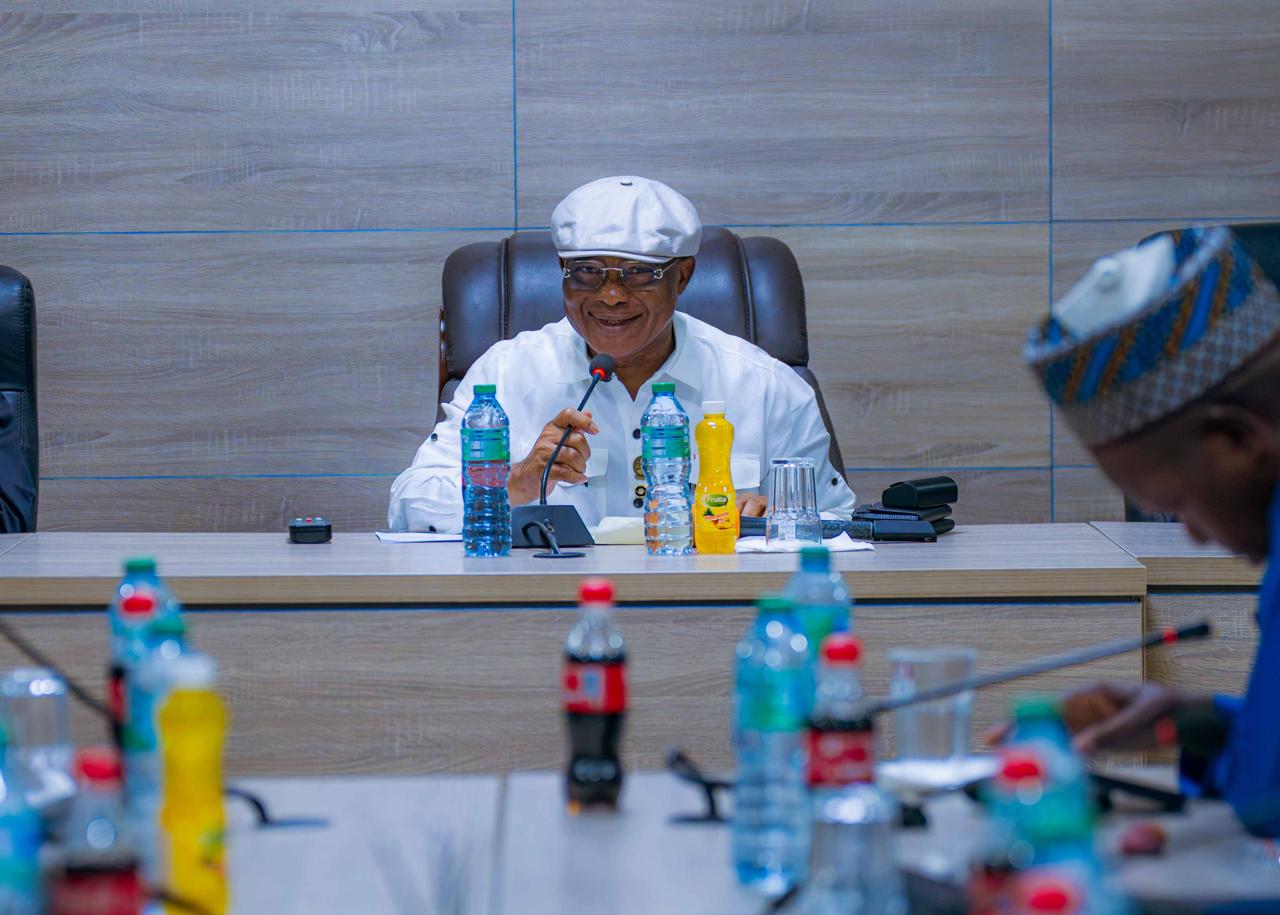
*Renewed Hope Ambassadors Step Into the Next Phase
Fresh from the successful APC 2026 National Convention, the Renewed Hope Ambassadors National, Zonal, and State leadership gathered in Abuja over the weekend, for its fourth strategic meeting, setting the tone for nationwide grassroots activation ahead of 2027.
Chaired by Governor Hope Uzodinma (Imo State) the Director General and National Coordinator of the Renewed Hope Ambassadors, alongside Deputy Director-General, Governor Uba Sani of Kaduna State, and Governor Inuwa Yahaya of Gombe State as Secretary, the session reinforced one clear direction: One Party. One Message. One Mobilization whilst also laying out a strategic roadmap for the activation of the network across all communities in Nigeria.
Backed by the strength of 31 APC-led states, the Renewed Hope Agenda is taking Bola Ahmed Tinubu’s message of progress and reform to every corner of Nigeria.
From bold economic restructuring to initiatives like NELFUND, the increase in the national minimum wage from ₦30,000 to ₦70,000, and strategic investments in critical sectors, including PNiCGI, the mission remains clear: helping Nigerians understand both the purpose and the progress of the Renewed Hope vision.
This is coordination at scale. This is grassroots engagement with purpose. This is the next phase of Renewed Hope with One Party, One Message, and One Mobilisation framework
#RenewedHopeAmbassadors #APC #WeAreAPC


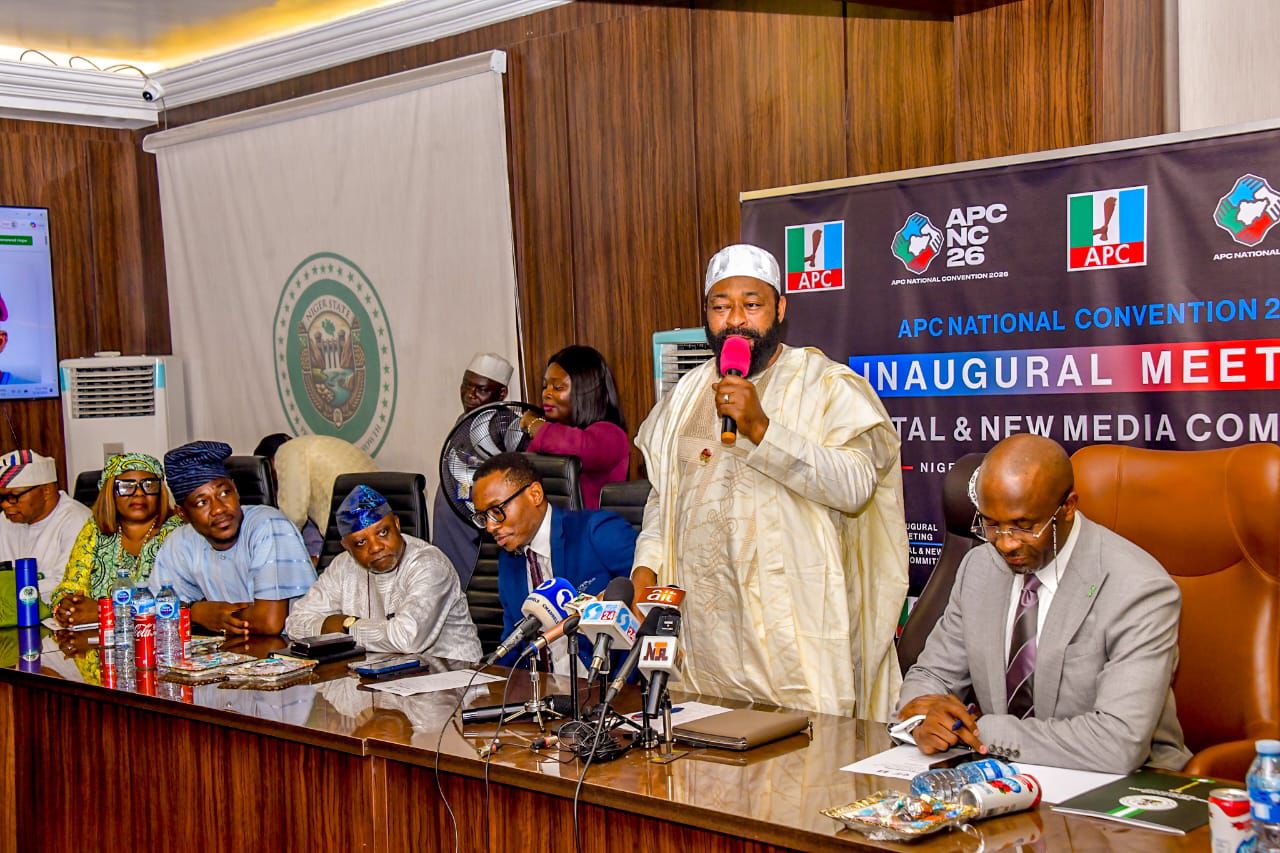
Governor Bago Inaugurates APC Digital Media Sub-Committee Ahead of National Convention.
Governor Umaru Bago has inaugurated the Digital Media Sub-Committee for the forthcoming National Convention of the All Progressives Congress (APC), scheduled to hold on March 27 and 28, 2026 in Abuja.
Chairing the sub-committee, Governor Bago tasked members with the responsibility of effectively communicating the party’s manifesto to the public.
He emphasized the need to leverage social media platforms to highlight the achievements and ongoing efforts of President Bola Ahmed Tinubu, noting that communication gaps have posed challenges that must now be decisively addressed.
The Co-Chair of the sub-committee, Hon. Benjamin Kalu, Deputy Speaker of the House of Representatives, echoed the Governor’s position, urging members to project the activities of both the party and the government to a broader audience.
He called for a deliberate and coordinated effort to showcase the party’s achievements and policy direction, stressing the importance of shaping a compelling and consistent narrative across all digital platforms.
Delivering a presentation to the committee, Otega Ogra, SSA to the President on New Media, who serves as Secretary of the sub-committee, outlined strategic focus areas to guide the team’s operations.
His presentation highlighted communication priorities and actionable steps to achieve the committee’s mandate and strengthen the party’s digital engagement.


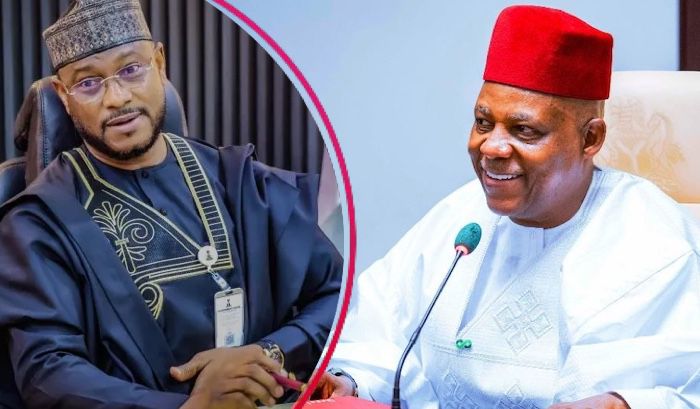
VP Shettima Set to Lead Delegation to Zamfara as Governor Dauda Lawal Formally Joins APC
The Zamfara State chapter of the All Progressives Congress (APC) has finalized plans to receive Vice President Kashim Shettima for the formal defection and reception of Governor Dauda Lawal into the ruling party, scheduled to take place on Tuesday.
State APC Chairman, Tukur Danfulani Maikatako, disclosed this during a high-level stakeholders’ meeting held in Gusau, the state capital. He noted that the Vice President would be joined by the party’s national leadership to mark what he described as a landmark political realignment in the state.
Maikatako expressed the party’s excitement over Governor Lawal’s return, recalling that Zamfara had historically been an APC stronghold and that the Governor was previously a bona fide member of the party before his earlier exit.
“We all know that Zamfara has long been one of the APC’s stronghold states, where the defected Governor was once a bona fide member. Now that he has decided to return home, having been satisfied that the APC remains his second choice after the one he left for obvious reasons,” Maikatako stated.
The Chairman called on all party faithful across the 147 wards in the state’s 14 local government areas to turn out en masse to honour the Vice President’s visit. He emphasized that the event was strategically positioned to bolster the party’s popularity and strengthen its structures ahead of the 2027 general elections.
In a strong appeal for unity, Maikatako urged members to set aside all factional tendencies, stressing that the APC remained one political family with shared goals, particularly the ambition to make Zamfara and Nigeria great again.
Echoing similar sentiments, a former state APC Chairman, Lawal M. Liman, appealed to members to cascade the message to their wards and local government areas. He reinforced the need for cohesion, noting that the party’s collective strength would be critical to achieving success in future elections.

All eyes are now on Gusau as the ruling party prepares for a high-profile political gathering expected to further consolidate its influence in Zamfara State.


-

 society6 months ago
Religion: Africa’s Oldest Weapon of Enslavement and the Forgotten Truth
-

 news4 months ago
WHO REALLY OWNS MONIEPOINT? The $290 Million Deal That Sold Nigeria’s Top Fintech to Foreign Interests
-

 society6 months ago
“You Are Never Without Help” – Pastor Gebhardt Berndt Inspires Hope Through Empower Church (Video)
-

 celebrity radar - gossips2 months ago
Dr. Chris Okafor Returns with Power and Fire of the Spirit -Mounts Grace Nation Altar with Fresh Anointing and Restoration Grace on February 1, 2026