
society
Your Office Is Not a Playground, Minister Wike: APC Demands Your Resignation and a Return to Rivers Politics

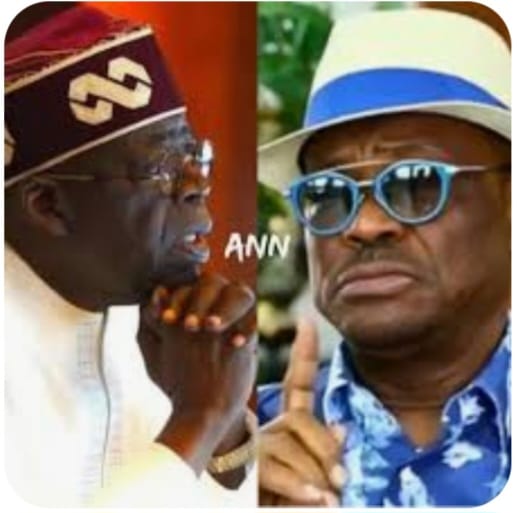
Your Office Is Not a Playground, Minister Wike: APC Demands Your Resignation and a Return to Rivers Politics.
By George Omagbemi Sylvester | saharaweeklyng.com
“Why insisting that a former PDP governor serving in an APC government must choose between party loyalty or chaos is vital for democratic integrity and political sanity.”
Nigeria’s political theatre has seldom been short on drama and yet the latest salvo exchanged between the All Progressives Congress (APC) and the Federal Capital Territory (FCT) Minister, Nyesom Wike, marks something beyond ordinary political tiff. It exposes a deeper crisis of legitimacy, loyalty and constitutional order in the conduct of public office holders who straddle party lines and seek to influence the affairs of opposing party structures.
On January 5, 2026, APC National Secretary Senator Ajibola Basiru publicly demanded that Wike resign his ministerial appointment, warning that it is incompatible for him to remain in the Federal Executive Council of an APC government “and be causing confusion within any organ or structure of the party at any level.” Basiru explicitly argued that Wike “cannot bring the spirit of PDP into the APC,” and insisted that if he wishes to pursue Rivers State politics, he should leave the cabinet and do so unabashedly on his own turf.

This demand is not mere rhetoric but it is rooted in constitutional norms, political ethics and the moral imperative of democratic cohesion. What the APC’s call underscores is this: political actors cannot selectively switch roles, borrow the authority of one party to influence another, and then cry foul when restrained. Nigeria’s fragile democracy cannot endure such ambiguity.
Wike’s Dual Role: A Contradiction in Terms.
Nyesom Wike’s political resume is impressive by any measure: a former two-term governor of Rivers State and a key figure in the Peoples Democratic Party (PDP), he has enjoyed political survival and influence that few Nigerians have matched. Yet his current position as the Minister of the Federal Capital Territory in an APC-led government presents an inherent contradiction when he uses that platform to wade into intra-party affairs in Rivers.
Basiru’s argument is not about personal animosity. It is about political coherence and the idea that a ministerial appointee of one party should not be a ghost in the corridors of another’s leadership cockpit. As Basiru reminded the public, Wike’s support for President Bola Ahmed Tinubu does not make him an APC member: “Millions of non-APC Nigerians also support Mr. President and his own is no different.”
This is an important distinction. Political support for a sitting president does not equate to party membership or allegiance. It is one thing to vote for a leader’s policy; it is another to interfere in the internal party mechanics of his political opponents while serving at the highest level of government.
This dilemma (a monopolisation of influence across political boundaries) is precisely what scholars warn against when they talk about institutional integrity. According to political scientist Dr. Samuel M. Makinde of the University of Ibadan, “The essence of party democracy is the clear demarcation of organisational structures and the autonomy of party actors. When actors blur these boundaries, they undermine internal discipline and weaken democratic competition.”

Wike’s interference in Rivers politics (particularly in the leadership tussle involving Governor Siminalayi Fubara and other party operatives) is exactly this kind of boundary-blurring. Whether one views his actions as strategic rescue or partisan sabotage, the optics are clear: a minister in an APC administration acting as though he remains the de facto leader of the Rivers PDP.
Why APC Is Right to Insist on Resignation.
Political parties are (by design) autonomous organisations. They are built on shared ideology, membership loyalty, and internal protocols. A cabinet minister, by contrast, holds executive power derived from the president and the constitution. These roles are not only different; they are structurally incompatible when fused in service of competing political ends.
Basiru’s demand for Wike’s resignation is bolstered by a fundamental principle of good governance: accountability and clarity of roles. Ministerial appointments are offices of public trust, not ethnic or party turfs to be wielded for partisan advantage. Forcing a minister to choose between serving the nation through the cabinet and pursuing state politics reduces the risk of conflicts of loyalty that derange governance.
Furthermore, Wike’s recent warning to APC leaders to “stay out of Rivers politics” (framing the state as a “no-go area”) only fuels the perception that he seeks to shield his political network from legitimate scrutiny and competition.
This kind of rhetoric does little for national unity or institutional integrity. It worsens factionalism and promotes political tribalism, conditions that weaken party structures, distort electoral democracy and stall policy progress.
In the words of Nigerian legal scholar Professor Ayo Olukotun, “Public office holders are custodians of the people’s trust, not personal fiefdoms. When they wear multiple political hats simultaneously, the risk of bias, divided loyalty, and policy incoherence rises sharply.”
PDP Spirit vs APC Structure: Beyond Semantics.
Basiru’s phrase about not allowing the “spirit of PDP” into the APC is more than political hyperbole. It hits at the heart of party identity.
A political party is not a marketplace where ideologies and loyalties are exchanged without consequence. Parties invest in their members; they build institutions; they define campaigns and governance frameworks. The APC’s rebuke stems from a refusal to accept political cross-contamination and the idea that a non-member can dictate or influence party operation under the cover of national office.
Consider this: if cabinet members can freely intervene in the business of opposing party structures, where does that leave party sovereignty? What prevents a future minister from shaping the internal affairs of another party? This is not speculative but it is a real threat to democratic fairness.
Comparative political theory warns against such encroachments. According to Professor Larry Diamond, an authority on democratic governance, “Stable democratic systems require institutional respect and boundaries. When public office holders engage in partisan manipulations beyond their mandate, it erodes confidence in both the state and party systems.”
Checks, Balances and Democratic Sanity.
Wike’s critics (including Basiru) argue that his presence in the cabinet undermines the APC’s efforts to consolidate party operations in the South-South and, by extension, Nigeria’s broader political stability. In practical terms, this shapes voter confidence, electoral strategy, and governance outcomes.
Nigeria, after all, has experienced the worst deficit of trust in institutions in decades. The ruling party cannot afford to allow perceptions of internal sabotage, or characterise legitimate partisan admonition as “interference.” Nor can a national government look on while a minister uses his office to influence sub-national party struggles.
As constitutional law expert Professor Babatunde Fagbayi succinctly puts it, “A minister wears the cloak of the nation, not of factional politics. When that cloak is used to mask partisan advantage, it betrays the public trust.”
The Road Ahead: A Moment of Reckoning for Wike.
The APC’s demand is not a personal vendetta. It is a clarion call for clarity, accountability and democratic fidelity. Nyesom Wike, as a seasoned political veteran, must recognise that his influence does not extend beyond the constitutional and ethical boundaries of the office he occupies.
If Wike genuinely seeks to contribute to Rivers politics (whether to protect his legacy, shape the 2027 contest, or unify factions) the honourable path is clear: resign his ministerial post and engage freely as a politician. Anything less is a recipe for continued conflict, fractured party structures, and further erosion of democratic norms.
When political actors refuse to choose between public office and partisan advantage, Nigeria’s democracy becomes weaker not stronger. And in a nation that has fought hard for the rule of law and institutional integrity, that is a risk too great to tolerate.





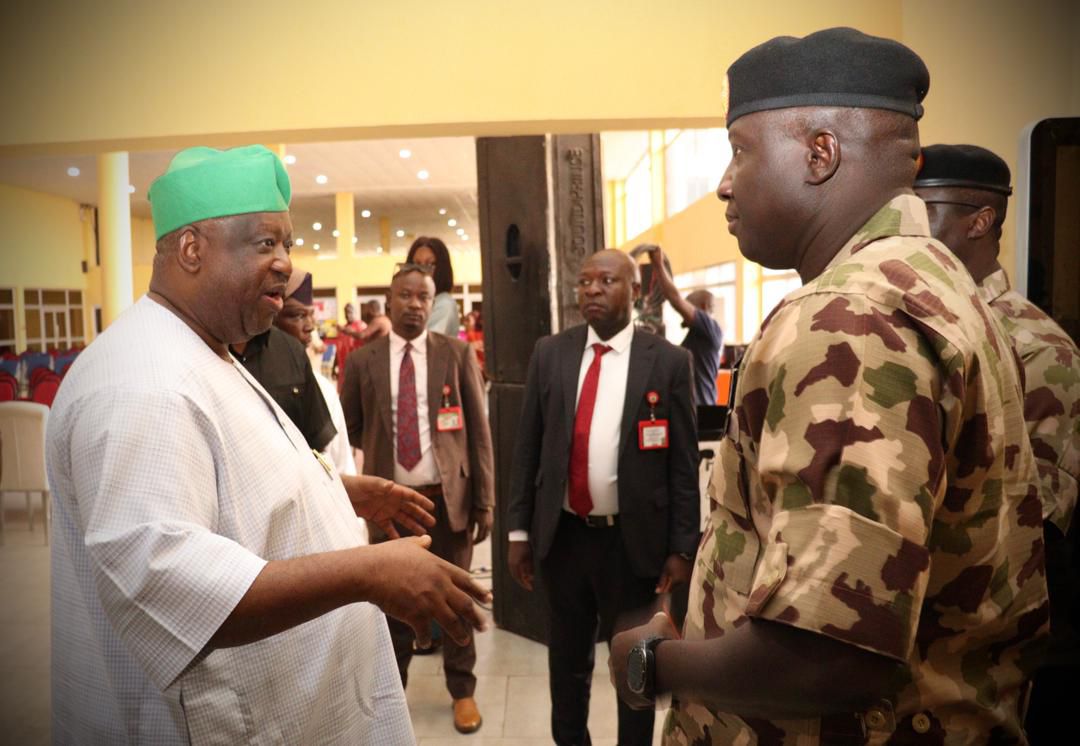
COAS Launches Nationwide Security Renewal Mission in Plateau
The Chief of Army Staff, Lieutenant General Waidi Shaibu, on Thursday led a high-level delegation of security chiefs to Plateau State, flagging off a nationwide security renewal mission aimed at strengthening civil-military cooperation and restoring lasting peace across the country.
The visit to Jos, the Plateau State capital, marks the first phase of a coordinated national effort to address persistent security challenges through joint operations, community engagement, and proactive intelligence gathering.

Governor Caleb Muftwang received the delegation, describing the initiative as a critical step toward stabilizing affected communities and reinforcing public confidence in security institutions.
Civil-Military Synergy Takes Centre Stage
At the heart of the mission is a renewed emphasis on collaboration between the military, civil authorities, and local communities. Speaking during the visit, Lt. Gen. Shaibu stressed that national security must be treated as a collective responsibility.
He urged citizens to support security agencies by remaining vigilant, sharing credible information, and complying with lawful directives, noting that effective security cannot be achieved in isolation.
Community Engagement as Confidence-Building Tool
In a departure from purely operational engagements, the Army Chief held direct consultations with community leaders and residents in Jos, reinforcing the importance of trust and dialogue in conflict resolution.
Lawmakers, including Dachung Bagos and Ladi Dangyok, commended the initiative, stating that visible engagement by top military leadership helps rebuild confidence among citizens and fosters cooperation.

Proactive Security Operations Underway
Operational updates were provided by Major General Folusho Oyinlola, who disclosed that troops under Operation Enduring Peace have intensified surveillance, intelligence-led patrols, and coordinated actions with other security agencies.
According to the Army, the approach is designed to prevent escalation of threats, safeguard lives and property, and stabilize vulnerable communities before crises emerge.
A Shift Toward Sustainable Peace
Military authorities emphasized that the Plateau visit is part of a broader, long-term strategy to transition from reactive responses to sustainable peacebuilding nationwide. The framework includes strengthening local resilience, ensuring justice, and maintaining continuous engagement with stakeholders.
Analysts view the initiative as a significant policy shift, reflecting a more inclusive security architecture that integrates community participation with military operations.
Call for National Unity
The Army leadership concluded with an appeal to Nigerians to reject divisive narratives and support ongoing efforts to promote unity and peace.
“The success of this mission depends not only on the armed forces but on the cooperation of every citizen,” the COAS stated.
The nationwide security renewal campaign is expected to extend to other regions in the coming weeks as authorities seek to consolidate gains and build a safer, more unified Nigeria.


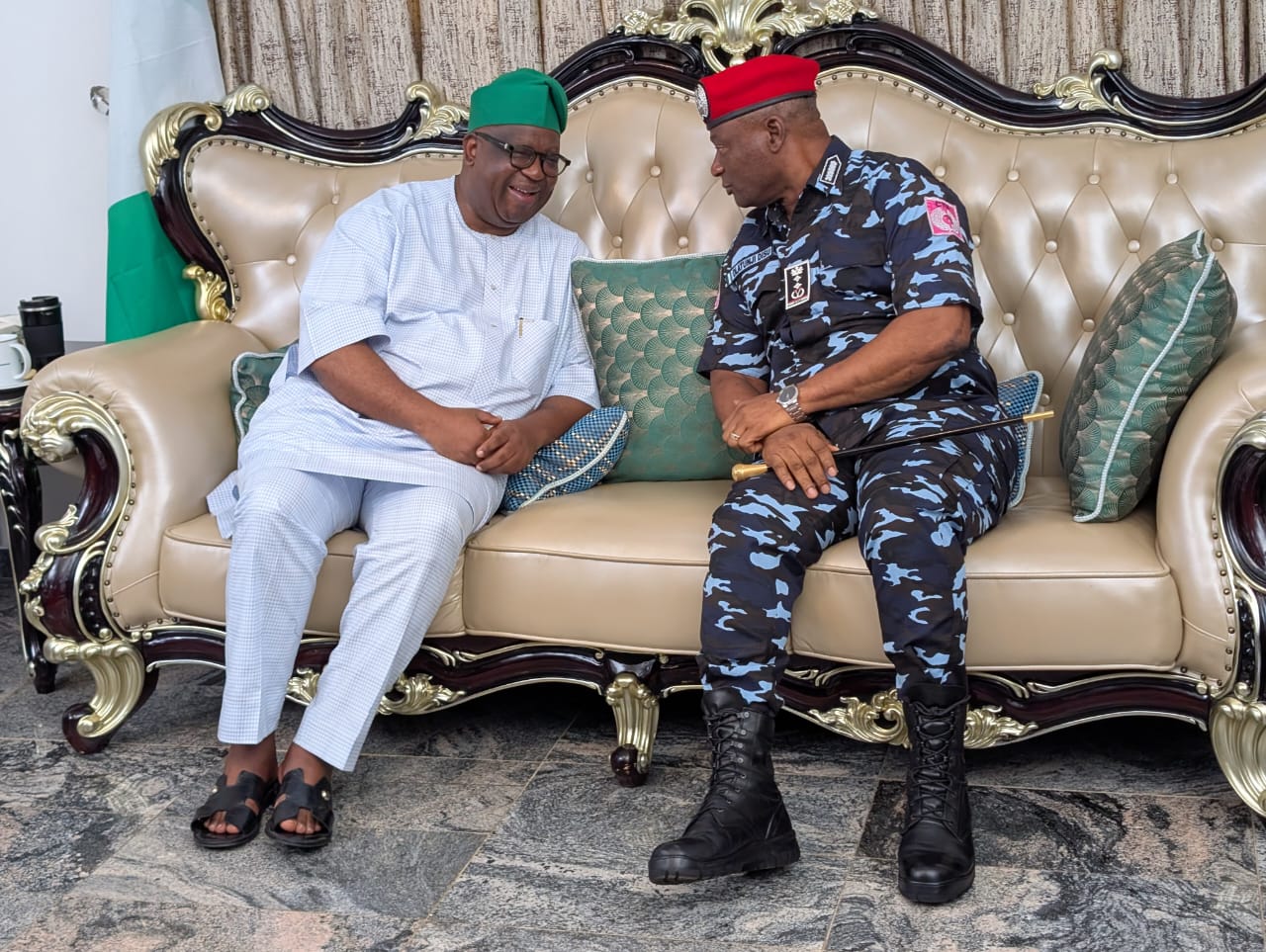
IGP Disu Visits Plateau, Orders Tactical Deployment To Reinforce Security
The Inspector General of Police, Olatunji Disu, on Thursday paid a working visit to Plateau State following recent unrest, holding strategic talks with Governor Caleb Muftwang on measures to strengthen security and prevent further disturbances.
As part of immediate steps to stabilise the situation, the police chief authorised the deployment of specialised tactical units to support officers already on ground across affected areas.
Governor Muftwang commended the swift intervention of the police leadership, praising the dedication and professionalism of security personnel working to restore calm. He also acknowledged the efforts of mobile police officers and lauded the leadership of the state’s Commissioner of Police, Bassey Ewah.
Both the Nigeria Police Force and the Plateau State Government reaffirmed their commitment to safeguarding lives and property, stressing that enhanced collaboration remains key to restoring lasting peace in Plateau State, popularly known as the Home of Peace and Tourism.


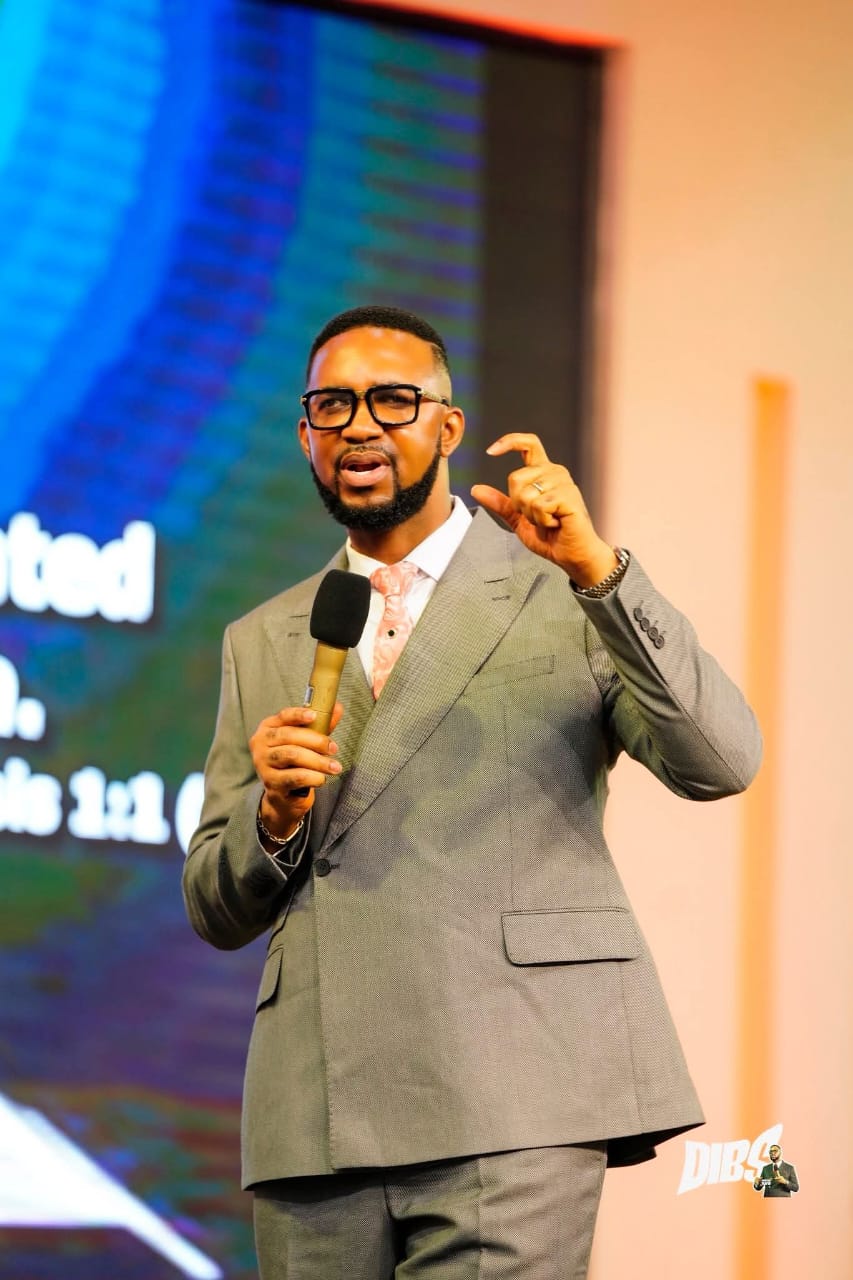
Grace Nation Worldwide: A Living Reality – Dr. Chris Okafor
……“Miracles, Healing, and Deliverance Overflow at Grace Nation Services”
The Grace Nation midweek Prophetic Healing, Deliverance, and Solutions (PHDS) Service on 2nd April 2026 at the international headquarters in Ojodu Berger, Lagos, was a spectacular display of God’s power, marked by miracles, healing, and deliverance.
The God of Grace Nation continues to demonstrate His authority, breaking strongholds, healing the sick, restoring lost glory, and providing solutions to every problem presented at His altar.
Testimonies of God’s Power
One woman, previously diagnosed with a terminal condition and slated for a ₦4.5 million surgery due to inability to excrete, was prayed for by the Generational Prophet, Christopher Okafor, just a week after visiting the church. Declaring healing within 24 hours, she returned to testify to God’s miraculous intervention.
Another pregnant woman, whose baby was bridged and at risk, was located and prayed for. She returned to service with confirmation that her child is now well-positioned for delivery. Similarly, a woman booked for a C-section due to an overdue and poorly positioned pregnancy testified during the service that her baby is now properly positioned, ready for birth.
These testimonies underscore the truth: what God cannot do does not exist. Grace Nation has entered a new level of spiritual authority, and with faith, believers are witnessing the impossible become reality.
God Works by Principle, Not Gossip
In his sermon, Dr. Okafor emphasized that God does not operate on superstition, gossip, or social media pressures. His work is grounded in His Word, and it is through adherence to His principles that Grace Nation continues to flourish.
The Generational Prophet stressed that to enjoy divine blessings and fruitfulness, believers must remain connected to God’s Word, faithfully serve Him, and ignore distractions or side-talks. Focused commitment to God’s service guarantees alignment with His miraculous power.
Join the Movement
Grace Nation Worldwide is open for all who desire a life transformed by divine intervention. Weekly services include:
Sunday Service: 7:00 AM
Grace Nation Island Service (Ogombo): Wednesday, 5:00 PM
Midweek PHDS Service: Thursday, 7:00 AM
Attending these services under the ministry of the Generational Prophet ensures encounters with God’s supernatural power, life-changing miracles, and lasting breakthroughs.
Grace Nation Worldwide is not just a church—it is a reality where faith meets the supernatural.
By Sunday Adeyemi


-

 society6 months ago
Religion: Africa’s Oldest Weapon of Enslavement and the Forgotten Truth
-

 news4 months ago
WHO REALLY OWNS MONIEPOINT? The $290 Million Deal That Sold Nigeria’s Top Fintech to Foreign Interests
-

 society6 months ago
“You Are Never Without Help” – Pastor Gebhardt Berndt Inspires Hope Through Empower Church (Video)
-

 celebrity radar - gossips2 months ago
Dr. Chris Okafor Returns with Power and Fire of the Spirit -Mounts Grace Nation Altar with Fresh Anointing and Restoration Grace on February 1, 2026