
society
₦10 Billion Solar Panels at Aso Rock: Tinubu’s Silent Vote of No Confidence in Nigeria’s Electricity Sector

₦10 Billion Solar Panels at Aso Rock: Tinubu’s Silent Vote of No Confidence in Nigeria’s Electricity Sector
By George Omagbemi Sylvester
In a country where over 90 million citizens live without reliable access to electricity, where epileptic power supply continues to stifle businesses, education, and healthcare, President Bola Ahmed Tinubu has sanctioned the installation of ₦10 billion worth of solar panels at the Aso Rock Presidential Villa. This ostentatious project comes in the same breath as recent assurances by his Minister of Power, Adebayo Adelabu, who boldly claimed that Nigeria’s national grid had “greatly improved” and that electricity supply was now “more stable than ever.”
But the irony here is impossible to ignore, painfully loud and bitterly revealing. The same administration that forced Nigerians into Band A tariffs under the pretense of improving service delivery has chosen to insulate itself from the very grid it coerces the populace to depend on. Tinubu’s decision to power the seat of government independently through solar energy is more than just symbolic, it is a deafening, silent vote of no confidence in Nigeria’s electricity sector. It is, quite frankly, a betrayal of public trust and a scandalous contradiction that undermines every reform narrative being pushed by this administration.
A Public Relations and Moral Disaster
This isn’t just a case of bad optics; it is a strategic blunder and a public relations nightmare. It is a spit in the face of millions of ordinary Nigerians who wake up at 2 a.m. to iron their clothes or charge their phones during the brief window when “NEPA” brings back light. It is a harsh insult to small business owners who spend half their earnings fueling generators. It is a cruel reminder to students forced to study under candlelight and hospital patients whose lives hang in the balance due to erratic electricity supply.
What message does it send when the Commander-in-Chief cannot trust the very system his government is supposedly reforming? Nigeria has reportedly spent over $25 billion on the power sector since the advent of democracy in 1999. Yet, we still generate an embarrassing 3,500 to 4,000 megawatts for a country of over 200 million people, a mere fraction of our real demand, which exceeds 30,000 megawatts.
According to a 2024 report by the World Bank, Nigeria loses an estimated $28 billion annually to power sector inefficiencies. In the same year, the national grid collapsed twice in one week, affecting all 36 states. These systemic failures make Tinubu’s solar insulation not just hypocritical but a confirmation that Nigeria’s energy sector is in shambles—and that even those in charge no longer believe in its redemption.
Who Is the Minister Fooling?
In March 2024, Power Minister Adebayo Adelabu stated:
“Electricity has improved greatly across the country, and the grid is more stable than ever.”
This statement aged like spoiled milk. Less than a month later, Nigeria’s fragile grid failed twice in one week, plunging the country into darkness and mocking every word of the minister’s fantasy.
If the grid is truly stable, why can’t the nation’s seat of power rely on it?
Renowned economist and former Presidential Economic Adviser, Dr. Doyin Salami, once stated:
“Any leader who cannot trust the system he oversees has already admitted failure without saying a word.”
By quietly opting for solar energy while publicly touting grid stability, President Tinubu has, in essence, conceded defeat on one of the most critical components of national infrastructure. Instead of leading by example and investing in holistic grid rehabilitation, he has chosen personal convenience over public confidence.
Band A: A Policy of Deceit
In April 2024, the Federal Government introduced Band A tariffs, a controversial policy that saw the cost of electricity skyrocket from ₦68 per kWh to ₦225 per kWh for select urban areas; mostly populated by the middle class. The government justified this hike by claiming it would ensure a minimum of 20–24 hours of daily supply to Band A users.
However, less than a month in, Band A areas reported frequent outages, sometimes worse than before. Nigerians quickly realized that the promise of improved power was a farce, another deceptive policy dressed in economic jargon. This tariff structure, instead of driving efficiency, has widened the inequality gap, where only the affluent can afford consistent electricity while the poor remain in darkness; taxed, yet unrewarded.
Aso Rock’s move to solar is the final nail in the coffin. It shows that even with Band A revenues pouring in, the government still has no faith in the reforms it is selling.
The Broader Economic Implications
Electricity is not a luxury; it is the foundation of any modern economy. Without it, industrialization is a myth, digital transformation is a joke, and economic growth remains a pipe dream. Nigeria’s perennial power problems have discouraged foreign investors, stifled domestic innovation, and eroded citizens’ trust in government capacity.
The hypocrisy of spending ₦10 billion on solar panels for the presidency while universities, hospitals, and factories continue to grope in darkness is not just a leadership flaw, it is an economic crime. That money could have funded mini-grids in underserved rural areas, equipped teaching hospitals with stable power, or supported local businesses through solar cooperatives.
As Dr. Charles Soludo, former CBN Governor, once said:
“Economic reforms must begin from the top, and credibility is the capital of leadership. If people at the top show double standards, the bottom will implode.”
Silence Is No Longer Golden
What is perhaps most appalling is the deafening silence from the Presidency regarding this project. There has been no official justification, no detailed explanation, and no roadmap for scaling solar beyond the Villa. This opacity feeds public anger and fuels conspiracy theories. Is the contract for the solar project another front for looting? Were due processes followed? Who are the contractors? Is there a cost-benefit analysis?
Transparency is not optional when public funds are involved. Citizens deserve answers.
A Call to Action
It is time for Nigerians to demand better. We must ask hard questions, challenge double standards, and hold leaders accountable, not just for their words but for their actions. The Tinubu administration cannot continue to speak reform while acting in contradiction.
If the President believes in solar, then let him lead a solar revolution across Nigeria, not just within the comfort of his official residence. Let every ministry, school, clinic, and rural community benefit from decentralized, renewable energy. Let this ₦10 billion solar project be a pilot, not a personal luxury.
Let this be the moment when Nigerians stop accepting excuses and start demanding delivery.
Final Word
In the end, leadership is not about comfort, it is about credibility. The installation of solar panels at Aso Rock is not just a quiet act of energy diversification; it is a silent vote of no confidence in Nigeria’s power sector. And if the President himself has abandoned the national grid, why should the people keep paying for it?
Until Nigeria has leaders who live within the system they administer, who experience the daily power failures, the darkness, the frustration, there will be no change. You cannot reform what you refuse to endure. And you cannot fix what you quietly flee from.
President Tinubu’s solar-powered fortress is not just an energy policy. It is a metaphor for the widening gap between government and the governed.
And that is the real national emergency.





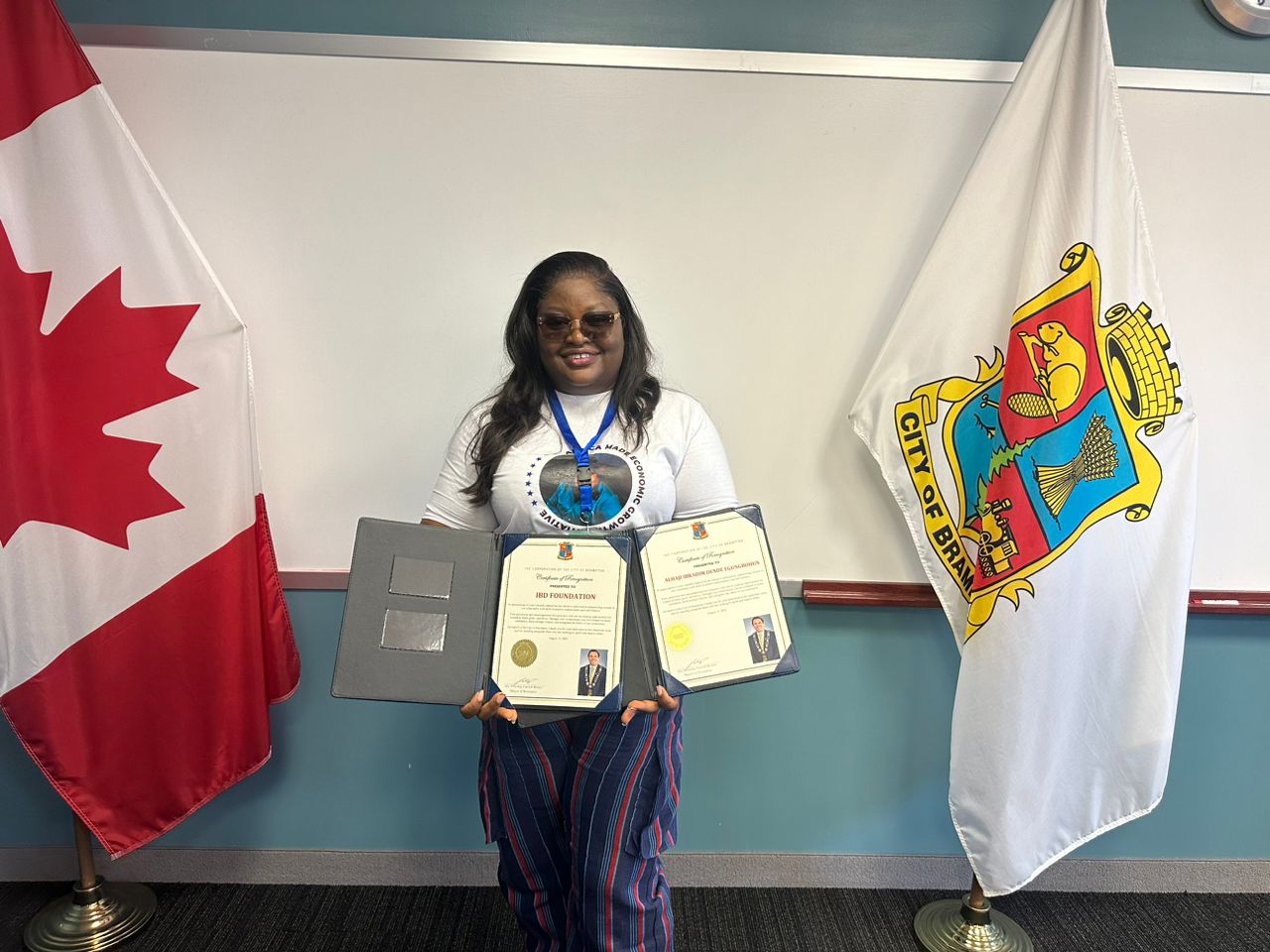
Mayor of Brampton Honours IBD Foundation
The City of Brampton has recognised Alhaji Ibrahim Dende Egungbohun for his remarkable contributions to a transformative initiative designed to empower women through essential skill-building for independence and self-reliance. This formal acknowledgment took place on August 15, 2025, in Mayor Patrick Brown’s office during a visit from the Africa Made Economic Growth Initiative (AMEGI) team. Represented by his wife, Mrs. Omolara Egungbohun, Alhaji Dende received the certification amidst an atmosphere of gratitude and celebration. Mayor Brown presented the certificate personally and extended his commendations to the IBD Foundation for their relentless pursuit of women’s empowerment, development, and their philanthropic efforts.

The Certificate of Recognition underscored Egungbohun’s unwavering dedication and tireless efforts to create diverse opportunities for women to enhance their skills, develop their potential, and ultimately prosper in their personal and professional lives. As a philanthropist, esteemed businessman, and influential social figure, his impact in Nigeria and beyond is both profound and far-reaching.

Egungbohun’s generosity and steadfast commitment have significantly bolstered the confidence of program participants, facilitating their ability to envision and construct brighter futures while strengthening community ties. In his acknowledgment, Mayor Brown stated, “Your dedication uplifts those working to inspire others,” highlighting the deep and lasting influence of Egungbohun’s work in empowering women.

This initiative is not just a standalone effort; it harmonizes perfectly with Brampton’s broader mission to advocate for and uplift marginalized groups within the community. Egungbohun’s contributions serve as a vital catalyst for transformative change, offering practical skills that enhance employability while reshaping the economic and social framework for women. Through an assortment of workshops, mentorship programs, and robust support networks, he has fostered an encouraging environment where women can fully explore and realize their potential.
As Brampton steadfastly commits itself to promoting inclusivity and equity, leaders like Egungbohun exemplify how collaboration, vision, and genuine enthusiastic engagement can effectively turn hopes and aspirations into tangible realities. The public acknowledgment from the city not only honors individual efforts but also sends a resounding message, inspiring other community leaders and stakeholders to step up and invest in grassroots empowerment initiatives that uplift and serve those in need. This recognition is a clarion call for collective action toward a more equitable and inclusive society.
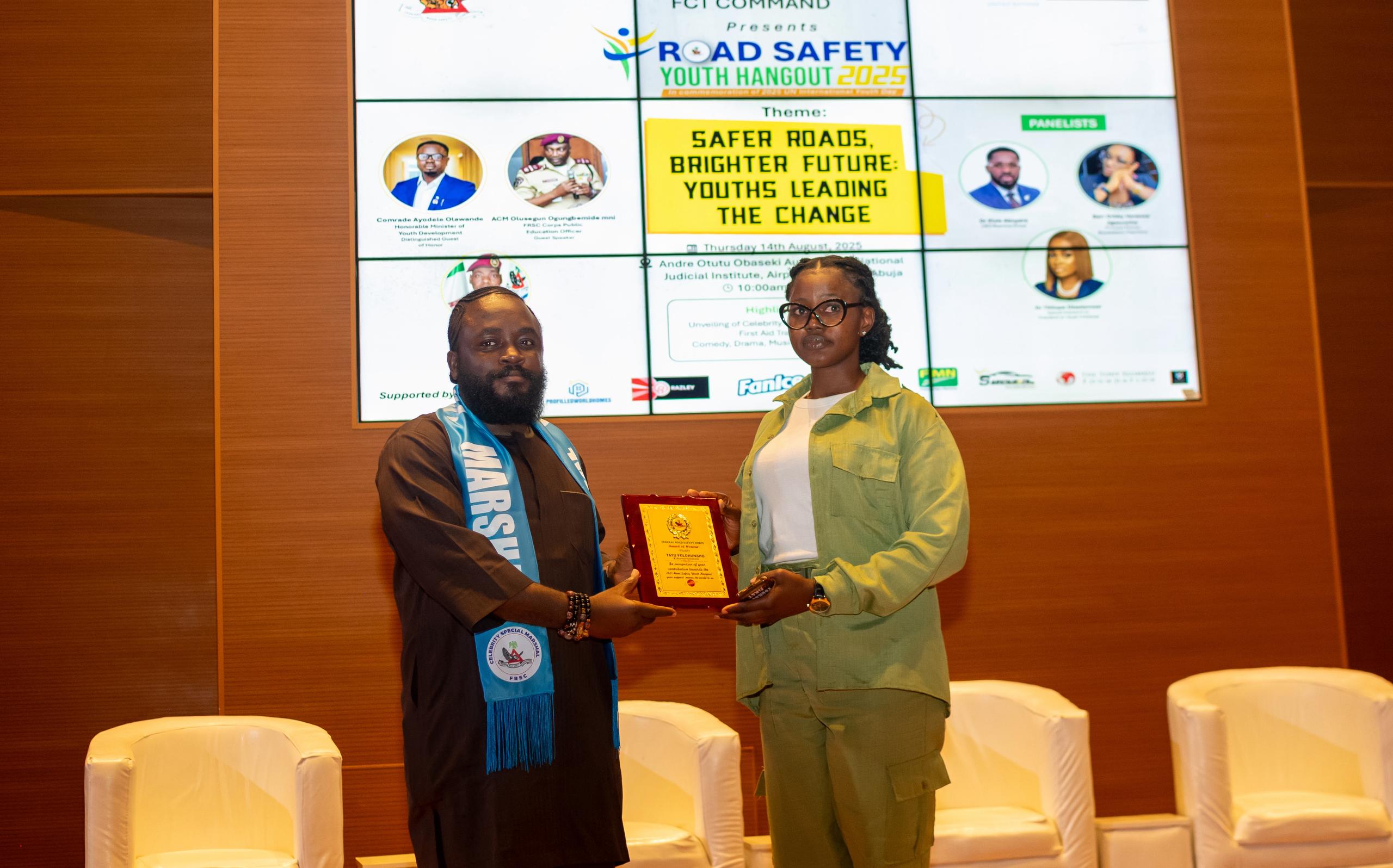
Tayo Folorunsho Nominated as Celebrity Special Marshal of the Federal Road Safety Corps
Tayo Folorunsho, renowned youth ambassador and edutainment advocate, has been officially nominated to be decorated as a Celebrity Special Marshal (CSM) of the Federal Road Safety Corps (FRSC).

The unveiling took place at the recently concluded FRSC Youth Hangout, held in celebration of the United Nations International Youth Day at the National Judicial Institute, Abuja.
Over the years, Tayo Folorunsho has distinguished himself as a passionate youth leader, consistently driving initiatives that inspire and empower young people. His recognition as a Celebrity Special Marshal is not only a mark of honor but also a call to responsibility—championing road safety, responsibility, and positive change within society.

Speaking on the recognition, Tayo Folorunsho emphasized:
“This is more than an honor; it is a responsibility to use my voice and influence to promote safety, responsibility, and positive change on our roads.”
This milestone reinforces his commitment to youth empowerment, social responsibility, and nation-building through edutainment and advocacy.
society
FRSC Partners with Edutainment First International to Drive Road Safety Awareness in Nigeria
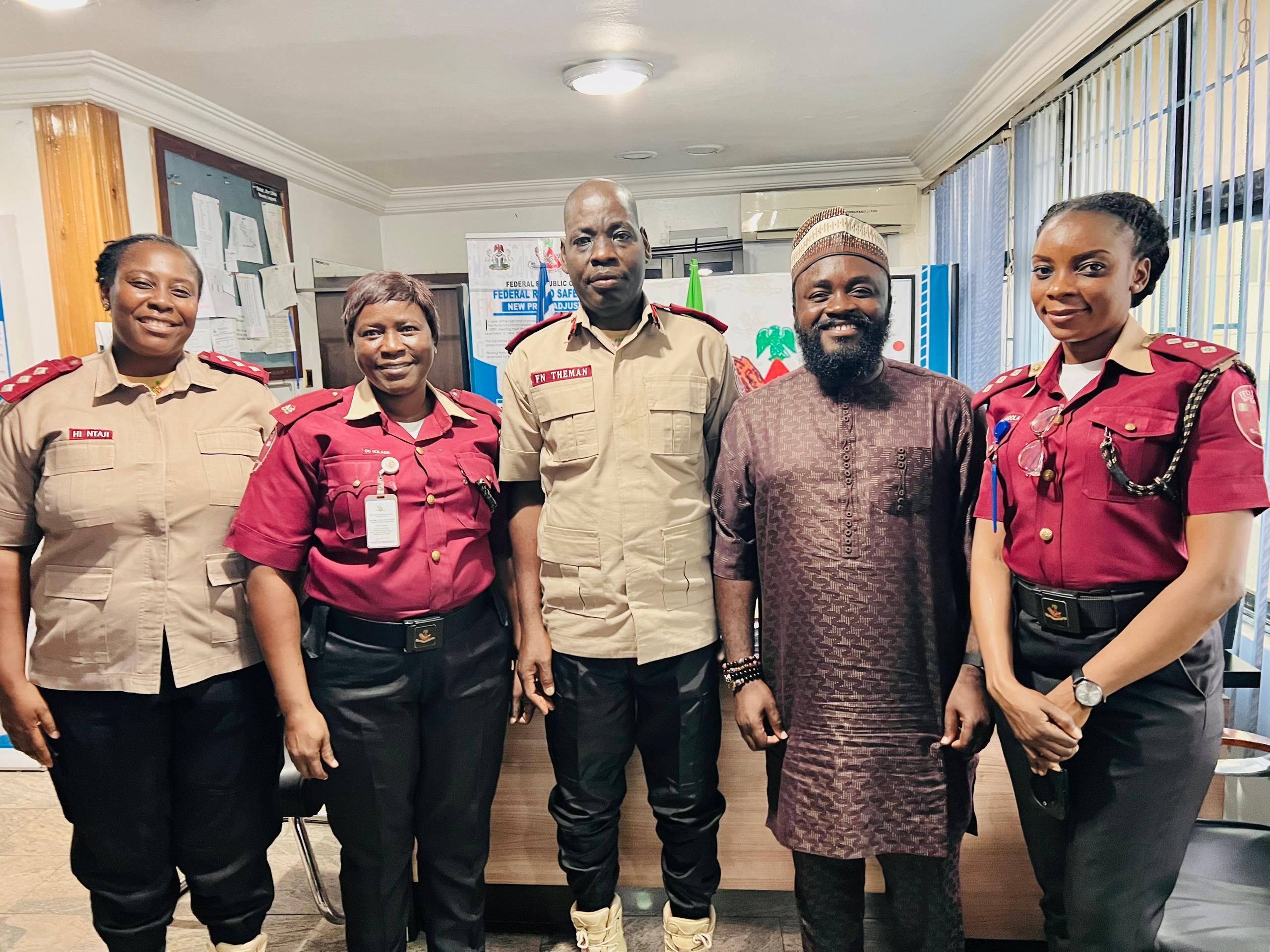
FRSC Partners with Edutainment First International to Drive Road Safety Awareness in Nigeria
In a country where road accidents claim thousands of lives each year—most of them young people—the Federal Road Safety Corps (FRSC) and Edutainment First International have launched a bold new initiative to change the narrative. On Thursday, August 14, both organizations hosted the maiden Road Safety Youth Hangout at the National Judicial Institute, Abuja.

The event, held to mark United Nations International Youth Day 2025, brought together more than 300 participants, including members of the National Youth Service Corps (NYSC), students, youth leaders, and community representatives. Unlike traditional road safety campaigns, the hangout was designed as an interactive forum blending education and entertainment, where young Nigerians could learn, innovate, and commit to safer road practices.
According to FRSC data, young people remain the most vulnerable demographic in road traffic crashes across Nigeria—an urgent concern this initiative aims to tackle. Through storytelling, innovation, and collaborative problem-solving, the Road Safety Youth Hangout sought to transform young Nigerians into advocates for safety within their communities.
“This is not just about rules and regulations,” said one of the organizers. “It’s about equipping young people with the tools and the voice to change Nigeria’s road culture.”
Aligned with the UN’s 2025 theme, “Local Youth Actions for the SDGs and Beyond,” the program underscored the critical role of young Nigerians in advancing the Sustainable Development Goals (SDGs), particularly those connected to health, safety, and responsible citizenship.
By focusing on empowerment rather than enforcement, FRSC and Edutainment First International signaled a fresh approach to road safety: investing in the next generation as the real drivers of change. The belief is simple yet powerful—an informed and empowered youth population is key to reducing accidents and saving lives.
For many participants, the hangout was more than just an event; it was a wake-up call. With interactive sessions infused with music, drama, and dialogue, young Nigerians were challenged to reflect on their daily habits as road users and to embrace leadership as advocates for safer communities.
As one youth participant reflected:
“Road safety isn’t just the job of the FRSC. It’s our responsibility too—because we are the ones most at risk.”
The maiden edition of the Road Safety Youth Hangout may have ended, but the movement it launched has only just begun. Its message was unmistakable: Nigeria’s fight for safer roads must be youth-led, collaborative, and relentless.


-

 society5 months ago
Ramadan Relief: Matawalle Distributes Over ₦1 Billion to Support 2.5 Million Zamfara Residents
-

 Politics2 months ago
Nigeria Is Not His Estate: Wike’s 2,000‑Hectare Scandal Must Shake Us Awake
-

 society4 months ago
Broken Promises and Broken Backs: The ₦70,000 Minimum Wage Law and the Betrayal of Nigerian Workers
-

 society3 months ago
OGUN INVESTS OVER ₦2.25 BILLION TO BOOST AQUACULTURE