Connect with us

society

Mohbad Will Get Justice When His Family Members Are Ready …Turkey Based Activist, Tenny Omoologo

Published

on

Mohbad Will Get Justice When His Family Members Are Ready

Turkey Based Activist, Tenny Omoologo


Turkey-based Nigerian activist and blogger, Beatrice Opeyemi a.k.a. Tenny Omo Ologo, had a brief chat with select journalists about her experience as an independent justice advocate, former member of the Yoruba Nation movement, justice for Mohbad proponent, and more. Excerpts…


Tell us briefly about yourself.

I am Beatrice Opeyemi popularly known as Tenny Omoologo.


Did you leave Nigeria for Turkey in search of greener pastures?

Yes, I left Nigeria for Turkey for greener pastures. I am into private businesses.


You became a known face on the internet during the ‘Yoruba Nation’ struggle; tell us about your experiences at that time as a female.

You’re not far from the truth. But I have been on the internet before the Yoruba Nation struggle. However, it is the Yoruba Nation saga that made me more popular. My experience taking part in the Yoruba Nation struggle was quite challenging. It was life-threatening. But I thank God I’m still alive.


How did you become a member of the Yoruba Nation movement?

I joined the Yoruba Nation movement in 2020. I was approached by a group to join the struggle because they knew that I had been speaking about the Nigerian leadership situation on my own. They said they wanted me to join them and add my voice as a Yoruba to advocate for an independent Yoruba nation. I agreed with them because it was my passion to talk about Yoruba liberation and better life for all Nigerians. The challenge started when the EndSars protest came amid the campaign for Yoruba Nation. That protest was timely because it was actually about ending bad governance. So, it was a sort of liberation call. On my Facebook live programme, I was showing and analyzing the EndSars activities live. This didn’t go down well with some people who are pro-government. So, they would come on my show to attack, abuse and curse me.


Did you ever suffer a physical attack?

It happened on December 26, 2020. I left home to get a laptop for my programme because the phone I was using was already full. And I had a lot of information that I needed more gadgets to be able to accommodate them. Before then, I had been hearing that some people were paid $100 each to track and physically assault me. I didn’t believe it until that incident happened. So, while on my way to get the laptop after exchanging the forex I wanted to use, I spotted three men and overheard one of them saying ‘that is Tenny Omoologo passing along’ I was shocked. So I increased the pace of my movement. It was already getting dark. But as I tried to change the direction of my route, I saw the men getting into a vehicle. The vehicle went to make a u-turn, came back suddenly and hit me. I fell on the road and hit my head on the ground. I was conscious for close to one hour. When I became conscious, I found a lot of people around me who later helped me to the hospital where the bruises on my face, head and mouth were stitched.


Did that stop you from the campaign?

Not at all. I was not deterred. I continued talking about Yoruba liberation. It was after that that Chief Sunday Igboho visited Igangan to chase the Fulani herdsmen out. It was after that that Chief Igboho’s house was attacked by the DSS. In April 2021 before the attack, I had a vision and warned Chief Igboho to be very careful. Also on June 20, 2021, I had information that Igboho’s life had been paid for. I made a lot of noise about it but people were against me thinking I was raising a false alarm, including fellow freedom fighters. I said then that Chief Igboho must not ignore the warning because if he escaped the attack, he may end up in captivity and spend more than one year. It came to pass. When Igboho’s members were arrested and taken to Abuja, it was through my personal efforts that they were later released. I did a fundraiser and got a lot of money that was used for their court case until they were freed. After Igboho was arrested, most of the Yoruba Nation members ran away. Only me and a few others stayed. I was the one begging those that left to come back, telling them it was wrong to abandon the struggle at a time like that. But for all I did I was still betrayed and treated like an outcast. After that I got information that I was the next target of the government attack. I ignored the warning and continued with the campaign. But I stopped going out. I was just doing my thing within my premises. Again, in March 2022, I left home and saw those guys again. They ordered me into a vehicle. I refused and they bundled me into the vehicle and burned my laps with hot iron. Those are a few of the challenges. There were many.


Were you part of the group that declared Yoruba Nation independence in Ibadan?

When in 2022, they told me that they were going to declare Yoruba Nation with Dupe Onitiri and others, I saw it as a joke. On December 20, 2022, I was invited to a meeting. Some of them were already campaigning for Tinubu to be president. They called themselves ‘Asiwaju Bloggers’. I didn’t join the meeting in time. When I decided to join, I changed my profile picture and name and joined the zoom meeting. They never knew it was me. That was how I discovered that the zoom meeting was meant to drum up support for Tinubu. People at that meeting were topmost Yoruba Nation campaigners. At the meeting they decided to use their platforms to campaign for Tinubu and agreed that if Tinubu did not win the presidential election, they would return to the Yoruba Nation struggle. I was shocked and shed tears because of the calibre of people I saw at that meeting.


Did you find out if those people were campaigning for Tinubu without the knowledge of the Yoruba Nation movement leaders?

I did. I sent a message to the person that introduced me to the group asking if Sunday Igboho and Pa Bani Akintoye were aware of the group’s campaign for Tinubu and the person said yes they knew about it. I was amazed. So I withdrew. When there were issues between them later, some people wanted me to fight on the side of Igboho and I said I couldn’t. Instead of siding with any of them, I used some episodes of my show to expose how they have turned the Yoruba Nation movement to a political platform. I told the public to stop donating money to the struggle. That was how they launched a series of attacks against me. It got to the extent that I was almost deported back to Nigeria in April 2023. Those experiences gave me the opportunity to discover that the Yoruba Nation struggle was a scam, mere plot to enrich some people. It wasn’t a genuine liberation movement. They are using it for politics and to defraud people abroad. Most of the members who were poor became very rich overnight.


You appear to some people as a traditionalist. What exactly is your religion and what religion were you born into?

My mother is from a Muslim home. My father is a Christian and I am married to a Christian. But as a Yoruba I value Yoruba traditions. Christianity is Jew’s religion and Islam is Arab’s religion. I would say that I belong to the three popular religions. Islam, Christianity and traditional worship. It’s left for people to assess me.


You became more popular as one of the voices fighting for justice for Mohbad; why did you decide to join the Mohbad warriors group?

I am a human rights activist. I became a fighter for justice for Mohbad by chance. I traveled to Cairo. I was in a market there when I received a call from someone who asked if I had heard about a young Nigerian musician who just died. I have never heard of Mohbad. So I searched the news on Google and saw RIP all over and his music videos have spread everywhere on the internet. I became more interested when on the second day the young guy was taken for burial and when his casket was opened, we saw that his body was stuffed in the casket and his neck was broken. People were already talking about the family and the wife’s negligence or culpability. Besides, Mohbad’s label owner, Naira Marley, were also mentioned and also Sam Larry. Unfortunately, Sam Larry made a post after Mohabd was buried suggesting that he had been buried and there was no more issue or something like that. That was how I took it upon myself to use my platform to fight for justice for the young man.


Are you disappointed that one year and four months after Mohbad’s death, justice is still not in sight, and what is your hope?

I am very disappointed. First of all, I would put the blame on the Lagos State government. When Mohbad was exhumed, the Lagos State government promised to investigate his death and ensure that justice was done. We wouldn’t be at this stage of stress and disappointment if the government had done the right thing on the boy’s death. As a Nigerian citizen I am deeply saddened and embarrassed that the Nigerian government does not act on matters that affect its citizens. Secondly, as a mother, I am disappointed in the parents of Mohbad and his entire family. We have not been able to get justice for Mohbad’s death because his father, mother, wife and other members of his family were selfish and greedy.


Please, share some of the challenges you faced fighting for justice for Mohbad.

The challenges are numerous. There is a diversity of opinions and it’s tough responding, coordinating and pleasing people. The other challenge is fishing out the anti-justice and fake justice seekers in the ‘Justice For Mohbad’ fight.


You are very beautiful and have a unique sense of style. Please, tell us your fashion routine.

God made me beautiful (laughs). I took beauty after my parents, especially my mother. I am bulky just like my parents. In fashion, I’m stylishly traditional. I love dressing in aso oke and other Yoruba traditional wears with beads.

society

Diplomacy Under Fire: South Africa’s Anti-Apartheid Vanguard Challenges U.S. Ambassador Nomination
Published

on

Diplomacy Under Fire: South Africa’s Anti-Apartheid Vanguard Challenges U.S. Ambassador Nomination

By George Omagbemi Sylvester
Published by saharaweeklyng.com

“How history, sovereignty and global justice are colliding in Pretoria’s political theatre.”

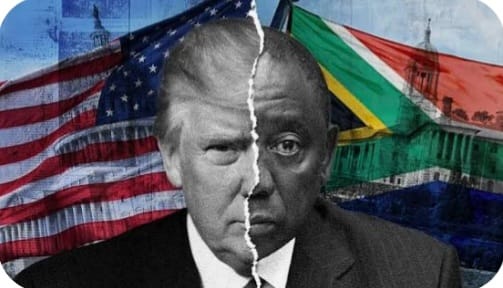
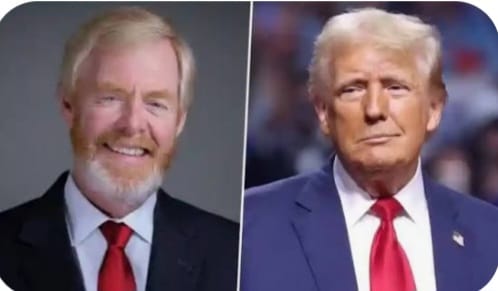
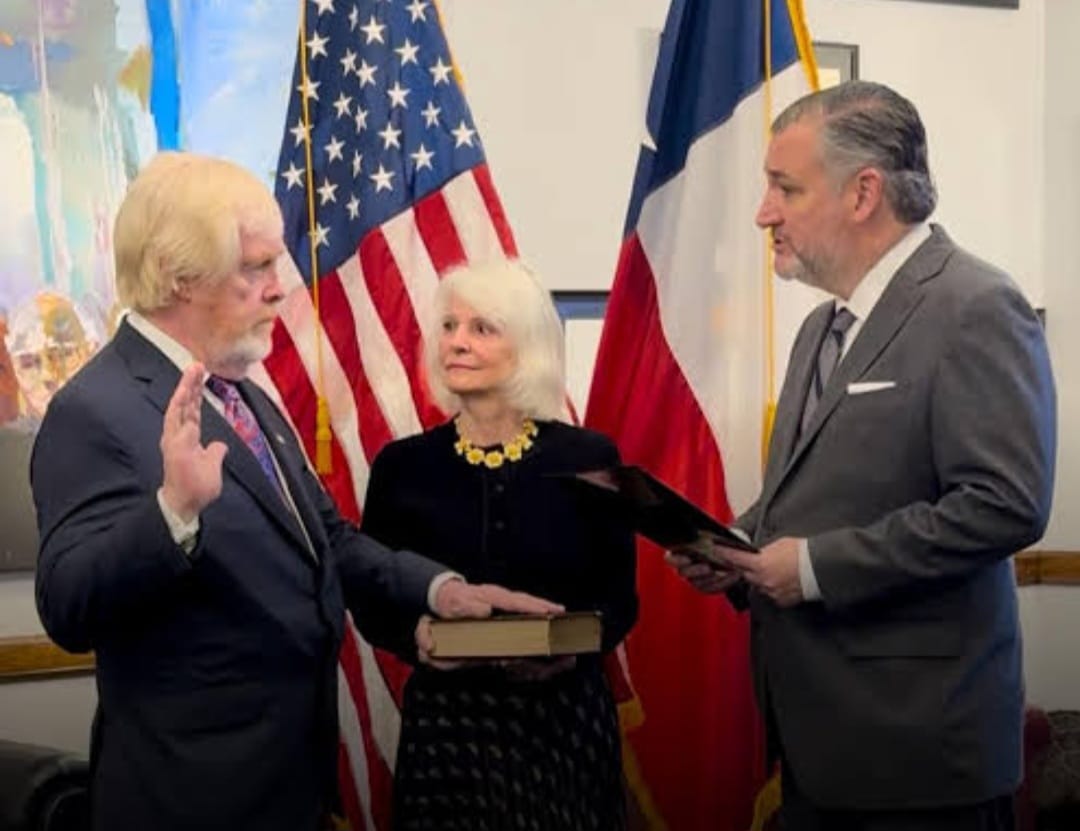
South Africa stands at the intersection of memory, morality and contemporary geopolitics. In a dramatic and deeply symbolic challenge to international diplomatic norms, the South African chapter of the Anti-Apartheid Movement (AAM) has publicly urged President Cyril Ramaphosa to exercise his constitutional right to reject the credentials of Leo Brent Bozell III, the United States’ ambassador-designate to South Africa. This demand is not merely about one diplomat’s qualifications but it represents a broader contest over historical interpretation, national sovereignty, human rights and the ethical responsibilities of global partnerships.

The statement issued by the AAM, drawing on its legacy rooted in the nation’s hard-won liberation from racial oppression, argues that Bozell’s track record and ideological orientation raise “serious questions” about his fitness to serve in South Africa. The movement insists that his appointment threatens to undermine the country’s independent foreign policy, particularly in the context of Pretoria’s pursuit of justice at the International Court of Justice (ICJ) in The Hague, where South Africa has taken the rare step of challenging alleged atrocities in Gaza.
The Roots of the Dispute.
At the heart of the controversy is the claim by activists that Bozell’s public remarks over time have been disparaging toward the African National Congress (ANC) and the broader anti-apartheid struggle that shaped modern South Africa’s democratic identity. These statements, which critics describe as reflective of a worldview at odds with the principles of liberation and equity, have animated calls for his credentials to be rejected.

South Africa’s constitution empowers the head of state to accept or refuse the credentials of foreign envoys, a power rarely exercised in recent diplomatic practice but one that acquires urgency in moments of intense bilateral tension. As the AAM’s leadership frames it, this is not about personal animus but about safeguarding the nation’s right to determine its own moral and geopolitical compass.

Historical Memory Meets Contemporary Politics.
South Africa’s anti-apartheid legacy holds deep cultural, political and moral resonance across the globe. The nation’s liberation struggle (led by giants such as Nelson Mandela, Desmond Tutu and Oliver Tambo) was rooted in the universal principles of human dignity, equality and resistance to systemic oppression. It transformed South Africa from a pariah state into a moral beacon in global affairs.

As the AAM statement put it, “We know too well that our freedom is incomplete without the freedom of others.” This invocation of history is not ceremonial. It frames South Africa’s foreign policy not just as a function of national interest but as a commitment to a universal ethos born of struggle.

Renowned scholars of post-colonial studies, including the late Mahmood Mamdani, have argued that anti-colonial movements inherently shape post-independence foreign policy through moral imperatives rooted in historical experience. In this view, South African diplomacy often reflects an ethical dimension absent in purely strategic calculations.

The Broader Diplomatic Context.
The dispute over ambassadorial credentials cannot be separated from broader tensions in South African foreign policy. Pretoria’s decision to take Israel before the ICJ on allegations of violating the Genocide Convention has triggered significant diplomatic friction with the United States. Official U.S. channels have expressed concern over South Africa’s stance, particularly amid the conflict in the Middle East. This has coincided with sharp rhetoric from certain U.S. political figures questioning South Africa’s approach.
 

Diplomacy Under Fire: South Africa’s Anti-Apartheid Vanguard Challenges U.S. Ambassador Nomination
By George Omagbemi Sylvester
Published by saharaweeklyng.com

For instance, critics in the United States have at times framed South Africa’s foreign policy as both confrontational and inconsistent with traditional Western alliances, especially on issues relating to the Middle East. These tensions have underscored how global power dynamics interact (and sometimes collide) with post-apartheid South Africa’s conception of justice.

Within South Africa, political parties have responded in kind. The Economic Freedom Fighters (EFF) have condemned Bozell’s nomination as reflective of an agenda hostile to South Africa’s principles, even labelling his ideological lineage as fundamentally at odds with emancipation and equality. Whether or not one agrees with such characterisations, the intensity of these critiques reveals the deep anxiety amongst some sectors of South African civil society about external interference in the nation’s policymaking.

Sovereignty, International Law and National Identity.
Scholars of international law emphasise that the acceptance of diplomatic credentials is not merely ceremonial; it signals a nation’s readiness to engage with a foreign representative as a legitimate interlocutor. Legal theorist Martti Koskenniemi has written that diplomatic practice functions at the intersection of law, power and morality, shaping how states perceive each other and interact on the world stage.

In this light, the AAM’s appeal to Ramaphosa reflects a profound anxiety: that South Africa’s sovereignty (and its moral authority on the world stage) is being tested. To refuse credentials would be to affirm the nation’s agency; to accept them without scrutiny could be interpreted, in some quarters, as a concession to external pressure.

President Ramaphosa himself has, in recent speeches, stressed the importance of upholding constitutional integrity and South Africa’s role as a constructive actor in global affairs. His leadership, shaped by decades as a negotiator and statesman, walks a fine line between defending national interests and maintaining diplomatic engagement.

Moral Certainties and Strategic Ambiguities.
What makes this situation especially complex is the blending of moral conviction with strategic diplomacy. South Africa, like any sovereign state, depends on a web of international relationships (economic, security, political) that require engagement with powers whose policies and values do not always align with its own.

Yet for many South Africans, drawing a line on diplomatic appointments is not just about personalities but about reaffirming the values fought for during decades of struggle. As anti-apartheid veteran and academic Professor Pumla Gobodo-Madikezela once observed, “Our history is not a relic; it is the compass by which we navigate present injustices.” This idea captures why historical memory acquires such force in debates over current foreign policy.

Towards a Resolution.
Whether President Ramaphosa will act on the AAM’s call remains uncertain. Diplomatic norms usually favour acceptance of appointed envoys to maintain continuity in bilateral relations. However, exceptional moments call for exceptional scrutiny. This situation compels a national debate on what it means to balance sovereignty with engagement, history with pragmatism, values with realpolitik.

Experts on international relations stress the need for South Africa to carefully assess not just the semantics of credential acceptance but the broader implications for its foreign policy goals and relationships. Former diplomat Dr. Naledi Pandor has argued that “diplomacy is not merely about representation, but about conveying what a nation stands for and will not compromise.” Whether this moment will redefine South Africa’s diplomatic posture or be absorbed into the standard rhythms of international practice remains to be seen.

Summation: History and the Future.
The AAM’s call to reject a U.S. ambassadorial nominee is more than an isolated political manoeuvre, it is a reflection of South Africa’s evolving self-understanding as a nation shaped by legacy, committed to justice and unwilling to dilute its moral voice in global affairs. The controversy casts a spotlight on the tensions facing post-colonial states that strive to be both sovereign and globally engaged.

At its core, this debate is about who writes the rules of international engagement when history has taught a nation never to forget what it fought to achieve. It is a reminder that in a world of shifting alliances and competing narratives, moral clarity, historical awareness and strategic foresight are indispensable.

South Africa’s decision in this matter will not only shape its diplomatic engagement with the United States but will reverberate across continents where questions of justice, human rights and national dignity remain at the forefront of global discourse.


Diplomacy Under Fire: South Africa’s Anti-Apartheid Vanguard Challenges U.S. Ambassador Nomination
By George Omagbemi Sylvester
Published by saharaweeklyng.com

Continue Reading

society

Fatgbems Group Commissions Ultra-Modern Mega Station in Opic, Expands Footprint in Nigeria’s Energy Retail Sector
Published

on

Fatgbems Group Commissions Ultra-Modern Mega Station in Opic, Expands Footprint in Nigeria’s Energy Retail Sector
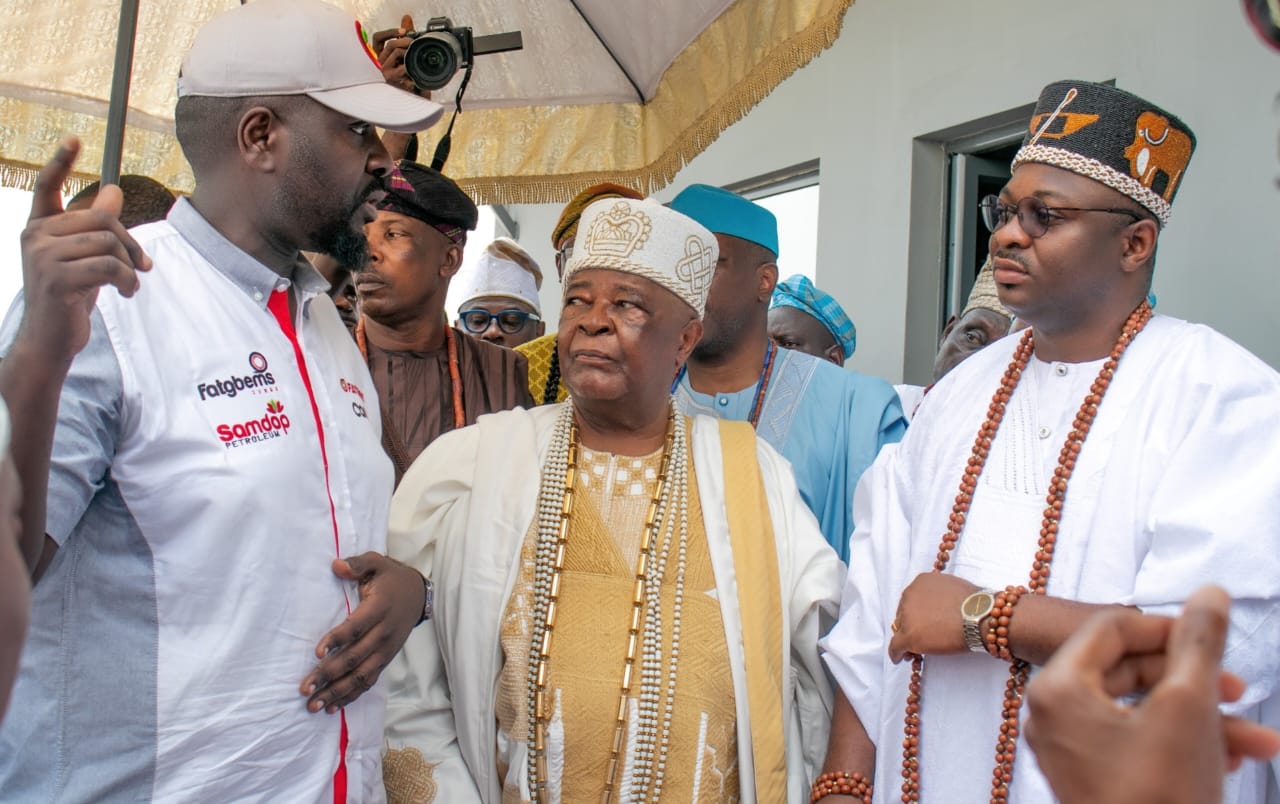
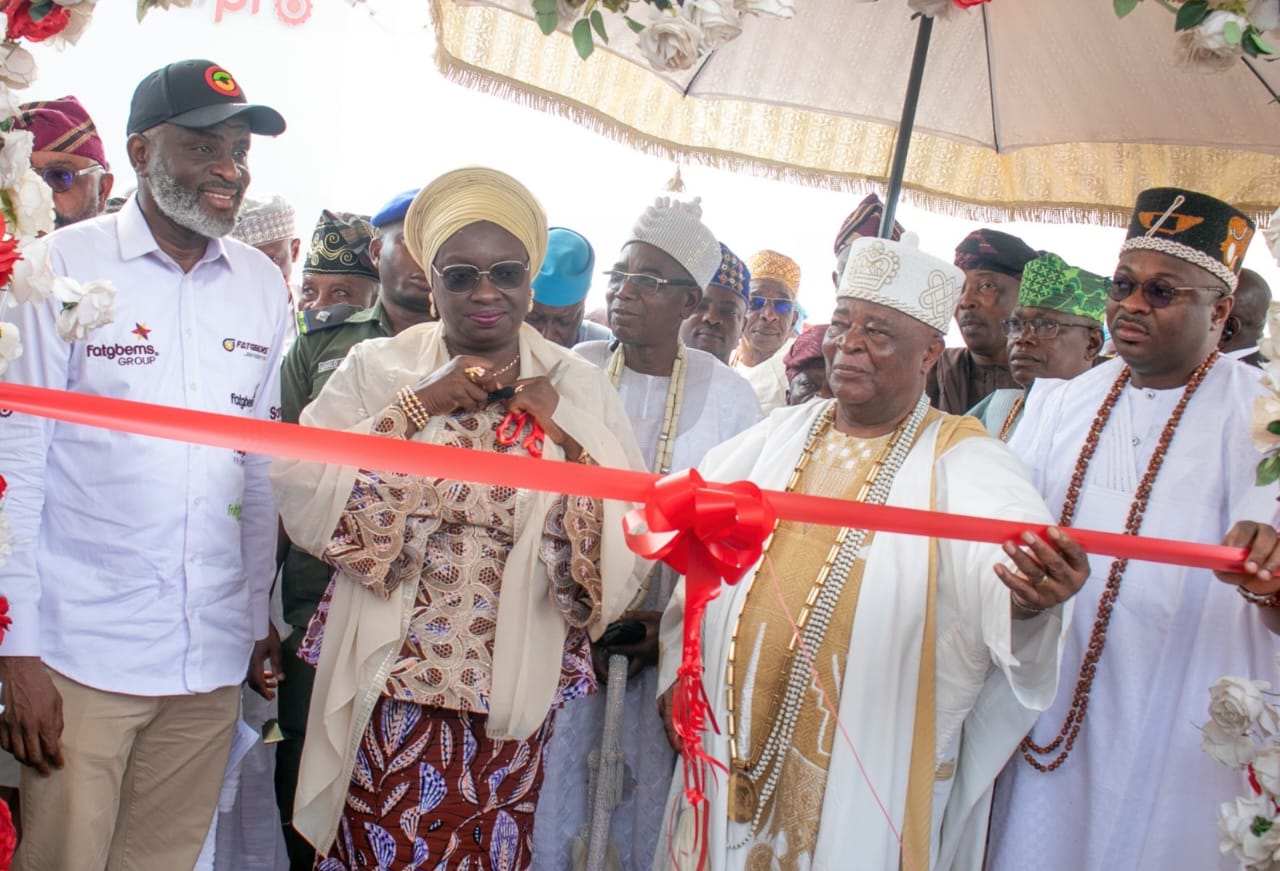
Fatgbems Group has commissioned its state-of-the-art Opic Mega Station, marking a major milestone in the company’s expansion drive and reaffirming its commitment to delivering premium energy solutions and customer-focused services across Nigeria.
The commissioning ceremony, held at the new outlet in the fast-growing Opic corridor, attracted top government officials, traditional leaders, industry stakeholders, business partners, the company’ board members, staff and community members who gathered to witness the unveiling of one of the region’s most modern fuellng and service hubs.
The Opic Mega Station is designed to provide more than fuel. The facility features multiple fueling bays for faster service, a well-stocked convenience store, modern restrooms, and customer-friendly amenities, all within a spacious and safety-conscious forecourt built to accommodate high traffic volumes.
Speaking at the event, the Managing Director of Fatgbems Group, Dr. Kabir Gbemisola described the new station as a symbol of the company’s long-term vision and commitment to operational excellence.
“Today’s commissioning is not just about opening a new station; it is about deepening our promise to deliver quality, reliability, and an exceptional customer experience. The Opic Mega Station reflects our confidence in Nigeria’s growth and our determination to continue investing in infrastructure that supports mobility, commerce, and community development,” the Managing Director said.
Representing the Ogun State Government, the Deputy Governor of Ogun State, Mrs Noimot Salako-Oyedele commended Fatgbems Group for contributing to the state’s economic growth through private sector investment.
“We are proud to see indigenous companies like Fatgbems Group expanding and creating employment opportunities for our people. This investment aligns with Ogun State’s vision of becoming a leading industrial and commercial hub, and we encourage more responsible businesses to take advantage of the enabling environment we are building,” the Deputy Governor stated.
In his goodwill message, the Alake of Egba land, His Royal Majesty, Oba Dr. Micheal Aremu Adedotun Gbadebo 111, lauded the company for bringing modern infrastructure and development closer to communities within the axis.
“This project is a welcome development for our people. Beyond providing essential services, it stimulates economic activities and creates jobs for our youths. We appreciate Fatgbems Group for choosing to invest in our land and for being a responsible corporate organization,” the revered monarch said.
The project is expected to positively impact the surrounding community through direct and indirect job creation, increased commercial activity, and improved access to quality fueling services.
Fatgbems Group also reiterated its commitment to the highest safety and environmental standards, noting that the station is equipped with modern safety systems and operated by well-trained personnel to ensure seamless and secure service delivery.
Other guests at the event commended the company for its continued investment in infrastructure and for bringing a world-class fueling experience closer to residents, businesses, and commuters along the Lagos–Ibadan corridor.
With the launch of the Opic Mega Station, Fatgbems Group continues to strengthen its presence in Nigeria’s downstream sector while setting new benchmarks for service excellence, convenience, and reliability in the oil and gas sector.
Fatgbems Group Commissions Ultra-Modern Mega Station in Opic, Expands Footprint in Nigeria’s Energy Retail Sector

Fatgbems Group Commissions Ultra-Modern Mega Station in Opic, Expands Footprint in Nigeria’s Energy Retail Sector
Continue Reading

society

PUBLIC NOTICE: STRONG WARNING & DISCLAIMER

Published

on

PUBLIC NOTICE: STRONG WARNING & DISCLAIMER


The general public is hereby strongly warned to exercise extreme caution regarding any dealings with Joseph Enyinnaya Eze, popularly known as Dracomiles who claims to operate as a Forex trader in Nigeria and the United Kingdom. Multiple reports and complaints have raised serious concerns about his business activities, dubious act. warranting immediate public attention.


Anyone who has already engaged with or been affected by these activities should urgently report the matter to the EFCC (Nigeria), Action Fraud (UK), or their nearest law enforcement authority.


This notice is issued in the interest of public safety and financial protection and should be treated with the utmost seriousness.


Signed,

HIS ROYAL HIGHNESS

PRINCE EMMANUEL BENNY DANSON.

Continue Reading

Cover Of The Week

Trending