
society
Praying While Nigeria Burns: How Religious Cowardice Has Replaced National Responsibility

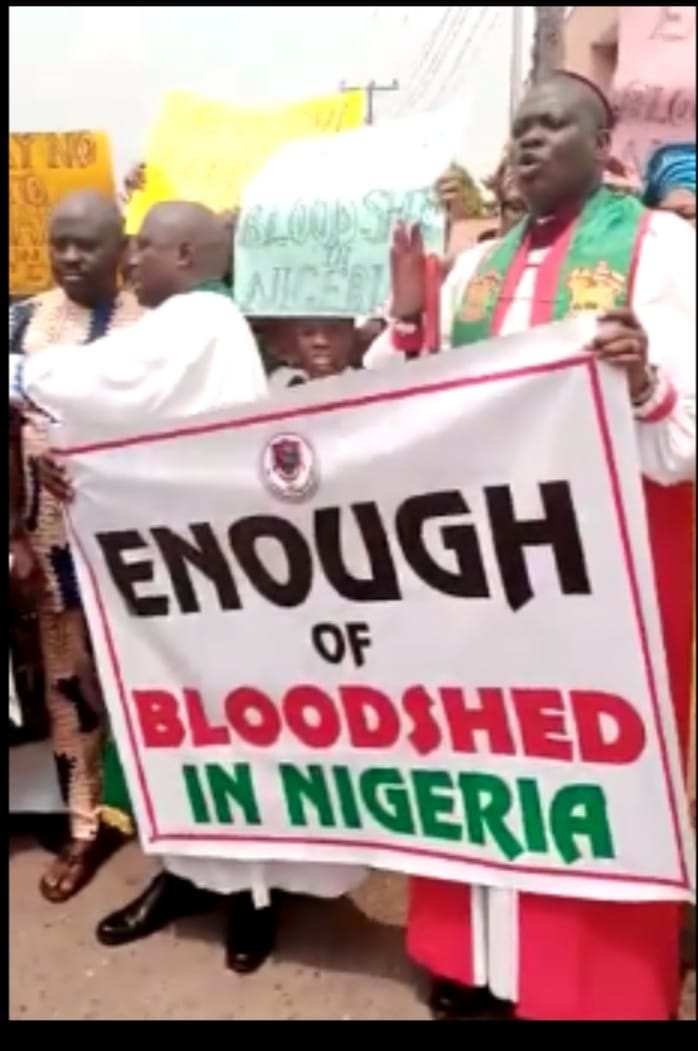
Praying While Nigeria Burns: How Religious Cowardice Has Replaced National Responsibility
By George Omagbemi Sylvester
In a country where churches and mosques line every street corner, where vigils echo louder than town hall meetings and where men of God are treated like royalty, Nigeria in 2025 is still groaning under the weight of insecurity. From banditry in the North-West, terrorism in the North-East, secessionist unrest in the South-East and rampant kidnapping across the South, Nigerians continue to live under siege. Yet, rather than confronting the root of this evil, too many of our religious leaders are asking citizens to “pray harder.”
If prayer alone could guarantee security, we would not need the police, the military, intelligence services or national security councils. We would simply replace the Ministry of Defence with a Ministry of Intercession. Unfortunately, this is not heaven, it is a country under attack and prayer is not a national security policy.
The Dangerous Illusion of Prayer as a Policy
The recent calls from Nigerian clerics urging citizens to “seek God’s intervention” against rising insecurity are not just misguided, they are dangerously irresponsible. It represents a national culture of escapism, one that tries to outsource responsibility to divine forces rather than holding government accountable or proposing concrete solutions.
As the saying goes, “God has no hands but ours.” Even the Bible itself warns against blind faith without action. James 2:17 declares: “Faith by itself, if it does not have works, is dead.” In Islam, the Hadith encourages believers to “tie your camel first, then put your trust in Allah.” So why are Nigeria’s men of God promoting helplessness?
Nigeria’s Grim Security Reality
According to the Global Terrorism Index (GTI) 2024, Nigeria remains one of the top 10 countries most impacted by terrorism, trailing only behind countries like Afghanistan and Syria. Boko Haram, ISWAP, Fulani herdsmen and bandits have killed over 80,000 Nigerians since 2011. The Armed Conflict Location & Event Data Project (ACLED) reported that over 5,000 Nigerians were killed or kidnapped between January and October 2024 alone.
President Bola Tinubu’s administration has repeatedly promised security reform, but the streets tell a different story. Communities in Zamfara, Niger and Borno continue to pay “taxes” to bandits. Schools are shut down in large swathes of the North for fear of abductions. In the South-East, military checkpoints have turned into extortion points while criminals hide under political agitation.
Yet, despite these glaring facts, instead of storming government houses with demands for justice and reform, our spiritual leaders are organizing “national days of prayer.”
Spiritual Cowardice in Robes and Collars
Many of Nigeria’s revered pastors and imams have simply chosen the path of least resistance. Rather than speak truth to power like the prophets of old like Elijah who confronted kings or Imam Ibn Taymiyyah who defied tyrants, they’ve become chaplains of the corrupt elite. Their pulpits are now platforms for praise-singing those in power, not calling them to accountability.
When was the last time you heard a popular megachurch pastor directly criticize Nigeria’s defense budget mismanagement? Or an influential imam demand police reform beyond platitudes? What we hear instead are sermons about “spiritual warfare” against “evil forces in high places” a euphemism that conveniently keeps them from naming names.
As Martin Luther King Jr. rightly said, “A time comes when silence is betrayal.” Nigeria’s religious leaders are betraying their flocks by cloaking cowardice in the garment of faith.
The Economics of Prayer-Based Leadership
Part of the reason religious leaders lean so heavily on prayer is because insecurity is good for business. The more afraid people are, the more likely they are to run to churches and mosques for solace. It creates a dependency loop, terror feeds fear, fear drives faith and faith fills offering baskets.
Nigeria’s religious industry is worth billions. Churches and mosques build estates, own private jets and have media empires. In many parts of Nigeria, clerics wield more power than governors. But what do they use that influence for? Is it to demand security architecture reform? No. It is to tell you that you were kidnapped because your “spiritual hedge was down.”
There is a difference between spiritual leadership and religious profiteering. The latter thrives in chaos.
What Real Leaders Do
History provides us with examples of faith leaders who were not afraid to fight for justice. Archbishop Desmond Tutu in apartheid South Africa used the church as a base for resistance, not resignation. Malcolm X spoke against oppression from the mosque, not merely prayed it away. In Nigeria, the likes of Archbishop Anthony Olubunmi Okogie and Sheikh Gumi (in his earlier years) stood for justice not silence.
The role of the clergy should be prophetic not passive. Nigeria does not need intercessors who romanticize passivity; we need warrior-priests who will take bold stands and tell the government, “Your failure is unholy.”
Security Is a Civic Duty, Not a Spiritual Event
The Nigerian government budgets billions for defense. In the 2024 national budget, over N3.25 trillion (about $2 billion) was allocated to security, yet insecurity remains a constant. The issue is not prayer; it is poor governance, corruption, lack of intelligence coordination and under-equipped forces.
Prayer is a private discipline; security is a public responsibility. No amount of fasting can stop a bandit with an AK-47. What stops him is law enforcement, intelligence and effective prosecution. Those who keep shifting the burden to God are enabling the failure of man.
As Thomas Jefferson once said, “God helps those who help themselves.”
What Must Change?
Religious Accountability: Men of God must be held to account for what they preach. Those who perpetuate fear instead of faith, and compliance instead of courage, should be challenged publicly.
Civic Education: Citizens must be taught that while prayer is valuable for personal peace, it is no substitute for civic engagement. Nigerians must demand results from security agencies, lawmakers and local leaders.
Security Reform: The Nigerian government must invest in not just military hardware but in intelligence, rapid response units, community policing and forensic investigation capabilities.
Courageous Clergy: Nigeria needs a new generation of fearless clerics, imams and pastors who will occupy not just prayer grounds, but protest grounds.
Demystify Religious Authority: Nigerians must stop giving religious leaders uncritical reverence. Ask questions. Demand clarity. Challenge false narratives.
Final note
Nigeria’s insecurity crisis is not just the failure of government; it is the silence of the pulpit. While prayer is noble, when used to mask cowardice, it becomes spiritual malpractice. The nation is bleeding. Children are being kidnapped. Farmers are being slaughtered. Soldiers are dying. And instead of resistance, we get prayer requests?
If Jesus overturned tables in the temple to cleanse corruption, what excuse do today’s religious leaders have for shaking hands with tyrants and thieves? If Prophet Muhammad led his followers to battle for justice, why are Nigerian imams calling for passivity?
A praying nation is a powerful thing. But a nation that prays without action is doomed to die with folded hands.





society
OWUTU FM 2026 Ramadan Lecture: Sheikh Jamiu Asanbe Urges Muslims to Avoid Showboating in Worship

OWUTU FM 2026 Ramadan Lecture: Sheikh Jamiu Asanbe Urges Muslims to Avoid Showboating in Worship.
The Chief Imam of Agelete Central Mosque, Ikoyi Lagos, Alhaji Jamiu Asanbe, has urged Muslims to remain sincere in their acts of worship and avoid the temptation of seeking public praise for good deeds.
The respected Islamic scholar gave this admonition while delivering a lecture at the OWUTU FM 2026 Ramadan Lecture, held on Saturday, February 28, 2026, in Lagos.
Speaking on the importance of sincerity in Islam, Sheikh Asanbe cautioned Muslim faithful against what he described as “showboating” — the practice of performing charitable acts or religious duties merely to gain recognition or admiration from others.
According to him, every act of worship in Islam must be done purely for the sake of Almighty Allah.
He explained that while acts such as prayer, fasting, and charity are fundamental pillars of faith, their true value lies in the intention behind them.
The cleric therefore encouraged Muslims to remain genuine in their devotion and avoid mixing their faith with the desire for worldly praise or attention.
Sheikh Asanbe also reminded the faithful that the holy month of Ramadan presents a unique opportunity for spiritual renewal. He urged believers to increase acts of generosity, particularly by supporting the needy, vulnerable members of society, and orphans.
Earlier in her remarks, the Convener of the Ramadan Lecture and CEO of OWUTU FM, Hajia Adejoke Muyibat Balogun, encouraged attendees to use the sacred month as a time for reflection, self-improvement, and community development.
She described the lecture theme as carefully selected to promote spirituality, strengthen faith, and encourage peaceful coexistence within the community.
Balogun expressed appreciation to the numerous guests and supporters who attended the event, noting that their presence reflected the strong bond within the community.
She further reaffirmed OWUTU FM’s commitment to sustaining the annual Ramadan Lecture, praying for Allah’s continued guidance and mercy in the years ahead.
The 2026 edition of the Ramadan Lecture attracted dignitaries and representatives from various organisations including Uzamot Communications, Okutex Fabrics, and the Yeye Asiwaju of Ojota Kingdom.
The event also featured engaging activities such as a quiz competition, where winners were presented with gifts. In the spirit of Ramadan, iftar meals were shared with guests, reinforcing the values of unity, generosity, and compassion that define the holy month.
Through initiatives like this, OWUTU FM continues to play a vital role in promoting faith-based dialogue, community engagement, and social harmony.
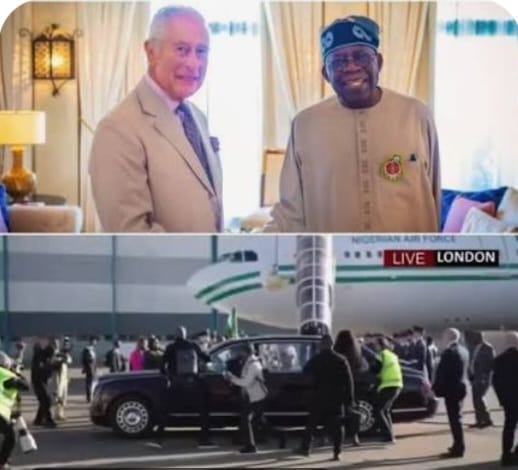
Tinubu Abroad, Nigeria in Chaos: The Spectacle of Elite Excess
By George Omagbemi Sylvester
“Government officials queue to bid him farewell as he departs, only to rush ahead and line up again to welcome him at his destination; a stark display of misaligned priorities in Nigerian leadership.”
Wednesday, March18, 2026
In a spectacle that has plunged Nigeria’s political class into fresh ignominy, a long line of federal ministers, governors, senators and political hangers‑on queued outside a London hotel this week to welcome President Bola Ahmed Tinubu, GCFR upon his arrival in the United Kingdom for a two‑day state visit.
Not only did these government officials send off Mr. Tinubu as he departed Nigeria (a ritual in itself excessive given the scale of pressing national crises) they rushed ahead to London to line the halls of his hotel, applauding and greeting him like conquering heroes arriving on foreign shores. This is how Nigeria’s elites now comport themselves while millions of citizens endure ever‑deepening hardship.
A Travesty of Priorities
Tinubu’s visit to the UK, hosted by King Charles III and Queen Camilla, is officially billed as an effort to deepen trade relations, attract investment and strengthen bilateral cooperation between Britain and Africa’s most populous nation. While those diplomatic objectives in theory could benefit Nigeria, the optics of an entire political class fawning over a president abroad are unbearably grim against the backdrop of domestic suffering.
According to recent economic analysis, despite macroeconomic adjustments such as ending fuel subsidies and floating the naira, more than 60% of Nigerians still live in poverty and daily hardships are rampant. Security remains a grave concern with violence and banditry destabilising large swathes of the country. Instead of addressing these crises with urgency, Nigeria’s leadership appears fascinated with photo‑ops overseas.
“A System of Self‑Centred Elites”
Critics within Nigeria have not minced words. Political observers describe the spectacle as a display of self‑centred politics divorced from the realities facing ordinary citizens. One observer on social platforms summed up the broader sentiment: “Tinubu represents a system of self‑centred elites (elite consensus over popular will) and this is exactly the performative politics that lines like these embody.”
Dr. Godfrey Mwakikagile, a respected African scholar on post‑colonial governance, has long warned that bad leadership and lack of accountability are Africa’s greatest challenges. “Power in many African states is too centralised and concentrated in the hands of elites who use it to perpetuate themselves at the expense of the public good,” Mwakikagile recently argued; a critique that resonates all the more when ministers fly abroad not to pursue tangible policy but to line up like admirers.
The Cost of Foreign Pageantry
This isn’t the first time Tinubu’s foreign engagements have attracted scrutiny. His administration’s frequent travels (often with large entourages) have drawn criticism for prioritising optics over outcomes, especially when Nigeria’s economy contracts and its people struggle with food inflation and insecurity.
Former presidential candidate Peter Obi has been among the most vocal domestic critics of these priorities, noting that Tinubu’s extensive foreign travel (including to the UK) distracts from urgent national needs and has become a “matter of grave concern.” Obi insists that such actions reveal a leadership more interested in global visibility than domestic wellbeing.
Nigeria Jagajaga!
The phrase “Nigeria jagajaga” (loosely translated as Nigeria being in disarray) has never felt more apt. A nation where ministers greet presidents in plush foreign suites while citizens queue for food and services is a country deeply out of balance.
Instead of being welcomed like dignitaries abroad, ministers and governors should be at home addressing the root causes of Nigeria’s struggles: insecurity that displaces communities and kills livelihoods, an economy that leaves the majority impoverished despite reforms, and the persistent failings of governance that erode public trust.
What Nigerians Deserve
President Tinubu and his entourage should be judged not by the number of ministers who lined up to greet him in London, but by the lives changed back in Nigeria.
As scholars like Mwakikagile and critics like Obi remind us, political leadership must be accountable and grounded in service, not spectacle. Nigeria’s leaders owe the people more than applause at international hotels; they owe them safety, economic opportunity, and genuine progress.
If this nation is ever to break free from the cycle of “jagajaga,” then those in power must demonstrate sincerity, not pageantry; action, not admiration. The lines outside a London hotel are not a testament to leadership; they are a testament to where Nigeria’s priorities have tragically come to rest.


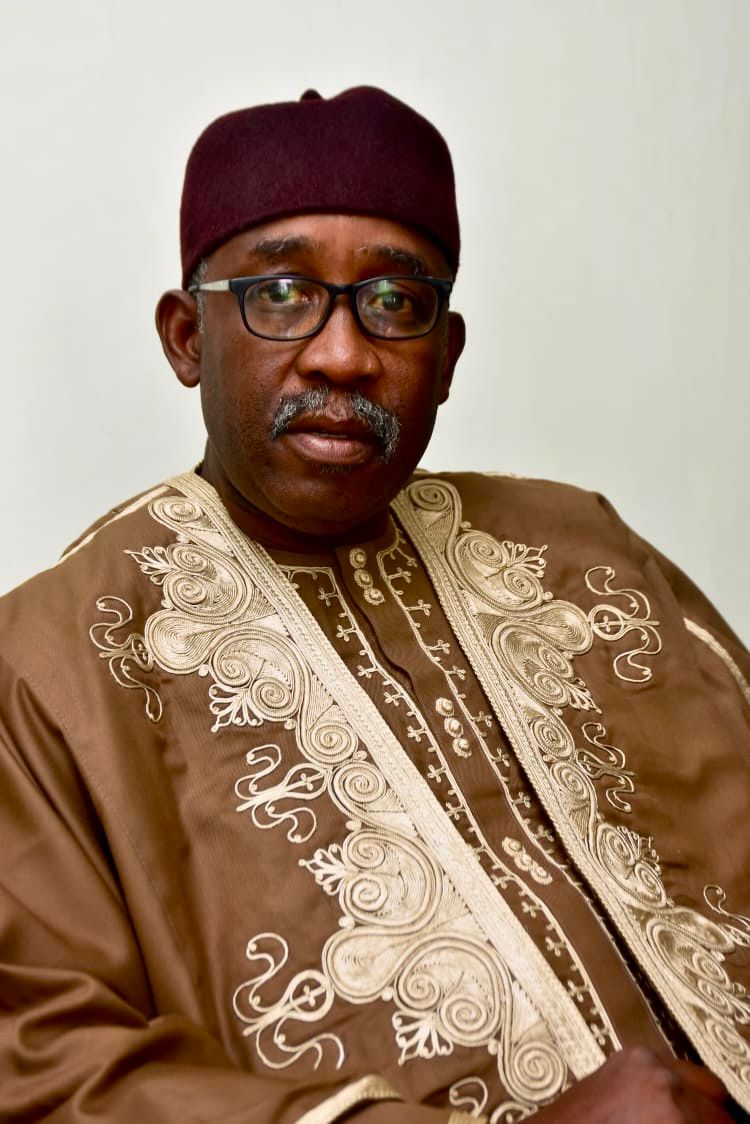
GENERAL BULAMA BIU MOURNS VICTIMS OF BORNO ATTACKS, CALLS FOR UNITY AND VIGILANCE**
In a solemn and heartfelt message, Major General Abdulmalik Bulama Biu (Rtd), mni, the Sarkin Yakin Biu, has expressed profound grief over the recent tragic incidents of bomb explosions in Maiduguri and renewed violent attacks in several communities across Borno State.
This was contained in a statement he personally signed and made available to the press.
The retired senior military officer described the assaults which affected areas including Ngoshe, Mandiragirau, Ajiri, and Buratai as “cruel and most barbaric,” particularly as they occurred during a period of deep religious observance for many residents. General Biu extended his condolences to His Excellency, Professor Babagana Umara Zulum, the Executive Governor of Borno State, the people of the state, and especially the immediate families of the victims.
“These unfortunate attacks have painfully led to the loss of innocent lives and destruction of properties, a painful reminder of the challenges we continue to face as a people,” he stated.
General Biu prayed that Almighty Allah grants the deceased eternal rest (Jannatul Firdaus) and grants the injured a speedy recovery. He also commended the bravery and swift response of security agencies and emergency responders, acknowledging their tireless efforts to protect lives and restore peace in the state.
Addressing the resilient people of Borno, including elders, community leaders, associations, and the vibrant youth, General Biu urged steadfastness, unity, and increased vigilance. “Let us once again rejig our commitment and ensure we overcome this development. We have done it in time past, we can still do it now together,” he emphasized.
He further called on citizens not to allow “these cowardly acts to break our spirit or weaken our collective resolve to achieve lasting peace and stability.”
In strong terms, General Biu declared his solidarity with Governor Zulum, the state government, stakeholders, and all well-meaning citizens in condemning the attacks. He concluded his message with a prayer: “May Allah (SWT) bring lasting peace to Borno State and the entire nation.”


-

 society6 months ago
Religion: Africa’s Oldest Weapon of Enslavement and the Forgotten Truth
-

 news3 months ago
WHO REALLY OWNS MONIEPOINT? The $290 Million Deal That Sold Nigeria’s Top Fintech to Foreign Interests
-

 society6 months ago
“You Are Never Without Help” – Pastor Gebhardt Berndt Inspires Hope Through Empower Church (Video)
-

 society7 months ago
Who is Chief Kestin Pondi? Niger Delta’s “People’s Chief” Winning Hearts With Hundreds of Millions in Generosity