
society
BIRNIN KEBBI IN PERIL: MALAMI’S CONVOY ATTACKED AS DEMOCRACY SHRINKS. By George Omagbemi Sylvester / saharaweeklyng.com

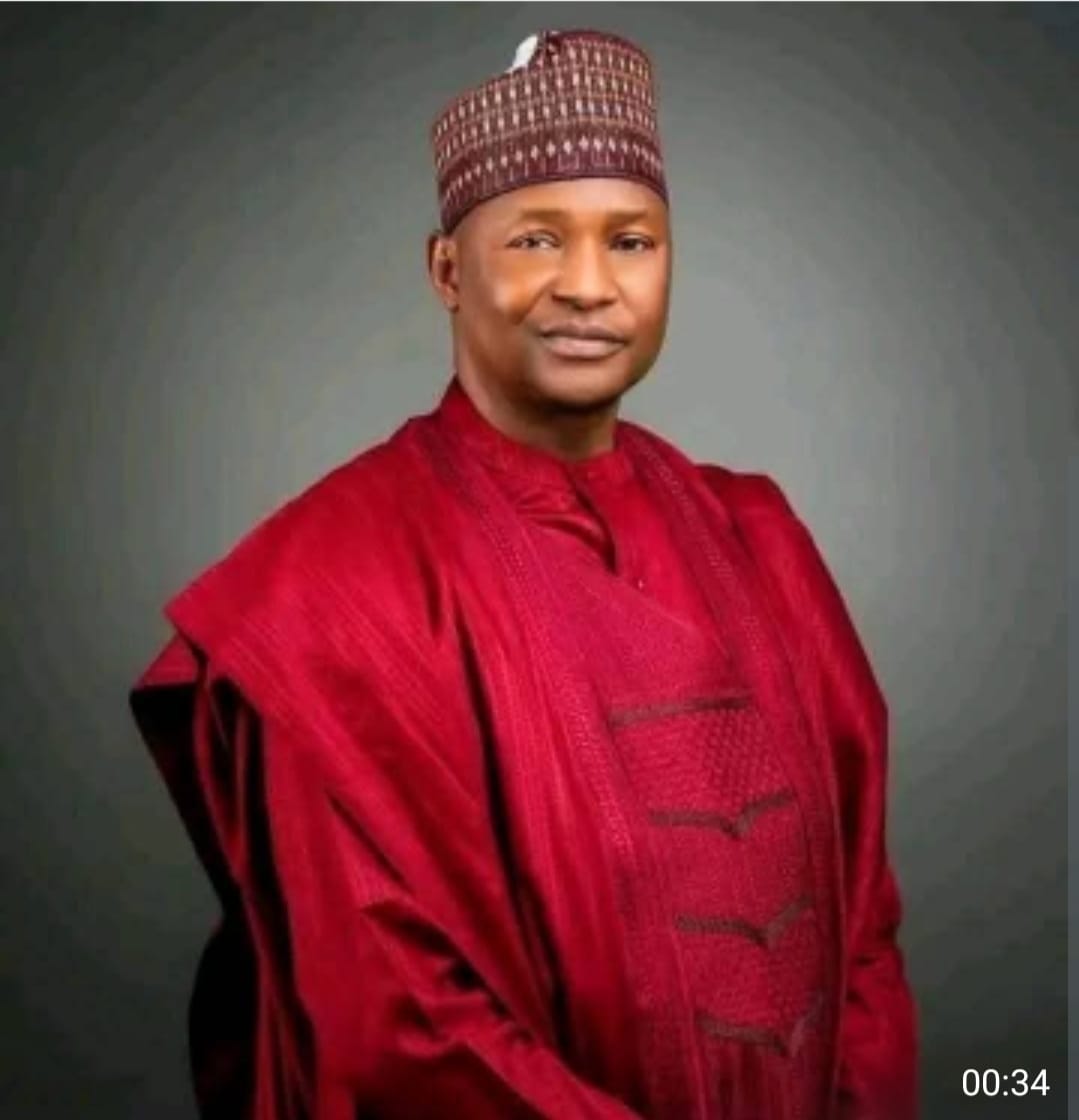
BIRNIN KEBBI IN PERIL: MALAMI’S CONVOY ATTACKED AS DEMOCRACY SHRINKS.
By George Omagbemi Sylvester / saharaweeklyng.com
Birnin Kebbi, September 2nd, 2025 ~ In a harrowing assault that starkly exposes the erosion of democratic norms, former Attorney-General of the Federation and Minister of Justice, Abubakar Malami SAN, along with his entourage, narrowly escaped violence on Monday, September 1st, 2025, during what was meant to be a solemn condolence visit in the Kebbi State capital. The convoy of the African Democratic Congress (ADC) leader was met with a hail of stones and weapons, leaving several vehicles destroyed and supporters injured. A chilling testament to political intolerance.

Chaos Unleashed in the Heart of Democracy.
Multiple reports confirm the attack occurred in Birnin Kebbi metropolis as Malami returned from paying respects to families, including those of the late Emir of Zuru, whose passing occurred weeks earlier. Saharaweeklyng.com details that “about 10 vehicles in the convoy were vandalised, while several of Malami’s supporters sustained varying degrees of injuries”
SaharaWeeklyNG.com – Nigeria news. Adding grim specifics, the ADC leader recounted:
“I was in Birnin Kebbi solely to pay condolence (not for political campaigns) and some thugs emerged from the APC state headquarters, armed with weapons, stones and attacked our convoy, destroying vehicles and injuring members of our convoy.”

In a contrasting claim, the APC’s Kebbi State Publicity Secretary suggested that security personnel attached to Malami’s convoy escalated the confrontation by opening fire.
Nonetheless, the saharaweeklyng.com records that the All Progressives Congress in Kebbi “condemned in totality” the attack and pledged to investigate those responsible.
A Disturbing March Toward Political Violence.
This incident rings alarm bells far beyond Birnin Kebbi. It resonates with a chilling trend in Nigerian politics: the weaponization of violence and intimidation to suppress opposition voices. Just days earlier, ADC coalition members under former Kaduna Governor Nasir el-Rufai were attacked by hoodlums wielding cutlasses, clubs, stones (and in some accounts, firearms) during a transition committee meeting in Kaduna. A spokesperson for el-Rufai warned such events signify a “dangerous descent into lawlessness”.

The Voice of Authority: Scholars Weigh In.
To underscore the gravity of these attacks, it’s instructive to invoke scholarly reflections on the health of democracy.
Dr. Aisha Bello, political scientist at Ahmadu Bello University, reminds us:
“When political disagreements spill into violence, democracy itself is weakened. A system that cannot guarantee safety for opposition is already in peril.”
Professor John Nwosu, constitutional law expert, warns:
“The right to peaceful assembly is sacred. When that right is breached, especially by political actors, the very foundation of civil society is being eroded.”
Ms. Funmi Akinrinde, senior researcher at the Democracy Institute of Nigeria, adds:
“These orchestrated attacks are not spontaneous. They’re signals, a chilling message of who may safely exist in public life.”
Contextualizing Political Intimidation in Kebbi.
Kebbi State has long been a political battleground. Malami, a former APC insider and long-serving AGF (2015-2023), now leads the ADC. His growing prominence (some say) threatens established power structures in the state, in particular, the APC’s grip. A pro-Malami camp even suggests that the APC leadership is unsettled by his rising profile ahead of the 2027 governorship race.
In this light, what occurred looks less like random violence and more like partisan intimidation. Ten vehicles destroyed, supporters hurt, a grievance-seeking convoy halted not by chance, but by political calculation.
No Retreat, No Surrender.
Standing firm, Malami asserted:
“The truth is, when it comes to politics in Kebbi State, there is no retreat, no surrender.”
This resolve stands against a backdrop of insecurity not only physical, but institutional. It demonstrates a commitment to challenging authoritarian double standards and affirms the rights owed to opposition actors in a democracy.
What Must Happen Next.
Transparent Investigation
The APC’s vow to probe the incident must result in concrete, impartial inquiry. All implicated parties (thugs, possible organizers, even convoy members) must be held accountable.
Strengthen Protection for Opposition.
The police and security agencies must ensure opposition figures, especially during peaceful civic activities, are afforded protection not persecution.
Reaffirm Civil Liberties
Society must reject the view that democracy is a privilege. As noted by ADC’s Bolaji Abdullahi: policing and assembly rights are constitutional, not discretionary.
Prompt Public Condemnation
Leaders (political, academic, religious) must unify to condemn such attacks, safeguarding democracy from violent erosion.
Final Analysis.
Monday, September 1st attack on Abubakar Malami’s convoy is more than an ugly political episode, it’s a dangerous barometer of Nigerian democracy. In a healthy polity, the grieving are spared harm, the opposition is protected, and civil liberties flourish; but when stones and might overturn discourse, democracy convulses.
As the dust settles over Birnin Kebbi, the words of Prof. John Nwosu echo ominously: “Democracy is not guaranteed (it is defended, day by day.” It falls upon all stakeholders) citizens, institutions, leaders to defend it now. If a condolence convoy can be attacked today, tomorrow, anything is possible.






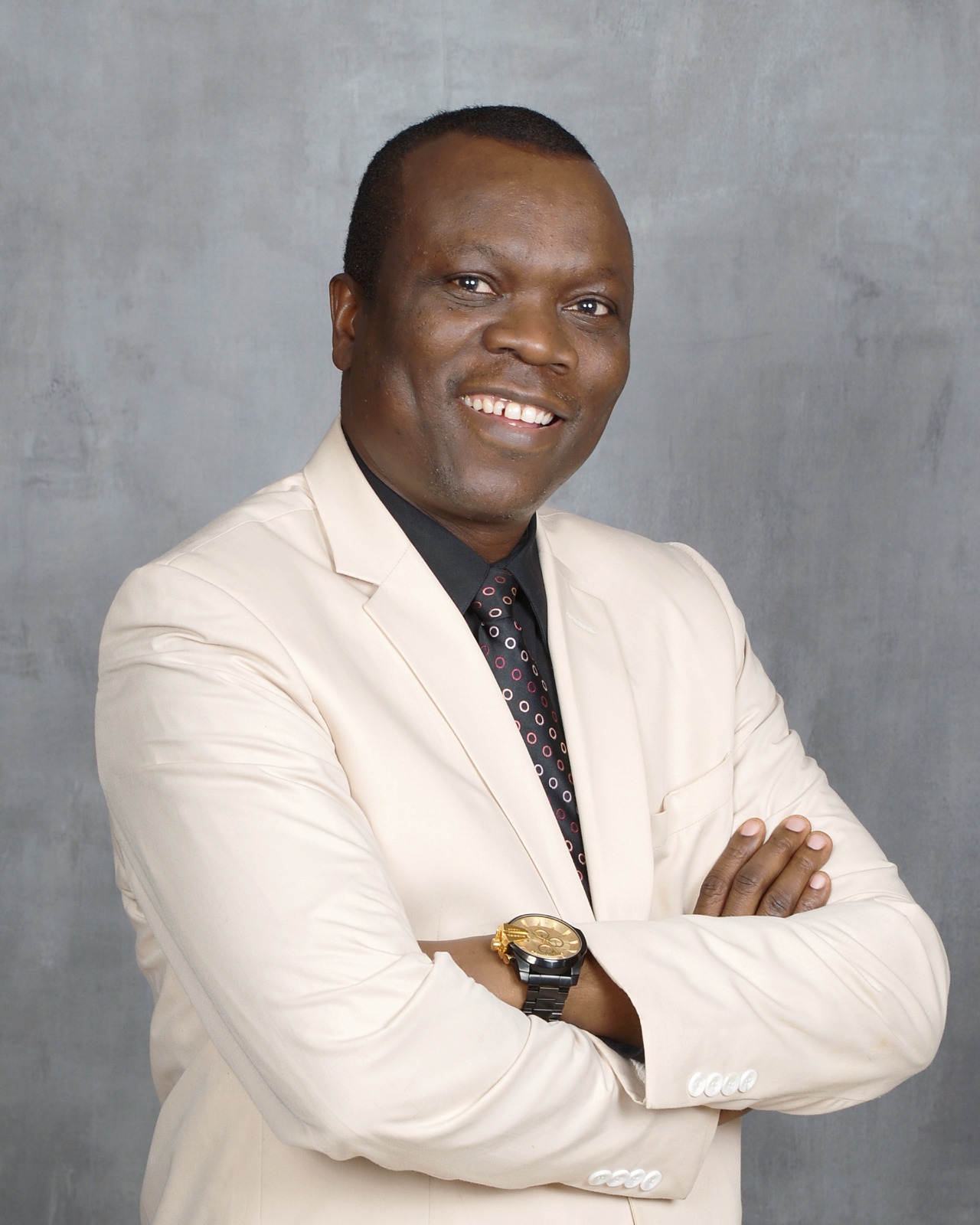
Banwo Questions Bwala’s Credibility After Al Jazeera Interview
Public commentator, Dr. Ope Banwo, has criticised Daniel Bwala, the Presidential Spokesperson on Policy Communication for President Bola Ahmed Tinubu, following a contentious interview on Al Jazeera, describing the appearance as damaging to the credibility of Nigeria’s public communication.
Bwala had appeared on a programme hosted by journalist Mehdi Hasan, where he faced a series of questions about past statements attributed to him. During the exchange, Hasan presented video clips of previous remarks by the government spokesman and asked him to reconcile them with his responses during the interview.
The exchange, which has since circulated widely online, drew attention after Bwala appeared to dispute statements that were subsequently played back during the programme.
Reacting to the development, Banwo said the episode reflected poorly on Nigeria’s representation on international media platforms.
According to him, the availability of digital records and online archives means public officials must be prepared to defend their past statements whenever they appear on global television.
“In the era of instant fact-checking, any public figure going on international television must assume that every previous statement can be easily retrieved,” Banwo said.
He added that the controversy surrounding the interview was particularly troubling because the contradictions presented during the programme were supported with video evidence.
Banwo noted that while political interviews can be confrontational, government representatives should expect tough questioning when appearing before international audiences.
The founder of Naija Lives Matters also expressed concern over Bwala’s reaction during the interview, especially his claim that he was not informed he would be required to defend his personal record.
“A government spokesman should never be surprised by questions about his own public statements,” Banwo said.
During the programme, Bwala also responded to criticism of Nigeria’s governance challenges by arguing that similar problems exist in other parts of the world.
However, Banwo argued that such comparisons do not address the specific issues raised about Nigeria.
According to him, the episode should serve as a reminder of the importance of preparation and credibility when Nigerian officials appear before international media platforms.
The interview has continued to generate reactions across social media and political commentary circles, with observers debating both the conduct of the interview and the implications for Nigeria’s global image.
society
THE IMPERIAL GOLD COIN OF THE UNITED KINGDOM OF ATLANTIS UNVEILED AS SYMBOL OF SOVEREIGNTY AND HERITAGE

THE IMPERIAL GOLD COIN OF THE UNITED KINGDOM OF ATLANTIS UNVEILED AS SYMBOL OF SOVEREIGNTY AND HERITAGE
_[Atlantis City, United Kingdom of Atlantis – March 2026]_ – The United Kingdom of Atlantis proudly announces the introduction of its *Imperial Gold Coin*, a magnificent emblem of sovereignty, authority, and imperial heritage. The exquisite gold coin has been crafted to represent the nation’s regal tradition, economic strength, and the visionary leadership of its monarch.
The centerpiece of the coin features the dignified portrait of *His Imperial Majesty, Professor Solomon Wining*, depicted in full royal regalia. Crowned with a majestic golden crown and adorned with intricately crafted ornaments, the portrait embodies honor, wisdom, and noble leadership befitting a sovereign ruler. The depiction celebrates the monarch’s reign, which is associated with wisdom, development, and the pursuit of justice.
The golden coin itself signifies *prosperity, stability, and the enduring legacy* of the Atlantis Kingdom. Gold, historically a universal symbol of power, wealth, and permanence, reflects the strength and vision of the kingdom’s leadership and its aspirations for lasting greatness.
Encircling the royal portrait is the carefully engraved inscription *“United Kingdom of Atlantis”*, reinforcing the state’s identity any the authority of its sovereign ruler. The lower rim of the coin prominently displays the name *Solomon Wining*, commemorating the monarch whose leadership is linked to noble governance and national advancement.
The phrase *“Gold Coin”* highlights not only the currency’s intrinsic value but also its symbolic significance as a representation of the kingdom’s economic structure and royal treasury. Beyond its aesthetic elegance, the coin serves as a *mark of sovereignty*, a seal of authority, and a reminder of the royal institution governing the United Kingdom of Atlantis.
The Imperial Gold Coin represents:
– *Unity* among citizens,
– *Loyalty* to the crown,
– A vision of a kingdom built upon *justice, prosperity, and noble leadership*.
Every detail—from the engraved crown to the polished golden surface—makes the coin a timeless emblem of imperial prestige and national pride. It stands as both a symbol of wealth and a monument to the legacy of royal leadership, reminding all who behold it of the enduring power and majesty of the United Kingdom of Atlantis.
The United Kingdom of Atlantis is a sovereign nation dedicated to upholding traditions of regal governance, cultural heritage, and economic prosperity, guided by the wisdom of its imperial leadership.
_Notes to Editors_:
The Imperial Gold Coin is intended for commemorative and symbolic purposes, representing the nation’s imperial heritage and royal authority.
Ajadi Visits Ibadan Chief Imam, Receives Blessings
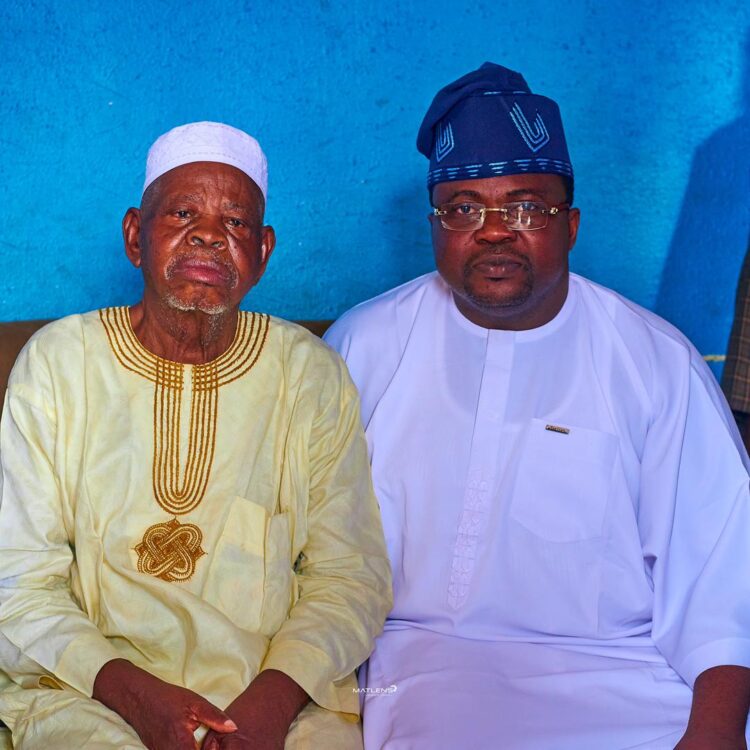
The leading gubernatorial aspirant in Oyo State on the platform of the Peoples Democratic Party (PDP), Ambassador Olufemi Ajadi Oguntoyinbo, on Wednesday paid a courtesy visit to the Grand Chief Imam of Ibadanland, Sheikh Imam Abdul Ganiy Abubakir Agbotomokekere, at his Oja’ba residence in Ibadan, where discussions centred on leadership, integrity, and the role of prayers in governance.
Ajadi, who described the revered Islamic cleric as a spiritual pillar in Oyo State, said his visit was to seek prayers and wise counsel as he continues consultations ahead of the 2027 governorship race.
While addressing the Chief Imam, Ajadi commended his consistent prayers for Ibadanland, Oyo State and Nigeria, noting that religious leaders remain critical stakeholders in nation building.
“I have come to seek your prayers and spiritual blessings because of your important role in promoting peace, unity and moral guidance in our society,” Ajadi said.
“I also want to appreciate your continuous prayers for the progress of Ibadanland, Oyo State and Nigeria as a whole. My prayer is that Almighty Allah will continue to grant you sound health and long life to witness many more Ramadan seasons on earth.”
Speaking further, the PDP gubernatorial aspirant emphasised the need for leadership driven by compassion, fairness and accountability, stressing that his political aspiration is rooted in service to the people.
“My ambition is not just about occupying an office but about serving the people with sincerity and fear of God. We must continue to encourage politics that will bring development and improve the welfare of our people,” he added.
While speaking with journalists after the visit, Ajadi also assured the people of Oyo State and Nigerians at large that the internal crisis and political tensions within the Peoples Democratic Party (PDP) have been brought under control by the grace of God. He expressed optimism that the party would emerge victorious in all elective positions in the 2027 general elections.
In his response, Sheikh Agbotomokekere advised the governorship hopeful to remain focused on the principles of good governance, warning against corrupt practices often associated with politics.
The respected Islamic scholar noted that while politics is practised differently by individuals, only leaders with integrity and fear of God can truly deliver the dividends of democracy.
“Politics is practised by different kinds of people. Some play politics in a corrupt way, while others practise it with sincerity. My prayer is that you will be among those who will practise democracy in the right way if you become governor,” the Chief Imam said.
He reminded the aspirant that human ambition can only be fulfilled by divine approval, stressing that ultimate power belongs to God.
“Whoever is seeking a position should know that only Allah can make such an ambition come true. Whether a person becomes famous or remains unknown is also by the will of Allah,” he said.
Offering prayers for the politician, the cleric added: “Many people may be struggling for a position meant for one person, and it is only God who knows the rightful person. I pray that Almighty Allah will make you the chosen one among all the contenders.”
Using a football analogy to further illustrate his point, the cleric advised Ajadi to be wary of political distractions and misleading influences.
“On the football field, sometimes spectators believe they understand the game more than the players themselves. I pray that you will not be misled by so-called political gurus and that God will guide your steps aright,” he said.
Sheikh Agbotomokekere, the 18th Chief Imam of Ibadanland, is widely respected across South-Western Nigeria for his scholarship, spiritual leadership and advocacy for peaceful coexistence among religious and political groups.
Observers say the visit forms part of Ajadi’s ongoing consultations with key stakeholders, traditional rulers and religious leaders as political activities gradually gather momentum ahead of the next electoral cycle in Oyo State.
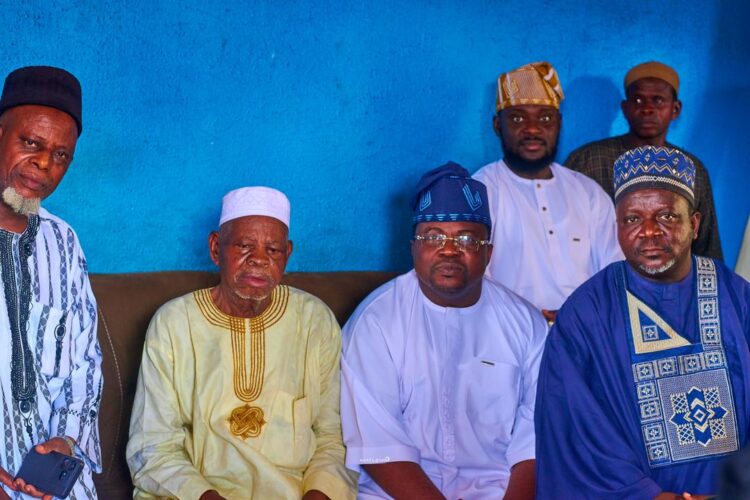
The cleric offered special prayers for peace in Oyo State, successful leadership, and continued unity among the people despite political and religious differences.


-
 society6 months ago
Religion: Africa’s Oldest Weapon of Enslavement and the Forgotten Truth
-

 news3 months ago
WHO REALLY OWNS MONIEPOINT? The $290 Million Deal That Sold Nigeria’s Top Fintech to Foreign Interests
-

 society6 months ago
“You Are Never Without Help” – Pastor Gebhardt Berndt Inspires Hope Through Empower Church (Video)
-

 Business7 months ago
GTCO increases GTBank’s Paid-Up Capital to ₦504 Billion