
society
Fault Lines in the Temple of Justice: What the Nestoil–Neconde Order Reveals About the Limits of Judicial Discretion


–Controversial Ex Parte Order Rekindles Questions Around Courtroom Impunity
…And How a Fake $5m Bribery Allegation Tried — But Failed — to Tarnish a Chief Judge
The gavel can be an instrument of justice or a hammer of ruin. In Nigeria’s turbulent judicial arena, few recent episodes have ignited as much scrutiny as the ex parte order issued by Justice Isaac Deinde Dipeolu of the Federal High Court, Lagos, in the complex dispute involving Nestoil, Neconde, and a tangled matrix of loan collateral.
What began as a routine commercial disagreement has now evolved into a national conversation on judicial discretion, institutional integrity, and the simmering anxiety around the impartiality of Nigeria’s courts.
Through layers of filings, rebuttals, and political noise, one fact stands out: the court order was so sweeping in scope and so startling in reach that it reopened long-quiet questions about the judge who issued it—questions far larger than the courtroom where they resurfaced.
A Judge Under a Long Shadow
Justice Dipeolu is neither obscure nor new to controversy. Over the years, his name has appeared repeatedly in conversations about unorthodox rulings and contested interpretations of the law. Civil society groups and legal commentators frequently describe his decisions as those that attract unusual appellate scrutiny.
Those concerns resurfaced two years ago when he was compelled to withdraw from the high-profile forfeiture case involving former Central Bank Governor Godwin Emefiele. Rumours—never proven—of financial inducement swirled, and his abrupt exit left a residue of public doubt. Since then, subsequent rulings have been viewed through a harsher lens.
Another storm erupted after his October 25, 2025 order directing Lotus Bank to seize the assets of Unpacked Limited, a firm linked to Feyikemi Abiodun and guaranteed by Oluwafemi Badewole. Analysts criticised the order for technical inaccuracies and procedural lapses. To critics, these episodes formed a pattern: a judge whose discretionary decisions often appeared fluid, unpredictable, and legally fragile.
The Nestoil Order — A Legal Earthquake
The latest controversy centres on Nestoil, a major Nigerian energy conglomerate; Neconde Energy, operator of key OML 42 assets; and a consortium of lenders seeking to enforce loan security rights.
Nestoil had borrowed from several banks, pledging a range of assets as collateral. First Trustees, the security trustee, appointed Senior Advocate of Nigeria Abubakar Sulu-Gambari as receiver/manager after an alleged default—a standard commercial process.
Trouble began when the lenders attempted to expand the collateral pool to include Neconde’s OML 42 interest. But Neconde’s stake in OML 42 was already pledged to a different set of lenders whose consent was required for any second-ranking charge. They refused, making the creation of such a charge legally impossible.
Yet when the matter reached Justice Dipeolu on an ex parte basis, he granted an order allowing Nestoil’s receiver/manager to take over not only Nestoil’s assets, but also Neconde’s office, assets, and OML 42 interest—property over which the Nestoil lenders held no security rights.
Order 5 was the flashpoint:
It authorised the takeover of Neconde’s Victoria Island office, its assets within the court’s jurisdiction, and its OML 42 joint-venture interest—all pending the hearing of a motion on notice.
To commercial lawyers, it was an earthquake masked as routine procedure. The order effectively displaced Neconde’s own lenders, granting control to creditors who held no charge over its assets. It violated the first rule of secured credit:
Collateral follows the creditor who holds the charge—not the one who desires it.
Within days, four of Neconde’s actual lenders applied to be joined in the suit, seeking to dismantle what they described as a legally unsustainable order. Their intervention signalled just how destabilising the ruling was for Nigeria’s commercial environment.
The Question of Judicial Discretion
Ex parte orders are extraordinary tools, granted only in emergencies to prevent irreparable harm. But analysts argue that the Nestoil scenario did not remotely meet this threshold. No evidence suggested that Neconde’s OML 42 interest was in danger of being dissipated. The dispute centred on the validity of collateral—not on an imminent threat.
To critics, Justice Dipeolu’s decision was not merely an overreach; it was an affront to judicial restraint.
When a False Bribery Rumour Enters the Arena
As the controversy intensified, an online rumour emerged claiming that the Chief Judge of the Federal High Court, Justice John Tsoho, had received a $5 million bribe to direct Justice Dipeolu to step aside from the Nestoil case.
The allegation quickly collapsed under scrutiny. Legal experts clarified that the Chief Judge’s directive was a routine administrative step triggered by a petition filed by the Nestoil Group to the National Judicial Council. Standard judicial procedure requires a judge to recuse himself when such petitions are lodged.
Thus, what was portrayed as corruption was simply the judiciary following its internal rules. Observers believe the false bribery narrative was an attempt to distract from the substance of the controversy or shield Justice Dipeolu from scrutiny.
A Judiciary at a Critical Crossroads
Nigeria’s judiciary is already burdened with public distrust—accusations of corruption, inconsistent rulings, and political interference. Cases like Nestoil–Neconde become more than legal disputes; they become symbols of a system wrestling with its own credibility.
When ex parte orders are issued without urgency, when collateral hierarchies are ignored, when judges hesitate to step aside after petitions are filed, the judiciary’s legitimacy shakes.
Yet the system also shows signs of resilience:
Neconde’s lenders challenged the order.
The NJC became involved.
The Chief Judge exercised administrative oversight.
Safeguards exist—the question is whether they are applied consistently.
What Comes Next
Applications to set aside the ex parte order await determination. The NJC petition is still under review. Nestoil lenders, Neconde lenders, and multiple stakeholders continue to press their cases in what has become one of the year’s most closely watched commercial disputes.
But the larger conversation remains:
What are the limits of judicial discretion, and how do we safeguard the integrity of the courts?
Justice Dipeolu’s critics argue that his rulings reflect a troubling disregard for judicial responsibility. His defenders say he merely exercised discretion within the law. But in the Nestoil matter, the facts and the law appear aligned in ways that make the controversy difficult to dismiss as mere difference of legal opinion.
For now, the case stands as a mirror—revealing both the strengths and the fault lines in Nigeria’s temple of justice.




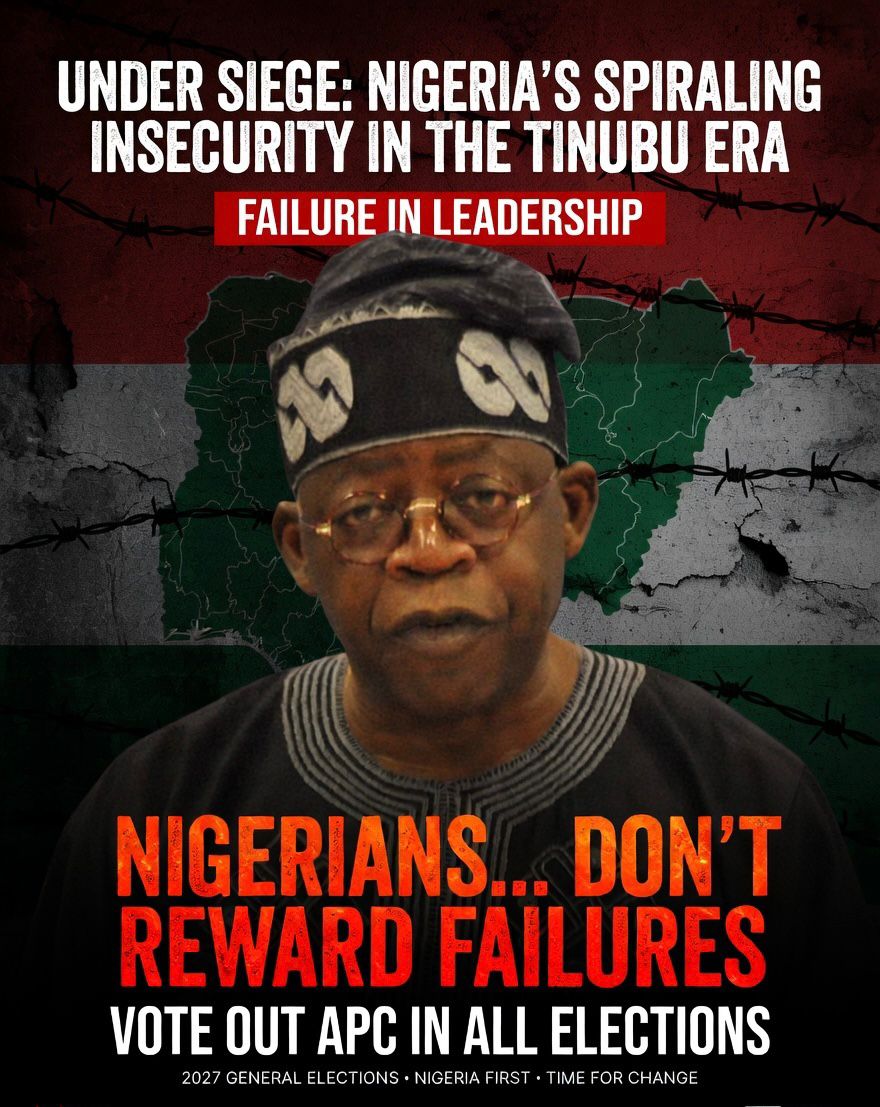
Under Siege: Nigeria’s Spiraling Insecurity in the Tinubu Era
By George Omagbemi Sylvester
“As Violence and Kidnappings Surge, Nigerians Face a Humanitarian and Security Crisis Amid Perceived Government Inaction”
Since President Bola Ahmed Tinubu assumed office on May 29, 2023, the promise of a “Renewed Hope” has been starkly overshadowed by a relentless wave of violence and insecurity across Nigeria. Despite early pledges to prioritise national safety, the reality for millions has been a harrowing descent into a pervasive climate of fear. From the rugged terrains of the Northwest to the insurgent‑heavy Northeast, criminal cartels, bandits and extremist groups continue to challenge the state’s ability to protect its citizens.
Independent monitoring groups and international bodies such as Amnesty International estimate that over 10,000 Nigerians have lost their lives in violent attacks since Tinubu took office. Alongside this grim death toll is the dramatic escalation of abductions and the “kidnap‑for‑ransom” economy, which reportedly drained more than $1.4 billion (about ₦2.23 trillion) from families in the administration’s first year alone. This financial drain has compounded psychological trauma and deepened economic hardship.
“Nigeria’s security crisis is not merely a law enforcement problem,” says Prof. Abuja‑based security analyst Dr. Chukwuemeka Eze, “it is a symptom of systemic governance failure; where the state cannot guarantee the safety of its citizens.”
In the Northwest and Northcentral regions (including states such as Zamfara, Kaduna and Plateau) armed gangs have razed villages and forced farmers to pay “harvest levies” just to access their own lands. This has devastated local food systems and contributed to rising inflation.
Meanwhile, in the Northeast, fractious insurgent groups such as Islamic State West Africa Province and factions of Boko Haram continue to mount attacks against military and civilian targets. While the military claims to have “degraded” these groups, they remain capable of coordinated assaults, keeping large areas of the region under persistent threat.
Adding a new layer of complexity is the emergence of the “Lakurawa” group in the Sokoto‑Kebbi axis, signalling that old threats persist even as new ones take root.
Critics argue that the Tinubu administration’s focus on economic reforms (such as fuel subsidy removal and currency realignment) has come at the expense of human security. Former defence policy adviser Prof. Ayo Ajayi of Ahmadu Bello University notes, “Security is the foundation of economic growth. Without it, reforms risk becoming hollow promises for millions who live daily under threat.”
Late in 2025, President Tinubu declared a national security emergency and authorised the recruitment of additional security personnel. However, many Nigerians perceive these measures as reactive rather than proactive. The government’s increased reliance on non‑kinetic strategies (such as negotiations and amnesties for some criminal elements) has been met with scepticism.
Observers argue this approach has inadvertently emboldened criminal networks, turning kidnapping into a low‑risk, high‑reward enterprise. Although the state has acquired new military hardware and reshuffled service chiefs, these changes have yet to translate into a sense of safety for ordinary citizens.
The situation is not merely a security challenge but a humanitarian crisis. Civilians are being displaced, families are paying enormous ransoms under duress, and school abductions have uprooted thousands of students from classrooms.
Political scientist Dr. Yemi Ogunleye of the University of Lagos warns, “When the monopoly of coercive force shifts from the state to non‑state actors, the very fabric of democracy is threatened. Citizens must feel safe within their borders; otherwise governance itself becomes irrelevant.”
The Peoples Democratic Party (PDP) insists it has the experience and strategy necessary to confront Nigeria’s security challenges, arguing that decisive leadership and strengthened community defence initiatives are critical. Many Nigerians now look back on previous administrations with the hope that a change in leadership might bring a corresponding shift in national safety and stability.
Until the state can effectively reclaim its monopoly on the use of force and protect lives and properties, the “Renewed Hope” agenda will continue to ring hollow for millions living in the shadow of insecurity.
Published on Tuesday, March 17, 2026


society
MAIDUGURI EXPLOSION: SECURITY FORCES WORKING TIRELESSLY TO END INSECURITY – GEN. CG MUSA SUPPORT INITIATIVE URGES CALM
*MAIDUGURI EXPLOSION: SECURITY FORCES WORKING TIRELESSLY TO END INSECURITY – GEN. CG MUSA SUPPORT INITIATIVE URGES CALM, CONDOLES WITH BORNO OVER BOMB BLAST*
The Gen Christopher Gwabin Musa Support Initiative has extended its profound condolences to the government and resilient people of Borno State following a tragic bomb blast in Maiduguri town on Monday evening.
The attack, was condemned in the strongest terms in a statement signed by the Initiative’s Convener, Ibrahim Dahiru Danfulani, Sadaukin Garkuwan Keffi/Betara Biu, and made available to the press.
In the statement, the Initiative conveyed a powerful message of reassurance from its Grand Patron, His Excellency Gen. Christopher Gwabin Musa, OFR, the Minister of Defence of the Federal Republic of Nigeria. It emphatically noted that “both the sponsors and the terrorists’ end will be soon,” asserting that the insecurity plaguing the nation will become “a thing of the past.”
The statement urged citizens nationwide, particularly those in affected areas, to remain calm and steadfast, affirming that the nation’s security architecture is more determined than ever. It highlighted that Gen. Musa, in line with President Bola Ahmed Tinubu’s Renewed Hope Agenda, is working day and night, coordinating all security agencies to restore lasting peace and security across Nigeria.
“This tragic incident only strengthens our resolve,” the statement read. “The Minister of Defence and our gallant troops are engaged in relentless, tireless efforts to dismantle the networks of terror and bring a definitive end to this scourge. The light of peace is breaking through, and the end of this darkness is in sight.”
The Gen Christopher Gwabin Musa Support Initiative expressed unwavering confidence in the strategic leadership of the Minister of Defence and the overarching vision of the Renewed Hope Project, which prioritizes the safety and security of every Nigerian as its cornerstone.
The public is assured that the Federal Government, under President Tinubu and through the diligent execution of the Minister of Defence, is deploying every necessary resource and strategy to secure the nation. Citizens are encouraged to continue supporting security agencies with vital information and to maintain hope, as a new dawn of sustained peace and stability is being forged.

PROPHECY STIRS CONVERSATION AS PROPHET KINGSLEY AITAFO ANNOUNCES 3-DAY REVIVAL IN OGUN


-

 society6 months ago
Religion: Africa’s Oldest Weapon of Enslavement and the Forgotten Truth
-

 news3 months ago
WHO REALLY OWNS MONIEPOINT? The $290 Million Deal That Sold Nigeria’s Top Fintech to Foreign Interests
-

 society6 months ago
“You Are Never Without Help” – Pastor Gebhardt Berndt Inspires Hope Through Empower Church (Video)
-

 Business7 months ago
GTCO increases GTBank’s Paid-Up Capital to ₦504 Billion