
society
Greed, Corruption and the Nigerian Malaise: Why We Are an Embarrassment to Ourselves


Greed, Corruption and the Nigerian Malaise: Why We Are an Embarrassment to Ourselves.
Written by George Omagbemi Sylvaester |
Published by SaharaWeeklyNG.com
“How Self-Interest Has Undermined Nigeria’s Progress and What It Reveals About Our National Character.”
No nation’s identity is static, though it is forged in the crucible of history, culture, values and collective behaviour. Yet, for Nigeria, that crucible has, more often than not, revealed not our finest steel but our deepest corrosion. Today, billions around the world look at Nigeria not with admiration, but with exasperating disappointmentant not because we lack potential, but because we collectively betray it. The uncomfortable truth is this: Nigerians are an embarrassment to Nigeria when greed, corruption and self-interest become defining national traits.
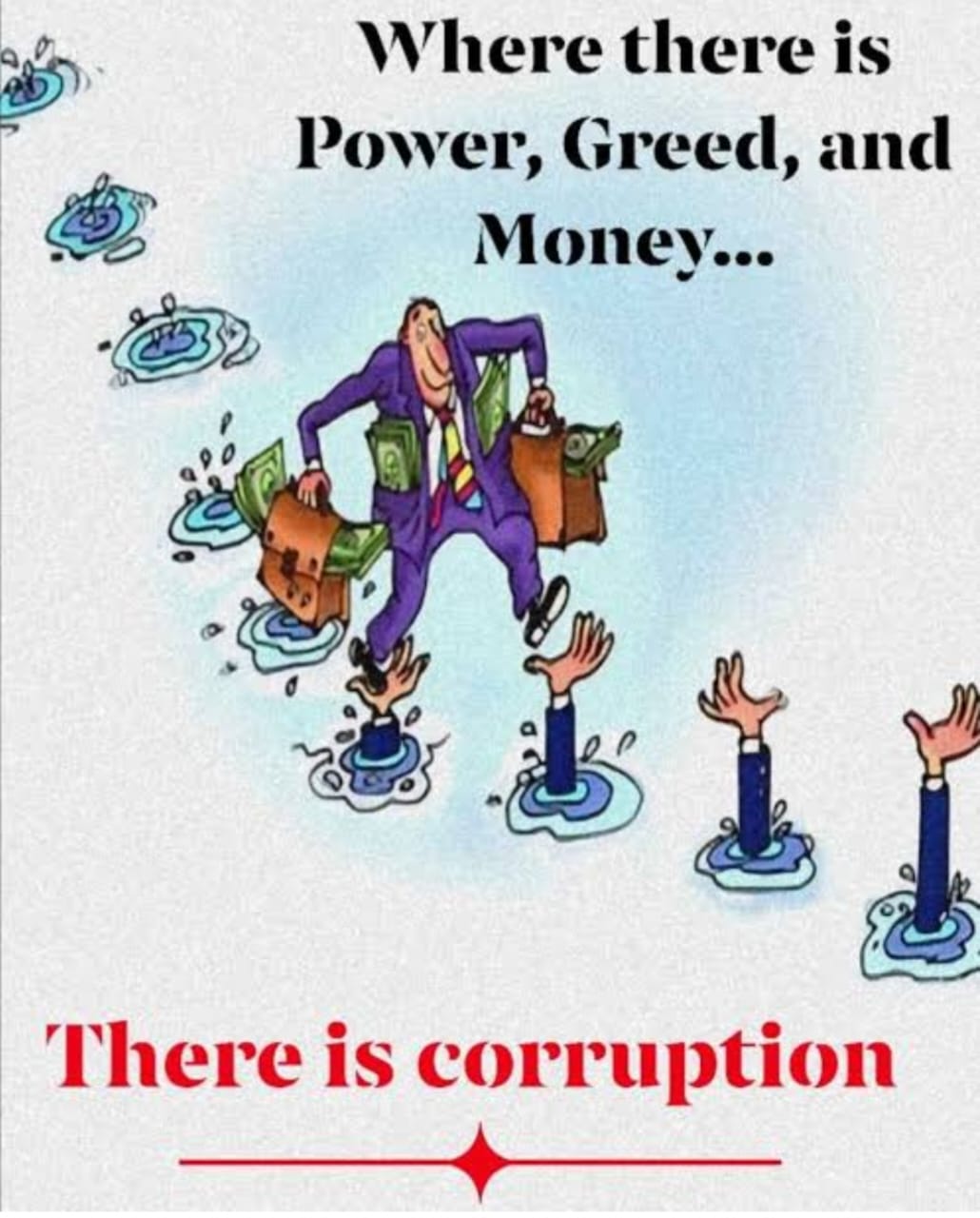
This is not a cheap rhetorical flourish. It is a sober judgment backed by hard data, global indices and the frank observations of respected leaders and institutions.
A Nation Rankled by Corruption. The most authoritative global measure of corruption is the Corruption Perceptions Index (CPI) published annually by Transparency International. In the 2024 CPI, Nigeria scored a shocking 26 out of 100, placing it 140th out of 180 countries and among the world’s most corrupt nations. Low scores and rankings in this index signify a public sector perceived as deeply corrupt, where abuse of entrusted power for private gain is systemic rather than exceptional.
To put that into perspective: countries with similar scores include Iraq and Madagascar, while nations renowned for governance integrity (like Denmark and Finland) score above 88.
This is not just a poor showing and it is an indictment of a culture in which the stealing of public resources is so normalized that it has become a defining feature of our national identity.
Greed, Not Resources, Is the Real Curse. Nigeria’s overwhelming wealth in human and natural resources should have made it the envy of nations. We possess vast oil reserves, energy and a youthful population with boundless entrepreneurial energy. Yet, instead of translating into widespread prosperity, this bounty has become a resource curse with a situation in which wealth fuels CORRUPTION rather than DEVELOPMENT.
Institutions meant to safeguard the public interest are instead captured by private interests. Billions of dollars from oil revenues, subsidies and contracts vanish into private pockets or are siphoned overseas. Even when recovered, these funds tell a story of how much was stolen in the first place. The United States recently returned $52.8 million in assets linked to a former Nigerian oil minister accused of embezzlement, underscoring how leadership greed has internationalized our shame.
Former President Olusegun Obasanjo (a figure deeply intertwined with Nigeria’s post-military history) has stated bluntly that greed, selfishness and ignorance are the root causes of Nigeria’s malaise, saying that these forces undermine our collective destiny.
When Greed Becomes a National Habit. Greed manifests itself not only among political elites, but across society. It shapes decisions, behaviour and norms. For too many, the overriding question is: “WHAT’S IN IT FOR ME?” rather than “WHAT’S BEST FOR US ALL?”
The Economic and Financial Crimes Commission (EFCC) has noted that greed, laziness and peer pressure drive many youths into fraud and economic crimes. These are not isolated cases, but widespread issues that shape the country’s international image.
This is not merely a problem of a few “BAD APPLES” but it is a CULTURAL PATHOLOGY that erodes trust, destroys livelihoods and undermines institutions. When corruption becomes normalised, honesty becomes a liability and greed becomes an expected behaviour rather than an aberration.
The Economic Toll of Corruption and Greed.
Greed is not only immoral but economically destructive. Transparency International’s CPI and numerous global studies show a clear negative correlation between corruption and economic growth. Countries perceived as more corrupt attract far less foreign investment, suffer from weaker institutional trust, and have lower GDP per capita.
In Nigeria’s case, despite being Africa’s largest economy by GDP, its GDP per capita remains among the lowest on the continent and a sign that wealth is concentrated in the hands of few, while the majority languish in poverty. Corruption diverts public funds away from essential services like healthcare, education, power and infrastructure these sectors that should form the backbone of prosperity.
A Crisis of Trust and Values. When citizens see leaders behaving selfishly, it erodes trust in the entire social contract. Surveys reveal that while most Nigerians disapprove of corruption, many tolerate or rationalize it as a necessary evil in a dysfunctional system. This is tragic because it means the very fabric of civic morality is fraying.
A society that tolerates petty bribery, nepotism and embezzlement in public life also tolerates it in business, family and community. This betrayal of collective interest for personal advancement slowly transforms national identity into caricature.
Voices of Conscience: Scholars and Experts Speak
Renowned scholars have long warned of the dangers of institutionalised corruption. Pauline Baker, former President of the Global Fund for Peace, described Nigeria as an archetype of the “RESOURCE CURSE”, where wealth without accountability fuels corruption that cripples development.
Similarly, experts from Chatham House point out that corruption in Nigeria is not an isolated phenomenon but deeply embedded in social norms and expectations, impacting every level of governance and daily life.
These are not abstract academic critiques, they are reflections of a lived reality where greed has become systemic and self-interest undermines collective prosperity.
Cultural Change, Not Just Institutional Reform. To claim that “Nigerians are an embarrassment to Nigeria” is not to condemn individuals wholesale, but to call out a destructive culture that prioritises self-enrichment over national wellbeing. Change must be cultural as much as it is institutional.
The whistle-blowing policy introduced by Nigeria in 2016 (offering rewards for exposing corruption) is one initiative aimed at shifting behaviour, but it is not enough by itself.
Nigerians must reclaim values like integrity, accountability and patriotism. We must demand transparency from leaders, reject the notion that corruption is an acceptable survival strategy, and foster a culture that honours hard work and honesty.
Final Take: A Call to National Consciousness. We can no longer hide behind excuses. Our low ranking on the corruption index, the billions lost to embezzlement and the societal tolerance for greed are not just statistics, they are the everyday realities that have made Nigeria an embarrassment to itself, but this is also a moment for introspection and renewal. If we confront our faults honestly, embrace accountability and reject greed at every level, Nigeria can still rise to fulfill its promise.
As former President Obasanjo said, the problem is not destiny; it is human shortcomings like GREED and SELFISHNESS that have chained us.
The path forward demands courage and it is the courage to do what is right even when it is hard, the courage to serve others before self and the courage to restore Nigeria’s honour not through empty slogans, but through integrity and collective resolve.
Only then will we transform from an EMBARRASSMENT to an INSPIRATION.







society
Stop Means Stop”: Legal Experts Warn Ignoring ‘Stop’ During Intimate Acts Can Be Criminally Punishable

“Stop Means Stop”: Legal Experts Warn Ignoring ‘Stop’ During Intimate Acts Can Be Criminally Punishable
By George Omagbemi Sylvester | Published by SaharaWeeklyNG
“Grounded in international law and consent principles, legal authorities stress that continuing sexual activity after a partner withdraws consent may constitute sexual assault and lead to imprisonment.”
A growing body of legal interpretation and expert opinion reaffirm that consent in intimate encounters is not a one-off event but an ongoing requirement; withdrawn at any time by either participant. Legal practitioners and rights advocates are increasingly warning that if one partner clearly says “stop” during sexual activity and the other continues, this conduct can constitute a criminal offence with significant penalties, including imprisonment.
Consent must be “a voluntary agreement to engage in the sexual activity in question,” and crucially can be revoked at any stage. Once a partner expresses withdrawal of consent (by words like “stop” or by unmistakable conduct) the other party is legally obligated to cease all activity immediately. Failure to respect this is widely recognised in multiple legal jurisdictions as sexual assault or rape.
Professor Deborah Rhode, a prominent authority on legal ethics, has stated: “Respect for autonomy and bodily integrity lies at the core of consent law. Ignoring a partner’s withdrawal of consent undermines basic personal freedoms and is treated as a serious offence in criminal law.”
According to experts, this legal principle is not limited to strangers but applies equally to long-term partners and spouses. The Criminal Code in many countries explicitly rejects implied or blanket consent based on relationship status.
Human rights lawyer Amal Clooney has similarly emphasised that clear communication and mutual agreement are essential, and that “once consent is withdrawn, any continued sexual activity crosses the line into criminal conduct.”
This means that in places where consent law is well-established, ignoring an explicit “stop” can lead to charges of sexual assault, with courts interpreting such conduct as a violation of an individual’s autonomy and dignity.
The issue has gained media and legal attention in recent years across numerous jurisdictions (including Canada, parts of Europe, and reform discussions in U.S. states) as courts and legislatures clarify that sexual consent is continuous and revocable at any time. Although no globally consolidated database exists of individual cases tied specifically to a news report on this warning, reputable legal frameworks consistently reinforce that continuing after “stop” is unlawful.
The subject engages legal scholars, criminal law practitioners, human rights experts, and statutory bodies advocating sexual violence prevention. Law enforcement agencies and prosecutors may pursue charges when clear evidence shows that consent was withdrawn and ignored.
In practice, consent frameworks require that the person initiating or continuing sexual activity take reasonable steps to ensure ongoing affirmation of willingness. Silence, passive behaviour, or failure to stop when asked cannot substitute for ongoing consent.
In summary, the legal maxim is clear: verbal or unambiguous withdrawal of consent must be respected. Ignoring it shifts the encounter from consensual to criminal, potentially resulting in serious legal consequences including imprisonment.
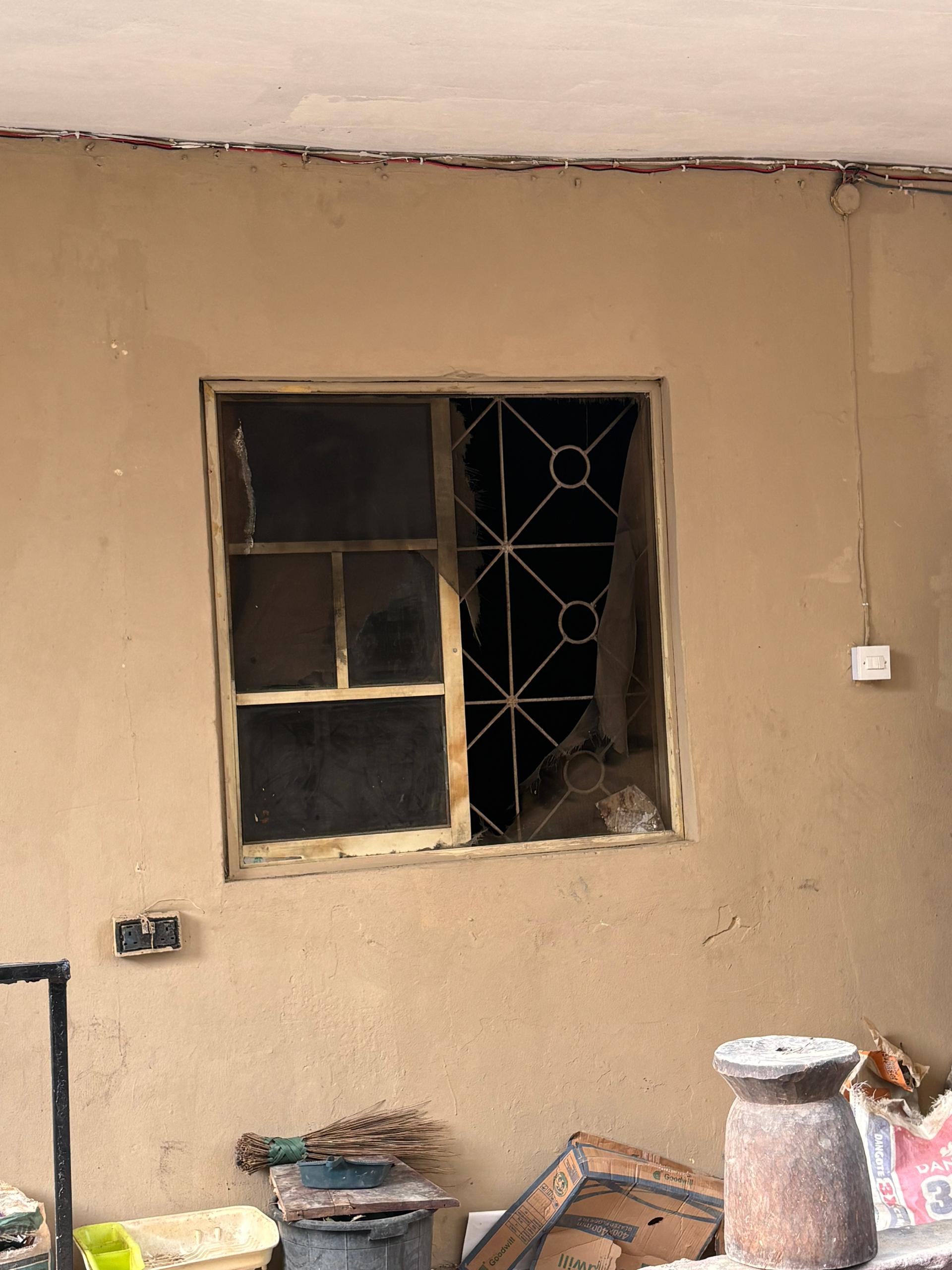
Lagos Family Property Dispute Turns Violent After Death of Chief Omotayo Ojo
By Ifeoma Ikem
A festering family dispute over property has escalated into a series of violent attacks in Lagos, leaving residents of a contested apartment in fear for their safety.
Mrs. Omotayo-Ojo-Alolagbe (Nee Omotayo-Ojo) the third child and first daughter of the late Omotayo Ojo, has alleged repeated assaults and destruction of property by her siblings from her father’s other marriages.
According to her account, hostility against her began while her father was still alive, allegedly fueled by the affection and support he showed her. She claimed that tensions worsened after his death in 2019.
Mrs. Alolagbe stated that her late father had given her a particular apartment during his lifetime, assuring her she would not suffer hardship, especially after her husband left the marriage. She said the property became her primary source of livelihood and shelter.
However, she alleged that her siblings had sold off several other family properties and were determined to dispossess her of the apartment allocated to her by their father.
The dispute reportedly turned violent on Nov. 15, 2025, when unknown persons allegedly attacked the building. She said the incident prompted her to petition the Chief Judge of Lagos State and the Commissioner of Police.
Despite the pending legal proceedings, she alleged that another attack occurred on Jan. 21, 2026. During that incident, parts of the building were vandalised, including the walkway and the main gate, which was reportedly removed.
A third attack was said to have taken place on Feb.18, 2026, during which the roof, gates, and sections of the walkway were allegedly dismantled. Residents were reportedly assaulted, and some were allegedly forced to part with money under duress.
Tenants in the apartment complex are said to be living in fear amid the repeated invasions, expressing concern over their safety and uncertainty about further violence.
Mrs. Alolagbe alleged that the attacks were led by a man identified as Mr. Alliu, popularly known as aka “Champion,” whom she described as a political thug. She claimed he arrived with a group of about 50 men, allegedly brandishing weapons and breaking bottles to intimidate residents.
She further alleged that the group boasted of connections with senior police officers, politicians in Lagos State, and even the presidency, claiming they were untouchable.
According to her, some arrests were initially made following the incidents, but the suspects were later released. She expressed concern that the alleged perpetrators continue to threaten her, making it difficult for her to move freely.
She also disclosed that during a meeting on Feb. 23, 2026, an Area Commander reportedly told her that little could be done because the matter was already before a court of law.
The development has raised concerns about the enforcement of law and order in civil disputes that degenerate into violence, particularly when court cases are pending.
As tensions persist, residents and observers are calling on relevant authorities to ensure the safety of lives and properties ,while allowing the courts to determine ownership and bring lasting resolution to the dispute.

Adron Homes Introduces Special Ramadan Offer with Discounts and Gift Rewards
As the holy month of Ramadan inspires reflection, sacrifice, and generosity, Adron Homes and Properties Limited has unveiled its special Ramadan Promo, encouraging families, investors, and aspiring homeowners to move beyond seasonal gestures and embrace property ownership as a lasting investment in their future.
The company stated that the Ramadan campaign, running from January 20th to April 6th, 2026, is designed to help Nigerians build long-term value and stability through accessible real estate opportunities. The initiative offers generous discounts, flexible payment structures, and meaningful Ramadan-themed gifts across its estates and housing projects nationwide.
Under the promo structure, clients enjoy a 30% discount on land purchases alongside a convenient 36-month flexible payment plan, making ownership more affordable and stress-free.
In the spirit of the season, the company has also attached thoughtful rewards to qualifying payments. Clients who pay ₦200,000 receive a Provision Hamper to support their household during the fasting period, while those who pay ₦400,000 receive an Automated Prayer Mat to enhance their spiritual experience throughout Ramadan.
According to the company, the Ramadan Promo reflects its commitment to aligning lifestyle, faith, and financial growth, enabling Nigerians at home and in the diaspora to secure appreciating assets while observing a season centered on discipline and forward planning.
Reiterating its dedication to secure land titles, prime locations, and affordable pricing, Adron Homes urged prospective buyers to take advantage of the limited-time Ramadan campaign to build a future grounded in stability, prosperity, and generational wealth.
This promo covers estates located in Lagos, Shimawa, Sagamu, Atan–Ota, Papalanto, Abeokuta, Ibadan, Osun, Ekiti, Abuja, Nasarawa, and Niger states.
As Ramadan calls for purposeful living and wise decisions, Adron Homes is redefining the season, transforming reflection into investment and faith into a lasting legacy.


-

 celebrity radar - gossips6 months ago
Why Babangida’s Hilltop Home Became Nigeria’s Political “Mecca”
-
 society5 months ago
Religion: Africa’s Oldest Weapon of Enslavement and the Forgotten Truth
-

 society6 months ago
Power is a Loan, Not a Possession: The Sacred Duty of Planting People
-

 news7 months ago
THE APPOINTMENT OF WASIU AYINDE BY THE FEDERAL GOVERNMENT AS AN AMBASSADOR SOUNDS EMBARRASSING