
Politics
Global Storm: South Africa Demands UN Action After U.S. Strikes Venezuela. A Demand for Justice, Sovereignty & African Agency.

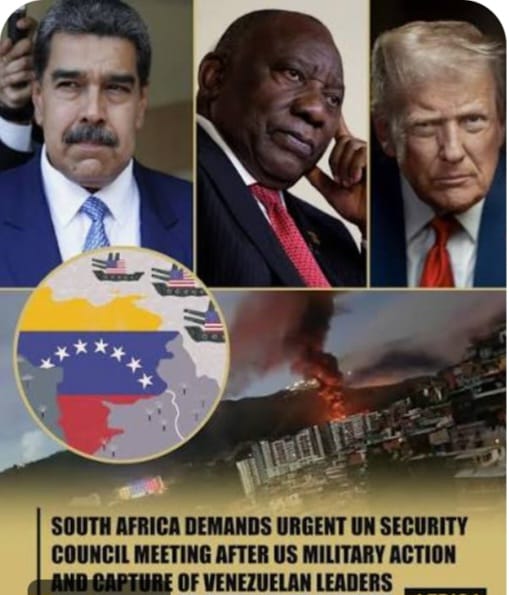
Global Storm: South Africa Demands UN Action After U.S. Strikes Venezuela. A Demand for Justice, Sovereignty & African Agency.
George Omagbemi Sylvester
“Geo-Political Upheaval, Sovereign Rights, and the Mandate of International Law. With Reflections on Human Welfare, Governance and the African Moment.”
In a world roiled by geopolitical tension and fraught with bitter contests over power and principle, the recent unilateral U.S. military strike on Venezuela has sparked an unprecedented diplomatic crisis, compelling South Africa to urgently urge a meeting of the United Nations Security Council and the very body vested with the solemn responsibility of maintaining international peace and security.
This call from Pretoria represents more than procedural politicking; it is a forceful rebuke against what many perceive as a reckless disregard for the Charter of the United Nations and the sanctity of sovereign statehood. The implications (legally, morally and politically) are vast.
The U.S. Strike on Venezuela: What Happened and Why It Matters.
In early January 2026, the United States conducted a “large-scale military strike” on Venezuela, hitting targets near Caracas and other regions and culminating in the reported capture of Venezuelan President Nicolás Maduro and his wife. The operation was justified by U.S. authorities on grounds of a supposed counter-narcotics mission and alleged criminality involving Venezuela’s leadership, but reaction from around the globe was swift and powerful.
To many observers, this was not a surgical law-enforcement action but a dramatic military intervention into the sovereign affairs of a nation, raising immediate questions about compliance with international law and Article 2(4) of the UN Charter, which prohibits the use of force against the territorial integrity or political independence of any state.
South Africa, already wary of unilateral interventions by global powers, did not mince words. The Department of International Relations and Cooperation (DIRCO) described the strikes as a “manifest violation of the Charter of the United Nations” and warned that such actions undermine the stability of the international order and the principle of equality among nations.
DIRCO spokesperson Chrispin Phiri emphasized that the UN Charter does not authorise external military intervention in matters that are essentially within the domestic jurisdiction of a sovereign nation. This point (legal in form and democratic in substance) goes to the heart of why South Africa felt compelled to demand urgent UN action.
Global Outrage: A Broad Chorus of Concern.
South Africa’s protest echoes a broader pattern of global criticism. Brazilian President Luiz Inácio Lula da Silva condemned the strikes as “a serious affront to Venezuela’s sovereignty,” warning that such acts represent a threat to regional peace. European and Asian powers (from France to China) also warned that no lasting political solution can be imposed from the outside, and many referred to international law as the only legitimate arbiter of disputes between states.
Even non-Western voices, historically wary of hegemonic intervention, registered intense concern. Latin American governments, Russia, and Cuba voiced condemnation, with human rights groups denouncing the violence and civilian impact. Collectively, these reactions underscore a broader anxiety: if one state can strike another without UN authorisation, then the legal framework that protects smaller nations is dissolved.
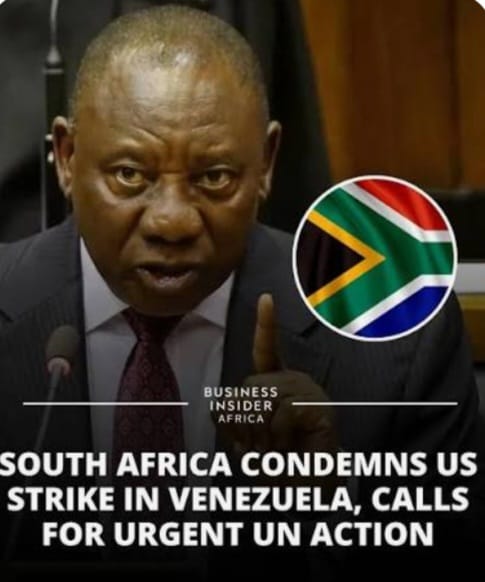
South Africa’s Stance: A Defence of Sovereignty and Rule of Law.
South Africa’s call for the Security Council to convene is rooted in principles formed from a painful history of colonialism, apartheid, and externally imposed domination. Pretoria’s position affirms that no nation (great or small) should be subject to military incursions without collective authorisation. As Dirco put it, “unlawful, unilateral force of this nature undermines the stability of the international order and the principle of equality among nations.”
Political analysts in South Africa, however, offer caution. Professor Andre Duvenhage of North-West University warned that while the call to convene the Council is legally sound, it carries potential economic and diplomatic costs, possibly straining Pretoria’s relations with major powers and exposing South Africa to geopolitical backlash.
Yet this is precisely the kind of moral leadership that defines nations that refuse to be cowed by power politics. South Africa’s stance is thus not merely defensive of Venezuela, it is a defence of the very legal fabric that gives voice to the Global South.
The Broader Lesson: Africa’s Moment to Uphold International Law.
For many scholars of international relations, South Africa’s position illuminates a critical moment in African diplomacy. As Professor Ifeoma Nwoye, a noted expert in international law, has argued: “Upholding the Charter protects all nations, especially those with limited capacity to respond to violations. To remain silent today is to invite arbitrary force tomorrow.”
Her point is simple but powerful: international law is only as strong as the willingness of states to defend it. In an era where might often masks itself as right, South Africa’s bold invitation to the UN Security Council to act is a call to resist the tyranny of power and defend the rule of law.
From Caracas to Gusau: The Human Cost of Leadership Failures.
While global capitals argue over geopolitics, ordinary citizens pay an incalculable price. In Venezuela, the spectre of war and foreign intervention threatens to upend civilian life, exacerbate humanitarian crises, and ripple into neighbouring regions. In the African context, we can reflect on a parallel crisis close to home: the ongoing struggle for peace and welfare in Nigeria’s Zamfara State.
Governor Dauda Lawal, the democratically elected Governor of Zamfara State, grapples daily with insecurity that has left communities terrorised and destabilised. Despite his administration’s repeated assurances to protect lives and livelihoods, insecurity persists as a defining challenge in the region.
Lawal has publicly committed to the welfare of the people, insisting that his government will “leave no stone unturned” to ensure justice and support for all residents, regardless of political affiliation. His promise to uplift education, security, and economic empowerment resonates with the aspirations of the state’s citizens.
Yet critics argue that persistent banditry and rising violence are evidence of leadership shortcomings. Local civic groups have accused the governor of inefficacy, claiming that insecurity in Zamfara continues to worsen under his watch — a sobering reminder that governance must be measured by results, not rhetoric.
Still, supporters highlight Lawal’s welfare programmes and recognition from labour unions for compassionate leadership, pointing to policies that have improved worker conditions and livelihood support.
Whether in Pretoria or in Gusau, the core issue is unchanged: people yearn for peace, dignity, and protection under accountable leadership. Governments must ensure that human welfare (not power projection) remains the cornerstone of policy.
What Lies Ahead: A Time for Principle Over Power.
The crisis ignited by U.S. military action in Venezuela and South Africa’s forceful appeal to the United Nations encapsulates a fundamental tension in the 21st century: the struggle between might and right, unilateral power and collective responsibility.
South Africa’s demand for a Security Council meeting is not an empty gesture. It is a principled stand for the rule of law, respect for sovereignty, and protection of international norms. It is also a reminder that in a world of shifting alliances and strategic interests, the voices of nations committed to justice and equality must be heard and loudly and without compromise.
As global leaders reckon with the fallout, the lessons echo across continents: peace cannot be imposed by force, rights cannot be guaranteed by bullets, and development cannot flourish in the soil of fear. Whether the United Nations heeds South Africa’s call will determine not just the fate of Venezuela but the fate of international order itself.
For the people of Zamfara and countless others who beleaguered by violence and insecurity, leadership (at all levels) must be anchored in accountability, compassion, and unyielding commitment to human welfare. Only then can we speak of true sovereignty and true peace.







Obasa Appointed to CPA African Executive Committee
The Speaker of the Lagos State House of Assembly, Rt. Hon. (Dr.) Mudashiru Ajayi Obasa, has been appointed as a Sub-National Representative to the Commonwealth Parliamentary Association (CPA) African Executive Committee.
The announcement was formally conveyed through a letter from the CPA Africa Region, which was read on the floor of the Assembly by the Clerk, Mr. Olalekan Onafeko, on Tuesday, March 10. The appointment confirms Speaker Obasa’s three-year tenure, spanning 2026 to 2029.
Lawmakers took turns to congratulate Speaker Obasa, praising his devotion to parliamentary service and his consistent efforts to strengthen legislative practice. They described his appointment as a recognition of his hard work and a reflection of Lagos State’s growing influence within the Commonwealth. Members noted that his achievements continue to bring pride not only to Lagos but to Nigeria as a whole.
In his remarks, Speaker Obasa expressed gratitude to his colleagues for their support, urging them to remain steadfast in prioritizing the progress of the Assembly and to continue working collectively to advance the legislature. He further directed the Clerk to send a formal letter of appreciation to the CPA African Region for the honour bestowed upon him. “Let us always put the House of Assembly first and never relent in our efforts to move the legislature forward, ” Obasa concluded.
The CPA African Region plays a pivotal role in advancing the interests of African parliaments within the Commonwealth. It is widely recognized for promoting gender equality, women’s empowerment, respect for human rights, democracy, and good governance across member nations.
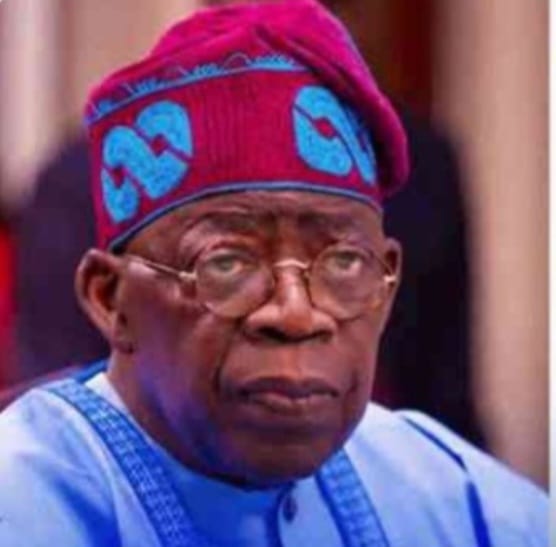
TINUBU RENEWS TENURE OF THREE PERMANENT SECRETARIES
President Bola Ahmed Tinubu has approved the renewal of tenure for three Permanent Secretaries in the Federal Civil Service, in line with existing public service regulations.
The approval was disclosed in a statement issued by the Office of the Head of the Civil Service of the Federation, indicating that the renewed appointments will take effect from April 27, 2026.
The affected officials include Kachallom Shangti Daju, Permanent Secretary in the Federal Ministry of Health and Social Welfare; Beatrice Jedy‑Agba, Solicitor-General of the Federation and Permanent Secretary in the Federal Ministry of Justice; and Mary Ada Ogbe, Permanent Secretary in the Federal Ministry of Regional Development.
According to the statement, the renewal represents a second and final four-year tenure for the officials, in accordance with the provisions of Public Service Rule 020909, which allows Permanent Secretaries an initial four-year term with the possibility of a second term based on satisfactory performance.
The Head of the Civil Service of the Federation, Didi Esther Walson‑Jack, congratulated the Permanent Secretaries on their reappointment and urged them to see the renewed mandate as a call to greater dedication and excellence in service delivery.
She further encouraged them to deploy their experience and professional expertise toward strengthening governance and advancing national development.
The statement was signed by Eno Olotu, Director of Press and Public Relations in the Office of the Head of the Civil Service of the Federation, and dated March 6, 2026.
Politics
Governor Dauda Lawal’s Prompt Action Against Insecurity in Zamfara State Yielding Positive Result’ – GDL Media Force Fires Back at Critics
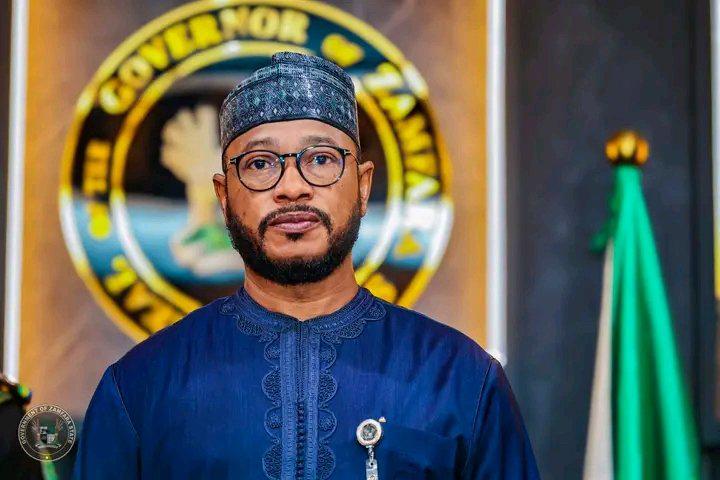
‘Governor Dauda Lawal’s Prompt Action Against Insecurity in Zamfara State Yielding Positive Result’ – GDL Media Force Fires Back at Critics
The attention of GDL Media Force and other well-meaning supporters of the Dauda Lawal-led administration has been drawn to a recent statement syndicated on social media by influencers from a group calling itself the Zamfara Good Governance Forum, which ludicrously attempted to portray the Governor’s security efforts as a “total failure.” This characterisation is not only divorced from reality. Still, it represents a desperate attempt by political opponents to rewrite history and undermine a Governor whose growing influence and performance clearly terrify them. It should be on record that in the whole of the North West region, Governor Dauda Lawal has tackled insecurity head-on with verifiable evidence that even those in the opposition have commended him for his huge investment in equipment that will further give security and armed forces an edge over those fueling insecurity in the country.
Since his assumption as Governor of Zamfara State, Dr Lawal has vowed that as the Chief Security Officer of the state, as well as the chief rescuer, an unprecedented commitment to tackling the security challenges that have plagued Zamfara for over a decade is his top priority and he is engaging it with much gusto. Unlike previous administrations, that engaged in shadowy deals with non-state actors, this Governor has chosen the path of transparency, capacity building, and decisive action. He was one of the Governors who openly declared that His administration would not negotiate with bandit rather his administration with fight them to a standstill and ensure they are cleared out.
In a bid to address the issues of insecurity with a well-planned arrival plan, he procured heavy Security Assets that even the Federal Government commended, him for. The recently procured and unveiled 25 units of Armoured Personnel Carriers (APCs) and an 80-meter endurance surveillance drone capable of covering 50 kilometres and operating continuously for eight hours. This represents the single largest state-government investment in security hardware in the history of Zamfara State.
The Defence Minister, during the inauguration ceremony, praised what he described as a clear demonstration of the Governor’s commitment to protecting lives and property, making the striking projection that “if we continue like this in the second term, Zamfara will look like Dubai”. This is not praise from a partisan source it is professional acknowledgement from the highest level of Nigeria’s defence establishment that Governor Lawal is doing something right.
Beyond heavy military hardware, the Governor has operationalised the Community Protection Guards in accordance with the law, providing them with 60 brand-new, well-equipped Hilux operational vehicles and specialised motorcycles to ensure swift response and effective first-responder services in difficult terrains. This is complemented by the distribution of 150 Hilux vehicles to mainstream security agencies including the Nigeria Police, DSS, and NSCDC, plus 20 Toyota Buffalo vehicles (both armoured and soft-body).
Perhaps most significantly, Governor Lawal established the Zamfara State Security Trust Fund, which provides a predictable, structured framework for logistical support to security forces. This moves the state away from the era of fragmented, reactive responses to a professional, sustainable security architecture.
When recent attacks occurred including the unfortunate February 19 incident in Anka LGA, Governor Lawal did not go into hiding or issue condolence statements from his office in Gusau. He immediately convened and personally presided over an emergency security meeting with all heads of security agencies at the Government House in Gusau, tasking them to urgently review the current security framework and implement coordinated countermeasures.
The Governor charged security chiefs to maintain “heightened vigilance, strengthened intelligence, and immediate, coordinated countermeasures” to ensure that criminal elements do not gain further ground. He also commiserated with affected communities and assured them of his administration’s full support both logistical and institutional. This is not the behaviour of a detached leader. This is the conduct of a Governor who understands that his primary constitutional responsibility is the protection of lives and property.
The public needs to understand the pedigree of those behind these allegations. The so-called “Zamfara Good Governance Forum” has a well-documented history of partisan attacks against Governor Lawal. A simple review of their previous statements reveals a pattern they have consistently attacked the Governor while remaining conspicuously silent during the administrations that presided over the worst years of banditry in the state. Interestingly, these attacks often coincide with political manoeuvres by the immediate past governor, Bello Matawalle, now Minister of State for Defence. The Zamfara State Government has previously accused Matawalle of using federal security apparatus to intimidate opposition figures in the state. The current criticism fits a familiar pattern, when you cannot defeat a Governor politically or at the ballot box, you attempt to undermine him through sponsored propaganda spreading sheer falsehood to ensure the public turns their back on a performing Governor who is rebuilding the rot the Matawale-led administration caused.
These same critics who now demand a “security roadmap” conveniently ignore that Governor Lawal inherited a state that was virtually a failed entity where farmers could not access their lands, where markets were paralysed, and where government had lost all credibility through failed negotiations and ransom payments to bandits.
Critics also conveniently ignore a fundamental reality Governor Lawal is the only opposition governor in the entire North-West geopolitical zone. Since taking office in 2023, his administration has received no federal intervention funds beyond statutory allocations no special palliatives, and no enhanced security support that flows to states with ruling-party governors. Yet despite this political isolation, he has managed to fund security without resorting to new borrowing, while monthly servicing N1.2 billion in inherited debts from the Bello Matawalle-led administration. This is governance under siege fiscally constrained, politically isolated, yet still delivering.
Governor Dauda Lawal has never claimed that the battle against banditry is easy or that success will come overnight. What he has demonstrated is sincerity of purpose, strategic vision, and relentless commitment. From the Security Trust Fund to community protection guards, from armoured personnel carriers to surveillance drones, these are not the actions of a leader who has failed. The growing influence of Governor Lawal across the North-West clearly frightens those who benefited from the old order of insecurity. When banditry thrives, politicians who negotiate with criminals remain relevant. But when peace is restored through genuine security architecture, such elements become obsolete.
Zamfara State is on the path to lasting peace. The detractors may continue their campaign of falsehood, but the facts on the ground speak louder than their sponsored propaganda. Governor Dauda Lawal remains focused, undeterred, and absolutely committed to restoring full normalcy to every inch of Zamfara State. The people of Zamfara see the progress. The Federal Government acknowledges the investment. And history will remember who truly fought for the state’s liberation.
Signed: GDL Media Force Support Group
March 4, 2026
Abuja, Nigeria


-
 society6 months ago
Religion: Africa’s Oldest Weapon of Enslavement and the Forgotten Truth
-

 news3 months ago
WHO REALLY OWNS MONIEPOINT? The $290 Million Deal That Sold Nigeria’s Top Fintech to Foreign Interests
-

 society6 months ago
“You Are Never Without Help” – Pastor Gebhardt Berndt Inspires Hope Through Empower Church (Video)
-

 Business7 months ago
GTCO increases GTBank’s Paid-Up Capital to ₦504 Billion