
Politics
Nigeria 2027: Reject the Crumbs, Demand Your Future

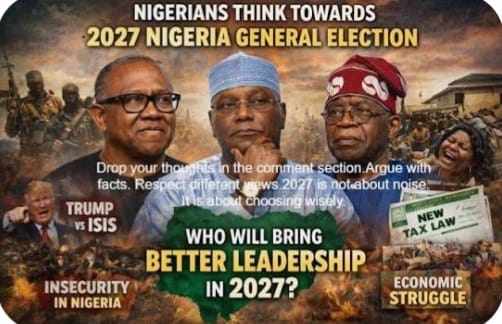
Nigeria 2027: Reject the Crumbs, Demand Your Future.
By George Omagbemi Sylvester | Published by SaharaWeeklyNG.com
“Why Nigerians Must Reject Short-Term Handouts and Demand Leaders Who Deliver Security, Dignity and a Future Beyond Crumbs.”
As Nigeria approaches the official campaign season for the 2027 general elections, a critical question confronts every citizen: WHAT WILL YOUR VOTE MEAN FOR THE NEXT FOUR YEARS OF YOUR LIFE? In a nation where political theatrics often overshadow the real struggles of everyday Nigerians, it is crucial that we pause, reflect and make deliberate choices. This is not merely a question of party loyalty, ethnicity, or charisma; it is a question of survival, dignity and the future of generations yet unborn.
The Limits of Symbolic Politics. Over the years, Nigerian politics has become synonymous with symbolic handouts and ephemeral gestures. Face caps, branded T-shirts, sacks of rice, litres of cooking oil and yards of Ankara have replaced substantive governance. Let us be candid: NO T-shirt can shield a family from insecurity, NO rice can fill an empty stomach for a year, let alone four. NO Ankara cloth can clothe the poverty that has become a permanent companion to millions of citizens. These tokens, though momentarily satisfying, are political distractions though a short-term sop designed to obscure long-term neglect.

Professor Adebayo Adedeji, a distinguished Nigerian economist, once emphasized, “Governments that measure their impact by the number of handouts they distribute have failed to grasp the essence of development. True leadership provides opportunity, security and empowerment, not temporary appeasements.”
The Cost of Compromised Choices. Many Nigerians, in the throes of economic hardship, are offered cash (sometimes N10,000, N20,000, or even a motorcycle) in exchange for loyalty at the polls. Yet, if we calculate the real cost, a one-time gift pales in comparison to the 4-year consequences of misgovernance. The average Nigerian household is already struggling under an inflation rate that, according to the National Bureau of Statistics, has consistently hovered above 20% in essential commodities. Housing, healthcare and education costs are rising exponentially. How can N10,000 adequately compensate for four years of stagnation, insecurity and mismanagement?
It is imperative to ask: how much do these politicians give their own children every month? If a child of privilege enjoys the luxury of quality education, access to healthcare and global exposure, while the masses are offered crumbs, it is a stark reflection of misplaced priorities and structural inequity.
Your Vote, Your Power. Many Nigerians feel powerless, believing their vote is meaningless in a system dominated by elite interests and entrenched political godfathers. This is a dangerous misconception. Democracy is not a spectator sport; it demands engagement, critical thinking and courage. By voting thoughtfully, Nigerians can disrupt cycles of corruption, favoritism and misrule.
Dr. Joe Obi, a political analyst at the University of Lagos, asserts: “Every citizen holds within their vote the power to redefine governance. It is the only legitimate instrument through which ordinary Nigerians can challenge systemic injustice.”
Your vote is not a mere expression of party loyalty, but it is a statement of self-worth, civic responsibility, and national dignity. It communicates that you refuse to be placated with temporary gestures while your rights, opportunities and security are compromised.
Reject Ethnic Politics. Nigeria’s political history is littered with examples of ethnic manipulation. Politicians routinely exploit identity to divide citizens, ensuring that loyalty to a tribe supersedes accountability to the nation. The suffering does not discriminate between Yoruba, Hausa, Igbo or Itsekiri. It is a Nigerian problem and any solution must be inclusive.

Dr. Chukwuma Soludo, former Governor of the Central Bank of Nigeria, notes: “Ethnicity as a political tool has been used to justify mediocrity, nepotism and the diversion of national resources. Progress demands leaders who rise above parochial loyalties.”
Voters must therefore scrutinize candidates for competence, integrity and a proven commitment to national development, rather than succumb to manipulative ethnic narratives.
The Illusion of Campaign Visits. Politicians are adept at cultivating appearances. During campaign season, they traverse states, meet constituents and promise sweeping reforms. Yet, the cycle is predictable: once elections are over, they vanish, leaving behind unfulfilled promises and neglected communities. The responsibility lies with voters to demand accountable leaders who prioritize sustainable policy over performative displays.
Character Over Charisma. Electoral decisions must hinge on the character, competence and integrity of candidates rather than their charisma, celebrity status, or financial clout. Leadership in Nigeria requires vision, discipline and a commitment to the welfare of all citizens. A leader who cannot guarantee security, economic opportunity, or social justice is a liability, regardless of party affiliation.
Professor Amina Jibril, a governance expert, emphasizes: “Leadership is a moral contract with society. When politicians exploit desperation, they violate that contract. Citizens must hold leaders accountable by demanding transparency and ethical governance.”
Local Votes, Global Implications. It is easy to think of elections as local exercises. In reality, the consequences reverberate far beyond municipal boundaries. Policy decisions made in Abuja influence international trade, security, investment and diplomatic relations. A mismanaged economy, for instance, not only impoverishes citizens but diminishes Nigeria’s credibility on the global stage. Investors, international organizations and diaspora Nigerians watch carefully. Poor leadership affects everyone, irrespective of geography.

Reject the Culture of Political Thuggery. Across the country, youths are often lured into serving as political enforcers, thugs or foot soldiers, risking their lives for candidates whose children live safely abroad. This form of exploitation is both morally reprehensible and strategically self-destructive. The children of politicians enjoy education, health care and freedom and why should ordinary youths risk life and limb for political elites who prioritize their own luxury over national progress?
The Nobel Laureate Wole Soyinka once warned: “A society that trades its youth for political expedience is a society that forfeits its future.” Wise citizens recognize the value of life and reject such coercion.
The Long-Term Vision. Nigeria’s path to sustainable development lies in rejecting short-term appeasement and embracing long-term vision. Citizens must vote for candidates committed to security, education, healthcare, infrastructure and transparent governance. Campaign promises are not merely slogans and they are a blueprint for the next four years. Every Nigerian deserves leaders who will convert these promises into actionable, measurable outcomes.
The International Crisis Group reports that nations that prioritize inclusive governance, anti-corruption measures and citizen engagement consistently achieve better social and economic indicators. Nigeria cannot afford to be left behind.
Final Reflection: Your Future is Non-Negotiable. The 2027 elections present a defining moment. Your vote is not a commodity, it is a declaration of your worth, your voice and your future. Reject temporary handouts, symbolic gestures and manipulative ethnic politics. Demand accountability, character and sustainable policy. The power resides in your hands and the consequences of apathy are profound.
Remember: life is too precious to be mortgaged for crumbs. Do not vote for the same cycle of poverty, insecurity and mediocrity. Vote with wisdom, courage and foresight. Engage, scrutinize and insist on leaders who honor the trust placed in them. Nigeria deserves nothing less than citizens who recognize their power, demand their rights and refuse to settle for less.
Be wise. Be thoughtful. Be relentless in your pursuit of a better Nigeria. The nation’s future depends on your choices.





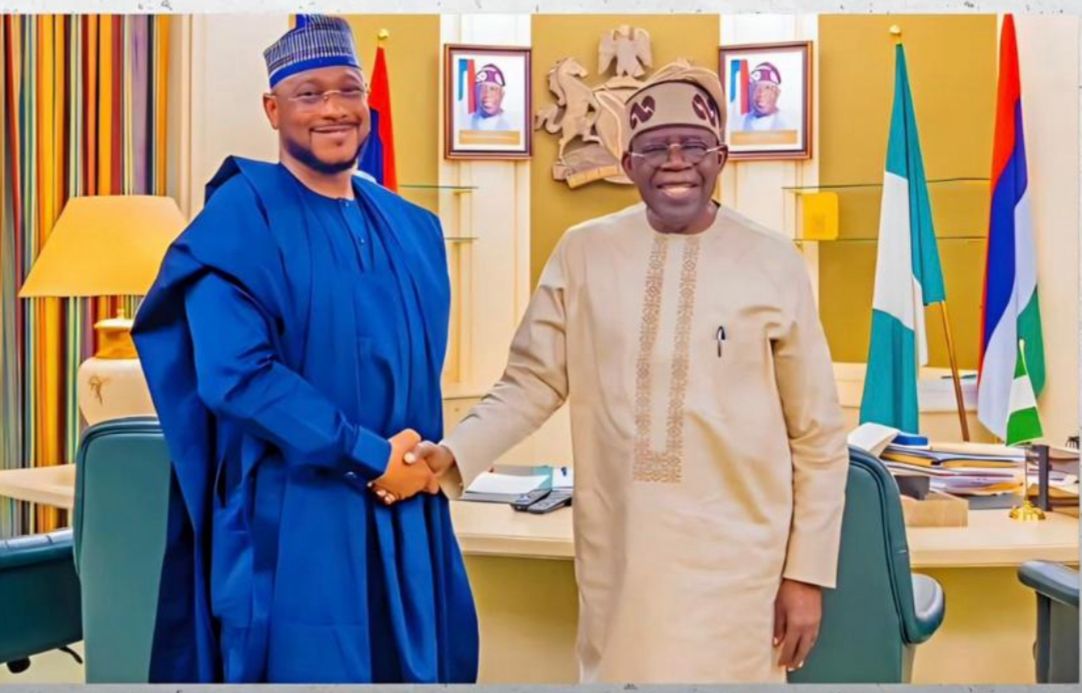
Governor Dauda Lawal Named Part of Presidential Delegation for Historic UK State Visit
Governor Dauda Lawal of Zamfara State has been named as a member of the presidential entourage that will accompany President Bola Ahmed Tinubu and First Lady Oluremi Tinubu on a historic two-day State Visit to the United Kingdom.
According to a statement from the Zamfara State Government House on Monday, the Governor will depart Abuja for the UK on Tuesday for the visit, which is scheduled to take place on March 18 and 19 at the invitation of the British Royal Family.

During the visit, King Charles III will host President Tinubu, the First Lady, and the Nigerian delegation at Windsor Castle, where they will view a special exhibition of Royal Collection items related to Nigeria. The Royal Family will also host a State Banquet in honour of the Nigerian guests on the evening of Wednesday, March 18.
The presidency has outlined that the purpose of the visit is to strengthen bilateral relations between Nigeria and the United Kingdom. President Tinubu is scheduled to hold talks with Prime Minister Keir Starmer, which are expected to lead to expanded bilateral discussions and the signing of Memorandums of Understanding covering trade, investment, defence, and cultural cooperation.
The President will also serve as the guest of honour at the Nigerian Modernism exhibition, which showcases contemporary art and culture, and will participate in a reception with Nigerian and British business leaders as well as members of the diaspora community.
The Zamfara State Government expressed confidence that Governor Lawal’s participation in the high-level delegation will provide valuable networking opportunities, opening significant prospects for investment and economic benefits for Zamfara State. The visit will also see Governor Lawal display his repertoire of knowledge on global policy and corporate governance and also pitch the Mineral and Farming rich state to potential investors during the bilateral meeting with the UK Prime Minister, Keir Starmer.
Politics
LPDC Verdict: CRG Hails Decision Clearing Deputy Speaker Benjamin Kalu, Condemns Political Witch-Hunt

LPDC Verdict: CRG Hails Decision Clearing Deputy Speaker Benjamin Kalu, Condemns Political Witch-Hunt
The Centre for Responsible Governance (CRG) has welcomed the decision of the Legal Practitioners Disciplinary Committee (LPDC) dismissing the complaint filed against the Deputy Speaker of the House of Representatives, Benjamin Okezie Kalu, describing the ruling as a clear affirmation of due process and institutional integrity.
In a press statement issued on Thursday, the spokesman of the Centre, Obande George, said the verdict of the disciplinary body has once again vindicated the Deputy Speaker and reaffirmed the position earlier taken by CRG that the allegations against him lacked merit.
The LPDC, in its ruling referenced BB/LPDC/1954/2026, held that no prima facie case had been established against the Deputy Speaker and dismissed the complaint in its entirety.
According to George, the decision demonstrates the importance of allowing competent institutions to examine allegations objectively rather than rushing to judgment in the court of public opinion.
“From the onset, the Centre for Responsible Governance maintained that justice must take its course. We insisted that competent institutions should be allowed to examine the issues without political pressure or sensationalism. The LPDC’s ruling has now clearly shown that the allegations had no foundation,” he said.
The CRG spokesman further stated that the decision reinforces the sterling reputation of the Deputy Speaker, who has over the years built a distinguished profile both as a legal practitioner and as a legislator.
“Honourable Benjamin Kalu is a respected member of the Nigerian Bar and an accomplished lawmaker. Attempts by some individuals to impugn his reputation through unfounded allegations were unfortunate and unnecessary.”
CRG also condemned the actions of certain civil society groups that were quick to demand that the Deputy Speaker step aside from office even before any formal determination had been made by the relevant authorities.
George described such calls as premature and irresponsible, noting that they contributed to the politicisation of a matter that required sober institutional review.
“It is disappointing that some civil society organisations rushed to demand that the Deputy Speaker step aside without allowing due process to run its course. Advocacy for accountability must be guided by facts and fairness, not by sensational pressure.”
The organisation also criticised what it described as the role played by some political actors from the South East who allegedly sought to exploit the controversy for narrow political interests.
According to CRG, it is troubling that certain politicians would attempt to undermine one of their own for short-term political advantage.
“It is even more disturbing that some political actors from the South East appeared eager to weaponise this matter in an attempt to bring down one of their own for cheap political gain. Such actions weaken collective political progress and erode the spirit of solidarity required for national development.”
CRG therefore called on Nigerians to learn from the episode and reaffirm respect for institutional processes and the rule of law.
The organisation stressed that public discourse must be guided by evidence, fairness and responsible engagement rather than rumours or politically motivated campaigns.
“The lesson here is simple: allegations must be tested by competent institutions before conclusions are drawn. Nigeria’s democracy will only grow stronger when due process is respected and reputations are not casually destroyed.”
CRG concluded by congratulating the Deputy Speaker for maintaining calm and dignity throughout the controversy, noting that his composure reflected confidence in the justice system.


@The Centre for Responsible Governance, Email: [email protected], Instagram: crgngo6, Twitter: crgng06, Threads: crgngo6

Obasa Appointed to CPA African Executive Committee
The Speaker of the Lagos State House of Assembly, Rt. Hon. (Dr.) Mudashiru Ajayi Obasa, has been appointed as a Sub-National Representative to the Commonwealth Parliamentary Association (CPA) African Executive Committee.
The announcement was formally conveyed through a letter from the CPA Africa Region, which was read on the floor of the Assembly by the Clerk, Mr. Olalekan Onafeko, on Tuesday, March 10. The appointment confirms Speaker Obasa’s three-year tenure, spanning 2026 to 2029.
Lawmakers took turns to congratulate Speaker Obasa, praising his devotion to parliamentary service and his consistent efforts to strengthen legislative practice. They described his appointment as a recognition of his hard work and a reflection of Lagos State’s growing influence within the Commonwealth. Members noted that his achievements continue to bring pride not only to Lagos but to Nigeria as a whole.
In his remarks, Speaker Obasa expressed gratitude to his colleagues for their support, urging them to remain steadfast in prioritizing the progress of the Assembly and to continue working collectively to advance the legislature. He further directed the Clerk to send a formal letter of appreciation to the CPA African Region for the honour bestowed upon him. “Let us always put the House of Assembly first and never relent in our efforts to move the legislature forward, ” Obasa concluded.
The CPA African Region plays a pivotal role in advancing the interests of African parliaments within the Commonwealth. It is widely recognized for promoting gender equality, women’s empowerment, respect for human rights, democracy, and good governance across member nations.


-

 society6 months ago
Religion: Africa’s Oldest Weapon of Enslavement and the Forgotten Truth
-

 news3 months ago
WHO REALLY OWNS MONIEPOINT? The $290 Million Deal That Sold Nigeria’s Top Fintech to Foreign Interests
-

 society6 months ago
“You Are Never Without Help” – Pastor Gebhardt Berndt Inspires Hope Through Empower Church (Video)
-

 society7 months ago
Who is Chief Kestin Pondi? Niger Delta’s “People’s Chief” Winning Hearts With Hundreds of Millions in Generosity