
society
Madness and Misgovernance: Nigeria’s Security Crisis and the Folly of Negotiating with Kidnappers

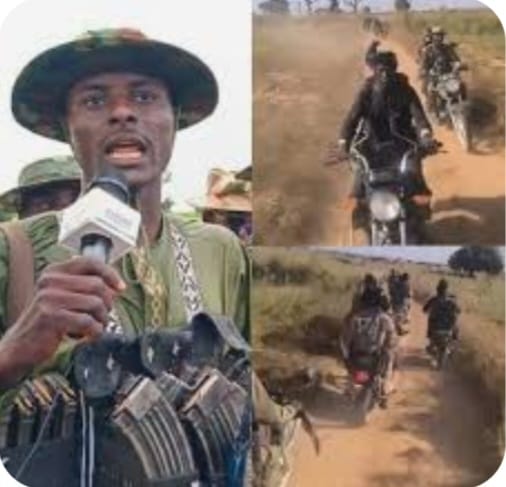
Madness and Misgovernance: Nigeria’s Security Crisis and the Folly of Negotiating with Kidnappers.
By George Omagbemi Sylvester | Published by SaharaWeeklyNG.com
“How the Kidnapping of 177 Worshippers and the Demand for Motorcycles Expose a Nation in Peril.”
On January 18, 2026, armed militants stormed three churches in Kurmin Wali community, Kajuru Local Government Area, Kaduna State, abducting 177 worshippers, this is a shocking reminder of Nigeria’s deep-seated insecurity. Instead of demanding ransom in cash, the abductors bizarrely insisted on the return of 17 motorcycles allegedly “LOST” during recent military operations before they would negotiate the release of the captives.
This grotesque demand (seemingly trivial in monetary terms) triggers a much deeper question: How can a sovereign nation as powerful and populous as Nigeria be forced to negotiate with kidnappers, bandits and terrorists? And worse, why are these negotiations happening at all in a country that constitutionally claims the capacity and mandate to protect its citizens?

The scenes unfolding in Kaduna are not isolated anomalies. They are stark symbols of a nation unravelling under the weight of insecurity and a crisis that cripples daily life, threatens economic development and erodes trust in government institutions.
The Mechanics of Nigeria’s Kidnap Economy. Data from independent security analysts paint a chilling picture of Nigeria’s kidnapping crisis as a full-blown criminal economy. Between July 2024 and June 2025, at least 4,722 Nigerians were abducted across 997 kidnapping incidents, with factions demanding nearly ₦48 billion in ransom (of which families and victims paid more than ₦2.57 billion) and at least 762 people killed in related violence.
In many affected regions (especially northern states such as Zamfara, Kaduna and Katsina) rural communities live in fear. Farms are abandoned, schools are shut and social life disintegrates as the threat of attack penetrates everyday existence.
Kidnapping has become a refined revenue-earning strategy for armed groups, operating with impunity due to weak law enforcement, corruption and porous territorial control by the state. In some areas, officials concede that taxation and ransom have become embedded in local criminal economies.
Negotiation: A Costly and Dangerous Policy. Negotiating with kidnappers is not merely a tactical option; it has become a semi-institutionalised response, practiced by security agencies and even local government interlocutors.
Yet this is a self-defeating strategy.
As security expert Dr. Chidi Anselm Odinkalu said: “When you pay ransom or negotiate terms with kidnappers, you are effectively rewarding criminality and incentivising more violence against the very citizens the state is meant to protect.” His words echo a key security principle: criminal enterprises grow where risk is low and profit is high. Negotiations reduce risk for kidnappers and amplify the profitability of kidnapping as a business.
Nigeria is, therefore, subsidising its own insecurity.
Today’s demand for motorcycles (seemingly trivial) has exposed the moral and operational decay in Nigeria’s security leadership. What message does it send to militants when military operations dislodge them from camps only for communities to be forced into negotiation? What CONFIDENCE can victims families have in a government that bargains on behalf of kidnappers?
For families in Kurmin Wali, the trauma has been double, first in seeing loved ones taken and second in watching officials scramble for excuses rather than solutions.
The Government’s Response: Ambiguity and Deflection. Government reactions range from defensive statements to outright denial. In some cases, local leaders initially dismissed reports of abductions as “RUMOURS,” only to retract after mounting evidence and public outrage.
At the state and federal levels, security agencies intermittently claim to be battling insecurity strategically. Some reports even note tactical successes; for instance, operations by the Nigerian military recently freed 62 captives in the northwest while killing militants involved in coordinated attacks.
Yet, tactical victories notwithstanding, the broader strategic failure remains palpable. Kidnapping (for ransom or political leverage) continues unabated. Markets, schools and worship centers have been targeted repeatedly, revealing a grim reality: ordinary Nigerians are viewed as expendable pawns in a battle the state has failed to decisively win.
Is Negotiation Madness or Strategy?
Many analysts argue that negotiation is madness in the context of organised terrorism and banditry.
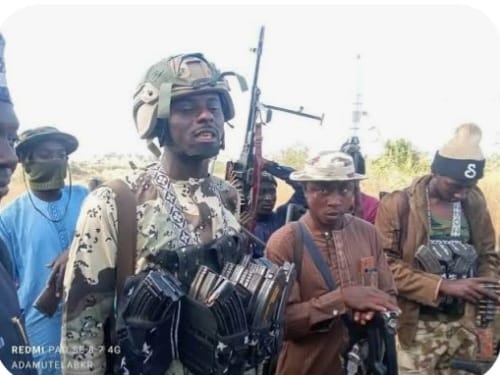
The former Director of Nigeria’s Defence Headquarters once admonished that negotiating with criminals transforms them into recognised power brokers. As he stated, “There is no negotiation with criminality. It only fuels further cycles of violence and undermines state authority.”
This perspective was reflected in recent defence policy discussions where the Senate declared kidnapping an act of terrorism and mulled harsher penalties, including the death sentence for such crimes.
The logic is straightforward: treating kidnappers merely as criminals to be bargained with undercuts deterrence. Instead, it builds a market for kidnapping and one that is expanding and mutating into various forms of terror and extortion.
International Ramifications.
Nigeria’s insecurity is not just a national catastrophe; it has international security implications. The country’s porous borders, interlinked regional insurgencies and the rise of violent groups in the Sahel make West Africa a hotspot for burgeoning criminal networks.
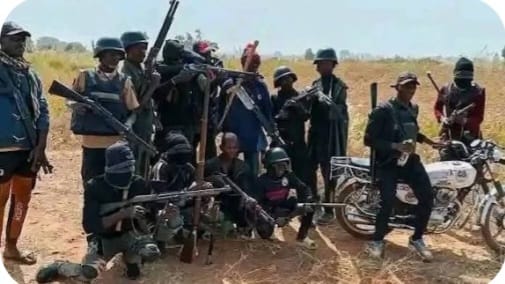
Furthermore, international businesses and investors look at Nigeria through the lens of risk. Persistent kidnappings and the government’s inability to secure citizens and property cast a long shadow on economic prospects which is discouraging foreign investment and eroding confidence in the region’s largest economy.
What Must Change: A New Paradigm of Security. End Negotiations with Criminals:
Negotiating with kidnappers has turned Nigeria into a nation of debt with emotionally, morally and financially. As security scholar Professor Alex Bello asserts: “A government that bows to criminal demands sacrifices its legitimacy and abandons its citizens.”
Strengthen Intelligence and Response:
Tactical operations must be supported by robust intelligence networks that anticipate threats and neutralise them before they escalate.
Judicial Reform:
Kidnappers operate with near impunity. Reforming the justice system to ensure swift prosecution and sentencing of kidnappers will serve as a deterrent.
Community Protection Initiatives:
Instead of leaving vulnerable communities to fend for themselves, government forces must provide real protective infrastructure and not just symbolic patrols or hollow statements.
International Partnerships:
Foreign cooperation on intelligence, training, and counterterrorism can bolster Nigeria’s capabilities, but only if anchored in accountability and transparency.
For How Long Will This Continue?
The answer depends on political will. For too long, Nigeria has tolerated negotiation as a default tactic, rationalised by fear of casualties or immediate harm. Though fear cannot be the compass of national policy. A state that negotiates with kidnappers is a state that has abdicated its responsibility to its people.
As security policy expert Dr. Farouk Umar warns: “A nation that incentivises violence by capitulating to it is laying the groundwork for its own undoing.” If the Nigerian government cannot secure its citizens, then it must answer a painful question: Is it capable of governing at all? History will not forgive those who negotiate away the dignity and safety of ordinary Nigerians.
A Defining Moment: A Call for Courage and Reform. Nigeria stands at a crossroads. The spectacle of negotiating with kidnappers is not merely a political embarrassment; it is a symptom of systemic failure. The country’s leadership must choose between appeasing criminals or reclaiming its authority.
The demand for motorcycles in exchange for human lives is more than absurd and it is an indictment of leadership that has lost its moral compass.

If Nigeria is to emerge from this dark chapter, its leaders must demonstrate courage, competence and a steadfast commitment to justice. Anything less will condemn millions of Nigerians to a future marred by fear, loss and a betrayal of the very principles upon which the nation was founded.









How OPay Is Turning Product Architecture Into a Customer Service Advantage
In high-volume fintech markets like Nigeria, customer service can no longer sit at the end of the business process. When a platform serves tens of millions of users and processes millions of transactions every day, the old model of customer service, call centres, long queues, and manual complaint handling quickly becomes too slow, too costly, and challenging to scale.
The future of customer service in fintech is not just about answering calls faster. It is about preventing problems before they happen. This is where product design, technology, and risk systems begin to play a bigger role. Instead of reacting to customer complaints, modern fintech platforms are now building customer protection and support directly into the app experience itself.
OPay is one of the platforms showing how this shift works in practice.
Over the past few years, OPay’s product development has followed a clear pattern. New features are not only designed to make payments easier, but also to reduce errors, prevent fraud, and lower the number of issues that customers need to complain about. In simple terms, many customer service problems are stopped before users even notice them.
One of the strongest examples of this approach is OPay’s real-time fraud and scam alerts. Traditionally, customers only contact support after money has already left their account. At that point, the damage is done, emotions are high, and recovery becomes more complex. OPay’s system works differently. When a transaction looks unusual, based on amount, timing, behaviour, or pattern, the system raises a warning before the transfer is completed. This gives users a chance to pause, review, and confirm. In many cases, this stops fraud before it happens.
For users, this feels like protection built into the app, not an emergency response after a loss. For the business, it means fewer fraud cases, fewer complaints, and less pressure on customer support teams. This proactive model aligns with global fintech best practices, which prioritise prevention over recovery.
Another important layer is step-up security for high-risk or high-value transactions. As users move more money and rely more heavily on digital wallets, security cannot be one-size-fits-all. Adding too many checks to every transaction creates frustration. Adding too few creates risk. OPay balances this by applying stronger security only when it is needed. For example, biometric verification and additional authentication steps are triggered in sensitive situations. This keeps everyday transactions smooth, while adding extra protection when the risk is higher. This approach builds trust quietly. Users may not always notice the security working in the background, but they feel the result: fewer unauthorised transfers and fewer urgent problems that require support intervention.
Beyond visible features, OPay also runs behaviour-based risk systems in the background. These systems monitor patterns such as sudden device changes, unusual login behaviour, or transaction activity that does not match a user’s normal habits. When something looks off, the system responds automatically. Most users never see these checks. But their impact shows up in fewer failed transactions, fewer reversals, and fewer cases where customers need to chase resolutions. As a result, customer service interactions shift away from crisis handling toward simple guidance and assistance.
Together, these layers form what can be called an invisible customer service system. Many issues are intercepted early, long before they become formal complaints. User sentiment on social media provides real-world signals of how this system is being experienced. On X (formerly Twitter), some users have publicly shared their experiences with OPay’s responsiveness and reliability.
One user, @ifedayo_johnson, wrote, “Opay has refunded it almost immediately. Before I even made this tweet but I didn’t notice. logged it as transfer made in error on the Opay app and they acted almost immediately. Commendable. Thank you @OPay_NG. I’m very impressed with this!”
Another user, @EgbonAduugbo, shared “The reason I love opay so much is that you hardly ever have to worry, wait or call their customer service for anything cuz everything just works!”
While social media comments are not formal performance metrics, they matter. They reflect how real users feel when systems work smoothly and issues are resolved quickly, often without friction. This product-led customer service model becomes even more important when viewed in the context of OPay’s scale. At this scale, even minor improvements in fraud prevention or transaction success rates can prevent thousands of potential complaints every day. In this context, customer service is no longer driven mainly by headcount. It is driven by engineering choices, risk models, and system design.
OPay’s journey suggests what the future of fintech in Africa may look like. The next generation of leaders will not only be those with the most users, but those whose systems are designed to protect users, resolve issues quickly, and reduce friction at scale.
society
Phillips Esther Omolara : Answering The Call To Worship And Transforming Lives Through Gospel Music

Phillips Esther Omolara : Answering The Call To Worship And Transforming Lives Through Gospel Music
Introduction : Phillips Esther Omolara (Apple Of God’s Eye) is an Inspirational and passionate Nigerian gospel music minister, singer, and songwriter dedicated to spreading the message of Christ through her songs.
Background : I was born and brought up in Lagos State. I am a devoted gospel minister and a worship leader who began her musical journey in the children choir later graduated to adult church choir at a young age, leading praises and also a vocalist in the choir.
Early Life : I was born on April 8th 1990 in Lagos, Phillips Esther Omolara is a native of Oyo state in Ogbomosho.
Family : Got married to Phillips Oluwatomisin Omobolaji from Ogun State and our union was blessed with children.
Education : I went to Duro-oyedoyin nursery and primary school Ijeshatedo, Lagos, where I laid the foundation for my academic pursuits. For my secondary education, I attended Sanya Grammer school in Ijeshatedo, Lagos.
During my high school years, I was already deeply involved in church activities. After completing my secondary education, Phillips Esther pursed higher education at Lagos State Polytechnic (LASPOTECH).
Musical Style : Known for [e.g., Inspirational songs, Contemporary Worship, Highlife, Reggae, Traditional Yoruba], and my music blends spiritual depth with creative musicality.
INSPIRATIONS AND INFLUENCES : I have no specific role model in the gospel music industry. However, I have expressed my love for songs from several Veteran gospel artists who have influenced my musical journey.
Some of the gospel artists whose music i admires include:
* Mama Bola Are
* Tope Alabi
* Omije Ojumi
* Baba Ara
* Bulky Beks
Mission : My ministry focuses on leading people to the presence of God and creating an atmosphere for miracles.

CHETACHI NWOGA-ECTON EMPOWERS 300 WIDOWS IN IMO
A renowned humanitarian and proud daughter of Mbaise in Imo State, High Chief (Dr.) Princess Chetachi Nwoga-Ecton, has empowered over 300 widows and vulnerable women across the Owerri Zone, in a remarkable demonstration of compassion and service to humanity.

The empowerment programme, which took place at the Palace of the Eze of Ngor Okpala, HRH Eze Engr. Fredrick Nwachukwu, brought together community leaders, traditional rulers, women groups and beneficiaries from different communities within the zone.
During the event, the widows received food materials and cash support, aimed at helping them meet basic needs and strengthen their small-scale businesses.

The initiative was widely applauded as a timely intervention to support women who often face severe economic hardship after losing their spouses.
Many of the beneficiaries expressed heartfelt appreciation to High Chief (Dr.) Nwoga-Ecton, describing the empowerment as a lifeline that would help them take better care of their families.
Some widows, while offering prayers for the philanthropist, noted that the gesture had restored hope and dignity in their lives.
Fondly known as Ada Imo and Adaure, High Chief (Dr.) Princess Chetachi Nwoga-Ecton has earned widespread admiration for her consistent humanitarian efforts both within Nigeria and internationally.
Through her philanthropic activities and foundations, she has continued to support widows, children, and vulnerable communities with interventions in healthcare, welfare and economic empowerment.
Community stakeholders who attended the programme commended the Mbaise-born philanthropist for her generosity and dedication to uplifting the less privileged, noting that her actions reflect true leadership and compassion.
Observers say the initiative further reinforces her growing reputation as one of the most impactful humanitarians of this generation, whose commitment to humanity continues to inspire hope across Imo State and beyond.


-

 society6 months ago
Religion: Africa’s Oldest Weapon of Enslavement and the Forgotten Truth
-

 news3 months ago
WHO REALLY OWNS MONIEPOINT? The $290 Million Deal That Sold Nigeria’s Top Fintech to Foreign Interests
-

 Business6 months ago
GTCO increases GTBank’s Paid-Up Capital to ₦504 Billion
-

 society6 months ago
“You Are Never Without Help” – Pastor Gebhardt Berndt Inspires Hope Through Empower Church (Video)