
Uncategorized
FROM BORDER TO MARKETS: HOW NIGERIA’S REFORMS ARE REWRITING AND MODERNISING TRADE FACILITATION By O’tega Ogra

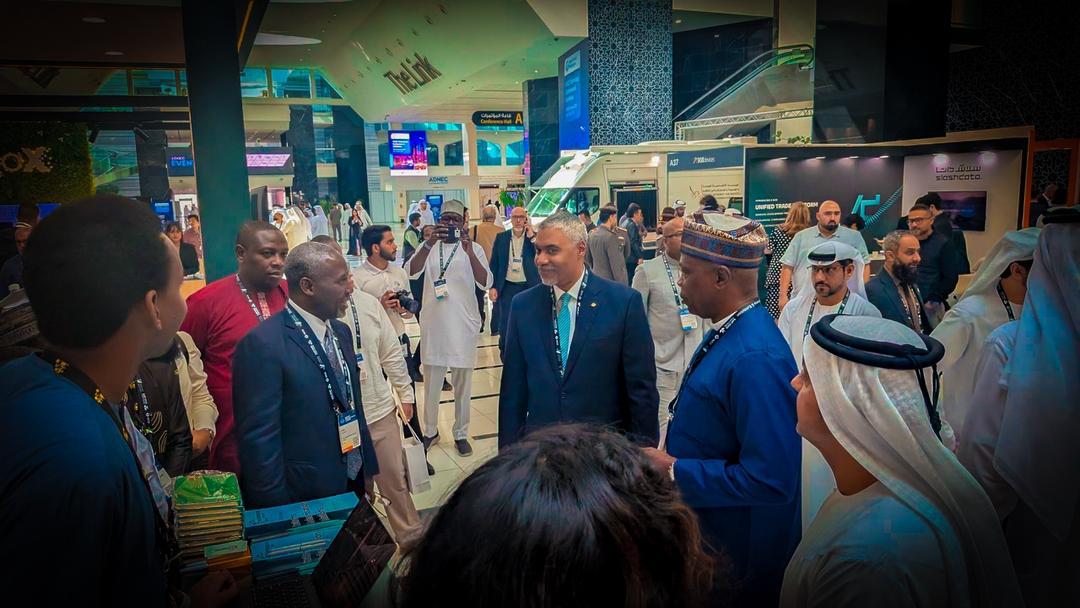
FROM BORDER TO MARKETS: HOW NIGERIA’S REFORMS ARE REWRITING AND MODERNISING TRADE FACILITATION
By O’tega Ogra
On the surface, the 2026 World Customs Organization (WCO) Technology Conference in Abu Dhabi, held in the last week of January, followed a familiar script: flags, formal sessions, carefully worded speeches. But beneath the choreography, something more consequential was unfolding. As customs chiefs and trade officials compared notes on the future of borders, Nigeria arrived not with theory, but with a working proposition.
The Nigeria Customs Service (NCS) Modernisation Project, being implemented through Trade Modernisation Project (TMP) Limited, unveiled to a global audience of customs administrators and policy leaders a window into how Africa’s largest economy is confronting one of the most complex challenges in public administration: reforming the machinery of trade while it is still running.

For decades, customs reform was treated largely as a technical exercise—frequent patches here, shoddy fixes there; new software in one corner, revised procedures in another. Nigeria’s presence in Abu Dhabi signalled something different. TMP Limited, working in partnership with the NCS, advanced the argument that trade is a cornerstone of economic development and must be supported by organic, sustainable partner ecosystems. Such ecosystems deliver speed and trust, revenue and credibility, and secure borders without stifling commerce.
That argument resonated in a room increasingly aware that global trade is no longer defined solely by tariffs and treaties, but by data, interoperability, and the quiet efficiency of systems that simply work.
The annual WCO Technology Conference has, in recent years, become a barometer for the direction of global trade governance. This year’s discussions reflected a shared anxiety: supply chains are more fragile, compliance risks are rising, and governments face mounting pressure to collect revenue without discouraging investment. Customs administrations now sit at the intersection of all three.
Nigeria’s response has been to attempt a full reset.
At the heart of this effort is the NCS Modernisation Project, implemented through a Public-Private Partnership (PPP) arrangement with TMP Limited as the concessionaire. The project seeks to replace fragmented technology deployments and manual processes within the Nigeria Customs Service with a single, integrated framework. This is anchored on B’Odogwu, a Unified Customs Management System (UCMS) that brings together cargo clearance, risk management, payments, and inter-agency collaboration. The ambition is sweeping—and so are the stakes.
Alhaji Saleh Ahmadu, OON, Chairman of TMP, framed the initiative as nothing less than an institutional reconstruction, designed to position the NCS at the forefront of global customs administration technology, aligned with international standards and assurance frameworks.

“Digital trade modernisation is not just about upgrading systems,” he told participants in Abu Dhabi. “It is about upgrading trust, predictability, and confidence in how trade flows through our borders.”
That choice of words matters. Nigeria’s economy has long struggled with the perception gap between its size and the ease of doing business. Investors cite delays. Traders complain of opacity. Government points to revenue leakages. In this context, customs reform becomes as much a credibility project as a technical one.
Saleh’s message was timely and direct: modern trade demands modern customs. Data-driven processes, automation, and risk-based controls are no longer luxuries; they are prerequisites for competitiveness in a world where capital moves faster than policy.
The institutional face of this digital transformation is the Comptroller-General of Customs, Bashir Adewale Adeniyi, who led Nigeria’s delegation to Abu Dhabi. His message reflected a subtle but important shift in how customs leadership now understands its role.
“Customs administrations today must evolve from gatekeepers to facilitators of legitimate trade,” Adeniyi said. “Nigeria’s customs modernisation project reflects our determination to place the Nigeria Customs Service at the centre of national economic transformation.”
It is a familiar refrain globally, but one that carries particular weight in Nigeria, where customs revenue remains a critical pillar of public finance. Automation, Adeniyi argued, is not about weakening control; it is about strengthening it through intelligence rather than discretion.

Risk management systems reduce unnecessary physical inspections. Integrated platforms limit human contact. Data analytics improve compliance targeting. When executed well, the result is faster clearance for compliant traders and tighter scrutiny for high-risk consignments.
In Abu Dhabi, peers from Asia, Europe, and Latin America listened closely to Nigeria’s presentation. Reforming customs in a small, open economy is one thing. Doing so in a market of over 200 million people, home to some of Africa’s busiest ports and its largest economy, is quite another.
Nigeria’s engagement emphasised that customs modernisation is embedded within a broader economic reform agenda under President Bola Ahmed Tinubu, GCFR. Simplifying trade procedures, strengthening revenue assurance, and aligning with international standards form part of a wider effort to reposition the economy for investment-led growth.
What makes the project particularly noteworthy is its insistence on end-to-end coherence. Rather than digitising isolated functions, the reform aims to connect agencies, harmonise data, and reduce duplication across government—an all-of-government approach that acknowledges an uncomfortable truth: trade friction is often created not at the border, but between institutions.
The WCO 2026 Technology Conference offered Nigeria more than a platform; it provided a stress test. Questions from peers were pointed. How will change be sustained across political cycles? How will capacity be built? How will entrenched institutional behaviours be unlearned?
The responses were pragmatic. Reform is being phased. Training programmes are ongoing. International benchmarks are being adopted not as slogans, but as operating standards. There were no claims of perfection—only a clear statement of intent.
“Our engagement here underscores Nigeria’s commitment to international cooperation,” Adeniyi noted. “We are learning, sharing, and contributing to global conversations on the future of customs administration.”

That contribution matters. As Africa moves to deepen regional trade under continental frameworks, customs efficiency will determine whether integration succeeds in practice or remains aspirational on paper. Nigeria’s experience, if successful, could offer a valuable template for other developing economies navigating similar constraints.
In Abu Dhabi, the mood was cautious but curious. Reform fatigue is real in many countries. Yet there was a growing sense that Nigeria’s effort—precisely because of its scale and difficulty—deserves attention.
Borders are rarely glamorous. But they are decisive. In choosing to modernise its borders in public, under global scrutiny, Nigeria is signalling something beyond technical competence. It is signalling seriousness.
And in global trade, seriousness still counts.
O’tega Ogra is Senior Special Assistant to President Bola Ahmed Tinubu, GCFR, responsible for the Office of Digital Engagement, Communications and Strategy in the Presidency.




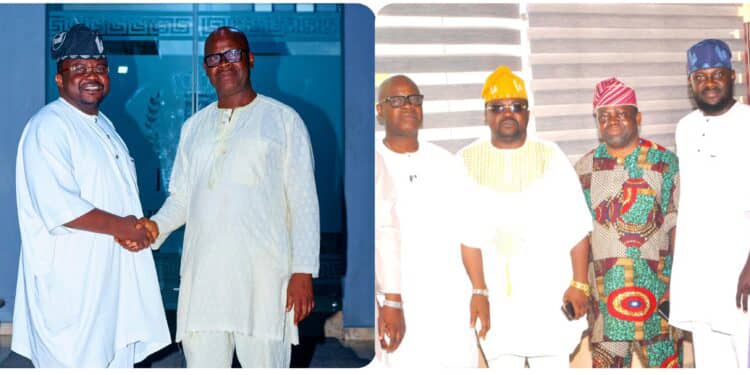
Ajadi Visits Ilaji Resort, Commends Sanusi’s Vision for Oyo’s Economic Growth
The leading gubernatorial aspirant in Oyo State under the Peoples Democratic Party (PDP), Olufemi Ajadi Oguntoyinbo, has lauded the transformative impact of private-sector investment on the state’s economy, following a courtesy visit to Ilaji Hotels and Sports Resort in Akanran, Ibadan.
Ajadi, who was warmly received on Sunday by the resort’s founder, Chief Dr Dotun Sanusi, described the facility as a symbol of what visionary leadership and indigenous enterprise can achieve in driving rural development, job creation, and tourism growth.
Speaking during the visit, Ajadi commended Sanusi’s commitment to Oyo State’s economic advancement, noting that Ilaji Resort stands as a model for sustainable development outside urban centres.
“What I have seen here today is not just a business venture, but a bold statement of belief in Oyo State’s potential,” Ajadi said. “Chief Sanusi has demonstrated that with vision, dedication, and strategic investment, we can transform our rural communities into thriving economic hubs. This aligns perfectly with my agenda to expand opportunities, empower our people, and sustain development across the state.”
[4/13, 6:34 PM] johnsonakinpelu: The PDP gubernatorial aspirant emphasised that his governorship ambition is rooted in supporting initiatives that promote local enterprise, tourism, and youth employment, adding that partnerships between government and private investors would be a priority if elected.
In his remarks, Sanusi, popularly known as Ilaji, expressed delight at hosting Ajadi and his entourage, describing the visit as encouraging for investors in the state.
“I am honoured to receive Ambassador Ajadi here at Ilaji Resort,” Sanusi said. “This project was born out of a desire to give back to society, create jobs for our youths, and showcase the rich cultural and tourism potential of Oyo State. When leaders recognise and support such efforts, it strengthens our resolve to do more.”
Sanusi further stressed the importance of continuity in governance and policies that encourage investment, noting that consistent support from government actors is crucial for long-term economic growth.
The visit also attracted notable political stakeholders, including the former Ona-Ara Local Government Chairman, Hon. Taiwo Oke, Hon. Bass Oloko, and Ajadi’s personal assistant, Kilamuwaye Badmus, among others.
Observers at the event described the meeting as a convergence of political leadership and entrepreneurial vision, highlighting the growing importance of collaboration in addressing developmental challenges in Oyo State.
Analysts see Ajadi’s visit to Ilaji Resort as part of his broader engagement with key stakeholders across sectors, as he continues to build momentum ahead of the 2027 governorship race.

FOPCHEN Calls for Dialogue as Court Fixes May 28 for Continuation
OTA, OGUN STATE — Proceedings in a widely followed legal case resumed on March 24, 2026, at the High Court of Ogun State, Ota Division, ending with a fresh adjournment as the court fixed May 28, 2026, for continuation.
During the session, legal representatives for all parties restated their positions and addressed preliminary matters, laying the groundwork for more substantive arguments at the next hearing. Observers noted that the case continues to attract significant public attention due to its perceived implications for law, culture, and societal values.
The Foundation for the Protection of Cultural Heritage in Nigeria (FOPCHEN) used the occasion to reiterate its call for constructive national dialogue. The group emphasized that while the judicial process must be respected, broader societal engagement remains essential.
According to the organization, issues relating to values, responsibility, and cultural identity should not be confined solely to courtroom deliberations but should involve active participation from various sectors of society.
Legal analysts present at the proceedings described the matter as one with far-reaching implications, noting that arguments advanced in court could shape future interpretations surrounding sensitive cultural and moral questions.
The presiding judge subsequently adjourned the case to May 28, granting all parties time to refine their submissions and respond to issues raised during the hearing.
As anticipation builds ahead of the next court date, Nigerians across different sectors continue to monitor developments closely, keen to see how the judiciary navigates the delicate balance between constitutional rights and cultural expectations.
Uncategorized
CRG: Politicians Must Stop Witch-Hunting, Focus on Nation Building — Says NYSC Cleared Deputy Speaker Since 2023
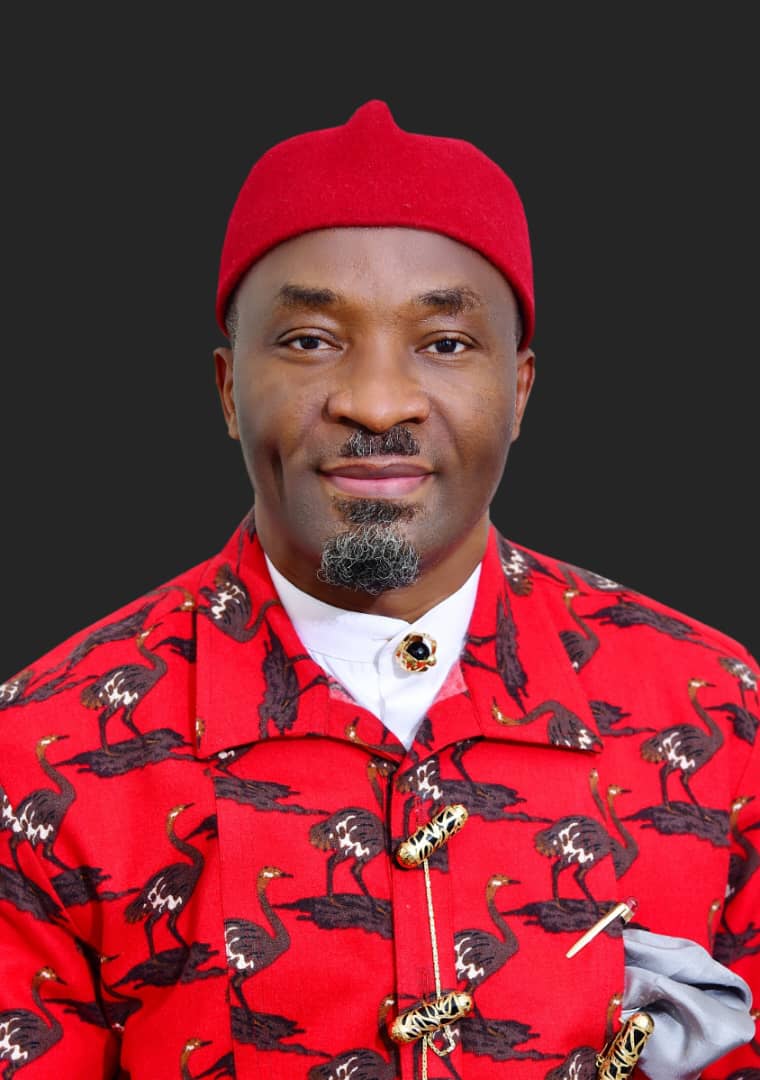
CRG: Politicians Must Stop Witch-Hunting, Focus on Nation Building — Says NYSC Cleared Deputy Speaker Since 2023
By: Boye Ola
The Centre for Responsible Governance (CRG) has called on political actors and interest groups to desist from what it described as needless witch-hunting of the Deputy Speaker of the House of Representatives, Benjamin Okezie Kalu, following renewed controversies surrounding his National Youth Service Corps records.
The organisation noted that the clarification by the National Youth Service Corps (NYSC) regarding the matter is not a recent development, as a formal verification letter had already been issued as far back as May 23, 2023.
The letter, referenced NYSC/CCD/VER/10/5.1/VOL1/02, had already addressed and cleared the questions surrounding the Deputy Speaker’s NYSC records.
Reacting to the renewed debate, the spokesman of the Centre,
Obande George, said it was troubling that issues which had already been clarified by a competent national institution were being resurrected for political purposes.
According to him, the time has come for political actors to move away from destructive engagements and concentrate on building the nation.
“It is important to note that the NYSC had already issued a verification letter dated May 23, 2023 addressing the matter.
Reopening issues that have already been clarified by a competent authority suggests that some individuals are more interested in political witch-hunting than in national progress,” George said.
The CRG stressed that democracy thrives when institutions are respected and their determinations are accepted in good faith rather than constantly questioned for political advantage.

George also commended the Deputy Speaker for demonstrating maturity and composure throughout the controversy, despite what he described as sustained provocations.
“Honourable Benjamin Kalu has shown remarkable calm and maturity in the face of intense public scrutiny and political provocation.
Instead of engaging in unnecessary public confrontation, he allowed institutions to speak through their records.”
The Centre warned that Nigeria’s political culture must evolve beyond constant character attacks and sensational allegations, which often distract public officials from their responsibilities.
According to the organisation, the country’s development requires constructive engagement among political actors rather than continuous attempts to discredit opponents.
“Nigeria cannot move forward if political energy is constantly spent on digging up allegations and amplifying rumours. Our leaders and political actors must redirect their focus to governance, policy and nation building.”
CRG therefore urged Nigerians to rely on verified information from credible institutions and avoid spreading speculative claims that could damage reputations or destabilise public discourse.
The organisation reiterated that respect for due process and institutional integrity remains essential for strengthening Nigeria’s democracy.

@The Centre for Responsible Governance, Email: [email protected], Instagram: crgngo6, Twitter: crgng06, Threads: crgngo6


- Critical Minerals Africa Group to Speak at Invest in African Energy Forum in Paris April 14, 2026
- Talentz MEDIA Announces Strategic Partnership with Ghanaian Artist Kwaku Cenima to Launch “Emotional Scene” April 14, 2026
- South African Local Government Association (SALGA) and The Global Trust Project announce municipal pilot under new three-year Memorandum of Understanding (MoU) April 14, 2026
- TotalEnergies Strikes New Oil Discovery Offshore Congo Amid National Drive Toward 500,000 barrels per day (BPD) April 14, 2026
- Africa Finance Corporation (AFC) Delivers Côte d’Ivoire’s First Project Finance Green Bond for Landmark Solar Plant April 14, 2026
- Renaissance Services acquires Socat as part of new growth strategy April 14, 2026
- Afreximbank and Government of St Kitts and Nevis Sign Hosting Agreement for AfriCaribbean Trade and Investment Forum (ACTIF2026) April 14, 2026
- African Energy Chamber: Africa Must ‘Refine, Baby Refine’ as Global Supply Disruptions Expose Need for Downstream Expansion April 14, 2026
- African Mining Week (AMW) to Link Investors to Africa’s Aluminium Prospects Amid Middle East Supply Disruptions April 14, 2026
- President Mahama to launch landmark Free Primary Health Care Programme April 14, 2026
- Critical Minerals Africa Group to Speak at Invest in African Energy Forum in Paris April 14, 2026
- Talentz MEDIA Announces Strategic Partnership with Ghanaian Artist Kwaku Cenima to Launch “Emotional Scene” April 14, 2026
- South African Local Government Association (SALGA) and The Global Trust Project announce municipal pilot under new three-year Memorandum of Understanding (MoU) April 14, 2026
- TotalEnergies Strikes New Oil Discovery Offshore Congo Amid National Drive Toward 500,000 barrels per day (BPD) April 14, 2026
- Africa Finance Corporation (AFC) Delivers Côte d’Ivoire’s First Project Finance Green Bond for Landmark Solar Plant April 14, 2026
- Renaissance Services acquires Socat as part of new growth strategy April 14, 2026
- Afreximbank and Government of St Kitts and Nevis Sign Hosting Agreement for AfriCaribbean Trade and Investment Forum (ACTIF2026) April 14, 2026
-

 news4 months ago
WHO REALLY OWNS MONIEPOINT? The $290 Million Deal That Sold Nigeria’s Top Fintech to Foreign Interests
-

 celebrity radar - gossips3 months ago
Dr. Chris Okafor Returns with Power and Fire of the Spirit -Mounts Grace Nation Altar with Fresh Anointing and Restoration Grace on February 1, 2026
-

 celebrity radar - gossips4 months ago
Prophet Kingsley Aitafo Releases 2026 Prophecy: ‘Nigeria Will Rise, but the World Must Prepare for Turbulence’
-

 celebrity radar - gossips6 months ago
End of an Era: Nigeria Mourns Evangelist Dr. Uma Ukpai, 80