
Politics
ABSURD. SHAMBOLIC. – TRIAL AND JUDGEMENT OF CODE OF CONDUCT TRIBUNAL IN FRN V. ONNOGHEN PLUMB THE DEPTHS OF TRAVESTY

Access to Justice Public Statement
Date: 18 April 2019
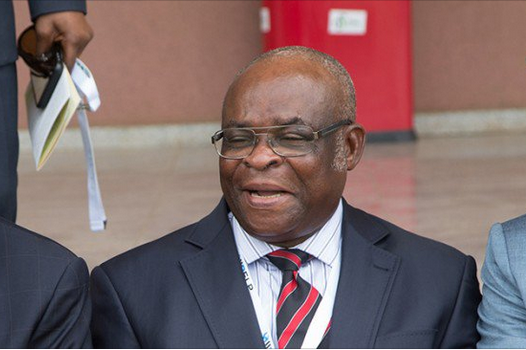
Today, April 18, 2019, the Code of Conduct Tribunal in a judgment delivered by its chairman, Mr. Danladi Umar convicted Justice Walter Onnoghen on a six-count charge of false declaration of assets. The charges were filed on January 10th 2019 by the Federal Government of Nigeria following a petition to the Code of Conduct Bureau on January 9th 2019 by an organization (the Anti-Corruption and Research Based Data Initiative). Following its verdict, the Tribunal ordered Justice Onnoghen’s removal from judicial office as Chief Justice of Nigeria, as well as the seizure and forfeiture of the monies in his accounts. It also barred him from holding public office for ten years. The Code of Conduct Tribunal is a quasi-criminal court saddled with the responsibility of handling complaints of non-compliance with the Code of Conduct for Public Officers. The primary objective of the Code of Conduct Tribunal, as provided under its Enabling Act is to establish and maintain a high standard of morality in the conduct of their official functions by public officials.
Access to Justice (A2Justice) takes no position on whether Justice Walter Onnoghen committed the infractions with which he was charged or indeed is guilty of offences related to them. A2Justice abides by the rule of law principle that all persons are equal before the law and that no person should be above the law. However, a cardinal rule of law requirement is that courts and tribunals which exercise judicial powers should be independent of other arms of government and appear, in the perception of reasonable observers, to be so independent. Unfortunately, the Code of Conduct Tribunal did not offer this guarantee of independence, neither its perception. Far from it. The Tribunal had, from the word go, drawn the handwriting on the wall indicating that it was bent on a particular outcome, and that it would look neither to the left nor to the right in the blind pursuit of that goal. At several pivotal junctures in the course of the trial, the Tribunal appeared to demonstrate that it was clearly on the same side with the government, and was not sitting as an unbiased umpire or judicial arbiter.
Nowhere was this more evident as when Danladi Umar and another member of the Tribunal granted, speaking figuratively, under cover of darkness on January 23rd 2019, an ex-parte Order removing Justice Walter Onnoghen as Chief Justice of Nigeria. The bizarre and egregious procedure taken to unseat Justice Onnoghen was an unmistakable indication that no barrel was too deep to plumb in getting to achieve what the Tribunal wanted to achieve, and no rule or principle of law was strong or revered enough to forestall its plan. It will not surprise many that the Code of Conduct Tribunal reached the verdict it did after using very questionable procedures from the very start.
It would be a serious fallacy to characterize the Tribunal’s verdict as one reached after a due process trial using even the lowest possible denominators of what a fair trial represents. The procedures adopted by the Tribunal in the case were far too faulty and flawed to be regarded as a judicial process. To reasonable observers, it would appear that the Tribunal’s procedure and speed were deliberately contorted to enable it reach its pre-determined outcomes, and its verdict was simply a reflection and product of the shambolic trial.
Undoubtedly, Justice Onnoghen’s trial before the Code of Conduct Tribunal was, in every way, grossly and grievously unfair, and no fair-minded court or tribunal could have descended to the depths the Code of Conduct Tribunal delved in trying to convict Walter Onnoghen on the charges against him in order to remove him from office. The Tribunal was so desperate to convict Justice Onnoghen that it had to overturn or side-step its previous judgments on similar matters, decisions such as those given in a prior case involving another Justice of the Supreme Court. A cardinal principle of our Common Law system is that similar cases are decided alike in other to prevent arbitrariness and caprice in the adjudication of cases.
This is not a way to fight corruption. There is no positive, but rather, there are plenty negatives to this flawed judgment. This judgment merely shows how much is still lacking in Nigeria’s courts and tribunals and how distanced they truly are from being independent vehicles of justice. Unfortunately, the Code of Conduct Tribunal has been headed for a long time by a person who himself has been the subject of corruption allegations, and that, in itself, is a major weakness.
It is clearly feasible to argue, at least theoretically, that all an executive government needs to do to get the Code of Conduct Tribunal groveling to its side is to raise the spectre of pursuing a corruption trial against its Chairman, Danladi Umar. That is just how vulnerable the leadership of the Code of Conduct Tribunal is. There needs to be a change in the chairmanship of the Tribunal if it is to inspire public confidence in itself. More than changing its leadership, constitutional reforms must make the CCT a more independent institution. As Danladi Umar himself said in his judgment today, “…CCT also is not under the supervision of the National Judicial Council but the Presidency…’’. A Tribunal under the Presidency cannot be independent of the Presidency, which is a political institution.
Ultimately, the trial and judgment of the CCT will disparage Nigeria’s system of justice in the eyes of the international community. More than that however, they show that, despite elaborate constitutional arrangements to guarantee an independent Judiciary, as well as constitutional rights to a fair trial, the judicial process is still weak and leaking through many crevices leaving many citizens defenceless and exposed as a result. We see this situation in the Code of Conduct Tribunal. No democracy can flourish under such conditions.
For Access to Justice
Joseph OttehDaniel Aloaye
Executive DirectorProgramme Officer







Journalists for Good Governance Shines Searchlight on Local Government Administration
…Calls for Accountability in Nigeria’s Grassroots Governance
LAGOS, Nigeria — A civil society coalition known as Journalists for Good Governance(JGG) has intensified public debate on transparency and accountability within Nigeria’s local government system, urging media professionals, civil society actors, and citizens to hold grassroots leaders accountable.
Speaking an event in Lagos recently, the acting chairman of the society, Comrade Bunmi Obarotimi said that despite reforms such as the Supreme Court’s 2024 ruling granting financial autonomy to all 774 Local Government Areas (LGAs), systemic challenges continues to hinder effective service delivery and responsible stewardship of public funds.
“Local governments are the closest tier of government to the people — yet too often they remain the least transparent. Without civic oversight and vibrant media, promises of autonomy ring hollow.” the acting chairman said.
The Journalist for Good Governance emphasised crucial roles that journalists can play in uncovering discrepancies in council spending, flagging poor service delivery, and educating citizens on their rights. Their call comes amid wider efforts by media and civic organisations to bridge accountability gaps. The civil society initiatives had previously launched monitoring campaigns to track local government expenditures and have been quietly advocating for transparency in how public money is deployed.
The leaders of the Journalists for Good Governance (JGG) highlighted the importance of physical assessment and citizens engagement on projects to boost people’s confidence, urging local councils to adopt open data platforms and proactive information dissemination in compliance with the Freedom of Information Act. Experts say the majority of LGAs currently lack operational websites or digital portals, further limiting public scrutiny.
The Journalists for Good Governance initiative aligns with sustained advocacy by civil society groups and governance experts calling for a collective approach to strengthening democratic accountability, and has decided to engage in critical and holistic assessments of how Local Governments is being run and the impact and quality of projects they embark-on and to address deficits in transparency and public trust.
Meanwhile, some state governments have signalled support for improved community engagement. In Lagos State, authorities reiterated a commitment to enhancing community media platforms as vehicles for civic participation and accountability at the grassroots level.
The renewed spotlight on local government administration has reignited public debate over fiscal responsibility and priorities. Controversies such as the widely criticised Adamawa council chairmen’s wives trip to Istanbul — which drew public outrage for perceived misuse of public funds — underscore why watchdog groups say stronger oversight mechanisms are urgently needed at the grassroots.
Citizens and activists have welcomed the journalists’ initiative, calling for sustained media engagement that goes beyond headlines to influence policy and accountability reform.
The civic rights advocates note that real change will require robust legal frameworks, a free press, and empowered communities equipped to demand transparency at every level of governance.
As Journalists for Good Governance mobilises its members, the coming months are likely to see heightened media attention on grassroots administration — from council budgets and service delivery to the enforcement of public information laws and digital transparency initiatives.
Gov. Dauda Lawal commissions projects in Anka LGA, Commits to Sustainable Development
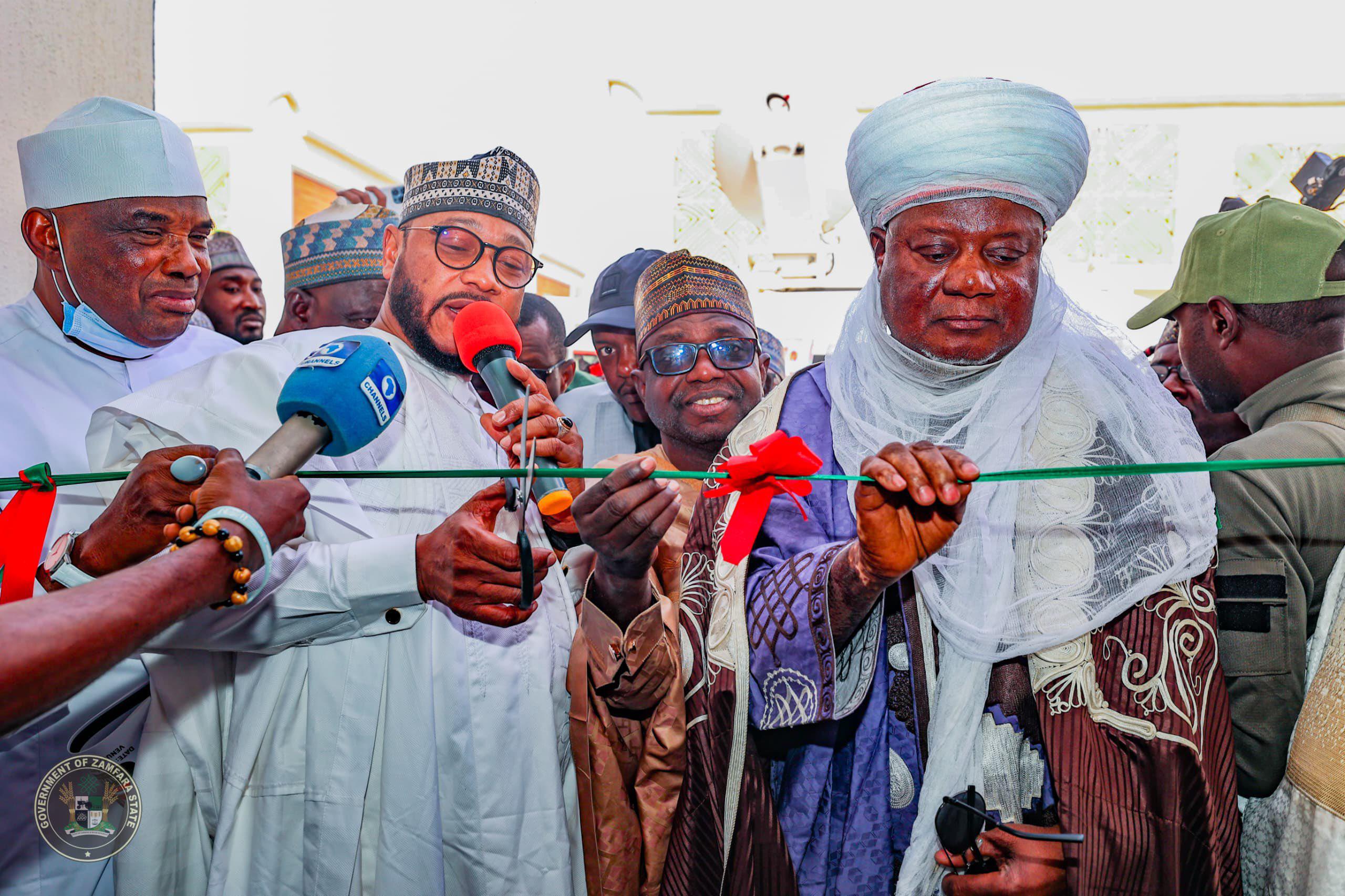
The Executive Governor of Zamfara State, Dr. Dauda Lawal, has reiterated his administration’s steadfast commitment to guiding Zamfara State towards sustainable development by inaugurating and initiating a series of pivotal projects in the Anka Local Government Area.
Among the key undertakings announced are the comprehensive reconstruction and modernization of the Emir of Anka’s palace, signaling a revitalization of traditional leadership; the initiation of work on the crucial Anka–Abbare Road, which is expected to significantly improve connectivity; and the construction of a new Local Government Secretariat.
Additionally, the projects encompass the establishment of dedicated offices for the Hisbah Commission and the Community Protection Guards, alongside the reconstruction of the Safe School in Anka, emphasizing the administration’s focus on enhancing educational infrastructure.
During the commissioning event, Governor Lawal highlighted that these projects are a fulfillment of commitments made during his campaign, aimed at transforming the local landscape by improving infrastructure, stimulating economic growth, bolstering public service efficiency, and enhancing the capacities of security agencies. He called for a collective effort from the community to ensure proper maintenance of these facilities, underscoring the shared responsibility in preserving public assets.
Governor Lawal shared that similar projects have also been inaugurated in Tsafe, with plans for upcoming projects in Kaura Namoda, Moriki, Bungudu, Bukkuyum, and Zurmi, all expected to be completed and inaugurated by the year’s end. This ambitious timeline reflects the administration’s urgency in addressing the development needs of various regions within the state.
In his remarks, the governor urged residents and local traditional institutions to collaborate closely in maintaining the newly commissioned structures and supporting the overarching objectives of his administration. “I stand here in Anka today to honor our commitments to the people of Anka Local Government and all of Zamfara State. The official opening of the new palace for the ‘Sarkin Zamfaran Anka’ and the Zamfara State Council of Chiefs is a significant milestone that wraps up today’s agenda,” he stated.
Governor Lawal emphasized the strategic importance of the Anka–Abbare Road, describing it as a critical artery that will not only enhance access to remote areas but also stimulate economic activities and generate multiplier effects throughout the local economy. He articulated the necessity of providing a conducive work environment for civil servants, affirming that the new local government secretariat and dedicated offices will significantly contribute to strengthening law and order within the state.
“Education is the cornerstone of any thriving society. Our focused initiatives are oriented towards fostering a safe, secure, and supportive environment for our students. I am also proud to announce the completion and commissioning of the reconstructed SAFE School Anka today,” he remarked, reaffirming the administration’s dedication to education.
The governor further noted that the commissioning of the Emir’s Palace serves to restore the historical prominence of traditional institutions, which he regards as pivotal custodians of the region’s culture and heritage. He underlined the administration’s awareness of the invaluable role that these institutions play in fostering the state’s growth and emphasized the necessity of aligning development projects with cultural values.
In conclusion, the governor mentioned that after the successful commissioning in Anka and Tsafe, future projects in Kaura Namoda and Moriki will follow suit, while those in Bungudu, Bukkuyum, and Zurmi remain on track for completion and official commissioning before the year concludes.
news
GEN CHRISTOPHER GWABIN MUSA SUPPORT INITIATIVE HAILS GOVERNOR UBA SANI’S APPOINTMENT AS RENEWED HOPE AMBASSADOR
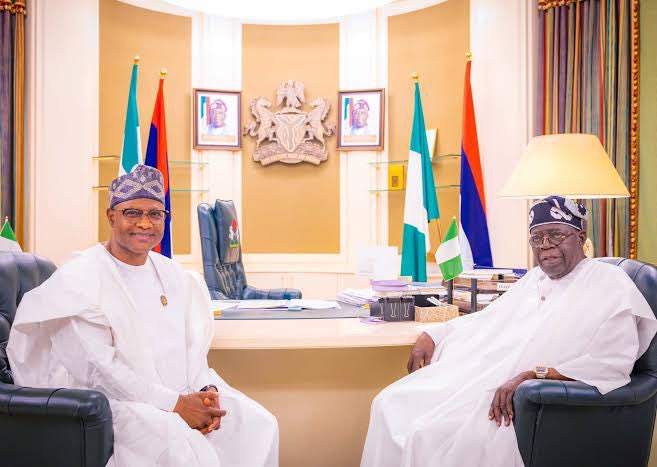
GEN CHRISTOPHER GWABIN MUSA SUPPORT INITIATIVE HAILS GOVERNOR UBA SANI’S APPOINTMENT AS RENEWED HOPE AMBASSADOR
The Gen Christopher Gwabin Musa Support Initiative (GCGMSI) has extended its warm congratulations to His Excellency, Mallam Uba Sani, the Executive Governor of Kaduna State, following his recent appointment as a Renewed Hope Ambassador and Deputy Director-General for Party Outreach, Engagement, and Mobilisation by the All Progressives Congress (APC).
This felicitation was formally conveyed in a statement signed by the Initiative’s Convener, Ibrahim Dahiru Danfulani, Sadaukin Garkuwan Keffi/Betara Biu, and disseminated to the press.
The statement highlighted that the Grand Patron of the GCGMSI, His Excellency General Christopher Gwabin Musa, OFR, Minister of Defence of the Federal Republic of Nigeria, received the news of the appointment with great pride but without surprise. According to the statement, General Musa expressed unwavering confidence in Governor Uba Sani’s proven capability and salient leadership qualities, affirming that the Governor is eminently equipped to deliver on every task entrusted to him.
The Grand Patron further extended profound appreciation to the President and Commander-in-Chief of the Armed Forces, His Excellency Asiwaju Bola Ahmed Tinubu, GCFR, for recognising and finding Governor Uba Sani worthy of this critical national assignment. The appointment, which takes effect immediately, was made by the President in his capacity as the leader of the APC, citing the Governor’s exceptional organisational abilities and strategic acumen.
In his new role, Governor Sani is tasked with working in close collaboration with the Director-General of the Renewed Hope Ambassadors and the party hierarchy, including the National Chairman of the APC. His primary mandate is to ensure harmony, inclusiveness, and strategic coordination across all levels of the party’s mobilization and engagement architecture, a vital function for advancing the political agenda.
Demonstrating its commitment to national service and effective governance, the GCGMSI, under the direct directive of its Grand Patron, General Musa, has officially mobilised its formidable structure. The Initiative has pledged the full deployment of its extensive network, seasoned personnel, and robust operational framework to assist and support Governor Uba Sani in the successful execution of his new responsibilities.
The Gen Christopher Gwabin Musa Support Initiative, renowned for its disciplined organisation, widespread grassroots penetration, and capacity for large-scale civic mobilisation, stands ready as a pivotal force. This move underscores the GCGMSI’s pivotal role as a key support system for national development initiatives and its unwavering dedication to fostering unity and progress under the Renewed Hope agenda.


-

 celebrity radar - gossips6 months ago
Why Babangida’s Hilltop Home Became Nigeria’s Political “Mecca”
-

 society6 months ago
Power is a Loan, Not a Possession: The Sacred Duty of Planting People
-

 society5 months ago
Religion: Africa’s Oldest Weapon of Enslavement and the Forgotten Truth
-

 news6 months ago
THE APPOINTMENT OF WASIU AYINDE BY THE FEDERAL GOVERNMENT AS AN AMBASSADOR SOUNDS EMBARRASSING
You must be logged in to post a comment Login