
society
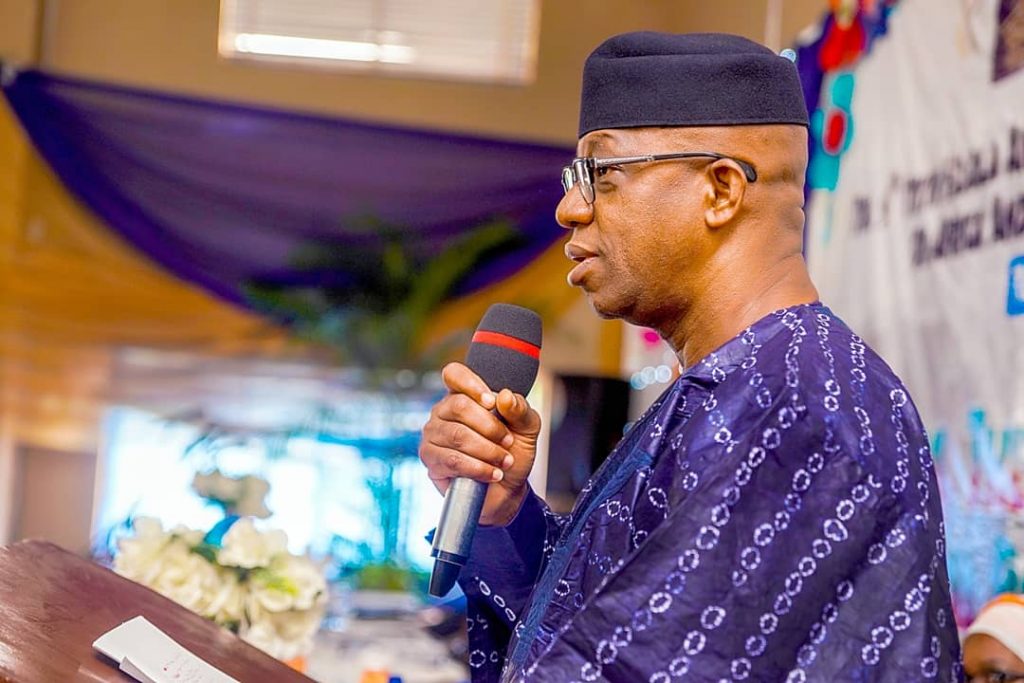
ADDRESS DELIVERED BY THE GOVERNOR OF OGUN STATE, HIS EXCELLENCY, PRINCE DAPO ABIODUN MFR, AT THE 2019 TOYIN FALOLA CONFERENCE ON AFRICA AND THE AFRICAN DIASPORA (TOPAC), HELD ON MONDAY, 1ST JULY, 2019.

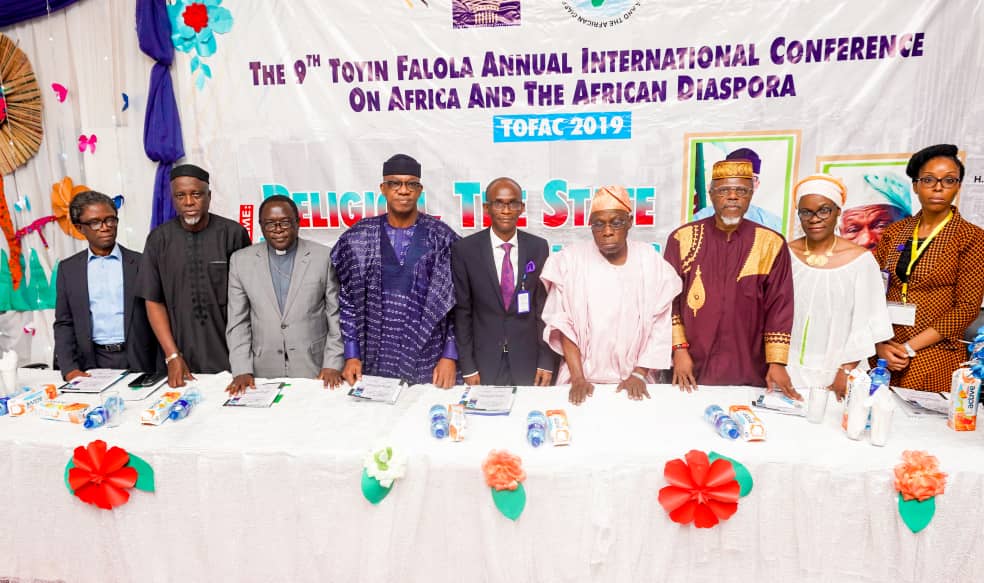
ADDRESS DELIVERED BY THE GOVERNOR OF OGUN STATE, HIS EXCELLENCY, PRINCE DAPO ABIODUN MFR, AT THE 2019 TOYIN FALOLA CONFERENCE ON AFRICA AND THE AFRICAN DIASPORA (TOPAC), HELD ON MONDAY, 1ST JULY, 2019.
Protocols,
On behalf of the Government and the good people of Ogun State, let me welcome the academic community and other members of the entire intellectual community to the 2019 Toyin Falola Conference on Africa and The African Diaspora (Topac), being held here at Babcock University, Ilisan-Remo, Ogun State.
- Let me also commend the management of Babcock University for sustaining the tradition of scholarship since its establishment. This University and others remain part of the reason our dear State is referred to as the education capital of Nigeria. The hosting of this Conference with the theme “Religion, the State and Global Politics is another symbolic demonstration of this Universitys commitment to its mandate of providing quality tertiary education and research and providing solutions to issues of concern to the university and its host community. I also wish to thank the Chairman and the Members of the planning committee for inviting me as the Special Guest, I want to commend you for your commitment and good planning which had made todays occasion possible.
- Distinguished ladies and gentlemen, there is no doubt that the theme of the Conference could not have been more apt considering recent developments in the polity and the attachment of religion. Religion, which should have been a unifying factor, that should bring us closer to our creator has suddenly become a dividing factor. Rather than seeing ourselves as one entity of humanity, we have continued to see ourselves as different, divisible units with varied worldviews.
- In the past, we have always assumed that religion and the State are two different entities. But recent events have continued to lay bare the fact that the connections between religion and the State are increasingly relevant. We have continued to see demonstrations that most of peoples’ actions and commitments are derivable from their religious beliefs. If we have to talk about security, peace, co-existence and even, socio-economic development, we cannot divorce religion.
- In recent times, the global community has been confronted with acts of terrorism which have been tied to religion, whether rightly or wrongly. What is more confounding is the fact that these acts of terrorism are also supposedly sponsored by politicians against the State, and, or by Government against another Government.
- In Nigeria, we have had more than our own fair share of acts of violence which some quarters have tied to religion, and even the State. We have the Boko-Haram issue in the Northern part of the country, which has been linked to a religious terrorist movement, ISIS; there is also the rampaging security threats of Herdsmen-Farmers clash and Kidnap which some people have linked to a grand plan by a particular tribe to take over the rest of the country. I find these acts condemnable and no efforts should be spared to bring the perpetrators to book. If you ask me, these are common criminals and should be treated as such.
- It is also not out of place to state that all these developments within a nation also determines its global perception. In the past, we have had the Western and Eastern Blocs, based on political cum economic philosophy; and we have also had the Non-Aligned Movement. However, recent events have also shown that more nations are forming alliances, not just on geographical location, but also, on religious ideology. We have continued to see international organisations which have religion as its basic credential for membership. It is no surprise that membership of such organisations raise serious discourse amongst citizens of such nations.
- In our contemporary geographical landscape, therefore, we cannot afford to ignore issues of religion, with particular reference to religious freedom and tolerance on one hand; and, on the other hand, violence and oppression. And, in the light of this, State policy makers, Scholars, and all Stakeholders will have to think out of the box and come up with improved and more practical approaches in dealing with our diverse religious ideologies so that religion will be a unifying factor that will provide impetus to socio-economic development of Nigeria. That is why I will state once again that this conference and its theme could not have been more apt because it provides us another veritable platform for cross-fertilization of ideas that will foster religious tolerance and peaceful co-existence for all-round development of our dear country.
- In Ogun State, we appreciate the role of religion in socio-economic development. And, we have mapped out strategies in engaging religious leaders and all our people so that apart from seeing religion as a tool of spiritual fulfillment, they will also see it as a vehicle that drives economic viability of our dear State. We appreciate the importance of the cooperation and support of our people to the successful implementation of the Building our Future Together agenda. Our Administration is irrevocably committed to fairness, justice, equity and inclusiveness.
- Let me not pre-empt the Guest Speaker because I have no doubt in my mind that he will do appropriate justice to the topic. It is my belief that the discussions that will ensue will be quite engaging and at the end of the conference, all of us will feel the time spent has been worth the while.
- Once again, I commend the management of Babcock University, Ilishan-Remo, Ogun State; and, the organisers of this conference for coming up with this important topic.
- As I wish all of us a rewarding and fruitful deliberations, it is with a sense of duty that I declare this Conference open to the glory of God and continued peaceful coexistence of humanity.
- I thank you all for listening and God bless.
Prince Dapo Abiodun MFR
Governor of Ogun State, Nigeria.
Monday, 1st July, 2019.









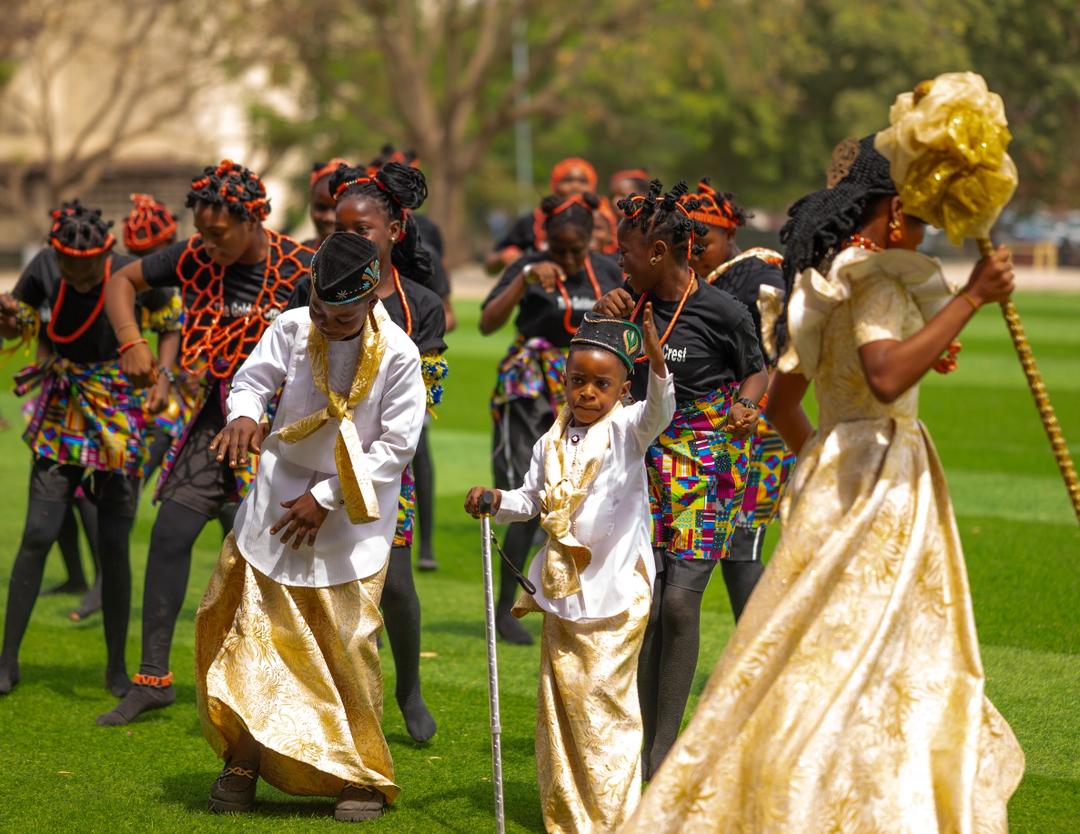
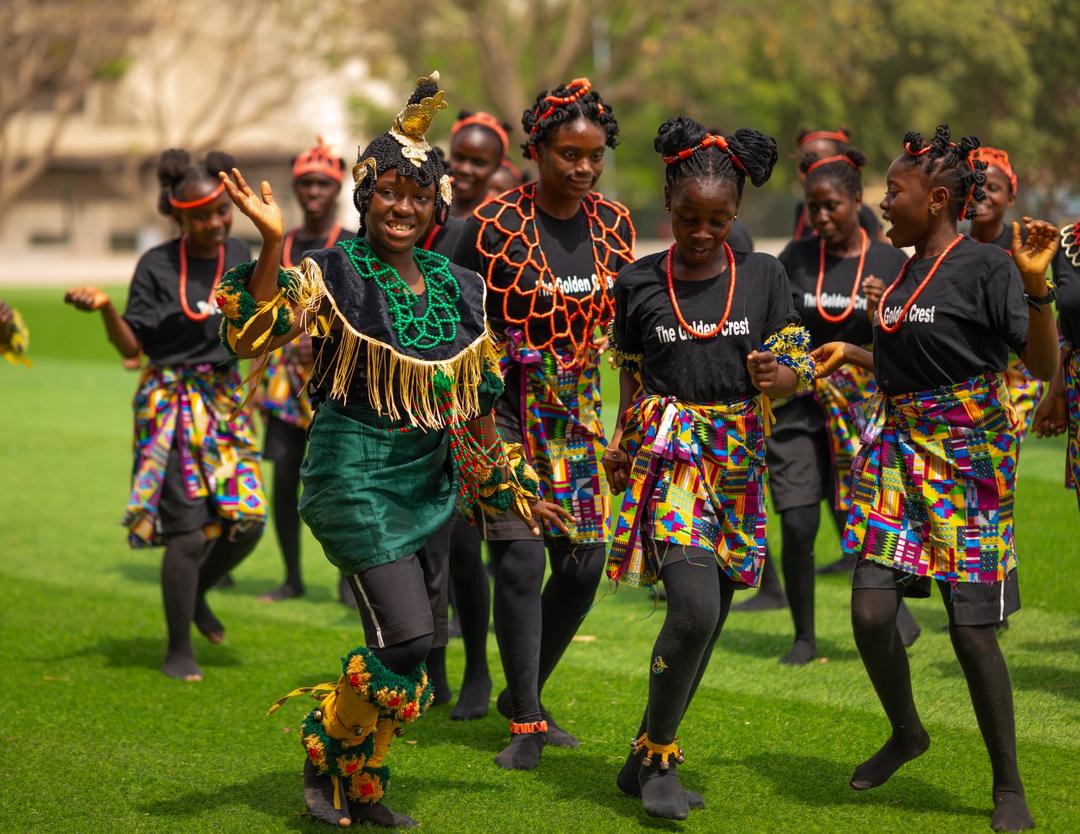
You Against Crime Founder Tayo Folorunsho Praises Winners of Abuja Schools Festival.
Abuja, Nigeria – The maiden edition of the You Against Crime – Schools Festival 2026 Grand Finale has concluded, marking a significant milestone in youth engagement and crime prevention efforts across the Federal Capital Territory (FCT).
The event, held at the University of Abuja, brought together 78 secondary schools from the six Area Councils of Abuja, with the top six schools competing in the Grand Finale.
*Winners Emerge*
Tudunwada School, Bwari took the top spot, followed closely by The Golden Crest Royal in second place, and Government Secondary School, Kuje in third.
*CULTURE, THE CURE FOR CRIME*
The festival’s theme, “Culture, The Cure for Crime,” highlighted the importance of values, identity, mentorship, and positive engagement in preventing crime and shaping responsible citizenship among young people.
*DISTINGUISHED GUEST SPEAKERS*
Auwal Musa Rafsanjani, Chairman, Amnesty International, praised the initiative, saying, “This festival is a beacon of hope for our young people, promoting values and principles that can shape a brighter future for Nigeria.”
Aisha Mohammed, Head of Enlightenment & Re-orientation, Economic and Financial Crimes Commission, emphasized the importance of mentorship, stating, “Empowering young people with the right guidance and opportunities is key to preventing crime and building a stronger nation.”
*PARTNERSHIP AND SUPPORT*
The 2026 Grand Finale Edition was proudly sponsored by Civicx Technology Ltd Int’l, reinforcing a shared commitment to youth empowerment and crime prevention through cultural reorientation and innovation.
Tayo Folorunsho, Host & Founder, You Against Crime International, addressing the media and appealed to government agencies to support initiatives like this, targeting young minds early.
You Against Crime International is a movement advocating cultural change as a long-term solution to crime. The organization remains committed to advancing youth development, civic responsibility, and nation-building across Nigeria.


TICP Customs Launches Paperless Regime, Warns Against False Declarations
The Customs Area Controller of Tin Can Island Port Command of the Nigeria Customs Service (NCS), Comptroller Frank Onyeka, has launched a roadmap for the full implementation of a paperless regime at the command.
Onyeka disclosed this during a press briefing in Lagos, stating that the command was fully prepared for seamless digital operations ahead of the nationwide rollout scheduled for the second quarter of the year.
He described the engagement as the first in a series of consultations aimed at sensitising stakeholders on the strategies, operational framework and expectations under the new regime.
The controller commended the media for its constructive reportage since his assumption of office and sought continued collaboration to ensure the success of the initiative.
Presenting the command’s performance report, Onyeka said the Tin Can Island Command generated ₦609 billion in revenue in 2025, describing it as the highest in the history of the command.
He added that revenue collection rose from ₦116 billion recorded in January of the previous year to ₦145 billion in the corresponding period last month, representing an increase of over ₦29.9 billion.
Onyeka stated that his vision was to make the command known for trade efficiency, explaining that under the paperless regime, containers would be released without physical contact between Customs officers and clearing agents, provided declarations were accurate.
He credited the Comptroller-General of Customs, Bashir Adewale Adeniyi, for providing the leadership and strategic direction driving modernisation efforts across Customs formations nationwide.
The controller urged stakeholders to avoid false declarations and engage directly with the command to resolve concerns, emphasising that transparency and dialogue were essential to achieving efficient port operations.
He assured that consignments with clear scanning results and proper documentation would be released promptly, while those flagged by the risk management system would undergo physical examination, adding that the command would continue to collaborate with other agencies to reduce cargo dwell time and enhance port efficiency.

Love on Display: Katie Price and Lee Put On a Public Show of Affection
By George Omagbemi Sylvester | Published by SaharaWeeklyNG
British media personality Katie Price is once again at the center of tabloid and public attention after being photographed poolside with her new husband, Lee, in a display of affection that quickly circulated across entertainment platforms. The images, reportedly taken during a recent leisure outing at a private resort location in the United Kingdom, show the couple embracing and kissing beside a swimming pool, with Lee prominently displaying a tattoo tribute dedicated to Price.
The photographs, which surfaced in mid-February 2026 through British tabloid outlets, depict the couple appearing relaxed and affectionate. Lee, whose full name has been reported in sections of the UK press but who largely maintains a lower public profile compared to his wife, lifted his arm to reveal a visible tattoo said to be in honor of Price and a gesture widely interpreted as a public affirmation of their relationship.
What happened was straightforward but symbolically charged: a public display of affection between newlyweds, amplified by Price’s longstanding celebrity status. Where it happened (poolside at what sources describe as a private holiday setting) underscores the blending of personal life and public spectacle that has long defined Price’s media journey. During a recent February getaway placed it squarely within ongoing tabloid interest surrounding her latest marriage. Price, 47 and her new husband Lee, whose visible tribute tattoo became the focal point of the moment.
Celebrity culture scholars argue that public figures such as Price operate within a media ecosystem where visibility sustains relevance. “Modern celebrity is performative intimacy,” explains Professor Graeme Turner, a media and cultural studies scholar known for his work on celebrity culture. “Public displays of affection are not merely private acts; they are communicative gestures that reinforce brand identity and narrative continuity.” In Price’s case, her romantic relationships have long been interwoven with her public persona.
Price first rose to prominence in the late 1990s under the glamour model moniker “Jordan,” before transitioning into reality television, publishing and business ventures. Her personal life (including previous marriages and high-profile relationships) has frequently generated headlines in the British press. This latest marriage continues that pattern of intense scrutiny.
The tattoo tribute displayed by Lee is particularly significant in celebrity symbolism. Body art dedicated to a partner is often perceived as a declaration of permanence. Dr. Chris Rojek, emeritus professor of sociology and an authority on fame and public identity, has observed that “celebrity relationships are sustained as much through symbolic reinforcement as through private commitment. Visible tokens (rings, tattoos, coordinated appearances) function as public assurances.” In this case, the tattoo serves not merely as personal expression but as a visual narrative device in an already highly mediated relationship.
How the moment unfolded (casually but conspicuously) reflects the dynamics of contemporary celebrity coverage. Photographs were reportedly captured either by paparazzi stationed nearby or shared through controlled media access, a common practice in the British entertainment industry. Within hours, the images were republished by multiple outlets, accompanied by commentary on Price’s relationship history and ongoing legal and financial challenges, issues that have previously placed her under intense public scrutiny.
Despite recurring controversy throughout her career, Price remains a resilient media figure. Communications analyst Mark Borkowski has previously remarked in interviews that “Katie Price understands publicity better than most. Whether by design or instinct, she maintains a feedback loop with the press that keeps her culturally visible.” The poolside photographs appear to fit squarely within that established pattern of managed exposure and reactive media amplification.
Critically, there is no indication of misconduct, public disturbance or controversy tied directly to the poolside display itself. It was, by all verified accounts, a consensual and celebratory expression of affection between married adults. The wider attention it has generated speaks less to the act and more to the individuals involved; particularly Price’s enduring position within British popular culture.
For global audiences, the episode illustrates a broader truth about contemporary fame: private milestones often become public commodities. The marriage of Katie Price and Lee (and the symbolic tattoo that now marks it) has become another chapter in a life lived persistently under the camera’s gaze.
As celebrity culture continues to blur boundaries between intimacy and publicity, moments like this poolside embrace are no longer trivial snapshots. They are narrative events, reinforcing identity, commitment and brand continuity in equal measure.


-

 celebrity radar - gossips6 months ago
Why Babangida’s Hilltop Home Became Nigeria’s Political “Mecca”
-

 society6 months ago
Power is a Loan, Not a Possession: The Sacred Duty of Planting People
-

 news6 months ago
THE APPOINTMENT OF WASIU AYINDE BY THE FEDERAL GOVERNMENT AS AN AMBASSADOR SOUNDS EMBARRASSING
-

 society5 months ago
Religion: Africa’s Oldest Weapon of Enslavement and the Forgotten Truth
You must be logged in to post a comment Login