
society
Dr. Ope Banwo Speaks On Transitioning Naija Lives Matter Organization To Non-Partisan Mode

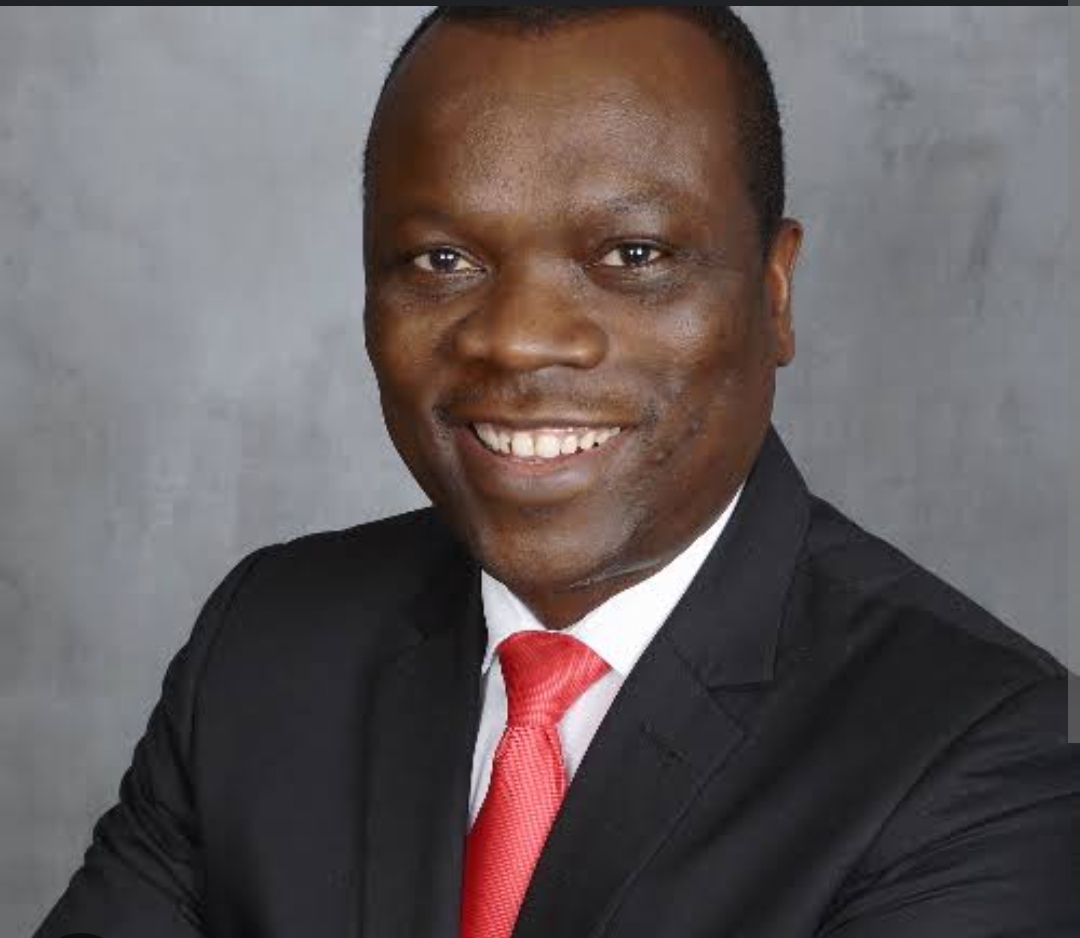
Dr. Ope Banwo Speaks On Transitioning
Naija Lives Matter Organization To Non-Partisan Mode
***Says Organization Will Now Focus On Projects To Improve Nigerian Lives
Dr. Ope Banwo, the founder of Naija Lives Matter (NLM), a non-governmental organization committed to better lives for Nigerians has explained the organization’s decision to refocus its priorities.
In a statement released on Tuesday, Dr. Banwo stated that the organization’s mission and goals extend beyound the 2023 elections, electioneering campaigns, and politics.
According to him, the process of the organization had been clearly communicated from its very beginning to avoid any accusations of opportunism or policy inconsistencies, which are unfortunately common in our country when disagreements arise.
He said; “Since 2011, the NLM organization has consistently de-emphasized its partisan support for any specific candidate after the elections and campaigns are over, enabling it to concentrate on its global mandate of making Naija lives matter to all Nigerians, irrespective of their political affiliations.
“When Naija Lives Matter endorsed Peter Obi as our chosen candidate in August 2022, we made it clear that our partisan involvement would solely extend until the conclusion of the elections. Subsequently, we would focus on other aspects of our mission and goals, for which our organization was founded in 2011.
“In the past, we supported Jonathan through the GEJ project, rallied behind Buhari through the Buhari4Naija project in 2015, and even had a Moghalu4Naija project before eventually endorsing Peter Obi for the 2023 elections.
“Our commitment is not irreversibly tied to any particular politician; it lies in what we believe is in the best interest of Nigeria and its people,” Dr. Banwo said.
With the transition, NLM now moves beyond the recent election cycle, with a current focus on organizing projects aimed at making the lives of all Nigerians better.
“Henceforth, we shall therefore leave the legal and political affairs to lawyers and politicians, and respect the decisions of the courts, whatever they may be.
“In alignment with our mandate and the previously declared engagement period for the 2023 elections, we hereby inform our members that Naija Lives Matter will now shift its focus towards other aspects of our charter such as mass non-partisan mobilization on national issues, youth empowerment training, workshops, community assistance services for the less privileged in Nigeria, and other activities.
“In light of this new direction, we will convene meetings with our state directors and cell leaders to announce additional NLM initiatives that extend beyond politics in the coming days. These initiatives will focus on non-partisan national mobilization, youth empowerment through training and workshops, and community-building responsibilities.
“All our threads on WhatsApp and other social media platforms will once again be dedicated to NLM as we officially conclude the Peter Obi Nation Project for the 2023 elections,” Dr. Banwo noted.
Thanking members of the Peter Obi Nation Project of the NLM organization for their tremendous efforts during the 2023 elections, Dr. Banwo said that together they fought valiantly in a highly contested electoral process, adding that together they gave as much as they got in the very bitter partisan electioneering campaign for the organization’s endorsed candidate, Peter Obi.
“We did not compromise and many of us even paid the price of alienating some of our long-term friends in the heat of partisan battle.
“To this end, I am immensely proud of every individual involved in this monumental battle, and it has been an honor serving as the Chief Vawolence Officer for Naija Lives Matter side of things during this 2923 election cycle. We also offer No apologies for our passionate campaign for what we passionately believed in. It was what it was.
Acknowledging the fact that many individuals who joined NLM’s special Peter Obi Nation Project were primarily interested in supporting the Labour Party (LP) presidential candidate, and may not share NLM”s broader mandate and NGO charter, Dr. Banwo said that the organization would understand if those solely focused on partisan politics choose to disassociate themselves from the NLM organization across it numerous groups and threads, adding that the organizational continuity transcends any single election cycle.
“To be clear, this pivot by NLM does not mean we no longer support Peter Obi. We continue to stand behind his 2023 mandate which we believed in, wholeheartedly. Nevertheless, our organization was not established solely for this election cycle. We have followed the same refocusing approach after the elections in 2011 and 2015. Although the intensity of this cycle was undeniable, our policy remains intact.
“We hope that our fellow compatriots engaged in the highly intense campaign for 2023 will understand and respect our decision to shift away from combative partisan politics at this juncture. Instead, we aim to engage the Tinubu government in a non-partisan yet critical manner, reminding them of their promises and holding them accountable. Should the courts later remove him from office, we will also celebrate. But for now, we have a country to assist in governance.”






society
Diplomacy Under Fire: South Africa’s Anti-Apartheid Vanguard Challenges U.S. Ambassador Nomination
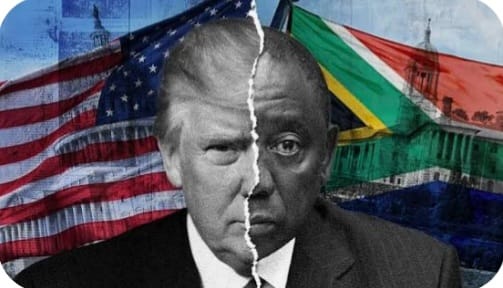
Diplomacy Under Fire: South Africa’s Anti-Apartheid Vanguard Challenges U.S. Ambassador Nomination
By George Omagbemi Sylvester
Published by saharaweeklyng.com
“How history, sovereignty and global justice are colliding in Pretoria’s political theatre.”
South Africa stands at the intersection of memory, morality and contemporary geopolitics. In a dramatic and deeply symbolic challenge to international diplomatic norms, the South African chapter of the Anti-Apartheid Movement (AAM) has publicly urged President Cyril Ramaphosa to exercise his constitutional right to reject the credentials of Leo Brent Bozell III, the United States’ ambassador-designate to South Africa. This demand is not merely about one diplomat’s qualifications but it represents a broader contest over historical interpretation, national sovereignty, human rights and the ethical responsibilities of global partnerships.
The statement issued by the AAM, drawing on its legacy rooted in the nation’s hard-won liberation from racial oppression, argues that Bozell’s track record and ideological orientation raise “serious questions” about his fitness to serve in South Africa. The movement insists that his appointment threatens to undermine the country’s independent foreign policy, particularly in the context of Pretoria’s pursuit of justice at the International Court of Justice (ICJ) in The Hague, where South Africa has taken the rare step of challenging alleged atrocities in Gaza.

The Roots of the Dispute.
At the heart of the controversy is the claim by activists that Bozell’s public remarks over time have been disparaging toward the African National Congress (ANC) and the broader anti-apartheid struggle that shaped modern South Africa’s democratic identity. These statements, which critics describe as reflective of a worldview at odds with the principles of liberation and equity, have animated calls for his credentials to be rejected.
South Africa’s constitution empowers the head of state to accept or refuse the credentials of foreign envoys, a power rarely exercised in recent diplomatic practice but one that acquires urgency in moments of intense bilateral tension. As the AAM’s leadership frames it, this is not about personal animus but about safeguarding the nation’s right to determine its own moral and geopolitical compass.
Historical Memory Meets Contemporary Politics.
South Africa’s anti-apartheid legacy holds deep cultural, political and moral resonance across the globe. The nation’s liberation struggle (led by giants such as Nelson Mandela, Desmond Tutu and Oliver Tambo) was rooted in the universal principles of human dignity, equality and resistance to systemic oppression. It transformed South Africa from a pariah state into a moral beacon in global affairs.
As the AAM statement put it, “We know too well that our freedom is incomplete without the freedom of others.” This invocation of history is not ceremonial. It frames South Africa’s foreign policy not just as a function of national interest but as a commitment to a universal ethos born of struggle.
Renowned scholars of post-colonial studies, including the late Mahmood Mamdani, have argued that anti-colonial movements inherently shape post-independence foreign policy through moral imperatives rooted in historical experience. In this view, South African diplomacy often reflects an ethical dimension absent in purely strategic calculations.
The Broader Diplomatic Context.
The dispute over ambassadorial credentials cannot be separated from broader tensions in South African foreign policy. Pretoria’s decision to take Israel before the ICJ on allegations of violating the Genocide Convention has triggered significant diplomatic friction with the United States. Official U.S. channels have expressed concern over South Africa’s stance, particularly amid the conflict in the Middle East. This has coincided with sharp rhetoric from certain U.S. political figures questioning South Africa’s approach.
For instance, critics in the United States have at times framed South Africa’s foreign policy as both confrontational and inconsistent with traditional Western alliances, especially on issues relating to the Middle East. These tensions have underscored how global power dynamics interact (and sometimes collide) with post-apartheid South Africa’s conception of justice.
Within South Africa, political parties have responded in kind. The Economic Freedom Fighters (EFF) have condemned Bozell’s nomination as reflective of an agenda hostile to South Africa’s principles, even labelling his ideological lineage as fundamentally at odds with emancipation and equality. Whether or not one agrees with such characterisations, the intensity of these critiques reveals the deep anxiety amongst some sectors of South African civil society about external interference in the nation’s policymaking.
Sovereignty, International Law and National Identity.
Scholars of international law emphasise that the acceptance of diplomatic credentials is not merely ceremonial; it signals a nation’s readiness to engage with a foreign representative as a legitimate interlocutor. Legal theorist Martti Koskenniemi has written that diplomatic practice functions at the intersection of law, power and morality, shaping how states perceive each other and interact on the world stage.
In this light, the AAM’s appeal to Ramaphosa reflects a profound anxiety: that South Africa’s sovereignty (and its moral authority on the world stage) is being tested. To refuse credentials would be to affirm the nation’s agency; to accept them without scrutiny could be interpreted, in some quarters, as a concession to external pressure.
President Ramaphosa himself has, in recent speeches, stressed the importance of upholding constitutional integrity and South Africa’s role as a constructive actor in global affairs. His leadership, shaped by decades as a negotiator and statesman, walks a fine line between defending national interests and maintaining diplomatic engagement.
Moral Certainties and Strategic Ambiguities.
What makes this situation especially complex is the blending of moral conviction with strategic diplomacy. South Africa, like any sovereign state, depends on a web of international relationships (economic, security, political) that require engagement with powers whose policies and values do not always align with its own.
Yet for many South Africans, drawing a line on diplomatic appointments is not just about personalities but about reaffirming the values fought for during decades of struggle. As anti-apartheid veteran and academic Professor Pumla Gobodo-Madikezela once observed, “Our history is not a relic; it is the compass by which we navigate present injustices.” This idea captures why historical memory acquires such force in debates over current foreign policy.
Towards a Resolution.
Whether President Ramaphosa will act on the AAM’s call remains uncertain. Diplomatic norms usually favour acceptance of appointed envoys to maintain continuity in bilateral relations. However, exceptional moments call for exceptional scrutiny. This situation compels a national debate on what it means to balance sovereignty with engagement, history with pragmatism, values with realpolitik.
Experts on international relations stress the need for South Africa to carefully assess not just the semantics of credential acceptance but the broader implications for its foreign policy goals and relationships. Former diplomat Dr. Naledi Pandor has argued that “diplomacy is not merely about representation, but about conveying what a nation stands for and will not compromise.” Whether this moment will redefine South Africa’s diplomatic posture or be absorbed into the standard rhythms of international practice remains to be seen.
Summation: History and the Future.
The AAM’s call to reject a U.S. ambassadorial nominee is more than an isolated political manoeuvre, it is a reflection of South Africa’s evolving self-understanding as a nation shaped by legacy, committed to justice and unwilling to dilute its moral voice in global affairs. The controversy casts a spotlight on the tensions facing post-colonial states that strive to be both sovereign and globally engaged.
At its core, this debate is about who writes the rules of international engagement when history has taught a nation never to forget what it fought to achieve. It is a reminder that in a world of shifting alliances and competing narratives, moral clarity, historical awareness and strategic foresight are indispensable.
South Africa’s decision in this matter will not only shape its diplomatic engagement with the United States but will reverberate across continents where questions of justice, human rights and national dignity remain at the forefront of global discourse.
society
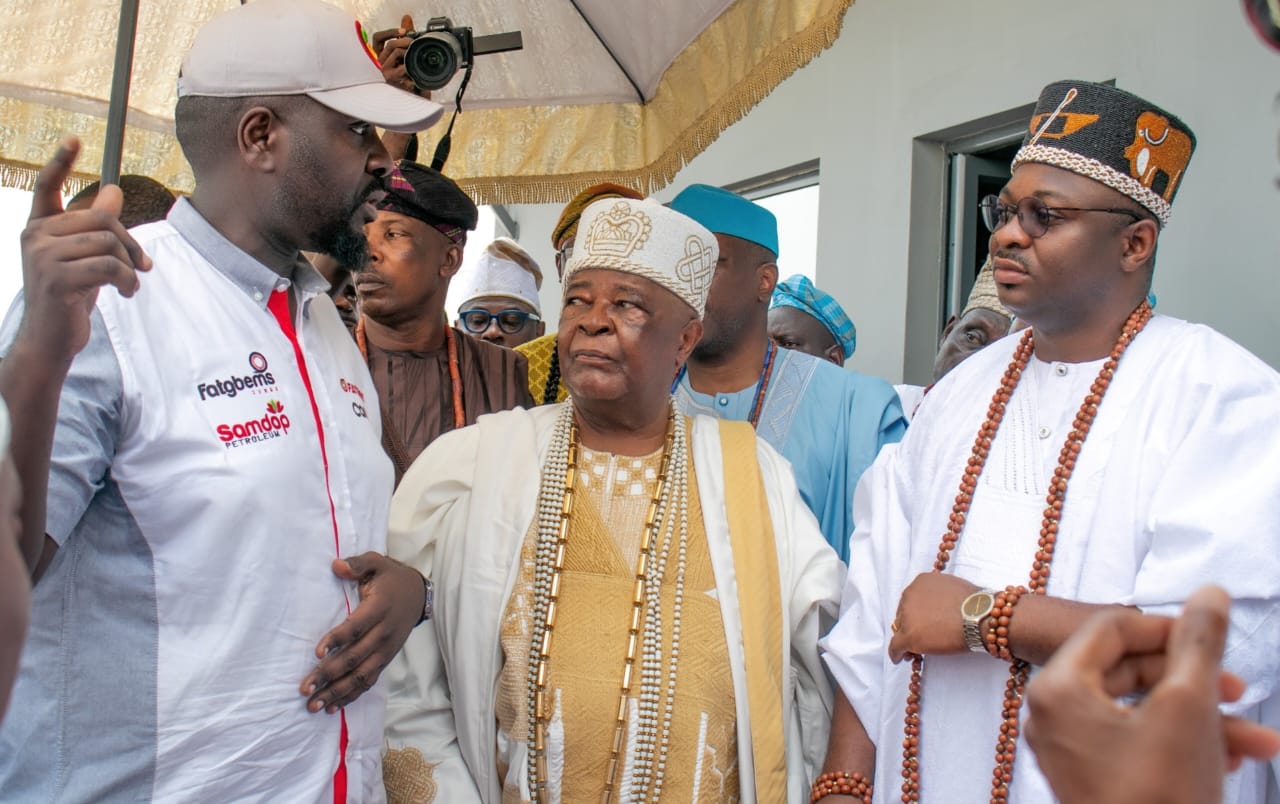
Fatgbems Group Commissions Ultra-Modern Mega Station in Opic, Expands Footprint in Nigeria’s Energy Retail Sector
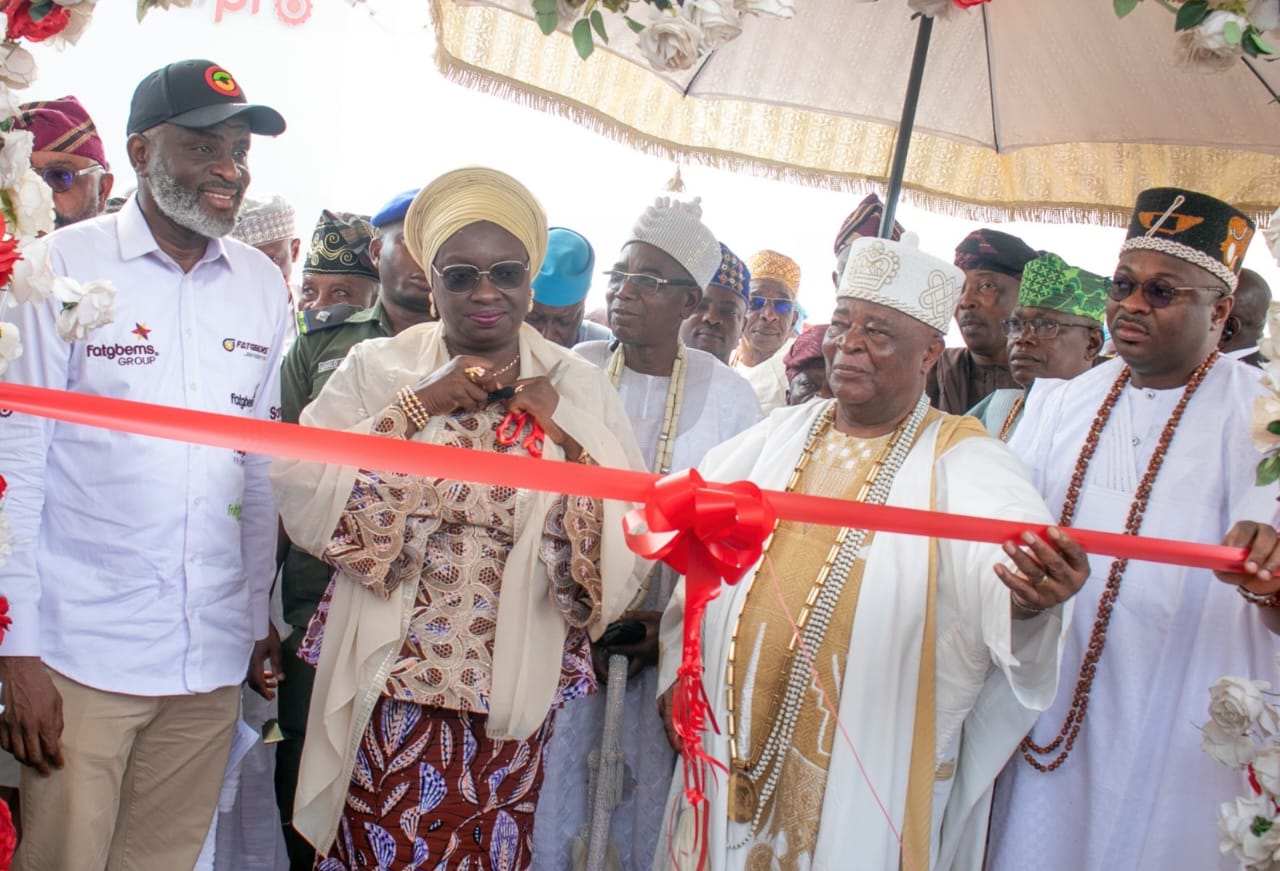
Fatgbems Group Commissions Ultra-Modern Mega Station in Opic, Expands Footprint in Nigeria’s Energy Retail Sector

PUBLIC NOTICE: STRONG WARNING & DISCLAIMER
The general public is hereby strongly warned to exercise extreme caution regarding any dealings with Joseph Enyinnaya Eze, popularly known as Dracomiles who claims to operate as a Forex trader in Nigeria and the United Kingdom. Multiple reports and complaints have raised serious concerns about his business activities, dubious act. warranting immediate public attention.
Anyone who has already engaged with or been affected by these activities should urgently report the matter to the EFCC (Nigeria), Action Fraud (UK), or their nearest law enforcement authority.
This notice is issued in the interest of public safety and financial protection and should be treated with the utmost seriousness.
Signed,
HIS ROYAL HIGHNESS
PRINCE EMMANUEL BENNY DANSON.


-

 celebrity radar - gossips5 months ago
Why Babangida’s Hilltop Home Became Nigeria’s Political “Mecca”
-

 society5 months ago
Power is a Loan, Not a Possession: The Sacred Duty of Planting People
-

 Business6 months ago
Batsumi Travel CEO Lisa Sebogodi Wins Prestigious Africa Travel 100 Women Award
-

 news6 months ago
THE APPOINTMENT OF WASIU AYINDE BY THE FEDERAL GOVERNMENT AS AN AMBASSADOR SOUNDS EMBARRASSING