
Politics
ABSURD. SHAMBOLIC. – TRIAL AND JUDGEMENT OF CODE OF CONDUCT TRIBUNAL IN FRN V. ONNOGHEN PLUMB THE DEPTHS OF TRAVESTY

Access to Justice Public Statement
Date: 18 April 2019
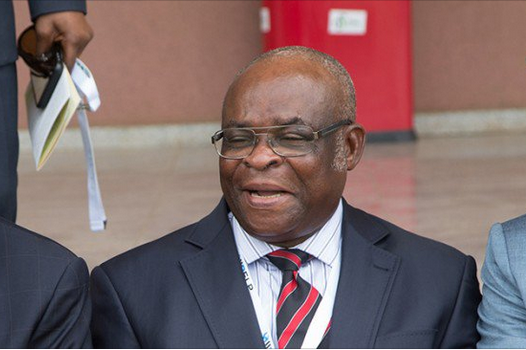
Today, April 18, 2019, the Code of Conduct Tribunal in a judgment delivered by its chairman, Mr. Danladi Umar convicted Justice Walter Onnoghen on a six-count charge of false declaration of assets. The charges were filed on January 10th 2019 by the Federal Government of Nigeria following a petition to the Code of Conduct Bureau on January 9th 2019 by an organization (the Anti-Corruption and Research Based Data Initiative). Following its verdict, the Tribunal ordered Justice Onnoghen’s removal from judicial office as Chief Justice of Nigeria, as well as the seizure and forfeiture of the monies in his accounts. It also barred him from holding public office for ten years. The Code of Conduct Tribunal is a quasi-criminal court saddled with the responsibility of handling complaints of non-compliance with the Code of Conduct for Public Officers. The primary objective of the Code of Conduct Tribunal, as provided under its Enabling Act is to establish and maintain a high standard of morality in the conduct of their official functions by public officials.
Access to Justice (A2Justice) takes no position on whether Justice Walter Onnoghen committed the infractions with which he was charged or indeed is guilty of offences related to them. A2Justice abides by the rule of law principle that all persons are equal before the law and that no person should be above the law. However, a cardinal rule of law requirement is that courts and tribunals which exercise judicial powers should be independent of other arms of government and appear, in the perception of reasonable observers, to be so independent. Unfortunately, the Code of Conduct Tribunal did not offer this guarantee of independence, neither its perception. Far from it. The Tribunal had, from the word go, drawn the handwriting on the wall indicating that it was bent on a particular outcome, and that it would look neither to the left nor to the right in the blind pursuit of that goal. At several pivotal junctures in the course of the trial, the Tribunal appeared to demonstrate that it was clearly on the same side with the government, and was not sitting as an unbiased umpire or judicial arbiter.
Nowhere was this more evident as when Danladi Umar and another member of the Tribunal granted, speaking figuratively, under cover of darkness on January 23rd 2019, an ex-parte Order removing Justice Walter Onnoghen as Chief Justice of Nigeria. The bizarre and egregious procedure taken to unseat Justice Onnoghen was an unmistakable indication that no barrel was too deep to plumb in getting to achieve what the Tribunal wanted to achieve, and no rule or principle of law was strong or revered enough to forestall its plan. It will not surprise many that the Code of Conduct Tribunal reached the verdict it did after using very questionable procedures from the very start.
It would be a serious fallacy to characterize the Tribunal’s verdict as one reached after a due process trial using even the lowest possible denominators of what a fair trial represents. The procedures adopted by the Tribunal in the case were far too faulty and flawed to be regarded as a judicial process. To reasonable observers, it would appear that the Tribunal’s procedure and speed were deliberately contorted to enable it reach its pre-determined outcomes, and its verdict was simply a reflection and product of the shambolic trial.
Undoubtedly, Justice Onnoghen’s trial before the Code of Conduct Tribunal was, in every way, grossly and grievously unfair, and no fair-minded court or tribunal could have descended to the depths the Code of Conduct Tribunal delved in trying to convict Walter Onnoghen on the charges against him in order to remove him from office. The Tribunal was so desperate to convict Justice Onnoghen that it had to overturn or side-step its previous judgments on similar matters, decisions such as those given in a prior case involving another Justice of the Supreme Court. A cardinal principle of our Common Law system is that similar cases are decided alike in other to prevent arbitrariness and caprice in the adjudication of cases.
This is not a way to fight corruption. There is no positive, but rather, there are plenty negatives to this flawed judgment. This judgment merely shows how much is still lacking in Nigeria’s courts and tribunals and how distanced they truly are from being independent vehicles of justice. Unfortunately, the Code of Conduct Tribunal has been headed for a long time by a person who himself has been the subject of corruption allegations, and that, in itself, is a major weakness.
It is clearly feasible to argue, at least theoretically, that all an executive government needs to do to get the Code of Conduct Tribunal groveling to its side is to raise the spectre of pursuing a corruption trial against its Chairman, Danladi Umar. That is just how vulnerable the leadership of the Code of Conduct Tribunal is. There needs to be a change in the chairmanship of the Tribunal if it is to inspire public confidence in itself. More than changing its leadership, constitutional reforms must make the CCT a more independent institution. As Danladi Umar himself said in his judgment today, “…CCT also is not under the supervision of the National Judicial Council but the Presidency…’’. A Tribunal under the Presidency cannot be independent of the Presidency, which is a political institution.
Ultimately, the trial and judgment of the CCT will disparage Nigeria’s system of justice in the eyes of the international community. More than that however, they show that, despite elaborate constitutional arrangements to guarantee an independent Judiciary, as well as constitutional rights to a fair trial, the judicial process is still weak and leaking through many crevices leaving many citizens defenceless and exposed as a result. We see this situation in the Code of Conduct Tribunal. No democracy can flourish under such conditions.
For Access to Justice
Joseph OttehDaniel Aloaye
Executive DirectorProgramme Officer




*Renewed Hope Ambassadors Step Into the Next Phase
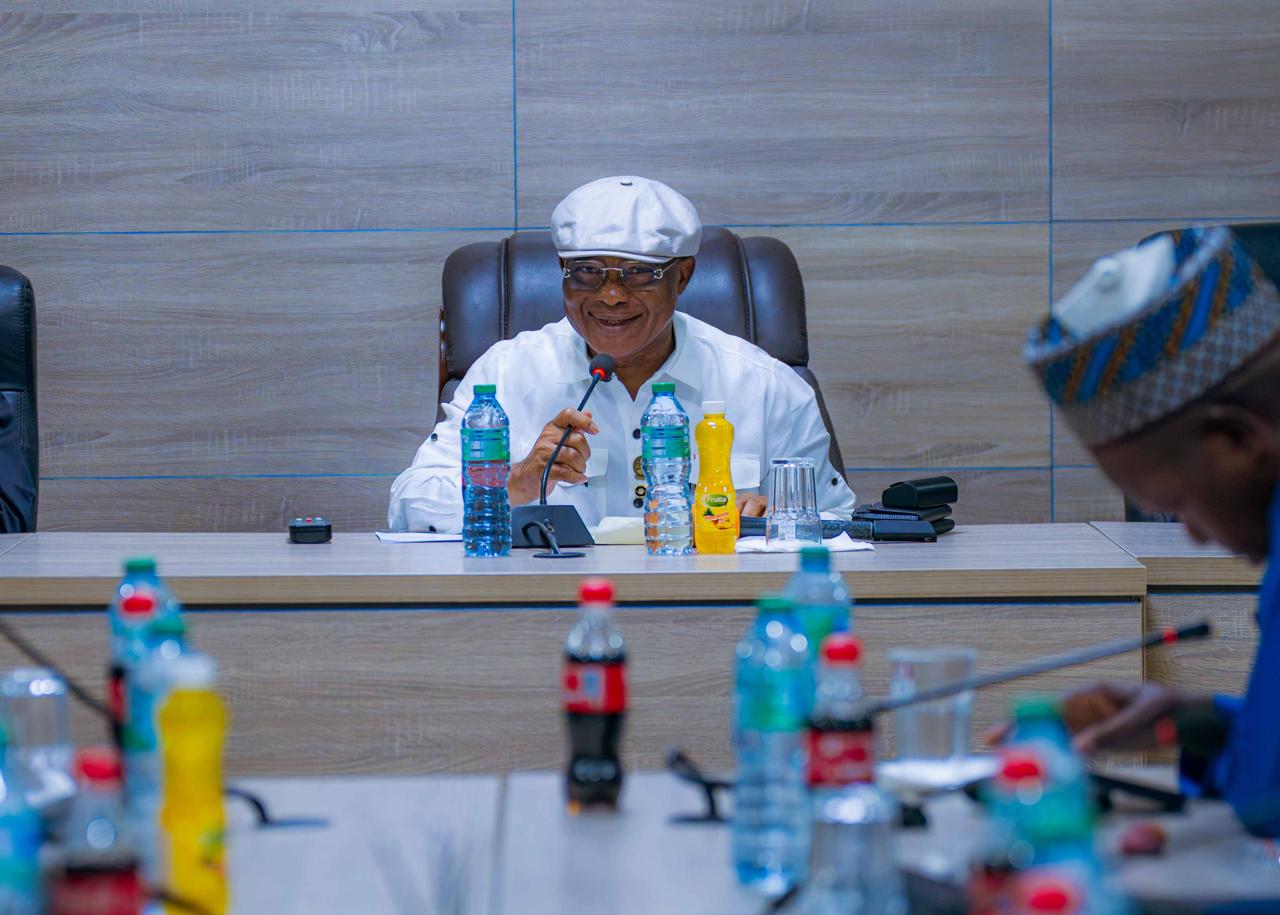
Fresh from the successful APC 2026 National Convention, the Renewed Hope Ambassadors National, Zonal, and State leadership gathered in Abuja over the weekend, for its fourth strategic meeting, setting the tone for nationwide grassroots activation ahead of 2027.
Chaired by Governor Hope Uzodinma (Imo State) the Director General and National Coordinator of the Renewed Hope Ambassadors, alongside Deputy Director-General, Governor Uba Sani of Kaduna State, and Governor Inuwa Yahaya of Gombe State as Secretary, the session reinforced one clear direction: One Party. One Message. One Mobilization whilst also laying out a strategic roadmap for the activation of the network across all communities in Nigeria.
Backed by the strength of 31 APC-led states, the Renewed Hope Agenda is taking Bola Ahmed Tinubu’s message of progress and reform to every corner of Nigeria.
From bold economic restructuring to initiatives like NELFUND, the increase in the national minimum wage from ₦30,000 to ₦70,000, and strategic investments in critical sectors, including PNiCGI, the mission remains clear: helping Nigerians understand both the purpose and the progress of the Renewed Hope vision.
This is coordination at scale. This is grassroots engagement with purpose. This is the next phase of Renewed Hope with One Party, One Message, and One Mobilisation framework
#RenewedHopeAmbassadors #APC #WeAreAPC


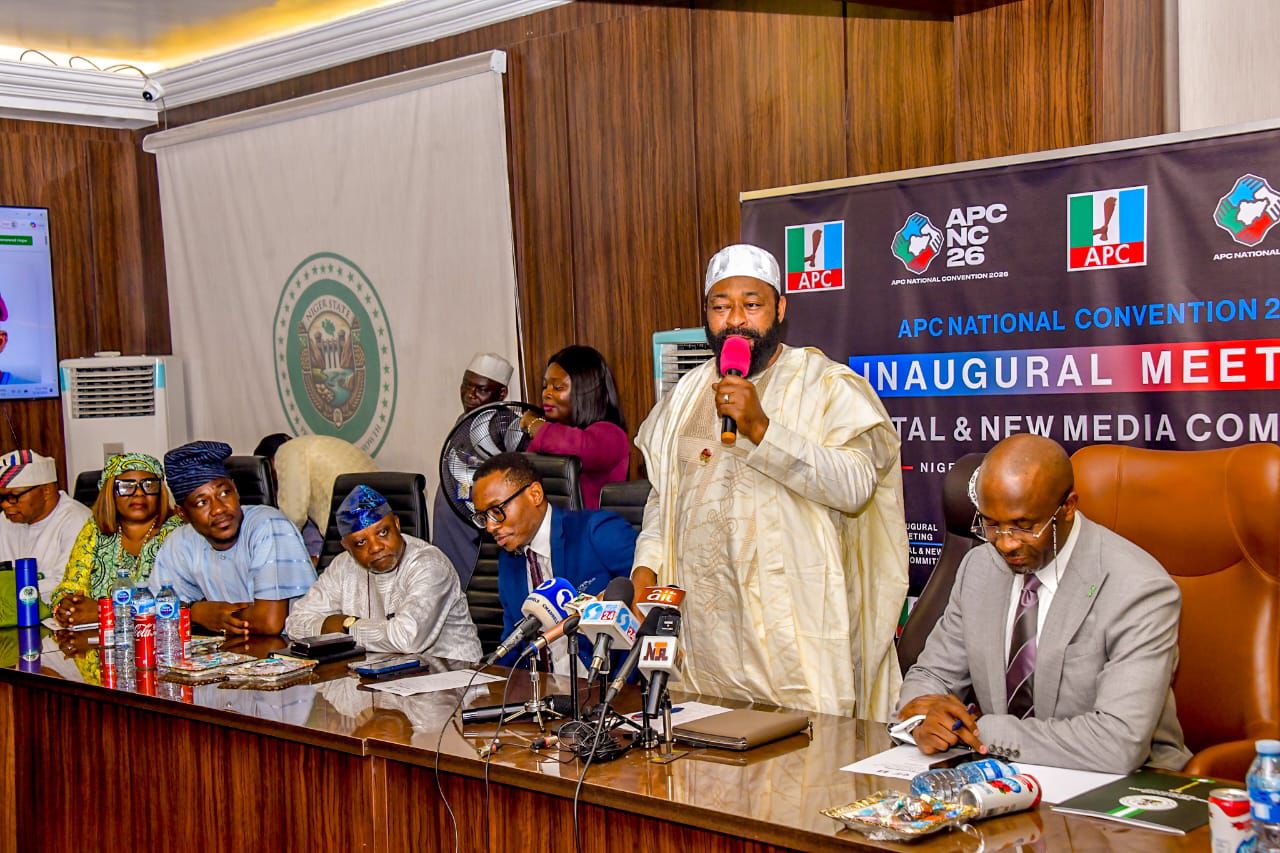
Governor Bago Inaugurates APC Digital Media Sub-Committee Ahead of National Convention.
Governor Umaru Bago has inaugurated the Digital Media Sub-Committee for the forthcoming National Convention of the All Progressives Congress (APC), scheduled to hold on March 27 and 28, 2026 in Abuja.
Chairing the sub-committee, Governor Bago tasked members with the responsibility of effectively communicating the party’s manifesto to the public.
He emphasized the need to leverage social media platforms to highlight the achievements and ongoing efforts of President Bola Ahmed Tinubu, noting that communication gaps have posed challenges that must now be decisively addressed.
The Co-Chair of the sub-committee, Hon. Benjamin Kalu, Deputy Speaker of the House of Representatives, echoed the Governor’s position, urging members to project the activities of both the party and the government to a broader audience.
He called for a deliberate and coordinated effort to showcase the party’s achievements and policy direction, stressing the importance of shaping a compelling and consistent narrative across all digital platforms.
Delivering a presentation to the committee, Otega Ogra, SSA to the President on New Media, who serves as Secretary of the sub-committee, outlined strategic focus areas to guide the team’s operations.
His presentation highlighted communication priorities and actionable steps to achieve the committee’s mandate and strengthen the party’s digital engagement.


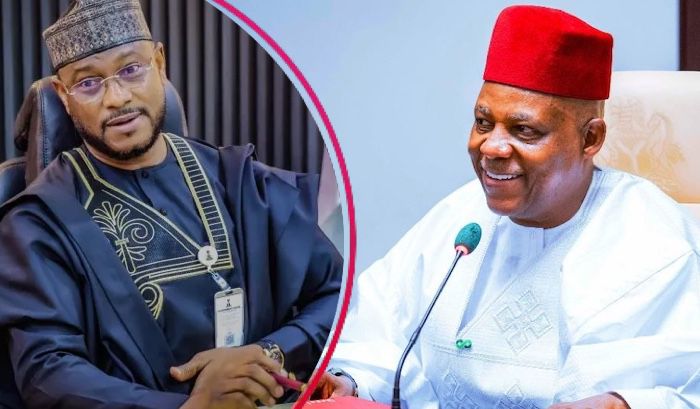
VP Shettima Set to Lead Delegation to Zamfara as Governor Dauda Lawal Formally Joins APC
The Zamfara State chapter of the All Progressives Congress (APC) has finalized plans to receive Vice President Kashim Shettima for the formal defection and reception of Governor Dauda Lawal into the ruling party, scheduled to take place on Tuesday.
State APC Chairman, Tukur Danfulani Maikatako, disclosed this during a high-level stakeholders’ meeting held in Gusau, the state capital. He noted that the Vice President would be joined by the party’s national leadership to mark what he described as a landmark political realignment in the state.
Maikatako expressed the party’s excitement over Governor Lawal’s return, recalling that Zamfara had historically been an APC stronghold and that the Governor was previously a bona fide member of the party before his earlier exit.
“We all know that Zamfara has long been one of the APC’s stronghold states, where the defected Governor was once a bona fide member. Now that he has decided to return home, having been satisfied that the APC remains his second choice after the one he left for obvious reasons,” Maikatako stated.
The Chairman called on all party faithful across the 147 wards in the state’s 14 local government areas to turn out en masse to honour the Vice President’s visit. He emphasized that the event was strategically positioned to bolster the party’s popularity and strengthen its structures ahead of the 2027 general elections.
In a strong appeal for unity, Maikatako urged members to set aside all factional tendencies, stressing that the APC remained one political family with shared goals, particularly the ambition to make Zamfara and Nigeria great again.
Echoing similar sentiments, a former state APC Chairman, Lawal M. Liman, appealed to members to cascade the message to their wards and local government areas. He reinforced the need for cohesion, noting that the party’s collective strength would be critical to achieving success in future elections.

All eyes are now on Gusau as the ruling party prepares for a high-profile political gathering expected to further consolidate its influence in Zamfara State.


-

 society6 months ago
Religion: Africa’s Oldest Weapon of Enslavement and the Forgotten Truth
-

 news4 months ago
WHO REALLY OWNS MONIEPOINT? The $290 Million Deal That Sold Nigeria’s Top Fintech to Foreign Interests
-

 society6 months ago
“You Are Never Without Help” – Pastor Gebhardt Berndt Inspires Hope Through Empower Church (Video)
-

 celebrity radar - gossips2 months ago
Dr. Chris Okafor Returns with Power and Fire of the Spirit -Mounts Grace Nation Altar with Fresh Anointing and Restoration Grace on February 1, 2026
You must be logged in to post a comment Login
You must log in to post a comment.