
society
ALLEGED FRAUD IN LEKKI WATERFRONT DEAL : HOW ABUJA HIGH COURT ORDERED SEALING OF DISPUTED PROPERTY

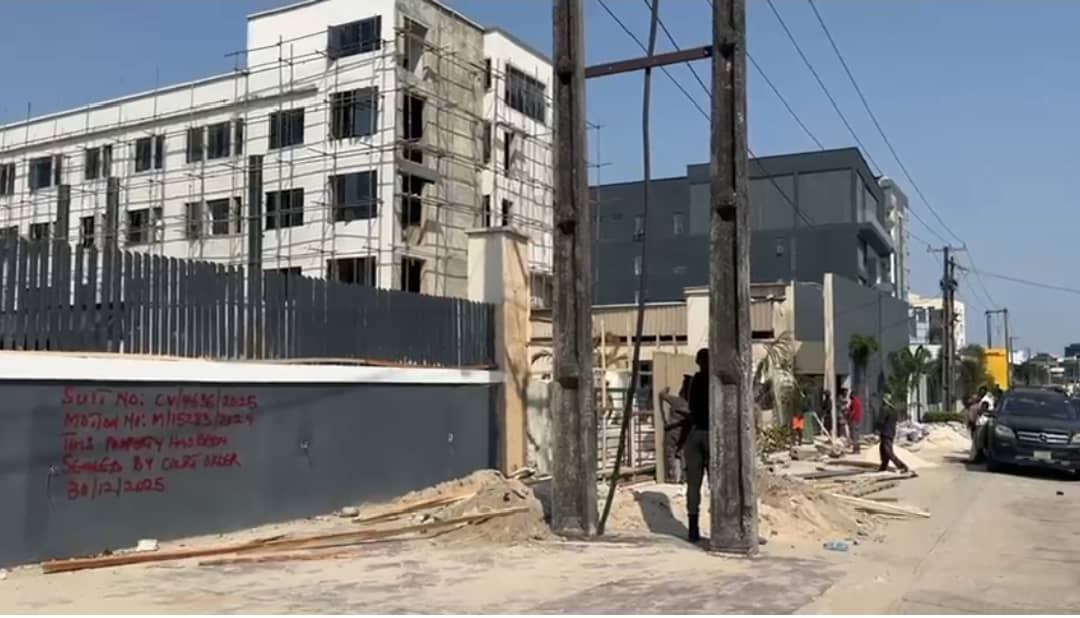
ALLEGED FRAUD IN LEKKI WATERFRONT DEAL : HOW ABUJA HIGH COURT ORDERED SEALING OF DISPUTED PROPERTY
Contrary to misleading reports and narratives circulating in some quarters regarding the sealing of a disputed waterfront property within the Lekki Peninsula Scheme, Lagos, fresh facts have emerged to clarify the circumstances that led to the court action, the involvement of law enforcement agencies and the role of Lagos State regulatory authorities.
The claimant, Mr. Henry Ugonna Orabuchi has explained that the legal steps taken were a measure of last resort, prompted by what he described as glaring inconsistencies, regulatory violations, and potential fraud surrounding the transaction involving the disputed land.
Background of the Transaction:
Mr. Orabuchi was introduced to Mr. Elvis Emecheta Eze sometime in 2022 by an agent who presented Mr. Emecheta is the owner of a waterfront property located in Lekki, Lagos. He was informed that a substantial portion of the land was waterlogged and that Mr. Emecheta was seeking a financial partner to sand-fill the area, after which the reclaimed land would be sold at the rate of ₦800,000 per square meter.
Following negotiations, Mr. Orabuchi entered into a formal agreement to purchase 3,000 square meters of the reclaimed land for a total consideration of ₦2.4 billion. During the course of the transaction, Mr. Emecheta further requested an additional ₦100 million to fast track the process, which Mr. Orabuchi obliged in good faith. The agreement was executed based on documents presented by Mr. Emecheta, including a Lagos State Certificate of Occupancy (C of O) over the main property, abutting the waterfront.
It was expressly represented that Mr. Orabuchi’s Governor’s consent over the reclaimed portion would be derived from the root of- title of the main property.
Mr. Orabuchi stated that the main property, which already had a developed structure, provided the only access to the waterfront being reclaimed. This made the main property and the reclaimed waterfront land physically, legally, and commercially inseparable, a fact clearly captured in the contract of sale.
It was further agreed that access to the reclaimed land would be created through the main property, including the construction of an access road leading from the existing structure to the waterfront portion.
Regulatory Issues and Red Flags:
Under the agreement, Mr. Emecheta undertook to sand-fill the waterlogged area and perfect all necessary documentation within 17 months, with assurances that the root of title already enjoyed Lagos State Governor’s Consent.
However, following the sand-filling exercise, officials of the Lagos State Government reportedly conducted an assessment and confirmed that only 6,700 square meters of land was legally recognised as having been reclaimed by Mr. Emecheta. Rather than accept and regularise the assessment, Mr. Emecheta allegedly rejected the report, insisting on reclaiming up to 10,000 square meters through the federal government.
During this period, Mr. Emecheta reportedly engaged the services of agents to start marketing the whole reclaimed water front property without releasing and perfection of title documents for Mr Henry Orabuchi, rather, portions of the said property was fraudulently assigned to Lord of Hosts Miracle Church and other business operators.
It is important to question the motives behind the actions of Mr. Elvis Emecheta, who failed to release the relevant title documents to the genuine and legitimate purchaser, Mr. Henry Orabuchi, yet assigned same to a church owner and other business enterprises.
Mr. Orabuchi consiquently alleged that Mr. Emecheta acted deviously by deliberately stalling the title perfection process, thereby evading full performance of his obligations under the contract of sale.
Further investigations revealed that most of the structures erected on the said property by Mr. Elvis Emecheta was constructed without valid planning and proper documentation, which contravened the lagos state building regulations hence, the Lagos State Building Control Authority (LASBCA) moved in to remove the illegal structures during its regulatory assessment exercise. These developments, Mr. Orabuchi stated, directly contradicted earlier representations made to him and raised serious concerns regarding the legality, ownership, and extent of the land.
Law Enforcement and Court Intervention:
Faced with material inconsistencies, regulatory breaches, and the risk of substantial financial loss, Mr. Orabuchi demanded that proper legal steps be taken to perfect the title to the disputed land in order to avoid sanctions or penalties from relevant government agencies that could frustrate the contract of sale duly executed by both parties
Prior to instituting the suit, Mr. Orabuchi petitioned the Office of the Inspector-General of Police (IGP) against Mr. Elvis Emecheta for Obtaing money by false pretenses, criminal breach of trust, cheating, and conduct likely to cause the breach of the peace. After reviewing the petition, the IGP directed that the matter be referred to Zone 2 Police Command Headquarters onikan Lagos for discreet investigation.
While investigation was still ongoing at the Zone 2 command Headquarters for his criminal culpability, Mr Emecheta allegedly petitioned the IGP monitoring unit Abuja in order to pervert the cause of justice on the matter contrary to the extant directives of the IGP on duplication of cases.
To avoid conflicting investigations, the IGP reportedly redirected the Monitoring Unit Abuja to step aside and allow Zone 2 command to conclude its investigation
Despite the clear directives from the IGP, officers attached to the monitoring units, Abuja continues to threaten and harassed Mr Henry Orabuchi, which necessitated the civil action instituted at the federal high court Abuja in suit No: FCT/HC/CV/ 4636/2025 against the officers attached to the Monitoring unit Abuja and other parties, seeking the protection of his fundamental rights and the preservation of the property in dispute.
Based on his application, the court granted an ex parte order directing the sealing of the disputed property and the suspension of all activities on the premises pending the hearing and determination of the matter. The order was issued specifically to prevent a breach of public peace and to forestall any breakdown of law and order.
Subsiquently, the said property was sealed strictly in accordance with the court order by the appropriate enforcement agents.
Mr. orabuchi urged the general public to disregard the false narratives been peddled by Mr Elvis Emecheta and his team designed to whip up sentiment, he concluded by warning the members of the public and other prospective investors to be wary of Mr. EMECHETA’s nefarious activities and exercise extreme caution in any dealings with him in order not to fall victim.




society
Liberian Leaders, Citizens Bear Witness as Apostle Suleman Hosts Two-Day Power-Packed Crusade
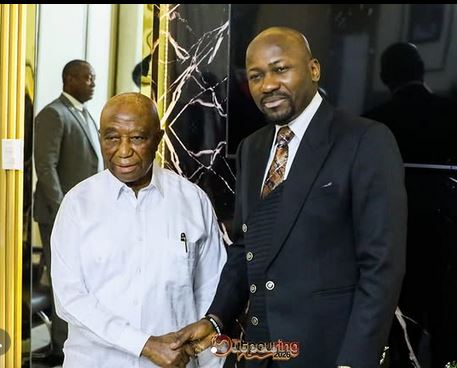
Liberian Leaders, Citizens Bear Witness as Apostle Suleman Hosts Two-Day Power-Packed Crusade
It was testimonies galore on Tuesday, March 31, the first day of the famous servant of God and founder of the Omega Fire Ministries (OFM) worldwide, Apostle Johnson Suleman’s power-packed two-day crusade. The event documented impactful moments with the Gospel and miracles, emphasizing the power of faith and the tangible confirmation of God’s Word through signs and wonders. It was equally an atmosphere of miraculous healing, restoration of lives, and the strengthening of faith.
At the crusade, which was held at the SKD Sports Stadium in Paynesville City, and themed, “Liberia Outpouring Crusade” witnessed testimonies of impact and miracles with participants experiencing instant healing of various kinds of challenges.
Apostle Suleman’s first port of call was Paynesville, the office of Liberian government’s president, Mr. Joseph Nyuma Boakai, who received him in an audience with his junior ministers. Apostle Suleman, who also met with the vice-president, Mr. Jeremiah Kpan Koung, was welcomed by the Liberian leader’s office as part of the president’s ongoing engagements with religious leaders aimed at fostering spiritual support for national development.
The president expressed profound appreciation to Apostle Suleman for the visit and continued prayers and intercessions by men and women of God on behalf of Liberia, emphasizing his firm belief that sustained spiritual guidance and prayer remain vital to the transformation and progress of the nation.
During the visit, Apostle Suleman offered prayers for President Boakai, his cabinet and the Liberian nation, invoking divine alignment, wisdom, and insight in Liberia’s path toward growth and stability. He prayed that the Almighty God would position Liberia for relevance and fulfillment of its national destiny.
Apostle Johnson Suleman, an evangelist who knows no bounds of where preaching the gospel comes to a stop, visited Liberia prepared with the message, compelling power of the Gospel and the work of the Holy Spirit, and bringing people to a point of decision where they surrendered their lives to Christ.
Aside from being prophetic and timely, OFM sources disclosed that the servant of God’s visit underscores the importance of faith-based partnerships in supporting governance and national renewal efforts.
society
Middle Belt Forum Hails Tinubu’s Jos Visit, Calls for United Civil-Military Effort to Restore Lasting Peace
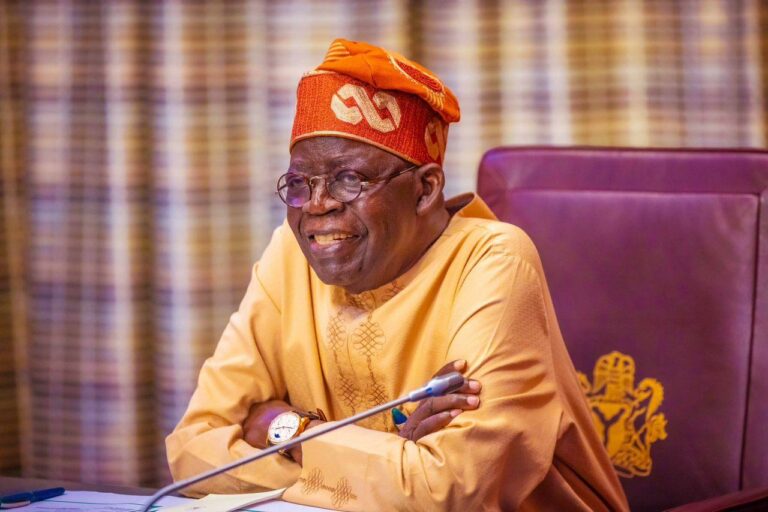
*Middle Belt Forum Hails Tinubu’s Jos Visit, Calls for United Civil-Military Effort to Restore Lasting Peace
The Middle Belt Peace Forum (MBPF) has commended President Bola Ahmed Tinubu for his profound demonstration of empathy and responsive leadership following his decision to postpone an official engagement in Iperu in order to visit victims of the recent attacks in Jos.
In a statement signed by its National Coordinator, Pastor Bulus Garba, in Jos on Friday, the Forum said the President’s decision to personally identify with grieving communities sends a powerful message of solidarity and reinforces public confidence in the commitment of the Federal Government to the protection of lives and property.
“The Middle Belt Peace Forum warmly commends President Bola Ahmed Tinubu for prioritising compassion over ceremony. At a time of deep sorrow for the people of Plateau State, his decision to visit Jos stands as a mark of true leadership—one that listens, responds, and stands with the people in their moment of pain,” the statement read.
The Forum described the perpetrators of the recent attacks as “cowards who prey on innocent and defenceless citizens,” stressing that such acts of violence are not only inhumane but also a direct assault on the unity and peace of the nation.
“We condemn in the strongest terms the actions of these cowardly attackers whose only aim is to instil fear and destabilise peaceful communities. Their actions must be met with firm and decisive resistance from all arms of the state,” Pastor Garba said.
The MBPF further used the opportunity to salute the courage, gallantry, and sacrifices of the Armed Forces of Nigeria under the leadership of the Chief of Defence Staff, General Olufemi Oluyede, noting that their continued efforts remain central to restoring stability across troubled parts of the country.
According to the Forum, the Armed Forces have demonstrated resilience and professionalism in the face of complex security challenges, often operating under difficult conditions to safeguard communities and defend Nigeria’s territorial integrity.
“We salute the Armed Forces of Nigeria for their unwavering commitment and sacrifices. Their gallantry in confronting criminal elements and reclaiming territories is a testament to their dedication to national service. We recognise that the path to peace is demanding, and we honour those who stand daily in defence of our nation,” the statement added.
The Forum pledged its full support to ongoing military operations and called for strengthened collaboration between security agencies and local communities as a critical factor in achieving lasting peace.
It also urged citizens across the Middle Belt to cooperate with security forces by providing timely information and fostering unity within their communities.
The MBPF, however, expressed concern over the need for greater synergy among security agencies, particularly the role of the Nigeria Police in consolidating gains made by the military.
“We call on the Nigeria Police Force to rise fully to its constitutional responsibility by effectively supporting the Armed Forces in stabilising and securing areas that have been cleared of criminal elements. Holding and policing such territories is essential to preventing a resurgence of violence,” Pastor Garba stated.
The Forum emphasised that sustainable peace requires a coordinated approach in which the military clears and secures areas, while the police maintain law and order to enable displaced communities to return and rebuild their lives.
The MBPF concluded by reiterating its commitment to peacebuilding efforts across the Middle Belt and expressed optimism that with sustained leadership, coordinated security efforts, and active citizen participation, lasting peace can be achieved.
“Together, through unity, vigilance, and collective resolve, we can overcome these challenges and build a safer and more peaceful Middle Belt,” the statement added.
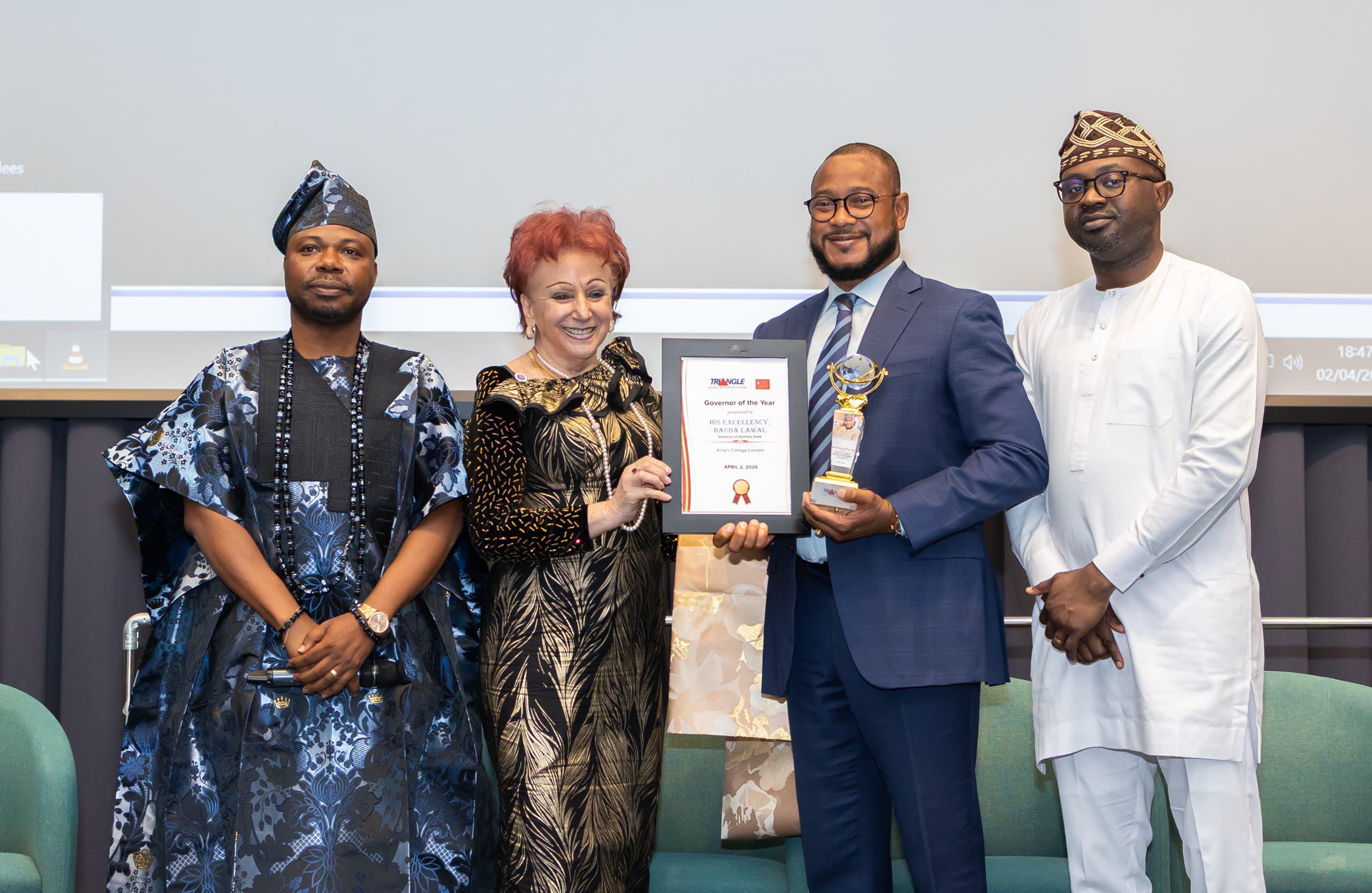
Governor Dauda Lawal Wins Face of Africa Governor of the Year Award in London
Governor Dauda Lawal has been honored with the Outstanding Governor of the Year award by Triangle Media International Magazine.
The award was presented during the magazine’s 10th annual lecture and award ceremony, held on Thursday at the Grand Hall of King’s College, London, United Kingdom.
According to a statement by the governor’s spokesperson, Sulaiman Bala Idris, the awards recognize public and private sector leaders whose leadership positively impacts governance and service delivery.
He added that the lecture, themed “Harnessing the Roles of Nigerians in Diaspora for National Development,” brought together stakeholders from both the public and private sectors.
The statement read in part: “Yesterday, in London, Governor Dauda Lawal received the 2026 Face of Africa Leadership Award for Outstanding Governor of the Year.
“The 2026 edition coincides with the 10th anniversary of Triangle International Magazine, which has over the years celebrated notable Africans across diverse fields.
“The award recognizes the Zamfara State Government under Governor Lawal’s leadership for achieving remarkable milestones in service delivery since his inauguration on 29 May 2023.
“The board of Triangle International noted that, despite inheriting an empty treasury, Governor Dauda Lawal has remained true to the Rescue Agenda’s campaign promise: to rescue and rebuild Zamfara.
“The award also reflects the state government’s innovative approach to indirectly curbing insecurity through educational advancement, demonstrated by the declaration of a state of emergency in the education sector.
“This includes the state government’s swift payment of the outstanding N3.4 billion for WAEC and NECO examinations, as well as the reconstruction and rehabilitation of schools across all 14 Local Government Areas of Zamfara State.
“The international magazine finds these initiatives to be strategic interventions toward long-term efforts to make Zamfara State better.”
The colourful event was attended by the Minister of Interior, Olubunmi Tunji-Ojo, and Sahara Group’s Group Managing Director, Kola Adesina, among others.


-

 society7 months ago
Religion: Africa’s Oldest Weapon of Enslavement and the Forgotten Truth
-

 news4 months ago
WHO REALLY OWNS MONIEPOINT? The $290 Million Deal That Sold Nigeria’s Top Fintech to Foreign Interests
-

 society6 months ago
“You Are Never Without Help” – Pastor Gebhardt Berndt Inspires Hope Through Empower Church (Video)
-

 celebrity radar - gossips2 months ago
Dr. Chris Okafor Returns with Power and Fire of the Spirit -Mounts Grace Nation Altar with Fresh Anointing and Restoration Grace on February 1, 2026