
celebrity radar - gossips
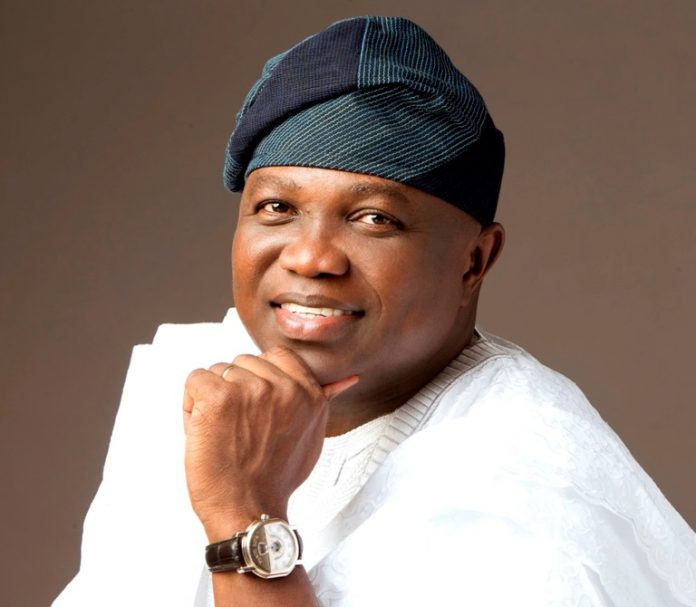
Ambode: Off key note in a melodious verse


Friday Musings with Ayo Olukotun
[email protected], 07055841236
For Governor Akinwunmi Ambode, whom this writer has commended on previous occasions for edifying governance strides, the last fortnight was billed as a season for showcasing his achievements, and the continuing importance of Lagos State. The opportunity of marking Lagos at 50 coincided with Ambode’s mid-term report, and conversations around the prospect of Lagos mutating into a smart city, as well as a tourism and investment hub. Applause, most of it well-earned, flowed freely from a grateful public for such interventions as enormous road construction in key parts of the city, the Light Up Lagos Project, and the renewal of the Lagos State University after a protracted turmoil.
Suddenly, there was a jarring, off key note in a melodious train; a shrill cry interrupted the songs of praise; a crisis of reputation and of image has suddenly erupted. The story has been well told, but it bears narration. The governor’s wife, Mrs. Bolanle Ambode, had attended an anointing service at the state government-owned Chapel of Christ the Light presided over by Venerable Femi Taiwo, who was ministering on that fateful day, May 14. Disappointed that she was not called first to be anointed, Madam Ambode reportedly stormed out of the church in a huff, defying all entreaties by church leaders to return to the service. Official sanctions fell swiftly and rapidly upon Taiwo, who was not only given a sack letter, but was asked to vacate his official quarters within 24 hours of receiving the letter. But for the compassionate intervention of some church members who offered Taiwo accommodation, the full brunt of homelessness and displacement would have fallen on him and his family.
Unsurprisingly, the social media was agog with spirited discussions and condemnations of official highhandedness, in which sanctions were far in excess of alleged offence. Alleged? Yes, because Bolanle had a choice, however angry she became, to have shown grace under pressure by staying the course, letting others get anointed before her, thereby demonstrating humility, a spiritual virtue, and earning kudos for identifying with the common folk. Something politicians do gleefully during election period to curry electoral support. That, of course, was the road not taken, leading to the miasma which punctuated the jubilee celebrations and victory train of Ambode and Lagos State. Obviously, the so-called clearing of Bolanle by the Christian Association of Nigeria is beside the point, as it only affirms what is already well-known, namely, that Ambode had the power to fire and hire the Chaplain. The issue in contention, however, is whether that power was exercised with due diligence, and in the context of the values of people-oriented governance, championed by Ambode.
Strikingly, the event raises several issues, some of which include power versus justice in an emerging democracy, the so-called bottom power, governmentality, and the tradition of leadership omnipotence. Before developing the conversation further, this writer invites the readers to contemplate a short take.
Prof. Adigun Agbaje, eminent political scientist, it was, who broke the jolting news of the passing, last Monday, of Abubakar Momoh, well-known political science professor, and civil society activist, who was the Director General of the Electoral Institute at the Independent National Electoral Commission. Aristocratic by birth, Momoh committed class suicide in Marxian parlance by devoting his scholarship and activism to the struggle for a redrawing of the social map, in favour of the oppressed and under-privileged. Momoh and I were both senior academics at the Lagos State University, where he stayed on to become Dean of the Faculty of Social Sciences, and a much sought after public intellectual and conference speaker. He was totally devoted to the academic calling, and had few other joys besides devouring the contents of a new book in his field, or doing a paper to sketch out the outlines of a paradigm shift, or preparing himself for the next conference, be it in Australia or the Philippines. A compassionate man, he had no problem with sharing with the needy, the very last naira in his pocket, even if that meant depriving himself, temporarily, of safety net. He will be missed, and sorely too, but his lengthy publications and books will continuously index him as a remarkable scholar, who was never at home with rehearsing received knowledge without subjecting it to devastating scrutiny.
To return to the initial discourse, it is interesting to note that one of the fallout of the harshly disciplinary action meted out to Taiwo is the instant reduction in the membership of the church. Many members had apparently voted with their feet by staying away from a set-up, where the axe can be so thunderously wielded against a minister, who narrowly escaped being reduced to homelessness within 48 hours. There are some who prefer to side step the issue, in the hope that a public with short memories will soon move on to the next governance warp. Some even argue that Ambode’s performance has been so stellar that we need not bother ourselves with the unusual exercise of state power. I differ from this position, for Ambode or indeed any public official cannot perform better, if all he hears are the sounds of oriki (traditional praise songs) from journalists, who have chosen to become the echo chambers of officialdom. Recall, for example, that the Acting President, Prof. Yemi Osinbajo, in his Democracy Day broadcast, mentioned that the Buhari administration is learning from its mistakes. This is a recognition of the fact that, contrary to the mindset of many Nigerian office holders, public officials are fallible, and those who point out their weaknesses, omissions or commissions, are not enemies or traitors, but in many cases are offering public service. There is too much of the “we versus them” syndrome in our political conversations, which makes it difficult for office holders to learn from their critics. Ironically, they learn even less from the media that merely chorus their good points, and never say even a word about what they haven’t done so well.
If Taiwo had not been queried for any offence before this event, then there is a breach of due process in administering to him on this occasion the maximum sanctions possible, including his ejection from official quarters within 24 hours. That apart, considering how difficult it is to find alternative accommodation in Lagos, nothing would have been lost if a decent interval had been given to him to vacate official quarters. A government which has pledged to alleviate the sufferings of citizens should not be seen to be promoting hardship or oppression, just because some are perceived as “disrespecting” office holders. This action evokes the concept of the African state, discussed by scholars such as Achille Mbebe, which conceives it as threat and terror, rather than the protector of citizens. This may not have been the intention of Bolanle, but in overreacting to what should have been overlooked or played down, the matter veered in the direction of the autocratic exercise of power.
To redeem the situation, and to restore the visage of his achievements, Ambode should call back the chaplain, restore his official quarters as a demonstration of charity and fellow feeling, which appear to have been the defining characteristics of his two years in office, before the sad event.




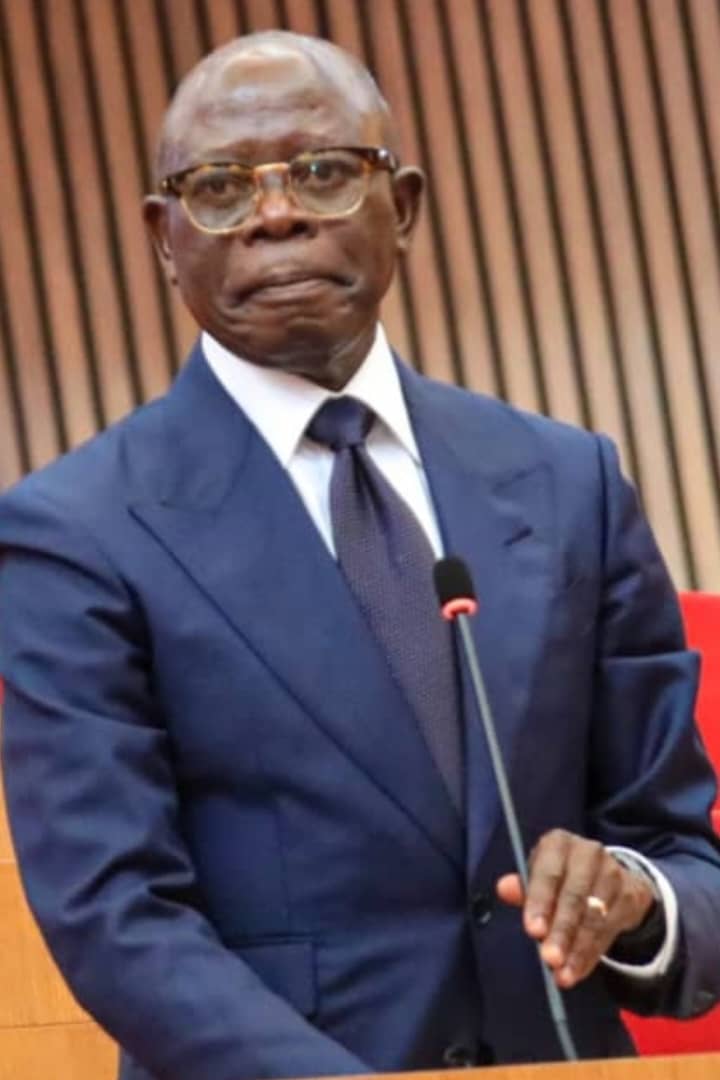
Daniel Eromosele Eulogize Adams Oshiomole as he turns 74 years
Today, I celebrate an exceptional leader, a fearless voice for the people, and a man whose life has remained a symbol of courage, sacrifice, and unwavering commitment to justice—Distinguished Comrade Senator Adams Aliu Oshiomhole.

Your journey has been nothing short of inspiring. From your days as a vibrant labour leader to your impactful tenure as the Executive Governor of Edo State, and now as a respected Senator of the Federal Republic, you have consistently demonstrated what it means to serve with integrity, strength, and purpose. Your contributions to the growth of our nation and the development of Edo State remain indelible and deeply appreciated.
You have not only built structures and institutions but have also built people. I am personally a beneficiary of your leadership, your guidance, and your belief in empowering others. Your influence in my life has been profound, and I remain grateful for the opportunities and inspiration you have given me.
On this special day, I celebrate not just your achievements, but the man you are—resilient, principled, and ever committed to the progress of Nigeria and her people.

May this new year bring you renewed strength, greater wisdom, good health, and more remarkable accomplishments. May your legacy continue to shine brighter with each passing year.
Happy Birthday, sir. Wishing you many more fruitful and impactful years ahead.
celebrity radar - gossips
Accolades to Empress Genevieve Wining as she Celebrate birthday in Grand style

Accolades to Empress Genevieve Wining as she Celebrate birthday in Grand style
Emmanuel Clement
Vilnius, Lithuania – The Grand Hotel Vilnius will host a grand birthday celebration in honor of Her Majesty The Empress Genevieve Wining of the United Kingdom of Atlantis (UKA) on April 4th, 2026.
The four-day event promises to be an extravagant affair, marking the special birthday of Empress Genevieve Wining. The celebration will take place at the prestigious Grand Hotel Vilnius, Lithuania, renowned for its luxurious ambiance and exceptional service.

According to the event flyer, the birthday celebration will be a spectacular occasion, fitting for an empress. Guests can expect an elegant setting adorned with golden accents, sparkling champagne, and festive decorations, creating a regal atmosphere befitting the occasion.
The Empress Genevieve Wining of UKA is expected to grace the event, which will include various festivities and celebrations in her honor. The occasion aims to bring together dignitaries, followers, and guests to commemorate the empress’s birthday with grandeur and joy.
For media inquiries, accreditation, or further information about the birthday celebration of The Empress Genevieve Wining of UKA, please contact the event organizers.
Courtesy of His Excellency Emperor Prof. Solomon Wining. UKA

Today, Dr. Chris Okafor turns a year older
~By Sunday Adeyemi
It is widely acknowledged that the exceptional Dr. Chris Okafor, a man of great character, always celebrates his birthday on April 4th, and in recognition of this occasion, I am inspired to write this special tribute to honor him.
Today marks a momentous occasion as we commemorate the birthday anniversary of Dr. Chris Okafor, a rare gem, a perfect gentleman, and the revered founder of Grace Nation Church, aka Liberation City.
Without reservation, this versatile and dependable Oracle foundry has consistently proven itself worthy of the accolades bestowed upon it on this notable anniversary.
Let it be reiterated that Dr. Chris Okafor is a leader known for his generosity and commitment to humanity’s welfare and advancement. The special gifts donated recently to widows and widowers within and outside the church are a testament to his exceptional leadership.
Your reputation as an outstanding and authentic man of God is evident in your exceptional goodwill and philanthropic endeavors.
Your dedication and perseverance have yielded impressive results, and numerous people, including myself, are justifiably proud of the remarkable work you are doing.
You have consistently exemplified outstanding leadership in the Christian community, demonstrating the profound impact of your role as a gift from God to humanity. I firmly believe this to be true.
Here’s to a year of productivity, success, and happiness. Congratulations and warm wishes on your birthday, sir.
Sunday Adeyemi
Your Son


-

 society7 months ago
Religion: Africa’s Oldest Weapon of Enslavement and the Forgotten Truth
-

 news4 months ago
WHO REALLY OWNS MONIEPOINT? The $290 Million Deal That Sold Nigeria’s Top Fintech to Foreign Interests
-

 society6 months ago
“You Are Never Without Help” – Pastor Gebhardt Berndt Inspires Hope Through Empower Church (Video)
-

 celebrity radar - gossips2 months ago
Dr. Chris Okafor Returns with Power and Fire of the Spirit -Mounts Grace Nation Altar with Fresh Anointing and Restoration Grace on February 1, 2026
You must be logged in to post a comment Login
You must log in to post a comment.