
society
AN OPEN LETTER TO DONALD TRUMP by Chief Femi Fani-Kayode

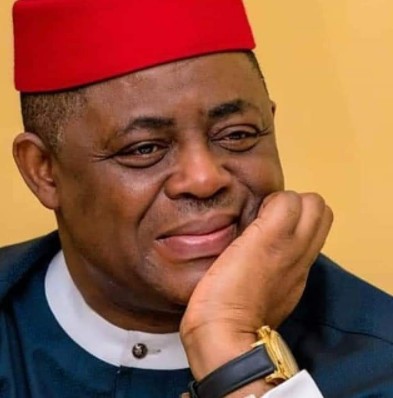
AN OPEN LETTER TO DONALD TRUMP by Chief Femi Fani-Kayode
Mr. President, over the last 15 months your country America has subjected the people of Gaza to mass murder, genocide & ethnic cleansing.
You armed, assisted & enabled the State of Israel to murder, by your own admission, hundreds of thousands of innocent Gazan civilians the vast majority of whom were women & children.
You turned their once beautiful country into a poisonous, stinking, uninhabitable, burnt flesh-filled, rodent-infested sea of landmines & sulphurus rubble & into an ocean of foul, rotting, verminous body parts.
You did this by supplying Israel with the most deadly modern weapons including 2000 pound bombs which they unleashed on a weak, impoverished & defenceless civilian population in what can only be described as the most barbaric slaughter in modern history.
You crushed them in body, spirit & soul.
Yet your nation was still not done. As soon as you were sworn into office, to the horror of the civilised world, you declared your insidious intention to displace the 1.6 million Gazans that are still left alive (there were originally 2.5 million) & take over their land in order to develop it into a “prime piece of real estate” & a “beautiful holiday resort” for rich Americans!
These are the homes & ancestral land of the Palestinian people who have been living there for over 2000 years.
This is the land in which their loved ones & families have been caged, butchered & buried by your murderous Zionist friends for the last 76 years.
This is the place in which millions of them have fought & died for the last seven decades in order to preserve their honor, dignity, heritage, history & identity & leave something for generations of their children yet unborn.
You went further by publicly stating that you were “committed to owning Gaza” & that “we will let other countries develop parts of it: it will be beautiful. People can come from all over the world to live there.”
In conclusion you said “the Palestinians would have no right to return when they leave”.
As Ambassador A. M. Shawesh, the Palestinian Ambassador to India rightly said,
“When a real estate developer rules the world no one will be spared, everyone will follow”.
Your lack of empathy for the plight of the women & children of Gaza is appaulling.
Your inability to feel their pain & acknowledge their tears betrays the fact that you lack compassion.
You not only want to take the little that is left of it from them but you also want to send the 1.6 million Gazans that have been left alive to Egypt & Jordan (both of whom have outrightly rejected the proposal) & turn their homeland into a holiday spot filled with American hotels, American holiday homes, American escorts & American casinos.
You fail to appreciate the fact that to stand with Gaza is to stand with humanity.
This sentiment is shared by the majority of nations including Ireland, South Africa, Brazil, China, Russia, Iran & Spain who have taken the lead in this cause.
It is not only the Muslims and Arabs that feel this way: His Eminence Pope Francis and the majority of Christians throughout the world do as well.
Killing innocent women & children, subjecting them to mass murder, ethnic cleansing & genocide & forcefully displacing them & taking over their land cannot be justified under ANY circumstances.
Is this so difficult to comprehend?
You will recall that Vice-President Kashim Shettima eloquently stated the unassailable position of the Nigerian people when he said the following at the United Nations General Assembly:
“Today we are all witnesses to the heart-wrenching situation in Gaza & other Palestinian Territories. Justice is antithetical to revenge. Freedom is an inalienable right & a natural entitlement that cannot be denied to any people. The Palestinian people deserve their independence. They deserve to have a home of their own on territories already recognised by this very Assembly & by international law which is being routinely ignored.“
His words reflect the position of no less than 149 countries that recognise the State of Palestine as an independent, sovereign nation.
I am proud of the fact that my country has taken such a noble stand and, unlike yours, has chosen to stand for peace & justice.
I have always admired you because of what I believed to be your reverence for God, your Christian values, your stated intention of pulling America out of foreign conflicts, your rapprochement with Russia, China & North Korea, your opposition to the globalists & your support for the nationalists.
Again I have always respected you because of the way you stood strong and proud in the face of the persecution that you were subjected to by the Deep State.
Yet despite my respect I am constrained to tell you the truth.
This is not the time for platitudes or spouting the cowardly words of a quisling & lickspittle.
I must be candid.
Permit me to begin by saying that your proposition for Gaza is an expression of unadultetated evil.
Whilst others are rightly talking about establishing a two state solution where both the Palestinians & Israelis can live in peace you are talking about America taking over Gaza for itself & forcefully acquiring its offshore gas & oil reserves.
Is there no end to your greed? Is your insatiable desire to pillage & steal other people’s land & wipe them off the face of the earth just to gain access to their natural resources not of the devil?
Is this not the same thing that your white American forefathers did to the Red Indians?
Is this not what Pharaoh, Genghis Khan, Atilla the Hun, Christopher Columbus & Adolf Hitler did to others in their time?
Did they not annihilate their victims, driving many into extinction, subject them to a holocaust and take their land?
Is it not the same violent, butchering, slaughtering, conquering, plundering & pillaging spirit that drives you all?
Then come your puerile gaffes & brazen threats which are reminiscent of that of a school yard bully.
For example when you say things like “all hell will break loose if Hamas does not release all the hostages by Saturday” you betray the fact that you do not know that Hamas is far stronger today in terms of resolve and numbers than it was before October 7th.
This came as a consequence of the massive number of Palestinian women & children that were butchered post-October 7th by Israel in the name of retaliation.
Hamas have been energised by their quest for vengeance & if they had 10,000 fighters before October 7th they now have at least 200,000.
The more innocent Palestinans you kill the stronger Hamas will get.
This is why Gaza has been described as the “graveyard of imperialist delusions”.
Worse still the “hell” that you threaten to unleash may well engulf Israel and the entire Middle East.
Surely an attempt to ensure that the ceasefire is not broken & that negotiations for the release of hostages on all sides continue is better than issuing threats which may well endanger the lives of the very hostages that you are trying to save.
I pray that you cultivate the presence of mind to appreciate this point.
Your obsession with meddling in the affairs of other nations & laying claim to their territory, whether it be Canada, Greenland, the Panama Canal, the Gulf of Mexico, South Africa, Colombia or Gaza is symptomatic of a troubled mind.
If you are not threatening other countries with taking over their land or withdrawing aid, you are threatening them with trade tariffs in an attempt to bring them to their knees.
Worse of all your disdain for immigrants & desire to send them back to where they came from in chains without any humanity & dignity or lock them up in Gauntanamo Bay whilst at the same time offering white South Africans refugee status is shameful.
It also provides us with a graphic expression of your inherent racism.
Your aversion to immigrants & categorisation of them as being “criminals, gangsters, murderers & mentally deranged people” is shameful.
Permit me to remind you that you are the grandson of a German immigrant, the son of a Scottish immigrant, the husband of a Slovenian immigrant & the ex-husband of a Czech immigrant.
You were a beneficiary of America’s immigration policies yet you hate immigrants with a passion & seek to not only stop them from entering your country but also to deny foreigners that are born there citizenship rights & abolish the ‘birth right law’ which is embedded in your constitution.
Such is your contempt for immigrants that Pope Francis was constrained to say the following in order to ameliorate the pain and damage that your vitriol has caused.
He said,
“I exhort all the faithful of the Catholic Church not to give in to narratives that discriminate against and cause unnecessary suffering to our migrant & refugee brothers & sisters.”
‘Making America Great Again’ does not mean destroying the aspirations of others & does not give you the right to intimidate, threaten, subjugate & conquer the world!
You would do well to remember that it was the collective prayers of millions to God that delivered you from the assassin’s bullet on two separate occassions, that stopped you from being sent to jail & that got you to where you are today.
Those same prayers will bring you to your knees if you refuse to change course.
May God guide you.
(Chief Femi Fani-Kayode is the Sadaukin Shinkafi, the Wakilin Doka Potiskum, a former Minister of Culture and Tourism and a former Minister of Aviation).




society
Liberian Leaders, Citizens Bear Witness as Apostle Suleman Hosts Two-Day Power-Packed Crusade
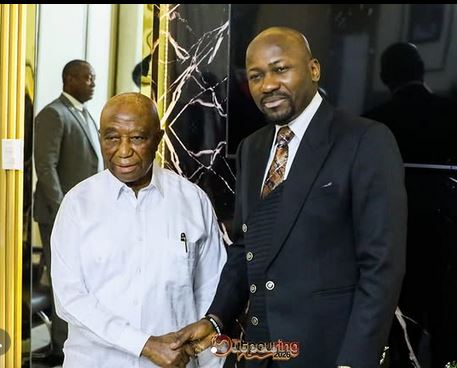
Liberian Leaders, Citizens Bear Witness as Apostle Suleman Hosts Two-Day Power-Packed Crusade
It was testimonies galore on Tuesday, March 31, the first day of the famous servant of God and founder of the Omega Fire Ministries (OFM) worldwide, Apostle Johnson Suleman’s power-packed two-day crusade. The event documented impactful moments with the Gospel and miracles, emphasizing the power of faith and the tangible confirmation of God’s Word through signs and wonders. It was equally an atmosphere of miraculous healing, restoration of lives, and the strengthening of faith.
At the crusade, which was held at the SKD Sports Stadium in Paynesville City, and themed, “Liberia Outpouring Crusade” witnessed testimonies of impact and miracles with participants experiencing instant healing of various kinds of challenges.
Apostle Suleman’s first port of call was Paynesville, the office of Liberian government’s president, Mr. Joseph Nyuma Boakai, who received him in an audience with his junior ministers. Apostle Suleman, who also met with the vice-president, Mr. Jeremiah Kpan Koung, was welcomed by the Liberian leader’s office as part of the president’s ongoing engagements with religious leaders aimed at fostering spiritual support for national development.
The president expressed profound appreciation to Apostle Suleman for the visit and continued prayers and intercessions by men and women of God on behalf of Liberia, emphasizing his firm belief that sustained spiritual guidance and prayer remain vital to the transformation and progress of the nation.
During the visit, Apostle Suleman offered prayers for President Boakai, his cabinet and the Liberian nation, invoking divine alignment, wisdom, and insight in Liberia’s path toward growth and stability. He prayed that the Almighty God would position Liberia for relevance and fulfillment of its national destiny.
Apostle Johnson Suleman, an evangelist who knows no bounds of where preaching the gospel comes to a stop, visited Liberia prepared with the message, compelling power of the Gospel and the work of the Holy Spirit, and bringing people to a point of decision where they surrendered their lives to Christ.
Aside from being prophetic and timely, OFM sources disclosed that the servant of God’s visit underscores the importance of faith-based partnerships in supporting governance and national renewal efforts.
society
Middle Belt Forum Hails Tinubu’s Jos Visit, Calls for United Civil-Military Effort to Restore Lasting Peace
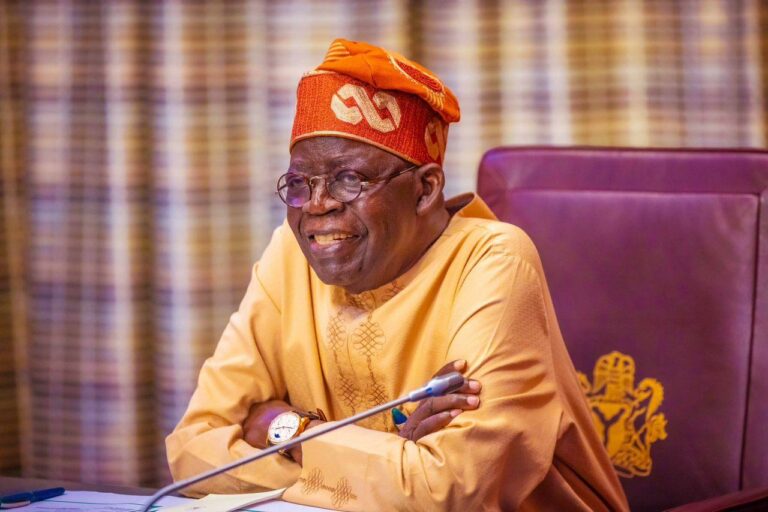
*Middle Belt Forum Hails Tinubu’s Jos Visit, Calls for United Civil-Military Effort to Restore Lasting Peace
The Middle Belt Peace Forum (MBPF) has commended President Bola Ahmed Tinubu for his profound demonstration of empathy and responsive leadership following his decision to postpone an official engagement in Iperu in order to visit victims of the recent attacks in Jos.
In a statement signed by its National Coordinator, Pastor Bulus Garba, in Jos on Friday, the Forum said the President’s decision to personally identify with grieving communities sends a powerful message of solidarity and reinforces public confidence in the commitment of the Federal Government to the protection of lives and property.
“The Middle Belt Peace Forum warmly commends President Bola Ahmed Tinubu for prioritising compassion over ceremony. At a time of deep sorrow for the people of Plateau State, his decision to visit Jos stands as a mark of true leadership—one that listens, responds, and stands with the people in their moment of pain,” the statement read.
The Forum described the perpetrators of the recent attacks as “cowards who prey on innocent and defenceless citizens,” stressing that such acts of violence are not only inhumane but also a direct assault on the unity and peace of the nation.
“We condemn in the strongest terms the actions of these cowardly attackers whose only aim is to instil fear and destabilise peaceful communities. Their actions must be met with firm and decisive resistance from all arms of the state,” Pastor Garba said.
The MBPF further used the opportunity to salute the courage, gallantry, and sacrifices of the Armed Forces of Nigeria under the leadership of the Chief of Defence Staff, General Olufemi Oluyede, noting that their continued efforts remain central to restoring stability across troubled parts of the country.
According to the Forum, the Armed Forces have demonstrated resilience and professionalism in the face of complex security challenges, often operating under difficult conditions to safeguard communities and defend Nigeria’s territorial integrity.
“We salute the Armed Forces of Nigeria for their unwavering commitment and sacrifices. Their gallantry in confronting criminal elements and reclaiming territories is a testament to their dedication to national service. We recognise that the path to peace is demanding, and we honour those who stand daily in defence of our nation,” the statement added.
The Forum pledged its full support to ongoing military operations and called for strengthened collaboration between security agencies and local communities as a critical factor in achieving lasting peace.
It also urged citizens across the Middle Belt to cooperate with security forces by providing timely information and fostering unity within their communities.
The MBPF, however, expressed concern over the need for greater synergy among security agencies, particularly the role of the Nigeria Police in consolidating gains made by the military.
“We call on the Nigeria Police Force to rise fully to its constitutional responsibility by effectively supporting the Armed Forces in stabilising and securing areas that have been cleared of criminal elements. Holding and policing such territories is essential to preventing a resurgence of violence,” Pastor Garba stated.
The Forum emphasised that sustainable peace requires a coordinated approach in which the military clears and secures areas, while the police maintain law and order to enable displaced communities to return and rebuild their lives.
The MBPF concluded by reiterating its commitment to peacebuilding efforts across the Middle Belt and expressed optimism that with sustained leadership, coordinated security efforts, and active citizen participation, lasting peace can be achieved.
“Together, through unity, vigilance, and collective resolve, we can overcome these challenges and build a safer and more peaceful Middle Belt,” the statement added.
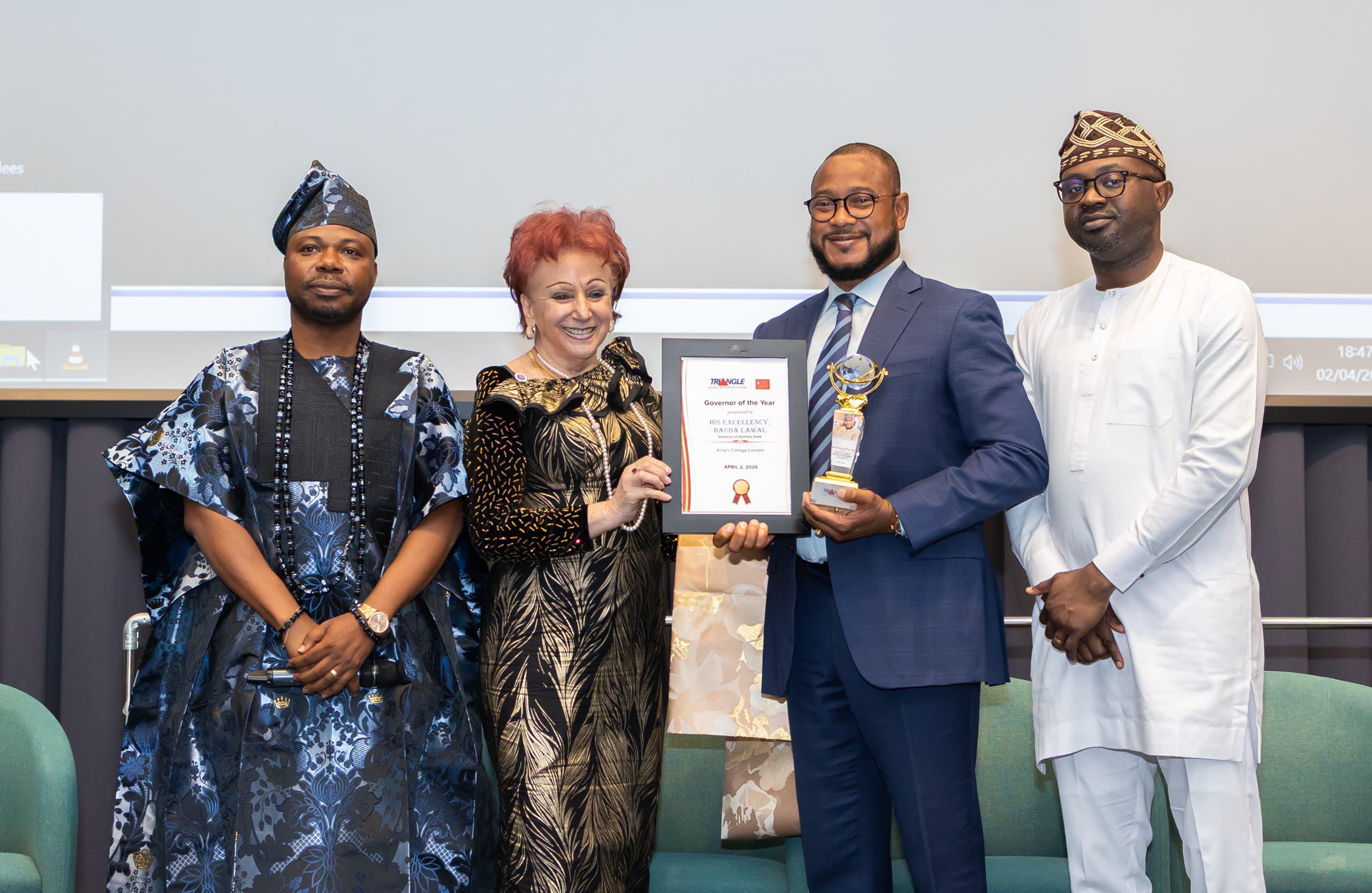
Governor Dauda Lawal Wins Face of Africa Governor of the Year Award in London
Governor Dauda Lawal has been honored with the Outstanding Governor of the Year award by Triangle Media International Magazine.
The award was presented during the magazine’s 10th annual lecture and award ceremony, held on Thursday at the Grand Hall of King’s College, London, United Kingdom.
According to a statement by the governor’s spokesperson, Sulaiman Bala Idris, the awards recognize public and private sector leaders whose leadership positively impacts governance and service delivery.
He added that the lecture, themed “Harnessing the Roles of Nigerians in Diaspora for National Development,” brought together stakeholders from both the public and private sectors.
The statement read in part: “Yesterday, in London, Governor Dauda Lawal received the 2026 Face of Africa Leadership Award for Outstanding Governor of the Year.
“The 2026 edition coincides with the 10th anniversary of Triangle International Magazine, which has over the years celebrated notable Africans across diverse fields.
“The award recognizes the Zamfara State Government under Governor Lawal’s leadership for achieving remarkable milestones in service delivery since his inauguration on 29 May 2023.
“The board of Triangle International noted that, despite inheriting an empty treasury, Governor Dauda Lawal has remained true to the Rescue Agenda’s campaign promise: to rescue and rebuild Zamfara.
“The award also reflects the state government’s innovative approach to indirectly curbing insecurity through educational advancement, demonstrated by the declaration of a state of emergency in the education sector.
“This includes the state government’s swift payment of the outstanding N3.4 billion for WAEC and NECO examinations, as well as the reconstruction and rehabilitation of schools across all 14 Local Government Areas of Zamfara State.
“The international magazine finds these initiatives to be strategic interventions toward long-term efforts to make Zamfara State better.”
The colourful event was attended by the Minister of Interior, Olubunmi Tunji-Ojo, and Sahara Group’s Group Managing Director, Kola Adesina, among others.


-

 society7 months ago
Religion: Africa’s Oldest Weapon of Enslavement and the Forgotten Truth
-

 news4 months ago
WHO REALLY OWNS MONIEPOINT? The $290 Million Deal That Sold Nigeria’s Top Fintech to Foreign Interests
-

 society6 months ago
“You Are Never Without Help” – Pastor Gebhardt Berndt Inspires Hope Through Empower Church (Video)
-

 celebrity radar - gossips2 months ago
Dr. Chris Okafor Returns with Power and Fire of the Spirit -Mounts Grace Nation Altar with Fresh Anointing and Restoration Grace on February 1, 2026