
society
ASSAULT TODAY, AMBASSADOR TOMORROW; WHAT NATION DOES THIS? (Rewarding misconduct: What are we teaching future generations?


ASSAULT TODAY, AMBASSADOR TOMORROW; WHAT NATION DOES THIS? (Rewarding misconduct: What are we teaching future generations?)
By George Omagbemi Sylvester | SaharaWeeklyNG
On August 5, 2025, a ValueJet aircraft preparing to taxi at Abuja’s Nnamdi Azikiwe International Airport was brought to a needless standstill. Viral clips showed Fuji icon Wasiu Ayinde Marshal (KWAM 1) on the tarmac amid a confrontation that aviation authorities later described as an egregious breach of airport protocol. Within days, the Federal Government (through the Aviation Minister, Festus Keyamo) announced that KWAM 1’s penalty would be reduced and that he would be engaged as an “AVIATION SECURITY/PROTOCOL AMBASSADOR.”

In the same news cycle, Comfort Emmanson, a passenger on an Ibom Air flight who allegedly assaulted airline staff after refusing to switch off her phone, was banned by airline operators and faced swift legal consequences, only for public statements to float the idea that she, too, could be tapped in some “GOOD CONDUCT” ambassadorial role. The mere suggestion made a mockery of deterrence and sent a gale-force signal of mixed values.
This is not a trivial spat. It is about whether Nigeria still believes in consequences that fit the offense; especially in aviation, where one person’s unruly behavior can ripple into safety risks for all. International and Nigerian rules are unambiguous: DISRUPTIVE CONDUCT THAT THREATENS SAFETY OR ORDER (on the ground or in the cabin) is an offense with legal and administrative penalties. ICAO’s regime (Tokyo Convention 1963, strengthened by the Montreal Protocol 2014) and Nigeria’s Civil Aviation Regulations outline clear enforcement powers for pilots, security agencies and regulators.

The facts we cannot spin
Abuja/ValueJet incident (Aug 5, 2025): The Minister confirmed the episode and initially announced sanctions before reducing KWAM 1’s ban to one month and positioning him for an awareness role. The NCAA complaint to the police was also withdrawn. Critics (including industry voices and public commentators) condemned the optics.
Ibom Air confrontation(Aug 10, 2025): Emmanson allegedly struck crew and resisted removal; she was banned by airlines and faced arraignment. International outlets highlighted the severity of the assault claims and the safety implications of defying crew instructions.
The law is clear: Nigeria’s Civil Aviation Regulations list “UNRULY PASSENGER BEHAVIOR” as an offense, with penalties ranging from fines to imprisonment; ICAO’s framework empowers the pilot-in-command to restrain and disembark disruptive passengers and encourages states to prosecute. These are not suggestions; they are safety architecture.
Nigerian Civil Aviation Authority.

Why the “AMBASSADOR” gambit is dangerous?
1) IT DILUTES DETERRENCE. Aviation safety depends on predictability: follow crew instructions, respect sterile areas and never interfere with aircraft operations. When high-profile violators are swiftly recast as “AMBASSADORS,” we create a perverse incentive structure. The public perceives misbehavior as a shortcut to attention or soft landings. As IATA warns, unruly and disruptive behavior threatens safety, diverts flights and endangers crew and passengers; awareness campaigns are useful, but they must sit on a firm base of credible enforcement.
2) IT UNDERMINES RULE-OF-LAW SYMMETRY. The uneven treatment between an influential celebrity and an ordinary passenger corrodes trust. When the powerful appear to skate past consequences, citizens infer that the law is not a shield for all but a ladder for the few. Former Aviation Minister Osita Chidoka captured the zeitgeist: episodes of celebrities blocking aircraft or passengers assaulting crew are symptoms of a deeper state dysfunction when public order is not impartially upheld.
3) IT CONTRADICTS THE GLOBAL SAFETY TREND. The Montreal Protocol 2014 exists precisely because states needed stronger jurisdiction to prosecute unruly passengers landing in their territory. Many jurisdictions are tightening penalties, not lightening them; because one incident can cascade into injuries, diversions and millions in losses. Nigeria should align with this arc of seriousness.
The better path: CREDIBLE SANCTIONS FIRST, EDUCATION SECOND.
There is nothing wrong with using high-visibility figures for public education; after accountability is done. Indeed, the Minister later clarified that such roles are voluntary awareness efforts, not paid sinecures. But timing is everything. Turning transgressors into teachers within days flirts with impunity’s theater. Education should reinforce deterrence not replace it.
A principled sequence would look like this:
Complete investigations and apply proportionate sanctions under NCAA regulations (fines, bans or prosecution as appropriate) without fear or favor.
Publicly disclose outcomes with timelines, reinforcing that the same rules bind the titled and the unknown.
Then consider restorative roles (e.g., recording PSAs on “what I did wrong”) that underline, not erase, the lesson.
What message are we sending?
In civil aviation, a single slap, shove or “celebrity moment” can disturb cockpit focus, inflame crowds and morph into a safety incident. Cabin crew orders are not suggestions; they are a safety chain. A society that trivializes breaches in this chain is playing dice with lives.
Political philosopher Montesquieu warned that “there is no greater tyranny than that which is perpetrated under the shield of law and in the name of justice.” When symbols of “AMBASSADORSHIP” are bestowed before justice is seen to be done, we twist the shield. Martin Luther King Jr. taught that “Injustice anywhere is a threat to justice everywhere.” When the runway becomes a stage for preferential treatment, we rehearse injustice in the most unforgiving theater: a system where physics (not politics) has the last word.
The exasperation from stakeholders is not hysteria. Industry groups have repeatedly flagged the rising tide of disruptive behavior, urging stricter enforcement and public education working in tandem. Nigerian commentators and aviation lawyers have, in recent days, laid out chapter and verse of our laws, ICAO guidance and pilot authority. The theme is unmistakable: consequences must be certain.
Concrete steps Nigeria should take now are:
1) Lock in the legal backbone. Ensure domestic law fully leverages the Montreal Protocol 2014’s expanded jurisdiction so that incidents landing on Nigerian soil meet timely prosecution. Publish (ahead of time) the charge sheets and sentencing guidelines for common unruly offenses to remove guesswork.
2) Standardize penalties and publish them prominently. The NCAA should maintain an always-current, public schedule of penalties for unruly behavior (e.g., obstruction of operations, assault on crew, non-compliance with safety instructions), and stick to it. This clarity deters, guides prosecutors and shields against ad-hoc leniency.
3) Mandate “cooling-off” periods before any advocacy roles. If, for restorative justice, a wrongdoer is later used for public education, a fixed moratorium (say, 12–18 months after sanctions are satisfied) should be required. This preserves the moral sequence: accountability, then advocacy.
4) Crew-first policy. Assault on cabin crew must trigger automatic arrest referrals and minimum penalties. Pilots must be confident that handing over a disruptive passenger will not dissolve into celebrity exceptionalism at the terminal door.
5) A real public awareness blitz (rooted in accountability. Use airports, airlines, radio and social media to run relentless campaigns on “What counts as unruly,” “Crew authority,” and “Penalties you will face.” IATA’s guidance and international best practice support such campaigns) and they work best when anchored in credible enforcement.
To the youth watching.
Every society teaches by what it rewards. If the impressionable see that a tarmac tantrum or a slap in a cabin ends in a photo-op and a title, they will learn the wrong lesson about power, fame and the rule of law. We do not build a safe aviation culture (or a serious country) by turning transgression into a trampoline.
Edmund Burke cautioned that “example is the school of mankind and they will learn at no other.” Let our example be that no one (artist or artisan, VIP or everyman) stands above the safety rules that keep aluminum tubes full of our mothers and children from turning into headlines.
Ambassadors for safety should be those whose conduct embodies it, not those still stepping out of the dock. If Nigeria wants to cultivate a culture of respect for aviation protocols, our sequence must be simple and non-negotiable: law, consequence, then lesson in that order.
Editor’s note: All dates are in August 2025.




society
From Broadcast to Spiritual Renaissance: The Journey of Alọba A. Orisabimbola Ifatomi, Creator of ÒRÌṢÀTV

From Broadcast to Spiritual Renaissance:
The Journey of Alọba A. Orisabimbola Ifatomi, Creator of ÒRÌṢÀTV
In a time when African stories are often misrepresented or diluted, a seasoned voice in Nigeria’s media and creative industry is stepping forward with a bold vision to reclaim, preserve and project the depth of African spirituality through a new wave of cinematic storytelling powered by technology.
Alọba Adewunmi, a respected broadcaster, journalist and creative professional, is the mind behind ÒRÌṢÀTV a groundbreaking platform using Artificial Intelligence (AI) cinematic production to tell authentic Yoruba stories rooted in cosmology, spirituality and cultural heritage.
ÒRÌṢÀTV is not just a channel it is a destination to experience “The Beginning”, a Yoruba cosmology-based AI cinematic series that explores the origin of life and existence through an African lens.
A Career Built on Media Excellence
With years of experience across broadcast and print media, Alọba Adewunmi has established himself as a dynamic storyteller and cultural voice.
He has worked with several notable platforms including OSBC, Orisun FM, Yotomi Cable, Okin FM, Midland FM, Delta Cable, Akede Oodua Publications and Akede Africa.
His professional journey includes:
– Reporter at Alariya Oodua
– Editor at Gbajumo Online Magazine
– General Editor at Akede Africa ( a bilingual news magazine)
Through these roles, he has contributed significantly to journalism, cultural reporting, politics, crime and entertainment.
A Multifaceted Creative Force
Beyond journalism, Alọba Adewunmi’s creative footprint extends deeply into film and storytelling.
He is not just a performer, but a creative architect behind the scenes, serving as:
– A Continuity Director
– Continuity Director of the home video “Tobi (Forgiveness)”, produced by Kola Adeyemo
– A Story Writer and Dialogue Director
– A Scriptwriter
He has also contributed to several home video productions from the late 1990s through the early 2000s, reflecting a long-standing presence in Yoruba film storytelling.
A Spiritual Path and Cultural Mission
Beyond media and film, his journey is rooted in a deeper spiritual calling.
Alọba Adewunmi is a traditional priest, teacher and herbal medicine practitioner, dedicated to the preservation and practice of Yoruba spirituality.
His temple, Obàtálá Alábãlàse Temple of Purity, stands as a sacred center for purity, healing and spiritual guidance.
The Vision Behind ÒRÌṢÀTV
ÒRÌṢÀTV is more than a content platform, it is a cultural revival movement powered by AI-driven cinematic storytelling.
Through this innovative approach, the platform explores:
– The origin of existence
– The roles of divinities
– The structure of human destiny
– The spiritual laws governing life
The debut episode, “The Birth of Ilẹ̀ Àwọn Alààyè”,( Command of Creation ) marks the beginning of the series “The Beginning”.
Blending mythology, spirituality and AI-powered visuals, ÒRÌṢÀTV offers a unique experience that is both educational and deeply immersive.
A Mission Beyond Entertainment
For Alọba Adewunmi, this project goes far beyond entertainment.
It is a mission to preserve indigenous knowledge, educate future generations, correct misconceptions about African spirituality and restore pride in African identity.
The Man Behind the Vision
Despite his wide experience and creative influence, Alọba Adewunmi remains a naturally private and introverted individual.
He is known more for his work than for public appearances moving quietly between his professional responsibilities and personal space.
Rather than seeking the spotlight, he has consistently chosen to let his talent, creativity and impact speak for him.
Those who encounter his work or collaborate with him understand the depth he brings a reminder that true substance is not always loud and presence is not always public.
Looking Ahead
With Episode 1 now released, anticipation continues to build as “THE BEGINNING” prepares to explore deeper aspects of creation, human destiny and spiritual alignment.
This is not just a project it is a legacy unfolding through culture, spirituality, and innovation.
Watch Now
THE BEGINNING


Episode 1
The Birth of Ilẹ̀ Àwọn” Command of Creation)
Available on YouTube.
Media & Contact
For interviews, features and collaborations:
08125883088
© 2026 ÒRÌṢÀTV
All Rights Reserved
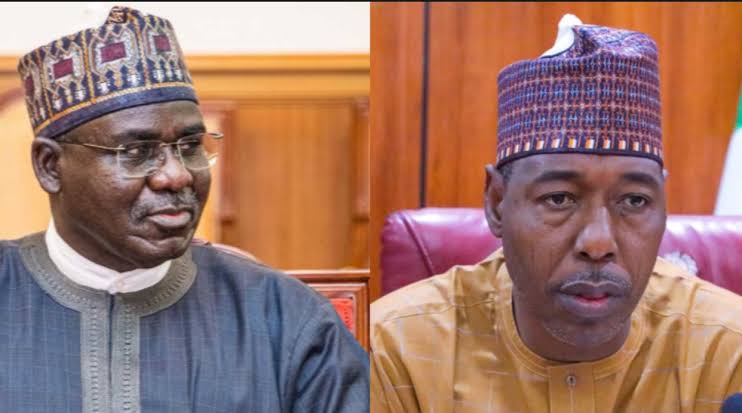
TY BURATAI HUMANITY CARE FOUNDATION COMMENDS GOVERNOR ZULUM FOR HELPING MILITARY FAMILIES
The TY Buratai Humanity Care Foundation has commended Borno State Governor Babagana Umara Zulum for his generous donation of ₦150 million to the families of three military officers who were tragically killed in recent attacks. Each family received ₦50 million as part of the state’s continued commitment to supporting fallen heroes and wounded personnel involved in counter-insurgency operations.
The commendation was contained in a statement signed by the foundation’s chairman, Ibrahim Dahiru Danfulani Sadaukin Garkuwan Keffi/Betara Biu, and made available to the press.
The foundation expressed gratitude for the governor’s compassionate gesture, which included personal visits to the families of the late Lieutenant Colonels Umar Farouq, Salihu Iliyasu, and Aliyu Saidu Paiko in Abuja, Niger, and Kano States. During the visits, Governor Zulum offered his condolences and praised the service, sacrifice, and patriotism of the fallen officers.
The foundation’s Grand Patron, His Excellency, Lieutenant General Tukur Yusufu Buratai, CFR (Rtd), personally commended the governor’s dedication to improving the lives of Borno State residents. He also extended his condolences to the families of the officers and soldiers who made the ultimate sacrifice in service to the nation.
During his visits, Governor Zulum reaffirmed his administration’s commitment to supporting bereaved families, which includes offering scholarships to the orphaned children of fallen personnel. He pledged to extend similar visits to other affected families, underscoring a compassionate approach to addressing the needs of those who have suffered in the line of duty.
society
Queen Amb Dr. Nwamaka Cordelia Anyatonwu Appointed Minister of Humanitarian, Culture, and Kingdom Affairs, United Kingdom of Atlantis
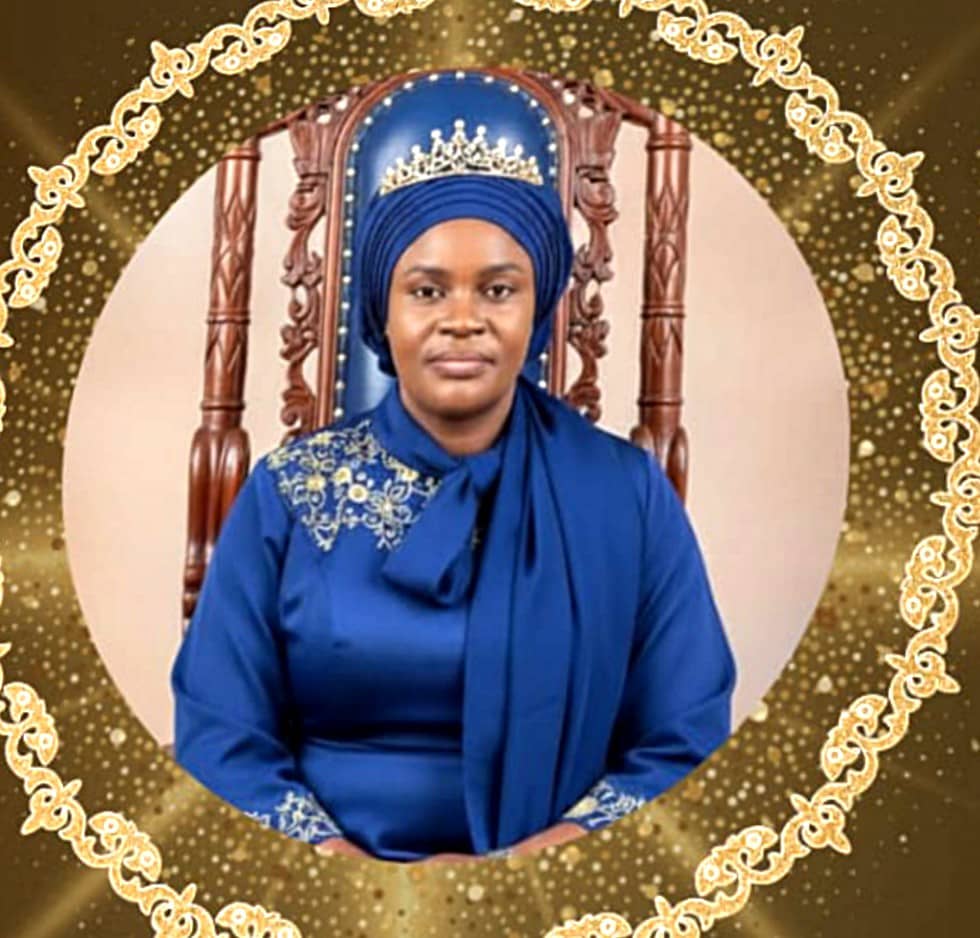
*Queen Amb Dr. Nwamaka Cordelia Anyatonwu Appointed Minister of Humanitarian, Culture, and Kingdom Affairs, United Kingdom of Atlantis
Her Majesty Queen Amb Dr. Nwamaka Cordelia Anyatonwu, Queen of the Aches Empire under the jurisdiction of the United Kingdom of Atlantis (UKA), has been appointed as the Minister of Humanitarian, Culture, and Kingdom Affairs, effective immediately.
This appointment comes as the UKA takes decisive steps to strengthen its humanitarian efforts and protect its citizens from unauthorized activities. In light of recent developments, the UKA has issued an official public disclaimer cautioning citizens, followers, and the general public about the activities of individuals promoting and operating a coin or platform not officially recognized by the Atlantian Gold Coin (ATC). This follows the hijacking of the 5 billion humanitarian project, a move that has been met with concern and condemnation from the international community.
As the newly appointed Minister, Queen Amb Dr. Anyatonwu has announced that all matters pertaining to the 5 billion humanitarian project in UKA should be directed to her office. This includes the newly captured NGOs, which are now required to report to the Office of Humanitarian Affairs, ensuring transparency and accountability in the management of humanitarian resources.
“We are committed to transparency and accountability in our humanitarian efforts,” said Queen Amb Dr. Anyatonwu. “We urge all stakeholders to work with us to ensure the success of our initiatives and protect our citizens from unauthorized activities. We will not tolerate any form of exploitation or mismanagement of humanitarian funds, and we will take all necessary measures to ensure that those responsible are held accountable.”
The UKA has assured its citizens and the international community that it is taking all necessary measures to recover the hijacked funds and bring the perpetrators to justice. The appointment of Queen Amb Dr. Anyatonwu is seen as a significant step towards achieving this goal and ensuring that humanitarian efforts are aligned with the UKA’s values and principles.
For more information. Please contact the Office of the Minister of Humanitarian, Culture and Kingdom Affairs.
*About the United Kingdom of Atlantis*
The United Kingdom of Atlantis is a sovereign nation committed to promoting peace, prosperity, and humanitarian values. The UKA is dedicated to working with international partners to address global challenges and improve the lives of its citizens and people around the world.


-

 society6 months ago
Religion: Africa’s Oldest Weapon of Enslavement and the Forgotten Truth
-

 news4 months ago
WHO REALLY OWNS MONIEPOINT? The $290 Million Deal That Sold Nigeria’s Top Fintech to Foreign Interests
-

 society6 months ago
“You Are Never Without Help” – Pastor Gebhardt Berndt Inspires Hope Through Empower Church (Video)
-

 celebrity radar - gossips2 months ago
Dr. Chris Okafor Returns with Power and Fire of the Spirit -Mounts Grace Nation Altar with Fresh Anointing and Restoration Grace on February 1, 2026