
society
Billionaire Tonye Cole’s Sahara Energy Declared Bankrupt Over N15b Debt

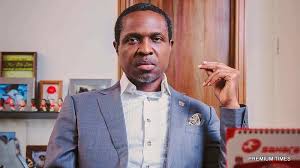
Billionaire Tonye Cole, the River State born boardroom colossus might be experiencing a business downturn for the second time if information at our disposal is anything to go by. The business mogul whose turnaround story was a prayer point to unfortunate entrepreneurs is in trouble again, and this much Enquirermag can reveal.
The man who’s believed to have always been unfortunate went bankrupt in 1998 after he and his business partners invested money into an oil transaction that was cancelled by the incoming administration in Nigeria after the military ruler, Sani Abacha died. He later made it big again and was estimated to be sitting on an oil conglomerate that’s worth $1.4 billion, according to Wealth-X.
But today, 20 years after his bankruptcy story, Tonye Cole’s Sahara Energy is in another deep mess of a whopping N15b (Fifteen Billion Naira only) debt.
According to informed sources, a federal high court sitting in Abuja, the federal capital territory of Nigeria has favoured a winding up petition filed by United Bank for Africa Plc, UBA against a limited liability company, Kepco Energy Resources Nigeria Limited with registered NO.: (RC 6900064) over the inability of the company to pay a debt of N15,221,674,976. In its ruling, the court has ordered that the winding up notice be advertised in the Federal Gazette and in one other National Daily Newspaper.
The order of the court was sequel to an application filed and argued before the court by Barrister Temilolu Adamolekun, in a winding up petition filed before the court, it was alleged that Kepco Energy Resources Nigeria Limited of 14, Colorado Street, Maitama Abuja, Nigeria which is into the business of new electricity distribution, metropolitan electricity search, energy and power generation was desirous of raising capital requirement to fund the acquisition of 70% share of the Egbin Power Plant located at Egbin, Lagos state.
To actualise the acquisition, the company had approached several banks for credit facilities and was bailed out by United bank for Africa to the tune of $35m (Thirty Five Million Dollars) United States Dollars in August, 2013.
As part of the security for the credit facilities granted to the company, another company, Sahara Energy Resources Limited owned by billionaire Tonye Cole executed a sponsor Guarantee Assurances Deed wherein Sahara stood as a corporate Guarantor and undertook to irrevocably and unconditionally pay the bank any unpaid balances /sums owed the bank.
As at the 31st of December 2018, the indebtedness of the company to UBA stood at $42, 282,430,49 which is equivalent to N15,221,674,976.
The bank has made several demands on the company to pay it’s debt but to no avail. The company is insolvent and unable to pay its debt. In the circumstances, it is just and equitable that the company be wound up.
Consequently, Mr. Adamolekun urged the court to grant an order for the advertisement of the petition, as it is imperative that the petition is brought to the notice of all persons desiring to be joined as parties.
In his ruling, the presiding Judge, Justice Inyang Edem Ekwo after listening to the submission of Mr. Adamolekun ordered that the petition against Kepco Energy Resources Company be advertised in the Federal Gazette, in one National Daily Newspaper and one other Newspaper circulating within the Federal Capital Territory, Abuja where the registered office or principal place of business of the company situates.
Thereafter, Justice Ekwo adjourned till 27th of June 2019 for report of compliance.
In a related development, a federal high court sitting in Lagos south West Nigeria had earlier ordered that a winding up petition filed by Barrister Adamolekun on behalf of UBA against Sahara Energy Resources limited, the guarantor of the said loan granted to Kepco Energy Resources Nigeria Limited be advertised, in the Federal Gazette, and one National Daily Newspaper due to the failure of the company to meet its obligation to the bank, in respect of the loan it guaranteed. The petition had since been advertised.
Jite Usman
Culled @enquier magazine




NASRE: Building A Safety Net For Nigeria’s Journalists
At a time when Nigeria’s media industry is strained by economic uncertainty, job instability, and shrinking newsroom resources, the Nigerian Association of Social and Resourceful Editors (NASRE) is redefining professional solidarity. More than a network of editors, it is emerging as a critical support system for journalists navigating an increasingly precarious landscape.
Founded on the principles of welfare, solidarity, and professional growth, NASRE has positioned itself as a responsive and forward-looking body within the media ecosystem. While many professional associations remain focused on advocacy and training, NASRE distinguishes itself by combining these roles with direct and practical support for journalists and their families.
At the core of its mission is a clear proposition that no journalist should be abandoned in times of need. Through financial assistance, targeted outreach, and sustained engagement, the association has supported members facing hardship, as well as widows and families of deceased practitioners. These largely understated interventions have steadily earned NASRE credibility and respect across the industry.
The organisation’s approach reflects a keen awareness of the pressures confronting media professionals, including irregular pay, job insecurity, and limited institutional backing. In such an environment, NASRE’s welfare initiatives are not merely charitable, they are essential.
Beyond welfare, the association is investing in professional resilience. Through collaboration, networking, and knowledge-sharing platforms, it is equipping editors and practitioners to remain competitive in a rapidly evolving digital media space, where adaptability is no longer optional.
Headquartered in Lagos, NASRE continues to broaden its reach, attracting a growing membership united by the need for a more responsive and supportive professional community. Its expansion signals a shift in expectations within the industry, away from symbolic affiliations towards institutions that deliver measurable value.
For many observers, NASRE represents a necessary evolution, a professional body anchored not just in ideals, but in impact. By combining empathy with structure, it offers a model of what media associations can become in challenging times.
As the industry continues to evolve, organisations like NASRE may prove indispensable. In a profession devoted to telling society’s stories, it is ensuring that the storytellers themselves are not left behind.
Oluremi Tinubu Hosts Wife of New IGP, Talks Welfare, Empowerment for Police Families
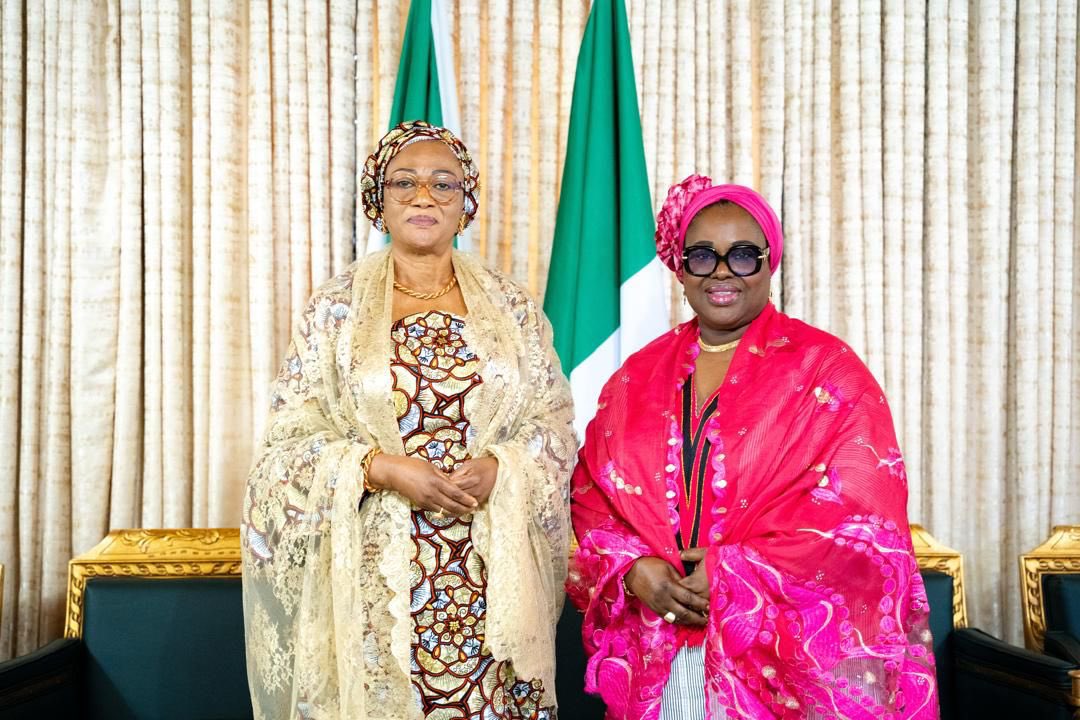
The First Lady of the Federal Republic of Nigeria, Senator Oluremi Tinubu, today welcomed Mrs. Mutiat Disu, wife of the Inspector General of Police, at the State House in Abuja.

During the meeting, the First Lady encouraged Mrs. Disu to continue championing the welfare and wellbeing of police officers’ families, especially through impactful support for their wives.
Speaking after the meeting, Mrs. Mutiat Disu shared her excitement about partnering with the First Lady’s Renewed Hope Initiative (RHI), noting that she is ready to leverage its programs to empower police officers’ wives across the country.
Mrs. Disu, who also serves as the National President of the Police Officers’ Wives Association (POWA), described the meeting as insightful and inspiring. She emphasized her commitment to using RHI platforms to improve healthcare, welfare, and economic empowerment for POWA members nationwide.
“The purpose of this visit is to tap into her wealth of experience and explore how POWA can benefit from her programs,” she said.
She added that her engagement with the First Lady has already provided valuable direction, especially in areas of social intervention and healthcare support for police families.
“I’m ready to work closely with Mama to ensure our women benefit fully, especially since RHI focuses on uplifting women, and POWA is largely made up of women.”
Mrs. Disu assumed leadership of POWA following the appointment of Tunji Disu as Inspector General of Police on February 24, 2026, succeeding Kayode Egbetokun.
Police Day 2026: IGP Disu Leads Nationwide Walkathon To Strengthen Community Trust
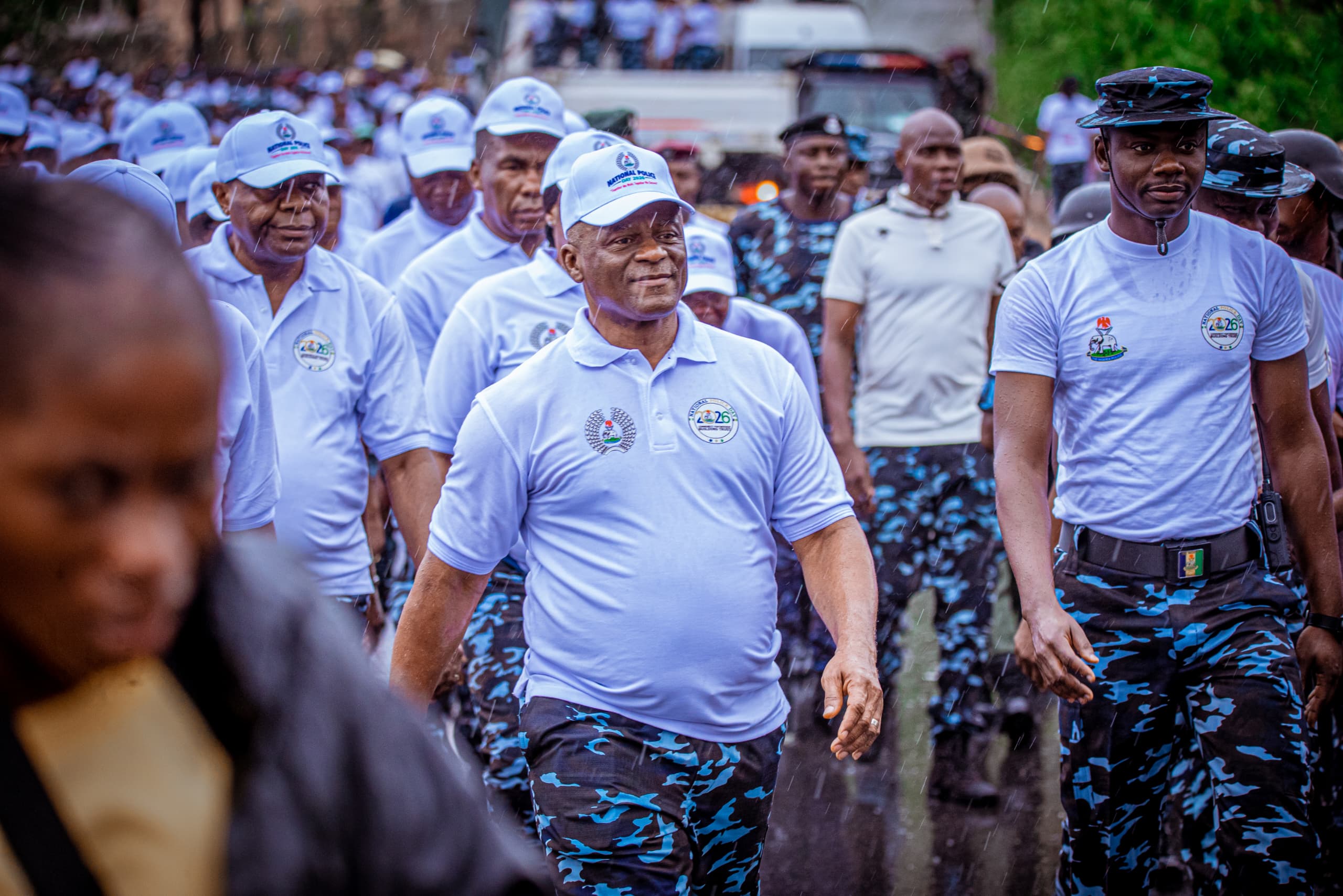
The Inspector-General of Police, Olatunji Disu, on Tuesday led the management team, alongside officers and personnel of the Nigeria Police Force, in a nationwide walkathon to commemorate the 2026 National Police Day.
The event, held across state capitals and the Federal Capital Territory, formed part of activities marking Day Two of the annual celebration, themed “Community Partnership: Building Trust.”
The symbolic exercise, which drew participation from both police personnel and members of the public, was aimed at showcasing unity, discipline, and a renewed commitment to community policing and public safety.
According to the Force leadership, the walkathon underscores the Nigeria Police Force’s resolve to strengthen public trust, deepen engagement with citizens, and enhance collaboration in tackling security challenges across the country.
Participants described the initiative as a practical step toward bridging the gap between law enforcement and the communities they serve, while also promoting physical fitness and mental well-being among officers and civilians alike.
With the theme reflecting a shared responsibility for safety, the Police reiterated that sustainable security can only be achieved through active partnership with the public.
The event concluded with a renewed call for collective action under the banner: “Together We Walk, Together We Secure,” emphasizing unity of purpose in building a safer and more secure society for all Nigerians.


-

 society6 months ago
Religion: Africa’s Oldest Weapon of Enslavement and the Forgotten Truth
-

 news4 months ago
WHO REALLY OWNS MONIEPOINT? The $290 Million Deal That Sold Nigeria’s Top Fintech to Foreign Interests
-

 society6 months ago
“You Are Never Without Help” – Pastor Gebhardt Berndt Inspires Hope Through Empower Church (Video)
-

 celebrity radar - gossips2 months ago
Dr. Chris Okafor Returns with Power and Fire of the Spirit -Mounts Grace Nation Altar with Fresh Anointing and Restoration Grace on February 1, 2026
You must be logged in to post a comment Login
You must log in to post a comment.