
Politics
BIODATA OF HON. PRINCE CHINEDU NSOFOR (KPAKPANDO NDIGBO) FRONT-LINE PDP SENATORIAL ASPIRANT FOR ANAMBRA SOUTH SENATORIAL DISTRICT


BIODATA OF HON. PRINCE CHINEDU NSOFOR (KPAKPANDO NDIGBO) FRONT-LINE PDP SENATORIAL ASPIRANT FOR ANAMBRA SOUTH SENATORIAL DISTRICT
.
Sex: Male
Date of Birth: 24th March, 1990
Marital Status: Married
State of Origin: Anambra State
L.G.A: Ekwusigo
Nationality: Nigerian
Religion: Christianity
PERSONALITY
A visionary leader with a servant-hearted disposition, deeply rooted in the conviction that genuine leadership is first an act of service. From an early stage in life, he embraced the responsibility of contributing meaningfully to society, especially in the development and empowerment of Nigerian youths and students. This passion has consistently shaped his personal and professional journey, guiding his engagement with various institutions and communities across Nigeria.
He possesses a unique blend of humility and initiative, always striving to understand institutional dynamics and tailor innovative solutions to complex challenges. His leadership style is people-centered, inclusive, and adaptive—anchored on strong moral values, emotional intelligence, and a strategic mindset. Whether in grassroots mobilization, policy advocacy, organizational management, or capacity-building, he approaches each responsibility with dedication and foresight.
Politically, he embodies the traits of a transformational servant-leader—someone who understands the pulse of the people and remains committed to participatory governance, equity, and sustainable development. He envisions a system where leadership is not a privilege but a platform for impact, transparency, and national progress. With a deep awareness of Nigeria’s socio-political realities, he advocates for youth involvement in politics, institutional reforms, and inclusive policies that address the needs of the underserved. His track record reflects a consistent pursuit of excellence, community engagement, and nation-building, making him a dependable force for constructive change in any organizational, civic, or political structure.
INSTITUTIONS ATTENDED.
Ladoke Akintola University of Technology Obomosho, Oyo State 2015-2016
Dunamis School of Ministry (January 2016 – June 2016)
University Of Nigeria, Nsukka, Enugu State 2008-2012
Maryrays Secondary School, Fegge Onitsha, Anambra State 2002-2008
Maryrays Primary School, Fegge Onitsha, Anambra State 1996-2002
EDUCATIONAL QUALIFICATIONS
PhD (Social Work in view)
M.sc (Social Work)
B.sc. (Social Work) Second- Class Upper Division
Project Management Training Programme at Abuja Graduate School
Advanced Leadership Training Programme
Strategic Leadership Training
Basic Certificate of Discipleship and Leadership Training Course
Basic Leadership Course
Basic Certificate in Computer Operation AfriHUB Centre UNN.
Senior Secondary School Certificate
Junior Secondary School Certificate
First School Leaving Certificate
PUBLIC SERVICE/ WORK EXPERIENCE
MD/CEO Work While in School Group (Comprising Work While in School Media Ltd, Work While in School Ventures Ltd, Work while in School Construction Company ltd, Work While in School Foundation and other subsidiaries)
Nigeria’s Country Director RapidHeal International (Global headquarters in Malaysia) 14th August 2024 till date
Nigeria’s Programmes Director Asia Pacific Sports International (24th March 2023 till date)
Programmes Director Nigeria Association of Economists (4th April 2022 till Date)
National Coordinator G INITIATIVE (30th March 2022 till date)
Member Management Committee of Global Coalition for Sustainable Environment (17th March till date)
Member Imo State Government’s Committee on Science and Technology Road Map 2020-2030 (December 2020-January 2022).
Special Assistant (Special Duties/Special Projects) to Chief Dr. E.C Iwuanyanwu CFR,OFR,MFR,FNICE,FNIST,FNSE,KSC -AHAEJIAGAMBA NDIGBO (Chairman Ohanaeze Ndigbo Council of Elders) (1st August-24th March 2022)
Board Secretary Iwuanyanwu National Ambulance Foundation 2019-24th March 2022)
National Co-ordinator Iwuanyanwu National Ambulance Foundation (1st August-24th March 2022)
Co-ordinator Iwuanyanwu Foundation (1st August 2017-24th March 2022)
Founder Work While in School Venture Ltd; a company that is currently in partnership with the Federal Government of Nigeria via the National Commission for Colleges of Education (NCCE) for the implementation of Work While in School Programmes in all Colleges of Education in Nigeria.
Coordinator IMOFINTECH Programme for five thousand Imo youths organized by the Imo State Government in partnership with Iwuanyanwu Foundation on October-December 2019
Programme Coordinator of Safety training for Ambulance Drivers in South East Nigeria during COVID19 2021
Coordinator Central Bank of Nigeria-South East Entrepreneurship Development Centre’s Programme; Owerri Study centre. 2018
Programme Coordinator of the Median edition of Inter secondary school debate competition for all secondary schools in Abuja 2018, organized by Federal Road Safety Corps in partnership with Iwuanyanwu National Ambulance Foundation.
Coordinator 2017 Accident free Ember Month Programme of Federal Road Safety Corp (Owerri Safety Command) and Iwuanyanwu National Ambulance Foundation
Programme Coordinator of Imo State and Ebonyi State Free Automobile training Programme organized by Innoson Kiara Academy in partnership with Iwuanyanwu Foundation and Imo and Ebonyi State Governments respectively 2021
Programme Coordinator Free Physiotherapy Treatment Intervention Programme for Arthritis, Neck Pain, Back Pain, Waist Pain Patients in Ikeduru LGA, Imo State on 3rd and 4th Dec. 2021
Programmes Manager El-Bethel Global Business School (14th December 2015-30th September 2017).
Programme Co-coordinator of Chartered Institute of Personnel Management Programme Abuja Study Centre (April 2015-December 14th 2015).
Programme Co-ordinator of 20 days NAPSAS/National Power Training Institute training Abuja May 2015
Programme Co-coordinator National Power Training Institute of Nigeria (NAPTIN)/SURE-P TVET) training for Graduate Engineers held in Lagos (February-March) 2015.
Business Development Executive at Abuja Graduate School-AGS (September 2014-December 14th 2015)
South Eastern Nigeria Advocate/AMAC-FCT Administrative Secretary of Citizens Club of Nigeria ( March 2014-September 2014)
Admin/ Transport Officer at The Presidency SURE-P National Secretariat Abuja (NYSC March 2013-March 2014)
Networks Manager University of Nigeria Book of Fame Project – Who is who in UNN (2011 – till date).
Programme Coordinator of the 2nd Edition of 7 days Work While in School Conference in UNN for about 3000 students organized by Work While in School Foundation, in partnership with Institute of African Studies UNN.
Project Cordinator of Global Impact Show organized by Great Minds International and powered by the Faculty of Social Sciences UNN. 2012
As a student /Igwe of the Faculty of Social Sciences UNN, he organized the Faculty of Social Sciences New Yam Festival in 2010 an event that witnessed the presence of the Senior Special Assistant to the Present FGN on Special Duties/Project who doubled as Secretary Presidential Task Force on Power among other national dignitaries that were present in 2010.
Coordinator of the 1st Work while in School Conference in UNN (2011) for all third year students (over 4,000 students) organized by Work While in School Foundation in collaboration with the Centre for Entrepreneurship and Development Research UNN the programme. The Programme went down on records as the biggest student entrepreneurship conference in the history of UNN, thus Chinedu Nsofor became the first student in the history of UNN to sign an MOU with the University to implement this Initiative and other projects Nationwide.
Coordinator of the 7days African Education and ICT conference by WORKWIS Foundation and Institute of African Studies, UNN (March 2010) the conference attracted the renewal of the N5million Annual scholarship grant of Dr. Sam Onyishi Foundation, including a fifty million naira donation to the University. During the Conference, over 5,000 UNN students across seven selected Faculties were trained in various skills 2011
National Secretary, Odumegwu Ojukwu G24 Forum 2012 till date
National Coordinator/ Board Secretary, Igbo Heroes Foundation 2011 till date
Founder, Work While in School Foundation ( WORKWIS ) Foundation
Member, Centre for Entrepreneurship and Development Research UNN/WORKWIS Foundation Joint committee on Work While in School Projects.2011-2012
Chairman Otu Subakwa Igbo UNN chapter; an association with Prof Pita Ejiofor (former Vice Chancellor of UNIZIK as National President) 2011-2012.
Member, Institute of African studies UNN committee on conferences and seminars 2011-2012
Marketing Manager, SOCIOSCOPE LIVE MAGAZINE (official magazine of the Faculty of Social Sciences UNN, office of the Dean) 2011-2012.
Igwe, Faculty of Social Sciences, UNN 2010-2012
Secretary Youth and Dreams Leadership Forum UNN chapter 2008-2012
President, Press Club Mayrays Secondary School, Fegge Onistha 2007-2008
Labour Prefect, Maryrays Secondary School.,Fegge Onitsha 2007-2008
SKILLS:
My skills include networking and stakeholder engagement, human capacity building, project management, event management, proposal and grant writing, social work and community development, youth mobilization and advocacy, ICT and digital proficiency, entrepreneurial and business development skills, public speaking and communication, financial literacy and management, strategic leadership, political strategy and policy development, legislative and governance knowledge, conflict resolution and mediation, campaign and electoral management, advocacy and public policy engagement, as well as servant leadership and ethical governance.
SPEECHES:
Delivered Inaugural Speech of the 1st University of Nigeria Work While in School Programme held on 5th December, 2011.
Delivered a Module on Entrepreneurship Development during SURE-P GIS training in Enugu State 31stDecember, 2014
Delivered Modules on Entrepreneurship Development in Graduate Internship Scheme of the Federal Ministry of Finance on 7th September 2016 at Bayelsa State.
Delivered a speech on the theme; Work While in School in Entrepreneurship Programme of School of Arts, Alvan Ikoku College of Education Owerri on 17th May 2016.
Delivered a speech on Restructuring; a panacea to peaceful coexistence in Nigeria on Saturday 14th August 2021
BOOKS WRITTEN:
Unaegbu, J., Chukwu, S. & Nsofor, C. (2017). Amazing Grace (A Biography of Chief Dr. Emmanuel Chukwuemeka Iwuanyanwu, CFR, AhaejiagambaNdigbo).
Nsofor C., Unaegbu, J. (2016). Work While in School (the Students with Innovation Guide book)
Nsofor C. (2015) Abuja Graduate School- Chartered Institute of Personnel Management (CIPM) Operations Manual
Nsofor C. (2015) Abuja Graduate School-Chartered Institute of Bankers (CIBN) Operations Manual
Nsofor C. (2015) Operations Manual for coordinating training Programme in Abuja Graduate School
AWARDS/ RECOGNITIONS
Leadership Excellence Award (Rotract Club UNN) 2012
Premier Alumini Award by the Department of Social Work University of Nigeria Nsukka.
Spotlight Medalist on Entrepreneurship (Big Brothers Award) 2011.
Meritorious Service Award (National Association of Social Work Students, UNN) 2012.
Most Acknowledged Personality of the year (History and Archeology Students Association, UNN) 2012.
Most Political Student of UNN (Nigerian Engineering Students Association, UNN) 2012
Most Popular Student Award (National Association of Social Work Students, UNN) 2012.
UNN Raiser of the year Award (Golden Heart Foundation Lagos and Trailblazers UNN) 2011.
His Profile is published in the University of Nigeria Book Of Fame as an outstanding Personality of UNN for his contribution in the development and empowerment of students of UNN (UNN Book of Fame: WHO is WHO in UNN edited by Prof. Alex Animalu, Prof. Sam Onuigbo and Jeff Unaegbu.) 2012.
INNOVATIONS:
WORK WHILE IN SCHOOL INNOVATION
The current educational system in Nigeria stands as a stark deviation from the true essence of what education ought to be. At its core, education is meant to awaken and empower both the hands and the mind nurturing creativity, problem-solving abilities, and the innovative spirit necessary for both personal development and societal transformation.
Unfortunately, the creative dimension of education has been critically eroded within our system today. Graduates are often products of rote learning, trained merely to regurgitate information for the sake of passing examinations. As a result, many leave school mentally underutilized, fit only for routine administrative tasks and incapable of independent thought or innovation. They function more as tools for executing directives than as thinkers or change-makers.
This reality reflects a lingering shadow of the colonial legacy, whose agenda was to produce clerks, secretaries, accountants, and administrative officers individuals conditioned to serve without question, follow without innovation, and replicate without understanding. Education has sadly become a test of memory rather than a test of intelligence, and our institutions continue to produce individuals who have mastered the art of “copy and paste” rather than the skills of critical thinking, innovation, and meaningful engagement with real-world problems.
In light of this, the Work While in School initiative emerges as a bold and visionary response one designed to challenge this flawed status quo. It is not just a program, but a movement aimed at reawakening the minds of students, cultivating creativity, and reigniting purpose in education to the glory of God.
This initiative introduces a well-structured curriculum focused on invention, innovation, and idea generation. It seeks to align practical skill acquisition with each student’s field of study, ensuring that learning is both relevant and empowering. Furthermore, it instills timeless values and godly virtues, shaping students into principled leaders and value-driven individuals true agents of transformation for every age and generation.
HOBBIES
Listening to gospel music, deep worship and prayers, reading inspirational books and the Holy bible, logical reasoning, brainstorming, political discuss, youth empowerment/mobilization.
REFEREES.
Chief Dr. Emmanuel Iwuanyanwu (CFR, OFR, MFR, FNSE, FNICE, FNIST, KSC)
Former Chairman Nigeria Investment Promotion Commission and former Chairman Federal Emergency Management Board
08034209040
Chief Dr Chukwuemeka Ezeife (PhD Harvard, CON)
Former Governor of Anambra State and former Chairman National Commission for Colleges of Education
08033110763
Prof. Osita Ogbu (OON,PhD Howard)
Former Chief Economic Adviser to the President of Nigeria/Former Minister for National Planning
0803 700 2500
MY CAPABILITY STATEMENT
I am a Professional Social Worker and Seasoned Technocrat, armed with a First Degree, Master’s Degree, and currently pursuing a PhD in Social Work. Over the past 12 years, I have dedicated my career to understanding and addressing the root causes of unemployment in Nigeria, and by the special grace of God, I have designed, developed, and executed sustainable job creation and wealth empowerment models that have impacted individuals, communities, and institutions across the country.
My extensive fieldwork and innovative thinking have directly empowered over 50,000 Nigerian youths with actionable skills for self-reliance and wealth generation. Through flagship initiatives such as the Work While in School Programmes in tertiary institutions nationwide, and collaborative empowerment campaigns under the Iwuanyanwu Foundation in partnership with various state governments, I have consistently championed youth productivity and inclusive economic growth.
A notable example of my impact is the successful coordination of the Imo FINTECH Programme, which trained and equipped 5,000 Imo youths to participate in the digital financial services sector. Many of the beneficiaries have become successful mobile money agents, contributing to the decentralization of the financial sector and drastically reducing unemployment in the region.
I am divinely endowed with wisdom and strategic foresight, possessing what many have called a Midas touch—the ability to transform systemic challenges into tangible opportunities and sustainable prosperity. My strengths lie in my versatility and innovative mindset, sharpened through professional training and mentorship in Social Work, Business Development, Project Management, and Organizational Leadership.
My track record spans across prestigious organizations and government initiatives, including the Nigeria Association of Economists, Global Coalition for Sustainable Environment, G Initiative, Iwuanyanwu Foundation, South East Entrepreneurship Development Centre/CBN Imo Study Centre, Imo State Science and Technology Roadmap Committee (2020–2030), Work While in School Foundation, Abuja Graduate School, El-Bethel Global Business School, and the Federal Government’s Subsidy Reinvestment and Empowerment Programme (SURE-P), among others.
Politically, I represent the embodiment of transformational leadership and servant governance. I believe leadership is a sacred trust—a platform for national renewal and social inclusion. My work reflects a grassroots-to-policy approach, combining field-based experience with strategic advocacy to influence state and national policy directions, especially on youth empowerment, education, employment, and digital innovation.
As I continue to serve, I remain committed to mobilizing youth-driven political participation, bridging the gap between citizens and government, and driving sustainable development through policies that create jobs, build human capital, and ignite the entrepreneurial spirit of our nation.
SIGNED
CHINEDU NSOFOR BSc. MSc.
A Professional Social Worker, a Seasoned Technocrat and a Disruptive Change Agent
Front-line PDP Senatorial Aspirant for Anambra South Senatorial District




Politics
APC Group Endorses Fubara for 2027, Calls on Tinubu and APC to Prioritise Performance Over Politics in Backing Governor’s Second Term Ambition
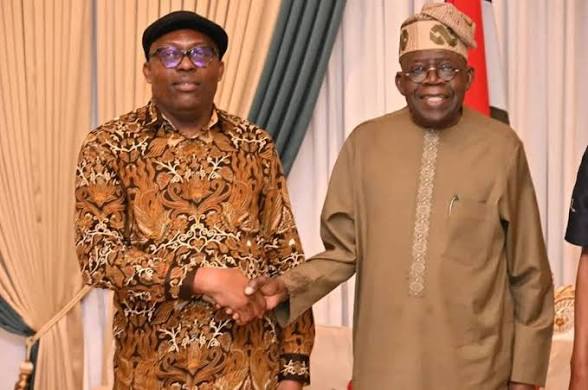
*APC Group Endorses Fubara for 2027, Calls on Tinubu and APC to Prioritise Performance Over Politics in Backing Governor’s Second Term Ambition*
The APC National Vanguard has appealed to President Bola Ahmed Tinubu and the leadership of the All Progressives Congress (APC) to support a second term in office for Siminalayi Fubara, citing what it described as “impressive and verifiable developmental strides” across Rivers State.
In a statement issued on Thursday by its National President, Dr Gbenga Salam (JP), the group said its position followed an extensive assessment tour of key infrastructure and public service projects executed under the Fubara administration.
The APC National Vanguard said the appeal was based strictly on performance, arguing that governance outcomes should outweigh partisan considerations, particularly in a state as economically significant as Rivers.
“We respectfully urge President Bola Ahmed Tinubu and the leadership of the All Progressives Congress to support the continuity of Governor Siminalayi Fubara beyond his current tenure, in recognition of his commitment to development, prudent resource management, and people-focused governance,” the statement read.
According to the group, its delegation visited multiple project sites across the state, observing ongoing and completed works spanning road construction, urban renewal, and public infrastructure upgrades.
It noted that the scale and distribution of these projects reflect a deliberate effort by the state government to extend development beyond traditional urban centres and into underserved communities.
“Our findings from the tour reveal a government that is not only active but intentional in its development agenda. The execution of capital projects across various parts of Rivers State demonstrates a clear understanding of the needs of the people and a commitment to addressing them,” Dr Salam said.
The group particularly commended what it described as prudent financial management by the administration, noting that the projects reviewed showed evidence of careful planning and efficient allocation of resources.
“At a time when economic pressures are evident across the country, it is commendable that the Rivers State government has managed its resources in a way that delivers visible and impactful development without signs of fiscal recklessness,” the statement added.
The APC National Vanguard further observed that despite political tensions in the state, the Fubara administration has maintained focus on governance, ensuring continuity in project execution and service delivery.
The group argued that such stability is critical for sustained development and should be encouraged rather than disrupted.
“Leadership must ultimately be judged by results. In Rivers State, there is clear evidence of progress—projects that are not only announced but executed, and policies that translate into real benefits for citizens,” Dr Salam noted.
The group warned that discontinuity in leadership could stall ongoing projects and reverse gains already recorded, stressing the importance of allowing a performing administration to consolidate its achievements.
“Rivers State is at a pivotal stage where continuity will allow for the completion of ongoing initiatives and the deepening of development gains. Supporting Governor Fubara for a second term is, therefore, a decision in the best interest of the people,” the statement said.
In addition to its call on the APC leadership, the group reaffirmed its support for President Tinubu, expressing confidence in his administration’s broader economic and governance reforms.
The APC group urged Nigerians to remain supportive of efforts aimed at stabilising the economy and strengthening public institutions.
“We reiterate our endorsement of President Bola Ahmed Tinubu for a second term in office, in recognition of his leadership and commitment to national development. With sustained support, the administration can consolidate its reform agenda for the benefit of all Nigerians,” Dr Salam added.
The APC National Vanguard concluded by calling on political actors to prioritise development and public interest over partisan divides, insisting that governance should always be guided by performance and accountability.
“Where leadership demonstrates prudence, delivers development, and remains focused on the welfare of the people, it deserves continuity. This is the position we have reached after a careful and independent assessment of Rivers State,” the statement added.
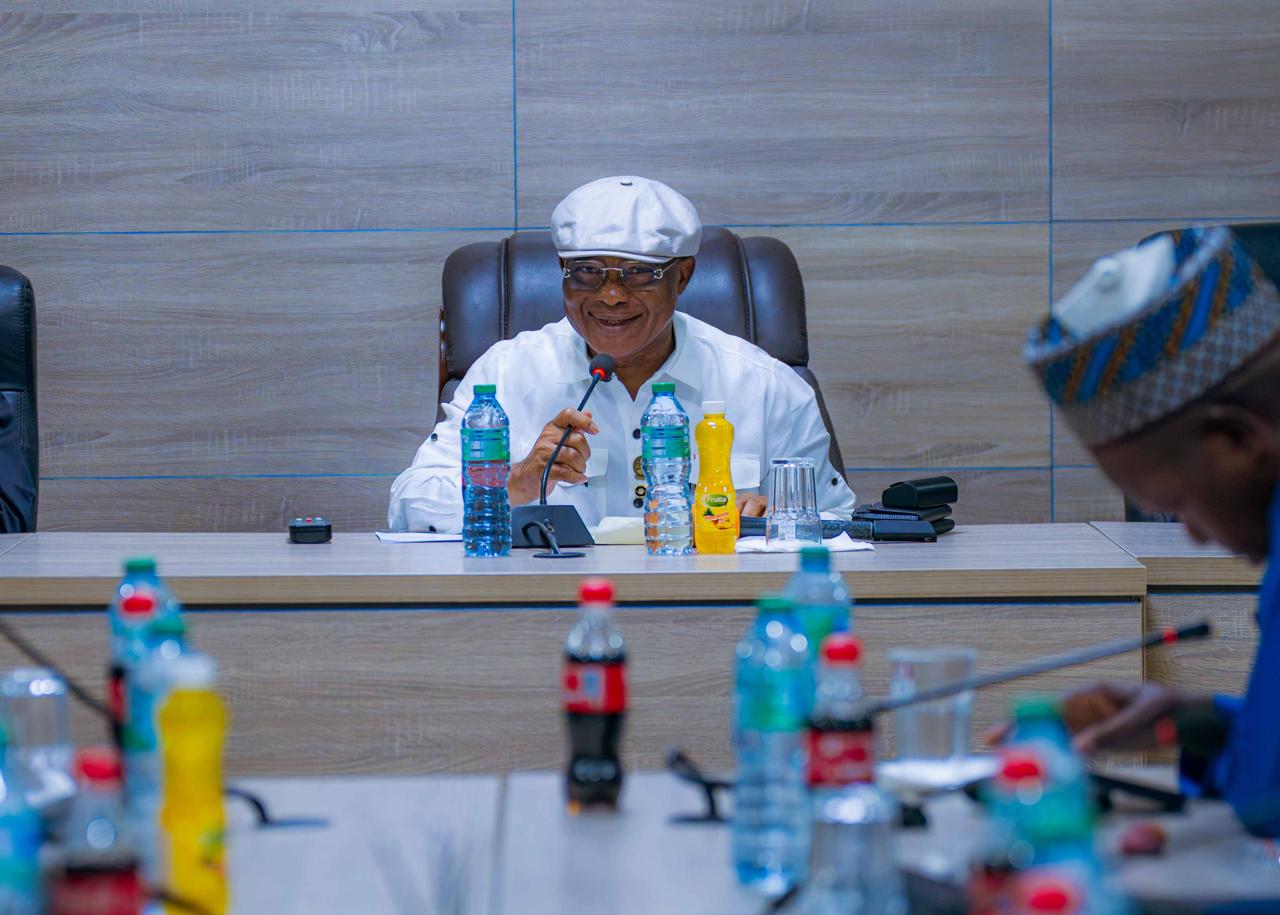
*Renewed Hope Ambassadors Step Into the Next Phase
Fresh from the successful APC 2026 National Convention, the Renewed Hope Ambassadors National, Zonal, and State leadership gathered in Abuja over the weekend, for its fourth strategic meeting, setting the tone for nationwide grassroots activation ahead of 2027.
Chaired by Governor Hope Uzodinma (Imo State) the Director General and National Coordinator of the Renewed Hope Ambassadors, alongside Deputy Director-General, Governor Uba Sani of Kaduna State, and Governor Inuwa Yahaya of Gombe State as Secretary, the session reinforced one clear direction: One Party. One Message. One Mobilization whilst also laying out a strategic roadmap for the activation of the network across all communities in Nigeria.
Backed by the strength of 31 APC-led states, the Renewed Hope Agenda is taking Bola Ahmed Tinubu’s message of progress and reform to every corner of Nigeria.
From bold economic restructuring to initiatives like NELFUND, the increase in the national minimum wage from ₦30,000 to ₦70,000, and strategic investments in critical sectors, including PNiCGI, the mission remains clear: helping Nigerians understand both the purpose and the progress of the Renewed Hope vision.
This is coordination at scale. This is grassroots engagement with purpose. This is the next phase of Renewed Hope with One Party, One Message, and One Mobilisation framework
#RenewedHopeAmbassadors #APC #WeAreAPC


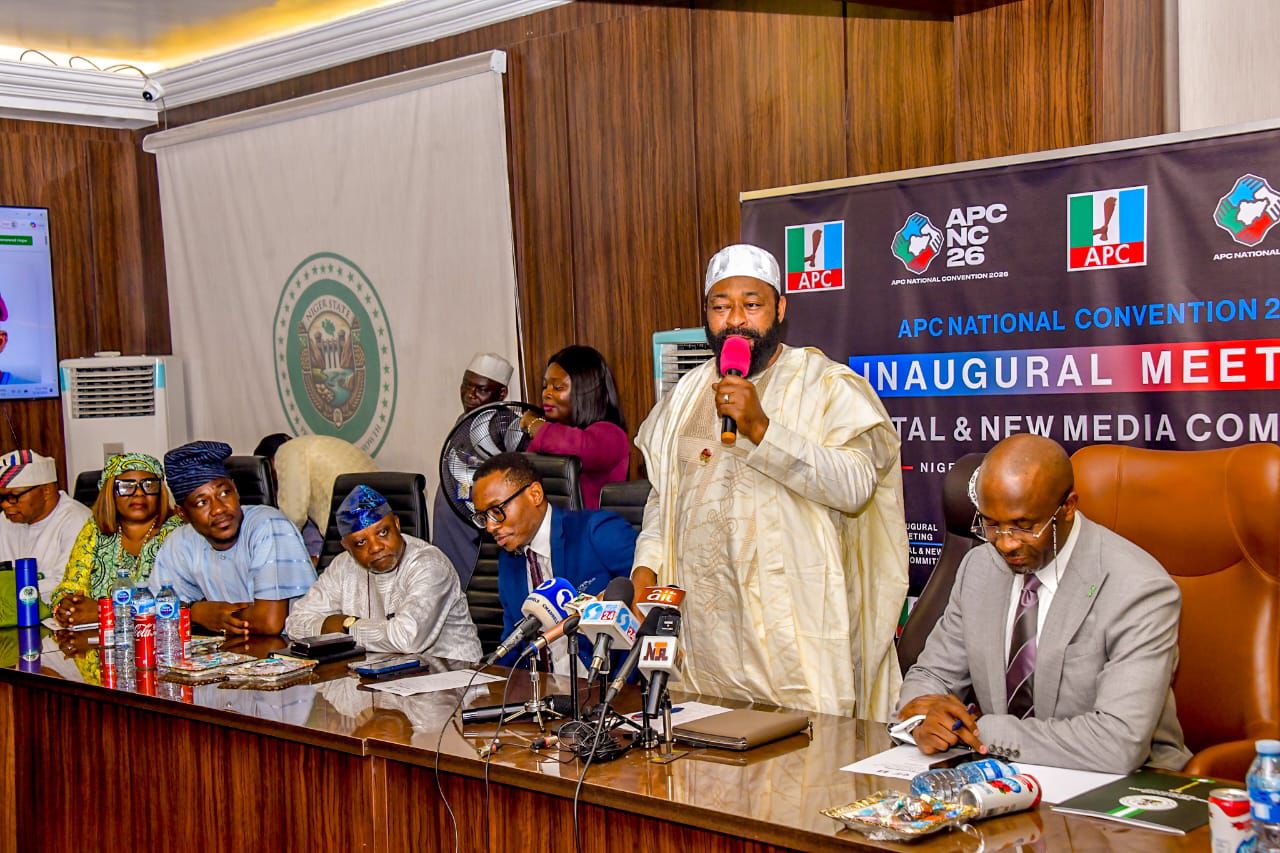
Governor Bago Inaugurates APC Digital Media Sub-Committee Ahead of National Convention.
Governor Umaru Bago has inaugurated the Digital Media Sub-Committee for the forthcoming National Convention of the All Progressives Congress (APC), scheduled to hold on March 27 and 28, 2026 in Abuja.
Chairing the sub-committee, Governor Bago tasked members with the responsibility of effectively communicating the party’s manifesto to the public.
He emphasized the need to leverage social media platforms to highlight the achievements and ongoing efforts of President Bola Ahmed Tinubu, noting that communication gaps have posed challenges that must now be decisively addressed.
The Co-Chair of the sub-committee, Hon. Benjamin Kalu, Deputy Speaker of the House of Representatives, echoed the Governor’s position, urging members to project the activities of both the party and the government to a broader audience.
He called for a deliberate and coordinated effort to showcase the party’s achievements and policy direction, stressing the importance of shaping a compelling and consistent narrative across all digital platforms.
Delivering a presentation to the committee, Otega Ogra, SSA to the President on New Media, who serves as Secretary of the sub-committee, outlined strategic focus areas to guide the team’s operations.
His presentation highlighted communication priorities and actionable steps to achieve the committee’s mandate and strengthen the party’s digital engagement.


-

 society7 months ago
Religion: Africa’s Oldest Weapon of Enslavement and the Forgotten Truth
-

 news4 months ago
WHO REALLY OWNS MONIEPOINT? The $290 Million Deal That Sold Nigeria’s Top Fintech to Foreign Interests
-

 society6 months ago
“You Are Never Without Help” – Pastor Gebhardt Berndt Inspires Hope Through Empower Church (Video)
-

 celebrity radar - gossips2 months ago
Dr. Chris Okafor Returns with Power and Fire of the Spirit -Mounts Grace Nation Altar with Fresh Anointing and Restoration Grace on February 1, 2026