
Business
Black Gold and Red Tape: The Legal Siege of Nestoil’s Assets

–Opaque Finance or Hostile Takeover? Nestoil challenges FBNQuest’s asset freeze over disputed $1bn claims
…Experts warn Nigeria risks scaring off global investors if fiduciary transparency collapses
Beneath the sun-scorched oilfields of OML 42, a high-stakes corporate drama is unfolding—one that could redefine confidence in Nigeria’s financial and judicial systems. At its center is a contentious $1 billion dispute involving Nestoil Limited, FBNQuest Merchant Bank, and a syndicate of lenders. What began as a routine request for clarity has morphed into a tangle of bank statements, ex parte court orders, and contested liabilities that now threatens investor sentiment in Africa’s largest economy.
For months, Nestoil says it repeatedly requested statements of account from FBNQuest and its lending partners to reconcile disputed figures exceeding $1.01bn and ₦430bn. Emails dating from February to June 2024, the company alleges, were ignored. That silence, Nestoil argues, was not a clerical lapse but a breach of fiduciary duty at a moment when transparency was critical.
As Facility Agent for the syndicated loan, FBNQuest is obligated to coordinate communication, monitor repayment schedules, and maintain accurate, accessible records. Instead, Nestoil says, the bank sidestepped these duties and raced to court. Without furnishing the requested statements, FBNQuest secured ex parte Mareva and receivership orders that froze Nestoil’s assets and shareholdings. These sweeping orders, Nestoil contends, were obtained without due process and executed while the company was actively seeking clarification.
In its court filings, Nestoil insists the debt figures relied on by FBNQuest are “incorrect and lack any proper basis.” The company is now mobilizing ten local and international forensic auditors to comb through its bank accounts nationwide—a decisive step aimed at uncovering the truth behind the disputed claims. “Only a proper forensic reconciliation would reveal whether we are indebted, and the precise amount, if any,” the company maintains.
Observers have raised eyebrows at the timing of FBNQuest’s move. Neconde, the Nestoil subsidiary tied directly to the facility, recently rebounded in production at OML 42 after years of setbacks. With renewed revenue flows, insiders argue, the asset has become a lucrative target. One source familiar with the matter went further: “This is an attempted hostile takeover of a producing oil asset,” suggesting that the legal escalation may be driven by motives beyond debt recovery.
The Mareva and receivership orders have already disrupted operations. Neconde’s production, logistics, and contracts remain frozen. The ripple effects have drawn the attention—and legal challenges—of foreign lenders and major banks with exposures to Neconde. Their filings raise broader questions about the neutrality of facility agents and security trustees, especially when such entities are affiliates of domestic lenders.
Seasoned bankers warn that the implications extend far beyond this dispute. In a financial ecosystem where trust underpins investment, the perception that facility agents can weaponize their role to seize assets sends a chilling signal. “If agents can turn adversarial under the guise of enforcement, global financiers will hesitate to fund indigenous companies,” one senior banker warned.
The legal issues are no less complex. Neconde insists its inclusion in FBNQuest’s orders is unlawful given its ongoing Federal High Court proceedings. Legal experts emphasize the need for caution when issuing ex parte orders in strategic industries like oil and gas. While such orders aim to preserve assets, they can destroy value—halting production, stalling payrolls, and endangering jobs. “Justice should not become a tool for asset conquest,” a Lagos-based commercial lawyer said.
Financial analysts argue the dispute exposes structural vulnerabilities in Nigeria’s banking system. Facility agents and trustees wield enormous power in syndicated loans, yet the regulatory oversight governing transparency and fairness appears insufficient. With Nigeria aggressively courting foreign investment in energy and infrastructure, cases like this risk eroding already fragile investor trust.
The human consequences are equally real. Beyond boardroom statements and court filings, the freeze impacts workers, contractors, and local communities dependent on OML 42. Production halts can delay salaries and disrupt local economies—raising the stakes of judicial restraint and responsible banking practices.
From a governance standpoint, Nestoil’s move to engage forensic auditors signals a commitment to transparency amid uncertainty. It underscores the need for rigorous record-keeping, independent verification, and clearly defined obligations in multi-party financing arrangements. If anything, the company’s stance is helping set a benchmark for corporate accountability in Nigeria’s financial landscape.
This dispute is also reshaping how facility agents are perceived. Meant to mediate between borrowers and lenders, these agents risk losing legitimacy if allegations of information asymmetry and opportunistic asset seizure hold weight. Transparent communication and adherence to fiduciary obligations are essential—not optional.
The broader system faces its own moment of reckoning. Without stronger regulatory oversight, clearer judicial guidelines, and stricter enforcement of fiduciary duties, similar crises may recur. For a country striving to present itself as a stable investment destination, the damage could be severe.
As the courts, banks, and auditors proceed, the outcome of this dispute will send a powerful message about Nigeria’s commitment to fairness, transparency, and due process. The battle over the $1 billion loan is more than a corporate disagreement; it is a test of the credibility of Nigerian institutions.
In the shadows of OML 42—where black gold flows and fortunes rise or fall—the Nestoil–FBNQuest conflict is a study in accountability, strategy, and the fragility of trust. It will be remembered not only for its legal twists, but for what it reveals about Nigeria’s financial architecture, the dangers of unchecked authority, and the resilience of indigenous companies navigating complex financial terrain.
For investors, bankers, and policymakers, the message is unmistakable: transparency is non-negotiable, fiduciary duties must be honored, and due process cannot be circumvented. Nigeria’s investment climate—and its global reputation—depends on it.





Fidelity Bank grows gross earnings by 38% to N434.95b in Q1
Fidelity Bank Plc recorded 37.9 per cent growth in gross earnings to N434.95 billion in first quarter 2026 as the international commercial bank continued to expand its core banking market share.
Interim report and accounts of Fidelity Bank for the three months ended March 31, 2026 released at the Nigerian Exchange (NGX) showed that gross earnings rose from N315.42 billion in first quarter 20025 to N434.95 billion in first quarter 2026, representing an increase of 37.9 per cent.
The top-line performance was driven by impressive growth in the bank’s core business operations with interest incomes rising by 22.8 per cent to N314.48 billion in first quarter 2026 as against N256.10 billion in first quarter 2025.
With net interest income at N180.97 billion, the bank closed the period with profit before tax of N92.48 billion. After taxes, net profit stood at N74.47 billion for the three-month period. Earnings per share remained high at N5.69, underlining the capacity of the bank to reward its shareholders.
The balance sheet of the bank also emerged stronger. Total assets crossed the N11 trillion mark to N11.35 trillion by March 2026 compared with N10.46 trillion recorded in December 2025. Customers’ deposits increased from N6.89 trillion to N7.38 trillion. Total equity rode on the back of earnings growth to a 27.5 per cent increase from N1.09 trillion in December 2025 to N1.39 trillion by March 2026.
The first quarter 2026 results further consolidated the strong earnings outlook of the bank, which had successfully completed its recapitalisation amidst impressive earnings performance in 2025.
Fidelity Bank had recorded double-digit growths in interest and non-interest incomes as well as key balance sheet items during the year ended December 31, 2025.
The audited report showed that gross earnings rose from N1.04 trillion in 2024 to N1.52 trillion in 2025, an increase of 45.6 per cent. Interest and similar incomes had grown by 38.7 per cent from N803.1 billion in 2024 to N1.11 trillion in 2025. Fees and commission incomes also rose by 44.7 per cent from N78.4 billion to N113.4 billion. The bank recorded net profit after tax of N242.4 billion in 2025.
The bank’s balance sheet emerged stronger with total assets rising by 18.6 per cent to N10.46 trillion in 2025 as against N8.82 trillion in 2024. Customer deposits increased by 16.1 per cent from N5.94 trillion to N6.89 trillion, reflecting continued franchise strength and an improved funding profile. Net loans and advances meanwhile declined by 2.4 per cent to N4.28 trillion in 2025 as against N4.39 trillion in 2024, attributable to customers paying down on their mature obligations.
The bank had in 2025 strengthened its capital position, with eligible capital rising to N561 billion, above the regulatory minimum of N500 billion for banks with international authorisation. In addition, capital adequacy had remained robust, with Capital Adequacy Ratio of 30.94 per cent by December 2025 as against 23.47 per cent by December 2024.
Managing Director, Fidelity Bank Plc, Dr. Nneka Onyeali-Ikpe, said the first quarter 2026 results reinforced the bank’s strong and resilient business model.
She noted that with the remarkable success of its recapitalisation programme and continuing expansion, Fidelity Bank has entered a new era of growth and impressive returns.
“We are on a stronger footing and confident that we will set new growth records that are reflective of our legacy and the future we are working on,” Onyeali-Ikpe said.
Business
Dangote Refinery Ends Nigeria’s Era of Fuel Import Dependence, Boosts GDP, FX Earnings — EIU
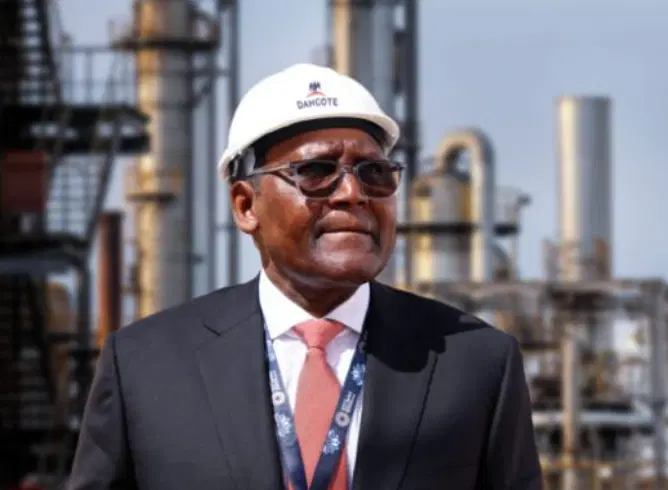
Dangote Refinery Ends Nigeria’s Era of Fuel Import Dependence, Boosts GDP, FX Earnings — EIU
The operational ramp up of the 650,000 barrels per day Dangote Petroleum Refinery & Petrochemicals is fundamentally reshaping Nigeria’s downstream oil sector, significantly reducing the country’s dependence on imported refined petroleum products and strengthening its external position, according to the Economist Intelligence Unit (EIU).
In its latest assessment on Nigeria’s fuel market and regulatory environment, the EIU said the refinery has already transformed a sector that was previously characterised by heavy reliance on imported fuel despite Nigeria being Africa’s largest crude oil producer. The report noted that the refinery met nearly 80 per cent of domestic petrol demand in April and produced enough volumes to satisfy local consumption requirements as operations approached full capacity.
The EIU described Nigeria’s downstream petroleum sector before the refinery as “long dysfunctional”, noting that the country had remained almost entirely dependent on costly imported fuel while producing nearly 1.5 million barrels of crude oil daily.
According to the report, the emergence of the refinery has reduced import dependence, improved domestic fuel availability and strengthened Nigeria’s balance of payments position through lower import demand and rising exports of refined petroleum products.
“The gradual ramp up of the 650,000 barrel/day Dangote refinery since May 2023 has transformed Nigeria’s long dysfunctional downstream sector,” the report stated. “The country’s main refineries, all state owned, had been inoperative for years and Nigeria was almost entirely reliant on costly imported fuel.”
The research and analysis division of The Economist Group, London added that the refinery’s attainment of full operational capacity and its planned expansion would further support Nigeria’s economic growth and foreign exchange earnings over the medium term.
“Meanwhile, the attainment of full capacity at, and an increase in exports from, the Dangote refinery will support real GDP growth and foreign exchange earnings in 2026 and 2027 and beyond, as a planned doubling of the plant’s output comes on stream around the end of the decade,” it added.
Industry analysts said the refinery is increasingly positioning Nigeria as an emerging refining and export hub, altering energy trade flows across Africa and reducing the vulnerability associated with fuel import dependence.
The EIU noted that the refinery’s expansion has coincided with major reforms in Nigeria’s downstream sector, including the removal of fuel subsidies and the introduction of market driven pricing mechanisms.
The report, however, said the transition from a state dominated fuel import structure to large scale domestic refining has triggered resistance from interests linked to the old import regime.
The latest tensions emerged following the decision by the Nigerian Midstream and Downstream Petroleum Regulatory Authority to relax restrictions on petrol imports despite the refinery’s growing capacity to meet domestic demand.
Dangote Industries subsequently initiated legal action, arguing that continued import approvals undermine domestic refining investments and conflict with the objectives of the Petroleum Industry Act, which seeks to encourage local refining capacity and reduce import dependence.
Analysts noted that the availability of large-scale domestic refining capacity has improved Nigeria’s energy security and reduced exposure to external supply shocks and foreign exchange volatility.
The Centre for the Promotion of Private Enterprise also cautioned against unrestrained importation of petroleum products, warning that such a policy could weaken Nigeria’s industrialisation drive and discourage investments in domestic refining.
Chief Executive Officer of CPPE, Muda Yusuf, said continued dependence on imported fuel had historically contributed to pressure on foreign reserves, exchange rate instability and fiscal leakages.
The refinery’s growing impact is also being reflected in Nigeria’s broader macroeconomic indicators. Earlier this month, S&P Global Ratings cited increased domestic refining capacity and rising hydrocarbon exports among the major factors supporting Nigeria’s sovereign credit rating upgrade – the first in 14 years.
Beyond Nigeria, analysts said the refinery is increasingly being viewed as a strategic industrial asset for Africa, where many countries remain heavily dependent on imported fuel despite rising demand for transportation, manufacturing, and power generation.
Business
BREAKING: Court Dismisses $19.6 Million Claim Against NNPCL — Rules Contract Scope Cannot Be Changed Orally
BREAKING: Court Dismisses $19.6 Million Claim Against NNPCL — Rules Contract Scope Cannot Be Changed Orally
In a landmark ruling on Friday, May 22, 2026, the Federal Capital Territory High Court in Abuja threw out a $19.6 million lawsuit filed by Alternate Dimensions Ventures Ltd against the Nigerian National Petroleum Company Limited (NNPCL), affirming a key legal principle: a written contract cannot be expanded through oral agreements or conduct.
Alternate Dimensions had sought $19,600,000 in professional fees, claiming the scope of its Direct Sale, Direct Purchase (DSDP e-pro) contract with NNPCL was orally expanded. Represented by counsel Patrick Peter, the firm argued it was entitled to the revised sum for services rendered under the alleged new terms.
But NNPCL, through its lawyer Ituah Imhanze of KENNA LP, pushed back sharply, arguing that parties are bound exclusively by the clear terms of their written agreement. Imhanze contended that without any written amendment, the claim was legally unsound, and the court agreed.
Delivering judgment, Justice Hamza Mu’azu upheld NNPCL’s defense, stating that the contract was unambiguous and that no evidence was adduced during the trial, which supported the alleged scope expansion. The court further found that NNPCL fully complied with all contractual terms and committed no breach.
Dismissing the suit as meritless, Justice Mu’azu reinforced the doctrine of sanctity of contract: any amendment to a written agreement must be express, unequivocal, and documented, not implied or verbal.
The ruling spares NNPCL from the S19.6 million claim and also a floodgate of similar potential liabilities.


- Africa Centres for Disease Control and Prevention (Africa CDC) Statement on Attacks Against Health Facilities During the Bundibugyo Virus Disease Response in the Democratic Republic of the Congo June 1, 2026
- Putting consumers at the centre of Africa’s dairy transformation June 1, 2026
- International Rescue Committee (IRC) warns Democratic Republic of the Congo (DRC) Ebola outbreak likely far larger than official figures suggest June 1, 2026
- South Africa: Portfolio Committee on Health Marks National Cancer Survivor Day and Reaffirms Importance of Early Detection and Public Awareness June 1, 2026
- Rwanda’s RSSB Tigers Crowned 2026 Basketball Africa League Champions June 1, 2026
- Uganda: Appointments Committee Begins Vetting of Ministerial Nominees June 1, 2026
- Sudan braces for worsening child malnutrition as pre-harvest season starts June 1, 2026
- Etu Energias Strengthens Angolan Footprint, Returns to Angola Oil & Gas (AOG) 2026 as Champion Sponsor June 1, 2026
- PayAngel Expands Global Payout Capabilities Through Collaboration with Visa and Currencycloud June 1, 2026
- From Commitment to Classrooms: Advancing Refugee Education through the United Nations High Commissioner for Refugees (UNHCR)–TECNO’s Global Partnership June 1, 2026
- Africa Centres for Disease Control and Prevention (Africa CDC) Statement on Attacks Against Health Facilities During the Bundibugyo Virus Disease Response in the Democratic Republic of the Congo June 1, 2026
- Putting consumers at the centre of Africa’s dairy transformation June 1, 2026
- International Rescue Committee (IRC) warns Democratic Republic of the Congo (DRC) Ebola outbreak likely far larger than official figures suggest June 1, 2026
- South Africa: Portfolio Committee on Health Marks National Cancer Survivor Day and Reaffirms Importance of Early Detection and Public Awareness June 1, 2026
- Rwanda’s RSSB Tigers Crowned 2026 Basketball Africa League Champions June 1, 2026
- Uganda: Appointments Committee Begins Vetting of Ministerial Nominees June 1, 2026
- Sudan braces for worsening child malnutrition as pre-harvest season starts June 1, 2026
-

 news6 months ago
WHO REALLY OWNS MONIEPOINT? The $290 Million Deal That Sold Nigeria’s Top Fintech to Foreign Interests
-

 society4 weeks ago
SOCIAL MEDIA IS NOT A BATTLEFIELD COMMAND – WHY THE NIGERIAN ARMY’S ACTION AGAINST JUSTICE CRACK IS A NATIONAL SECURITY IMPERATIVE
-

 celebrity radar - gossips4 months ago
Dr. Chris Okafor Returns with Power and Fire of the Spirit -Mounts Grace Nation Altar with Fresh Anointing and Restoration Grace on February 1, 2026
-

 celebrity radar - gossips6 months ago
Prophet Kingsley Aitafo Releases 2026 Prophecy: ‘Nigeria Will Rise, but the World Must Prepare for Turbulence’