
Politics
COVID-19: Buhari extends eased Restriction for Another two weeks ( Full Speech)

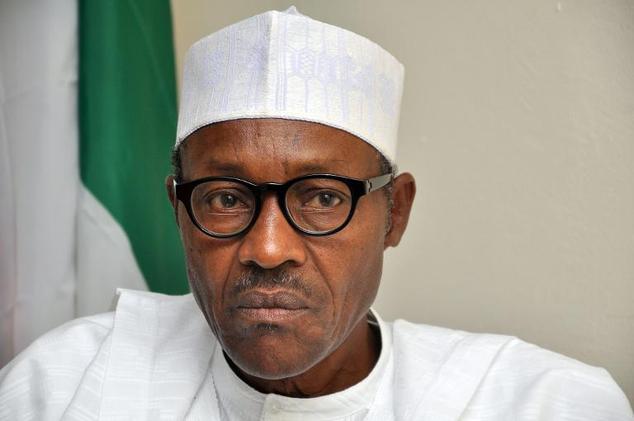
REMARKS BY THE SECRETARY TO THE GOVERNMENT OF THE FEDERATION/CHAIRMAN OF THE PTF ON COVID-19 AT THE NATIONAL BRIEFING OF MONDAY 18TH MAY, 2020
I welcome you to the National Briefing by the Presidential Task Force (PTF) on COVID-19 for Monday, 18th May, 2020.
2. Today’s briefing is significant as it provides us an opportunity to assess progress made in the first phase of our three-pronged strategy and communicate Mr. President’s directive on the next step of our National Response to the COVID-19 pandemic.
3. At the commencement of our national response, we informed Nigerians that the COVID-19 pandemic is the greatest public health challenge of our generation.
4. The PTF also developed a multi-sectoral national response bearing in mind the fact that we were traversing uncharted territories and that there was no cure for the virus.
5. As at date, the President has addressed the nation three times, to underscore the seriousness of the situation. On each of those occasions, he pronounced measures aimed at containing and controlling the spread of the disease.
6. Some of these measures introduced in phases and modified as we progressed, include lockdown of specified high burden areas, travel ban, nationwide curfew, as well as advisories aimed at escalating our infection, prevention and control strategies.
7.In the national broadcast of 27th April, 2020, Mr. President announced a phased and gradual easing of the lockdown in Lagos and Ogun States as well as the Federal Capital Territory along with additional nationwide measures aimed at ensuring that our economy continued to function within the limiting constraints posed by COVID-19 pandemic.
8.While maintaining a delicate balance between safety and economic survival in a precarious situation, Mr. President focused on achieving the following:
i. Ensuring that socio-economic difficulties experienced during the total
Lockdown were alleviated without compromising safety;
II. Allowing the Healthcare sector to continue preparing the identified metrics needed to manage the response and any potential future outbreak nationwide; and
III. Increasing the sensitization of the populace and empowering communities to start driving the response through taking personal responsibility by adhering to stated guidelines.
9.Achieving the foregoing objectives was predicated on adherence to the guidelines issued by the PTF COVID-19, adaptation and cooperation by the States, ownership by communities as well businesses, professional bodies, labour leaders, faith-based organisations, traditional rulers and particularly, individuals taking responsibility.
10.The PTF continued to assess the level of compliance with the guidelines which came into effect on 4th May, 2020. While emphasising ownership, we consistently shared some aspects of the assessment during our daily national briefings pointing in the general direction of non-compliance.
11.Nevertheless, we are pleased to inform you that measures put in place yielded sufficient progress that requires consolidation to ensure that the health system and economy are in a position to adequately respond to any potential outcomes in the future – including a secondary outbreak.
12.The gradual re-opening of the economy has been sign-posted by the controlled opening, and increased access to markets and supermarkets, Banks and other income
yielding activities for the vulnerable population. Similarly, Corporations and Government offices partially opened their operations and services so as to facilitate the activities of other sectors.
13.Some manufacturing, construction and allied sectors also resumed. All these sectors ensured that adequate infection mitigation measures were put in place.
14.In recognition of the global impact of COVID-19 on economies and the need to stimulate and positively turn around our economy, the Federal Government has been implementing various stimulus packages offered to businesses and state Governments through the CBN. These include:
i. Reduction of interest rates from 9 percent to 5 percent for all CBN intervention facilities;
ii. Restructuring of loans to longer tenors for all companies whose businesses are adversely impacted by COVID-19;
iii. N50billion facilities to household and businesses adversely impacted by COVID-19 through NIRSAL Micro Finance Bank;
iv. N100bn facility to Pharmaceutical and health sectors companies to retool their businesses;
v. N1 trillion facility to Agric and Manufacturing companies to expand and set up new factories; and
vi. Suspension of repayment of all state government loans for one year to give states ample financing room to pay salaries.
15.Within the two weeks of phase One of the eased lockdown, the following accomplishments were also recorded:
i. Increase in the number of laboratories in the COVID-19 network from 15 to 26;
ii. Additional 15,558 tests were conducted in the country (with a cumulative total of 35,098 tests and the number of tests per million increasing from 50 to 154;
iii. Increase in the number of trained personnel to 11,409 health workers thereby boosting capacity for case management;
iv. Procurement and distribution of additional personal protective equipment and ventilators across the country;
v. The doubling time of the virus has slowed down from 7 days to 11 days;
vi. The number of beds available for isolation and case management increased from 3500 to 5000 beds nationwide;
vii. The efficiency of the identification, testing, evacuation, and isolation process for confirmed cases has increased; and
viii. progressive improvement in capacity of the health system to respond to the outbreak.
16. In mobilising all sectors and communities to take individual and collective responsibility in the fight against the pandemic in our National Response, the PTF-COVID-19 remains highly appreciative of the efforts of the private sector, public spirited Nigerians, corporate organisations, the armed forces, intelligence and security community, the media, as well as the International Community for their unquantifiable support in the battle against the COVID-19. The response has been overwhelming and encouraging.
17. Last week, the Office of the Accountant General of the Federation introduced the transparency dimensions in the management of certain components of financial donations by publishing the receipts in the newspapers. I, in addition, explained the processes for other components so that Nigerians can be assured that accountability remains the hallmark of this administration and the PTF. All monies donated are safe and secure and would be judiciously utilised and accounted for.
18. Ladies and gentlemen, the outcomes of the first phase of the eased lockdown have been mixed. While some objectives were met, our assessment showed that non-compliance was rampant but the PTF nevertheless continued to persuade the populace through its messaging and daily briefing, on the need to take responsibility.
19. As I mentioned on Thursday, May 14th, 2020, the PTF briefed the Federal Executive Council and the National Security Council on the progress made and the challenges. It has similarly submitted its report to Mr. President at the conclusion of this phase on Sunday 17th May, 2020.
20. The PTF considers it important to let you know that it has relied largely on science, statistics, lessons learnt from other parts of the world and an evaluation of our peculiar circumstances to draw its conclusions on the outcome of the last two weeks. For example, our surveillance, infection prevention and control activities identified nine high burden local government areas in the federation reporting high number of cases and accounting for 51% of the total number of infections in the country. All the nine are densely populated local government areas nationwide.
21. We have also seen that though Nigeria’s caseload still lags behind several other countries, our large population and relatively high degree of mobility and urbanisation (50%) places us at an increased risk for high transmissibility. Therefore, our consideration of ease of restrictions has to balance lives and livelihoods and the slow and gradually phased approach should be science and data driven.
22.To arrive at our final recommendations to Mr. President, we objectively and frankly interrogated certain critical factors and wish to inform you as follows:
i. Is the transmission of the virus under control: –
Measures put in place have collectively slowed down the transmission of the Virus e.g. elongating the doubling time which has changed from 7 to 11 days;
ii. Is the health care system equipped to detect, test, isolate and treat every case and trace every person who came in contact with a positive case: Health care system has been better equipped to detect, test, isolate and treat every case, and trace every person who came into contact with a positive case with the increase in the number of laboratories from 15 to 26; ramping up of testing to a cumulative total of 35,098;
iii. Are outbreaks minimized in special settings like health facilities and Nursing homes: Though we have recorded infection of a number of medical personnel in our facilities, which is not peculiar to Nigeria, we have increased their training in care management and provided additional Personnel Protective Equipment (PPE);
iv. Are there measures in workplaces and schools to prevent the spread of the virus: With the gradual reopening of workplaces, markets, schools, etc, prescriptions have been made for the prevention of infection and spread of the virus;
v. Are the risks of importing more cases from outside the country being managed: The risks associated with importation has been seriously minimised with the ban flights, closure of borders and the mandatory 14 days quarantine for any one arriving Nigeria; and
vi. Are local communities educated, engaged and empowered to adjust to the ‘new norm’: Engagement with communities and other stakeholders has now become the new focus of our strategy.
23.The inevitable conclusion of the PTF, is that the fight against COVID-19 is long term as the virus is not likely to go away very soon. This is further underscored by the fact that no vaccine is expected till around the end of 2021. Nigeria is not where we wish to be in terms of control, ownership, infrastructure and change of behavior. We must do more.
24. Last week we hinted about the refocusing of our policy on community ownership. Going forward, we shall intensify the mobilization of individuals, especially the communities to take ownership of this fight. This will be accompanied by a corresponding development of infrastructure and other Public health measures to be undertaken in every community and at every phase of the response. These include: surveillance, case finding, testing, isolation, tracing and quarantining contacts.
25. Ladies and gentlemen, the reality is that in spite of the modest progress made, Nigeria is not yet ready for full opening of the economy and tough decisions have to be taken for the good of the greater majority. Any relaxation will only portend grave danger for our populace.
26.Advisedly, the current phase of eased restriction will be maintained for another two weeks during which stricter enforcement and persuasion measures will be pursued.
27.The two weeks extension of Phase one of the eased restriction is also to enable other segments of the economy prepare adequately for compliance with the guidelines, preparatory to reopening in the coming weeks. For the PTF, we share your pains but our future is in the hands of every Nigerian and future decisions will depend greatly on our compliance.
28.Based on the recommendations of the PTF, Mr. President has approved the following:
i) The measures, exemptions, advisories and scope of entities allowed to reopen under phase one of the eased locked down, shall be maintained across the federation for another two weeks effective from 12 00 midnight today (18th May, 2020 to 1st June, 2020);
ii) intensifying efforts to “tell (communicate), trace (identify) and treat (manage)’ cases;
iii) elevating the level of community ownership of non-pharmaceutical interventions;
iv)Maintain the existing lockdown order in Kano for an additional two weeks;
v) Imposition of precision lockdown in states, or in metropolitan/high-burden LGAs, that are reporting a rapidly increasing number of cases, when the need arises. This would be complemented with the provision of palliatives and continued re-evaluation of the impact of the interventions; and
vi) Aggressive scale up of efforts to ensure that communities are informed, engaged and participating in the response with enhanced public awareness in high risk states.
29. Specific implementation guidelines would be communicated by the National Coordinator during this press briefing and would be circulated through the conventional and social media.
30. For sustainability of the gains recorded, the PTF shall continue to support states by developing guidelines to shape decision-making for future steps in the response and aggressively scale up efforts to ensure effective community information.
32. It is believed that these steps will help consolidate the gains made so far, and position the country to effectively overcome the pandemic.
33. In the interest of our nation, the role of the States and Local Governments remain critical to success. The PTF shall engage with the States on the effective implementation of these guidelines. This morning, I participated in a virtual conference between the President and the Nigeria Governors Forum and the subject of collaboration was robustly discussed.
34. As contained in the address of Mr. President on 27th April, 202, State Governors are reminded to align their state specific measures with the guidelines issued by the Presidential Task Force.
35. The level of compliance has been reviewed and a specific directive has been issued to the security agencies to carry out strict enforcement of all measures. These include the nationwide curfew from 8.00pm to 6.00pm; the ban on interstate travels and the wearing of facemasks/coverings in public.
36.The security agents are however urged to be mindful of the human rights of citizens, while citizens are equally urged to recognize the dangers posed to self, their loved ones and the entire community if they fail to take responsibility.
37.Let me state categorically, that the exemptions allowed under the phase one are still in place. Particularly, Government remains conscious of the fact that we are in the rainy season and farming activities is critical to food and national security. It should therefore, not be hindered.
38.I therefore urge States and Security agencies to support, encourage and allow our farmers to carry out their activities.
39.We wish to appeal to all Nigerians to show understanding, demonstrate patriotism and take responsibility. Humanity is in great peril and we are all in danger. Most importantly, we repeat our call on all Nigerians to please STAY HOME and STAY SAFE
40.I now call on the Hon. Minister of Health and the DG NCDC to update the nation while the National Coordinator presents the new guidelines.
41.I thank you for listening.




Politics
APC Group Endorses Fubara for 2027, Calls on Tinubu and APC to Prioritise Performance Over Politics in Backing Governor’s Second Term Ambition
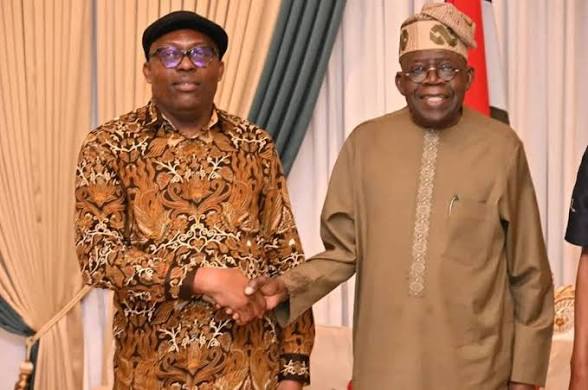
*APC Group Endorses Fubara for 2027, Calls on Tinubu and APC to Prioritise Performance Over Politics in Backing Governor’s Second Term Ambition*
The APC National Vanguard has appealed to President Bola Ahmed Tinubu and the leadership of the All Progressives Congress (APC) to support a second term in office for Siminalayi Fubara, citing what it described as “impressive and verifiable developmental strides” across Rivers State.
In a statement issued on Thursday by its National President, Dr Gbenga Salam (JP), the group said its position followed an extensive assessment tour of key infrastructure and public service projects executed under the Fubara administration.
The APC National Vanguard said the appeal was based strictly on performance, arguing that governance outcomes should outweigh partisan considerations, particularly in a state as economically significant as Rivers.
“We respectfully urge President Bola Ahmed Tinubu and the leadership of the All Progressives Congress to support the continuity of Governor Siminalayi Fubara beyond his current tenure, in recognition of his commitment to development, prudent resource management, and people-focused governance,” the statement read.
According to the group, its delegation visited multiple project sites across the state, observing ongoing and completed works spanning road construction, urban renewal, and public infrastructure upgrades.
It noted that the scale and distribution of these projects reflect a deliberate effort by the state government to extend development beyond traditional urban centres and into underserved communities.
“Our findings from the tour reveal a government that is not only active but intentional in its development agenda. The execution of capital projects across various parts of Rivers State demonstrates a clear understanding of the needs of the people and a commitment to addressing them,” Dr Salam said.
The group particularly commended what it described as prudent financial management by the administration, noting that the projects reviewed showed evidence of careful planning and efficient allocation of resources.
“At a time when economic pressures are evident across the country, it is commendable that the Rivers State government has managed its resources in a way that delivers visible and impactful development without signs of fiscal recklessness,” the statement added.
The APC National Vanguard further observed that despite political tensions in the state, the Fubara administration has maintained focus on governance, ensuring continuity in project execution and service delivery.
The group argued that such stability is critical for sustained development and should be encouraged rather than disrupted.
“Leadership must ultimately be judged by results. In Rivers State, there is clear evidence of progress—projects that are not only announced but executed, and policies that translate into real benefits for citizens,” Dr Salam noted.
The group warned that discontinuity in leadership could stall ongoing projects and reverse gains already recorded, stressing the importance of allowing a performing administration to consolidate its achievements.
“Rivers State is at a pivotal stage where continuity will allow for the completion of ongoing initiatives and the deepening of development gains. Supporting Governor Fubara for a second term is, therefore, a decision in the best interest of the people,” the statement said.
In addition to its call on the APC leadership, the group reaffirmed its support for President Tinubu, expressing confidence in his administration’s broader economic and governance reforms.
The APC group urged Nigerians to remain supportive of efforts aimed at stabilising the economy and strengthening public institutions.
“We reiterate our endorsement of President Bola Ahmed Tinubu for a second term in office, in recognition of his leadership and commitment to national development. With sustained support, the administration can consolidate its reform agenda for the benefit of all Nigerians,” Dr Salam added.
The APC National Vanguard concluded by calling on political actors to prioritise development and public interest over partisan divides, insisting that governance should always be guided by performance and accountability.
“Where leadership demonstrates prudence, delivers development, and remains focused on the welfare of the people, it deserves continuity. This is the position we have reached after a careful and independent assessment of Rivers State,” the statement added.
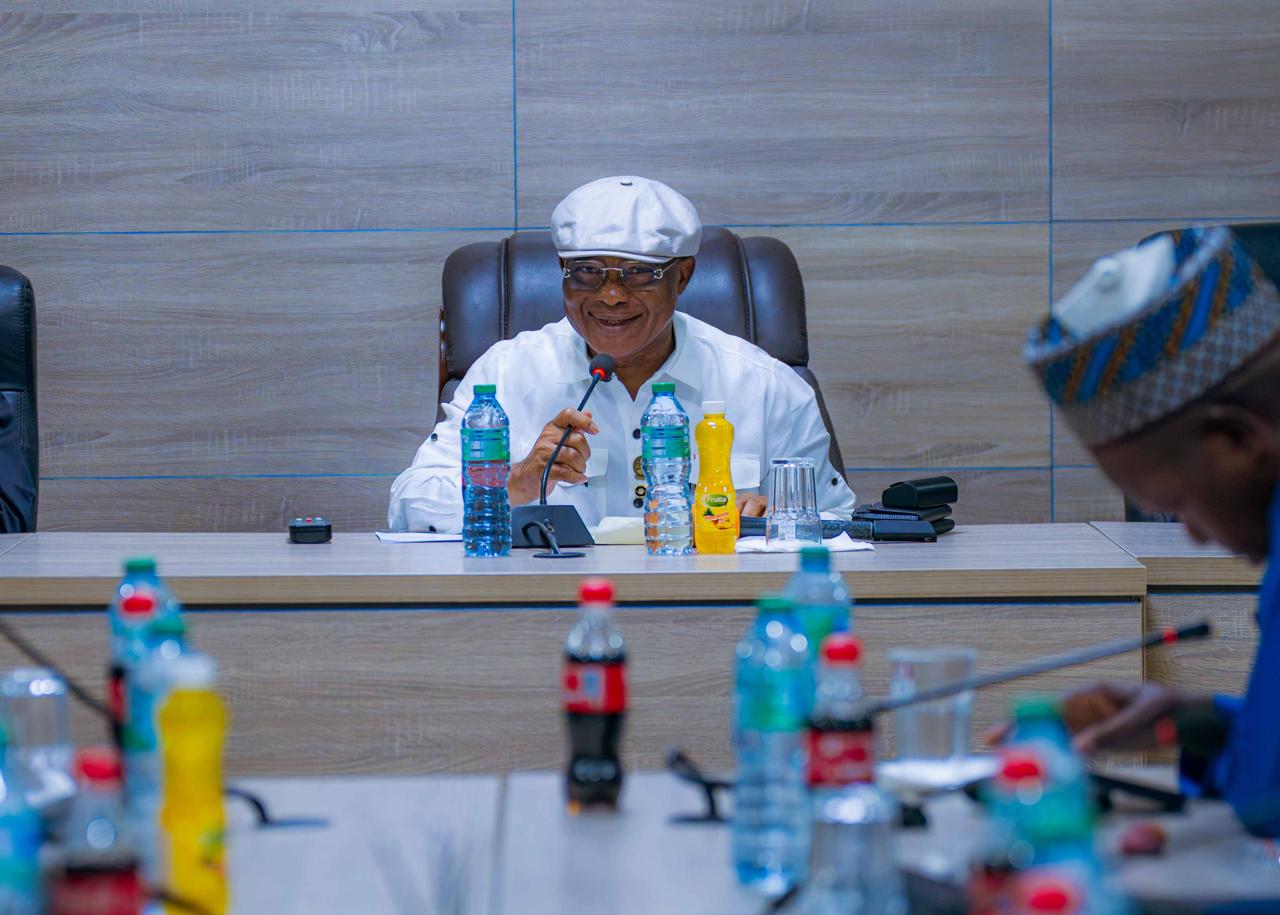
*Renewed Hope Ambassadors Step Into the Next Phase
Fresh from the successful APC 2026 National Convention, the Renewed Hope Ambassadors National, Zonal, and State leadership gathered in Abuja over the weekend, for its fourth strategic meeting, setting the tone for nationwide grassroots activation ahead of 2027.
Chaired by Governor Hope Uzodinma (Imo State) the Director General and National Coordinator of the Renewed Hope Ambassadors, alongside Deputy Director-General, Governor Uba Sani of Kaduna State, and Governor Inuwa Yahaya of Gombe State as Secretary, the session reinforced one clear direction: One Party. One Message. One Mobilization whilst also laying out a strategic roadmap for the activation of the network across all communities in Nigeria.
Backed by the strength of 31 APC-led states, the Renewed Hope Agenda is taking Bola Ahmed Tinubu’s message of progress and reform to every corner of Nigeria.
From bold economic restructuring to initiatives like NELFUND, the increase in the national minimum wage from ₦30,000 to ₦70,000, and strategic investments in critical sectors, including PNiCGI, the mission remains clear: helping Nigerians understand both the purpose and the progress of the Renewed Hope vision.
This is coordination at scale. This is grassroots engagement with purpose. This is the next phase of Renewed Hope with One Party, One Message, and One Mobilisation framework
#RenewedHopeAmbassadors #APC #WeAreAPC


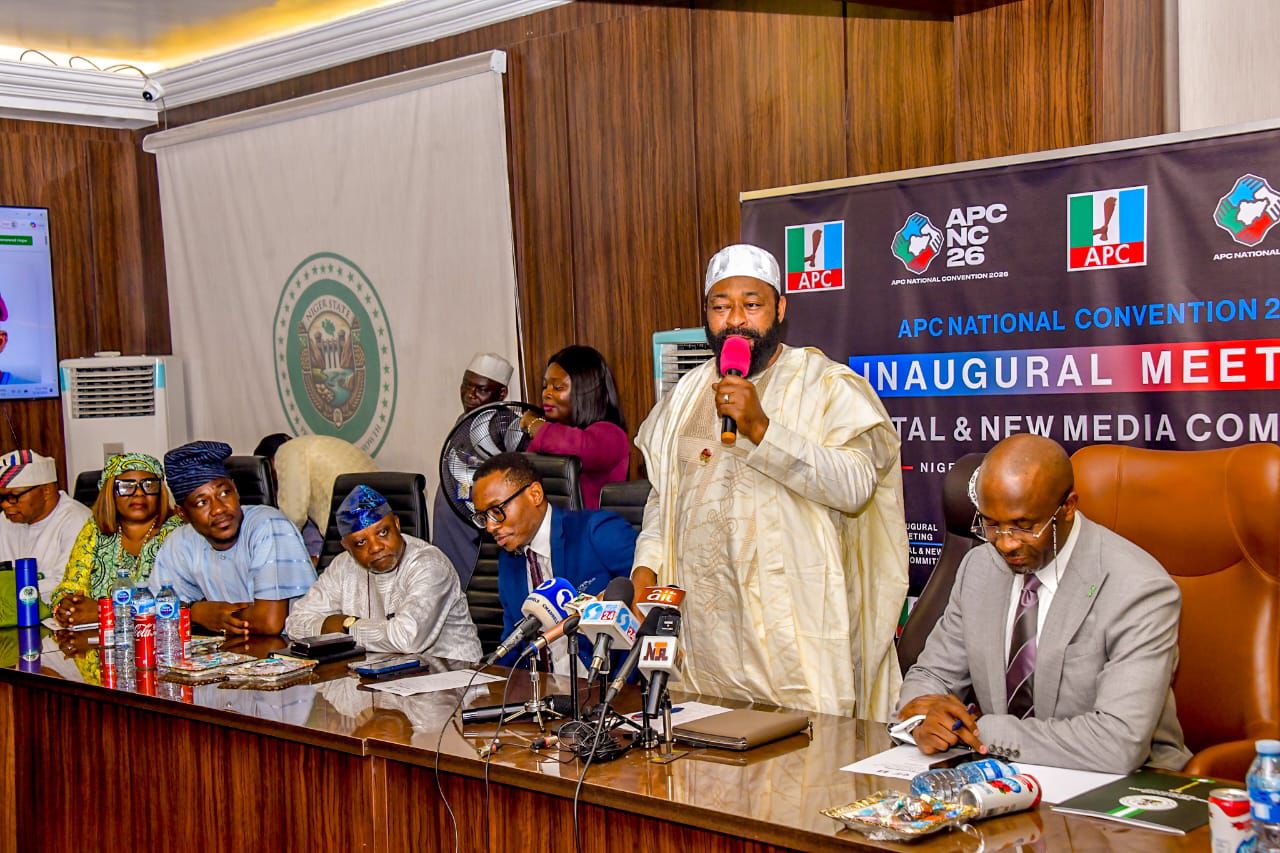
Governor Bago Inaugurates APC Digital Media Sub-Committee Ahead of National Convention.
Governor Umaru Bago has inaugurated the Digital Media Sub-Committee for the forthcoming National Convention of the All Progressives Congress (APC), scheduled to hold on March 27 and 28, 2026 in Abuja.
Chairing the sub-committee, Governor Bago tasked members with the responsibility of effectively communicating the party’s manifesto to the public.
He emphasized the need to leverage social media platforms to highlight the achievements and ongoing efforts of President Bola Ahmed Tinubu, noting that communication gaps have posed challenges that must now be decisively addressed.
The Co-Chair of the sub-committee, Hon. Benjamin Kalu, Deputy Speaker of the House of Representatives, echoed the Governor’s position, urging members to project the activities of both the party and the government to a broader audience.
He called for a deliberate and coordinated effort to showcase the party’s achievements and policy direction, stressing the importance of shaping a compelling and consistent narrative across all digital platforms.
Delivering a presentation to the committee, Otega Ogra, SSA to the President on New Media, who serves as Secretary of the sub-committee, outlined strategic focus areas to guide the team’s operations.
His presentation highlighted communication priorities and actionable steps to achieve the committee’s mandate and strengthen the party’s digital engagement.


-

 society7 months ago
Religion: Africa’s Oldest Weapon of Enslavement and the Forgotten Truth
-

 news4 months ago
WHO REALLY OWNS MONIEPOINT? The $290 Million Deal That Sold Nigeria’s Top Fintech to Foreign Interests
-

 society6 months ago
“You Are Never Without Help” – Pastor Gebhardt Berndt Inspires Hope Through Empower Church (Video)
-

 celebrity radar - gossips2 months ago
Dr. Chris Okafor Returns with Power and Fire of the Spirit -Mounts Grace Nation Altar with Fresh Anointing and Restoration Grace on February 1, 2026