
Politics
COVID-19: Dapo Abiodun States Conditions As worship Centres Open Today In Ogun State


STATEMENT BY THE GOVERNOR OF OGUN STATE, HIS EXCELLENCY, PRINCE DAPO ABIODUN MFR, ON UPDATE AND EFFORTS TO COMBAT COVID-19 PANDEMIC ON FRIDAY 14TH AUGUST, 2020
My fellow citizens of Ogun State,
I am here today once again to address you, on your government’s unrelenting efforts towards fighting COVID-19 pandemic. It is no longer news that the new normal has come to stay. We are committed to doing the needful as a Government to help all the people of Ogun State to adapt to this new life pending the time that the scourge will be over. Let me reassure all the people of Ogun State that we will continue to do all that we can to flatten the curve of COVID 19 in our dear State.
2. As at Thursday, 13th August, 2020, the COVID-19 statistics in Ogun State are: 7,122 screened persons; 1,521 confirmed cases; 1,288 persons treated and discharged; 24 fatalities; while we have 206 receiving medical attention. Records from the Presidential Task Force indicate that the number of positive cases went down over the last two weeks but that does not mean that the pandemic has reached the peak. Our approach and efforts are improving day by day. We will continue to test and identify infected people for prompt treatment and resultantly flatten the curve.
3. However, let me inform our people of the two major issues that have been in view for some months: reopening of worship centres and schools. After thorough deliberation, consideration and resolution, we decided to reopen the worship centres with effect from Friday 14th August, 2020 as indicated in my last address. This decision was made in line with agreement reached by the committee set up to develop guidelines for reopening of the religious centres. The Committee includes the leadership of the Christian Association of Nigeria (CAN); the League of Imams and Alfas and Government representatives. I am delighted to note that reports reaching us indicate varying but encouraging level of preparedness by the Worship Centres. Therefore, today, Friday, 14th August is hereby confirmed for the commencement of operations of the Worship Centres, subject to the guidelines.
4. It is of great importance that all stakeholders fully comply with the agreed guidelines, so that, together, we can further flatten the curve of this pandemic. For the purpose of emphasis, let me restate some of the elements of the guidelines which are as follows:
i. All congregants must wear their face masks appropriately (that is, No facemask, No entry);ii. Adequate provision of running water;iii. Worship centres should be adequately cleaned and decontaminated before and after services;iv. Household bleach solution / equivalent should be adequately prepared for disinfectations;v. There should be adequate provision and supervision of multiple Veronica Buckets for handwashing (fully automated handwashing machines are preferable);vi. There should be provision of alcohol-based sanitiser which must be used before and after service;vii. Worship centres should provide adequate toilet facilities with water;viii. Muslims are advised to perform ablution at home and go to Mosque with their personal praying mats;ix. Qualified Medical Practitioners or trained personnels should check the temperature of worshippers with infrared thermometer before allowing them to enter worship centres;x. There should be adequate medical support for sick persons;xi. All services on Friday/Sunday and other week days must adhere strictly to COVID-19 Guidelines;xii. There should be pre-designated standing position/sitting positions to ensure not less than 2 meter spacing;xiii. The duration of religious services should not be more than one and a half hours. In addition, same duration of one and a half hours must be observed as intervals, where there are multiple services;xiv. The use of Air-conditioners should be discouraged while worship centres should be well ventilated with the use of fans;xv. There should not be any handshakes/hugs by worshippers;xvi. Proper awareness of the susceptibility of the aged and people with signs of ill-health should be adequately created among worshippers at all times;xvii. Constant sensitisation of COVID-19 and its dangers should be included in sermon and goodwill messages;xviii. Provision of isolation rooms is mandatory in all worship centres or facilities;xix. Religious services and events should be recorded with digital camera for record purposes;xx. Worship Centres and facilities with more than 200 worshippers in a given service must seek further clearance with the State Government;xxi. At all times, there should be effective Entry and Exit Management Procedures in each of the Worship Centres;xxii. Administration of Holy Communion should be devoid of sharing of any item and must follow COVID-19 protocols.
5. We are therefore appealing to our people, particularly our religious leaders to ensure that they adhere strictly to the protocols as have been agreed upon. We all agreed on these protocols to open the worship centres for many reasons.
6. Let me say that our Task Force is already on ground and is moving about to ensure compliance. And, if perchance we discover that any of our religious centre is not complying or adhering to the laid down protocols, we will not hesitate to close down the centre. I want to repeat just like I mentioned in the last COVID-19 update that the purpose is not to open for rowdy ceremonies which can promote community transmission of COVID-19 and or any other communicable diseases that could lead to avoidable death. We will rather want our worship centres to be venues of solemnisation of matrimonies; christening of new-borns; venues of thanksgivings and praise-worship to the greatness of God. This explains our cautious, consultative, inclusive, and collaborative approach to reopening of our worship centres.
7. On Education, we thank God that our SS3 students resumed classes on Tuesday, 4th August, 2020. The 2-week revision period to prepare the SS3 students ends today and we are all looking forward to the commencement of the Senior Secondary Certificate Examination (SSCE) on Monday, 17th August, 2020. We want to enjoin all stakeholders, particularly the school administrators, teachers, parents, guardians to ensure that the safety of the children is paramount and all laid down COVID-19 Protocols are adhered to. I wish all our students in Ogun State writing the examination the very best of luck.
8. Following the release of the timetable for examinations by the National Examination Council (NECO), JSS3 students who have registered for the NECO Basic Education Certificate Examination (BECE) are to return to school from Monday 17th August 2020. The BECE exam organized by the Ogun State Government will hold at a date to be announced later. Furthermore, entrance examinations into Ogun State Boarding Schools will take place on Saturday 12th September 2020. As a Government, we will continue to monitor events as they unfold. We will be guided by statistics and feedback from the reopening of schools for exit classes and from our health professionals as we deliberate on opening up more sectors of the economy.
9. Let me say that now that our worship centres are open for activities, the restrictions on weekends are lifted, but the limitation on social gatherings not exceeding 20 people at any place at the same time is still very much in force. Other measures still in place include:i. Observation of dusk-to-dawn curfew as directed by the Presidential Task Force (PTF) i.e. between 10.00pm and 4.00am daily;ii. Wearing of face masks in the public is compulsory and failure to do so is punishable.iii. Only one passenger is still allowed for motorcycles and two passengers only for tricycles;iv. Taxi cabs and buses still have 60% limitation on their carrying capacity and non-adherence attracts sanction;v. The COVID-19 Task Force in markets must continue to ensure physical distancing, availability of hand washing facilities, and use of gloves and facemasks for traders;vi. Decontamination will continue in our markets and other public places;vii. Process of certifying leisure facilities – Gyms, arcades, swimming pools, barber-shops, spas, beauty Salons, public parks and golf courses including those in private residential estates with a view to reopening them is in progress;viii. Event centres, bars, casinos, cinemas, and night clubs are still under lockdown;ix. Restaurants are permitted to provide only take-away services and should also ensure that there are no more than 15 customers at a time with physical distancing measures in place. Guidelines for eat-in services are still being fine-tuned;x. All industries in Ogun State must continue to comply with the “Infection Prevention and Control Guidelines for Workplaces in Ogun State to Combat COVID-19” as issued by the Ministry of Health in conjunction with the Ministry of Industry, Trade and Investments. Therefore, testing of staff for COVID-19 in all industries in the State must be sustained;xi. The Task Force set up to conduct random spot checks on the premises of the industries, restaurants and other business enterprises to confirm compliance is still in operation.
10. We thank everybody for their support and cooperation since the beginning of this new normal. But let us not forget that COVID 19 is still with us. The fact that we are opening more sectors does not mean that COVID is gone. It is of great importance that we must be able to balance welfare, wellness and wellbeing with economic activities. More than ever, personal responsibility is at the core of containing this dreaded virus. Whilst government will continue to play its parts, we must individually take responsibility for where we go, what we do, who we interact with and the social distancing rule guiding interactions in the face of the pandemic. We cannot be too careful in the new normal. In fact, World Health Organisation (WHO) in conjuction with the Centre for Disease Control (CDC) declared 7th- 14th August as the World Facemask week to empahasise the need to wear facemask to contain COVID-19. The expectation is that the symbolic declaration of the week will raise enough awareness and we would all have internalized the use and essence of facemask as part of the new normal.
11. As I end this address, let me use this opportunity once again to appreciate all our frontline workers – doctors, nurses, pharmacists, medical lab scientists and indeed all health workers for their devotion and commitment towards this struggle. In the same vein, I commend the perseverance of our security personnel, journalists and other essential workers for their efforts to flatten the curve of COVID-19. Lastly, I want to express my appreciation to all the citizens of Ogun State for their support, solidarity and cooperation. We thank our people for their support and cooperation. We urge you to continue to cooperate with us.
12. I thank you all for listening and God bless. Igbega Ipinle Ogun, ajose gbogbo wa ni o!
Prince Dapo Abiodun, MFR,Governor of Ogun State, Nigeria. Friday, 14th August, 2020





Governor Dauda Lawal Approves Gratuity Payment
The Zamfara State Government, under the visionary leadership of Governor Dauda Lawal, has approved the release of funds for the payment of Gratuity Batch 3 for the 2024/25 period. This decisive action underscores the administration’s unwavering commitment to the welfare of retired civil servants who dedicated years of service to the state’s development.
The Accountant General of the State is already working diligently to ensure that all eligible retirees receive their payments promptly and efficiently, reflecting the government’s resolve to uphold transparency and accountability in the disbursement process.
This timely gratuity payment is a testament to Governor Dauda Lawal’s people-centered leadership, which recognizes the sacrifices and contributions of retirees to the progress and stability of Zamfara State. It also reaffirms the government’s pledge to honor its financial obligations without unnecessary delays.
The Zamfara State Government calls on all retirees in the affected batch to exercise patience as the necessary administrative and financial processes are finalized. Every effort is being made to ensure smooth and uninterrupted payments.
This initiative is part of Governor Dauda Lawal’s broader vision to empower citizens and retirees, strengthen confidence in public service, and sustain the morale of those who have committed their lives to the growth of Zamfara State.
Politics
APC Group Endorses Fubara for 2027, Calls on Tinubu and APC to Prioritise Performance Over Politics in Backing Governor’s Second Term Ambition

*APC Group Endorses Fubara for 2027, Calls on Tinubu and APC to Prioritise Performance Over Politics in Backing Governor’s Second Term Ambition*
The APC National Vanguard has appealed to President Bola Ahmed Tinubu and the leadership of the All Progressives Congress (APC) to support a second term in office for Siminalayi Fubara, citing what it described as “impressive and verifiable developmental strides” across Rivers State.
In a statement issued on Thursday by its National President, Dr Gbenga Salam (JP), the group said its position followed an extensive assessment tour of key infrastructure and public service projects executed under the Fubara administration.
The APC National Vanguard said the appeal was based strictly on performance, arguing that governance outcomes should outweigh partisan considerations, particularly in a state as economically significant as Rivers.
“We respectfully urge President Bola Ahmed Tinubu and the leadership of the All Progressives Congress to support the continuity of Governor Siminalayi Fubara beyond his current tenure, in recognition of his commitment to development, prudent resource management, and people-focused governance,” the statement read.
According to the group, its delegation visited multiple project sites across the state, observing ongoing and completed works spanning road construction, urban renewal, and public infrastructure upgrades.
It noted that the scale and distribution of these projects reflect a deliberate effort by the state government to extend development beyond traditional urban centres and into underserved communities.
“Our findings from the tour reveal a government that is not only active but intentional in its development agenda. The execution of capital projects across various parts of Rivers State demonstrates a clear understanding of the needs of the people and a commitment to addressing them,” Dr Salam said.
The group particularly commended what it described as prudent financial management by the administration, noting that the projects reviewed showed evidence of careful planning and efficient allocation of resources.
“At a time when economic pressures are evident across the country, it is commendable that the Rivers State government has managed its resources in a way that delivers visible and impactful development without signs of fiscal recklessness,” the statement added.
The APC National Vanguard further observed that despite political tensions in the state, the Fubara administration has maintained focus on governance, ensuring continuity in project execution and service delivery.
The group argued that such stability is critical for sustained development and should be encouraged rather than disrupted.
“Leadership must ultimately be judged by results. In Rivers State, there is clear evidence of progress—projects that are not only announced but executed, and policies that translate into real benefits for citizens,” Dr Salam noted.
The group warned that discontinuity in leadership could stall ongoing projects and reverse gains already recorded, stressing the importance of allowing a performing administration to consolidate its achievements.
“Rivers State is at a pivotal stage where continuity will allow for the completion of ongoing initiatives and the deepening of development gains. Supporting Governor Fubara for a second term is, therefore, a decision in the best interest of the people,” the statement said.
In addition to its call on the APC leadership, the group reaffirmed its support for President Tinubu, expressing confidence in his administration’s broader economic and governance reforms.
The APC group urged Nigerians to remain supportive of efforts aimed at stabilising the economy and strengthening public institutions.
“We reiterate our endorsement of President Bola Ahmed Tinubu for a second term in office, in recognition of his leadership and commitment to national development. With sustained support, the administration can consolidate its reform agenda for the benefit of all Nigerians,” Dr Salam added.
The APC National Vanguard concluded by calling on political actors to prioritise development and public interest over partisan divides, insisting that governance should always be guided by performance and accountability.
“Where leadership demonstrates prudence, delivers development, and remains focused on the welfare of the people, it deserves continuity. This is the position we have reached after a careful and independent assessment of Rivers State,” the statement added.
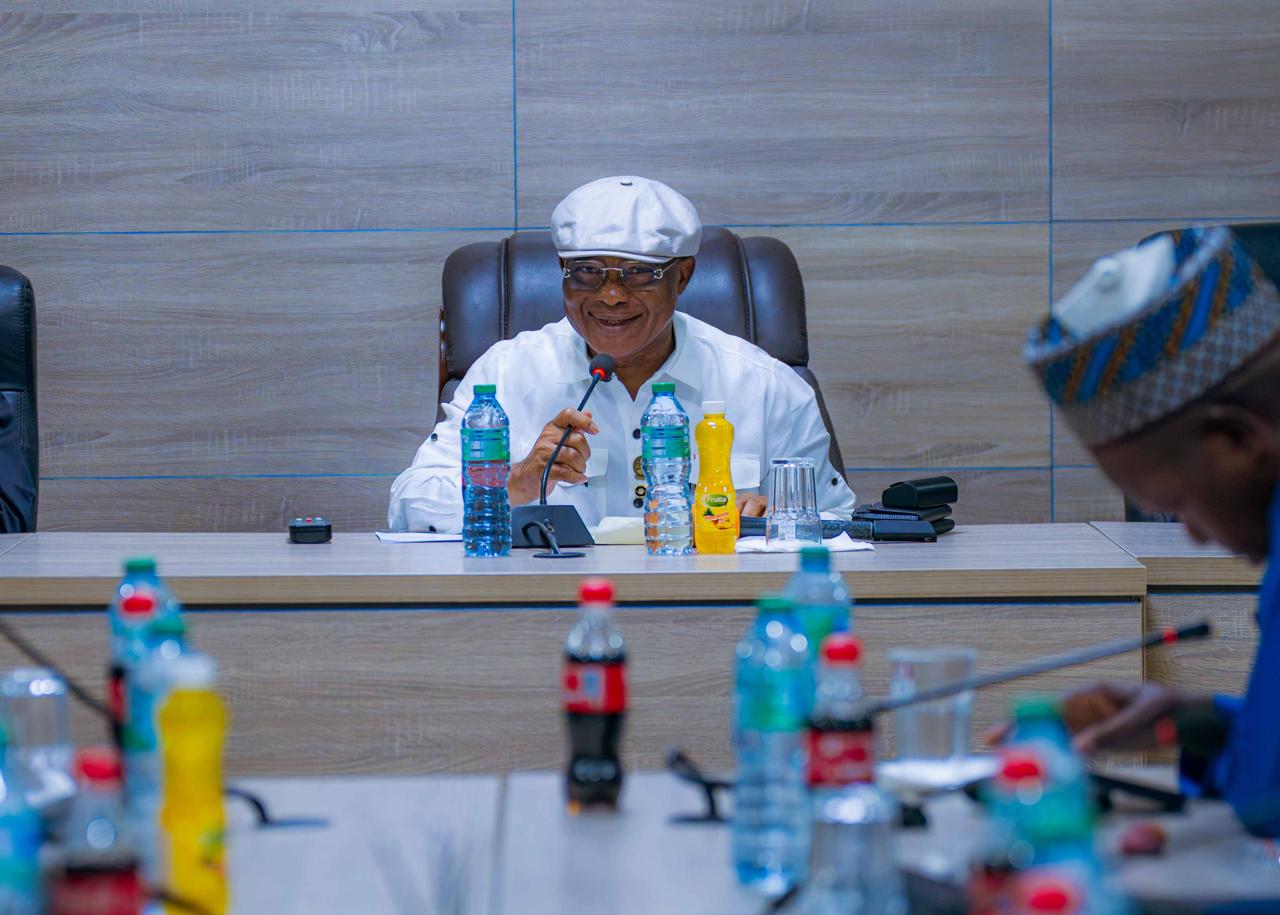
*Renewed Hope Ambassadors Step Into the Next Phase
Fresh from the successful APC 2026 National Convention, the Renewed Hope Ambassadors National, Zonal, and State leadership gathered in Abuja over the weekend, for its fourth strategic meeting, setting the tone for nationwide grassroots activation ahead of 2027.
Chaired by Governor Hope Uzodinma (Imo State) the Director General and National Coordinator of the Renewed Hope Ambassadors, alongside Deputy Director-General, Governor Uba Sani of Kaduna State, and Governor Inuwa Yahaya of Gombe State as Secretary, the session reinforced one clear direction: One Party. One Message. One Mobilization whilst also laying out a strategic roadmap for the activation of the network across all communities in Nigeria.
Backed by the strength of 31 APC-led states, the Renewed Hope Agenda is taking Bola Ahmed Tinubu’s message of progress and reform to every corner of Nigeria.
From bold economic restructuring to initiatives like NELFUND, the increase in the national minimum wage from ₦30,000 to ₦70,000, and strategic investments in critical sectors, including PNiCGI, the mission remains clear: helping Nigerians understand both the purpose and the progress of the Renewed Hope vision.
This is coordination at scale. This is grassroots engagement with purpose. This is the next phase of Renewed Hope with One Party, One Message, and One Mobilisation framework
#RenewedHopeAmbassadors #APC #WeAreAPC


-

 society7 months ago
Religion: Africa’s Oldest Weapon of Enslavement and the Forgotten Truth
-

 news4 months ago
WHO REALLY OWNS MONIEPOINT? The $290 Million Deal That Sold Nigeria’s Top Fintech to Foreign Interests
-

 society6 months ago
“You Are Never Without Help” – Pastor Gebhardt Berndt Inspires Hope Through Empower Church (Video)
-

 celebrity radar - gossips2 months ago
Dr. Chris Okafor Returns with Power and Fire of the Spirit -Mounts Grace Nation Altar with Fresh Anointing and Restoration Grace on February 1, 2026