
Politics
Dapo Abiodun: Six months of giant strides in Ogun

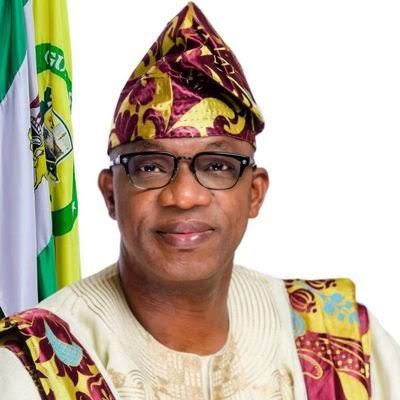
By Kunle Somorin
NOT many Nigerians would have failed to notice the highly significant event that happened in Ogun State shortly after the current state governor, Dapo Abiodun, assumed office. On the Lagos/Ibadan expressway, some pastors of the Redeemed Christian Church of God (RCCG) had been kidnapped, but the governor was attending a retreat in Abuja. So, what did he do? He asked President Muhammadu Buhari’s permission to leave the meeting, got the president to release a helicopter for aerial surveillance, and headed back to Ogun. Within a few hours, seeing the artillery mounted in the skies, the assailants buckled and panicked, and all the hostages were rescued, including others that were not previously known to be in the kidnappers’ den. This event, just one out of very many, is an eloquent testimony to the fact that good governance is currently ongoing in Ogun State.
Consider the scores of souls that have perished in forests across the country while some governors dithered, spewing empty rhetoric as bandits committed murder and rape with reckless abandon. Significantly, Governor Abiodun did not hype that incident, content with the fact that he had done what the law and duty apportioned to him. Such a noble approach however often serves only as weapons in the hands of the purveyors of fake news. a prime example is one Segun Sowunmi’s latest two diatribes casting the Ogun helmsman in the mould of a failure in six months. Tactlessly insulting Oyo State in the bid to prove Ogun exceptionality, the writer claimed that Abiodun is running an “all-inclusive (sic), now clearly cosmetic, uninspiring administration.” Of course, there are those who, without any introspection, would ingest his spin hook, line and sinker. While the writer is, like every citizen, qualified to criticize, even rebuke, the governor, I do not think he has a duty to ignore facts, even if he is only intent on undue attention, in doing so. And so his qualms, built on fancy rather than facts, need not detain us further as we show, with ample evidence, why Dapo Abiodun may yet be the best governor that Ogun has had since the return to civil rule.
Security, as everyone knows, is the raison d’etre of the state, yet it is a fact that when Abiodun resumed at Oke Mosan, law enforcement agencies did not have good equipment in place, meaning that the Commissioner of Police could not readily engage his counterpart in the military or Department of State Service (DSS). Governance being problem-solving, Abiodun did not whine about this: he set to work immediately, sourcing and providing the needed equipment. He also purchased 100 ‘4x 4’ patrol vehicles and 200 motorcycles to aid the police in their work. Apparently enthralled by his strides in security, the Business Day Research and Intelligence Unit gave Ogun an award: The Most Improved State On Security. That was not fortuitous, really: when in Lagos between 1995 and 1997, car snatchers from neigbouring Republic of Benin put Lagos under siege, it was to him that the state turned for relief. His two major interventions, the vehicle tracking system and Alarm Network, an initiative that led to the Rapid Response Squad project, quickly passed the message that there would be no escape route for robbers, as the criminally-minded in Ogun must be finding out right now.
The Ogun helmsman apparently does not subscribe to the pernicious practice of window-dressing state capitals while leaving other parts of the state to rot. Through the newly set up Ogun State Public Works Agency, roads that were hitherto a nightmare to motorists are now being rehabilitated, and this is being done simultaneously in all the local government areas of the state. Go to Otta, go to Ifo, go to Abeokuta, Sagamu and Ijebu-Ode; the roads are being worked on with renewed vigour, especially now that the rainy season is gone. Again, it is doubtful that any right-thinking person would find fault with the rehabilitation of 236 schools, one school per ward, across the state. Is that not better than building a few mega schools in major towns and leaving the majority of schools in the state to rot? How can it be a crime that there is no ward without government’s educational presence in Ogun State? Has the revocation of the N3,700 education levy per pupil not alleviated the suffering of parents in the state? In the last six months, the Ogun governor has approved the years 2016 and 2017 promotion of over 10,000 teaching and non-teaching staff in public schools, resolved the MAPOLY crisis and ensured its re-accreditation; implemented the recommendations of the visitation panel on the Tai Solarin College of Education (TASCE), including appointment of a Governing Council, and established a Government Delivery Unit for Education, among others.
The job portal which seems to be giving critics nightmares was put up to determine the number of underemployed and unemployed youths in Ogun State. Within three weeks, it recorded over 120,000 names. Businesses operating in the state post vacancies on the portal, and a local content law is afoot that will stipulate that a certain minimum of companies’ staff must be Ogun State indigenes. Besides, skills acquisition centres have been set up across the state, the first being the Tech hub in Kobape, Abeokuta. The technology hubs have been set up to rejig ICT across the state and confirm the premium position of the state in digital economy. In fact, the Federal Ministry of Communications and Digital Economy rated Ogun as the Best State In ICT Penetration And Adoption. In any case, in partnership with the Central Bank of Nigeria, the Anchor Borrowers Scheme is on course to produce Ogun agricpreneurs. A total of 10,000 youths harvested from the job portal and allocated a hectare of land each, with the documents attached to the lands, have begun slowly to build wealth. The CBN has provided funding, and will pay the agricpreneurs stipends until the harvest. Stage two of the plan will engage another 40,000 over the next three months, so that in the next two years, about 200,000 agricpreneurs would have been created. Providing food for people through a project that attracts a zero digit interest rate shows that Governor Abiodun certainly did his homework before coming to Government House, and will not be among those praised for a few months, only to receive condemnation for the rest of history.
In the health sector, the Abiodun Administration has given dilapidated hospitals a facelift and set up more resident primary health centres, again per ward, so that people can enjoy health services without travelling miles away from home. At the Olabisi Onabanjo University Teaching Hospital, the recruitment process for all categories and cadres of healthcare professionals (doctors, nurses, pharmacists, lab scientists, radiographers, etc) has already commenced; the State Hospital Ilaro, has been refurbished; and free medical outreach held at Ilishan, Odeda and Ilaro, addressing polio, diabetes, malaria, eyes, malaria, typhoid and other health conditions.
To ensure accountability and prudent financial management of the state resources, including the implementation of the medium term expenditure framework for budget preparation, Abiodun established the Fiscal Responsibility Commission for prudent financial mgt of state resources; efficient allocation of public expenditure, revenue and debt management; and long-term economic stability. It established the Public Private Partnership (PPP) Office and implemented staff biometrics and payroll audit and treasury management solution for single view and efficiency in treasury and payment processing, and a Bureau of Public Procurement Council has come on board, too. Moreover, it is a fact that for the most part, state chief executives and cabinet members have prepared budgets lacking the crucial connectivity with the socio-economic needs of the populace. In line with the paradigm shift that has hallmarked his administration so far, the Ogun State governor obtained the inputs of critical stakeholders in all the three senatorial districts in the state. As he noted, “We strongly believe that governance should be a participatory process and an inclusive one. Achieving the Ogun State of our dreams will require the inputs of all; it is our belief that the people should have a say on issues that concern them and they should, therefore, be allowed to take their rightful place in the governance process.”
The Ogun State Business Environment Council is now in place to improve and streamline the state’s internal processes towards achieving better scores in the ease of doing business ranking. Ogun State Investment Promotion Agency(Ogun Invest) has been established to attract investment and provide a one-stop shop for investors and support businesses. The Enterprise Development Agency (EDA) is for capacity building and facilitation of financing access to support the MSMEs sector. There is of course the Ogun State Economic Transformation Project Implementation Structures, part of the requirements for the establishment of Project Steering Committee (PSC), Project Implementation Unit (PIU) for the $250m World Bank loan. How can a government which initiated a creative arts and entertainment hub in conjunction with Shared Agent Network Expansion Facility Limited (SANEF), a special purpose vehicle of the bankers’ committee to further deepen development at the grass roots be said to have done nothing in six months? What about the 50 units of housing at Hilltop Estate Abeokuta, the 200 low-income, mass housing units project at Ibara Abeokuta; and the newly established Ogun Sports Commission geared towards youth development? Why mock the empowerment of widows through the ‘OkowoDapo’ loan programme with 2,000 initial beneficiaries?
On the issue of commissioners, the list will be broad-based and will reflect the wishes and aspirations of the good people of Ogun State. Let Abiodun continue building structures that will take Ogun to greater heights. He will be appreciated for it.
Somorin is Chief Press Secretary to the Ogun State governor




Politics
Akande-Sadipe Emerges APC Candidate for Oluyole Federal Constituency Amid Failed Disruption Attempts*
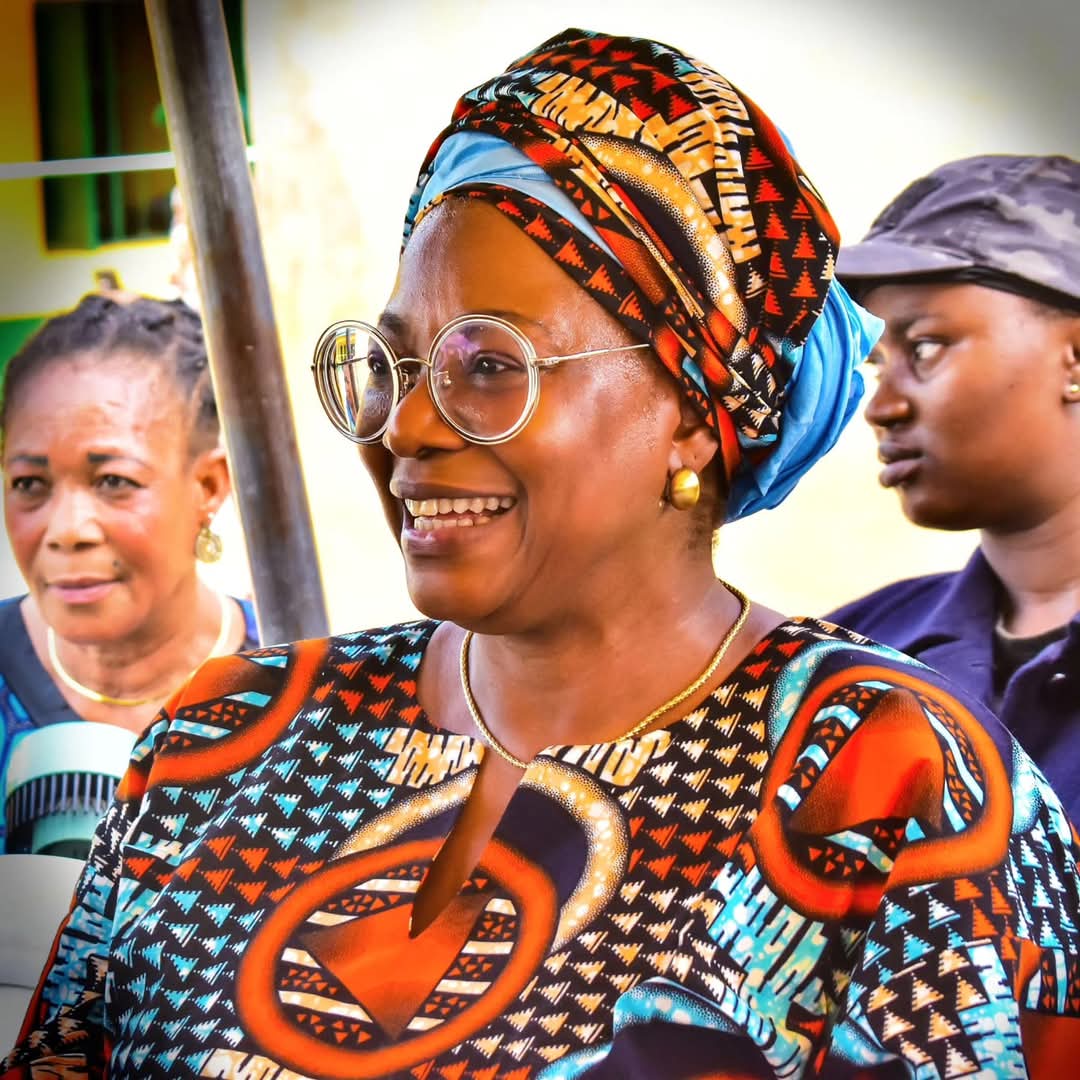
*Akande-Sadipe Emerges APC Candidate for Oluyole Federal Constituency Amid Failed Disruption Attempts*
The Member representing Oluyole Federal Constituency in the House of Representatives, Tolulope Akande-Sadipe, has emerged victorious in the All Progressives Congress (APC) primary election for Oluyole Federal Constituency.
The keenly contested primary, held under strict monitoring and in line with the party’s guidelines, witnessed a massive turnout of delegates and party faithful who reaffirmed their confidence in the leadership and representation of Akande-Sadipe.
Despite alleged attempts by opposition elements to disrupt the peaceful conduct of the exercise through acts capable of causing violence and tension, party members remained resolute and committed to democracy.
Security agencies and party officials acted swiftly to ensure orderliness, allowing the process to continue without intimidation.
Speaking after the declaration of results, Akande-Sadipe expressed gratitude to delegates, party leaders, and supporters across the constituency for their unwavering support and trust in her leadership.
She described the victory as a collective triumph for loyal party members and the people of Oluyole Federal Constituency.
“This victory belongs to the people of Oluyole who have continued to stand firmly for progress, continuity, and quality representation. I deeply appreciate the confidence reposed in me and assure our people that I will continue to work tirelessly for their welfare and development,” she said.
She also commended the leadership of the APC for ensuring a transparent and credible process while urging party members to remain united ahead of the general elections.
Akande-Sadipe reaffirmed her commitment to delivering impactful representation, empowerment programmes, infrastructural development, and people-oriented initiatives across Oluyole Federal Constituency.
E-signed:
Media Team
Office of Hon. Tolulope Akande-Sadipe.
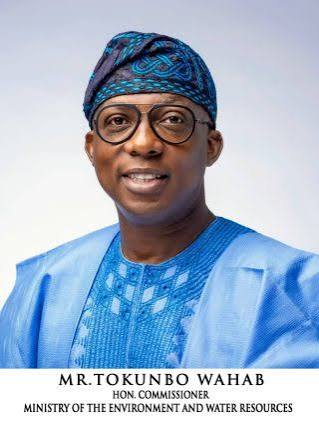
Celebrating Toks Wahab … Omoluabi Eko at 54
As Tokunbo Wahab turns 54, it is only fitting to celebrate not just the years, but the man he has consistently shown himself to be—one defined by kindness, humility, and a genuine love for people.
Yes, he is the Honourable Commissioner for Environment and Water Resources, and by every standard, he has done extremely well. His work, impact, and dedication in that office are evident for all to see. But that is not even the thrust of this write-up.
This is about the person.
A proud son of Epe in Lagos, he carries his roots with dignity and grace, reflecting the values of his heritage in the way he lives and relates with people. TKW… Omoluabi Eko—a true embodiment of character, respect, and integrity.
He is a man who shows up. Always willing to assist, to help, to give—without hesitation and without noise. His generosity is quiet, yet deeply impactful. His kindness is not occasional; it is who he is.
Those who know him closely will tell you he is incredibly accommodating. Easy to approach, easy to speak with, and always ready to make others feel comfortable, heard, and valued. There is a simplicity about him that is rare—no airs, no distance—just a calm, grounded presence.
He gives without announcing it. He supports without seeking recognition. He blesses lives in ways that may never be seen publicly, yet remain unforgettable to those who experience his goodwill.
In a world where many complicate things, he remains refreshingly simple. In a space where recognition is often chased, he chooses quiet impact. And when others might turn away, he steps forward.
As he marks this new chapter, we celebrate not just his life, but we also pray that God grants him many more meaningful years—years of continued service, impact, and grace to keep uplifting his people.
Happy 54th Birthday.
— Gbenga Adeyinka 1st
GCON
Bola Fisayo Emerged as APC flagbearer for Ondo EAST-WEST Federal Constituency.
Otunba Bola Fisayo has been declared winner of APC primary election held across the 22 wards of the Federal Constituency.
Announcing the results, the returning office Dr. André Akuche declared Otunba Bola Fisayo the winner having scored a total vote of 12,783 votes, Otunba Ade Adeniyi scored a total vote of 3,128 coming second while Hon. Abiola Makinde scored a total vote of 1,052 and Dr. Michael Akintomide Ajilo scored a total vote of 1011.
The total valid vote cast was 17974
Dr. Jibayo Adeyeye one of the Aspirants had earlier withdrawn from the race.
Otunba Bola Fisayo appreciated the party members for the mandate given to him and assured the party that unprecedented and adequate representation will be guaranteed in the federal constituency.


- Eritrea: President Isaias Afwerki Meets and Holds Talks with Egyptian Delegation May 16, 2026
- Eritrea: Preparations for Celebrating 35th Independence Day Anniversary May 16, 2026
- Mali: Group for the Support of Islam and Muslims (GSIM) must observe international humanitarian law and ensure safety of civilians as Bamako is under siege May 16, 2026
- Merck Foundation advances Healthcare Capacity through 2600+ Medical Scholarships across 52 Countries with African and Asian First Ladies May 16, 2026
- West African Development Bank (BOAD) and International Finance Corporation (IFC) Announce Landmark Reciprocal Euro and West African CFA franc (EUR-XOF) Facilities to Boost Local Currency Financing in West Africa May 15, 2026
- Eritrea: Seminar for female members of the Defense Forces May 15, 2026
- Guinea-Bissau takes another step toward a polio-free future May 15, 2026
- International Monetary Fund (IMF) Staff Completes the 2026 Article IV Consultation and Reaches Staff-Level Agreement with Ghana on the Sixth Review under the Extended Credit Facility Arrangement and on a 36-month Policy Coordination Instrument Request May 15, 2026
- Call for Urgent Regional Coordination Meeting Following Ebola Virus Disease Outbreak in Ituri Province, Democratic Republic of the Congo (DRC) May 15, 2026
- Seychelles and Maldives reaffirm bilateral ties as Foreign Ministers meet in Malé May 15, 2026
- Eritrea: President Isaias Afwerki Meets and Holds Talks with Egyptian Delegation May 16, 2026
- Eritrea: Preparations for Celebrating 35th Independence Day Anniversary May 16, 2026
- Mali: Group for the Support of Islam and Muslims (GSIM) must observe international humanitarian law and ensure safety of civilians as Bamako is under siege May 16, 2026
- Merck Foundation advances Healthcare Capacity through 2600+ Medical Scholarships across 52 Countries with African and Asian First Ladies May 16, 2026
- West African Development Bank (BOAD) and International Finance Corporation (IFC) Announce Landmark Reciprocal Euro and West African CFA franc (EUR-XOF) Facilities to Boost Local Currency Financing in West Africa May 15, 2026
- Eritrea: Seminar for female members of the Defense Forces May 15, 2026
- Guinea-Bissau takes another step toward a polio-free future May 15, 2026
-

 news5 months ago
WHO REALLY OWNS MONIEPOINT? The $290 Million Deal That Sold Nigeria’s Top Fintech to Foreign Interests
-

 society2 weeks ago
SOCIAL MEDIA IS NOT A BATTLEFIELD COMMAND – WHY THE NIGERIAN ARMY’S ACTION AGAINST JUSTICE CRACK IS A NATIONAL SECURITY IMPERATIVE
-

 celebrity radar - gossips4 months ago
Dr. Chris Okafor Returns with Power and Fire of the Spirit -Mounts Grace Nation Altar with Fresh Anointing and Restoration Grace on February 1, 2026
-

 celebrity radar - gossips5 months ago
Prophet Kingsley Aitafo Releases 2026 Prophecy: ‘Nigeria Will Rise, but the World Must Prepare for Turbulence’
You must be logged in to post a comment Login
You must log in to post a comment.