
Politics
Ekweremadu: LESSONS FROM NUREMBERG – Femi Fani-Kayode

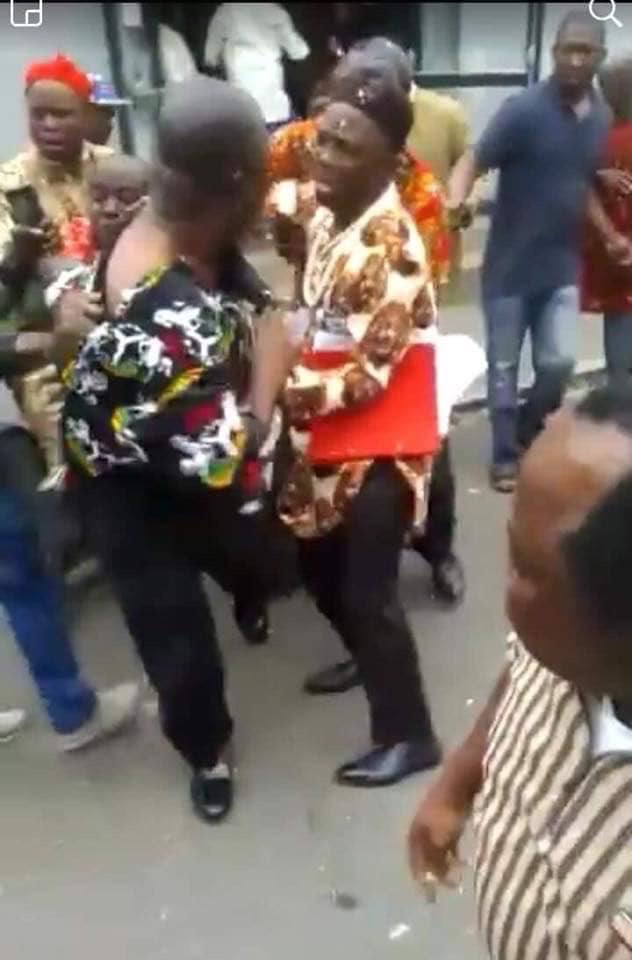
What happened to my friend and brother Senator Ike Ekweremadu in Nuremberg, Germany at the hands of IPOB is an eye-opener and a clear signal to every political leader in southern Nigeria! The people of the south are getting angry and you either stand up and defend them or stand aside!
It takes courage to stand for those that have been unjustly killed in Nigeria. It takes courage to say “no” and to stand up against injustice in a jungle. It takes courage to identify and empathise with the enslaved, the oppressed, the poor, the vulnerable and the weak in a killing field and functional zoo.
Yet we must all do it or stop laying claim to being called leaders. When your people and kinsmen are being turned into worthless slaves with little hope for the future and when they are being slaughtered like flies simply because they are southerners and Middle Belters or because of their faith and you say and do next to nothing then somewhere along the line a price has to be paid.
What happened in Nuremberg yesterday marks the beginning of an awakening. Every southern politician, including yours truly, will be called to account to the people of the south about what he or she did to stop the genocide and ethnic cleansing of southerners in Buhari’s Nigeria.
If anyone believes that it is only IPOB or the people of the South-East that feel so bitter then they really do not know what is going on. The sons and daughters of the Niger Delta, the South-South and the South-West are equally aggrieved. The anger is palpable and it is spreading throughout the south.
As each day passes those of us, like Ike Ekweremadu, that have called for patience and restraint are being seen as traitors and sell-outs by our own people who demand a far more candid, courageous, proactive, dynamic, honest, protective and inspirational form of leadership.
Only God knows for how much longer those of us that are moderates and that believe in non-violent and passive resistance can hold the line. Our people are boiling and they are about to kindle a fire that may consumme us all if something is not done to appease them and give them hope.
I call on President Muhammadu Buhari to shed his cloak of partiality, to put Nigeria before his Fulani tribe, to stop the genocide, mass murder and ethnic cleansing, to remove the Fulani herdsmen from the south and the Middle Belt, to proscribe Miyetti Allah and the Fulani mlitants, to declare them as terrorists and enemies of the Nigerian state and to protect the lives of EVERY Nigerian from this great evil that has tormented our people and torn us apart.
The fact that Ekweremadu wore a shirt which was covered with the Nigerian Coat of Arms and that it was torn to shreds by those that attacked him is instructive. It may also prove to be prophetic.
I say this because the assertion that Nigeris must and will remain one regardless of the humiliation, persecution, marginalisation, subjugation, barbarity, wickedness and torment that the south has been subjected to over the last 59 years and particularly over the last four years by those that believe that they were born to rule is, at best, misplaced and naive and, at worse, shallow and asinine.
How can Nigeria possibly remain one when every single one of the 17 security and intelligence agencies in the country and every arm of the Nigerian military except for the Navy is headed by a northern Muslim?
How can Nigeria remain one when the three arms of Government, namely the Executive, the Legislature and the Judiciary is headed by a northern Muslim?
How can Nigeria remain one when there is only one southerner in the top four positions in the country, namely the Speaker of the House of Representatives, and he is also Muslim?
Worse still his Deputy and every single one of the four principal officers in the House of Represenatives are northern Muslims.
How can Nigeria remain one when the substantive Minister of Petroleum and Gas over the last four years and every single key General Manager and Director at the nations state-owned petroleum corporation, the NNPC, are all northern Muslims?
How can Nigeria remain one when, for the better part of the last few years and up until one month ago, every single branch of the three tiers of the Federal Courts, namely the Supreme Court, the Court of Appeal and the Federal High Court, were headed by northern Muslims?
For the record, one month ago a Christian from the Middle Belt took over at the Federal High Court and that helped to balance the equation but the point remains valid.
How can Nigeria remain one when the first and fourth most deadly terrorist organisations in the world, namely Boko Haram and the Fulani militants, are wreaking havoc and committing the most heinous and barbaric atrocities all over Nigeria with the help and support of ISIS?
Worse still the Fulani militants have made a sport of targetting and killing southeners and Middle Belters and occupying their land with the tacit support of the Government who have refused to call them terrorists or to arrest, prosecute and bring them to justice?
How can Nigeria remain one when it is clear that a Fulanisation and Islamisation policy is being implemented by the Buhari administration before our very eyes?
How can Nigeria remain one when groups that have not killed anyone and that do not carry arms like IPOB and the IMN have been proscribed and declared as terrorist organisations whilst their leaders are subjected to inhuman treatment and hounded?
How can Nigeria remain one when the Coalition of Northern Groups, with the backing and support of the Northern Elders Forum, openly and publicly threaten the lives of southerners that live in the north and give them ultimatums to leave and consistently threatenen to target southerners if RUGA is not implemented in the south?
How can Nigeria remain one when Miyetti Allah appears to be above the law and when the Fulani herdsmen are allowed to carry arms and appear to be untouchable?
How can Nigeria remain one when the most senior Presidential spokesman says we must either give up our land to the murderous Fulani terrorist herdsmen or give up our lives?
How can Nigeria remain one when our quisling Vice President says that we must pray for the Fulani herdsmen that kill us on a daily basis, that take our land and that rape and abduct our wives and children?
How can Nigeria remain one when the Vice President also says that the number of killings are “exagerrated”?
How can Nigeria remain one when Christian leaders and clerics are being singled out and targetted for slaughter all over the country?
How can Nigeria remain one when more Churches have been burnt and more priests and Christian clerics have been killed in the last four years than at any other time in our history?
How can Nigeria remain one when more Nigerians have been killed in the last four years than at any other time other than during the civil war?
How can Nigeria remain one when over 3,500 MASS murders and MASS killings have taken place in Nigeria this year alone?
How can Nigeria remain one when our people are more divided on religious, ethnic and regional lines than at any other time in our history?
How can Nigeria remain one when southerners and Middle Belters are treated like scum and are regarded as nothing but slaves and, at best, second class citizens in their own country?
How can Nigeria remain one when Mr. Omoyele Sowore is abducted from his home in the middle of the night like a common criminal, dumped in a DSS cell, treated like a terrorist, detained for a minimum of 45 days and will be charged for treason or treasonable felony simply because he wanted to organise a peaceful demonstration against the reckless, inept, incompetent and dangerous policies of the Buhari Government?
How can Nigeria remain one when a courageous young lady by the name of Miss Leah Sharibu was not released and allowed to come home with the other Dapchi girls simply because she refused to renounce her Christian faith?
How can Nigeria remain one when southerners and northerners regard one another with increasing suspicion and contempt and with growing disdain?
How can Nigeria remain one when Fulani nationalism and supremacy is engendered and encouraged by the Buhari administration whilst the ethnic nationalism of the Yoruba, Igbo, Ijaw, Tiv and other indigenous tribes from the South and the Middle Belt are frowned upon, outlawed and treated as a crime?
Given all this, it is not surprising that when those that attacked Ekweremadu saw him wearing a shirt with the Nigerian coat of arms emblazzoned all over it at an Igbo yam festival in distant Germany they simply lost control of themselves, allowed their fury to take over and tore it to shreds. I do not seek to justify or condone their behaviour and neither do I support it: I only seek to explain it.
They are in pain and that pain has turned into a palpable and dangerous rage.
Those of us that lay claim to being southern leaders would do well to recognise that fact, accept it and resolve to rise up to the challenges that our people are facing.
The bitter truth is that the Nigerian Coat of Arms and the Nigerian flag itself, to a sizeable number of people from the South, has now become a symbol of tyranny, terror, subjugation and oppression.
As unpleasant and distasteful as this may be and as difficult it is to accept, that is the bitter and plain truth and the ugly events at Nuremberg have proved it.
The biggest miscalculation that the President could possibly make is to believe that this matter can be contained or that it will go away with time. The more the killings, the greater the build-up of anger and the greater the chance that things will soon explode.
We must do all we can to stop this and to restore love, peace, equity, justice, trust and mutual respect to our people and our land. That is the only way to ensure that what happened to Senator Ike Ekweremadu does not happen to other southern leaders some time in the not too distant future.
We must all be ready to stick our necks out for our people and defend them as aggressively and vigorously as is necessary or, if we fail to do so, we must be ready to pass on the baton and step aside for those that will.
Leadership requires risk and sacrifice. We, as southern leaders, must be ready to take a courageous stand and resolve to do both. We must do whatever it takes and whatever is necessary to protect the lives and property of our people, to defend their honor and dignity and to safeguard their future.
This is a duty and obligation that we must pledge to uphold and a covenant that we must make before the Living God. I wish my friend and brother Senator Ike Ekweremadu a speedy recovery from the unfortunate events in Nuremberg, Germany.
(Femi Fani-Kayode, 17th August, 2019)




*Renewed Hope Ambassadors Step Into the Next Phase
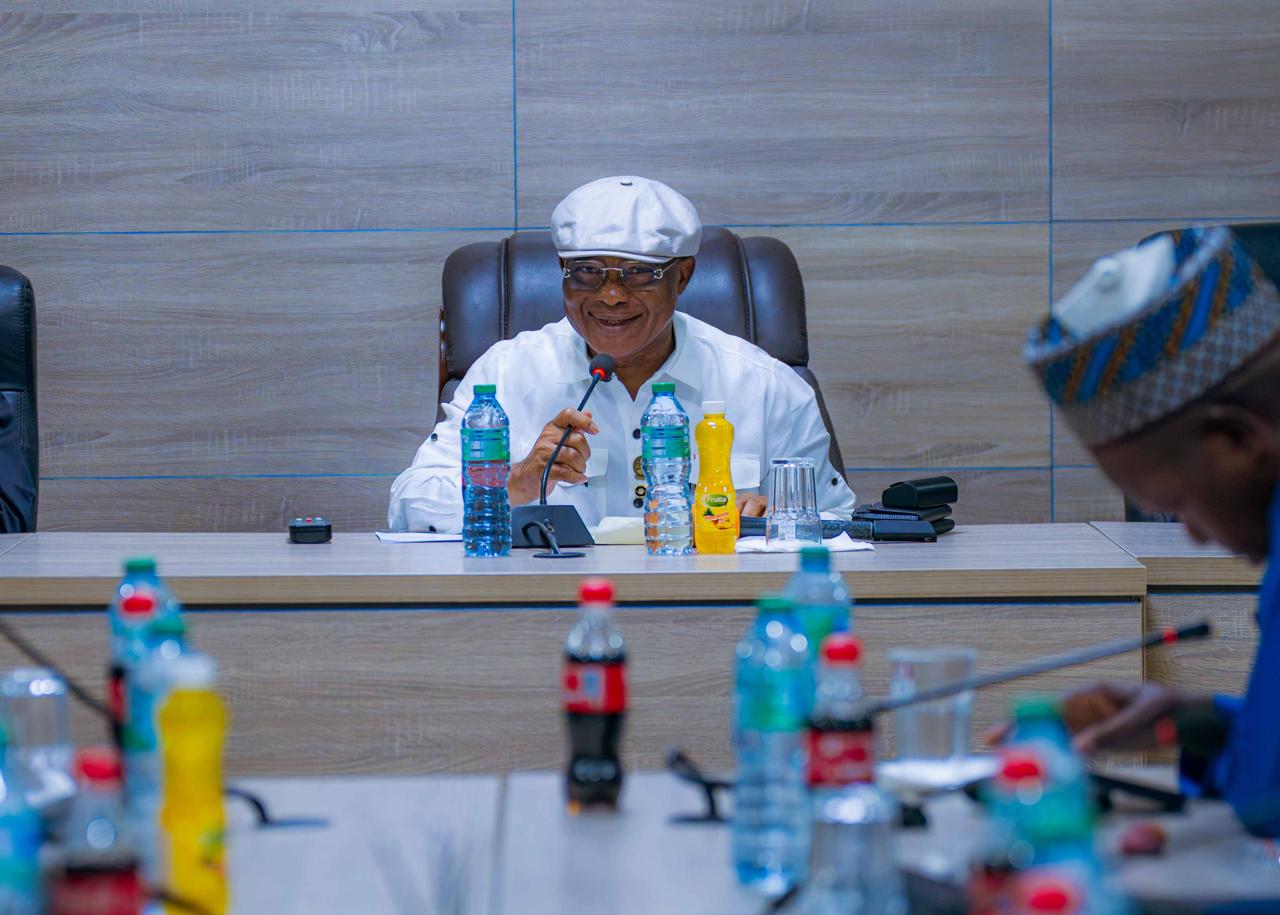
Fresh from the successful APC 2026 National Convention, the Renewed Hope Ambassadors National, Zonal, and State leadership gathered in Abuja over the weekend, for its fourth strategic meeting, setting the tone for nationwide grassroots activation ahead of 2027.
Chaired by Governor Hope Uzodinma (Imo State) the Director General and National Coordinator of the Renewed Hope Ambassadors, alongside Deputy Director-General, Governor Uba Sani of Kaduna State, and Governor Inuwa Yahaya of Gombe State as Secretary, the session reinforced one clear direction: One Party. One Message. One Mobilization whilst also laying out a strategic roadmap for the activation of the network across all communities in Nigeria.
Backed by the strength of 31 APC-led states, the Renewed Hope Agenda is taking Bola Ahmed Tinubu’s message of progress and reform to every corner of Nigeria.
From bold economic restructuring to initiatives like NELFUND, the increase in the national minimum wage from ₦30,000 to ₦70,000, and strategic investments in critical sectors, including PNiCGI, the mission remains clear: helping Nigerians understand both the purpose and the progress of the Renewed Hope vision.
This is coordination at scale. This is grassroots engagement with purpose. This is the next phase of Renewed Hope with One Party, One Message, and One Mobilisation framework
#RenewedHopeAmbassadors #APC #WeAreAPC


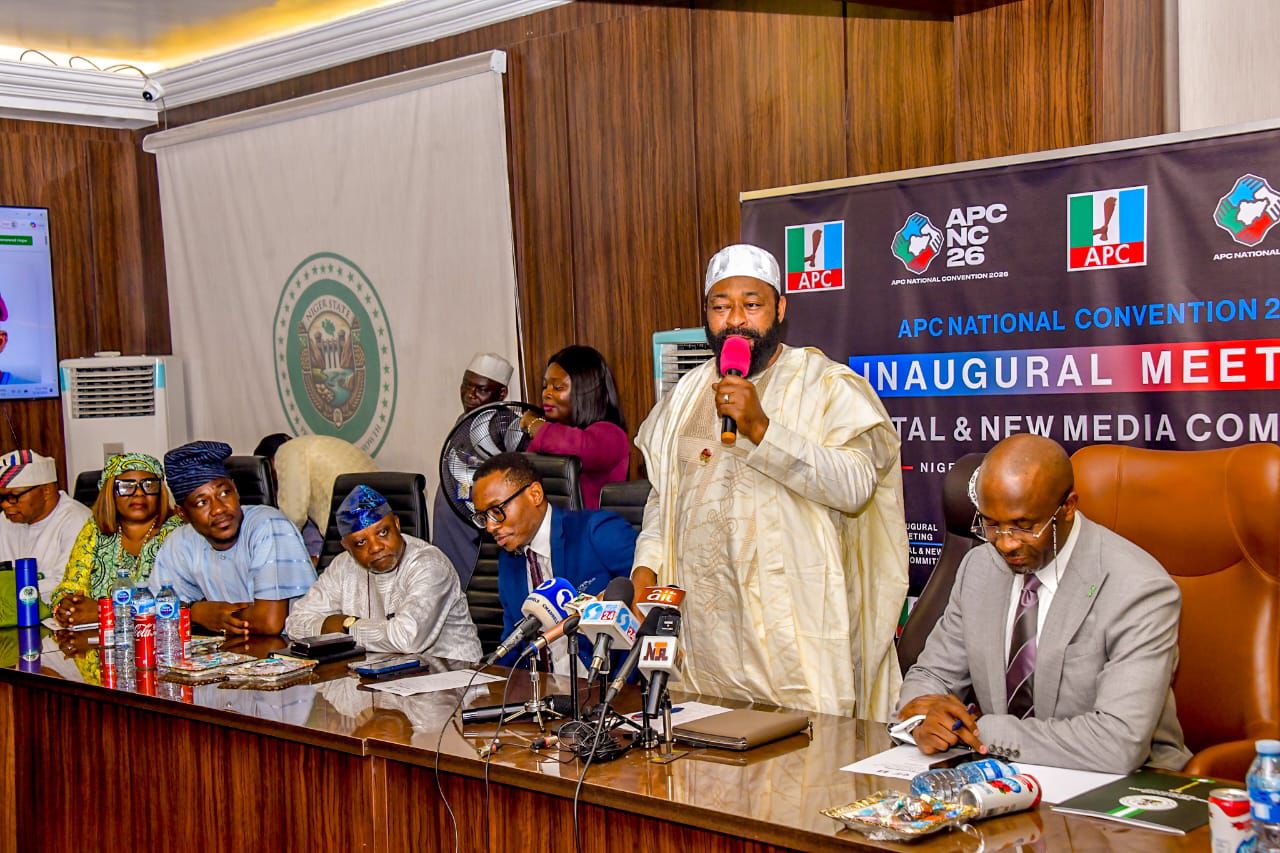
Governor Bago Inaugurates APC Digital Media Sub-Committee Ahead of National Convention.
Governor Umaru Bago has inaugurated the Digital Media Sub-Committee for the forthcoming National Convention of the All Progressives Congress (APC), scheduled to hold on March 27 and 28, 2026 in Abuja.
Chairing the sub-committee, Governor Bago tasked members with the responsibility of effectively communicating the party’s manifesto to the public.
He emphasized the need to leverage social media platforms to highlight the achievements and ongoing efforts of President Bola Ahmed Tinubu, noting that communication gaps have posed challenges that must now be decisively addressed.
The Co-Chair of the sub-committee, Hon. Benjamin Kalu, Deputy Speaker of the House of Representatives, echoed the Governor’s position, urging members to project the activities of both the party and the government to a broader audience.
He called for a deliberate and coordinated effort to showcase the party’s achievements and policy direction, stressing the importance of shaping a compelling and consistent narrative across all digital platforms.
Delivering a presentation to the committee, Otega Ogra, SSA to the President on New Media, who serves as Secretary of the sub-committee, outlined strategic focus areas to guide the team’s operations.
His presentation highlighted communication priorities and actionable steps to achieve the committee’s mandate and strengthen the party’s digital engagement.


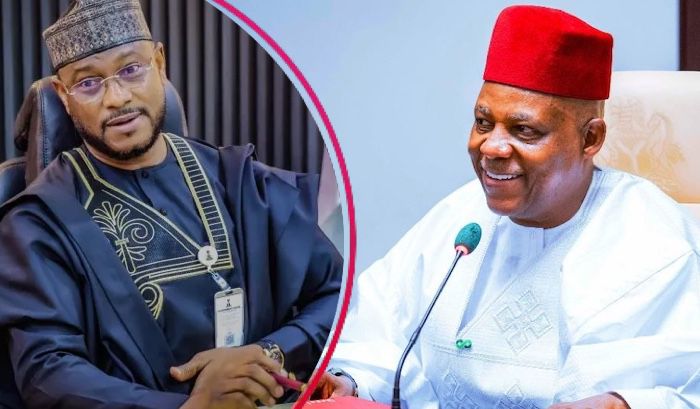
VP Shettima Set to Lead Delegation to Zamfara as Governor Dauda Lawal Formally Joins APC
The Zamfara State chapter of the All Progressives Congress (APC) has finalized plans to receive Vice President Kashim Shettima for the formal defection and reception of Governor Dauda Lawal into the ruling party, scheduled to take place on Tuesday.
State APC Chairman, Tukur Danfulani Maikatako, disclosed this during a high-level stakeholders’ meeting held in Gusau, the state capital. He noted that the Vice President would be joined by the party’s national leadership to mark what he described as a landmark political realignment in the state.
Maikatako expressed the party’s excitement over Governor Lawal’s return, recalling that Zamfara had historically been an APC stronghold and that the Governor was previously a bona fide member of the party before his earlier exit.
“We all know that Zamfara has long been one of the APC’s stronghold states, where the defected Governor was once a bona fide member. Now that he has decided to return home, having been satisfied that the APC remains his second choice after the one he left for obvious reasons,” Maikatako stated.
The Chairman called on all party faithful across the 147 wards in the state’s 14 local government areas to turn out en masse to honour the Vice President’s visit. He emphasized that the event was strategically positioned to bolster the party’s popularity and strengthen its structures ahead of the 2027 general elections.
In a strong appeal for unity, Maikatako urged members to set aside all factional tendencies, stressing that the APC remained one political family with shared goals, particularly the ambition to make Zamfara and Nigeria great again.
Echoing similar sentiments, a former state APC Chairman, Lawal M. Liman, appealed to members to cascade the message to their wards and local government areas. He reinforced the need for cohesion, noting that the party’s collective strength would be critical to achieving success in future elections.

All eyes are now on Gusau as the ruling party prepares for a high-profile political gathering expected to further consolidate its influence in Zamfara State.


-

 society6 months ago
Religion: Africa’s Oldest Weapon of Enslavement and the Forgotten Truth
-

 news4 months ago
WHO REALLY OWNS MONIEPOINT? The $290 Million Deal That Sold Nigeria’s Top Fintech to Foreign Interests
-

 society6 months ago
“You Are Never Without Help” – Pastor Gebhardt Berndt Inspires Hope Through Empower Church (Video)
-

 celebrity radar - gossips2 months ago
Dr. Chris Okafor Returns with Power and Fire of the Spirit -Mounts Grace Nation Altar with Fresh Anointing and Restoration Grace on February 1, 2026
You must be logged in to post a comment Login
You must log in to post a comment.